
OPPO

Search documents
AI手机赛道迎来重量级跨界玩家
Zheng Quan Ri Bao Zhi Sheng· 2025-12-01 16:37
Core Insights - The collaboration between ByteDance's AI assistant "Doubao" and ZTE marks a significant entry of a major player into the AI smartphone sector, focusing on redefining the hardware ecosystem through AI capabilities rather than manufacturing devices directly [1][2] - The partnership is seen as a critical variable in the industry's evolution, with the AI smartphone sector index rising following the announcement, indicating positive market sentiment [1] Group 1: Cross-Industry Collaboration - Doubao is a solution that requires deep collaboration with smartphone manufacturers at the operating system level, with ByteDance's strategy centered on "ecological cooperation" rather than self-manufacturing devices [2] - The initial batch of Nubia M153 prototypes, featuring Doubao's AI capabilities, is approximately 30,000 units, with ZTE announcing a strong market response and plans for a second-generation model [2] - ByteDance's hardware team, Ocean, has integrated members from various projects, indicating a long-term strategy of combining large models, super apps, and hardware terminals [2] Group 2: Market Dynamics and Competition - The entry of cross-industry players like ByteDance is expected to disrupt existing smartphone brands and user experience, compelling traditional manufacturers to either develop their own solutions or rely on ecological partners for AI capabilities [3] - Leading smartphone manufacturers have established their own competitive advantages, with Huawei, Honor, OPPO, and Vivo enhancing their AI capabilities and user experiences through innovative technologies [4] - IDC forecasts a strong growth in smartphone sales by the end of the year, benefiting the entire supply chain, including component suppliers and companies like ZTE and Sichuan Furong Technology [5][6]

“不造手机”的字节手机
Bei Jing Shang Bao· 2025-12-01 16:36
Core Insights - ByteDance emphasizes its focus on AI technology rather than developing its own smartphones, launching the Doubao mobile assistant in collaboration with ZTE [1][3] - The Doubao mobile assistant is designed to enhance user interaction and experience, leveraging ByteDance's AI capabilities and ZTE's hardware [4][5] - The AI mobile assistant is positioned as a core component of ByteDance's ecosystem cooperation strategy, aiming to integrate with various smartphone brands [3][4] Group 1: Product Launch and Market Impact - The Doubao mobile assistant was officially released on December 1, priced at 3499 yuan, and is currently available only to industry professionals as an engineering sample [1] - Following the announcement, ZTE's A-share stock hit the daily limit of 46.3 yuan, and its Hong Kong stock surged by 13.94% [1] - ByteDance's Doubao model has achieved 172 million monthly active users, leading the market, which provides a strong foundation for the technology's implementation [6] Group 2: Industry Dynamics and Competitive Landscape - Major smartphone manufacturers are increasingly developing their own AI systems, creating challenges for ByteDance's strategy of supplying AI technology to larger firms [4][9] - The collaboration between ByteDance and ZTE highlights the trend of integrating software and hardware to enhance AI mobile capabilities [5] - The competition in the AI terminal market is intensifying, with various tech giants launching AI-enabled devices to capture consumer interest [8][9] Group 3: Future Directions and Challenges - ByteDance plans to continue exploring ecosystem partnerships to integrate the Doubao mobile assistant into different smartphone models [3] - The AI terminal market faces challenges, including the need for consumer education on the unique value of AI devices and ongoing technological innovation to improve functionality [9] - The shift towards AI technology by major players indicates a consensus on the importance of AI terminals in the future market landscape [9]

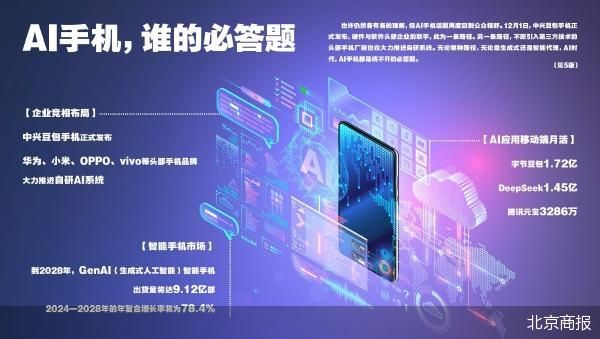
互联网大厂入局,端侧AI硬件加速
2025-12-01 16:03
互联网大厂入局,端侧 AI 硬件加速 20251201 摘要 端侧 AI 硬件在消费电子领域的发展背景是什么? 端侧 AI 硬件的发展背景主要有两个逻辑。首先,从必要性角度来看,随着云端 算力的快速发展,将云端算力下沉到端侧成为一个重要方向和议题。在全球数 十亿台手机、PC 和平板的保有量下,消费群体庞大,因此在 To C 市场中,手 机与消费者日常生活紧密联系,各大巨头(无论是互联网公司还是硬件厂商) 都在尝试开发端侧 AI 硬件。其次,从可行性角度来看,云端算力的 token 消 耗量持续增加,如果未来在 To C 市场大规模推广,仅依靠云端算力调用会面 临成本和安全方面的问题。因此,端侧 AI 硬件作为未来 To C 应用和云端算力 之间的桥梁应运而生。未来,端云结合的算力部署和消耗分布将成为主流。 智能化功能对传统设备渗透率潜力巨大,若 2%的普通眼镜转变为智能 化设备,即可达到 4,000 万副市场规模。大厂推动消费者教育和成熟产 品发布将扩大智能设备在传统领域的渗透。 端侧 AI 加速落地推动传统蜂窝通信模组智能化升级,模组厂商角色日益 重要,业务延伸至解决方案方向。预计到 2030 年,嵌入式 ...
字节跳动否认自研手机,中兴通讯A股H股大涨
2 1 Shi Ji Jing Ji Bao Dao· 2025-12-01 13:24
Core Insights - ByteDance is redefining the concept of mobile phones by introducing the Doubao mobile assistant, which integrates AI capabilities at the operating system level rather than as a standalone application [2][4] - The Doubao mobile assistant is designed to be a system-level intelligent agent that can understand screen content and perform complex tasks autonomously, marking a significant shift in user interaction with mobile devices [4][9] Product Development - The Doubao mobile assistant is currently in a technical preview phase and is being integrated into various smartphone brands through partnerships, with ZTE's nubia M153 being the first model to feature it [2][4] - The assistant allows users to interact seamlessly through voice commands and dedicated AI keys, enhancing the user experience by embedding common functionalities like voice and video calls [4][5] Market Impact - Following the announcement of the Doubao mobile assistant, ZTE's stock price surged, indicating strong market confidence in the collaboration between AI models and hardware manufacturing [5][8] - The global smartphone market is experiencing a slowdown, with growth projected to drop to 1.5% by 2025, making AI functionality a critical differentiator for smartphone manufacturers [8][9] Strategic Direction - ByteDance aims to avoid the competitive landscape of hardware manufacturing by focusing on deep integration with operating systems, thereby defining the next generation of human-computer interaction [8][9] - The company's strategy is to leverage its existing AI capabilities and user understanding to transform mobile operating systems into proactive intelligent agents, rather than passive resource managers [9]

字节跳动否认自研手机,中兴通讯A股H股大涨
21世纪经济报道· 2025-12-01 13:18
Core Viewpoint - ByteDance is redefining the concept of mobile phones by introducing the Doubao mobile assistant, which integrates AI capabilities deeply into the operating system, moving beyond traditional standalone AI applications [2][4]. Group 1: Doubao Mobile Assistant Launch - The Doubao mobile assistant was released on December 1, 2023, as a technical preview, built on the Doubao app and developed in collaboration with mobile manufacturers [2]. - ByteDance has no plans to develop its own mobile phones but is negotiating with multiple manufacturers to integrate the Doubao assistant into various brand models [2][4]. - The first engineering sample, nubia M153, developed in partnership with ZTE, features the Doubao assistant and is priced at 3499 yuan [2]. Group 2: AI Integration and Capabilities - The Doubao assistant represents a significant shift from being a limited voice tool to a "system-level intelligent agent" that can understand screen content and perform complex tasks autonomously [4]. - Users can activate the assistant through voice commands or a dedicated AI key, allowing seamless interaction across different applications [4]. - The assistant's capabilities include multi-modal functions and integration with the system's native photo gallery, enabling users to issue voice commands for photo editing [4]. Group 3: Market Impact and Strategic Positioning - Following the announcement, ZTE's stock price surged, reflecting market optimism about the collaboration between AI models and hardware manufacturing [6]. - The introduction of AI capabilities is seen as a key differentiator for mobile manufacturers, with major players like Apple and Samsung developing their own AI strategies [9]. - ByteDance's approach contrasts with traditional manufacturers by focusing on embedding AI capabilities at the operating system level, aiming to redefine user interaction and ecosystem standards [9][10]. Group 4: Future Outlook and Industry Trends - The global smartphone market is expected to slow down, with growth projected at only 1.5% by 2025, increasing the importance of differentiated AI functionalities for manufacturers [8]. - Analysts suggest that ByteDance's strategy leverages its existing strengths in user engagement and data understanding to transition into the next generation of computing platforms [9]. - The ultimate goal is for AI to become the "soul" of the smartphone, transforming the operating system into an intelligent agent that actively manages hardware and services [10].

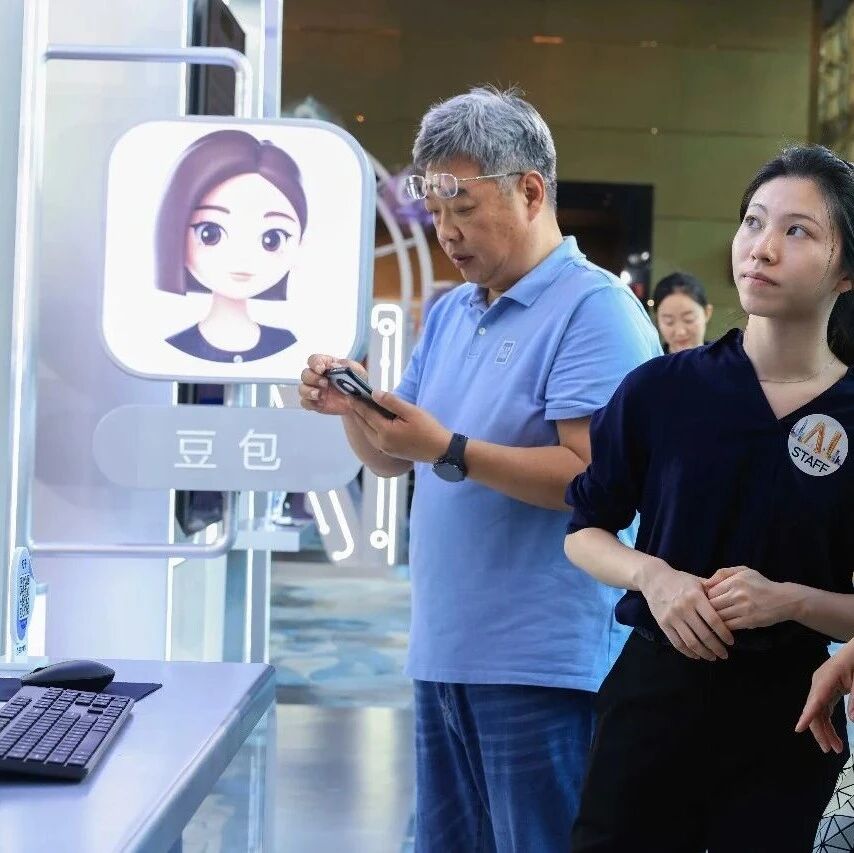
中兴通讯涨停!牵手字节推豆包AI手机:售价3499元,端侧AI能带来什么
Xin Lang Cai Jing· 2025-12-01 12:31
Core Insights - The launch of the Doubao mobile assistant by ByteDance marks a significant advancement in AI integration within mobile devices, allowing users to compare prices and specifications across multiple e-commerce platforms with voice commands [1][2] - The collaboration between ZTE and Doubao signifies a new phase in the ecosystem synergy between consumer electronics manufacturers and internet giants, with expectations for AI smartphone penetration to exceed 35% globally by 2026 [5] Group 1: Product Features - Doubao mobile assistant enables users to interact through voice, side buttons, or Doubao Ola Friend headphones, providing a seamless experience across various applications [2] - The assistant integrates common functions such as voice calls, video calls, and screen sharing, enhancing user convenience [2] - It features AI capabilities that allow for automatic navigation between applications based on user commands, facilitating tasks like ticket booking and product ordering [2][3] Group 2: Market Impact - The announcement led to a surge in ZTE's stock price, with other AI-related stocks also experiencing gains, indicating strong market interest in AI mobile technologies [2] - The partnership between Doubao and ZTE is part of a broader trend where mobile manufacturers are shifting towards deep collaborations with AI firms to enhance user services and reduce hardware investment in large models [3][4] - Analysts predict that the integration of Doubao's large model into mobile devices will significantly expand the application boundaries of AI, driving growth in the industry [5]
首款“豆包助手”手机3499元开售
第一财经· 2025-12-01 11:47
Core Viewpoint - The article discusses the rising trend of AI mobile phone concept stocks in the A-share market, highlighting the collaboration between ByteDance and various mobile manufacturers, particularly ZTE, in developing AI-integrated mobile devices without a self-developed phone plan [3][4][7]. Group 1: Market Performance - As of the closing on December 1, the AI mobile phone index rose by 2.71%, with notable increases in stocks such as Beilong Precision (up 20%), ZTE (up 10%), and Transsion Holdings (up 9.41%) [3]. - ZTE's A-share trading volume exceeded 14.6 billion yuan, and its H-share rose over 13% [7]. Group 2: Collaboration and Development - ByteDance confirmed ongoing discussions with multiple phone manufacturers, emphasizing that it does not have plans for self-developed phones [4]. - ZTE's Nubia has begun testing engineering samples of a phone equipped with the Doubao mobile assistant technology, which is set to be sold at a starting price of 3,499 yuan [5][10]. - The collaboration involves Doubao leading the AI assistant's product definition and experience, while Nubia focuses on hardware engineering and technical development [10]. Group 3: AI Assistant Integration - The Doubao mobile assistant is designed to operate across various applications, enabling tasks such as ticket booking and logistics tracking [7]. - Despite the collaboration, the core control of AI on mobile devices remains with the phone manufacturers, who have established their own voice assistant ecosystems [8][9]. Group 4: Data Privacy and Security - Concerns regarding data privacy and security are highlighted, particularly with the use of AI assistants that may access sensitive information [11][12]. - The Guangdong Standardization Association has issued standards addressing the risks associated with AI assistants, emphasizing the need for user authorization before executing tasks through third-party applications [11]. Group 5: Future Hardware Strategy - ByteDance is focusing on hardware development to enhance its AI capabilities, recognizing that hardware serves as both a data entry point and an amplifier for AI training [16]. - The company has made strategic acquisitions, such as the purchase of Oladance for AI-enabled headphones, and is exploring the VR space despite previous setbacks [17][18]. Group 6: Strategic Focus and Challenges - ByteDance's leadership is intensifying its focus on AI strategy, with key personnel changes aimed at improving cross-team collaboration [18]. - The company faces challenges in maintaining competitive technology and exploring sustainable revenue models while addressing its limitations in self-developed chips and infrastructure [18].
非洲手机市场竞争升级,传音控股如何破解增长焦虑?
Guo Ji Jin Rong Bao· 2025-12-01 11:08
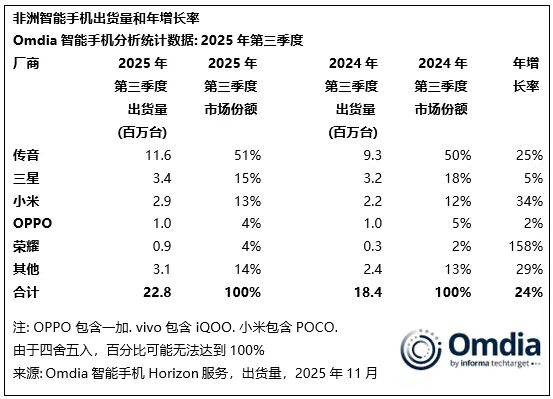
Core Viewpoint - Transsion Holdings, known as the "King of Mobile Phones in Africa," maintains a strong market presence in Africa despite increasing competition from other Chinese brands, focusing on enhancing its competitive advantages and brand differentiation strategies [1][3]. Group 1: Market Position and Performance - Since its listing in 2019, Transsion has seen an increase in its smartphone market share in Africa, remaining the market leader with over 40% share for five consecutive years [2][3]. - In the first nine months of 2023, the company reported a slight revenue decline of 3.3% year-on-year, totaling 49.54 billion yuan, while net profit dropped significantly by 44.97% to 2.15 billion yuan [2]. - The third quarter of 2023 showed a revenue rebound, achieving 20.466 billion yuan, a year-on-year increase of 22.6%, although net profit continued to decline by 11.06% to 0.935 billion yuan, indicating a "revenue growth without profit growth" scenario [2]. Group 2: Competitive Landscape - In Q3 2025, Transsion led the African smartphone market with a shipment of 11.6 million units, holding a 51% market share, while competitors like Xiaomi and Honor are rapidly increasing their market presence [3][4]. - Xiaomi's market share reached 13% with a 34% year-on-year growth, while Honor experienced a remarkable 158% growth, indicating a shift in competitive dynamics [3][4]. Group 3: Strategic Initiatives - Transsion plans to strengthen its competitive edge in Africa by focusing on refined operations, differentiated brand building, and establishing a robust "moat" through systematic capabilities [1][5]. - The company is also expanding its product categories beyond mobile phones, including digital accessories and home appliances, while implementing a multi-brand strategy to cater to emerging market demands [5].

字节跳动否认自研手机,合作方中兴通讯强势涨停
2 1 Shi Ji Jing Ji Bao Dao· 2025-12-01 10:41
Core Insights - ByteDance is redefining the concept of mobile phones by introducing the Doubao mobile assistant, which integrates AI capabilities at the operating system level rather than as a standalone application [1][2] - The Doubao mobile assistant represents a significant breakthrough in ByteDance's hardware ecosystem strategy, allowing for seamless interaction and deep integration with mobile devices [2][3] Group 1: Product Development - The Doubao mobile assistant is being developed in collaboration with multiple smartphone manufacturers, with no plans for ByteDance to produce its own hardware [1][3] - The first engineering sample, the nubia M153, has been released in partnership with ZTE, featuring the Doubao mobile assistant at a price of 3499 yuan [1][2] Group 2: Market Impact - Following the announcement of the Doubao mobile assistant, ZTE's stock price surged, hitting the upper limit in A-shares and increasing over 13% in H-shares, indicating strong market confidence in the collaboration [2][3] - The introduction of AI capabilities is seen as a key differentiator for smartphone manufacturers in a slowing global market, with predictions of a growth slowdown to 1.5% by 2025 [6][7] Group 3: Strategic Vision - ByteDance aims to penetrate the operating system layer to redefine human-computer interaction and establish a strategic advantage in the future AI ecosystem [6][7] - The company's strategy focuses on leveraging its existing AI capabilities and understanding of user intent to create a more integrated and intelligent mobile experience [7]
阶跃星辰开源GUI Agent套件,宣布合作超60%国产手机厂商
Xin Lang Ke Ji· 2025-12-01 08:34
Core Insights - The launch of ZTE's smartphone featuring the "Doubao Mobile Assistant Technology Preview" has garnered significant attention in the market [2] - Two days prior, the AI model company Jieyue Xingchen released a similar GUI Agent technology called GELab-Zero, achieving state-of-the-art (SOTA) performance records across various GUI benchmarks [2] - Jieyue Xingchen has collaborated with over 60% of domestic smartphone manufacturers, including Honor, OPPO, and ZTE, to enhance their AI capabilities [2] Company Developments - ZTE has introduced a smartphone equipped with advanced AI assistant technology, indicating a strategic move to enhance user experience [2] - Jieyue Xingchen's GELab-Zero technology is positioned as a competitive alternative in the AI assistant space, showcasing its capabilities on both mobile and desktop platforms [2] Industry Trends - The collaboration between Jieyue Xingchen and ZTE reflects a growing trend in the industry towards integrating AI functionalities into consumer electronics, particularly for older demographics [2] - The increasing adoption of AI technologies by major smartphone manufacturers suggests a shift in market dynamics, with a focus on user-friendly applications and services [2]
