
青岛银行

Search documents
A股银行中报业绩观察:中期分红在路上,息差压力仍存
Mei Ri Jing Ji Xin Wen· 2025-08-24 12:21
Core Viewpoint - The performance of seven A-share listed banks in the first half of 2025 shows steady growth in total assets, operating income, and net profit attributable to shareholders, with a decrease in non-performing loan ratios, indicating ongoing risk improvement [1][2]. Group 1: Financial Performance - Seven banks reported positive growth in total assets compared to the beginning of the year, with Ningbo Bank leading at an 11.04% increase, the only bank exceeding 10% [2]. - All seven banks achieved year-on-year growth in operating income and net profit attributable to shareholders, with Shanghai Pudong Development Bank's total revenue surpassing 90 billion yuan, a 2.62% increase [2]. - Jiangyin Bank reported the highest revenue growth at 10.45%, while Changshu Bank followed closely with a 10.1% increase in revenue [3]. Group 2: Asset Quality - The non-performing loan ratios of Ningbo Bank, Hangzhou Bank, and Jiangyin Bank remained stable compared to the beginning of the year, while the other four banks showed varying degrees of improvement, with Qilu Bank experiencing the largest decline of 10 basis points [2]. Group 3: Dividend Expectations - Several banks have announced expectations for mid-year dividends, with the high dividend yield of bank stocks enhancing their investment value [1][4]. - The total cash dividends of A-share listed banks reached 646.025 billion yuan in 2024, reflecting a year-on-year increase of 5.33%, which has bolstered investor confidence [4]. Group 4: Market Trends - The banking sector has seen a significant upward trend, with the China Securities Banking Index rising by 52.7% since the beginning of 2024 [4]. - The average net interest margin for commercial banks was 1.42% in the first half of the year, down 10 basis points from the end of the previous year, indicating pressure on interest margins [5].
短期指标与长期发展取舍两难,银行业"反内卷"如何破局立新?
Zheng Quan Shi Bao· 2025-08-24 10:19
Core Viewpoint - The banking industry is experiencing a phenomenon of "involution," characterized by irrational competition that compresses profit margins and poses potential risks to the sector's health [1][5][7]. Group 1: Interest Rate Adjustments - As of August, several listed banks reported that their average deposit costs fell below 2%, with specific rates at 1.96%, 1.62%, and 1.78%, but these declines were smaller than the corresponding drops in loan yields, which fell by 0.44, 0.37, and 0.53 percentage points respectively [2][3]. - The net interest margins (NIM) for these banks further narrowed to 2.58%, 1.54%, and 1.78%, although the rate of decline has slowed compared to previous periods [2][3]. - The People's Bank of China highlighted the significant deviation between deposit and loan rate adjustments, indicating severe competition among banks [3][4]. Group 2: Causes of Involution - The phenomenon of "involution" is attributed to a slowdown in the growth of new business for financial institutions, leading to intensified competition in the existing market [5][6]. - The competition manifests as price wars, particularly in the loan sector, where rates have dropped below 2%, resulting in a race to lower rates and relax credit standards [6][7]. - The pressure for performance and shareholder returns has exacerbated the competition among listed banks, pushing them to expand their scale to meet growth expectations [6][7]. Group 3: Implications for the Banking Sector - The ongoing "involution" is compressing profit margins and increasing operational risks for commercial banks, which could lead to long-term challenges for the industry [7][8]. - The central government has initiated a "de-involution" movement, with various regions implementing measures to curb excessive competition and promote healthier development practices [8][9]. - Experts suggest that banks need to transition from scale-driven growth to value-driven strategies, focusing on innovation and differentiated services to break the cycle of "involution" [9][10].
短期指标与长期发展取舍两难,银行业“反内卷”如何破局立新?
券商中国· 2025-08-24 07:57
Core Viewpoint - The financial industry is experiencing a "de-involution" movement as banks face challenges from intense competition and declining net interest margins, necessitating a shift towards high-quality and healthy development [1][2][9]. Group 1: Current State of the Banking Sector - Recent half-year reports from listed banks indicate that the "involution" phenomenon persists, with deposit interest rate declines lagging behind loan interest rate declines [2][3]. - Average deposit costs for banks like Changshu Bank, Jiangyin Bank, and Jiangsu Bank fell below 2%, while their loan yields decreased more significantly, leading to further narrowing of net interest margins [3][4]. - The central bank has highlighted the "involution" issue, noting significant discrepancies between deposit and loan rate adjustments compared to policy rates [4]. Group 2: Causes of Involution - The central bank attributes the "involution" to fierce market competition, where banks engage in high-interest deposit strategies and aggressive loan pricing, leading to unsustainable practices [4][5]. - The decline in loan growth rates over the years indicates a shift from expanding new business to competing for existing market share, exacerbating the "involution" [7][8]. Group 3: Implications of Involution - The "involution" is compressing banks' profit margins and increasing operational risks, which could hinder the healthy development of the banking sector [8][9]. - The competitive landscape is characterized by price wars, relaxed credit standards, and high-interest deposit strategies, which ultimately threaten long-term profitability and stability [8][9]. Group 4: Responses to Involution - Recent initiatives from regulatory bodies and financial institutions aim to combat "involution" through measures that promote compliance and sustainable competition [9][10]. - Experts suggest that banks need to transform their customer base and business models to align with economic transitions, focusing on value rather than scale [11][12].


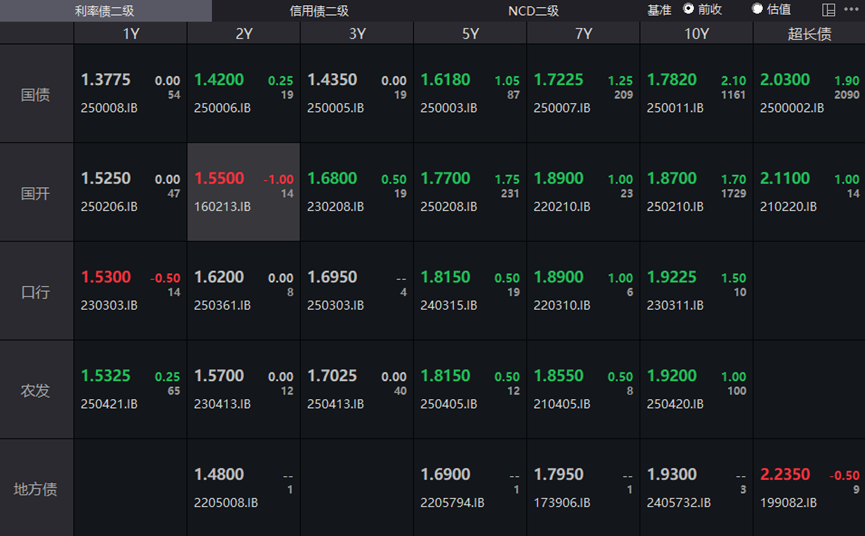
股市10年来首次站上3800点,10年期国债上行逼近1.8%关口
Xin Lang Cai Jing· 2025-08-22 09:21
Market Overview - The bond futures market closed lower across the board, with major interbank interest rate bond yields mostly rising, indicating a deep adjustment in the bond market amid a bullish stock market [1][3] - The 10-year government bond yield rose by 2.1 basis points to 1.782%, while the 30-year government bond yield increased by 1.9 basis points to 2.03% [1][3] Bond Market Dynamics - The 10-year and 30-year government bonds had weighted average bidding rates of 1.83% and 2.15%, respectively, both higher than the market estimates, reflecting a decrease in institutional subscription enthusiasm compared to earlier in the year [3][5] - The current bond market is viewed as having relatively high cost-effectiveness, with a recommendation for investors to focus on short-duration, high-liquidity assets [1][3] Monetary Policy and Liquidity - The People's Bank of China conducted a reverse repurchase operation of 361.2 billion yuan at a fixed rate of 1.40%, with a net injection of 123.2 billion yuan for the day [3] - Short-term Shibor rates fell across the board, indicating a loosening of the funding environment [4] Credit Market Performance - Non-financial credit bonds showed varied performance, with notable gains in specific bonds such as 19 Keqiao 02 and 21 Vanke 04, while others experienced declines [5][7] - The secondary market for certificates of deposit showed stable demand, with 6-month and 1-year national bank CDs trading at 1.64% and 1.65%, respectively [8][9]
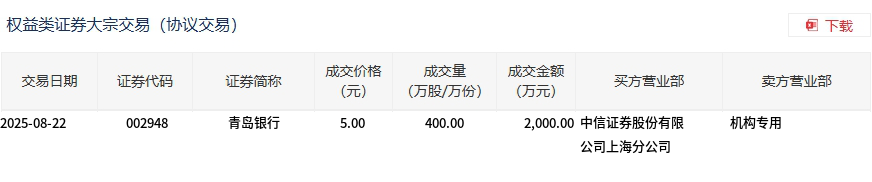
青岛银行今日大宗交易平价成交400万股,成交额2000万元
Xin Lang Cai Jing· 2025-08-22 08:57
| 交易日期 | 证券代码 | 证券简称 | 成交价格 | 成交量 | 成交金额 买方营业部 | 卖方营业部 | | --- | --- | --- | --- | --- | --- | --- | | | | | (元) | (万股/万份) | (万元) | | | 2025-08-22 | 002948 | 青岛银行 | 5.00 | 400.00 | 2,000.00 中信证券股份有限 | 机构专用 | | | | | | | 公司上海分公司 | | 8月22日,青岛银行大宗交易成交400万股,成交额2000万元,占当日总成交额的8.09%,成交价5元,较市场收盘价5元持 平。 ...
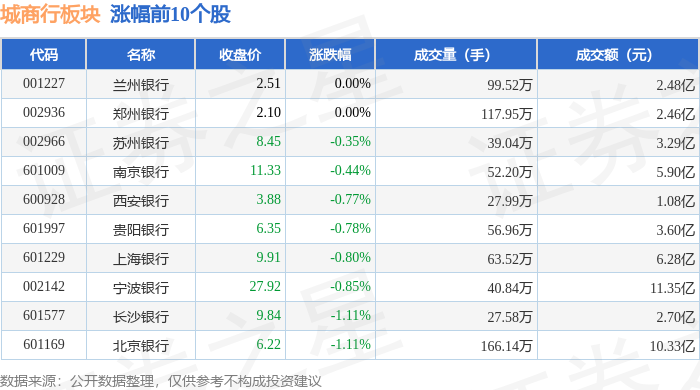
城商行板块8月22日跌1.08%,齐鲁银行领跌,主力资金净流出7.16亿元
Zheng Xing Xing Ye Ri Bao· 2025-08-22 08:46
证券之星消息,8月22日城商行板块较上一交易日下跌1.08%,齐鲁银行领跌。当日上证指数报收于 3825.76,上涨1.45%。深证成指报收于12166.06,上涨2.07%。城商行板块个股涨跌见下表: | 代码 | 名称 | 主力净流入(元) | 主力净占比 游资净流入 (元) | | 游资净占比 散户净流入(元) | | 散户净占比 | | --- | --- | --- | --- | --- | --- | --- | --- | | 601009 南京银行 | | 2185.32万 | 3.70% | 467.60万 | 0.79% | -2652.92万 | -4.50% | | 002936 郑州银行 | | 1582.75万 | 6.44% | -1475.10万 | -6.00% | -107.65万 | -0.44% | | 600928 西安银行 | | 340.11万 | 3.15% | -102.61万 | -0.95% | -237.50万 | -2.20% | | 601963 重庆银行 | | 284.02万 | 2.04% | 1335.31万 | 9.57% | -1619 ...
A股午评:三大指数集体上涨,沪指涨0.67%逼近3800点,创业板指涨2.56%,科创50大涨,半导体、算力大涨!近3300股下跌,成交1.53万亿缩量606亿
Ge Long Hui· 2025-08-22 04:05
Market Overview - The three major A-share indices collectively rose, with the Shanghai Composite Index increasing by 0.67% to 3796.36 points, reaching a nearly ten-year high during the session [1] - The Shenzhen Component Index rose by 1.32%, surpassing 12000 points, while the ChiNext Index increased by 2.56% [1] - The total trading volume in the Shanghai and Shenzhen markets was 153.07 billion yuan, a decrease of 60.6 billion yuan compared to the previous day, with over 1900 stocks rising across the market [1] Sector Performance - The semiconductor sector experienced significant gains, with Shengmei Shanghai hitting a 20% limit up, Cambrian Technology rising over 12% to surpass 1100 yuan, and SMIC increasing by over 8% [3] - The computing power sector also performed well, with stocks like Kede Education, Shunwang Technology, and Yuntian Leifeng hitting the 20% limit up [3] - Brokerage stocks saw a rally, with Xinda Securities hitting the limit up and Everbright Securities rising over 6%, indicating an increase in investor willingness to enter the market, with new brokerage accounts increasing by over 40% year-on-year [3] Declining Sectors - The oil and gas sector faced declines, with stocks like Qianeng Hengxin and Keli Co., Ltd. dropping over 3% [3] - Banking stocks generally fell, with Qingdao Bank and Chongqing Rural Commercial Bank both declining by nearly 2% [3]

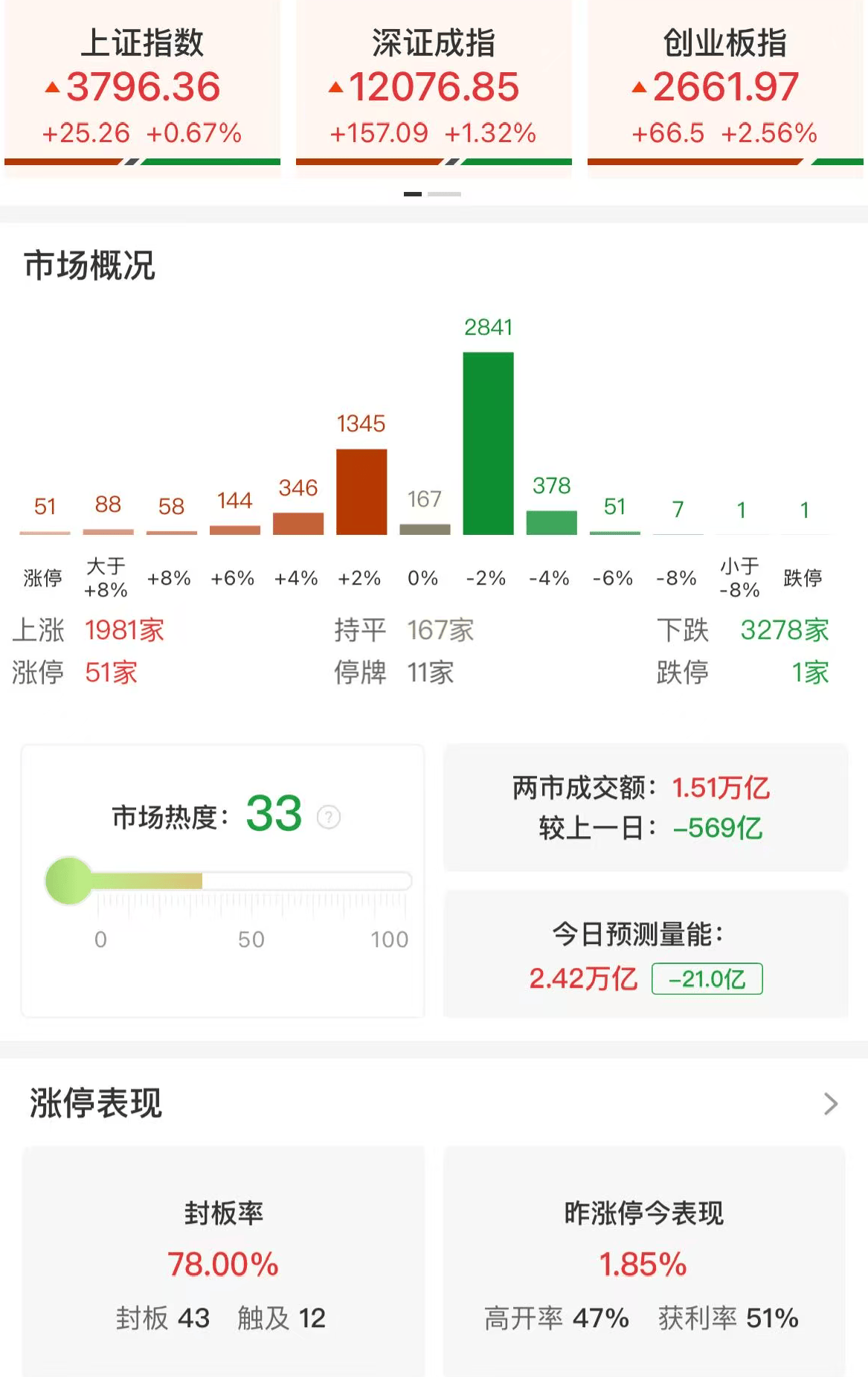
A股午评:沪指涨0.67%逼近3800点!创业板指涨2.56%,半导体、算力板块大涨
Xin Lang Cai Jing· 2025-08-22 03:44
Market Performance - A-shares' three major indices collectively rose, with the Shanghai Composite Index up 0.67% to 3796.36 points, reaching a nearly ten-year high [1] - The Shenzhen Component Index increased by 1.32%, surpassing 12000 points, while the ChiNext Index rose by 2.56% [1] - The total trading volume in the Shanghai and Shenzhen markets was 153.07 billion yuan, a decrease of 60.6 billion yuan from the previous day, with over 1900 stocks rising [1] Sector Performance - The semiconductor sector experienced significant gains, with companies like Shengmei Shanghai hitting the 20% daily limit, and Cambrian Technologies rising over 12% to exceed 1100 yuan [1] - SMIC saw an increase of over 8%, and the release of DeepSeek-V3.1, which targets next-generation domestic chip design, contributed to the sector's strength [1] - The computing power sector also performed well, with Kede Education, Shunwang Technology, and Yuntian Lifei all hitting the 20% daily limit [1] Brokerage and Investor Activity - Brokerage stocks saw a rally, with Xinda Securities hitting the daily limit and Everbright Securities rising over 6% [1] - There has been an increase in investor willingness to enter the market, with some brokerages reporting a year-on-year increase of over 40% in new account openings [1] Declining Sectors - The oil and gas sector faced declines, with companies like Qianeng Hengxin and Keli Co., Ltd. dropping over 3% [1] - Banking stocks generally fell, with Qingdao Bank and Chongqing Rural Commercial Bank both declining nearly 2% [1]
A股银行股普跌,青岛银行、厦门银行跌超2%
Ge Long Hui· 2025-08-22 03:44
Group 1 - A-shares of bank stocks experienced a widespread decline, with notable drops in Qingdao Bank, Jiangsu Bank, and Xiamen Bank, each falling over 2% [1] - Citic Bank, Qilu Bank, Yucheng Rural Commercial Bank, and Changsha Bank also saw declines close to 2% [1]


农业银行、邮储银行股价再创新高
Mei Ri Shang Bao· 2025-08-21 22:57
Group 1 - The banking sector in A-shares has shown a collective increase, with 40 out of 42 bank stocks rising, including notable gains from Qingdao Bank and Agricultural Bank [1] - Agricultural Bank reached a new high of 7.24 yuan per share, increasing its market capitalization to 2.46 trillion yuan, narrowing the gap with Industrial and Commercial Bank to 600 billion yuan [1] - Postal Savings Bank also hit a new high of 6.28 yuan per share, closing with a 1.30% increase and a market capitalization of 726.2 billion yuan, ranking sixth among bank stocks [1] Group 2 - Foreign investment firms, including JPMorgan, are optimistic about the future performance of Chinese listed banks, predicting a potential increase of 15% in A-share bank stocks and 8% in Hong Kong bank stocks by the second half of 2025 [2] - The average dividend yield for covered mainland bank stocks is expected to be around 4.3% this year, which is attractive in the current market environment [2] - UBS forecasts an improvement in the fundamentals of the Chinese banking industry starting from 2026, with a recovery in revenue growth and contributions from net interest margin and fee income [2]

