陕西历史博物馆

Search documents
欢欢喜喜过大年丨博物馆里乐享新春
Xin Lang Cai Jing· 2026-02-18 00:55
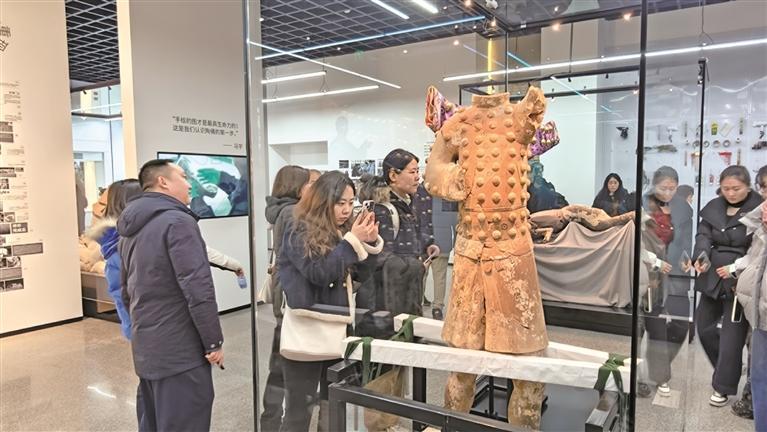
"展板上呈现的每个考古项目成果都是最新的,展出文物大多数是首展。"陕西历史博物馆副研究馆员张倩介 绍。 此外,"盛世修典——'中国历代绘画大系'成果展·陕西特展"和"绚烂与永恒——墓室壁画艺术特展"近期分别 在陕西历史博物馆本馆和秦汉馆亮相,带给观众多种多样的文化盛宴。 而在秦始皇帝陵博物院,新开放的"凝眸:凝望·望远·远眸——文物科技保护成果展"同样吸引了众多游客。 本次展览精选5件(组)珍贵文物亮相展陈,包括4号百戏俑及其复原服饰、28号百戏俑、一号坑出土铠甲武 士俑残片一组、陶马(试拼,未修复)、秦始皇帝陵C区一号墓出土铜鼎残片一组。 二月十四日,游客在参观"凝眸:凝望·望远·远眸——文物科技保护成果展"。 2月15日,陕西历史博物馆里热闹非凡,各地游客聚集于此,在历史文化中感受浓浓年味。"陕西历史博物馆 是我们来西安的第一站。"山东游客贺予湾说,"以前只在社交软件上见过这些精美的文物,今天终于看到实 物了。" 展厅内,不少游客像贺予湾一样,或驻足观赏,或凝神记录。来自广州的李眉带着刚上小学的儿子,在文物 前流连忘返。"孩子最近迷上了历史,过年带他来西安,就是想在古迹和文物前,给他上一堂生动的历史 课。 ...

陕历博一票难求优待政策被利用,陕历博有残疾人高价收费带客进馆
Xin Lang Cai Jing· 2026-02-08 00:58
【#陕历博一票难求优待政策被利用#,#陕历博有残疾人高价收费带客进馆#】近年来,陕西历史博物 馆"一票难求"、"预约难"一直饱受诟病。@新京报 记者调查发现,因二级及以上残疾人可免预约带一位 陪同人员进馆,当地由此催生了收费高达两三百元的残疾人带进服务。中介们打着"约不到也能 进"、"当天可进"的旗号发帖吸引游客,还有残障人士直接与游客沟通,甚至组织其他残疾人加入。曾 参与带进的残障人士段先生称,带一次游客进馆残疾人获酬120元。2月6日,陕历博人员表示,公安机 关正进行打击。 ...
以博物馆为媒,让中华文明可触可感
Xin Lang Cai Jing· 2026-02-07 22:52
Core Viewpoint - The importance of museums in protecting, inheriting, researching, and displaying human civilization is emphasized, with a focus on enhancing the influence of Chinese culture and making cultural relics more accessible to the public [2][3]. Group 1: Museum Development and Impact - Since the 18th National Congress, the number of registered museums in China has reached 7,046, with an average of one museum for every 200,000 people, and over 500,000 educational activities held annually [2]. - Museums are increasingly seen as educational institutions, breaking down barriers to expand cultural reach and allowing the public to engage with the vast history of humanity and civilization [2][3]. - Innovative exhibitions and interactive experiences in museums, such as traditional costume tours and themed courses, are making cultural heritage more relatable and engaging for visitors [2][3]. Group 2: Economic and Cultural Significance - Museums are not only preserving cultural value but also generating economic benefits, with exhibitions attracting millions of visitors and significantly boosting local economies, as seen with a cultural exhibition in Shanghai that generated over 35 billion yuan in comprehensive consumption [3]. - The concept of "one exhibition lights up a city" illustrates how museums can drive urban development and cultural tourism, creating new consumption scenarios that integrate culture, tourism, and commerce [3]. - Museums serve as platforms for international cultural exchange, showcasing Chinese artifacts abroad and fostering mutual understanding and friendship among nations [3][4]. Group 3: Cultural Identity and Future - The ongoing "museum fever" reflects a deep recognition and pursuit of Chinese cultural roots, as families and young people increasingly engage with exhibitions as part of their cultural experiences [4][5]. - Historical and cultural heritage is portrayed as not only a reflection of the past but also a significant influence on the present and future, emphasizing the importance of preserving these legacies for future generations [4][5].
释放文博活力 厚植文化滋养面向未来的博物馆事业
Zhong Yang Ji Wei Guo Jia Jian Wei Wang Zhan· 2025-12-05 00:24
Core Viewpoint - The article emphasizes the importance of museums in preserving and transmitting human civilization, highlighting their role in enhancing cultural confidence and meeting the spiritual and cultural needs of the public in contemporary China [6][10]. Group 1: Museum Development and Cultural Confidence - The 2025 National Museum Directors Forum was held at the National Museum of China, with over 50 museum directors and representatives discussing high-quality development in the cultural heritage sector [6]. - Museums are seen as vital educational institutions that connect the past, present, and future, contributing to national strength and cultural revival [6][10]. Group 2: Exhibition and Cultural Narratives - The Shaanxi History Museum utilizes its extensive collection to narrate the history of Chinese civilization, showcasing the evolution of political systems, economic forms, and cultural exchanges from prehistoric times to modern China [7][8]. - The Sichuan Museum focuses on the historical narrative of the Bashu region, highlighting its contributions to Chinese civilization through various thematic exhibitions [9]. Group 3: Educational and Interactive Initiatives - Museums are adopting innovative educational programs and interactive experiences to engage the public, such as digital classrooms and immersive activities that bring history to life [12][13]. - The concept of mobile museums, like the "Big Tent" traveling museum in Sichuan, aims to reach underserved communities and enhance public access to cultural heritage [13][14]. Group 4: Revolutionary Cultural Heritage - The China People's Anti-Japanese War Memorial Museum has hosted a significant exhibition commemorating the 80th anniversary of the victory in the Anti-Japanese War, attracting over 1.5 million visitors since its opening [10][11]. - The exhibition emphasizes the importance of revolutionary artifacts in promoting national spirit and cultural identity, utilizing modern technology to enhance visitor engagement [14].
为什么大家走哪儿都要买冰箱贴?
36氪· 2025-10-11 09:10
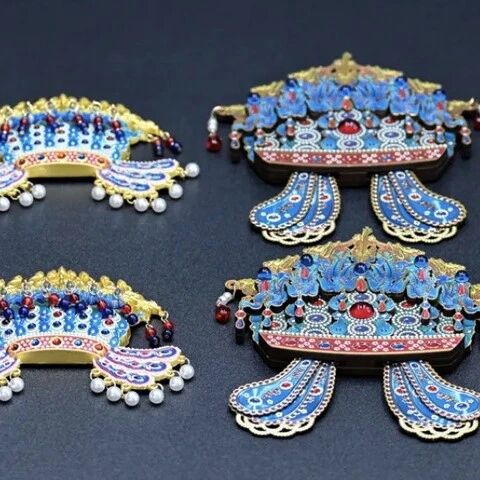
Core Viewpoint - The rise of refrigerator magnets as cultural symbols reflects a shift in cultural consumption and an upgrade in the cultural and creative industry ecosystem [5][10][19] Group 1: Cultural Consumption Trends - The recent surge in cultural tourism consumption, particularly during the Mid-Autumn Festival and National Day, has made cultural and creative products, such as refrigerator magnets, popular among tourists [6][10] - Refrigerator magnets have evolved from mere souvenirs to symbols of culture, aesthetics, and emotional expression, appealing to modern consumers [6][10] Group 2: Successful Cultural Products - The refrigerator magnet inspired by the crown of Empress Xiaoduan from the Ming Dynasty has sold over 1 million units, generating over 100 million yuan in sales, setting a record for the National Museum of China [8] - Other successful designs include magnets inspired by traditional Chinese clothing and historical figures, which have resonated well in the market and on social media [8][10] Group 3: Consumer Behavior and Preferences - Young consumers are shifting their spending from functional items to those that offer aesthetic and meaningful value, seeking products that resonate with their lifestyle and cultural identity [12][13] - The popularity of these magnets is driven by their affordability and emotional significance, allowing consumers to express personal taste while fulfilling commemorative needs [12][13] Group 4: Social Media Influence - Refrigerator magnets possess strong "social currency" attributes, with platforms like Xiaohongshu and Douyin facilitating widespread sharing and engagement, enhancing product visibility and appeal [14] - The lifecycle of these products extends into the sharing phase, where consumers showcase their collections, further promoting cultural engagement [14] Group 5: Industry Transformation - The success of refrigerator magnets indicates a broader transformation in the cultural and creative industry, where museums are evolving from mere content providers to cultural IP operators [16][19] - The shift from single product offerings to a comprehensive IP ecosystem allows cultural institutions to create long-term brand value and engage consumers more deeply [19] Group 6: Digitalization and Future Trends - Digitalization is driving the cultural and creative industry towards more refined operations, enabling institutions to better understand audience needs through data analysis and content marketing [19] - Future developments may include AR interactions, virtual exhibitions, and limited digital collectibles, expanding the reach and impact of cultural IP [19]
文化·视点|延长营业时间、推行免预约,如何做好“文博消费”文章?
Xin Hua She· 2025-09-25 06:04
Core Insights - The article discusses the increasing popularity of cultural consumption, particularly in museums, driven by a growing public interest in historical and cultural heritage [1][2] - Recent policies aim to enhance service consumption by extending operating hours and optimizing reservation systems for popular cultural venues [1][3] Group 1: Policy Measures - The government has proposed measures to extend operating hours for popular cultural venues and encourage no-reservation policies to meet the diverse cultural needs of the public [1][3] - Specific examples include the Sanxingdui Museum extending its closing time from 18:00 to 20:00 during holidays, and the Shanghai Museum implementing no-reservation policies starting in September [1][3] Group 2: Economic Impact - Optimizing reservation methods is expected to enhance user experience and stimulate local economies, including ticket sales, cultural products, and dining [2][3] - The Shanghai Museum's recent exhibition on ancient Egyptian civilization attracted 2.77 million visitors and generated revenue of 760 million yuan, contributing to over 35 billion yuan in overall city consumption [2] Group 3: Cultural Innovation - The article emphasizes the need for innovative exhibition methods and collaboration with social forces to develop cultural products and digital offerings [3][4] - The number of museums achieving annual sales of over 100 million yuan in cultural products is increasing, with several museums reporting sales between 200 million and 500 million yuan [3] Group 4: Future Trends - The future of cultural consumption is expected to expand beyond urban areas and popular venues, becoming a significant part of mass tourism [4] - Museums are envisioned not only as guardians of culture but also as creators of enriching life experiences [4]
文化·视点丨延长营业时间、推行免预约,如何做好“文博消费”文章?
Xin Hua Wang· 2025-09-25 03:13
Core Insights - The article discusses the increasing popularity of cultural consumption, particularly in museums, driven by a growing public interest in historical and cultural heritage [1][2] - Recent policies aim to enhance service consumption by extending operating hours and promoting no-reservation entry at popular cultural venues [1][3] Group 1: Policy Measures - The government has introduced measures to extend operating hours for popular cultural venues and optimize reservation systems, encouraging no-reservation entry [1][2] - Specific examples include the Sanxingdui Museum extending its closing time from 18:00 to 20:00 during holidays, and the Shanghai Museum implementing no-reservation entry starting September [1][3] Group 2: Economic Impact - The cultural consumption sector is seen as a significant growth point for the integration of culture and tourism, with potential to boost local economies and night-time economies [2][3] - The "Pyramid Peak: Ancient Egyptian Civilization Exhibition" at the Shanghai Museum attracted 2.77 million visitors and generated revenue of 760 million yuan, contributing to over 35 billion yuan in overall city consumption [2] Group 3: Innovation and Collaboration - The article emphasizes the need for innovative exhibition methods and collaboration with social forces to enhance cultural offerings and market-driven exhibitions [3][4] - The number of museums achieving annual sales of over 100 million yuan in cultural products is increasing, with several museums reporting sales between 200 million and 500 million yuan [3] Group 4: Future Trends - The future of cultural consumption is expected to expand beyond urban areas and popular venues, becoming a vital part of mass tourism [4] - The integration of modern technology with traditional culture is anticipated to create new experiences for visitors, enhancing the appeal of cultural destinations [4]
【省文物局】“丝路环游记”博物馆主题云课堂活动举行
Shan Xi Ri Bao· 2025-08-28 22:42
Core Viewpoint - The "Silk Road Journey" themed cloud classroom event was held, focusing on digital education using museum resources to promote cultural exchange and international cooperation [1] Group 1: Event Overview - The event was guided by the Shaanxi Provincial Cultural Relics Bureau and co-hosted by the Shaanxi Museum Education Alliance and the Malaysian Chinese School Teachers Association [1] - The first audience consisted of youth from five primary and secondary schools who participated in digital education courses [1] Group 2: Course Development - The Shaanxi History Museum developed the "Silk Road Journey" themed course utilizing precious Silk Road artifacts and digital technologies such as 3D modeling and animation [1] - The Shaanxi Museum Education Alliance tailored the course content to fit the Malaysian Chinese school community, resulting in five themed classes, each approximately 40 minutes long [1] Group 3: Future Implications - The event is expected to accumulate practical experience for future international educational cooperation and promote a shift from "one-way communication" to "two-way interaction" in cultural dissemination [1] - This initiative aims to enhance cultural exchanges between Shaanxi and other regions through museums as primary carriers of Chinese culture [1]
长知识了!原来“觥筹交错”的“觥”长这样
Yang Shi Wang· 2025-08-24 16:11
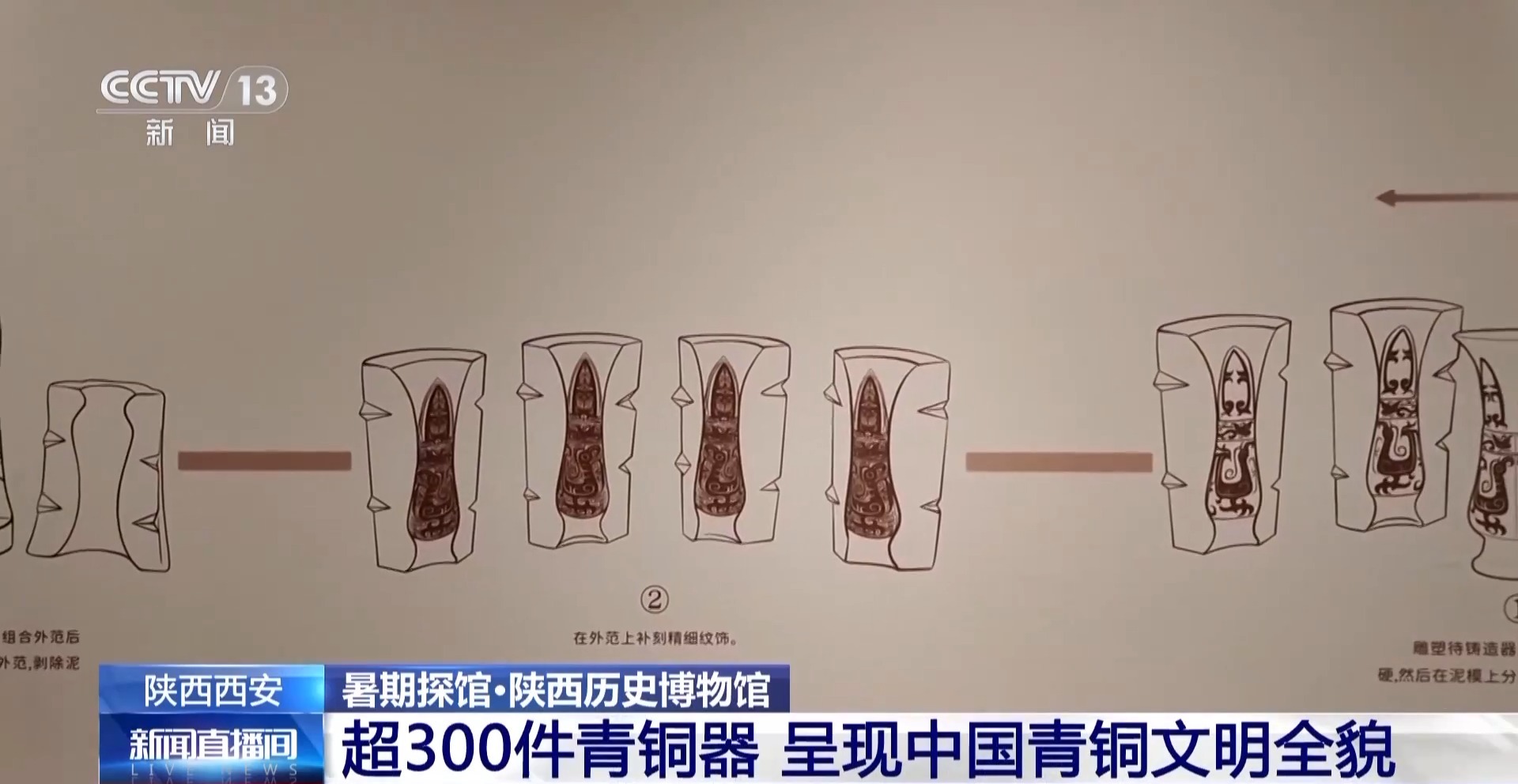
Core Viewpoint - The exhibition "Ji Jin: China - The Rise and Prosperity of Chinese Bronze Civilization" at the Shaanxi History Museum showcases over 340 bronze artifacts from more than 50 cultural institutions, highlighting the development of bronze metallurgy in ancient China and its cultural significance [1][3]. Group 1: Exhibition Highlights - The exhibition features artifacts that illustrate the entire process of bronze production, from mining and smelting to molding and casting [1]. - Significant items include a lead-tin bronze fragment, indicating a shift from solid to hollow bronze casting in the Central Plains region [10]. - The exhibition includes a unique wine vessel called "Dai Ji Gong," which features intricate designs and animal motifs, showcasing the artistic craftsmanship of the time [14][18]. Group 2: Educational and Interactive Elements - Interactive installations allow visitors to experience the sounds of ancient bronze instruments and engage with the evolution of Chinese characters through hands-on activities [20][22]. - The museum has extended its hours and increased ticket availability during the summer to accommodate public interest in the exhibition [23].
吉金铸国 礼乐中华(上新了)
Ren Min Ri Bao· 2025-08-22 22:14
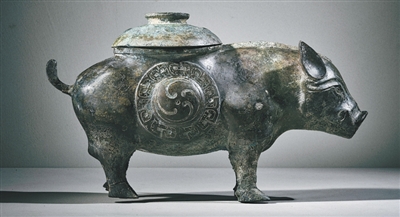
新石器时代晚期以来,以铸铜技术为代表的各种文化因素向中原地区加速汇聚,不仅催生出中国独特的 青铜文化,也使夏代文明跃升至王朝文明阶段。至西周早期,一个疆土广袤、文化趋同的最早的统一的 中国基本形成。由青铜技术所引发的这种革命性变化,不仅影响了中国早期文明的发展格局,也奠定了 中华礼乐文明的坚实基础。这就是"吉金铸国、礼乐中华"的展览主题。 山西曲沃北赵村晋侯墓地出土青铜猪尊。 甘肃玉门火烧沟遗址出土四羊首铜权杖头。 以上图片均为庞雅妮提供 陕西历史博物馆的原创大展"吉金·中国——中国青铜文明的兴起与繁荣"开展以来,备受关注。这也 是"早期中国"系列展览的收官之作,它和之前的"彩陶·中华""玉韫·九州"展一起,共同选择了在中华文 明起源与早期发展进程中3个最具典型性同时也最能反映不同时段先进生产力的器物类型——陶器、玉 器和青铜器,去审视当时农业与手工业的发展、社会的阶层分化以及社会管理权力的运行等,环环相 扣,自成体系。 什么是文明?早期中华文明是怎样发展的?社会复杂化和多元一体化的进程是如何进行的?这些具有重 大意义的问题,在学界已形成了较清晰的认识,但广大公众仍知之甚少。将考古研究成果进行系统性的 转化, ...