Finastra

Search documents
SaaS Markets Have Crashed in 2026. But Is Private Credit the Even Bigger Risk?
SaaStr· 2026-02-20 15:10
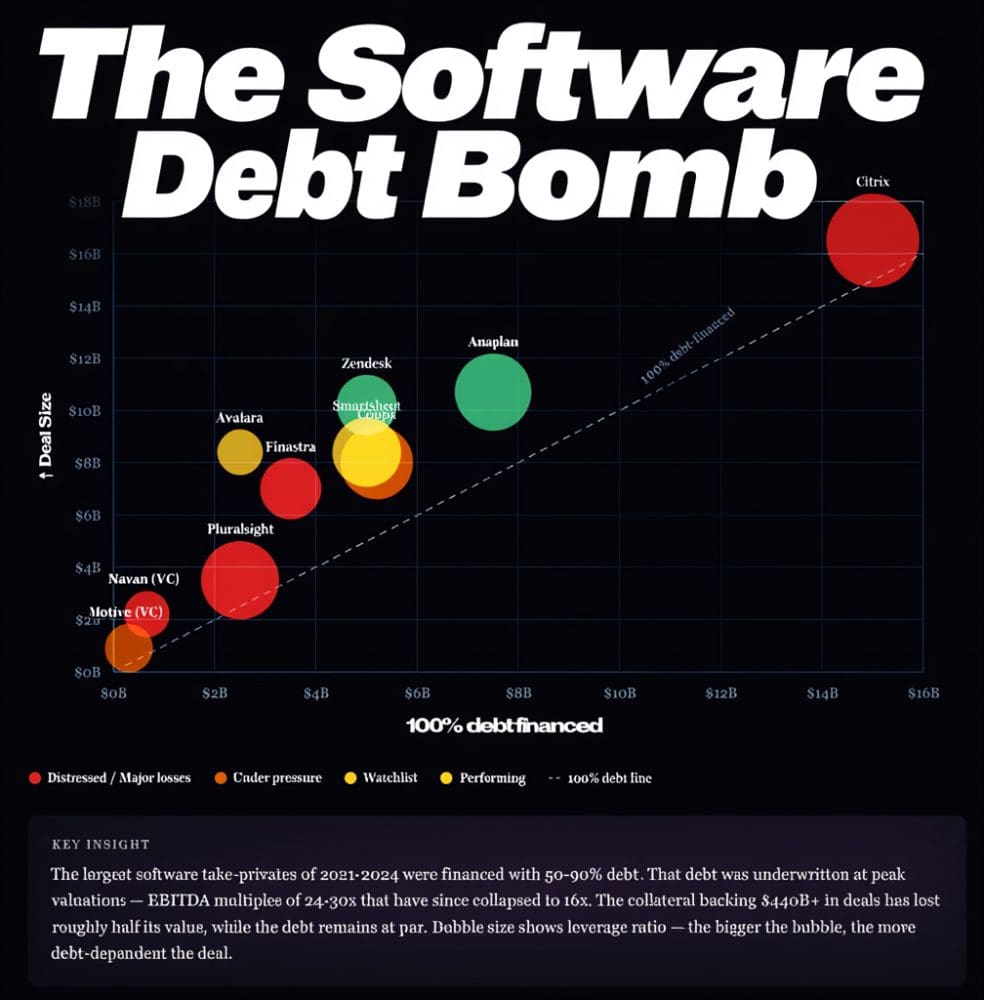
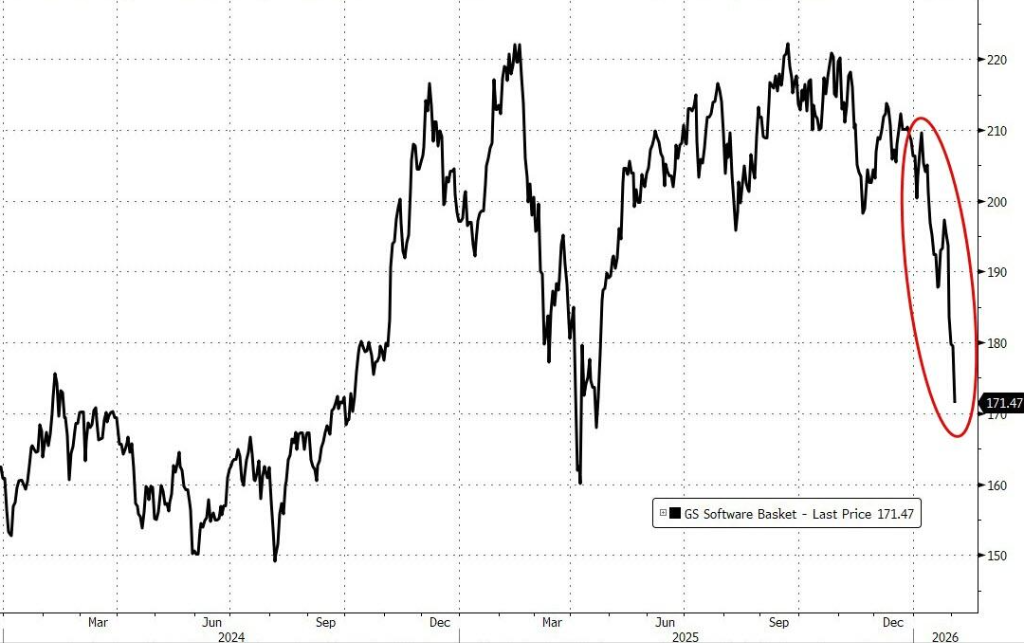
SaaS Markets Have Crashed in 2026. But Is Private Credit the Even Bigger Risk? We all know software stocks have entered a bear market in 2026. But the debt side of software might end up being a much bigger deal.IGV is down 23%+ year-to-date. $285 billion in market cap wiped out in a single day. Software P/S ratios compressed from 9x to 6x — levels we haven’t seen since the mid-2010s. But it’s more than just stocks going down.It puts huge stress on private credit’s $600-750 billion exposure to software comp ...


英国金融科技投资2025年大幅下滑21%
Sou Hu Cai Jing· 2026-02-13 11:53
Group 1 - The core point of the article highlights a 21% decline in UK fintech investment in 2025, despite growth in global and EMEA fintech investments [2][5] - In 2025, UK fintech companies received $10.97 billion (£8 billion), down from $13.35 billion the previous year, marking the lowest level since the COVID-19 pandemic [2] - The EMEA region saw over $29 billion invested in fintech companies in 2025, an increase from approximately $26.5 billion in 2024 [2] Group 2 - The UK remains a major capital recipient in the EMEA region, accounting for about one-third of total investments, despite the decline [2][6] - Revolut, a UK-based bank, secured $3 billion in investment, the largest single investment in Europe for the year [2] - The report from KPMG attributes the decline in UK fintech investment to geopolitical tensions, investor scrutiny, and a high-interest rate environment [2][5] Group 3 - Global fintech investment reached $116 billion in 2025, up from $95 billion in 2024, indicating a positive trend despite ongoing macroeconomic and geopolitical risks [3] - The combination of a stronger exit market, clearer regulatory environment, and accelerated innovation is seen as a constructive foundation for sustained investment and long-term value creation [3] Group 4 - AI adoption in the financial services sector in the UK is widespread, with all but 1% of companies utilizing AI technology [4][7] - AI is described as the "connecting organization" in the financial industry, driving advancements in real-time fraud detection, personalized product recommendations, and dynamic customer engagement [4] - Institutions are now focusing on where AI can provide tangible value and how to deploy it responsibly, rather than debating its adoption [4]

软件股暴跌或成下一轮信贷危机导火索?
Hua Er Jie Jian Wen· 2026-02-04 14:18
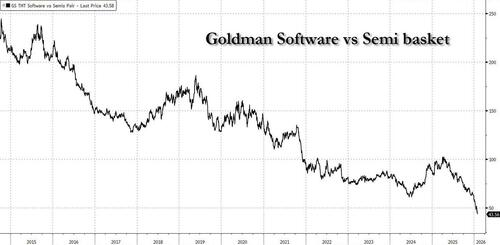
华尔街分析人士警告,BDC持有的巨额软件债务可能成为引发下一轮信贷危机的潜在导火索,这一隐 忧已开始在市场中显现。 BDC是私募信贷市场重要组成部分的商业发展公司(Business Development Company,简称BDC),专 门为中小型企业(通常是私有企业)提供资金,手里持有大量软件公司的债务(约占其投资组合的 16%)。而随着软件行业面临前所未有的抛售潮,BDC正面临严峻的资产减值风险。 据摩根大通信贷分析师 Kabir Caprihan2月3日发布的最新报告,尽管BDC管理层在过去一年多里持续评 估软件业敞口,但在近期软件贷款价格下跌且BDC股价重挫后,市场情绪急剧恶化。高盛的数据显 示,软件板块在过去12个交易日中有9日下跌,正测试关键支撑位,且长期表现相对于半导体板块已是 一场"史诗级灾难"。 导致这一崩溃的原因主要集中在人工智能技术的颠覆性威胁上。高盛客户指出,Anthropic 推出的新代 理功能以及部分AI相关公司每股收益(EPS)的下滑(如 Publicis 和 IT),加剧了市场恐慌。投资者担 忧AI可能是软件公司的终结者,这种恐慌情绪导致被视为软件即服务(SaaS)主要贷款方 ...
美股“SaaS末日”来临:“软件-PE”陷入“死亡循环”
华尔街见闻· 2026-02-04 11:56
Core Viewpoint - The software industry is experiencing a significant downturn, with the S&P North American Software Index dropping 15% in January, marking the largest monthly decline since October 2008. This decline is exacerbated by fears surrounding AI advancements that threaten traditional software companies' market positions and pricing power [1][6]. Group 1: Market Sentiment and Trends - The current market sentiment is characterized by panic selling, described as a "get me out" mentality, with no signs of stabilization [3]. - The release of Anthropic's productivity tool for corporate lawyers has intensified fears, leading to a sharp decline in legal software and publishing company stocks [1][6]. - There is a stark divide in the market, with semiconductor companies viewed as beneficiaries of the AI supercycle, while software companies are seen as major losers [6]. Group 2: Impact on Private Credit and BDCs - The software sector's decline is impacting private credit markets, with software companies representing about 20% of Business Development Companies' (BDCs) portfolios, totaling approximately $100 billion [4][9]. - As software valuations plummet, BDCs like Blue Owl, Blackstone, and Ares are experiencing stock price declines due to concerns over potential contagion effects [10]. - The risk exposure of BDCs to software loans is significant, with Morgan Stanley reporting that software loans account for about 16% of their tracked BDC loan portfolios, totaling around $70 billion [12]. Group 3: Potential Losses and Stress Testing - Stress tests conducted by JPMorgan indicate that if 33% of software companies default, BDCs could face losses of $22 billion, reducing net asset values by 11%. In a more severe scenario with a 75% default rate, cumulative losses could approach $50 billion, diluting book values by 24% [14]. - Specific software loans are already showing signs of pressure, with secondary market prices significantly lower than BDC book valuations, indicating a disconnect between market perceptions and reported values [15][16]. Group 4: Future Outlook and Investor Sentiment - There is a prevailing view that the software industry could face a fate similar to that of print media or department stores, leading to uncertainty in growth projections and valuations [7]. - Despite potential long-term buying opportunities, current investor confidence remains low, complicating the assessment of what constitutes a "cheap" investment in the software sector [7].

美股“SaaS末日”来临:“软件-PE”陷入“死亡循环”
美股IPO· 2026-02-04 01:02
Core Viewpoint - The software industry is facing a "doomsday crisis" due to the impact of AI, with the S&P North American Software Index experiencing a 15% drop in January, the largest monthly decline since 2008, leading to panic selling among investors [1][2][3]. Group 1: Market Impact - The S&P North American Software Index has seen a continuous decline for three weeks, with a significant drop of 15% in January, marking the largest monthly decline since October 2008 [2]. - The panic intensified after AI startup Anthropic released a productivity tool for corporate lawyers, causing stock prices of legal software and publishing companies to plummet [2][7]. - The software sector's crisis is not limited to the stock market but is also affecting the private credit market, with software companies representing about 20% of the portfolios of Business Development Companies (BDCs), totaling approximately $100 billion [3][10]. Group 2: Private Credit Risks - The collapse of the SaaS sector poses risks not only to the equity market but also to the debt market, with BDCs being particularly sensitive to declines in software stock and credit valuations [10]. - As software company valuations plummet, BDCs face asset impairment pressures, leading to potential credit tightening that could further squeeze the growth space of already struggling software companies, creating a "death spiral" [6][12]. - Analysts warn that if AI causes significant disruption to corporate borrowers, the default rate in U.S. private credit could soar to 13% [13]. Group 3: Stress Testing and Asset Valuation - JPMorgan conducted stress tests on BDC portfolios, indicating that under a scenario where 33% of companies default, the tracked BDCs could face losses of $22 billion, reducing net asset value by 11% [14]. - In a more severe scenario with a 75% default rate, cumulative net losses could approach $50 billion, diluting book value by 24% [14]. - Specific loan assets are already showing signs of pressure, with significant discrepancies between secondary market prices and BDC book valuations for software loans [15][18].

美股“SaaS末日”来临:“软件-PE”陷入“死亡循环”
Hua Er Jie Jian Wen· 2026-02-04 00:40
Core Viewpoint - The software industry is experiencing a significant downturn, with the S&P North American Software Index dropping for three consecutive weeks and a 15% decline in January, marking the largest monthly drop since October 2008 [1][3]. Group 1: Market Sentiment and Impact - The current market sentiment is characterized by panic selling, described as a "get me out" mentality, with no signs of stabilization [3]. - The release of Anthropic's productivity tool for corporate lawyers has intensified fears, leading to a sharp decline in legal software and publishing company stocks [1][7]. - There is a growing concern that advancements in AI technology may erode the competitive advantages of traditional software companies, leading to fears of being completely replaced [7]. Group 2: Private Credit Exposure - The software sector's decline poses risks not only to the stock market but also to the private credit market, with software companies representing about 20% of the portfolios of Business Development Companies (BDCs), totaling approximately $100 billion [3][9]. - As software company valuations plummet, private credit institutions face pressure to reassess their balance sheets, potentially tightening credit availability, which could further squeeze struggling software companies [5][10]. Group 3: Financial Analysis and Projections - Morgan Stanley's analysis indicates that if AI disrupts corporate borrowers aggressively, the default rate in U.S. private credit could soar to 13% [12]. - Stress tests conducted by Morgan Stanley suggest that under a scenario where 33% of companies default, tracked BDCs could face losses of $22 billion, reducing net asset value by 11% [13]. - In a more severe scenario with a 75% default rate, cumulative net losses could approach $50 billion, diluting book value by 24% [13]. Group 4: Market Dynamics and Valuation Challenges - The divergence in market performance is stark, with semiconductor companies benefiting from the AI supercycle while software companies are viewed as major losers [5]. - Despite some companies passing earnings tests, the overall pass rate is declining, indicating a harsh competitive environment within the industry [7]. - The market is struggling to assign reasonable valuations to software companies due to the uncertainty brought by AI, complicating the identification of attractive buying opportunities [7].
X @Bloomberg
Bloomberg· 2025-12-10 17:32
Finastra has hired PJT Partners to help with plans to sell its unit that caters to mid-sized US banks, according to people familiar with the matter. https://t.co/RrZbZLqv3b ...
X @Bloomberg
Bloomberg· 2025-10-16 14:58
Deutsche Bank and Goldman Sachs Group are among the banks getting ready to sell roughly $1.2 billion of debt that’s financing the buyout of a unit of Finastra https://t.co/DHoA5Lsttz ...
比特币价格剧烈波动引发市场关注 XBIT平台见证数字资产新变局
Sou Hu Cai Jing· 2025-08-30 07:10
Market Overview - The global digital asset market experienced significant volatility on the last trading day of August, with Bitcoin's price dropping from a daily high of $112,652 to $108,198, a decline of 3.3% within 24 hours, closing at $108,747. This drop was primarily due to a whale account selling 24,000 Bitcoins, valued at over $2.7 billion, impacting the entire cryptocurrency market [1][3] - Bitcoin is currently in a correction phase, approximately 10% down from its historical high of $124,496 reached in mid-August. Analysts suggest Bitcoin may enter a consolidation phase between $110,000 and $120,000 or test critical support levels between $105,000 and $100,000 if market momentum weakens [3] Ethereum Performance - Ethereum demonstrated relative strength during the market pullback, maintaining a price of $4,335 with only a 3.2% decline over 24 hours. Since April's low, Ethereum has surged over 200%, significantly outperforming Bitcoin's 45% increase during the same period [6] - Ethereum's recent price surge was partly attributed to comments from Federal Reserve Chairman Jerome Powell favoring a more accommodative monetary policy, which helped Ethereum briefly surpass $4,900, setting a new historical high [6] Institutional Investment Trends - A notable shift in institutional investment was observed, with a super whale investor, managing $11.4 billion in assets, converting a large amount of Bitcoin into Ethereum. This asset rotation reflects a positive outlook on Ethereum's ecosystem development [7] Stablecoin Market Dynamics - The global stablecoin market continues to grow, surpassing $283 billion, a 22% increase since the beginning of the year. Tether (USDT) holds approximately 65% of the market share, while Circle's USDC accounts for about 25%, together controlling 90% of the stablecoin market [8] - The recent GENIUS Act passed in the U.S. provides a clear regulatory framework for the stablecoin industry, requiring issuers to be fully backed by USD or other high-quality liquid assets, enhancing market confidence in stablecoin assets [8] Cross-Border Transactions and Stablecoin Utilization - The application of stablecoins in cross-border transfers and international trade settlements is rapidly expanding. Mastercard and Circle announced an expansion of USDC and EURC settlement services in Eastern Europe, the Middle East, and Africa, which will improve transaction efficiency and reduce costs [9] - Circle's partnership with fintech company Finastra aims to help more banking institutions integrate stablecoin settlement functions into existing cross-border transaction systems, indicating a shift of stablecoins from speculative tools to valuable components of financial infrastructure [9]

稳定币市值破2800亿美元创新高 XBIT驱动稳定币交易平台DeFi最新周期
Sou Hu Cai Jing· 2025-08-29 12:10
Group 1 - The total market capitalization of stablecoins has surpassed $280 billion, marking a historical high and reflecting strong growth in the stablecoin market [1] - Tether and Circle have minted an additional $8.75 billion worth of stablecoins in the past month, indicating increased demand and user participation in the crypto market [3] - The rise in stablecoin market value suggests a growing need for asset preservation, transaction convenience, and risk hedging among market participants [3] Group 2 - Arthur Hayes predicts that the total amount of dollar-pegged stablecoins in circulation will reach at least $10 trillion by 2028, highlighting the potential impact of stablecoins on the global financial system [4] - Circle has partnered with Mastercard and Finastra to integrate stablecoin settlement functions into mainstream finance, allowing for the use of USDC in international transactions [6] - The emergence of stablecoins is breaking down barriers in traditional finance, enhancing efficiency and reducing costs and risks in cross-border transactions [6] Group 3 - Ethereum is being recognized as a "Wall Street token," with stablecoins necessitating banks and financial services to adopt methods for receiving them, positioning Ethereum as a potential solution [7] - The new decentralized exchange platform XBIT is capitalizing on the current crypto bull market by offering low-slippage trading and high liquidity for major stablecoin trading pairs [9] - XBIT provides high APY stablecoin staking pools and collaborates with top DeFi protocols to maximize user returns during the bull market [9]