Shein

Search documents
TJX Cos forecasts muted annual sales and profit as consumers pull back spending
Yahoo Finance· 2026-02-25 14:11
Core Viewpoint - TJX Cos has forecasted annual sales and profit below Wall Street estimates, indicating strained discretionary spending among budget-conscious consumers amid economic uncertainty [1][2] Group 1: Sales and Profit Forecast - The company expects annual comparable sales to rise between 2% and 3%, lower than analysts' average estimate of 3.5% growth [3] - Earnings per share for fiscal 2027 are forecasted to be between $4.93 and $5.02, compared to analysts' average estimate of $5.18 per share [3] Group 2: Market Conditions and Competition - There are growing concerns over declining discretionary purchases as living costs rise, leading to smaller basket sizes and softer demand among lower-income shoppers [2] - The company faces intense competition from rivals such as Ross Stores, Burlington Stores, Amazon.com, and fast-fashion chains like Shein, all expanding their discount offerings [3] Group 3: Recent Performance and Market Reaction - TJX reported a quarterly comparable sales increase of 5%, exceeding the estimate of 3.6% growth [4] - Adjusted earnings per share for the fourth quarter were $1.43, surpassing the expectation of $1.39 per share [5] - Overall store traffic increased by 2.8% at TJ Maxx and 3.3% at Marshalls compared to the previous year, boosted by the holiday season [5] - The company announced an additional share repurchase plan of up to $3 billion [5]

Shein invests $42 million as Amazon's growth raises the stakes
Yahoo Finance· 2026-02-23 16:33
Core Insights - Amazon has surpassed Walmart in annual revenue for the first time in 13 years, reporting $716.9 billion in revenue for fiscal year 2025, a 12% increase year over year, compared to Walmart's $713.2 billion, which grew by 4.7% [2][3] - Shein is focusing on enhancing its supplier network and manufacturing efficiency, investing over $42 million in its Supplier Community Empowerment Program (SCEP) to modernize factories and improve working conditions [4][5] - The global e-commerce market is projected to grow from $25.93 trillion in 2023 to $83.26 trillion by 2030, indicating a significant opportunity for companies that innovate and adapt to changing consumer behaviors [14] Amazon's Performance - Amazon's revenue growth has allowed it to overtake Walmart, highlighting the competitive nature of the retail industry [3] - The company is heavily investing in logistics, AI, and cloud services, with Amazon Web Services (AWS) experiencing a 24% sales increase in Q4 2025, marking the fastest growth in over three years [12][13] - Amazon plans to invest approximately $200 billion in capital expenditures in 2026, anticipating strong long-term returns [13] Shein's Strategic Initiatives - Shein's SCEP has modernized over 200 supplier factories, benefiting around 33,600 workers through improved working conditions [5] - The program has also focused on workforce training, conducting over 300 vocational sessions for more than 13,000 participants and introducing at least 180 new tools to enhance operational efficiency [7] - Shein has implemented support programs for workers and their families, including financial assistance for education and medical expenses, with over $800,000 in grants distributed in 2025 [9] Walmart's Adaptation - Walmart is modernizing its operations to remain competitive in the digital retail environment, contributing to a 24% global e-commerce growth in Q4 [10][11] - The competition between Amazon and Walmart remains fierce, with both companies leveraging their unique advantages in technology and scale [16] Industry Trends - Continuous innovation is essential for survival in the retail sector, as highlighted by Amazon's recent success [14] - The retail landscape is increasingly rewarding adaptability and technology, with companies needing to focus on customer experiences to thrive [15]


Etsy sells secondhand clothing marketplace Depop to eBay for $1.2B
TechCrunch· 2026-02-18 22:55
Group 1 - Etsy is selling Depop, a secondhand clothing app, to eBay for $1.2 billion in cash to focus on its own marketplace [1] - Depop generated approximately $1 billion in gross merchandise sales in 2025, with nearly 60% year-over-year growth in the U.S. [2] - As of December 31, 2025, Depop had seven million active buyers, with nearly 90% under 34 years old, and over three million active sellers [2] Group 2 - eBay CEO Jamie Iannone expressed confidence that Depop will benefit from eBay's scale and operational capabilities, positioning it for long-term growth [3] - Etsy's year-over-year revenue growth was 2.2% in 2024, a decline from 7.1% growth in 2023 [4] - Etsy CEO Kruti Patel Goyal stated that the transaction allows the company to focus on growing the Etsy marketplace [5] Group 3 - The sale of Depop is part of a pattern where Etsy has acquired and then divested niche online marketplaces, including Elo7 and Reverb [8] - The deal is expected to close in the second quarter of this year [9]



从 GMV 增长到履约确定性,TikTok正在重塑跨境电商底层逻辑
Sou Hu Cai Jing· 2026-02-06 20:50
回望2025年,TikTok有一种明显的"边跑边换底盘"感。一边是GMV仍在增长曲线中前行,另一边却不 得不反复应对母体在美国的资产归属问题、监管拉扯与时间表延后。直到年底,平台才逐步把交易推进 到"有明确交割日期"的阶段。在这种不确定性背景下,一个趋势正在变得清晰:平台要继续做大,靠的 已经不只是内容点燃成交,而是必须把履约与关键链路牢牢握在手里。而这,正把海外仓推到跨境电商 物流前沿。 1、能否多平台统一处理订单 2、能否清晰管理库存与库龄 3、能否把物流费用、履约表现透明化 4、能否支撑平台级的履约考核与合规要求 这些能力,正在决定海外仓是否能真正承接平台红利。在这一过程中,像易仓WMS这样的海外仓系 统,开始成为不少仓配企业的"基础设施"。通过对接Amazon、TikTok、Temu、Shein等30多个主流跨境 电商平台,并且在整合订单、库存与履约数据是,都可以在系统中统一处理。同时,易仓WMS还打通 了1000+尾程物流渠道,让费用、追踪与时效更清晰可控。对正在承压的海外仓来说,配备一套专业的 海外仓系统能有效提升企业的运营能力,帮助其转化为更确定的履约能力。 第一,更强的物流管控。在美国、英国、 ...

深圳创新“四姐妹”上榜胡润500强前十,迈瑞缩水760亿
Nan Fang Du Shi Bao· 2026-02-06 14:33
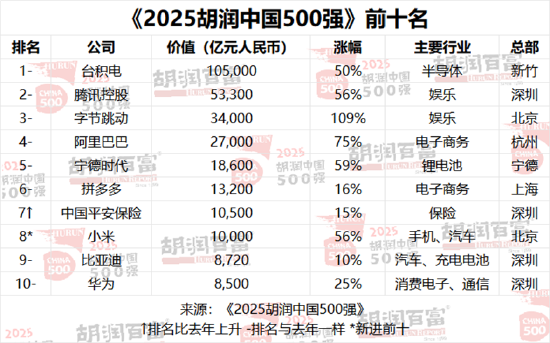
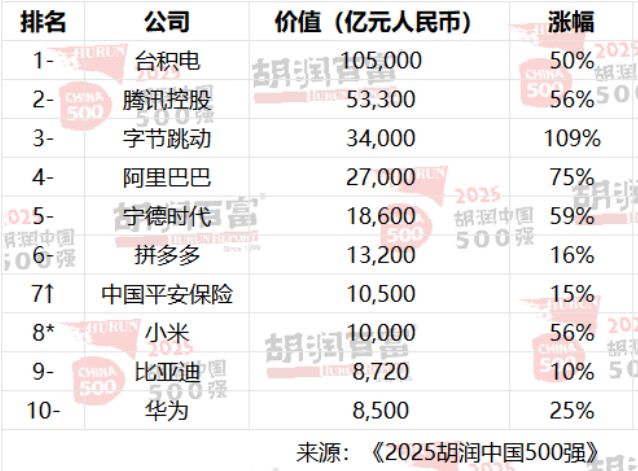
Core Insights - The latest Hurun China 500 list reveals the rankings of 500 non-state-owned enterprises in China, with a notable increase in the entry threshold to 34 billion RMB, a rise of nearly 30% compared to the previous year [1] - The list features 95 new entrants primarily from sectors such as consumer electronics, AI computing power, and new energy, while 99 companies dropped off the list, indicating a trend of fluctuation among companies [1] Group 1: Company Performance - Tencent's value reached 5.3 trillion RMB, marking a 50% increase, driven by strong performances in gaming, advertising, and fintech [2][3] - The "Shenzhen Four Sisters"—Huawei, BYD, Tencent, and China Ping An—are all in the top 10, with values of 850 billion RMB, 872 billion RMB, and 1.05 trillion RMB respectively, reflecting the resilience of Shenzhen's economy [3] - DJI, headquartered in Shenzhen, saw its value double due to its strong position in the consumer drone market and growth in overseas markets [5] Group 2: Industry Trends - The real estate sector saw a decline, with the number of listed companies dropping from 19 to 12 [1] - The Yangtze River Delta region has 161 companies in the Hurun China 500, accounting for 32% of the total, while the Guangdong-Hong Kong-Macau Greater Bay Area has 108 companies, representing 22% [4] - The report highlights that sectors such as AI computing, consumer electronics, innovative pharmaceuticals, and entertainment are key drivers of high-quality development in China's private economy [5]



对中国电商平台,法国降调了,“不全关也行…”
Xin Lang Cai Jing· 2026-02-06 12:41
Core Viewpoint - The French government has adjusted its legal demands against the Chinese e-commerce platform Shein, now seeking to block only third-party seller platforms instead of a complete shutdown of the site, with a court ruling expected on March 19, 2025 [1][3]. Group 1: Legal Proceedings - The French government initially sought a complete ban on Shein's operations in France due to the sale of illegal goods, but this request was rejected by the Paris court as disproportionate [3][4]. - The current appeal requests the court to restore Shein's operations to a state where only its own brand clothing is sold, while third-party seller items are removed [1][4]. - Shein's legal team argues that the government's demands are outdated, as the problematic items have already been removed from the platform [1][4]. Group 2: Government Actions and Statements - The French government is implementing a three-month measure to block third-party seller transactions on Shein, under the supervision of the digital regulatory authority Arcom [4]. - The French Minister for Small Enterprises, Serge Papin, has made conflicting statements regarding the potential for a complete ban on Shein, indicating ongoing concerns about unfair competition [5][7]. - Papin has also proposed a new law that would allow the government to suspend online platform operations without court approval, reflecting a strong stance against Chinese e-commerce competition [5][8]. Group 3: Market Context and Competition - Shein has faced scrutiny for selling illegal items, including weapons and inappropriate dolls, leading to a joint investigation by French authorities [3][4]. - The rapid growth of Chinese e-commerce platforms like Shein and Temu has raised concerns in Western governments, prompting regulatory actions to address perceived unfair competition [9]. - The European Union plans to implement a fixed fee on small packages imported from non-EU countries, a move driven by France to counter the impact of low-cost Chinese e-commerce [8][9].

屈田:复盘极兔出海全球的“三次突围”
混沌学园· 2026-02-06 07:07
Core Viewpoint - The notion that "not going overseas means being out of the game" is a fallacy, and blindly expanding internationally can be more dangerous [1] Group 1: Strategic Insights - True champions understand the strategy of "winning before fighting," summarized in the formula: Time and Space Selection × Deep Localization = Overseas Champions [2][9] - The success of companies like J&T Express is attributed to their ability to navigate crises and achieve critical breakthroughs, demonstrating the importance of strategic planning in international expansion [6][15] Group 2: Market Dynamics - The recent partnership between J&T Express and SF Express represents a significant alliance between the largest express companies in China and emerging markets, with a combined market value of $40 billion [5] - J&T Express has become the largest express company in Southeast Asia, holding a 33% market share and processing 27 million packages daily, indicating its strong market position [20] Group 3: Expansion Phases - J&T Express's first breakthrough was establishing a foothold in Southeast Asia, particularly Indonesia, which has the fastest e-commerce penetration growth outside of China and the U.S. [19] - The second breakthrough involved returning to China to leverage the changing market dynamics, where the share of major players was declining, allowing new entrants to gain a foothold [23][25] - The third breakthrough was global expansion into Latin America, the Middle East, and Africa, capitalizing on the global growth of Chinese e-commerce platforms [27] Group 4: Localization Importance - Deep localization is crucial for success in international markets, requiring teams to be physically present in the target country to understand the market effectively [8][30] - Companies must adopt a startup mentality when entering new markets, ensuring that local teams are empowered and not managed remotely [30] Group 5: Recommendations for Companies - Companies should assess whether they should go overseas, as not all are suited for international expansion; the idea that "not going overseas means being out of the game" is misleading [32] - It is advisable for companies to align with major trends and platforms when expanding internationally, as J&T Express did by following the global e-commerce trend [33] - Careful consideration is needed when choosing the first market for expansion, whether it be developed markets or emerging ones [34]

2025中国企业出海年鉴
Sou Hu Cai Jing· 2026-02-06 04:11
Core Insights - In 2025, the globalization journey of Chinese enterprises has not shifted due to any single event, but rather has undergone a paradigm evolution through multiple accelerating and intersecting trajectories [1] - The core logic of going abroad is transitioning from a clear path focused on scale and efficiency to a more complex, decentralized reality that is difficult to replicate [1][10] - Success in overseas operations increasingly depends on deep localization capabilities, forward-looking compliance layouts, and technology and system outputs beyond the products themselves [1][10] Overall Changes in 2025 - The industry coverage of Chinese enterprises going abroad has expanded, with sectors such as AI, new energy vehicles, cross-border e-commerce, and cultural consumption accelerating their globalization efforts [2][15] - Southeast Asia remains a stable testing ground, while regions like the Middle East, Latin America, and Africa are emerging as crucial sources of growth, with the European and American markets evolving into high-value, high-barrier strategic competitions [2][15] - The shift in overseas business models is marked by a transition from light to heavy investments, with companies focusing on foundational infrastructure like cloud computing and AI computing power [2][19] Regional Dynamics - The "Global South" has surpassed its role as a mere market supplement, becoming a core area for Chinese enterprises to build strategic depth, leveraging demographic dividends and digital transformation opportunities [2][14] - The Gulf region is notable for its significant investments in data centers and computing clusters, aiming to create a self-sufficient AI industry ecosystem [3][14] - In contrast, competition in the European and American markets has escalated to regulatory and compliance levels, with a shift towards capital control and safety reviews, creating high-cost institutional barriers [3][14] Industry Restructuring - The path for key industries going abroad is fundamentally being restructured, with the AI sector transitioning from a follower to a leader, achieving breakthroughs in open-source model capabilities [4][15] - The automotive industry's focus has shifted from mere export expansion to deep localization, with many companies establishing complete vehicle factories or CKD assembly plants overseas [4][15] - Cross-border e-commerce is experiencing a revolution in fulfillment models, with "overseas warehouses + local fulfillment" becoming mainstream, marking a shift in competition towards backend fulfillment and infrastructure capabilities [4][15] Strategic Evolution - Chinese brands are improving their global reputation, entering a critical window for transitioning from a focus on sales volume to brand premium [5][15] - The first generation of overseas expansion experiences, reliant on platform dividends and low-cost traffic, is systematically failing under increasing competition and high traffic costs [5][15] - The overseas service system is evolving from passive responses to proactive layouts in key regions, expanding service offerings to local and global clients, marking a new phase of "serving globally" [5][15] Conclusion - The landscape of Chinese enterprises going abroad in 2025 indicates that globalization has entered an era requiring greater resilience, where success depends not only on the courage and speed of going out but also on the determination to integrate deeply and build sustainable competitive advantages in complex environments [6][10]

2025年中国营销智能体研究报告
艾瑞咨询· 2026-02-06 00:07
Core Insights - The article emphasizes the rapid evolution of marketing intelligence agents, which are transforming from auxiliary tools to autonomous decision-making systems in marketing, driven by advancements in AI technology [1][4][11]. Market Trends and Global Dynamics - Three major changes are identified: accelerated changes in platform advertising environments, rising privacy requirements, and increased digital marketing investments by companies [2]. Emergence of Global Marketing Intelligence Agents - The application of computer technology in marketing is undergoing a profound transformation, evolving from data analysis and decision support to full-chain marketing automation systems [4][11]. Challenges for Chinese Enterprises in Overseas Marketing - Chinese companies face significant challenges in overseas marketing, including cultural differences, complex channels, privacy and compliance issues, and cross-border payment difficulties [6]. Opportunities for Chinese Enterprises in Overseas Marketing - Marketing intelligence agents provide crucial support in content creation, compliance review, and localization for Chinese enterprises venturing abroad, leveraging the rapid iteration of open-source large language models [8]. Definition of Marketing Intelligence Agents - Marketing intelligence agents are defined as products based on generative AI or machine learning algorithms that can autonomously or semi-autonomously execute marketing-related tasks, assisting or replacing human marketing efforts [9]. Transition from Marketing Tools to Autonomous Agents - The development of marketing technology is transitioning from "tools" to "agents," with these agents now capable of real-time optimization across multiple channels [11][13]. Key Capabilities of Marketing Intelligence Agents - The four core capability areas of marketing intelligence agents include market insights, content generation, campaign optimization, and evaluation report generation, enabling full-chain automated marketing and continuous optimization [15]. Future Technology Trends - The collaboration of multiple agents forms a closed-loop system, combining creative, deployment, and analytical agents to achieve a cycle of creative generation, advertising deployment, data feedback, and strategy adjustment [17]. Challenges in AI + SaaS Models - The monetization of AI within SaaS models faces challenges, with companies adopting a consistent commercial approach but maintaining conservative expectations regarding AI's impact on financial reports [19]. Global and Chinese AI Marketing Market Environment - The AI + marketing market is rapidly evolving, driven by technological innovation, regulatory policies, and changes in business models, with both international and Chinese markets transitioning from "tool-based" to "intelligent" approaches [22]. Commercial Model Analysis of Marketing Intelligence Agents - The commercial model of marketing intelligence agents is evolving from a "single software subscription" to a "multi-dimensional revenue system," encompassing SaaS subscriptions, advertising revenue sharing, and value-added services [31]. Market Size and Forecast for China's Intelligent Marketing Agents - The market for intelligent marketing agents in China is expected to exceed 100 billion yuan by 2030, driven by the integration of AI technologies and the digital transformation of the advertising industry [34]. Digital Marketing Penetration in China - China's digital economy is growing rapidly, with a growth rate of 7.39%, and the digital marketing sector is entering a phase of accelerated penetration due to advancements in AI technologies [36]. Policy Framework for AI + Marketing in China - China has established a multi-layered policy framework to support and regulate the integration of AI and marketing, covering strategic guidance, technological research, industry applications, and compliance [38][41]. Global Opportunities for Chinese Enterprises - Chinese marketing intelligence products have a global opportunity to challenge existing giants by offering next-generation, AI-native automated infrastructure, leveraging unique business and talent structures [45][48].



2025胡润中国500强发布:台积电、腾讯、字节跳动位列前三
Xin Lang Cai Jing· 2026-02-05 02:27
Core Insights - The 2025 Hurun China 500 list shows significant growth in company valuations, with TSMC leading as the highest valued private enterprise in China at 10.5 trillion RMB, followed by Tencent and ByteDance [1][9]. Company Performance - TSMC's value increased by 3.5 trillion RMB, driven by strong demand for artificial intelligence, advanced process technology, and a solid market position [3][11]. - Tencent's valuation rose by 1.9 trillion RMB, attributed to strong performance in gaming, advertising, and fintech [3][11]. - ByteDance's value grew by 1.8 trillion RMB, benefiting from advancements in AI [3][11]. - Alibaba's value increased by 1.2 trillion RMB, due to strategic investments in AI and cloud computing, alongside a recovery in traditional e-commerce [4][12]. - CATL's valuation rose by 690 billion RMB, supported by sustained demand in the electric vehicle market [4][12]. - Xiaomi entered the top ten with a valuation increase of 357 billion RMB, driven by growth in its automotive business and premium smartphone sales [4][12]. - Other notable companies include Cambricon, which saw a valuation increase of 370 billion RMB, and NetEase, which grew by 238 billion RMB due to strong gaming performance [4][12]. Industry Trends - The total value of the Hurun China 500 companies increased by 21 trillion RMB (38%) to reach 77 trillion RMB [2][10]. - The semiconductor industry experienced the most significant growth, surpassing the life sciences sector to become the second-largest industry in the list, while industrial products remained the largest [2][10]. - The real estate sector faced the largest decline, followed by retail [2][10]. - The average age of the top 500 companies is 29 years, indicating a relatively young corporate landscape [11]. Geographic Insights - Beijing, Shanghai, and Shenzhen are the top three cities with the most companies on the list, housing 59, 57, and 49 companies respectively [2][10]. - Suzhou emerged as the preferred manufacturing base with 68 companies, while Shanghai was the leading research and development hub with 101 companies [2][10]. New Entrants and Market Dynamics - A total of 95 companies (19%) made it to the list for the first time, with seven companies valued over 100 billion RMB [2][10]. - The threshold for entry into the 2025 Hurun China 500 increased by 7.5 billion RMB to 34 billion RMB, reflecting a 28% rise [2][10].