一人食

Search documents
30块的自嗨锅,还是输给了5块钱的方便面
3 6 Ke· 2026-02-13 00:13
Core Insights - The self-heating hotpot brand "自嗨锅" has filed for bankruptcy, marking a significant decline from its peak sales in 2020, where it sold 5 million units in just 10 minutes. The brand, once valued at 7.5 billion yuan, has seen its annual revenue decline since 2022 [1][3][28]. Market Trends - The self-heating hotpot market has experienced a drastic drop, with market shares for self-heating rice and hotpot falling below 1% in the latest quarter, showing year-on-year declines of 28.42% and 19.31% respectively [9][28]. - The convenience food landscape is shifting, with traditional instant noodles maintaining popularity due to their affordability and taste, while self-heating hotpots struggle to compete [20][21]. Consumer Preferences - Consumers are increasingly prioritizing taste and convenience, leading to a preference for traditional hotpot takeout over self-heating options. The convenience of delivery services has diminished the appeal of self-heating products [16][21]. - Many consumers find self-heating hotpots unappetizing, with reports of poor taste and quality, which has contributed to their declining popularity [13][16]. Competitive Landscape - Self-heating hotpots face stiff competition from established fast-food options like instant noodles, which are cheaper and more familiar to consumers. The price point of self-heating hotpots often does not justify their perceived value [18][20]. - The emergence of hotpot chains offering delivery services has further eroded the market for self-heating hotpots, as consumers can now enjoy traditional flavors without the hassle of preparation [18][21]. Conclusion - The decline of self-heating hotpots reflects a broader consumer trend towards seeking better taste, convenience, and value in food choices. As the market evolves, brands must adapt to meet these changing preferences or risk obsolescence [25][28].


年销10亿仍然破产,自嗨锅营销窟窿有多大?
36氪· 2026-02-12 10:18
Core Viewpoint - The article discusses the decline of the once-popular self-heating hot pot brand "自嗨锅" (Self-Heating Pot), highlighting its financial struggles, consumer dissatisfaction, and the competitive landscape of the ready-to-eat food market [5][10][40]. Financial Performance - At its peak, 自嗨锅 achieved a valuation of 7.5 billion and annual sales of 1 billion, but it has faced significant losses, with a net profit of -1.51 billion in 2020 and over 3 billion in losses in 2021 [7][14][15]. - In 2022, the company reduced marketing expenses to below 30 million, resulting in a slight recovery in gross profit margin and net profit, which reached 1.99 million [16][18]. - Despite a revenue drop of 17.34% in 2022, the company managed to improve its gross profit margin to 33.47% [18]. Consumer Sentiment - Consumer feedback has shifted negatively, with many expressing dissatisfaction over the taste and quality of the products, leading to a perception of high prices for low-quality offerings [22][25][26]. - Social media is filled with complaints about the product's taste and quality, with consumers noting that the self-heating mechanism poses safety risks [31][22]. Market Dynamics - The self-heating hot pot market is shrinking, with competitors like 卫龙 and 海底捞 also scaling back their offerings due to changing consumer preferences [35][36]. - The rise of pre-prepared meals and the convenience of delivery services have further eroded the unique selling proposition of self-heating hot pots [37][40]. Brand Strategy and Positioning - 自嗨锅's marketing strategy heavily relied on celebrity endorsements and social media, but it failed to innovate or adapt to changing consumer tastes, leading to a loss of relevance [11][40]. - The brand's attempts to diversify its product line have not resonated with consumers, and its pricing strategy has not effectively positioned it against cheaper alternatives [26][28]. Future Outlook - The one-person meal market continues to grow, with projections indicating a market size of 1.8 trillion by 2025, but 自嗨锅 has not capitalized on this trend effectively [38][40]. - The company faces significant challenges in regaining market share and consumer trust, as it struggles to differentiate itself in a crowded and competitive landscape [40][41].
年销10亿仍然破产,自嗨锅营销窟窿有多大?
3 6 Ke· 2026-02-11 13:34
Core Viewpoint - The company "自嗨锅" (Self-Heating Hot Pot) is facing significant challenges, including declining sales, negative consumer sentiment, and operational losses, leading to its potential bankruptcy and a shift in consumer preferences towards more convenient and appealing food options [2][6][32]. Financial Performance - In 2020, "自嗨锅" achieved sales close to 1 billion, but still reported a net loss of 1.51 billion due to high marketing expenses [9][11]. - By 2022, the company's revenue dropped by 17.34% to 819.7 million, with online sales declining by 41.54% [11]. - The marketing expenses were significantly reduced from 246 million in 2021 to below 30 million in 2022, which helped improve profit margins [9][11]. Consumer Sentiment - Consumer feedback has turned negative, with complaints about product quality, including issues like unappetizing flavors and high prices, leading to a loss of brand loyalty [17][19][21]. - The perception of "自嗨锅" as overpriced and underwhelming in taste has become prevalent among consumers, impacting its market position [21][23]. Market Trends - The self-heating hot pot market is shrinking, with competitors like "卫龙" and "统一企业" also withdrawing from the market due to changing consumer demands [32][35]. - The rise of pre-packaged meals and the convenience of delivery services have further eroded the unique selling proposition of "自嗨锅" [38][43]. Product Development - "自嗨锅" has struggled to innovate and keep up with evolving food trends, failing to introduce new flavors or healthier options that resonate with current consumer preferences [20][43]. - The brand's attempts at cross-promotions and collaborations have not generated significant consumer interest, indicating a disconnect with its target audience [26][32]. Operational Challenges - The company is burdened with debt and legal issues, complicating its ability to recover and adapt to market changes [16][32]. - Regulatory challenges, such as bans on carrying self-heating hot pots on trains, have further limited its market reach [14][32].
昔日网红“自嗨锅”被申请破产审查,曾在10分钟售出500万桶
Sou Hu Cai Jing· 2026-02-09 18:30
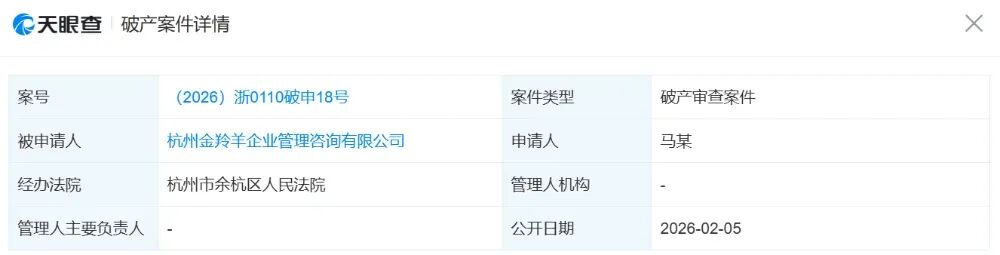
Core Viewpoint - The once-popular self-heating hot pot brand "Zihai Guo" is now on the brink of bankruptcy, with its associated company, Hangzhou Jinlingyang Enterprise Management Consulting Co., Ltd., recently filing for bankruptcy review [3][6]. Group 1: Company Background - "Zihai Guo" was founded in 2018 by Cai Hongliang, the founder of Baicaowei, and quickly became a leading brand in the self-heating hot pot industry [6][8]. - The product range includes self-heating hot pots, soups, dry pots, and boiling pots, targeting the "one-person meal" and "lazy economy" markets [6][8]. Group 2: Financial Performance - From 2018 to 2021, Hangzhou Jinlingyang completed five rounds of financing, raising over 550 million yuan, with a peak valuation of 7.5 billion yuan [8]. - The brand achieved remarkable sales, including a record of 5 million units sold in 10 minutes and over 100 million yuan in sales within 21 minutes during the Double 11 shopping festival in 2020 [8]. Group 3: Recent Developments - After a surge in demand during the pandemic, the brand's popularity declined post-2022 as home consumption decreased [8]. - In March 2023, a potential acquisition by Lianhua Health, a listed company, fell through five months after initial interest [8]. - In November of the previous year, due to a labor dispute with an individual named Ma, Hangzhou Jinlingyang and its legal representative Cai Hongliang faced restrictions on high consumption [8].
从估值75亿到重整审查 昔日网红自嗨锅陷破产危机
Huan Qiu Wang· 2026-02-09 09:55
Core Viewpoint - The self-heating hot pot brand "Zihai Guo," once valued at 7.5 billion yuan and known for its rapid sales, is now on the brink of bankruptcy due to declining demand and inherent business model flaws [1][6]. Company Overview - Zihai Guo was founded by Cai Hongliang in 2018 after he sold his previous snack brand, Baicaowei, for 960 million yuan. The brand quickly gained popularity by targeting the "one-person meal" and "lazy economy" segments [3]. - The brand experienced explosive growth in 2020, achieving sales of 1 billion yuan and setting a record of selling 5 million units in just 10 minutes [3][4]. Financial Performance - Zihai Guo's revenue peaked at 9.92 billion yuan in 2021 but fell to 8.2 billion yuan in 2022, marking a year-on-year decline of 17.34%. Online sales also dropped significantly, with reductions of 23.33% in 2021 and 41.54% in 2022 [4]. - The company reported net losses of 1.51 billion yuan and 3.14 billion yuan in 2020 and 2021, respectively, but managed to turn a profit of 27.52 million yuan in 2022 [4]. Market Position - Zihai Guo's market share decreased from 1.84% in 2022 to 1% in 2023, indicating a significant decline in its competitive position [4]. Investment and Acquisition Attempts - In March 2023, a potential acquisition by Lianhua Health was announced, with a valuation of 1.5 billion to 3 billion yuan for Zihai Guo. However, the deal fell through in August 2023 due to a lack of consensus between the parties [5]. - Following the failed acquisition, Zihai Guo faced a liquidity crisis, with over 1.4 billion yuan in current enforcement actions and a total of 3.2 billion yuan in historical enforcement actions [5]. Management and Legal Issues - Cai Hongliang, the company's legal representative, is also facing personal financial difficulties, including multiple enforcement actions and restrictions on high consumption due to labor disputes [5][6]. Industry Implications - The rapid rise and fall of Zihai Guo serve as a cautionary tale for the consumer sector, highlighting the risks of relying heavily on marketing and trends rather than product quality [6].
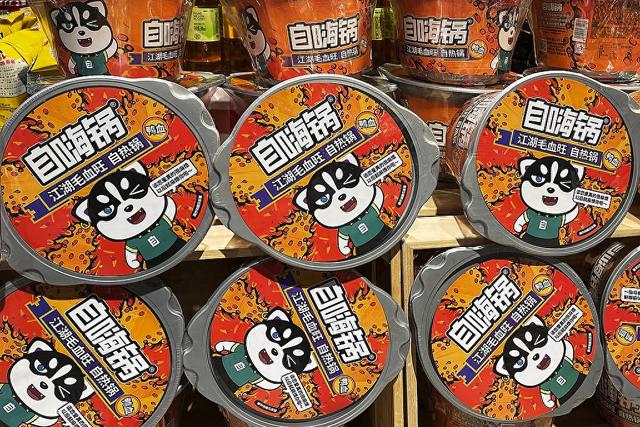
昔日网红“自嗨锅”被申请破产审查 曾在10分钟售出500万桶 公司估值一度高达75亿元
Mei Ri Jing Ji Xin Wen· 2026-02-09 07:54
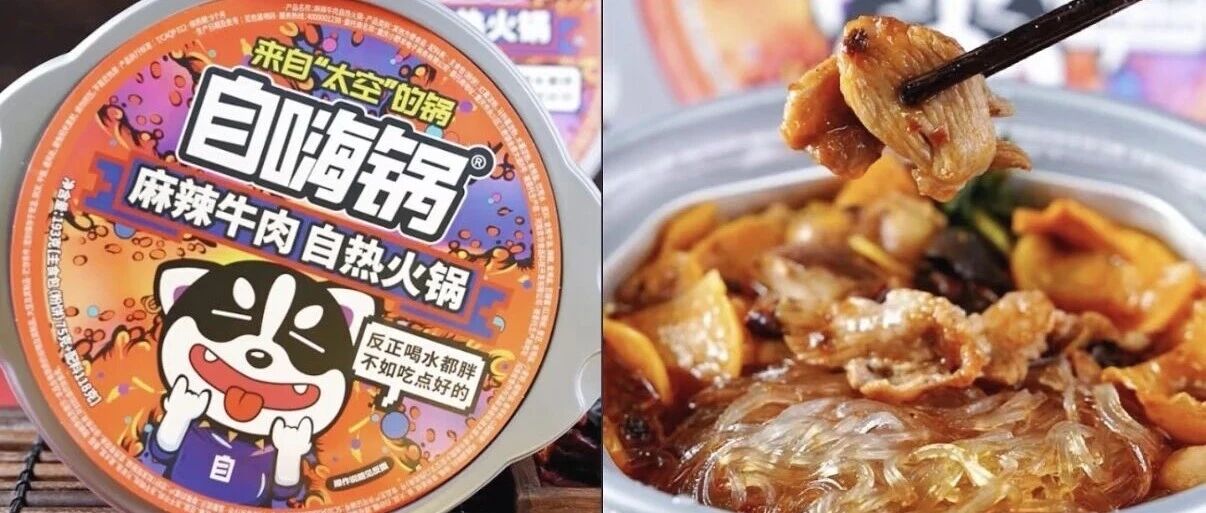
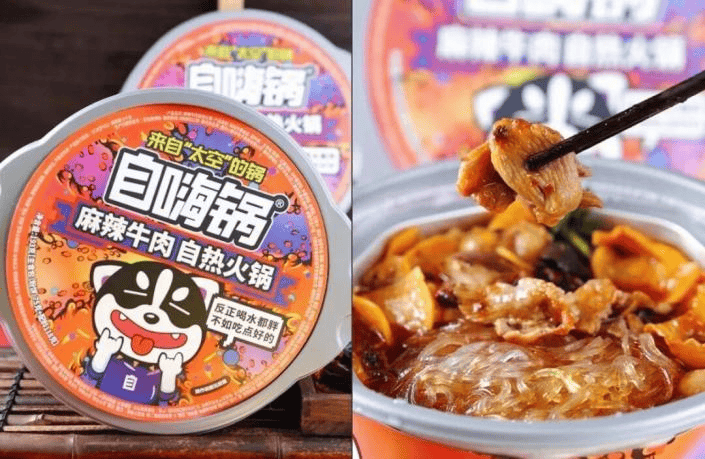
Core Viewpoint - The self-heating hot pot brand "Zihai Guo," established in 2018, is facing significant financial difficulties, including a recent bankruptcy review case, as the market for self-heating hot pots declines sharply [1][6]. Company Summary - "Zihai Guo" was founded in 2018 and offers a variety of self-heating hot pot products, including spicy beef hot pot and self-heating soup pots, utilizing freeze-drying technology to preserve the original shape and nutritional value of ingredients [3][4]. - The company, under the legal representative Cai Hongliang, previously gained fame for its rapid sales growth, achieving a record of 5 million units sold in 10 minutes and over 100 million yuan in sales within 21 minutes during the 2020 Double Eleven shopping festival [5]. - From 2018 to 2021, "Zihai Guo" completed five financing rounds, raising over 550 million yuan, with a peak valuation of 7.5 billion yuan, supported by notable investment firms [5]. Financial and Operational Challenges - The company has faced severe financial issues, including over 1.4 billion yuan in executed judgments and a total of 3.2 billion yuan in historical executed judgments, alongside 587.9 million yuan in cases of dishonesty [4][5]. - A planned acquisition by "Lianhua Health," known as the "King of MSG," fell through, exacerbating the company's financial strain and leading to a broken capital chain [6]. - The self-heating hot pot market is experiencing a downturn, with a reported 25.05 percentage point decrease in growth rate and a 32.67% drop in sales revenue year-on-year as of Q4 2024 [7].
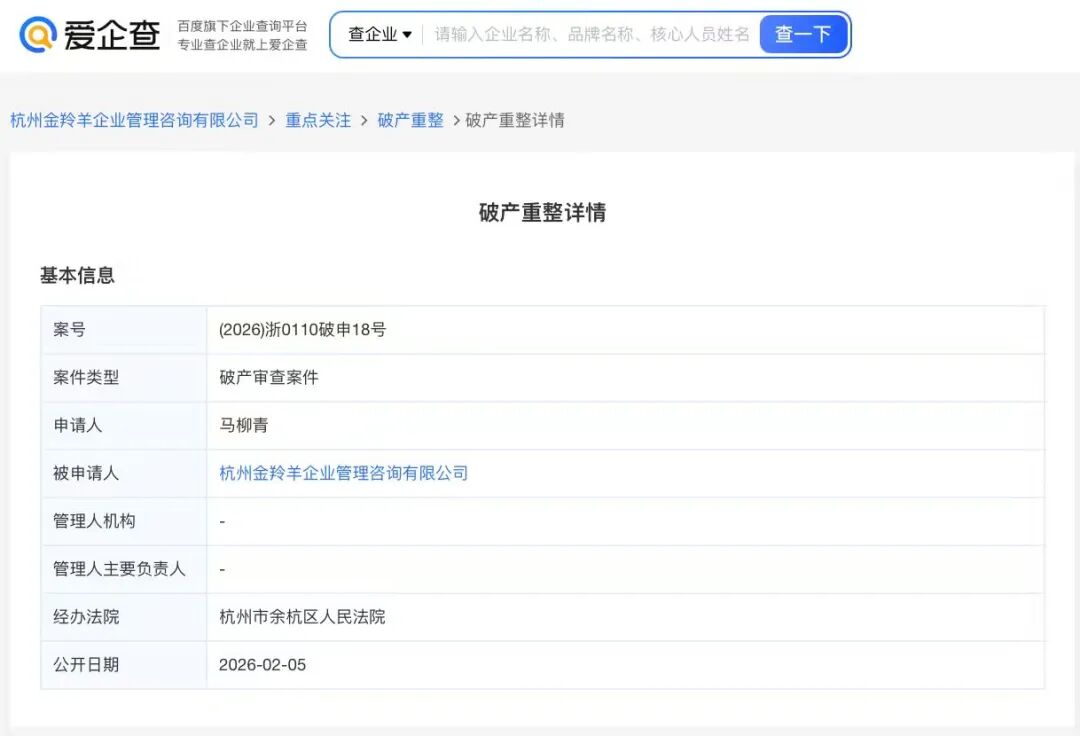
昔日网红“自嗨锅”被申请破产审查,曾在10分钟售出500万桶,公司估值一度高达75亿元
Mei Ri Jing Ji Xin Wen· 2026-02-09 07:44
Group 1 - The company "自嗨锅" (Self-heating Hot Pot) was established in 2018 and is known for its self-heating hot pot products, including spicy beef hot pot and various other self-heating cooking options [3][4] - The company has recently faced financial difficulties, with its associated company, 杭州金羚羊企业管理咨询有限公司, undergoing bankruptcy review, initiated by an individual named Ma, with the case handled by the Yuhang District People's Court in Hangzhou [1] - 杭州金羚羊 has multiple legal issues, including 6 enforcement cases with a total amount exceeding 1.4 billion yuan, and a history of 16 enforcement cases totaling over 3.2 billion yuan [4] Group 2 - The founder of 杭州金羚羊, 蔡红亮, previously founded 百草味 and sold it in 2016 before establishing 杭州金羚羊 and launching 自嗨锅 [5] - 自嗨锅 gained significant popularity during the COVID-19 pandemic, achieving record sales, including 5 million units sold in 10 minutes and over 100 million yuan in sales within 21 minutes during the Double Eleven shopping festival [7] - However, after 2022, demand for home-cooked meals decreased, leading to a significant drop in sales, with reports indicating a 50% decline in sales volume [7][8] Group 3 - The self-heating hot pot market is experiencing a decline, with a reported 25.05 percentage point decrease in growth rate, resulting in a market share drop and a 32.67% decrease in sales revenue [8] - In March 2023, a potential acquisition of 杭州金羚羊 by a listed company, 莲花健康, was proposed but ultimately fell through five months later, exacerbating the company's financial troubles [7]
曾10分钟售500万桶,昔日网红“自嗨锅”被申请破产审查
Di Yi Cai Jing Zi Xun· 2026-02-09 06:19
Core Viewpoint - The self-heating hot pot brand "Zihai Guo," established in 2018, is facing bankruptcy proceedings due to financial difficulties, with its associated company, Hangzhou Jinlingyang Enterprise Management Consulting Co., Ltd., recently filing for bankruptcy review [2][6]. Company Overview - "Zihai Guo" was founded by Cai Hongliang, the creator of the snack brand "Baicaowei," and quickly became a leading brand in the self-heating hot pot industry, leveraging the "one-person meal" and "lazy economy" concepts [5][6]. - The brand's product line includes various self-heating hot pots, such as spicy beef hot pot and self-heating soup pots, utilizing freeze-drying technology to preserve the original form and flavor of the ingredients [5]. Financial History - From 2018 to 2021, Hangzhou Jinlingyang completed five rounds of financing, raising over 550 million yuan, with notable investors including China International Capital Corporation, Matrix Partners, CMC Capital, and Gao Rong Capital, leading to a peak valuation of 7.5 billion yuan [6]. - In 2020, during the pandemic, "Zihai Guo" experienced explosive sales, achieving a record of selling 5 million units in just 10 minutes and over 100 million yuan in sales within 21 minutes during the Double Eleven shopping festival [6]. Recent Developments - Since 2022, demand for "Zihai Guo" has declined significantly, leading to a decrease in brand visibility and financial struggles, including lawsuits and forced executions due to cash flow issues [6][7]. - In March 2023, a potential acquisition by the listed company "Lianhua Health" was proposed but fell through five months later [6].
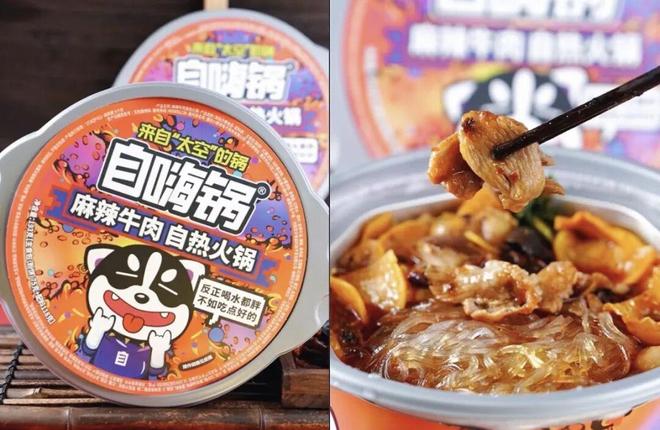
曾10分钟售500万桶 昔日网红“自嗨锅”被申请破产审查
Di Yi Cai Jing· 2026-02-09 06:12
Core Viewpoint - The company "自嗨锅" (Self-Heating Hot Pot) is facing significant financial difficulties, including a recent bankruptcy review case, which highlights the challenges in the self-heating hot pot market after a period of rapid growth [1][5]. Group 1: Company Overview - "自嗨锅" was established in 2018 and is known for its self-heating hot pot products, including spicy beef hot pot, soup pot, dry pot, and cooking pot [3][5]. - The brand was founded by Cai Hongliang, who previously created the snack brand "百草味" (Baicaowei) and had a successful exit in 2016 [5]. Group 2: Financial Performance and Challenges - "自嗨锅" experienced explosive growth during the pandemic, achieving record sales, including 5 million units sold in 10 minutes and over 100 million yuan in sales within 21 minutes on Double Eleven in 2020 [5]. - The company completed five rounds of financing from 2018 to 2021, raising over 550 million yuan, with a peak valuation of 7.5 billion yuan [5]. - However, since 2022, demand has decreased significantly, leading to a decline in brand visibility and financial struggles, including a bankruptcy review case and restrictions on the founder's spending [1][5]. Group 3: Market Position and Future Outlook - "自嗨锅" was once a leading brand in the self-heating hot pot sector, benefiting from targeted marketing strategies and the "one-person meal" trend [5]. - In March 2023, there was an attempt by "莲花健康" (Lianhua Health) to acquire a stake in the company, but the deal fell through five months later, indicating ongoing challenges in securing investment [5].
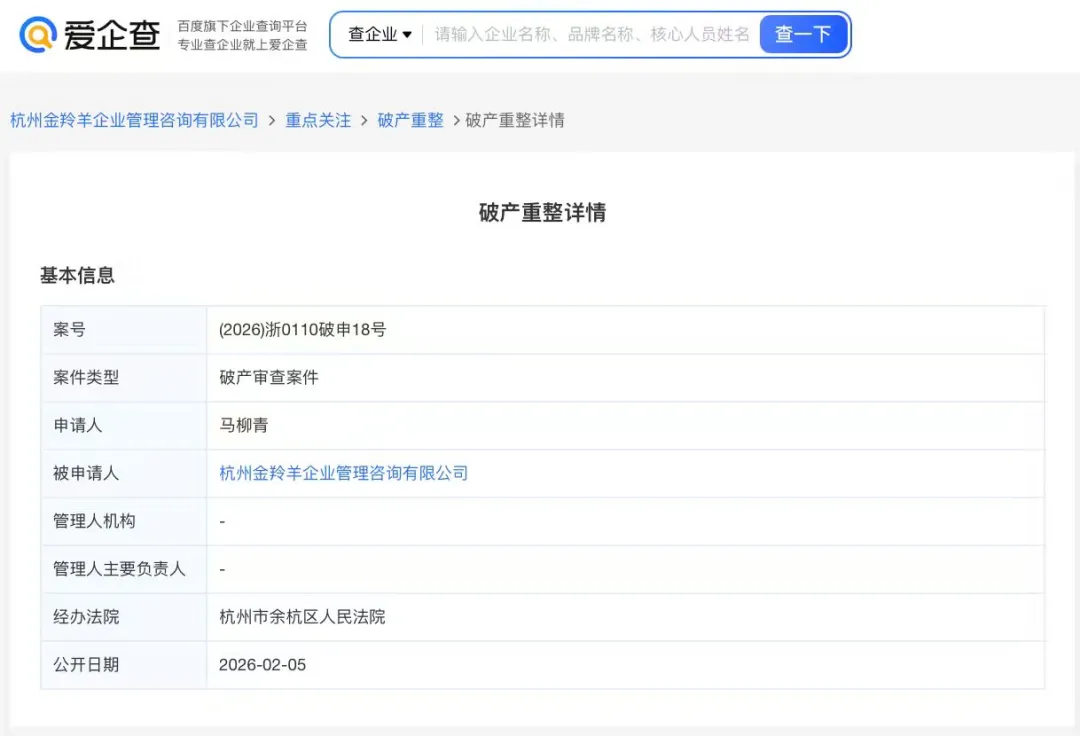
曾10分钟售500万桶,昔日网红“自嗨锅”被申请破产审查
第一财经· 2026-02-09 06:09
Core Viewpoint - The article discusses the bankruptcy examination case of Hangzhou Jinlingyang Enterprise Management Consulting Co., Ltd., associated with the self-heating hot pot brand "Zihai Guo," highlighting its rapid rise and subsequent decline in the market [2][6]. Group 1: Company Overview - "Zihai Guo" was established in 2018 and is known for its self-heating hot pot products, including spicy beef hot pot and various other self-heating dishes [4][5]. - The brand was founded by Cai Hongliang, who previously created the snack brand "Baicaowei" and sold it for 960 million yuan in 2016 [5][6]. Group 2: Financial and Market Performance - From 2018 to 2021, Hangzhou Jinlingyang completed five rounds of financing, raising over 550 million yuan, with a peak valuation of 7.5 billion yuan [6]. - In 2020, during the pandemic, "Zihai Guo" experienced explosive sales, achieving a record of 5 million units sold in just 10 minutes and over 100 million yuan in sales within 21 minutes on Double Eleven [6]. Group 3: Recent Developments - As of now, Hangzhou Jinlingyang has six enforcement records involving over 140 million yuan, and Cai Hongliang has been restricted from high consumption [6][7]. - After a decline in demand post-2022, a proposed acquisition by Lianhua Health was abandoned five months after initial interest [6][7].