自嗨锅

Search documents
年销10亿仍然破产,自嗨锅营销窟窿有多大?
36氪· 2026-02-12 10:18
Core Viewpoint - The article discusses the decline of the once-popular self-heating hot pot brand "自嗨锅" (Self-Heating Pot), highlighting its financial struggles, consumer dissatisfaction, and the competitive landscape of the ready-to-eat food market [5][10][40]. Financial Performance - At its peak, 自嗨锅 achieved a valuation of 7.5 billion and annual sales of 1 billion, but it has faced significant losses, with a net profit of -1.51 billion in 2020 and over 3 billion in losses in 2021 [7][14][15]. - In 2022, the company reduced marketing expenses to below 30 million, resulting in a slight recovery in gross profit margin and net profit, which reached 1.99 million [16][18]. - Despite a revenue drop of 17.34% in 2022, the company managed to improve its gross profit margin to 33.47% [18]. Consumer Sentiment - Consumer feedback has shifted negatively, with many expressing dissatisfaction over the taste and quality of the products, leading to a perception of high prices for low-quality offerings [22][25][26]. - Social media is filled with complaints about the product's taste and quality, with consumers noting that the self-heating mechanism poses safety risks [31][22]. Market Dynamics - The self-heating hot pot market is shrinking, with competitors like 卫龙 and 海底捞 also scaling back their offerings due to changing consumer preferences [35][36]. - The rise of pre-prepared meals and the convenience of delivery services have further eroded the unique selling proposition of self-heating hot pots [37][40]. Brand Strategy and Positioning - 自嗨锅's marketing strategy heavily relied on celebrity endorsements and social media, but it failed to innovate or adapt to changing consumer tastes, leading to a loss of relevance [11][40]. - The brand's attempts to diversify its product line have not resonated with consumers, and its pricing strategy has not effectively positioned it against cheaper alternatives [26][28]. Future Outlook - The one-person meal market continues to grow, with projections indicating a market size of 1.8 trillion by 2025, but 自嗨锅 has not capitalized on this trend effectively [38][40]. - The company faces significant challenges in regaining market share and consumer trust, as it struggles to differentiate itself in a crowded and competitive landscape [40][41].

估值75亿到濒临破产,自嗨锅的“自嗨式狂欢”如何落幕?
Sou Hu Cai Jing· 2026-02-12 08:23
Core Viewpoint - The company "自嗨锅" (Self-Heating Hotpot) has recently faced bankruptcy scrutiny, highlighting the challenges it faces after a period of rapid growth and high valuation, which peaked at 7.5 billion yuan. Company Overview - Founded by entrepreneur Cai Hongliang, who previously sold his snack brand Baicaowei for 960 million yuan, the company aimed to capitalize on the "one-person meal" economy with its self-heating hotpot brand [1][2]. - The brand gained significant popularity through aggressive marketing strategies, including celebrity endorsements and extensive advertising campaigns, leading to record sales during the pandemic [2]. Financial Performance - In 2020, the company reported revenues of approximately 958 million yuan but incurred a loss of 151 million yuan. In 2021, revenues slightly increased to about 992 million yuan, while losses widened to 313 million yuan. By 2022, the company achieved profitability, but revenues fell by 17.34% year-on-year, largely due to a significant reduction in sales expenses by approximately 258 million yuan [4]. - The company completed five rounds of financing, raising over 550 million yuan, and reached a valuation of 7.5 billion yuan [2]. Market Challenges - The company's success was heavily reliant on the pandemic-driven demand for home dining, which has since diminished as consumers returned to dining out and ordering takeout [2][4]. - Product quality issues, such as complaints about plastic taste and low value for money, have also contributed to declining consumer interest [3]. Strategic Missteps - The company engaged in blind expansion of its product line and built heavy asset factories, which led to a significant drop in sales and supply chain issues [5]. - In 2023, attempts to sell the company to Lianhua Health for funding were thwarted due to high valuation concerns from regulators, resulting in the deal falling through [6]. Current Situation - As of 2024, the company is facing forced execution due to unpaid advertising fees, and its founder has been restricted from high consumption activities [7].
年销10亿仍然破产,自嗨锅营销窟窿有多大?
3 6 Ke· 2026-02-11 13:34
Core Viewpoint - The company "自嗨锅" (Self-Heating Hot Pot) is facing significant challenges, including declining sales, negative consumer sentiment, and operational losses, leading to its potential bankruptcy and a shift in consumer preferences towards more convenient and appealing food options [2][6][32]. Financial Performance - In 2020, "自嗨锅" achieved sales close to 1 billion, but still reported a net loss of 1.51 billion due to high marketing expenses [9][11]. - By 2022, the company's revenue dropped by 17.34% to 819.7 million, with online sales declining by 41.54% [11]. - The marketing expenses were significantly reduced from 246 million in 2021 to below 30 million in 2022, which helped improve profit margins [9][11]. Consumer Sentiment - Consumer feedback has turned negative, with complaints about product quality, including issues like unappetizing flavors and high prices, leading to a loss of brand loyalty [17][19][21]. - The perception of "自嗨锅" as overpriced and underwhelming in taste has become prevalent among consumers, impacting its market position [21][23]. Market Trends - The self-heating hot pot market is shrinking, with competitors like "卫龙" and "统一企业" also withdrawing from the market due to changing consumer demands [32][35]. - The rise of pre-packaged meals and the convenience of delivery services have further eroded the unique selling proposition of "自嗨锅" [38][43]. Product Development - "自嗨锅" has struggled to innovate and keep up with evolving food trends, failing to introduce new flavors or healthier options that resonate with current consumer preferences [20][43]. - The brand's attempts at cross-promotions and collaborations have not generated significant consumer interest, indicating a disconnect with its target audience [26][32]. Operational Challenges - The company is burdened with debt and legal issues, complicating its ability to recover and adapt to market changes [16][32]. - Regulatory challenges, such as bans on carrying self-heating hot pots on trains, have further limited its market reach [14][32].
8点1氪丨自嗨锅关联公司濒临破产;特斯拉售后建议“剩100公里去充电”;小红书正研发视频剪辑类AI产品OpenStoryline
3 6 Ke· 2026-02-10 00:14
Group 1 - A company associated with self-heating pots, Hangzhou Jinlingyang, is facing bankruptcy with a total execution amount exceeding 1.4 billion yuan [2] - The company has multiple legal issues, including 6 execution records and 9 instances of being listed as a dishonest executor [2] - The legal representative, Cai Hongliang, has been restricted from high consumption due to these issues [2] Group 2 - Xiaohongshu is developing an AI video editing product named OpenStoryline, currently in testing and may be open-sourced in the future [2] Group 3 - A certain e-commerce platform has launched a limited edition gold phone case priced at 139,999 yuan, which includes a free iPhone 17 Pro Max with the purchase [3][4] - The gold phone case is available in various weights, starting from 10g to 100g, with the highest priced version at 139,999 yuan [3][4] Group 4 - Memory prices are expected to surge by 80%-90% by the first quarter of 2026, driven by a significant increase in DRAM prices for general servers [6] - The price of 64GB RDIMM contracts has risen from 450 USD in the fourth quarter to over 900 USD in the first quarter, with expectations to exceed 1000 USD in the second quarter [6] Group 5 - Apple is preparing to celebrate its 50th anniversary, with CEO Tim Cook confirming that a commemorative event will take place, although details are not yet disclosed [7] - Cook emphasized the importance of reflecting on the company's history while looking forward to future innovations [7] Group 6 - Tesla's FSD (Full Self-Driving) technology does not have a specific launch date in China, but local training centers have been established to support its deployment [8] - The company aims to ensure that the technology will perform at a level comparable to or better than local drivers [8] Group 7 - Alphabet's dollar bond issuance has attracted over 100 billion USD in demand, indicating strong investor interest in AI-related bonds [9] - The expected issuance size is around 15 billion USD, showcasing a rare level of enthusiasm in corporate bond markets [9] Group 8 - Seres plans to divest significant assets, resulting in a loss of control over Blue Electric Vehicles, with the local government and other investors taking a substantial stake in the new entity [10] - The agreement indicates that Seres will only hold a minority interest in Blue Electric Vehicles post-divestment [10] Group 9 - Playboy has signed an agreement to sell 50% of its China business to UTG Group for a total of 122 million USD, which includes cash payments and guaranteed dividends [12] - This deal allows UTG to manage Playboy's operations in mainland China, Hong Kong, and Macau [12]





自热火锅顶流被申请破产审查,估值一度高达75亿元;李亚鹏暂停直播带货;马斯克称中国有望在AI和制造业领域“完全占据主导地位”丨邦早报
创业邦· 2026-02-10 00:09
Group 1 - Li Yaping announced the suspension of live streaming sales, stating he will focus on the Yanran Hospital work, with the next broadcast possibly a long time away. His recent live stream on February 8 attracted 16.842 million viewers and generated sales between 75 million to 100 million yuan [3][4] Group 2 - Chasing Technology invested nearly 10 million USD in advertising during the Super Bowl, showcasing its high-end smart ecosystem products. The company expects North American revenue to grow by 189% by 2025, with overseas revenue accounting for nearly 80% [5] Group 3 - The self-heating hot pot brand "Self-Heating Pot" is undergoing bankruptcy review, with a peak valuation of 7.5 billion yuan. The company has faced multiple legal issues, including over 1.4 billion yuan in executed amounts [7][8] Group 4 - Beijing Xibei Xiaoniu Catering Management Co., recently renamed to Beijing Beiniao Catering Co., has undergone management changes, with Jia Guolong stepping down as legal representative [8] Group 5 - Elon Musk stated that China is likely to dominate in AI and manufacturing if the U.S. lacks breakthrough innovations, highlighting China's advanced manufacturing capabilities and significant electricity output [9] Group 6 - Dingdong Maicai confirmed its business operations remain stable amid concerns over Meituan's acquisition, assuring customers of unchanged quality standards [10][11] Group 7 - Databricks raised 5 billion USD in funding, increasing its valuation to 134 billion USD, a 34% rise from the previous round [18] Group 8 - The Australian AI infrastructure company Firmus Technologies secured 10 billion USD in debt financing for data center expansion, aiming for a total capacity of 1.6 gigawatts by 2028 [18] Group 9 - Sensor Tower predicts that the total revenue of the top 100 mobile games will reach 53 billion USD by 2026, driven by enhanced monetization strategies [23] Group 10 - The Chinese consumer-grade XR market is projected to grow by 13% in 2025, with AR sales expected to surpass VR for the first time [22]



昔日网红“自嗨锅”被申请破产审查,曾在10分钟售出500万桶
Sou Hu Cai Jing· 2026-02-09 18:30
Core Viewpoint - The once-popular self-heating hot pot brand "Zihai Guo" is now on the brink of bankruptcy, with its associated company, Hangzhou Jinlingyang Enterprise Management Consulting Co., Ltd., recently filing for bankruptcy review [3][6]. Group 1: Company Background - "Zihai Guo" was founded in 2018 by Cai Hongliang, the founder of Baicaowei, and quickly became a leading brand in the self-heating hot pot industry [6][8]. - The product range includes self-heating hot pots, soups, dry pots, and boiling pots, targeting the "one-person meal" and "lazy economy" markets [6][8]. Group 2: Financial Performance - From 2018 to 2021, Hangzhou Jinlingyang completed five rounds of financing, raising over 550 million yuan, with a peak valuation of 7.5 billion yuan [8]. - The brand achieved remarkable sales, including a record of 5 million units sold in 10 minutes and over 100 million yuan in sales within 21 minutes during the Double 11 shopping festival in 2020 [8]. Group 3: Recent Developments - After a surge in demand during the pandemic, the brand's popularity declined post-2022 as home consumption decreased [8]. - In March 2023, a potential acquisition by Lianhua Health, a listed company, fell through five months after initial interest [8]. - In November of the previous year, due to a labor dispute with an individual named Ma, Hangzhou Jinlingyang and its legal representative Cai Hongliang faced restrictions on high consumption [8].
“昔日网红自嗨锅濒临破产”上热搜,创始人被限高
Nan Fang Du Shi Bao· 2026-02-09 16:50
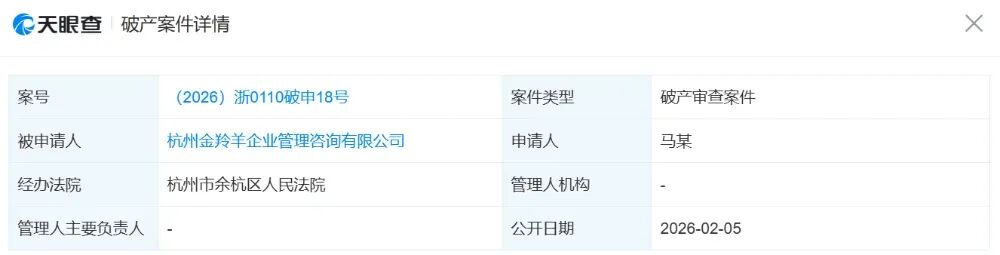
Core Viewpoint - The company "自嗨锅" (Self-heating Pot) is facing bankruptcy, as indicated by its association with the bankruptcy review case filed by an individual named Ma against its parent company, 杭州金羚羊企业管理咨询有限公司 (Hangzhou Golden Antelope Consulting Co., Ltd.) [4] Group 1: Company Background - Hangzhou Golden Antelope was founded by Cai Hongliang, who previously founded Baicaowei, and entered the self-heating hot pot market in 2018 [5] - The company was once a darling of investors, completing five rounds of financing between 2019 and 2021, with participation from notable investors such as Huaying Capital and Jingwei China [5][7] Group 2: Financial Performance - The company's revenue has significantly declined from 9.58 billion yuan in 2020 to 8.2 billion yuan in 2022, marking a year-on-year decrease of 17.34% [8] - Online sales saw a drastic reduction of 41.54% during the same period [8] - The net profit figures show a loss of 1.51 billion yuan in 2020, 3.14 billion yuan in 2021, and a profit of 275.23 million yuan in 2022, indicating a turnaround in 2022 [8] Group 3: Legal and Financial Issues - The company has faced multiple legal challenges, including 14 consumption restriction orders totaling approximately 308 million yuan due to labor disputes [4] - As of now, Hangzhou Golden Antelope has 6 enforcement records with a total amount exceeding 140 million yuan, and historical enforcement records totaling over 320 million yuan [10][12] - The company has also been involved in a failed acquisition attempt by Lianhua Health, which aimed to purchase at least 20% of its shares for a price between 300 million and 600 million yuan, but the deal fell through due to a lack of consensus [7][8]

昔日网红品牌,被曝濒临破产!很多人爱吃,网友:太唏嘘了
Nan Fang Du Shi Bao· 2026-02-09 12:35
Core Viewpoint - The self-heating hot pot brand "Zihai Guo" is facing bankruptcy proceedings, highlighting significant financial struggles and a decline in sales performance [4][15]. Financial Performance - In 2022, Hangzhou Jinlingyang's revenue dropped to 820 million yuan, a year-on-year decrease of 17.34%, with online sales plummeting by 41.54% [8][10]. - The company reported a net profit of 27.52 million yuan in 2022, recovering from losses of 1.51 billion yuan in 2020 and 3.14 billion yuan in 2021 [8][10]. - Total assets as of December 31, 2022, were approximately 7.34 billion yuan, with total liabilities of about 5.94 billion yuan, indicating a debt-heavy balance sheet [10]. Legal Issues - Hangzhou Jinlingyang is currently involved in bankruptcy review proceedings, with a total of 14 consumption restriction orders amounting to approximately 308 million yuan [4][12]. - The company has a history of legal troubles, including multiple enforcement cases and a total of 6 execution records with a total amount exceeding 140 million yuan [12][13]. Investment and Valuation - The company had previously attracted significant investment, completing five rounds of financing between 2019 and 2021, with notable investors including Huaying Capital and Jingwei China [4][7]. - A proposed acquisition by Lianhua Health in March 2023, valuing at 300 million to 600 million yuan for at least 20% equity, was ultimately abandoned due to disagreements on the transaction terms [8]. Market Trends - The decline in sales and the company's financial difficulties reflect broader market trends, where consumers are increasingly opting for cheaper and more convenient food delivery options over self-heating hot pots [21].
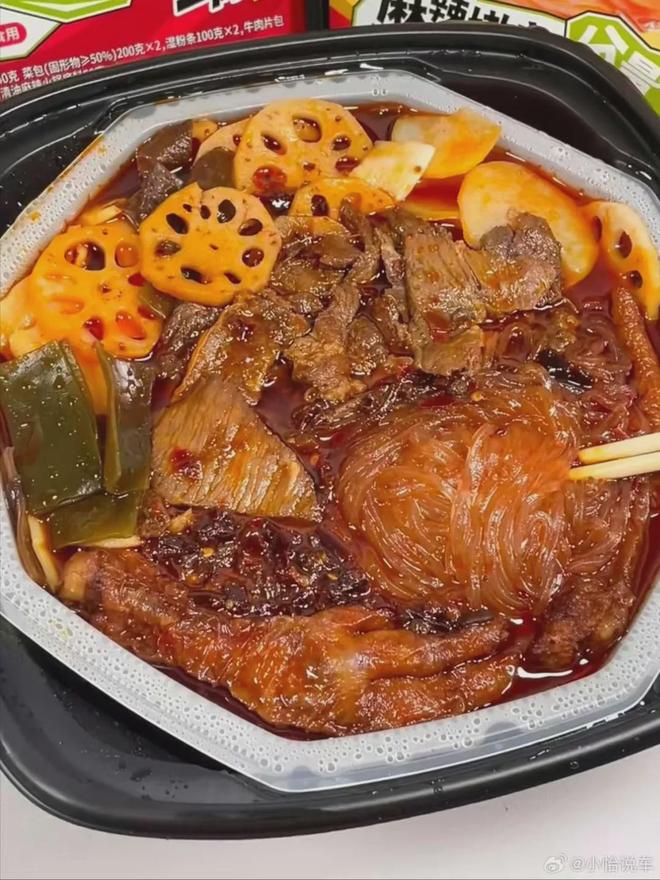
濒临破产!现象级网红产品,曾10分钟售500万桶,年销售额10亿!你可能也吃过!
Huan Qiu Wang· 2026-02-09 10:40
Company Overview - The self-heating hot pot brand "自嗨锅" is facing bankruptcy, with its associated company, Hangzhou Jinlingyang Enterprise Management Consulting Co., Ltd., recently entering bankruptcy review [3] - The brand was founded by Cai Hongliang, who previously founded Baicaowei and sold it to Haoxiangni in 2016 [8] - "自嗨锅" achieved significant sales success, with annual sales reaching 1 billion yuan and selling 5 million units in just 10 minutes at its peak [8][10] Financial Performance - Hangzhou Jinlingyang's revenue from 2020 to 2022 was 958 million yuan, 992 million yuan, and 820 million yuan, respectively, with a decline in revenue growth in 2022 [12] - The company's net profit for the same period was -151 million yuan, -314 million yuan, and 27.5 million yuan, indicating ongoing financial struggles [12] - The market share of "自嗨锅" decreased from 1.84% in 2022 to 1% in 2023, reflecting a significant decline in competitiveness [12] Investment and Market Dynamics - The brand attracted substantial investment, raising over 550 million yuan across five funding rounds from notable investors, with a peak valuation of 7.5 billion yuan [10] - A proposed acquisition by Lianhua Health for 300 to 600 million yuan for at least 20% equity was abandoned due to regulatory concerns over high premium rates [10] - The self-heating hot pot market is cooling down, with competitors like Uni-President and Wei Long withdrawing from the market due to various challenges [13] Consumer Sentiment - Consumers have expressed dissatisfaction with "自嗨锅," citing high prices and low value compared to alternatives like takeout and instant noodles [14]
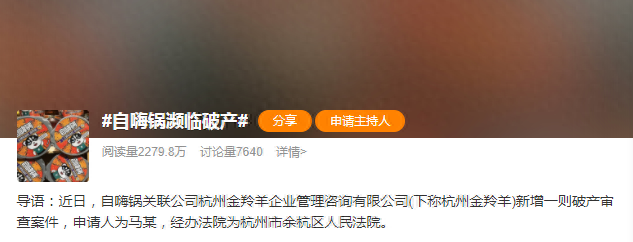
流量狂欢的终结与价值回归的起点:自嗨锅破产背后的商业逻辑嬗变
Xin Lang Cai Jing· 2026-02-09 08:09
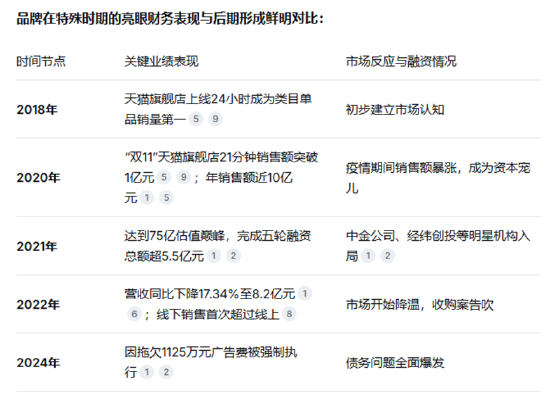
Core Insights - The self-heating food brand, Zihai Guo, is facing bankruptcy proceedings, with its associated company, Hangzhou Jinlingyang Enterprise Management Consulting Co., Ltd., under scrutiny for debts exceeding 140 million yuan [1][10] - Zihai Guo achieved a peak valuation of 7.5 billion yuan within four years of its establishment in 2018, driven by aggressive marketing strategies and celebrity endorsements [2][14] - The company's rapid growth was significantly supported by the COVID-19 pandemic, which increased demand for convenient food options, leading to a sales surge [4][18] Financial Performance and Market Response - In 2018, Zihai Guo's Tmall flagship store became the top-selling product in its category within 24 hours of launch [3][15] - By 2020, during the pandemic, the company reported nearly 1 billion yuan in sales during the "Double 11" shopping festival, with annual sales approaching 1 billion yuan [3][15] - The company reached a valuation peak of 7.5 billion yuan in 2021 after completing five rounds of financing totaling over 550 million yuan [3][15] - However, in 2022, revenue fell by 17.34% to 820 million yuan, and market share plummeted from 1.84% in 2022 to 1% in 2023 [5][18] Marketing and Brand Strategy - Zihai Guo invested heavily in marketing, with annual promotional budgets set at a minimum of 300 million yuan, directly linked to departmental KPIs [3][15] - Marketing expenses reached 293 million yuan in 2020 and 432 million yuan in 2021, but were drastically cut to 174 million yuan in 2022 due to declining revenues [5][18] - The brand's reliance on marketing over product quality led to a lack of consumer loyalty, with a repurchase rate of only 10% [20][21] Product and Quality Issues - Zihai Guo's products faced significant quality complaints, with over 617 reported issues, including foreign objects and spoilage [20] - The high price point of 20-40 yuan per serving compared to cheaper alternatives like instant noodles contributed to consumer dissatisfaction [20] - The product's usability was limited, requiring substantial water for heating, making it impractical in many situations [20] Industry Implications - The decline of Zihai Guo serves as a cautionary tale for the influencer-driven economy in China, highlighting the risks of over-reliance on marketing without solid product foundations [11][22] - The self-heating food market is experiencing a significant downturn, with industry market share decreasing by over 25% year-on-year [5][18] - Zihai Guo's bankruptcy proceedings may lead to asset liquidation or restructuring, reflecting broader challenges in the consumer goods sector [10][22]