
仰韶文化

Search documents
新春走基层·我在,我看,我记录丨让沉睡的遗迹“说话”
He Nan Ri Bao· 2026-02-08 23:21
从郑州市区向西北行车约50公里,在荥阳市高村乡枣树沟村村西有一处高台,这里就是著名的秦王寨遗 址。 2月6日,记者随郑州市文物考古研究院研究员魏青利驱车穿过枣树沟村,沿着崎岖的小路来到了遗址所 在地。一块立于2018年、写着"秦王寨遗址"的石碑面向远处的黄河静静竖立,提示着这里的厚重历史。 100多年前,瑞典人安特生首先发现了秦王寨遗址,该遗址是中国最早发现的几处典型的仰韶文化遗址 之一。"2013年遗址被认定为全国重点文物保护单位,不过一直没有发掘,去年我们开始进行主动发 掘。"魏青利边说边戴上帽子、围上围巾,还提醒记者,"捂严实点,山上风大,穿得少一会儿就冻透 了。" 向前几十米拐进秦王寨遗址考古现场,放眼望去,发掘面积并不大,5个探方一字排开,十几名工作人 员正井然有序地忙碌着。 "团队还有一个小姑娘李艺娜在后方负责数字化内容,看到越来越多年轻人选择考古、加入考古,让人 甚感欣慰。"魏青利说。 "魏老师,你来看看这儿,接下来是不是还按照一个坑继续做?"那边,从事考古几十年的技工刘坠生招 呼魏青利。很快,现场另一位经验丰富的技工赵洪法和刘秋晨、魏青利都聚在了一起,进行了一番头脑 风暴。 干了近30年田野考 ...
郑家沟遗址发现红山文化遗存 有望为中华文明探源研究开新篇
Huan Qiu Wang· 2026-02-07 13:55
Core Viewpoint - The recent archaeological discoveries at the Zhengjiagou site in Zhangjiakou, Hebei Province, reveal significant findings related to the Hongshan culture, including the excavation of nine stone tombs and over 600 artifacts, which provide new insights into the origins of Chinese civilization [1][17]. Archaeological Findings - The Zhengjiagou site features a large stone tomb with an area of approximately 1,500 square meters, surrounded by 90 tombs and over 180 sacrificial pits, indicating a complex burial structure [1][9]. - The excavation of the first stone tomb has uncovered a unique "Jade Pig Dragon," a typical artifact of the Hongshan culture, which was previously believed to be confined to the Liao West region [3][17]. - A notable discovery includes a "painted bear head clay sculpture," which was created using local materials and techniques, showcasing the artistic practices of the time [7][9]. Cultural Exchange and Influence - Artifacts from the Zhengjiagou site exhibit characteristics of both the Hongshan culture and the Yangshao culture, indicating a fusion of diverse cultural influences in the region [9][16]. - The site has been identified as a regional center for the late Hongshan culture, suggesting that it played a significant role in the cultural exchanges during that period [9][17]. Historical Context - The Hongshan culture is believed to date back approximately 6,500 to 5,000 years, with the Zhengjiagou findings extending its timeline by 200 years, indicating a broader geographical influence into Hebei Province [17]. - Genetic analysis of human remains from the site shows a strong genetic link between the Zhengjiagou population and the Hongshan culture population from the West Liao River basin, suggesting continuity in cultural identity [19]. Excavation Techniques - The excavation team employed modern techniques such as "box extraction" to preserve the integrity of the tombs while transporting them to the laboratory for detailed analysis [19][21]. - The process involves careful measurement and construction of a protective box around the tomb, followed by a methodical replacement of the soil to maintain the archaeological context [21][25].

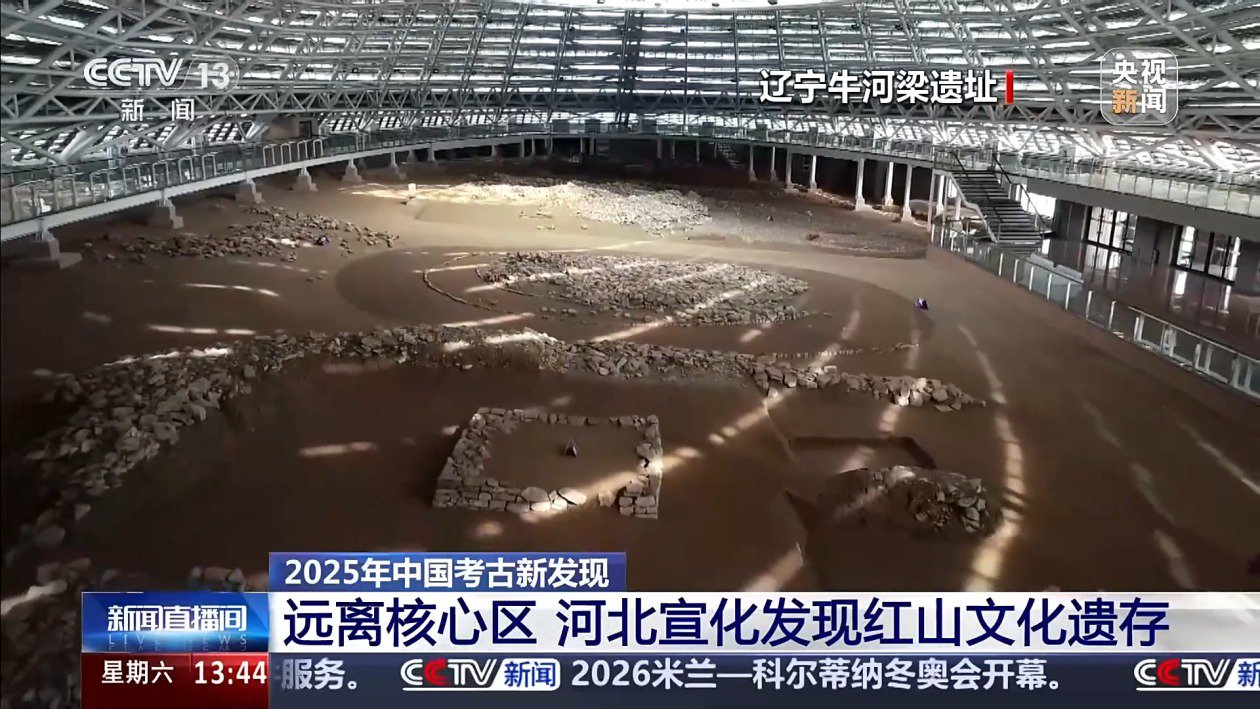
陕西富平发现一处仰韶文化史家类型为主要内涵的环壕聚落遗址
Zhong Guo Xin Wen Wang· 2026-01-16 13:41
Core Viewpoint - The archaeological discovery at the Yong'an site in Shaanxi Province is significant for understanding the Yangshao culture and early social structures in the region, with the site being recognized as one of the six major archaeological finds of 2025 [1][4]. Group 1: Archaeological Findings - The Yong'an site has revealed a rich cultural connotation, with a total of 151 relics from the Yangshao period, including 14 house sites and 134 ash pits [1]. - The excavation uncovered 14 well-preserved semi-subterranean house sites, providing a model for studying settlement family structures [3]. - The ash pits exhibited a regular shape, with a significant number of bag-shaped pits containing a variety of artifacts, including complete animal bones [1][3]. Group 2: Settlement Structure - The layout of the house sites indicates a centralized settlement structure, which is crucial for exploring the forms of early Yangshao settlements and social development processes [3]. - Two segments of a circular trench were revealed, indicating a defensive nature, with features such as a semi-convex entrance and surrounding postholes that may have served as a fence [3][4]. - The combination of the semi-convex entrance, "gatehouse," and "fence" structures represents a significant finding in the Guanzhong region, marking the first discovery of such features [4].
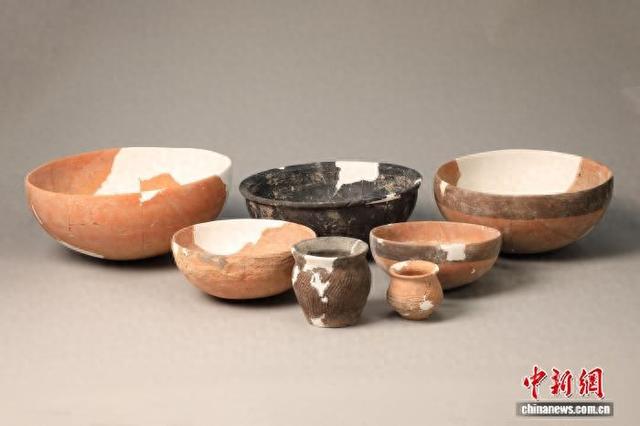
考古新发现!山西永济七社遗址发掘取得重要收获
Xin Lang Cai Jing· 2025-12-27 10:26
Core Insights - The Shanxi Provincial Archaeological Research Institute announced significant archaeological findings at the Qishe site in Yongji City, Shanxi Province, revealing artifacts from the Yangshao late middle period, early Shang, and Eastern Zhou periods [1] Group 1: Archaeological Findings - A large number of artifacts from various periods, including Yangshao, Longshan, Shang, and Eastern Zhou, have been discovered, indicating that the area may have been a densely populated region during the pre-Qin period in southwestern Shanxi [1] - The majority of pottery found consists of mud-based and fine sand red pottery, with gray pottery and painted pottery being less common [3] - The discovered pottery types include bowls and pots, with decorative features such as line patterns and various forms of vessels like pointed-bottom bottles and gourd-shaped bottles [3] Group 2: Burial Sites and Artifacts - A total of 35 Eastern Zhou tombs were excavated, which were undisturbed and showed no signs of being looted, with some modern disturbances noted [5] - The tombs are primarily small to medium-sized vertical pit graves, characterized by a funnel shape and smooth walls, with burial goods including ceramics and small artifacts like copper hooks and bone hairpins [5] - The artifacts reflect a timeline from the late Spring and Autumn period to the mid-Warring States period, with significant pottery types including ding, gu, and various vessels [5][6]
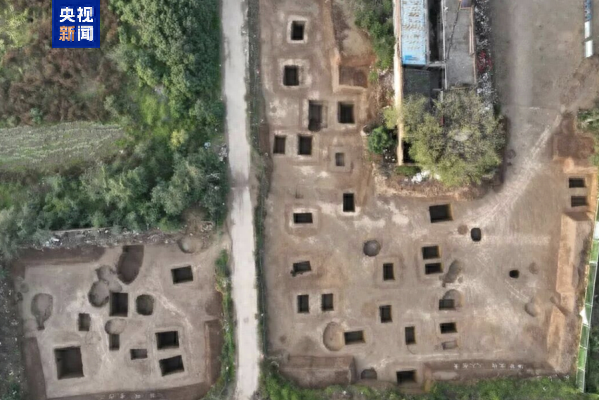
大河村国家考古遗址公园焕新开园 打造黄河岸边的文明地标
Yang Shi Xin Wen Ke Hu Duan· 2025-12-06 14:41
Core Viewpoint - The Dahu Village National Archaeological Site Park, which carries the memory of the Yangshao culture's 7,000-year civilization, has opened to the public after being recognized as a national-level archaeological site park [1]. Group 1: Site Overview - The total planned area of the archaeological site park is 2,373 acres, comprising a core protection area, a new museum, a Central Plains archaeological research and display center, an ecological wetland restoration area, a primitive farming planting area, and an interactive leisure experience area [6]. - The Dahu Village site is regarded as the "yardstick of Yangshao culture," having undergone three systematic archaeological excavations since its discovery in 1964, with a cumulative excavation area exceeding 10,000 square meters [9]. Group 2: Cultural and Educational Aspects - The Dahu Village Museum, as the core cultural carrier of the site park, features the exhibition "Dahu Tang Tang" in a display area of 7,292 square meters, showcasing over 1,600 prehistoric artifacts through immersive and restored displays [11]. - The park aims to explore new paths for site protection and revitalization, launching more cultural activities to connect the past, present, and future, thereby helping more people understand the ancient stories along the Yellow River and inherit the enduring Chinese civilization [13].
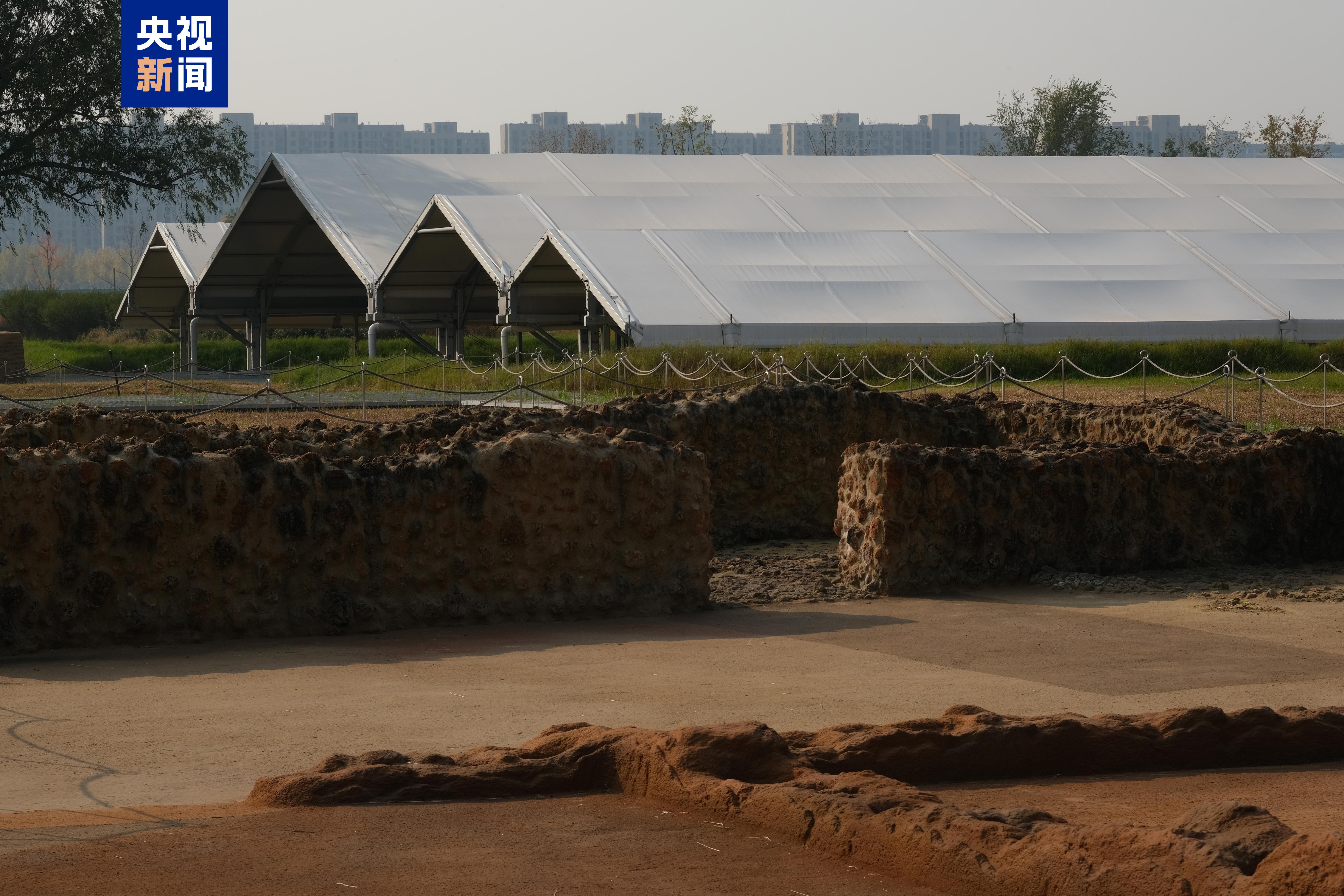
来自5000年前的“表情包” 马家窑文化最新出土彩陶亮相
Yang Shi Xin Wen· 2025-09-17 02:57
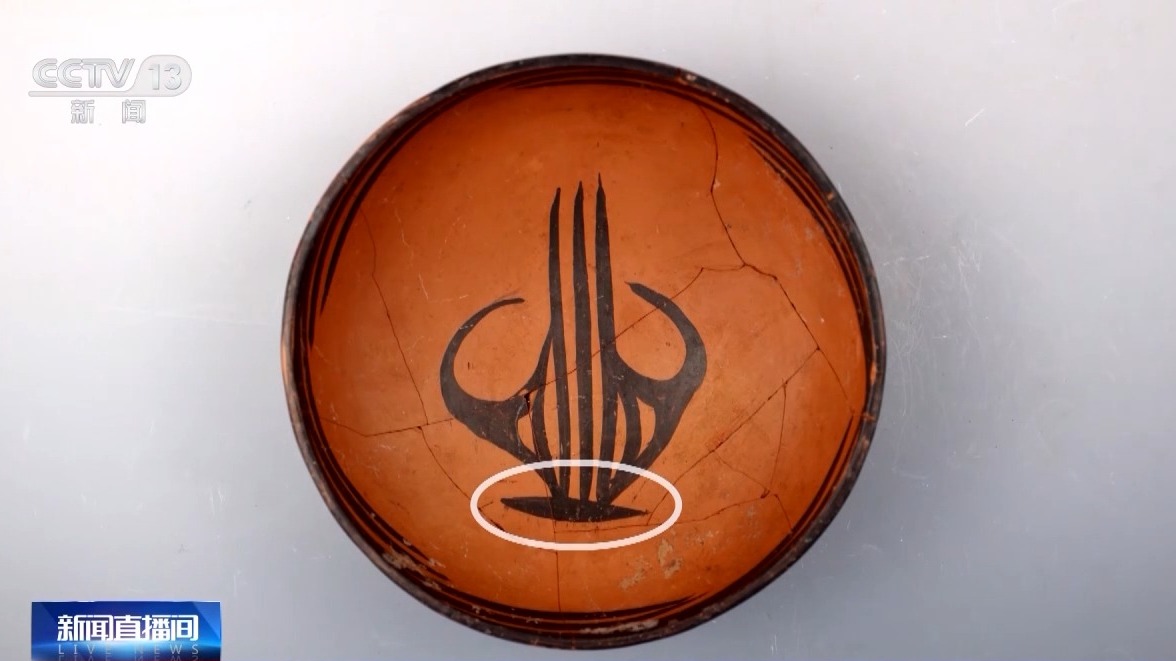
Core Viewpoint - The article highlights the opening of a new archaeological exhibition in China, showcasing the latest discoveries from the Majiayao culture in Gansu, aimed at making archaeological artifacts accessible to the public more quickly [1][16]. Group 1: Exhibition Details - The exhibition features newly unearthed Majiayao culture painted pottery, with the first display being a "painted bowl" found in a pit at the Shiwa site in Gansu [1]. - The exhibition is planned to last for three months, and visitors can reserve free tickets online [16]. Group 2: Archaeological Findings - A notable artifact is a painted pottery bottle with a nearly complete human face motif, characterized by wide-open eyes and a "tear drop" [5]. - The mysterious prehistoric "crying face" may symbolize the ancestors' wishes for fertility and sustenance from the land [6]. - The painted pottery exhibits unique features, such as asymmetrical designs, which are rare in Majiayao culture artifacts [8]. Group 3: Cultural Significance - The Majiayao culture, dating back 5,500 to 4,000 years, represents a peak in prehistoric Chinese painted pottery, evolving from the Yangshao culture [12]. - The presence of classic Yangshao triangular patterns in the newly discovered pottery indicates the diverse and integrated evolution of Chinese civilization [14]. - The Majiayao culture had a significant influence, extending from Xinjiang in the west to Sichuan and Yunnan in the south, and reaching Ningxia in the north [14].
仰韶文化“剧本游”来了
He Nan Ri Bao· 2025-08-25 23:31
Core Insights - The "Dahuo Zhi Shang" project at the Zhengzhou Dahe Village Ruins Museum is set to launch on September 1, offering an immersive experience based on the Yangshao culture, making it one of the first projects in China to utilize Neolithic archaeological sites for a full-process immersive experience [1][2] Group 1: Project Overview - The project is based on real archaeological findings from the Dahe Village site, including painted pottery patterns and burial layouts, transforming them into a dramatic narrative that combines historical facts, artistic creation, and immersive experience [1] - Visitors will engage as "cultural inheritors," following NPCs to solve puzzles and explore cultural themes, such as "finding the soul fragments of the river" and "deciphering the natural codes of pottery patterns" [1] Group 2: Cultural Significance - The project aims to deconstruct the evolution of civilization through dramatic conflict, allowing visitors to understand the wisdom of the Yangshao culture and the roots of Chinese civilization [2] - The immersive experience includes modern expressions of Yangshao culture, creating emotional resonance through visual elements, such as the symmetrical patterns on pottery that echo the narrative of truth waiting to be discovered [2] Group 3: Economic and Cultural Impact - The project explores the full-chain transformation of archaeological resources into cultural IP and consumer scenarios, aiming to enhance cultural recognition and engagement [2]
博物中国丨开在彩陶上的花!带你打卡课本“同款”文物
Yang Shi Xin Wen Ke Hu Duan· 2025-08-17 12:46
Group 1 - The design inspiration for the Spring Festival Gala's artistic installation comes from the "flower petal pattern" of the Miao Digu culture, which is a significant aspect of the Yangshao culture [3] - The Miao Digu culture is highlighted as the most brilliant cultural type during the middle period of the Yangshao culture, known for its colorful pottery [3] - The flower petal pattern is identified as the most iconic decoration of the Miao Digu culture, emphasizing its importance in historical education [3] Group 2 - The Miao Digu Museum is promoted as a place where visitors can explore the cultural significance of the flower petal pattern and its representation in historical artifacts [5] - The museum encourages visitors to bring their history textbooks to enhance their learning experience [5]

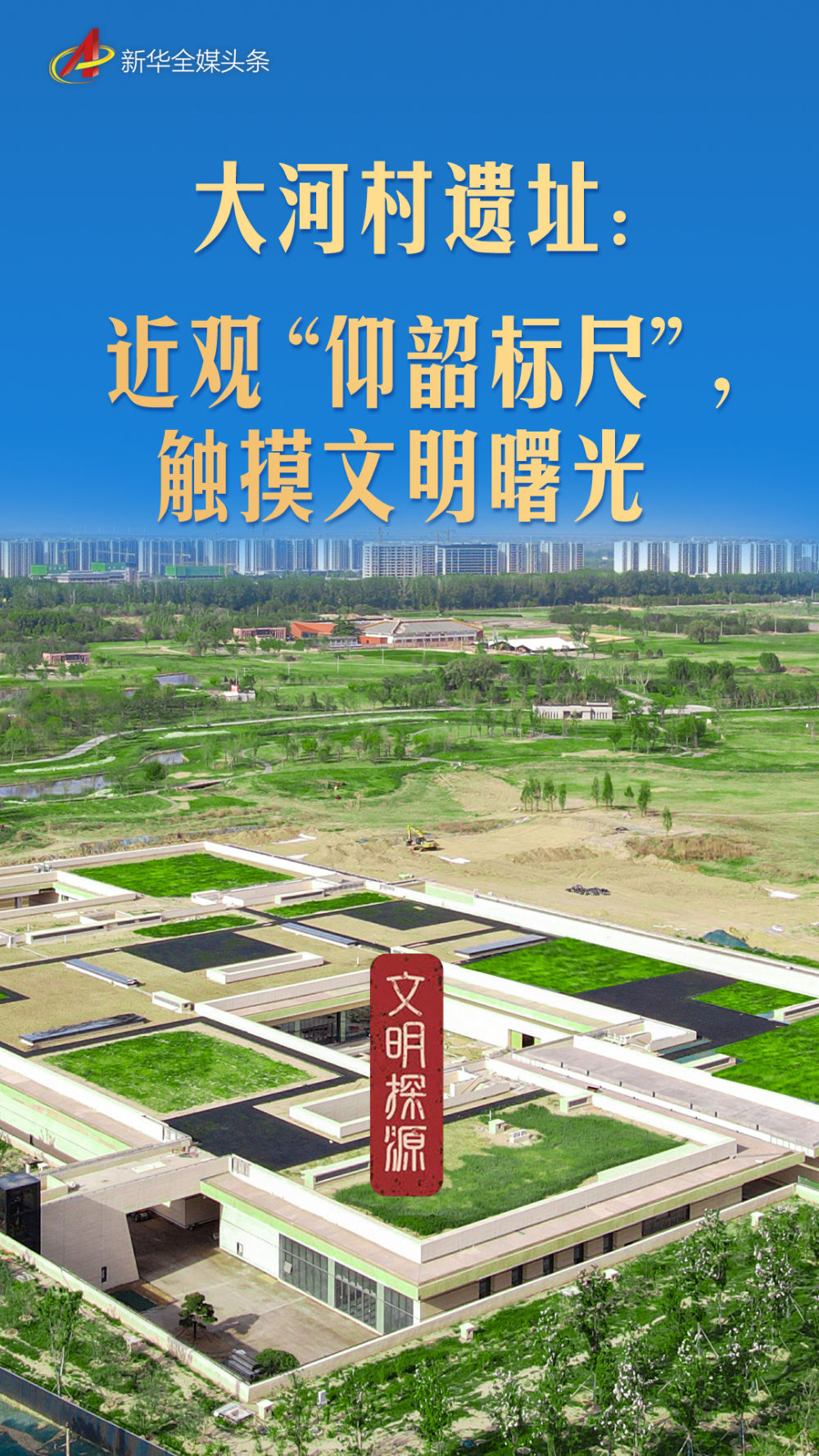
大河村遗址:近观“仰韶标尺”,触摸文明曙光
Xin Hua She· 2025-08-09 22:35
Core Viewpoint - The Zhengzhou Dahe Village Archaeological Site Museum showcases the rich cultural heritage of the Yellow River basin, emphasizing the importance of Yellow River culture as a vital part of Chinese civilization and its historical significance in the development of early Chinese society [3][7][8]. Group 1: Archaeological Significance - The Dahe Village site spans approximately 3,500 years, encompassing various cultural phases including Yangshao, Longshan, Xia, and Shang cultures, making it a crucial archaeological site for understanding the origins of Chinese civilization [3][6]. - Recent excavations have revealed significant findings, including well-preserved structures and artifacts that illustrate the transition from primitive settlements to a more complex society [6][7]. - The site is recognized as a "yardstick" for the Yangshao culture, providing a reference point for dating other archaeological sites in the region [8][7]. Group 2: Cultural Heritage and Preservation - The museum aims to promote the systematic protection of Yellow River cultural heritage and to enhance cultural confidence among the Chinese people by telling the "Yellow River story" [3][19]. - The new museum features an immersive digital exhibition project that recreates the social landscape of the Yangshao period, allowing visitors to experience the daily life of early inhabitants [19][20]. - The site has become a focal point for cultural exchange, hosting events that discuss the protection and utilization of cultural heritage, highlighting its role in bridging Eastern and Western civilizations [16][18]. Group 3: Visitor Engagement and Future Plans - The museum has seen a steady influx of visitors since its opening, indicating a strong public interest in the region's archaeological findings and cultural history [3][19]. - Future plans include the development of ecological wetland restoration areas and interactive leisure zones to enhance visitor experience and engagement with the site [20].
大河村遗址博物馆:全景式呈现仰韶文化
Ke Ji Ri Bao· 2025-07-18 02:10
Core Insights - The newly opened Dahu Village Ruins Museum in Zhengzhou, Henan Province, showcases the origins and development of Chinese civilization, particularly the Yangshao culture, through over a thousand artifacts from more than 30 significant archaeological sites [1][2] Group 1: Historical Significance - Dahu Village Ruins, discovered 61 years ago, spans approximately 530,000 square meters with a cultural layer thickness of 12.5 meters, encompassing multiple ancient cultures including Yangshao, Longshan, Erlitou, and Shang [2] - The site reflects a continuous cultural development from 6,800 to 3,500 years ago, making it unique compared to other ancient sites [2] Group 2: Architectural Insights - The museum features well-preserved remains of a 5,000-year-old residence, showcasing advanced construction techniques with wooden frameworks and mud walls, marking a milestone in ancient Chinese architecture [3] - The transition from semi-subterranean dwellings to ground-level buildings indicates a shift towards more complex societal structures and living arrangements [3] Group 3: Cultural Artifacts - The most notable artifacts from the site are the colorful pottery pieces, which signify a peak in prehistoric pottery culture, with the museum's centerpiece being a white pottery basin with intricate symmetrical designs [4] - The artifacts also reveal early astronomical observations by the inhabitants, indicating the development of timekeeping concepts [4] Group 4: Cultural Impact - The opening of the new museum is expected to enhance Zhengzhou's status as a cultural landmark along the Yellow River, providing a unique opportunity for the public to engage with the origins of the Yangshao culture and Chinese civilization [4]