
全球治理体系改革

Search documents
全球治理体系改革应重视的几个问题
Xin Lang Cai Jing· 2026-02-08 21:39
Group 1 - The core idea of the article emphasizes the importance of reforming the global governance system and enhancing global governance capabilities, particularly in the context of China's four major initiatives proposed by President Xi Jinping [1] - The establishment of a sovereign state system and the arrival of a comprehensive international relations era represent significant progress in post-war international relations, allowing most nations to express their will and strength [2][3] - The article highlights the need for a democratic, equitable, inclusive, and just global governance system, reflecting on the historical context of international relations and the necessity for reform [2][3] Group 2 - The relationship between global governance and national governance is crucial, as poor domestic governance limits a country's willingness and ability to engage in global governance [4] - The article calls for a re-evaluation of democracy, suggesting that new meanings should be assigned to democracy that promote genuine multilateralism and improve domestic governance quality [5] - Establishing institutional communication mechanisms between global governance and national governance is essential to ensure they do not conflict with each other [5] Group 3 - Incremental improvements in the global governance system are necessary, particularly from emerging countries like China, which supports the UN's core role in international affairs [6] - The article points out that structural issues in the global governance system are becoming increasingly apparent, indicating that mere incremental improvements may not suffice [6] Group 4 - Structural contradictions in global governance arise from the separation of internal and external politics, affecting countries' ability to participate in global governance [7] - The shift towards a multipolar world and the need for a more democratic and equitable governance structure are highlighted as ongoing challenges [7][8] - The article discusses the importance of incorporating various actors, such as multinational corporations and social organizations, into the global governance framework [8] Group 5 - The relationship between planning and action in global governance is emphasized, with a focus on the need for effective execution of global governance initiatives [9] - The article suggests that planning can mitigate the negative impacts of domestic political polarization on international commitments and cooperation [9]
全球治理之友,团结更多志同道合的朋友(环球热点)
Ren Min Ri Bao Hai Wai Ban· 2026-01-31 00:41
"全球治理之友小组"启动会议不久前在纽约联合国总部召开,"全球治理之友小组"正式成立。新华社记 者 张凤国摄 随着世界进入新的动荡变革期,改革和完善全球治理体系成为国际社会普遍关切的议题。在此背景下, 中国去年9月提出全球治理倡议,强调奉行主权平等、遵守国际法治、践行多边主义、倡导以人为本、 注重行动导向五大核心理念,得到国际社会广泛认同。 不久前,中国常驻联合国代表团在美国纽约联合国总部举办"全球治理之友小组"(简称"之友小组")启 动会议,之友小组正式成立。43个成员会后发表共同声明,强调成立之友小组是落实全球治理倡议的重 要一步,要共同维护二战胜利成果,支持联合国作用,就全球治理重大问题协调行动,诚邀更多志同道 合的国家加入。 受访专家认为,之友小组有利于加强各国间政策沟通和务实合作,将为维护多边主义、改革和建设全球 治理体系注入新动力。 回应完善全球治理体系的共同期待 【观察】 之友小组成立后,43个成员发表的《关于成立"全球治理之友小组"的共同声明》指出,当今世界进入动 荡变革期,联合国和多边体系面临的压力与日俱增,全球治理赤字不断扩大。之友小组对全球南方代表 性严重不足、包括联合国宪章宗旨和原则在 ...

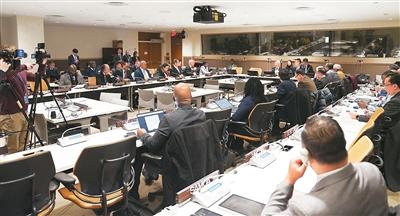
联合国秘书长古特雷斯呼吁加快改革全球治理体系
Yang Shi Xin Wen· 2026-01-29 17:34
Core Viewpoint - The current international system is facing profound turmoil and uncertainty, necessitating reforms in multilateral institutions and global financial architecture to adapt to the changing world order [1][2]. Group 1: Global Governance and Multilateralism - The global governance system still reflects the economic and power structures of 80 years ago, failing to account for the rise of emerging economies and the expansion of South-South cooperation [1]. - There is a call for inclusive multipolarity to achieve global balance through trade, technology, and international partnerships, emphasizing that global issues should not be resolved by a single or few major powers [1]. Group 2: Humanitarian and Development Issues - Humanitarian aid cuts, increasing inequality, climate change, and the transfer of technological power to private tech companies are triggering chain reactions that lead to social unrest and global instability risks [1]. - The UN aims to promote justice and sustainable peace, reform the Security Council, and accelerate the achievement of sustainable development goals [2]. Group 3: Climate and Technology - There is a call for increased emission reduction efforts, transitioning from fossil fuels to renewable energy, and enhancing support for countries affected by climate disasters [2]. - A proposal for establishing a global governance framework for artificial intelligence and a global fund for AI capacity building has been made [2].
中国国际关系学会副会长王帆:科技之争已成关键变量因素
Zhong Guo Zheng Quan Bao· 2026-01-06 20:42
Core Insights - The world is experiencing unprecedented changes, with emerging markets and developing countries gaining strength, leading to a trend of increasing multipolarity in the global landscape [1][2] - The traditional divide between developed and developing countries is diminishing, as developing nations are advancing economically while the influence of developed countries is declining [1] - The ongoing technological revolution, particularly in artificial intelligence and other frontier technologies, is expected to be a key factor in transforming international relations and economic structures [2] Group 1 - Emerging markets are witnessing rapid growth in economic output and trade, although their influence and participation in global governance remain limited [1][2] - The current transition period in international relations is characterized by uncertainty, with competition over international systems and mechanisms being a focal point [1][2] - The potential for a multipolar world order is anticipated, where countries will have increased strategic autonomy, but stability in such a system is not guaranteed [2] Group 2 - The global governance system is at a critical juncture, facing challenges such as development imbalances, unilateral sanctions, and ecological crises, which highlight the need for reform [3] - There is a growing call from developing countries for changes in the global governance framework, which may be informed by China's proposed global initiatives [3]
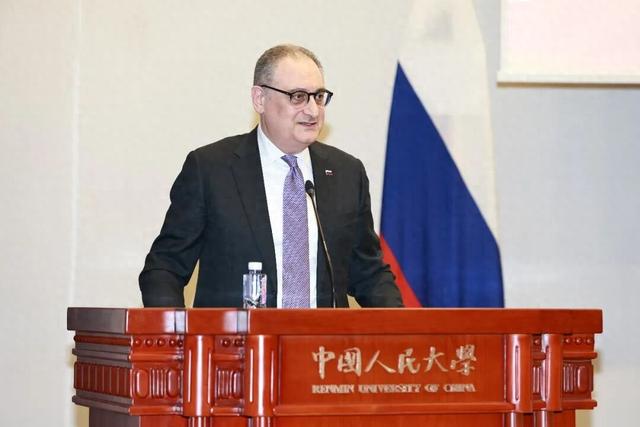
大使讲坛| 俄罗斯驻华大使伊戈尔·莫尔古洛夫:“那时我们站在一起,现在也站在一起”
Guan Cha Zhe Wang· 2025-12-31 09:38
Core Viewpoint - The speech by Igor Morgulov emphasizes the historical significance and current developments in Sino-Russian relations, highlighting mutual cooperation and shared interests in various fields, particularly in the context of commemorating significant historical events and enhancing bilateral ties. Group 1: Historical Context and Diplomatic Relations - The core theme of Sino-Russian relations in the past year has been the commemoration of the 80th anniversary of the victory in World War II, which solidified the historical bond between the two nations [3][4] - The relationship is characterized by a strong foundation built during World War II, where both nations fought against common adversaries, establishing a tradition of mutual support [4] - The upcoming 30th anniversary of the Sino-Russian strategic partnership, established in 1996, marks a significant milestone in their diplomatic relations [5] Group 2: Bilateral Cooperation and Economic Ties - A notable development is the mutual visa exemption policy implemented in September and December, which is expected to enhance people-to-people exchanges and deepen mutual understanding [7] - Sino-Russian trade has seen significant growth, with bilateral trade expected to reach approximately $245 billion by 2024, despite recent adjustments due to market factors [8] - The two countries have established over 80 major joint investment projects across various sectors, including automotive, metallurgy, and agriculture, supported by a new investment protection agreement [9] Group 3: Energy and Technological Collaboration - Russia is a key supplier of oil, gas, and coal to China, with ongoing discussions about a natural gas pipeline project that will secure long-term energy supplies for China [10] - Collaborative efforts in technology and high-tech fields are expanding, with joint research initiatives in medicine, biotechnology, and space exploration [11] Group 4: Cultural and Educational Exchange - The upcoming 2026-2027 cultural exchange year will focus on education, with a significant number of Chinese students currently studying in Russia and vice versa [12] - The successful completion of the 2024-2025 cultural year, which included around 400 activities, has strengthened cultural ties and established a vibrant dialogue between artists and institutions from both countries [19] Group 5: International Cooperation and Global Governance - Both nations advocate for a multipolar world and emphasize the need for reform in global governance structures to reflect contemporary geopolitical realities [14][16] - The collaboration within multilateral frameworks, such as the Shanghai Cooperation Organization and BRICS, aims to enhance cooperation on pressing global issues [16]
海内外嘉宾齐聚广州共探贸易冲突下的经济破局之道
Zhong Guo Xin Wen Wang· 2025-12-03 13:54
Group 1 - The core viewpoint of the forum is that trade and tariff conflicts are significantly impacting global economic growth, which has been driven by these factors for decades [1] - Former Italian Prime Minister Romano Prodi emphasized that current global trade disputes are more about political friction than economic conflict, indicating a shift in globalization and hindering free trade [1] - The Dean of the School of International Relations at Nanjing University, Zhu Feng, stated that no country can thrive independently of the global trade system, advocating for fair and equal trade cooperation, especially between the US and China [1] Group 2 - Former Bolivian President Jorge Quiroga highlighted the importance of China as an indispensable trade partner for South America, particularly in sectors like food and energy, and mentioned Bolivia's lithium resources as a complement to China's technological advantages in new energy [1] - Quiroga also noted Bolivia's interest in open-source AI systems and the country's efforts to develop local capabilities through infrastructure projects and skills training [2] - Maria Fernanda Espinosa, former President of the UN General Assembly, pointed out the dual nature of global economic interdependence and vulnerability, advocating for regional economic diversification to enhance resilience and reduce external dependencies [2] Group 3 - Espinosa argued that trade should enhance human welfare rather than serve as a geopolitical tool, and she called for reforms in the WTO to restore its credibility by focusing on dispute resolution and new areas like digital economy and green trade [3]
在二十国集团领导人第二十次峰会上的讲话 (二〇二五年十一月二十二—二十三日,约翰内斯堡)
Jing Ji Ri Bao· 2025-11-23 23:17
Group 1 - The core theme of the G20 summit is "unity, equality, and sustainability," with a strong emphasis on unity as a key to overcoming global economic challenges [1][2] - The G20 should actively seek common ground while respecting differences among member countries to foster cooperation and resolve conflicts [2][3] - The need for reform in global governance systems is highlighted, with a call for the G20 to lead in promoting multilateralism and enhancing the voice of developing countries [2][3] Group 2 - The G20 is urged to strengthen ecological and environmental cooperation to address climate change and achieve the goals of the Paris Agreement [3][4] - There is a focus on promoting green energy cooperation to ensure equitable development and support countries in their energy transitions [4][5] - The G20 should enhance food security cooperation to stabilize global food supply chains and support countries facing food shortages [5][6] Group 3 - The importance of leveraging new technologies, such as artificial intelligence, to bridge development gaps and ensure equitable access to opportunities is emphasized [5][6] - Cooperation on critical minerals is essential for sustainable supply and global resource security, with a call for responsible management of these resources [6] - The G20 is encouraged to empower developing countries, particularly in Africa, through capacity building and technological support to create job opportunities [6][7]
李强在二十国集团领导人第二十次峰会上的讲话
Xin Hua She· 2025-11-23 15:52
Group 1 - The theme of the G20 summit is "Unity, Equality, and Sustainability," with a strong emphasis on "Unity" as a key to overcoming global challenges [2] - The G20 was established in response to the Asian financial crisis in 1999 and has evolved to address various global economic issues, highlighting the importance of cooperation among diverse member states [2][3] - Current global challenges include unilateralism and protectionism, which threaten international cooperation and require the G20 to seek solutions to restore unity [2][3] Group 2 - The G20 should promote free trade and an open world economy to facilitate mutual benefits among nations, with China announcing initiatives to support industrialization in Africa and alleviate debt in developing countries [3][4] - Addressing climate change and ecological issues is crucial, with the G20 urged to enhance cooperation in environmental protection and achieve the goals of the Paris Agreement [4][5] - The G20 is called to strengthen global food security and ensure stable supply chains, particularly for countries facing hunger, by optimizing food distribution and enhancing agricultural cooperation [5][6] Group 3 - The rapid advancement of technology presents both opportunities and challenges, necessitating equitable access to development and the benefits of innovation for all nations [6][7] - The G20 should facilitate cooperation in artificial intelligence and critical minerals to ensure sustainable supply and resource security, while also addressing potential security risks [6][7] - Empowering developing countries, particularly in Africa, through capacity building and technological support is essential for inclusive global development [7][8]
学习规划建议每日问答丨如何把握“十五五”时期我国发展面临的国际国内形势
Xin Hua She· 2025-11-19 03:38
Group 1 - The core viewpoint emphasizes the need to understand the complex changes in the development environment and the profound impact of international relations, especially major power dynamics, on China's development during the "14th Five-Year Plan" period [1] Group 2 - The first aspect highlights the opportunities and challenges brought by the accelerated evolution of the world situation, including China's increasing international influence and the ongoing trend of economic globalization, despite facing external risks such as geopolitical conflicts and rising protectionism [2] Group 3 - The second aspect outlines China's development advantages, including the unique advantages of socialism with Chinese characteristics, a vast market, a complete industrial system, and abundant talent resources, which provide strong support for high-quality development [3] Group 4 - The third aspect addresses the contradictions and issues facing China's development, such as unbalanced and insufficient development, inadequate effective demand, and challenges in modernizing agriculture and rural areas, which require new strategies and solutions during the "14th Five-Year Plan" period [3] Group 5 - The conclusion emphasizes the importance of maintaining strategic determination and confidence, adapting to changes, and facing challenges head-on to continue the rapid economic development and long-term social stability of China [4]
专访社科院廖凡:“中国方案”为全球治理提供改革动能与务实样本
2 1 Shi Ji Jing Ji Bao Dao· 2025-11-13 07:59
Core Insights - The current global governance system must transition from a club dominated by a few countries to an effective platform that accommodates and responds to the demands of the "Global South" [1][5] - The systemic dilemma facing global governance is characterized by structural lag, insufficient representation, and weak execution, which are interrelated issues [3][4] - China plays a crucial role in promoting the integration of the Global South and can actively push for reforms in voting rights within international financial institutions [1][5] Global Governance Challenges - The governance system is experiencing a structural lag that fails to address new issues such as digital trade and climate change, leading to outdated rules [3][4] - There is a significant mismatch between the economic power of emerging markets and developing countries and their voting rights in major international financial institutions, resulting in a "representation deficit" [3][4] - Weak execution of global agreements occurs when major powers have conflicting interests, leading to decision paralysis and selective implementation [4] China's Role in Global Governance - China can act as a constructive leader, consensus builder, and reform practitioner in international economic governance [5][6] - The country aims to enhance the representation and decision-making power of the Global South in key institutions like the IMF and World Bank [5][6] - China's initiatives, such as the Global Development Initiative, address pressing challenges faced by developing countries and provide practical pathways for implementing the UN 2030 Agenda [6] Trade Dynamics - The global trade system is at a historical crossroads, facing challenges from rising unilateralism and protectionism, as well as opportunities from digital technology and green transformation [7][8] - China’s commitment to high-level opening up is both a strategic choice for its economic development and a stabilizing force for the multilateral trade system [9][10] - The recent signing of the China-ASEAN Free Trade Area 3.0 upgrade agreement signifies a new phase of high-quality economic relations, focusing on digital and green economies [12][13]