全面质量管理

Search documents
全面质量管理应成为常态
Jing Ji Ri Bao· 2026-02-23 23:31
Group 1 - The core idea emphasizes the importance of quality management in enhancing the stability and reliability of industrial chains, with over 5,300 leading enterprises and 280,000 chain member companies participating in more than 1,800 quality improvement projects since 2024, addressing over 25,000 quality issues [1] - Companies are urged to shift from a passive compliance approach to proactive quality management, integrating quality responsibility throughout the entire process from R&D to delivery and after-sales [1][2] - The article highlights the need for a comprehensive quality management system that includes all aspects of the supply chain, advocating for a culture where quality is prioritized at every level of the organization [2][3] Group 2 - Companies like Xi'an Geely Automobile and Ningbo Zhoushan Port Group are implementing innovative quality management practices, such as a "full staff quality real-name system" and a quality reward fund, respectively, to enhance quality culture and operational efficiency [2] - Digital technologies are transforming quality management from traditional inspection methods to proactive, data-driven approaches, as seen in companies like Hikvision and CATL, which utilize AI and big data for quality risk assessment and improvement [2] - The article stresses that the quality of a product is determined by its weakest link, urging both leading and small enterprises to collaborate and share best practices to foster a culture of continuous quality improvement [3]
喜旺荣获中国肉类行业质量标杆
Qi Lu Wan Bao· 2026-01-30 13:33
Core Viewpoint - Xi Wang Group has been recognized as a quality benchmark in China's meat industry due to its rigorous quality control model and strong research capabilities, aligning with the national initiative to enhance overall quality management levels [1][2]. Group 1: Quality Management Practices - Xi Wang Group's "three-in-one" quality management model has established a "six-dimensional manufacturing" technical system, effectively addressing long-standing development bottlenecks in the traditional meat products industry [1]. - The company has innovatively created a "four-dimensional quality control" technical system, which covers the entire chain of detection, control, monitoring, and early warning, significantly improving quality management levels across the enterprise and its supply chain [1][2]. Group 2: Commitment to High Standards - Xi Wang Group has positioned itself at the forefront of low-temperature meat product development since its inception, adopting advanced processing technologies and emphasizing quality management [3]. - The company has invested heavily in establishing advanced, closed-loop temperature-controlled production facilities and adheres to pharmaceutical standards in meat production [3]. Group 3: Technological Innovation - Xi Wang Group has implemented a technology innovation and standardization strategy, establishing domestic and international research platforms and collaborating with various research institutions to tackle significant industry challenges [4][5]. - The company has participated in the development of over 20 national and industry standards, enhancing its influence in standardization efforts [5]. Group 4: Product Structure Optimization - Xi Wang Group continuously innovates and diversifies its product offerings based on consumer demand, launching new products that have gained popularity among consumers [6]. - The company has developed a comprehensive quality management system that includes a self-developed cold chain management model, ensuring product freshness and safety throughout the distribution process [6]. Group 5: International Market Expansion - Xi Wang Group has achieved significant recognition in international markets, successfully integrating traditional Chinese health recipes with advanced processing techniques from countries like Italy and Germany [7]. - The company has established a strong presence in developed markets such as Canada, Japan, and the United States, with products available on major international e-commerce platforms [7].
质量强企结硕果!鲁抗医药荣膺第七届济宁市市长质量奖
Qi Lu Wan Bao· 2026-01-15 06:33
Core Viewpoint - The recognition of LuKang Pharmaceutical with the Jining Mayor Quality Award highlights the company's commitment to high-quality management and operational excellence [1][3] Group 1: Quality Management Practices - LuKang Pharmaceutical has implemented a comprehensive quality management system that integrates advanced concepts such as total quality management and lean management into its operations [1] - The company emphasizes a "zero defect" management approach and the 7S management system to enhance quality control [1] - A three-dimensional management model based on the entire value chain and total quality management has been established, focusing on quality control across research, supply, production, and sales [1][2] Group 2: Research and Development Capabilities - LuKang Pharmaceutical possesses the largest quality testing center in southwestern Shandong and has developed a full-process quality control system using LIMS and PAT technologies [2] - The company has a robust R&D framework with multiple national and provincial-level research platforms, leading to significant advancements in innovative drug development [2] - During the 14th Five-Year Plan period, the company has initiated clinical trials for three national Class 1 innovative drugs and has obtained 94 human drug registration certificates [2] Group 3: Recognition and Future Commitment - The award serves as a recognition of LuKang Pharmaceutical's long-term dedication to high-quality development and pursuit of excellence [3] - The company plans to continue its high-standard quality management and strengthen technological innovation to contribute to public health and local economic development [3]

十部门发文,打击虚假检测报告
仪器信息网· 2025-12-17 09:08
Core Viewpoint - The article discusses the "Guiding Opinions on Improving the Quality of Products and Services on Online Trading Platforms," which aims to enhance the quality management of online platforms, ensuring consumer safety and satisfaction while promoting healthy economic development [2][4]. Group 1: Overall Requirements - The guiding opinions emphasize a people-centered development approach, aiming for significant improvements in product and service quality by 2030, addressing key quality issues, and enhancing consumer satisfaction [5]. Group 2: Improving Product and Service Quality - The document outlines initiatives to enhance the quality of online products, including the establishment of quality standards and certification systems across various sectors such as electronics and food [6]. - It encourages platforms to develop innovative data products and services, promoting customized manufacturing and improving supply chain quality [6]. - The opinions advocate for the establishment of a comprehensive online service quality management system, including the use of advanced technologies like AR and VR for better consumer interaction [6]. Group 3: Strengthening Quality Management - Platforms are encouraged to adopt ISO9001 quality management systems and establish chief quality officer roles to enhance overall quality management [7]. - The document stresses the importance of rigorous verification of quality inspection reports and certifications to eliminate fraudulent practices [7]. - It also highlights the need for training and capacity building for online operators to ensure effective quality management throughout the supply chain [7]. Group 4: Addressing Illegal Business Practices - The opinions call for strict measures against counterfeit products and misleading marketing practices, emphasizing the need for accurate product information disclosure [8]. - It outlines the importance of regulating pricing practices to prevent unfair competition and ensure transparency in pricing [8]. Group 5: Creating a Safe Online Consumption Environment - The document promotes the establishment of a comprehensive after-sales service system, encouraging platforms to streamline dispute resolution processes and enhance consumer support services [10]. - It emphasizes the need for improved consumer rights protection mechanisms, including online dispute resolution and efficient complaint handling [10].


市场监管总局等部门发布关于提升网络交易平台产品和服务质量的指导意见
Mei Ri Jing Ji Xin Wen· 2025-12-12 10:14
Core Viewpoint - The recent guidelines issued by the State Administration for Market Regulation aim to enhance the quality of products and services on online trading platforms, which is crucial for improving the online consumption environment and fostering the healthy development of the platform economy [1][2]. Group 1: Overall Requirements - The guidelines emphasize a people-centered development approach, aiming for significant improvements in product and service quality on platforms by 2030, with a focus on addressing key quality issues and enhancing consumer satisfaction [2]. Group 2: Enhancing Product and Service Quality - The initiative encourages innovation in online product quality, particularly in sectors like home appliances, electronics, and food, promoting standardized quality across online and offline sales [3]. - It supports the development of online service quality management rules, including the use of advanced technologies for better consumer interaction and service quality commitments [3]. - The guidelines advocate for the cultivation of trustworthy online business entities, emphasizing quality grading and the establishment of a credit evaluation mechanism for platform operators [3]. Group 3: Strengthening Comprehensive Quality Management - Platforms are encouraged to adopt comprehensive quality management systems, integrating international standards and enhancing their internal auditing processes [4]. - The guidelines stress the importance of improving the quality management capabilities of platform operators, including establishing a full-chain quality control system [5]. - There is a focus on enhancing the quality awareness of live-streaming e-commerce practitioners, promoting quality-centric selection mechanisms and training [5]. Group 4: Addressing Illegal Business Practices - The guidelines call for strict measures against fraudulent practices such as selling counterfeit products and misleading marketing, ensuring that platforms enforce compliance with product information disclosure [6]. - There is a strong emphasis on combating misleading advertising, particularly in sensitive sectors like food and healthcare, and ensuring accountability for false claims [6]. - The guidelines also address unfair competition and pricing violations, mandating transparency in pricing and discouraging predatory pricing practices [6]. Group 5: Strengthening Quality Supervision - The implementation of a "digital passport" for products is proposed to enhance traceability and verification of product quality [6]. - The guidelines advocate for the use of advanced technologies like big data and AI to improve regulatory capabilities and ensure effective monitoring of online transactions [6]. - There is a call for enhanced collaboration between regulatory bodies to ensure comprehensive oversight of online trading activities [6]. Group 6: Creating a Safe Online Consumption Environment - The guidelines promote transparency in information disclosure by platforms and operators, encouraging the public sharing of service agreements and quality information [6]. - They advocate for the establishment of a robust after-sales service system, ensuring consumer rights are protected and disputes are resolved efficiently [6]. - The guidelines aim to facilitate consumer rights protection, promoting mechanisms for quick resolution of quality disputes and enhancing consumer advocacy [6].
我国有色金属行业QC小组质量改进成果首获ICQCC金奖
Zhong Guo Zhi Liang Xin Wen Wang· 2025-12-11 06:59
Group 1 - The core achievement of the Northern Copper Mining Group's QC team is the significant reduction of the fault rate in the 410-level rail transport system from 4.36% to 1.83%, enhancing both economic and safety benefits [1][2] - This award marks the first time that grassroots quality improvement results from China's non-ferrous metal industry have received the highest award at the ICQCC, indicating a historic breakthrough [1] - The innovative measures implemented include shortening the power supply radius and adding buffer springs, which have extended the lifespan of key equipment and improved maintenance efficiency [1] Group 2 - The ICQCC, initiated in 1976, is the largest and most influential international conference in the field of quality management, involving 14 countries and regions [2] - The achievement signifies that the Northern Copper Mining Group has reached an internationally advanced level in mass quality innovation activities, refined production management, and intelligent manufacturing [2] - The company has integrated comprehensive quality management into its overall strategy, fostering grassroots innovation to continuously address production bottlenecks and drive high-quality development [2]

公司运营管理的五大战略!
Sou Hu Cai Jing· 2025-12-07 04:29
Core Objectives of Operations Management - The primary goal of operations management is to deliver the right quality of products or services to customers at the right time and cost while continuously optimizing processes [1] Core Modules of Operations Management - Strategic and goal setting involves translating the company's vision and mission into executable operational strategies such as cost leadership and differentiation [3] - Process management and optimization includes designing core business processes aligned with strategy, establishing standard operating procedures, and applying tools like Lean and Six Sigma for continuous improvement [3] - Resource management focuses on optimizing human capital, financial resources, physical assets, and information resources to enhance operational efficiency [3] - Quality and customer orientation emphasize comprehensive quality management and customer relationship management to improve satisfaction and loyalty [3] Operational Focus by Company Development Stage - Startups prioritize agility and survival, focusing on validating business models and building core teams [5] - Growth-stage companies emphasize scaling up by establishing standardized processes and introducing basic management systems [5] - Mature companies concentrate on efficiency and innovation, optimizing cost structures and driving organizational change [5] Current Trends in Operations Management - Digital transformation leverages big data, AI, and IoT for smart predictions and automated decision-making [7] - Agility and flexibility are emphasized to enable quick responses to market changes through small teams and cross-department collaboration [7] - Supply chain resilience shifts focus from efficiency to safety and robustness, promoting diversified supply chains [7] - Sustainable development integrates ESG principles into operations, focusing on green production and carbon footprint management [7] - A human-centered approach enhances employee experience and fosters a learning organization [7] Recommendations for Managers - A systems thinking approach is essential, recognizing the interconnections between processes [9] - Data-driven decision-making is preferred over intuition, necessitating robust data collection and analysis capabilities [9] - Customer-centric optimization of internal processes should aim to create more value for customers [9] - Investing in talent is crucial, as effective processes require skilled execution and optimization [9] - Cultivating a culture of continuous improvement encourages teams to adopt problem-solving and process optimization as habitual practices [9]

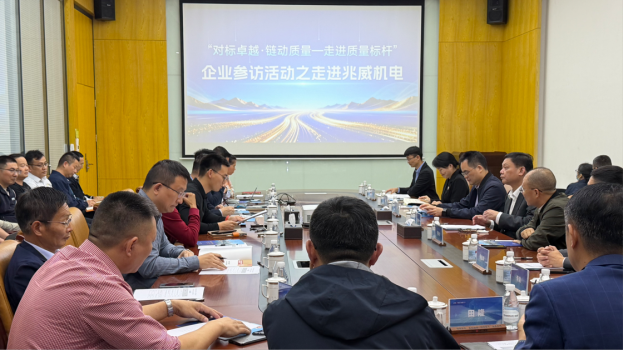
深圳市市场监管局组织开展“对标卓越·链动质量”走进质量标杆企业活动
Zhong Guo Zhi Liang Xin Wen Wang· 2025-12-05 09:00
Group 1 - The event "Benchmarking Excellence: Driving Quality" was organized by the Shenzhen Market Supervision Administration and the Yantian District People's Congress to promote quality management experiences of award-winning companies, specifically Shenzhen Zhaowei Electromechanical Co., Ltd. [1][3] - The theme of the event focused on "Strengthening Comprehensive Quality Management to Promote Quality Nation Construction," addressing the core needs for high-quality development in enterprises [3]. - Zhaowei Electromechanical showcased its innovations in automation and intelligent management, emphasizing its training models for employees and the importance of quality talent cultivation [3][5]. Group 2 - Zhaowei Electromechanical has developed a quality management model that integrates customer orientation, continuous innovation, and zero-defect principles, achieving refined and intelligent management throughout the product lifecycle [3][5]. - The Chief Quality Officer of Zhaowei Electromechanical highlighted the role of digital technology in real-time monitoring and precise management of product quality across different production bases [5]. - The Shenzhen Market Supervision Administration has supported numerous enterprises in quality system construction, with 9 companies nominated for the China Quality Award and 21 winning the Guangdong Provincial Government Quality Award, reflecting a strong commitment to quality [5][6]. Group 3 - The Shenzhen Market Supervision Administration plans to continue serving as a "service provider" and "accelerator" for quality improvement by optimizing policy supply and expanding financing services [6]. - The administration aims to foster a social atmosphere that values quality and excellence, contributing to Shenzhen's goal of becoming a globally influential quality hub [6]. - The "Walk into Quality Benchmark Enterprises" series has been an important initiative for promoting quality enhancement through deep exchanges and practical examples [6].
陕西多项质量管理成果获全国奖项
Shan Xi Ri Bao· 2025-11-18 23:02
Core Points - The Shaanxi quality management teams excelled at the 30th Asia-Pacific Quality Organization International Conference, winning multiple awards [1][2] - A total of 78 awards were received by Shaanxi quality management teams, ranking among the top in the nation [1] - The awarded teams focused on practical issues in production, service, and management, utilizing quality tools to enhance efficiency and customer satisfaction [1] Summary by Category Quality Management Achievements - Shaanxi quality management teams achieved 25 first-class, 41 second-class, and 12 third-class results, totaling 78 awards from over 550 teams nationwide [1] - In the "Quality Trustworthy Team" evaluation, Shaanxi received 10 5A-level and 15 4A-level awards, totaling 25 awards [2] Industry Participation - The awarded teams represent core enterprises across various sectors, including manufacturing, construction, and services, showcasing the active participation and creativity of Shaanxi enterprises in quality improvement [2] - The results reflect the province's efforts in advancing comprehensive quality management and strengthening quality talent cultivation [2] Future Initiatives - The Shaanxi Quality Association plans to continue its role as a bridge, collaborating with industry enterprises and quality professionals to promote advanced quality methods and solidify the quality foundation [2]
沪上金秋质潮涌 奋楫扬帆启新程——2025年上海市“质量月”活动综述
Zhong Guo Zhi Liang Xin Wen Wang· 2025-11-11 07:46
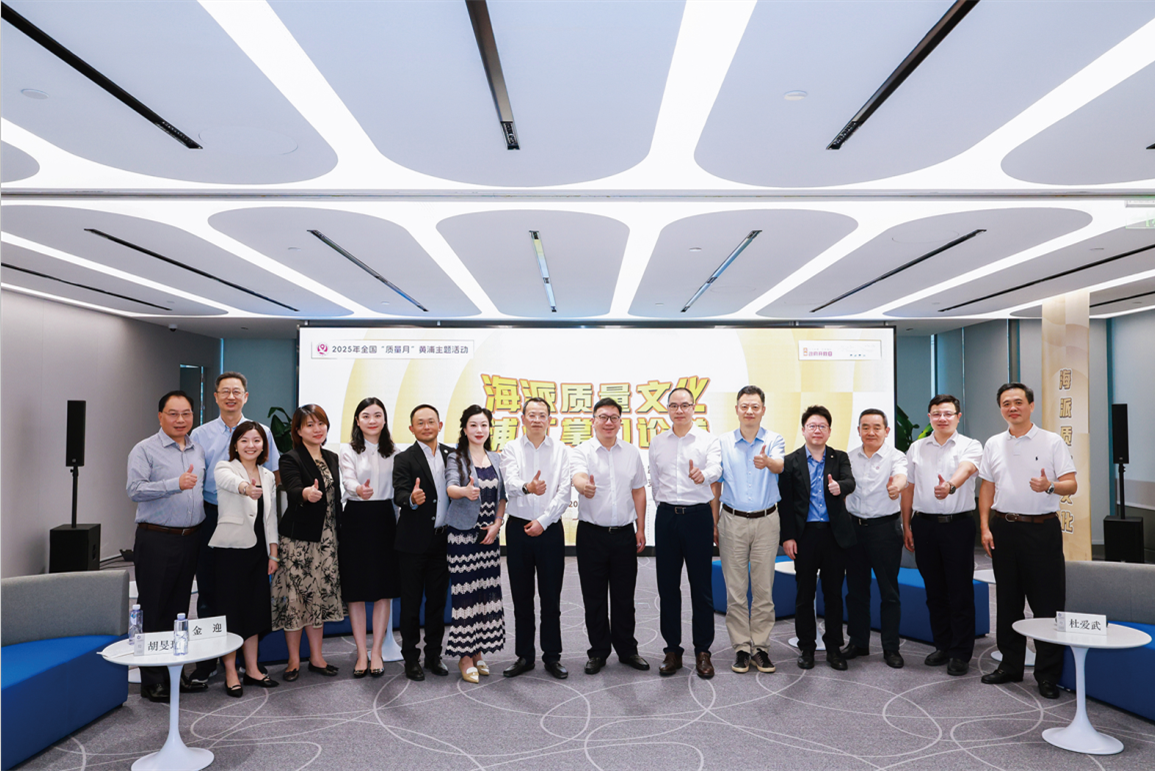
Core Viewpoint - The 2025 Shanghai "Quality Month" activities focus on enhancing comprehensive quality management to promote the construction of a quality-driven city, reflecting a shift from product-centric quality measures to a broader societal pursuit of quality [1][11]. Policy Guidance - Shanghai is implementing the "Quality Strong Nation Construction Outline" and its local implementation plan through various channels to instill quality concepts among leaders and business managers [11]. - The "Shanghai Quality Status Analysis Report (2025)" provides a comprehensive overview of the city's quality development, serving as a crucial reference for decision-making in quality enhancement [11]. Public Engagement - The "Quality Month" activities have seen significant participation, with 2,218 enterprises and over 145,000 citizens involved in various events, highlighting the growing societal emphasis on quality [12]. Financial Services Innovation - Various districts are exploring new paths for integrating quality elements with financial services, such as the "Quality Financing Credit Enhancement" mechanism in Pudong and the "Quality Standard Loan" 2.0 in Hongkou [12][13]. - These initiatives aim to alleviate financing challenges for small and medium-sized enterprises, promoting the idea that quality has value and can generate financial benefits [12]. Quality Infrastructure Development - Shanghai is advancing quality infrastructure in key industries, with new service stations established in Pudong for smart supply chains and high-end manufacturing [13]. - Training and certification programs for quality management are being implemented to enhance the capabilities of quality professionals [13]. Cultural Empowerment - A series of cultural activities during "Quality Month" aim to integrate quality concepts into daily life, fostering a deeper understanding of quality among citizens [14][15]. - Events like the "Sea-Pai Quality Culture" forum facilitate dialogue between traditional brands and emerging industries, promoting quality management insights [14]. Regional Collaboration - The activities emphasize regional collaboration, with initiatives like the Long Triangle Quality Improvement Competition engaging multiple enterprises to address common quality challenges [17]. - The "Long Triangle Biopharmaceutical Industry Quality Collaboration Initiative" aims to enhance quality standards across the region [17]. Grassroots Quality Services - Local regulatory bodies are implementing proactive quality service measures, such as standard classrooms and community outreach programs, to improve quality awareness among small businesses [18][19]. Innovation in Quality Practices - Innovative practices are being adopted, such as the cross-border e-commerce quality verification system developed by a local app, showcasing the integration of technology and quality management [20]. - The "Quality Walk" initiative in Putuo District has become a signature program, promoting quality awareness through interactive experiences [20][21]. Conclusion - The 2025 "Quality Month" activities reflect Shanghai's commitment to quality enhancement as a core component of urban competitiveness, aiming to establish a robust quality governance system and elevate public quality consciousness [21].