
场景融合

Search documents
剑南春马年春节营销:以“家国情怀”为笔,绘就市场热销画卷
经济观察报· 2026-02-10 10:02
Core Viewpoint - The white liquor industry is transitioning from rapid growth to high-quality development, where brands that understand and meet consumer spiritual needs and build deep cultural connections will gain a competitive edge in the next industry cycle [1][20]. Group 1: Market Environment and Trends - As the Spring Festival approaches, the white liquor industry is experiencing a critical turning point amid deep adjustments, with the market showing a "three lows and one high" trend, indicating an anticipated industry inflection point [2][4]. - The market for zodiac liquor is projected to exceed 20 billion, but the growth rate has decreased by 5.3 percentage points compared to the previous year, indicating a shift in consumer focus towards cultural and emotional values [4][18]. Group 2: Cultural Marketing Strategies - Jian Nan Chun has integrated "national sentiment" into every aspect of its Spring Festival marketing, recognizing the industry's shift from material consumption to spiritual consumption, where cultural resonance is a key factor for consumer choice [4][10]. - The company has successfully engaged consumers through cross-industry collaborations, such as the Douyin micro-variety show "National Sentiment and Spring Flavor," which explores regional cultural nuances and enhances brand culture [5][10]. Group 3: Product Innovation - Jian Nan Chun's zodiac liquor, priced at 1,099 yuan, serves as a link between the "National Sentiment" theme and the Spring Festival market, featuring a design inspired by cultural heritage [7][10]. - The cultural strategy enriches the product's significance, while high-quality and distinctive products further support the cultural marketing efforts, creating a symbiotic relationship [10]. Group 4: Scene Integration - The importance of scene marketing is increasing, with consumers seeking holistic experiences tied to specific occasions and emotional atmospheres, driving brand growth [12][15]. - Jian Nan Chun has created diverse consumer experiences, from sponsoring local lantern festivals to organizing a New Year shopping festival, enhancing brand recognition and purchase desire [12][15]. Group 5: Long-term Cultural Strategy - The white liquor market is under pressure from deep adjustments while also seeing signs of consumer recovery, pushing the industry towards a "true value" competition phase [18][20]. - Jian Nan Chun's marketing actions during the Spring Festival reflect a strategic focus on cultural elements, meeting consumer demands for emotional value and cultural significance [18][20]. - The company's cultural strategy is not just a short-term marketing tool but a core aspect of long-term brand building, positioning it for success in the evolving white liquor industry [20].


40余组彩灯呈现四川特色文化元素
Xin Lang Cai Jing· 2026-02-08 18:30
Core Viewpoint - The 55th Chengdu International Panda Lantern Festival, themed "Sichuan Lanterns Shine Worldwide: Dreamy Dong'an Lake," officially opened on February 7 and will run until March 22, with a closure on the eve of the Lunar New Year, February 16 [3][7]. Group 1 - The festival features over 40 sets of colorful lanterns, showcasing Sichuan's cultural elements such as national treasures, the Shu Road, the Three Kingdoms, poetry, and Hakka culture across a 330-acre area [7]. - The event is designed to create an immersive cultural and tourism experience, integrating elements like "Rongcheng Joyous Events," "Must-Visit Sichuan," and "Clean and Honest Rongcheng" into the festival [7]. - The festival employs innovative concepts such as "IP Empowerment, Scene Integration, and Vitality Drive" to construct new design scenarios [7]. Group 2 - In addition to the lantern displays, the festival includes various intangible cultural heritage projects and unique experiences, featuring performances like the trendy dance "Shuhan Boys" and "Heavenly Court Dance Troupe" [8]. - The festival hosts markets like "Flower Market" and "Prosperity Market," offering Sichuan specialties, family-friendly foods, and international fusion cuisine, creating a vibrant atmosphere for visitors [8]. - The festival's opening hours are from 15:00 to 22:30 on weekdays and weekends, with extended hours during the Spring Festival, allowing visitors to enjoy the lanterns and celebrate the New Year [8].

人群精准适配 场景深度融合
Jin Rong Shi Bao· 2026-01-28 04:33
Group 1 - The service consumption market is experiencing significant growth, with projections indicating that by 2025, per capita service consumption expenditure will increase by 4.5%, accounting for 46.1% of total per capita consumption expenditure [1] - The focus of competition in the consumer goods and retail industry has shifted from "capturing market share" to "creating meaning," reflecting a more mature and rational consumer base that seeks emotional resonance and identity recognition [2] - The "performance economy" is expected to see 640,400 commercial performances in 2025, a 6.58% increase from 2024, with an audience of 194 million, indicating a strong demand for immersive and personalized experiences [2] Group 2 - Major cities like Beijing and Shanghai are actively promoting the opening of new stores, with Beijing expecting 1,068 new stores and Shanghai 848 new stores by the end of 2025, enhancing social engagement among younger consumers [3] - The "silver economy" is emerging as a new growth area, with policies aimed at optimizing elderly care services and products, reflecting a shift in elderly consumer needs towards quality and diversified service experiences [4] - Various regions are piloting exclusive services for the elderly, indicating a market shift towards high-quality, emotionally resonant consumption experiences for older demographics [4] Group 3 - Service consumption is evolving through cross-industry integration, with models like "culture + tourism" and "digital + night economy" breaking down barriers and creating a multi-dimensional consumption ecosystem [5] - The "Su Chao" consumption tracking report indicates that integrated service scenarios have generated 37.96 billion yuan in revenue, showcasing the potential of immersive experiences in service consumption [6] - Online retail is projected to reach 15.97 trillion yuan in 2025, growing by 8.6%, with physical goods online retail accounting for 26.1% of total retail sales, highlighting the importance of digital integration in enhancing service consumption [6] Group 4 - Analysts suggest increasing investment in public service sectors such as elderly care, childcare, culture, and tourism to meet diverse consumer needs, emphasizing the role of technology in creating new service offerings [7] - Financial services should adapt to the unique characteristics of family-oriented consumption, moving from standardized to customized financial solutions to enhance the overall service consumption experience [7]
北京市发改委副主任张鑫做客北京青年报两会直播间:开局之年答好“经济卷”和“民生卷”
Xin Lang Cai Jing· 2026-01-27 22:08
关键词:融合 (来源:千龙网) 2026年是"十五五"开局之年,做好经济工作,迈好"十五五"时期发展第一步,意义重大。 昨天(27日),北京市发展和改革委员会党组成员、副主任、新闻发言人张鑫做客北京青年报两会直播 间,用引领、融合、突破、接续四个关键词串接起对计划报告的理解,深入解读今年北京如何统筹答好 开局之年的"经济卷"和"民生卷"。 关键词:引领 力争今年固定资产投资实现破万亿 张鑫告诉北京青年报记者,在今年本市的具体工作中,始终把高质量发展放在重要位置,坚持首善标 准、服务全局,坚持稳中求进、提质增效,坚持以人为本、守牢底线,坚持有效市场和有为政府相结 合,更加突出规划、目标、项目引领,政策、资源、工作融合,改革、创新、开放突破,一件事情接着 一件事情办、一步一步坚定走,统筹答好开局之年的"经济卷"和"民生卷"。"如果用几个词来概括今年 的特点,我觉得是'引领''融合''突破''接续'。"张鑫说。 第一个关键词是"引领"。主要体现在三个方面:一是规划引领。"今年是'十五五'开局之年,《北京市国 民经济和社会发展第十五个五年规划纲要(草案)》全文正接受北京市十六届人大四次会议审查,审查 通过后我们将做好 ...
超前点映口碑不佳,广告或成为缓兵之计
3 6 Ke· 2026-01-27 12:07
不花钱也能看超前点映,追剧党要"享福" 了? 日前有用户反馈称,在购买《骄阳似我》等电视剧的点映礼包时,在直接付费购买之外,平台还提供 了"看广告免费解锁"选项。但需要注意的是,从社交媒体相关帖子评论区的用户互动来看,目前这一服务 似乎仍在测试中,尚未全量上线。 众所周知,面对盈利困境,再叠加短视频、短剧等新兴内容的冲击,爱优腾芒等长视频平台近年来对于内 容的投入更加谨慎,也更注重用户侧的商业化。其中,超前点映已经成为了一众长视频平台的重要变现方 式。中金公司发布相关研究数据显示,2025年上半年55%左右的上新国产剧集,均启用了"SVIP提前看、 点映加更收官礼包、锁集"等模式排播,比例较往年显著提升。 在这样的背景下,提供"看广告提前解锁点映剧集"这个选项,长视频平台或是试图打破此前"一刀切"的二 次收费模式,通过给用户带来更多的选择权,进一步降低抵触情绪,让超前点映更具可持续性。 更进一步来说,长视频平台此举或许也是尝试通过"场景融合",即将广告场景与点映内容深度绑定来打破 业务壁垒,提升广告与超前点映的变现效率,从而实现"1+1>2"的效果。 需要注意的是,虽然艾媒咨询的相关数据显示,2024年有57 ...

“场景+技术”助动漫产业破圈升级
Xin Lang Cai Jing· 2026-01-25 22:24
"到馆游客的构成,直观反映了动漫的普惠性及产业市场的多层次需求。"该馆副馆长朱虹介绍,当前动 漫产业正从单一内容创作向全链条生态升级,通过与科技、旅游、文创等领域的深度融合,推动"全龄 段"文化消费市场加速形成。 □ 经过多年的政策扶持与技术积淀,国产动画电影的创作机制日趋成熟,制作水平显著提升,产量与质 量实现同步增长,观众的认知度与信任度不断增强,良性循环的市场环境已基本形成。 □ 国产动漫创作应进一步加强对现实题材、科幻科普题材和青少年生活题材的挖掘,推动中华优秀传统 文化与当代生活的创造性转化、创新性发展,通过生动的动画语言表达当代价值观与科学观,不断提升 作品的文化内涵与审美价值。 当前,中国动漫产业正处于从高速增长向高质量发展转型、从文化产品输出向产业能力输出升级的关键 阶段。向新场景要增量、向新技术要效率、向新融合要动能,已成为中国动漫产业守正创新的核心发展 路径。 场景融合开拓市场 "动漫产业已在我国形成电影、电视、网络三位一体的内容生态,并正加速向全年龄、多场景渗透。"中 国动漫集团创作策划中心主任宋磊介绍,动漫产业正与实体产业深度融合,成为赋能经济社会发展的重 要文化力量。 动漫早已冲破纸 ...
服务消费新场景巡礼|2025水岸音乐节×电影节爆火,上海西岸凭什么圈粉3万人?
Sou Hu Cai Jing· 2026-01-14 13:58
Core Insights - The event "2025 GATEM Waterfront Music Festival × Waterfront Film Festival" showcases the integration of music, film, sports, and consumption in a vibrant waterfront setting, attracting significant participation and engagement [3][6]. Group 1: Event Overview - The event took place from August 15 to 24, 2025, at the West Bank Dream Center, featuring a theme of "EVERYBODY DREAMS HERE" and creating a comprehensive consumption loop throughout the day [6]. - Activities included a morning "Waterfront Sunrise Run," 52 music performances in the evening, and 17 classic films screened at night, enhancing the immersive experience for attendees [6][10]. - The event led to a 10.4% increase in foot traffic and a 10% year-on-year growth in sales, demonstrating the successful synergy between cultural experiences and commercial consumption [6][11]. Group 2: Innovations and Strategies - The "Daydream Plan" was introduced to support ordinary creators, providing a full process from creation to performance, significantly enhancing public participation [9]. - A unique "scratch card promotion" mechanism was implemented to connect event participation with physical consumption, utilizing integrated operations of activities, content, channels, and data for precise marketing [10]. - The event's design emphasized both scenic experiences and interactive elements, allowing visitors to enjoy the natural landscape while engaging in cultural and commercial activities [10]. Group 3: Future Outlook - The event attracted over 30,000 participants and generated over 21 million online exposures, establishing a viable model for cultural empowerment of the waterfront economy [11]. - It promotes a virtuous cycle of "cultural promotion of commerce and commerce supporting culture," setting a replicable industry benchmark for integrating industrial heritage with cultural creativity [11]. - Future plans include deepening IP-based operations and exploring more integrated scenarios such as "waterfront + intangible cultural heritage" and "waterfront + family activities" [11].

CES 2026:加码“数字文具”,汉王科技首发Clear7 Ultra与M6系列
Huan Qiu Wang· 2026-01-07 04:28
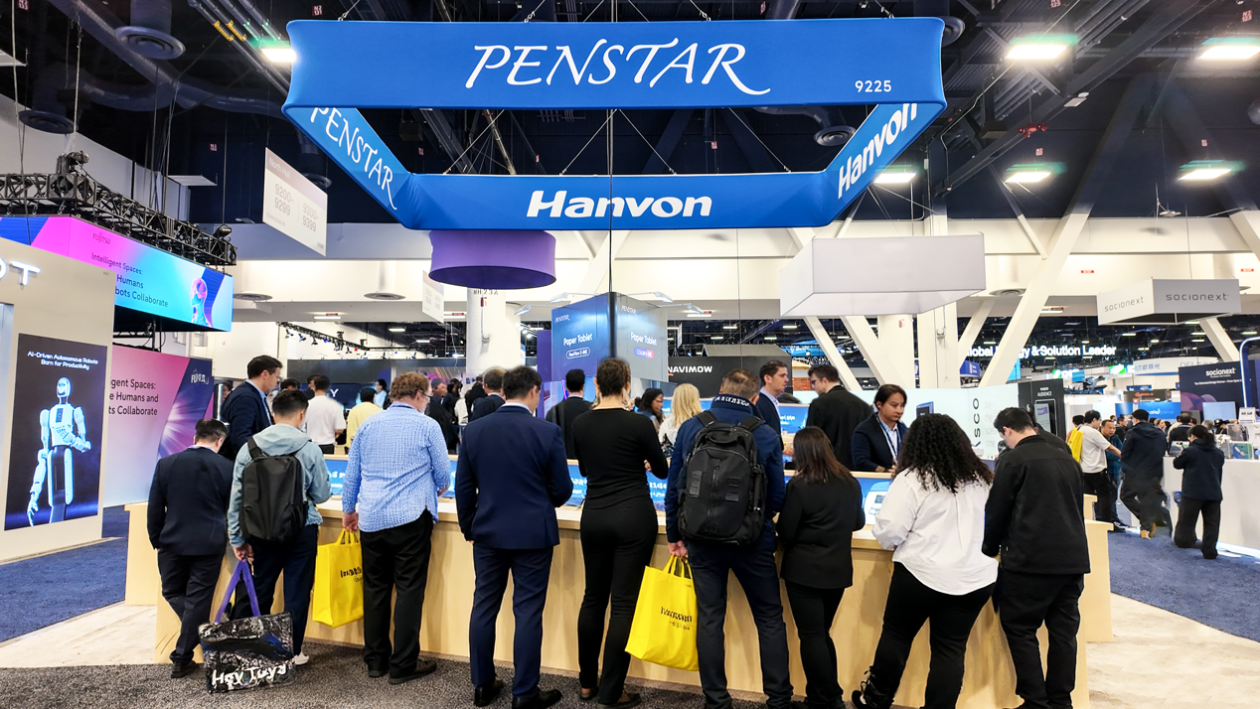
Company Overview - Hanwang Technology launched the Clear7 Ultra and M6 series e-readers at CES 2026, showcasing its innovative capabilities in the e-paper and digital stationery sectors [1][3] - The Clear7 Ultra is the first domestic 7.1-inch reader to utilize Oxide high-pressure fast refresh screens and T2000 full-area fast refresh engines, achieving a 35% increase in refresh speed, a 10% improvement in contrast, and a 30% reduction in power consumption compared to previous models [1] - The M6 series targets lightweight and flexible office users, integrating advanced pen control technology with AI features such as voice transcription and document scanning, evolving from traditional reading to a "scene integration" digital stationery application [3] Product Features - Clear7 Ultra's design includes a CNC metal frame and multiple color options, appealing to younger users' aesthetic preferences and immersive reading needs [1] - The M6 series offers a professional writing experience while incorporating multi-modal AI applications, providing a comprehensive digital stationery solution that meets diverse user needs [5] Market Positioning - Hanwang emphasizes an open ecosystem and AI innovation, differentiating itself from competitors like Kindle, which has a closed system. The Clear7 Ultra allows users to install third-party reading applications and optimize their reading experience [5] - The company is leveraging its sub-brand "Penstar" to accelerate its overseas expansion, establishing online channels in North America and planning partnerships with mainstream retailers to enhance product visibility [5][6] Industry Trends - The global e-paper terminal market is experiencing rapid growth, with a reported 71.3% year-on-year increase in shipments, driven by policies promoting low-carbon initiatives and rising demand for paperless office and smart education solutions [8] - E-readers are evolving from simple reading tools to multifunctional devices that include handwriting, voice interaction, and AI content generation, creating a new paradigm of digital stationery that merges traditional stationery with smart hardware [8] - Industry experts believe that Hanwang's introduction of the Clear7 Ultra and M6 series aligns with the global trends in digital reading and stationery, potentially redefining the standards for next-generation smart reading and writing terminals [9]

以科技创新重塑厨房健康新体验:卡萨帝厨电携手宝洁JOY定义“中国厨房新标配”
Feng Huang Wang· 2025-12-29 06:29
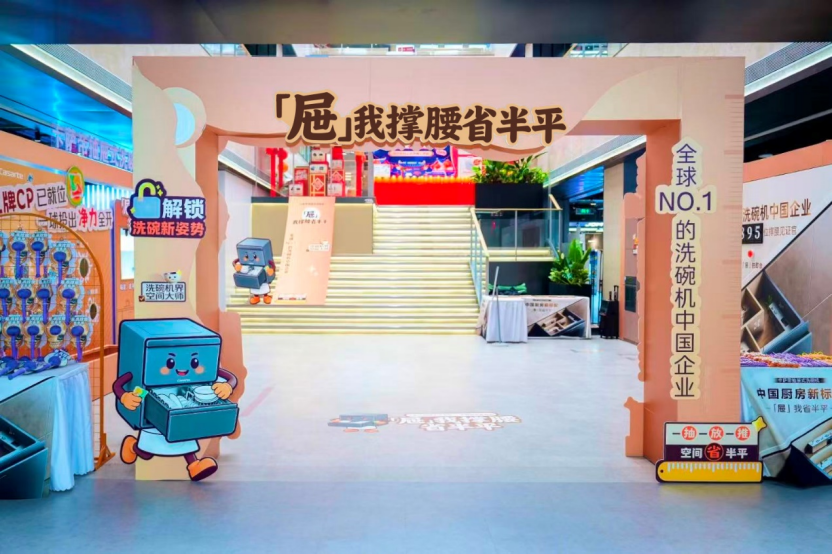
Core Insights - The modern kitchen is evolving into a space that emphasizes health, comfort, and emotional connection, marking a new stage in the quality of life for Chinese families [2][13] - The collaboration between high-end appliance brand Casarte and cleaning industry leader Procter & Gamble's Joy aims to address common kitchen challenges in Chinese households through technological innovation [2][10] Group 1: User Pain Points and Innovations - The average kitchen size in China is only 6.1 square meters, with over 70% of households being small to medium-sized, leading to ergonomic challenges with traditional dishwashers [3][11] - Users experience over 7,300 instances of bending down annually while using traditional dishwashers, resulting in a cumulative weight burden of 1,022 tons [3] - Casarte's innovative drawer-style dishwasher design allows users to operate it without bending, saving nearly 30% of operational space compared to traditional designs [3][5] Group 2: User Experience and Market Feedback - The drawer-style dishwasher has achieved a user satisfaction rate of 98.2% for its "no bending" experience, indicating its human-centered design [5] - Casarte's drawer-style dishwasher has led the offline market in China for three consecutive years, becoming a new trend in high-quality kitchen configurations [5][11] - The collaboration with Procter & Gamble's Joy has resulted in a complete kitchen ecosystem that enhances both space efficiency and cleanliness [10][11] Group 3: Product Integration and Ecosystem Development - Procter & Gamble's Joy has introduced a multi-chamber dishwashing pod that simplifies the cleaning process, addressing the clutter of traditional cleaning supplies [8][10] - The integration of Casarte's dishwasher and Joy's cleaning pods creates a seamless kitchen experience, transitioning from functional satisfaction to optimized user experience [10][11] - This collaboration signifies a shift in the appliance industry from competition based on technical specifications to delivering user-centric experiences [11][13] Group 4: Future Directions and Industry Impact - The partnership between Casarte and Procter & Gamble is set to expand nationwide, promoting a new kitchen experience focused on "no bending, space-saving, and cleanliness" [13] - The evolution of the kitchen as a core area reflecting family life quality is driven by technological integration and a focus on user needs [13] - The ongoing development of smart home ecosystems and health-conscious living will continue to shape the future of kitchen appliances [13]
跨界新能源:告别“草莽”,回归价值
Xin Lang Cai Jing· 2025-12-22 11:24
Core Viewpoint - Wuliangye Group is investing in renewable energy by establishing a joint venture with Longi Green Energy and planning to build an energy storage power station in its industrial park, indicating a significant shift in the energy landscape and the emergence of structural opportunities in the industry [1][6]. Group 1: Investment Waves in Renewable Energy - The first wave of cross-industry investment began in 2006 with the Renewable Energy Law, which established a guaranteed purchase mechanism, followed by the introduction of high-standard feed-in tariffs in 2011, attracting numerous investors to the photovoltaic sector [2][7]. - The second wave was initiated by the 2015 electricity reform policy, which restored the commodity nature of electricity and allowed market-based pricing, expanding competition from generation to consumption [2][7]. - The third wave was driven by the 2020 carbon neutrality goals and subsequent policies promoting new energy storage, leading to increased participation from non-energy players in diverse business areas [3][8]. Group 2: Factors for Success in Cross-Industry Investment - Sufficient funding acts as a crucial "booster" for successful cross-industry players, enabling them to explore new growth avenues; companies like Sunwoda and Tongwei leveraged their cash flow to enter the renewable sector [4][8]. - Technological capabilities serve as a "streamlining cover," allowing companies to differentiate themselves; for instance, TCL successfully transferred its semiconductor technology to the photovoltaic sector [4][9]. - The integration of various scenarios is becoming a "transformational engine," as seen with China Mobile's energy storage products tailored for data centers and industrial parks, indicating a trend towards the fusion of energy, power, and data [5][10]. Group 3: Market Dynamics and Future Outlook - The renewable energy sector is experiencing significant changes due to fluctuating photovoltaic component prices, intensified competition in energy storage, and periodic policy adjustments, leading to a divergence in the fortunes of cross-industry enterprises [1][6]. - Companies like JD Logistics are capitalizing on opportunities within the photovoltaic supply chain by offering customized services and integrated solutions, enhancing their value proposition [5][10]. - The future of cross-industry opportunities in renewable energy will depend on companies' ability to create stable and sustainable value within the new energy system, with long-term thinkers likely to gain an advantage [5][10].



