
房价

Search documents
2026年房价观察
Sou Hu Cai Jing· 2026-02-22 14:33
2026年房价观察 说说最近发现的一些细节。 房价还在持续掉,之前我以为会掉到2015年的水平,就是价格飞升之前,考虑到折旧的问题,价格可能会比2015年还要低一成。 但是事实证明我想的太乐观了。以石家庄某小区为例,2015年房价大概八千多,2017年上升到一万九,2025年的成交价格七千,其实已经低于2015年 的九折水平。今年,就是2026年年初,有个房主主动降价到六千,有人看房但是仍然没有成交。附近几个小区情况差不多,也都开始朝向六千的价格 进军。 最近看到一个石家庄的公寓楼,有这样的特征。这个公寓楼是七十年产权,民水民电没有天然气。从 2024年下半年开始到现在,一年多没有成交记 录。当然这个是贝壳的记录,不确定有没有其他小中介成交。这个公寓楼标的价格,目前仍然是七千的水平,已经和周围的住宅楼价格持平了。就这 几天看到这个公寓楼有一个法拍,一拍价格是不到四千,流拍了。这意思就是,当这个公寓楼标价不到四千的时候,人们没有购买意愿。 一个小区,实际成交价格会低于四千,标价七千,一年多没成交。这大概就是我们一直等待的横盘。 横盘就是价格不再掉,或者说,房主面临更低的价格的时候,选择不出售。 对于这个公寓楼来 ...


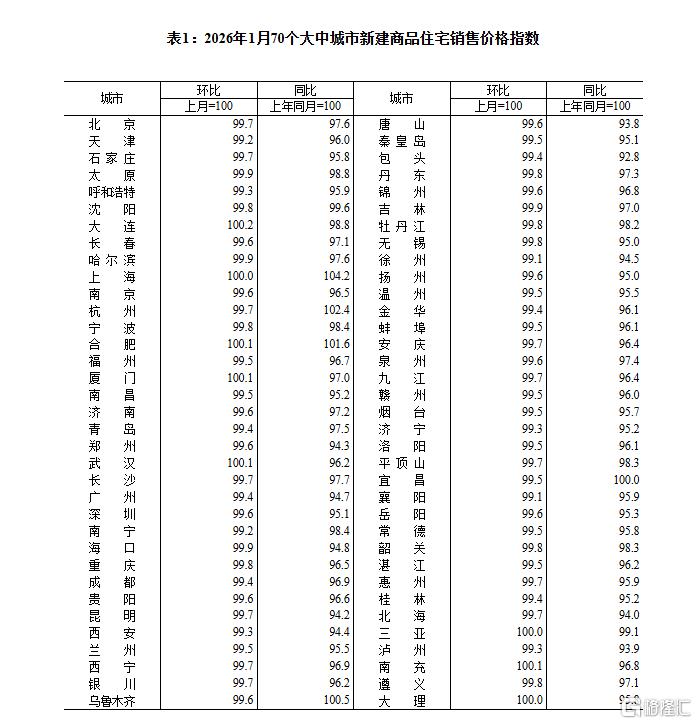
1月70城房价出炉!4城新房价格同比上涨,上海涨4.2%领跑
Ge Long Hui· 2026-02-13 05:39
2月13日,国家统计局公布2026年1月份70个大中城市商品住宅销售价格变动情况。 其中, 70个大中城市商品住宅销售价格环比降幅总体收窄、同比下降。 表1:2026年1月70个大中城市新建商品住宅销售价格指数 | | 城市 | 环比 | 同比 | 城市 | | 745FF | 同比 | | --- | --- | --- | --- | --- | --- | --- | --- | | | | 上月=100 | 上年同月=100 | | | 上月=100 | 上年同月=100 | | 北 | 京 | 99.7 | 97.6 | 匿 | ш | 99.6 | 93.8 | | 天 | 津 | 99.2 | 96.0 | | 秦皇岛 | 99.5 | 95.1 | | 石家庄 | | 99.7 | 95.8 | 包 | ਜੇ | 99.4 | 92.8 | | 太 | 原 | 6 66 | 98.8 | चे | 东 | 99.8 | 973 | | 呼和浩特 | | 99.3 | 95.9 | 锦 | NA | 99.6 | 06.8 | | 沈 | BB | 99.8 | 00 € | 투 | 林 | 9 ...
1月份美国二手房销量暴跌超8%
Xin Lang Cai Jing· 2026-02-12 15:14
核心要点 高房价、供应疲软以及消费者对经济信心不足,持续拖累美国房地产市场。 据美国全国房地产经纪人协会(NAR)数据,1 月份二手房销量经季节性调整后按年率计算为391 万 套,环比大跌8.4%,降幅超出预期;同比 2025 年 1 月下降4.4%,为 2023 年 12 月以来最慢销售速度。 该数据以实际过户量统计,对应的签约时间多为去年 11 月和 12 月,当时 30 年期固定抵押贷款平均利 率波动不大,直至 1 月才小幅回落。据《抵押贷款新闻日报》数据,目前该利率为6.1%。 从地区看,全美各区域销量环比均下滑,其中南部和西部跌幅最大。 美国全国房地产经纪人协会首席经济学家劳伦斯・云在声明中表示: "购房负担能力正在改善,NAR 住房负担能力指数显示,当前住房可负担性为 2022 年 3 月以来最佳。 这得益于薪资涨幅超过房价涨幅,且抵押贷款利率低于去年同期。然而,住房供应未能跟上,仍处于极 低水平。" 1 月份美国二手房销量环比大跌8.4%,降幅超出预期。 1 月份房屋成交中位价为396,800 美元,同比上涨 0.9%,创历史同期最高纪录。 房屋库存较 12 月有所下降,但同比仍增长3.4%。 ...

房价大局已定?未来60%的中国家庭,或许要经历这3大难关
Sou Hu Cai Jing· 2026-02-06 11:14
这两年,关于房价的讨论明显变少了。不是大家不关心,而是情绪慢慢从"每天盯着涨跌"变成了"更多 想想自己该怎么办"。很多家庭已经意识到,房子这件事,短期的起伏固然重要,但真正影响生活的, 是接下来几年要面对的现实变化。 把视角从价格曲线移开,会发现一个更扎心的事实:不管你买没买房,大多数普通家庭,可能都要跨过 几道不太轻松的坎。这些坎,不是靠运气就能绕开的,而是和收入结构、家庭阶段、生活成本紧密相 关。 第一道坎,来自"稳定感"的重新定价 过去很长一段时间,很多人默认一个逻辑:只要有房,生活就稳了。可现在越来越多人发现,稳定感不 再只由一套房子决定。 一方面,工作节奏变快,行业更替也更频繁。即使有房,收入波动依然会影响家庭安全垫的厚度。另一 方面,城市之间的分化越来越明显,有的地方机会多但成本高,有的地方压力小却选择少。 这就意味着,家庭需要为"不确定性"留出更大的缓冲空间。单靠房子,很难兜住所有风险。对不少人来 说,如何让现金流更稳、让职业路径更灵活,会比盯着房价更重要。 第二道坎,来自"居住质量"和"生活成本"的拉扯 很多家庭已经体会到,房子买完并不等于事情结束。装修、维护、物业、通勤、教育,这些看似零散的 ...

中金:宏观视角下的存款搬家与股市定价——存款到期的股债汇影响(一)
Xin Lang Cai Jing· 2026-01-27 23:53
Core Insights - The concept of "deposit into the market" emphasizes the importance of "new funds" while also considering "exit funds" to determine "net new funds," which have a greater correlation with stock prices. Ultimately, this reflects the willingness of residents to invest in the market, which is strongly correlated with income expectations [3][70][71] - The growth rate of new funds is more significant than the absolute amount of new funds, as it has a stronger correlation with stock market performance. High-net-worth individuals and insurance funds may provide independent support to the market in 2025, but this influence may diminish in 2026 [3][70][71] - The analysis framework for income expectations is based on employment and service inflation, with indicators such as resident credit pulses and housing prices leading to income expectations. In the baseline scenario, the amount of new funds entering the market is expected to remain relatively stable compared to the previous year [3][70][71] Group 1 - New funds do not equate to net new funds; stock price increases are more closely related to the growth rate of new funds. The relationship between new funds and stock market performance is not strong, as evidenced by fluctuations in new funds from 2015 to 2025 [4][7][75] - The correlation between the growth rate of new funds and stock market performance is more significant. For instance, in 2016, new funds reached 4.9 trillion yuan, but the market declined by 12.9%, while in 2019, lower new funds coincided with a 33% market increase [7][75][78] - The willingness of residents to invest in the stock market is a decisive factor, closely linked to income expectations. A decline in investment willingness can lead to reduced market participation, as seen in 2022 when a 14% increase in maturing deposits did not translate into increased market investment [21][25][90] Group 2 - The investment willingness of residents is significantly influenced by income expectations. As of Q3 2025, the tendency to save remains high, indicating potential for increased risk asset allocation if saving tendencies normalize [25][94] - Employment perceptions are closely tied to income expectations, which in turn affect stock market trends. Historical data shows a negative correlation between unemployment rates and stock market performance in the U.S. and Japan [30][99] - High-net-worth individuals' willingness to invest in the stock market may not be significantly affected by broader income expectations, and insurance funds may contribute to market investments, although their growth may be limited compared to 2025 levels [34][35][106]

格林期货早盘提示:国债-20260122
Ge Lin Qi Huo· 2026-01-22 01:05
1. Report Industry Investment Rating - No specific industry investment rating is provided in the report. 2. Core View of the Report - The short - term trend of Treasury bond futures may be volatile, and the impact of stock indices should continue to be monitored. Trading - type investors are advised to conduct band operations. [2] 3. Summary by Relevant Catalogs 3.1 Market Performance - On Wednesday, the opening prices of the main contracts of Treasury bond futures varied. The 30 - year variety opened significantly higher. Most main contracts fluctuated horizontally in the morning and rose in the afternoon. The 30 - year Treasury bond futures main contract TL2603 rose 0.75%, the 10 - year T2603 rose 0.03%, the 5 - year TF2603 rose 0.01%, and the 2 - year TS2603 fell 0.01%. [1] - On Wednesday, the Wande A - share index opened slightly lower, rose in the morning and then fluctuated horizontally. It closed 0.57% higher than the previous trading day, with a small positive line. The trading volume was 2.62 trillion yuan, a slight decrease from 2.80 trillion yuan in the previous trading day. [2] 3.2 Important Information - In the open market, the central bank conducted 363.5 billion yuan of 7 - day reverse repurchase operations on Wednesday. With 240.8 billion yuan of reverse repurchases maturing on the same day, the net investment was 122.7 billion yuan. [1] - In the money market, the overnight interest rate in the inter - bank money market declined on Wednesday. The weighted average of DR001 was 1.32%, compared with 1.37% in the previous trading day; the weighted average of DR007 was 1.50%, compared with 1.49% in the previous trading day. [1] - In the cash bond market, the closing yields of inter - bank Treasury bonds on Wednesday showed mixed changes compared with the previous trading day. The yield to maturity of 2 - year Treasury bonds rose 0.45 BP to 1.40%, the 5 - year rose 0.19 BP to 1.60%, the 10 - year fell 0.14 BP to 1.83%, and the 30 - year fell 3.25 BP to 2.30%. [1] - The Minister of the Ministry of Housing and Urban - Rural Development, Ni Hong, stated that the policy of implementing measures according to the city, precise policies, and one - city - one - policy will continue. The focus is on controlling increments, reducing inventories, and optimizing supplies. The "white - list" system for real - estate financing will be utilized to support the reasonable financing needs of real - estate enterprises and the rigid and improved housing needs of residents. [1] 3.3 Market Logic - In 2025, China's GDP was 1,401,879 billion yuan, a year - on - year increase of 5.0%, achieving the target set at the beginning of the year. In the fourth quarter, China's GDP increased by 1.2% quarter - on - quarter. In December, the growth rates of fixed - asset investment and total retail sales of consumer goods were lower than market expectations. The year - on - year actual growth rates of export and industrial added value above designated size both exceeded market expectations. The year - on - year growth rate of the service production index in December rebounded by 0.8 percentage points compared with November. [1] - In December last year, the year - on - year sales volume and housing prices of domestic real estate continued to decline, and the data from the first half of January this year also showed the same trend. The central bank announced a 0.25 - percentage - point reduction in the rediscount and re - loan interest rates starting from January 19, 2026, and stated that there is still room for reserve - requirement ratio cuts and interest - rate cuts throughout the year. [1] - On January 20, the Ministry of Finance stated that in 2026, the fiscal deficit, total debt, and total expenditure will be maintained at a necessary level to ensure that the overall expenditure intensity "only increases and does not decrease" and the guarantee of key areas "only strengthens and does not weaken". [1] 3.4 Trading Strategy - Trading - type investors are advised to conduct band operations. [2]
国家统计局数据显示 2025年12月份一线城市房价环比降幅收窄
Zhong Guo Zheng Quan Bao· 2026-01-19 21:09
Core Viewpoint - The real estate market in China is experiencing significant changes, with a shift from a focus on new housing to a balance between new and existing housing markets, as indicated by the latest data from the National Bureau of Statistics [1][2]. Group 1: New Housing Prices - In December 2025, the sales prices of newly built commercial residential properties in first-tier cities decreased by 0.3% month-on-month, a reduction of 0.1 percentage points compared to the previous month [1]. - Among first-tier cities, Shanghai saw a price increase of 0.2%, while Beijing, Guangzhou, and Shenzhen experienced declines of 0.4%, 0.6%, and 0.5% respectively [1]. - Year-on-year, the prices of newly built commercial residential properties in first-tier cities fell by 1.7%, with Shanghai increasing by 4.8% and Beijing, Guangzhou, and Shenzhen decreasing by 2.4%, 4.8%, and 4.4% respectively [1]. Group 2: Second-hand Housing Prices - In December, the sales prices of second-hand residential properties in first-tier cities decreased by 0.9% month-on-month, with a reduction of 0.2 percentage points from the previous month [2]. - Year-on-year, second-hand housing prices in first-tier cities dropped by 7.0%, with Beijing, Shanghai, Guangzhou, and Shenzhen experiencing declines of 8.5%, 6.1%, 7.8%, and 5.4% respectively [2]. - Second and third-tier cities also saw a year-on-year decrease in second-hand housing prices of 6.0%, with the decline expanding by 0.4 and 0.2 percentage points respectively [2].
湾财晚报 | 广东外贸 全国首位!70城房价数据出炉;黄金白银价格再创新高;黄小卫被查!
Nan Fang Du Shi Bao· 2026-01-19 14:59
Group 1: Guangdong Foreign Trade - Guangdong's foreign trade reached a historical high of 9.49 trillion yuan in 2025, marking a year-on-year growth of 4.4% [4] - Guangdong has maintained its position as the top province in China for 40 consecutive years, accounting for 20.9% of the national foreign trade total and contributing 24.1% to the national growth [4][6] - The import value was 3.46 trillion yuan, increasing by 7.8%, while the export value was 6.03 trillion yuan, with a growth of 2.5% [4] Group 2: Real Estate Market - In December 2025, new residential prices in Shanghai increased by 0.2% month-on-month and 4.8% year-on-year, making it the only city among the top-tier cities to show growth [5] - The overall residential sales prices in 70 major cities saw a month-on-month decline, with first-tier cities experiencing a 0.3% decrease [5] Group 3: Gold and Silver Prices - International gold and silver prices reached historical highs, with gold surpassing $4,690 per ounce and silver exceeding $94 per ounce [8] - Domestic gold jewelry prices also surged, with several brands reporting prices over 1,450 yuan per gram [8] Group 4: Shenzhen Office Market - Shenzhen's Grade A office market saw a net absorption of 664,000 square meters in 2025, the highest in four years, driven by demand from technology companies [15] - The total supply of Grade A office space increased by 9.4% year-on-year, reaching 12.84 million square meters [15] Group 5: Guangzhou Pharmaceutical Export Platform - Guangzhou Pharmaceutical Group established a comprehensive service platform for pharmaceutical exports, aiming to enhance the export of medical products [13] - A collaboration with GE Healthcare was announced to create a research and development laboratory for nuclear medicine [13]

当下(2025年)房价成这样了,你会买房吗,为什么?
Sou Hu Cai Jing· 2025-12-20 19:13
Core Viewpoint - The article discusses the challenges ordinary people face in purchasing homes, emphasizing that homeownership often requires significant financial sacrifice and long-term debt, making it increasingly difficult for the average person to afford housing [1][3][4]. Group 1: Housing Affordability - Most ordinary people are unable to afford homes without taking on long-term loans, often spanning 30 years, to secure a place to live and provide education for their children [3][10]. - The current housing prices are deemed unaffordable, with many individuals expressing a desire for prices around 2000 yuan per square meter, which is considered acceptable for the average person [7][9]. - Even with a stable income of 10,000 yuan per month over a 40-year career, an individual would only earn approximately 4 million yuan, making it challenging to afford a home that costs over 1 million yuan [9][10]. Group 2: Consumer Behavior - The financial burden of homeownership has led to a reluctance among ordinary people to spend money, as they prioritize saving for emergencies rather than engaging in what is perceived as excessive consumption [13][22]. - The average income for many individuals is between 3,000 to 5,000 yuan, with those earning over 10,000 yuan considered to have a high income, further complicating the ability to purchase homes [17][18]. - The necessity of homeownership for marriage and children's education drives some individuals to buy homes despite the financial strain, as it is seen as essential for family stability [25][30]. Group 3: Market Dynamics - The article notes that the current real estate market is not viewed as a viable investment for ordinary people, as purchasing a home is often seen as a loss rather than a gain [30]. - There is a distinction between ordinary buyers and those who have capitalized on market opportunities to upgrade their homes, indicating a divide in the housing market based on financial capability [27][29]. - The ongoing demand for property transactions can be observed through the number of people applying for property certificates, suggesting that despite challenges, there remains a persistent interest in home buying [31].

跨年的经济
Sou Hu Cai Jing· 2025-12-07 14:35
Group 1 - The ongoing debate about whether AI technology is becoming "bubble-like" continues, but investment is gradually penetrating upstream electricity and downstream applications, with increased fiscal budgets in the US, Europe, Japan, and South Korea for the coming year [1] - The Federal Reserve's interest rate cut cycle continues, while inflation expectations remain at historically high levels; the short-term weakness of the US dollar is accompanied by expectations of RMB appreciation [1] - High-frequency data indicates a potential short-term rebound in China's exports [1] Group 2 - The proportion of residents expecting a decline in housing prices has risen to a high level, indicating that the response to real estate risks has entered a new phase [1] - Under strict control of hidden debts, debt reduction and repayment continue, which corresponds to the ongoing weakness in infrastructure investment since the second half of the year [1] - Personal income tax has increased compared to trend values due to standardized tax administration, while cross-year consumption may still face pressure [1] Group 3 - Prices related to "anti-involution" categories have experienced a rebound in the third quarter but have since retreated, with the central tendency remaining higher than before; industrial production indicators are showing a month-on-month slowdown [1] - Vegetable prices have risen above seasonal levels due to weather disturbances, and combined with a low base, the CPI is expected to see a short-term rebound [1] - However, the resonance of pork and oil prices is expected to ease in early next year, leading to a further decline in prices [1] Group 4 - Historical economic "New Year openings" often correspond to prior year-end fiscal spending, with recent fiscal strength and continued pressure on local land transfer income indicating moderate economic growth at the beginning of next year [2] - The effectiveness of subsidy policies in promoting consumption in the service sector remains to be explored, while credit demand remains at historically low levels [2] - The management of liquidity through government bond trading is becoming more diversified, although interest rate tools remain cautious [2]