
数字化和智能化

Search documents
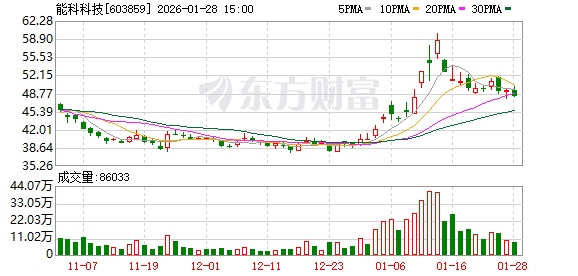
能科科技:公司主要为航空航天客户提供覆盖产品研发、制造、运维等环节的工业软件产品和AI Agent产品
Zheng Quan Ri Bao· 2026-01-28 11:44
Core Viewpoint - The company, Nengke Technology, focuses on providing industrial software products and AIAgent products for aerospace clients, covering the entire process from product development to operation and maintenance [2] Group 1: Company Overview - Nengke Technology offers services that include solution verification, product definition and decomposition, architecture design, detailed design, production manufacturing, product testing and validation, and operation and maintenance [2] - The company has accumulated practical experience in the aerospace field through its engine design projects and aims to continuously iterate and upgrade its offerings [2] Group 2: Industry Focus - The company is committed to supporting the high-quality development of the aerospace sector through its digital and intelligent solutions [2]


2025青岛财富论坛:探究财富管理助力中国式现代化的“青岛实践”
凤凰网财经· 2025-12-26 12:44
Core Viewpoint - The 2025 Qingdao Wealth Forum serves as a significant platform for discussing the future of wealth management in China, focusing on the theme of "Wealth Management Supporting the Practice of Chinese-style Modernization in Qingdao" [1][5][22]. Group 1: Forum Overview - The forum, hosted by the Qingdao Municipal Government, gathered over 500 leaders, experts, and entrepreneurs from the economic and financial sectors, establishing a high-quality platform for collaboration [1][5]. - This event marks the 11th consecutive year of the Qingdao Wealth Forum, which has evolved into a benchmark platform for high-end, professional, and international dialogue in the wealth management industry [5][7]. Group 2: Key Discussions and Insights - The main forum featured speeches from prominent figures, including former Deputy Governor of the People's Bank of China, Li Dongrong, who discussed the role of digitalization and intelligence in advancing the wealth management sector [10]. - Experts emphasized the unprecedented opportunities for the wealth management industry due to the deepening application of digitalization and intelligence, while also addressing challenges such as changes in financing structures and declining interest rates [16]. Group 3: Financial Development in Qingdao - Qingdao has been recognized as a significant source of wealth management innovation in China, having established a wealth management financial reform pilot zone in 2014, which has contributed to its evolution into a financial stronghold [19][21]. - The Qingdao Financial Center ranked 35th among 120 global financial centers in the 38th Global Financial Center Index, marking its continuous presence in the top 50 for 18 consecutive times [19]. Group 4: Financial "Five Major Articles" - The central financial work conference highlighted the importance of financial services in supporting high-quality economic and social development, focusing on five major areas: technology finance, green finance, inclusive finance, pension finance, and digital finance [22]. - Qingdao aims to achieve an average annual loan growth rate of no less than 10% in these five areas by 2027, fostering a unique "Qingdao model" for financial development [22]. Group 5: Sector-Specific Financial Initiatives - In the technology finance sector, Qingdao's financial institutions have increased support for technological innovation, with a technology loan balance reaching 575.4 billion yuan, a 9.7% increase from the beginning of the year [24]. - The green finance sector has seen a loan balance of 587.9 billion yuan, growing by 15.34%, positioning Qingdao among the leaders in national growth rates [24]. Group 6: Inclusive and Pension Finance - Qingdao has been selected as a demonstration zone for inclusive finance development by the central government for four consecutive years, enhancing financial accessibility for small and micro enterprises [26]. - The city has also expanded its pension finance sector, with over 2.31 million personal pension accounts opened by mid-year [26]. Group 7: Future Outlook - The 2025 Qingdao Wealth Forum is positioned as a pivotal event for transitioning into the "15th Five-Year Plan," continuing to leverage its platform to gather global insights and empower Qingdao in becoming a competitive emerging wealth financial center [26].

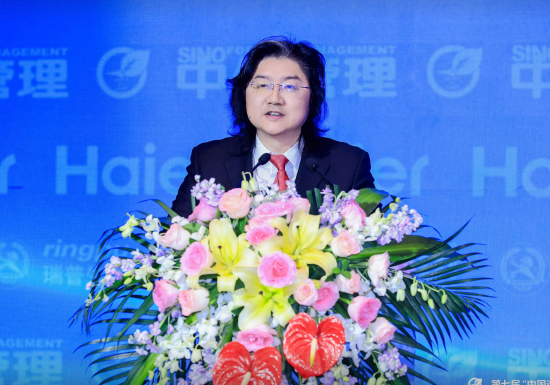
中外管理传媒社长杨光:金融将是中国隐形冠军企业未来高速发展、驰骋世界的翅膀和引擎
Xin Lang Cai Jing· 2025-12-19 01:44
Group 1 - The 7th "China's Invisible Champions" Evergreen Forum was held in Beijing on December 18-19, focusing on the theme of financial power and strong supply chains for invisible champions [1][4] - The judging panel for the awards expanded to 20 highly respected figures in the field of corporate management, and the number of awarded companies increased to 36, indicating a higher standard and difficulty for selection [3][6] - The evaluation criteria now include global market competitiveness, readiness for international expansion, carbon emission quantification, integration of digitalization and intelligence, and strategic alignment with industry competitiveness [3][6] Group 2 - Judges conducted on-site evaluations of participating companies to gain a real and direct understanding of their operations, enhancing the credibility of the awarded companies [3][6] - Financial support is deemed essential for the future rapid development of China's invisible champion companies, positioning the forum as a potential turning point in the context of the 14th Five-Year Plan [3][6]
路特斯科技上涨2.94%,报1.4美元/股,总市值9.50亿美元
Jin Rong Jie· 2025-12-15 15:15
Group 1 - The core viewpoint of the article highlights the financial performance and market position of Lotus Technology, a leading luxury battery electric vehicle (BEV) manufacturer [1] - As of December 15, Lotus Technology's stock price increased by 2.94%, reaching $1.40 per share, with a total market capitalization of $950 million [1] - Financial data indicates that by September 30, 2025, Lotus Technology's total revenue is projected to be $356 million, reflecting a year-on-year decrease of 45.5% [1] Group 2 - The company reported a net loss attributable to shareholders of $378 million, which represents a year-on-year increase of 43.1% [1] - Lotus Technology is recognized for its iconic British brand "Lotus," which symbolizes performance, design, and engineering excellence in the automotive industry [1] - The company is leveraging its world-class R&D capabilities and a light-asset model authorized by Geely Holdings to innovate in electrification, digitalization, and intelligence [1]

研判2025!全球及中国船舶险行业市场现状及未来趋势分析:中国船舶险保费稳步增加,发展潜力加速释放[图]
Chan Ye Xin Xi Wang· 2025-10-25 02:03
Core Insights - The global marine insurance premium is projected to increase from $7.1 billion in 2020 to $9.67 billion in 2024, driven by rising shipping activities and increasing vessel values [4][6][11] - The Chinese marine insurance market is expected to reach 7.312 billion yuan in 2024, reflecting a year-on-year growth of 7.1% [11][12] - The marine insurance claims in China decreased by 22.7% in 2024, amounting to 3.109 billion yuan, making it one of the few major property insurance types to experience a decline in claims [11][12] Marine Insurance Overview - Marine insurance covers various types of vessels against losses due to natural disasters and accidents while at sea or in port, typically categorized into total loss insurance and all-risk insurance [1][2] - Total loss insurance compensates for complete loss of the insured vessel, while all-risk insurance covers both total and partial losses, including collision liabilities and salvage costs [2] Global Marine Insurance Market Trends - Europe dominates the marine insurance market, accounting for approximately 53% of the total premium in 2024, with significant growth in countries like Turkey and Russia [6][7] - The Asia-Pacific region holds about 35% of the market share, with China showing substantial growth, although markets like India and Japan are experiencing stagnation [6][7] Chinese Marine Insurance Market Dynamics - China's shipping fleet and trade volume provide a solid foundation for marine insurance demand, with the fleet size and vessel prices directly influencing the market [11] - As of September 2025, there are 1,486 registered marine insurance products in China, with 1,149 in normal status, including 236 main insurance products [13] Future Trends in Marine Insurance - The industry is expected to focus on innovation, emphasizing green, digital, and intelligent development, with a shift towards new types of vessels and electric ships [14] - The application of AI technology in risk assessment and claims processing is anticipated to enhance efficiency and accuracy in the marine insurance sector [14]


2025年温控货运服务,头豹词条报告系列
Tou Bao Yan Jiu Yuan· 2025-09-22 12:47
Investment Rating - The report rates the temperature-controlled freight service industry as a sector with stable growth potential, driven by policy, technology, capital, and market demand [4]. Core Insights - The temperature-controlled freight service industry, also known as cold chain logistics, is a technology and capital-intensive core hub of modern supply chains. It is expected to see a recovery in growth rates in China, with a pronounced "Matthew Effect" where leading firms gain competitive advantages [4][12]. - The industry has evolved from basic preservation services to a modern, technology-driven supply chain component, focusing on data-driven decision-making, sustainable development, and specialized services in high-value areas like pharmaceutical cold chains and cross-border logistics [12][16]. Industry Definition - Temperature-controlled freight services involve logistics activities that maintain temperature-sensitive goods, such as fresh food and pharmaceuticals, within specified temperature ranges throughout production, storage, transportation, and distribution [5]. - The industry is categorized based on temperature ranges, including frozen, refrigerated, ultra-low temperature, and constant temperature services [5][6][7]. Industry Characteristics - The industry features high technical barriers, stringent regulatory requirements, and strong ecological synergy, necessitating advanced cooling, heating, monitoring, and data recording technologies [8][10][11]. - The regulatory framework is strict, especially in pharmaceuticals and food transport, requiring compliance with various quality standards and regulations [10]. Development History - The industry has progressed through early development (1950-1999), rapid growth (2000-2020), and is currently in a high-quality development phase (2021-present), with increasing emphasis on digitalization and intelligent logistics solutions [12][15][16]. Industry Chain Analysis - The industry chain consists of upstream (infrastructure and technology suppliers), midstream (service providers), and downstream (end-users in food, pharmaceuticals, chemicals, etc.) [17][18]. - The upstream focuses on providing core equipment and technology, while the midstream is characterized by various cold chain logistics service providers [18][22]. Market Size - The market size of China's temperature-controlled freight service industry is projected to grow from 383.2 billion RMB in 2020 to 536.1 billion RMB in 2024, with a compound annual growth rate (CAGR) of 8.76% [27]. - The market is expected to continue growing from 583.8 billion RMB in 2025 to 821.1 billion RMB in 2029, with a CAGR of 8.90% [27]. Competitive Landscape - The industry is characterized by a concentration of market power among leading firms like SF Express and JD Logistics, which leverage their scale and technology to dominate the market [34][36]. - The "Matthew Effect" is evident, with top firms expanding rapidly while smaller companies face increasing challenges, leading to a higher market concentration [36].

同兴股份:用算法赋能大气环境精细化治理
Mei Ri Shang Bao· 2025-09-10 23:18
Core Viewpoint - The article highlights the innovative air quality monitoring technology developed by Zhejiang Tongxing Technology Co., Ltd., which utilizes mobile monitoring devices to provide real-time air quality data in urban areas, significantly contributing to environmental governance and public health [1][2][3]. Group 1: Technology and Innovation - The "black box" developed by the company is a mobile atmospheric monitoring device that can detect various air pollutants such as PM2.5, PM10, carbon monoxide, and nitrogen dioxide, providing real-time data every second [2][3]. - The monitoring platform processes over 50 million data points daily, covering 90% of the built-up area in Hangzhou, and has established a "city air life network" [3]. - The company's air monitoring model has achieved an alarm accuracy rate of over 90% and a pollution tracing success rate of 85% since its launch in 2019 [2][3]. Group 2: Environmental Impact - The deployment of the monitoring devices has coincided with a slight decrease in PM2.5 concentrations in Hangzhou, indicating the effectiveness of technology-driven air quality management [3]. - The company aims to enhance the quality of life through technology and algorithms, emphasizing that even a minor reduction in pollutants can significantly impact respiratory health [1][3]. Group 3: Future Plans and Research - The company plans to increase research and development investments over the next 3-5 years to optimize its air monitoring models and expand monitoring dimensions [6]. - There are ongoing efforts to apply algorithm models to other fields, including AI research related to primate cognition, which could lead to advancements in human-like robots [5][6]. Group 4: Role of Private Enterprises - The company believes that private enterprises play a crucial role in technological innovation, being closer to production, market, and daily life, which drives continuous investment in research and development [7].
安能物流上半年300公斤以下货量增长18.2%
Mei Ri Jing Ji Xin Wen· 2025-08-21 13:56
Core Viewpoint - The logistics industry is experiencing a shift towards effective scale growth, with a trend against "involution" becoming prominent, as highlighted by Aneng Logistics' CEO during the earnings call [1] Financial Performance - In the first half of 2025, Aneng Logistics achieved a total freight volume of 6.82 million tons, a year-on-year increase of 6.2% - The company's revenue reached 5.625 billion yuan, up 6.4% year-on-year, while adjusted net profit was 476 million yuan, reflecting a 10.7% increase - Gross profit stood at 880 million yuan, with a gross margin of 15.6% [1][2] Market Competition - The express delivery market remains highly competitive, with price wars being a common strategy among major players - Aneng Logistics has managed to maintain a leading market share in the franchise-based express logistics sector despite aggressive pricing strategies from competitors like Zhongtong [3][4] - The average weight per shipment decreased from 89 kg in the first half of 2024 to 75 kg in the first half of 2025, indicating a shift in freight structure [2] Strategic Adjustments - The company is actively monitoring competitive dynamics and adjusting pricing policies accordingly, with a focus on maintaining a balance between market share and profitability [3][4] - Aneng Logistics plans to invest in over 200 smart driving vehicles and more than 100 electric heavy trucks in the second half of 2025 to enhance operational efficiency [6] Technological Advancements - The company is exploring the application of automation and smart logistics technologies to reduce costs and improve efficiency - Aneng Logistics has deployed automated sorting lines in several distribution centers, resulting in a 6% reduction in cost per kilogram and improved sorting efficiency [5][6] - The company is also testing the use of unmanned delivery vehicles in specific scenarios, although regulatory challenges regarding road rights remain a concern [5]
紫金矿业20250708
2025-07-09 02:40
Summary of the Conference Call on Deep Sea Technology and Marine Economy Industry Overview - The marine economy in China surpassed 10 trillion yuan in 2024, accounting for 7.8% of GDP, with a contribution of 11.5% to GDP growth, indicating its significance as a key growth driver for the national economy [2][4] - The government has emphasized deep-sea technology in its work report, highlighting the importance of this sector in national strategy [4] Core Areas of Deep Sea Technology - Deep sea technology encompasses three main areas: 1. **Deep Sea Material R&D**: Focused on high-performance steel, alloys, and composite materials to address challenges in extreme environments [6] 2. **Deep Sea Equipment Manufacturing**: Involves underwater robots, detection equipment, and marine engineering equipment [6] 3. **Deep Sea Digital Applications**: Incorporates information and intelligent technologies in deep-sea operations [6] Investment Opportunities - Investment opportunities are concentrated in: 1. **Specialty Steel, Titanium Alloys, and Polymer Materials**: Companies like Baotai Co., Baose Co., and Gangyan Gaona are key players [10] 2. **Underwater Exploration Equipment**: Including underwater robots and detection radar systems [10] 3. **Shipbuilding and Military Equipment**: This sector is seen as a critical area for future growth [10] Regional Development Initiatives - Coastal provinces such as Shanghai, Guangdong, and Fujian have released development plans focusing on high-tech industries, including marine equipment and new energy [7] Global Strategic Importance - The global competition for deep-sea control is driven by the strategic significance of deep-sea regions, with 90% of the world's waters exceeding 1,000 meters in depth [8][9] Current Industry Trends - The marine equipment industry is currently experiencing high demand, particularly in the exploration sector, which has shown strong performance [11] - Offshore wind power installations are on the rise, with significant potential for deep-sea wind power construction and related infrastructure needs [12] Future Directions in Deep Sea Technology - The development of deep-sea technology is increasingly focused on digitalization and intelligence, with the marine electronic information industry transitioning towards networked and intelligent systems [13] - Underwater data centers are emerging as a key infrastructure, utilizing natural cooling to address heat dissipation issues while being cost-effective [14] AI Integration - The integration of AI in deep-sea technology is gaining traction, particularly in communication needs as deep-sea exploration advances [15]

港口建设,助力东南亚国家打造发展新高地(国际视点)
Ren Min Ri Bao· 2025-06-11 22:09
Group 1: Port Infrastructure Development - Southeast Asian countries are accelerating investments and expansions in modern port infrastructure to meet growing trade demands, as highlighted in the "2024 Southeast Asia Freight Assessment Report" [1] - The Sihanouk Port in Cambodia celebrated a container throughput of over 1 million standard containers in 2024, marking a 29% year-on-year increase, contributing significantly to the national economy [2] - Malaysia's Port Klang and Tanjung Pelepas Port achieved container throughput growth of 4.12% and over 12.25 million standard containers respectively in 2024, reinforcing Malaysia's position as a logistics hub in Southeast Asia [3] Group 2: Economic Impact and Trade Facilitation - The port sector is crucial for regional economic prosperity, with significant contributions to trade and logistics opportunities in Southeast Asia [2][3] - Indonesia's Tanjung Priok Port handled over 2.2 million standard containers in 2024, exceeding expectations and solidifying its role as a key logistics center in the region [3] - The Thai government is investing 100 billion THB to upgrade Bangkok Port into a modern logistics hub, enhancing its competitiveness and tourism appeal [4] Group 3: Green Transition and Technological Advancements - Southeast Asia is focusing on green transformation in port operations, with initiatives to enhance automation and sustainability in port infrastructure [4][5] - Singapore Port has made significant advancements in automation and low-carbon operations, improving efficiency and reducing carbon footprints [5][6] - Malaysia's Port Klang is also advancing green port initiatives, including solar energy installations and AI-driven energy management systems [6] Group 4: Regional Cooperation and Partnerships - Trade between China and Southeast Asian countries is predominantly conducted via maritime routes, with increasing collaboration in port construction and operations [7] - The development of the Muara Port in Brunei, through a partnership with a Chinese company, has modernized its operations and enhanced its role as a regional logistics hub [7][8] - Chinese enterprises are actively engaging in port cooperation in Southeast Asia, sharing expertise in smart port development and green technologies [8]