新型研究型大学

Search documents
多地筹建新型研究型大学
第一财经· 2026-03-13 11:44
Core Viewpoint - The article discusses the rapid emergence of new research-oriented universities in China, highlighting the ongoing competition and development in this sector, driven by government initiatives and local projects [4][6]. Group 1: Government Initiatives and Plans - The "14th Five-Year Plan" outlines the establishment of several new research-oriented universities across the country, with various regions accelerating their construction efforts [4]. - Hainan Province aims to optimize its higher education structure and plans to establish new research-oriented universities as part of its economic and social development strategy [4]. - Zhejiang Province supports the development of world-class new research-oriented universities, including Zhejiang University and Westlake University, as part of its strategic initiatives [4]. Group 2: Specific University Projects - The construction of the Aerospace Information University in Shandong Province is highlighted, covering approximately 71.27 hectares and focusing on engineering disciplines [4]. - The Zhengzhou University project, with a total building area of 21,699.70 square meters, is also mentioned, indicating ongoing investments in new educational institutions [5]. Group 3: Growth and Potential of New Universities - Since the establishment of Southern University of Science and Technology in 2012, new research-oriented universities have proliferated, with notable examples including Westlake University and Shenzhen University of Technology [6]. - Westlake University has expanded its recruitment to additional provinces, indicating its growing recognition and competitiveness, with admission scores comparable to top-tier universities [6][7]. - New research-oriented universities are increasingly attracting high-achieving students, with some institutions achieving admission scores that rival or exceed those of established 985 universities [7]. Group 4: Educational Innovation and Talent Development - New research-oriented universities are characterized by innovative governance, talent cultivation models, and research organization forms, focusing on high standards and internationalization [7]. - Experts suggest that the establishment of more new research-oriented universities can stimulate healthy competition among institutions, enhancing the overall quality of higher education in China [7][8]. - The article emphasizes the importance of policy support to foster the development of these universities, aiming to cultivate top-tier innovative talents and integrate education with industry [8].


福耀科技大学50名大一学生被企业抢光?校长王树国回应:本科生不是目标 要把他们培养成卓越创新人才!曹德旺曾称“对标斯坦福”
Mei Ri Jing Ji Xin Wen· 2026-01-22 16:51
Core Insights - The news highlights the rapid recruitment of 50 students from Fuyou University by major companies, indicating strong industry interest in the university's talent [1][4] - The university aims to cultivate master's and doctoral students rather than focusing solely on undergraduate education, emphasizing the importance of innovation and talent development [1][4] - Fuyou University has a budget of 800 million yuan for its first year, which is comparable to Stanford's spending, including laboratory equipment [2][4] Group 1: University Development - Fuyou University was established with a significant investment of 10 billion yuan from the He Ren Charity Foundation, founded by Cao Dewang [1][4] - The university is in the process of applying for ordinary undergraduate status and has received approval for four undergraduate programs, with an expected enrollment of 8,000 students [4] - Wang Shuguo, the university's president, has a background in leading top-tier universities and is committed to creating a research-oriented institution [4][5] Group 2: Employment and Industry Collaboration - The early recruitment of students by major companies reflects the university's strong industry connections and the perceived quality of its students [1][4] - Wang Shuguo noted that while companies are eager to hire students, the university's goal is to allow students to choose their career paths independently [1][4] - The university's collaboration with industry is expected to enhance the educational experience and provide students with practical research opportunities [1][4]

福耀科技大学50名大一学生被企业抢光?校长王树国回应:本科生不是目标,要把他们培养成卓越创新人才!曹德旺曾称“对标斯坦福”
Mei Ri Jing Ji Xin Wen· 2026-01-22 16:40
Core Viewpoint - The news highlights the rapid employment of students from Fuyou University, with all 50 first-year students being recruited by major companies, indicating strong industry interest and collaboration with the university [1][3]. Group 1: University Overview - Fuyou University was established with a significant investment of 10 billion yuan from the He Ren Charity Foundation, founded by Cao Dewang, with an initial budget of 800 million yuan for the first year to enroll 50 students [5]. - The university aims to cultivate innovative talents at the master's and doctoral levels, rather than focusing solely on undergraduate education [3][7]. - The university's president, Wang Shuguo, has a vision to model the institution after Stanford University, emphasizing the importance of substantial investment in education and research [5][9]. Group 2: Employment and Industry Collaboration - The first cohort of 50 students has been fully booked by various large companies, showcasing the high demand for graduates from Fuyou University [1][3]. - Wang Shuguo noted that while companies are eager to recruit students, the university's goal is to ensure that students have the freedom to choose their career paths [3]. - The university is currently in the process of expanding its enrollment, with plans to increase the number of students beyond 50, pending approval from the Ministry of Education [3][7]. Group 3: Leadership and Vision - Wang Shuguo, who previously led two top-tier universities, is serving as the president of Fuyou University without a salary, emphasizing his commitment to educational ideals [7][9]. - He expressed a desire to create a leading research university that prioritizes innovation and quality education over financial gain [9].
福建福耀科技大学章程修订,简称定为“福耀科技大学”
Xin Lang Cai Jing· 2026-01-12 00:26
Core Viewpoint - Fujian Fuyao University of Science and Technology has received approval for its charter amendment, positioning itself as a new research-oriented university focused on technological innovation and talent cultivation in alignment with national strategies [1][2]. Group 1: Charter Amendment Details - The university's name has been officially revised to "Fujian Fuyao University of Science and Technology," with the abbreviation "FYUST" [1]. - The charter now states that the university aims to be a new research-oriented institution, emphasizing technological innovation in manufacturing and the cultivation of top innovative talents [1]. - The full-time student enrollment is set to be capped at 8,000 [1]. Group 2: Educational Goals and Philosophy - The university's educational goals focus on high standards, precision, research orientation, and internationalization, aiming to support national strategic emerging industries [1]. - The educational philosophy emphasizes personalized and international talent development, integrating education, technology, and talent [1]. - The university aims to produce outstanding talents with a strong sense of social responsibility and innovative spirit, aspiring to be a cradle for scientists, entrepreneurs, and excellent engineers [1]. Group 3: Governance Structure - The charter establishes a governing council as the highest decision-making body, consisting of 5 to 15 members, with a chairperson elected by the council [2]. - The appointment and dismissal of the university president require a two-thirds majority approval from the council [2]. - The council members must adhere to legal standards and ethical conduct, with a term of four years, allowing for re-election [2].
录取分数线超过“985”,这些新大学凭什么?
Xin Lang Cai Jing· 2025-12-29 12:51
Core Insights - The emergence of new research-oriented universities in China aims to address the homogenization issues in higher education and provide innovative pathways for development [2][4][12]. Group 1: New University Establishments - Fuyou University, Greater Bay Area University, and Ningbo Oriental Institute of Technology are set to officially enroll students in 2025, with admission scores surpassing some traditional "985" universities [2][23]. - Greater Bay Area University, founded by academician Tian Gang, aims to match the development focus of "985" universities and emphasizes merit-based recruitment [3][24]. - The establishment of these universities is in response to the increasing demand for high-quality education and the need for innovative talent in a rapidly changing economic landscape [4][12]. Group 2: Educational Philosophy and Structure - New research-oriented universities are characterized by a focus on "high starting point, small and refined, research-oriented, and international" education models [4][12]. - These institutions prioritize interdisciplinary studies and collaboration between academia and industry to accelerate technological advancements and meet national strategic needs [4][12]. - The educational approach includes practical training and real-world applications, with significant involvement from leading enterprises in curriculum design [34][35]. Group 3: Challenges and Opportunities - The new universities face challenges in attracting high-quality faculty, as they must convince top scholars of their potential despite being newly established [18][19]. - The flexibility of these institutions allows them to innovate in teaching and research, potentially leading to breakthroughs in academic entrepreneurship and technology transfer [11][31]. - The development of a diverse and effective evaluation system is crucial for these universities to differentiate themselves from traditional institutions [12][34]. Group 4: Future Directions - The "14th Five-Year Plan" and the 2035 vision emphasize the support for the development of new research-oriented universities, providing a framework for their growth [32][36]. - The focus on unique academic paths and integration with local industries is essential to avoid the pitfalls of homogenization in higher education [36][37]. - The establishment of a robust research ecosystem, as seen in Shenzhen University of Technology's collaboration with research institutes, exemplifies the potential for innovation in these new educational models [17][37].

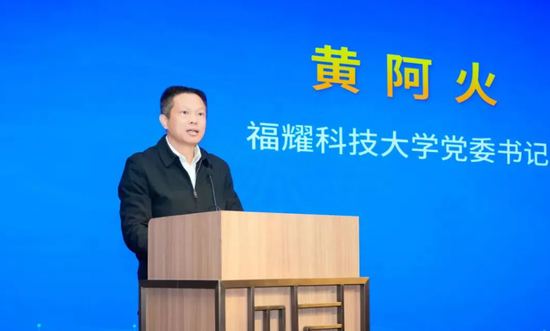
福建福耀科技大学,迎首任党委书记!
Xin Lang Cai Jing· 2025-12-24 04:54
Group 1 - The event "Technology Her Power, Innovation Towards the Future" was recently held in Fuzhou, organized by the Fujian Provincial Women's Association of Science and Technology, with approximately 150 female science and technology workers in attendance [1][5] - Key attendees included Lin Xueli, a member of the Provincial Association for Science and Technology, Lin Yeping, the Secretary and Chairwoman of the Provincial Women's Federation, Huang Ahua, the Secretary of Fujian Fuyou University, and Xu Zhihong, the President of the Provincial Women's Association of Science and Technology [1][5] Group 2 - Huang Ahua has been appointed as the Secretary of Fujian Fuyou University [6] - Huang Ahua, born in March 1974, has a graduate degree from the Provincial Party School and has held various positions including Deputy Secretary of the Youth League Committee at Fuzhou University and Vice Mayor of Tong'an District in Xiamen [3][8] - Fujian Fuyou University, located in the Fuzhou High-tech Industrial Development Zone, is a non-profit, public-benefit university initiated by the Chairman of Fuyou Group, Cao Dewang, and supported by the He Ren Charity Foundation and the Fuzhou Municipal Government [4][8]
这所大学“新”在哪?专访大湾区大学创校校长田刚
Yang Shi Xin Wen Ke Hu Duan· 2025-12-07 12:31
Core Perspective - The establishment of the Greater Bay Area University aims to redefine higher education by focusing on a new model of research-oriented education, emphasizing flexibility in major selection and collaboration with leading enterprises in the region [1][3]. Group 1: University Structure and Philosophy - The university will not assign majors in the first year, allowing students to engage in general education, which is crucial for their transition from high school to university [3]. - The university's approach is characterized as "small and precise," aiming to be a high-level research institution comparable to renowned international science and engineering schools [1][3]. Group 2: Curriculum and Academic Focus - The curriculum will include both applied and foundational disciplines, targeting fields that are urgently needed by the country and aligning with current technological advancements [5]. - Specialized programs such as mathematics and artificial intelligence experimental classes will be established to ensure a solid foundational knowledge base [5]. Group 3: Regional Integration and Collaboration - The university is strategically located in the Greater Bay Area, leveraging its geographical advantages to focus on new technology developments and fostering innovation [5]. - Collaborations with institutions in Hong Kong and Macau will be a key component, including joint research centers and doctoral training programs [5]. Group 4: Faculty and Student Recruitment - The university seeks high-level faculty members who possess teaching and research capabilities, as well as experience in industry collaboration to facilitate student connections with enterprises [7]. - Students are expected to have a strong interest in science and an innovative spirit, with personalized development based on individual characteristics [7].

福耀科技大学校长王树国:新型研究型大学突破长周期、走下象牙塔
2 1 Shi Ji Jing Ji Bao Dao· 2025-12-06 11:33
Core Viewpoint - The emergence of new research universities in China is a response to the demands of a new technological revolution, aiming to integrate technology and talent with societal needs [1][2]. Group 1: Emergence of New Research Universities - New research universities are increasingly appearing in China, including institutions like Southern University of Science and Technology, ShanghaiTech University, and Bay Area University [1]. - These universities are designed to break away from traditional academic structures and focus on practical applications and societal integration [1][4]. Group 2: Characteristics and Mission - New research universities are characterized by their innovative concepts, new knowledge frameworks, and educational systems that emphasize their role as integral parts of societal development [5][6]. - The mission of these universities is to transcend traditional single-discipline knowledge frameworks and establish interdisciplinary knowledge systems [6]. Group 3: Relationship with Traditional Universities - Traditional universities have made significant contributions to societal progress, but they face challenges in adapting to rapid technological changes [5]. - New research universities, being less encumbered by legacy systems, can move faster and more effectively in the current technological landscape [5]. Group 4: Future Prospects - The establishment of Bay Area University is seen as a significant development aligned with national strategies and the needs of the times, indicating a promising future for such institutions [6].
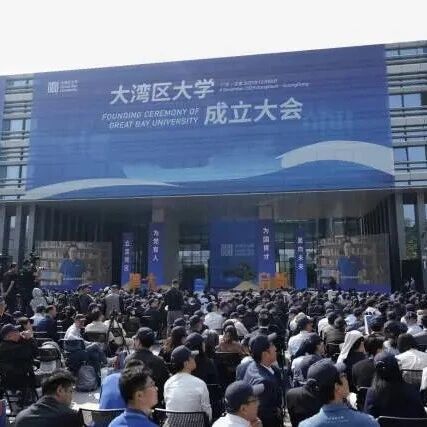
大湾区大学正式成立!
券商中国· 2025-12-06 09:41
Core Viewpoint - The establishment of the Greater Bay Area University (GBAU) marks a significant step in creating a new type of research-oriented university focused on science and engineering, aiming to cultivate high-quality research talents to meet the region's development needs [1][2]. Group 1: University Establishment and Focus - GBAU is positioned as a "small but refined, high-level research-oriented" institution, concentrating on six key fields: material science, advanced engineering, life sciences, information science and technology, natural sciences, and financial management [1]. - The university received official approval from the Ministry of Education in June 2023 and has already commenced operations with its first cohort of 80 students from 53 high schools across 16 cities in Guangdong [1]. Group 2: Innovative Educational Model - GBAU adopts an innovative educational model where students do not declare majors upon entry, allowing for self-exploration in their first year, with the option to choose from various disciplines starting in their second year [2]. - The university has established a high-caliber faculty team, with over 300 research teachers, all holding PhDs, and more than 70% having international experience [2]. Group 3: Strategic Collaborations and Future Plans - GBAU has formed strategic partnerships with major scientific institutions like the China Spallation Neutron Source and the Songshan Lake Materials Laboratory to enhance technological innovation and talent development [3]. - The university aims to integrate education with industry through innovative models such as "University + Major Scientific Facilities" and "University + Leading Technology Enterprises," supporting the development of new productivity in the Greater Bay Area [3].
就在今天,大湾区大学来了!大一新生入学后 先不分专业
2 1 Shi Ji Jing Ji Bao Dao· 2025-12-06 09:39
Group 1 - The establishment of the Greater Bay Area University marks the launch of a new research-oriented university focused on science and engineering [1] - The university is a public institution funded by the Guangdong Provincial Government and the Dongguan Municipal Government, with approval from the Ministry of Education in June [1] - The university opened in August with an initial enrollment of 80 students [1] Group 2 - The first five undergraduate programs offered include Mathematics and Applied Mathematics, Physics, Materials Science and Engineering, Computer Science and Technology, and Industrial Engineering [1] - The university's founding president, academician Tian Gang, emphasized a flexible curriculum where students explore their interests in the first year before choosing their majors in the second year [1] - Students have the option to select from various disciplines, including Mathematics, Physics, Computer Science, Materials Science, Industrial Engineering, Artificial Intelligence, and Future Robotics, with support for interdisciplinary minors [1]