
生猪产能调控

Search documents
生猪专家20260302
2026-03-03 02:52
生猪专家 20260302 摘要 2026 年生猪产能调控或加强,但 2025 年去产能力度有限,能繁母猪 整体稳定,2026 年供应端不具备"显著偏紧"的基础。行业平均 PSY 持续提升,将直接推高出栏供给,2026 年整体供给大概率高于 2025 年,价格中枢承压。 2025 年底至 2026 年初,母猪端未见明确减产,因商品猪亏损但仔猪 仍有利润,掣肘母猪去产。当前仔猪环节仍具利润,叠加部分母猪场对 春节后仔猪价格的季节性偏强预期,母猪去产动力不足。 2026 年猪价或在成本线附近运行。母猪是否启动更明显去化,核心取 决于仔猪利润。只有当上半年仔猪利润明显走弱甚至亏损,才可能推动 更实质的产能去化。 春节后猪价持续走弱,自繁自养与外购仔猪育肥均处于亏损。仔猪价格 短期稳定,但 2026 年上半年仍存在季节性上行空间,高点或受制于采 购意愿,投均盈利预计在 100—200 元区间,削弱母猪端主动去产的动 力。 Q&A 在农业农村部 2025 年 11—12 月及 2026 年 1 月能繁母猪数据未发布的情 况下,2026 年母猪产能调控的政策取向与产业端实际变化如何,2026 年供 应端应如何研判? 政策 ...
南华期货生猪产业周报:节后需求惨淡,能繁去化不及预期-20260302
Nan Hua Qi Huo· 2026-03-02 06:57
——节后需求惨淡,能繁去化不及预期 边舒扬(投资咨询证号:Z0012647 ) 投资咨询业务资格:证监许可【2011】1290号 2026年3月2日 第一章 核心矛盾及策略建议 1.1 核心矛盾 上周生猪市场的核心矛盾在于供强需弱格局下,上下游行为与预期的明显分化。上游养殖端因普遍看跌年后 行情,在春节前便集中加速出栏,导致节后供应压力持续后移;节后虽然规模场出栏体重因压栏增重情绪而 有所回升,但整体出栏积极性依然较高,适重猪源供应充裕。与此同时,二次育肥户在节后补栏热情明显退 潮,栏舍利用率从高位回落,短期对猪价的托底动能减弱。下游屠宰端则面临终端消费进入传统淡季的困 境,节后开工率虽逐步恢复但仍处于低位,样本企业日屠宰量较节前大幅下降,收购过程顺畅且采购难度不 大。此外,屠宰企业盈利压力较大,对提价收购和开工率提升形成阻力,且在春节前已加快消化冻品库存, 目前缺乏大规模入库的意愿。综合来看,上游出栏积极与下游承接乏力形成鲜明对比,供需失衡导致猪价弱 势运行并创下阶段性新低。 南华期货生猪产业周报 3.节后标猪价格下跌时,二育是否会选择进场。 . 屠宰企业鲜销率:生猪 source: 南华研究 百分比 20 ...

东兴证券:节前猪价转跌 1月出栏环比下行
智通财经网· 2026-02-27 08:01
东兴证券发布研报称,猪价自25年12月底部回升,涨势持续至1月中下旬,而后止涨下滑。2月猪价打破 年前高企预期,持续回调,截至2月10日,全国外三元生猪均价12元/公斤。猪价年前调头说明供过于求 形势严峻,猪价短期向下压力大,年后猪价探底将带来行业亏损出清;26年一号文件提出强化生猪产能 综合调控,农业农村部将落实生猪生产备案管理,政策精细化调控趋势持续,政策与亏损共同作用下, 年后产能去化有望逐步加速,猪价有望在26年下半年迎来向上拐点。 东兴证券主要观点如下: 国家统计局数据显示,2025年12月末能繁母猪存栏量3961万头,相比10月末进一步下降。2026年中央一 号文件提出强化生猪产能综合调控,2026年政策精细化调控趋势持续。截至2026年2月13日,行业平均 自繁自养生猪头均盈利-98.32元/头,自繁自养再度转亏。 标的方面 建议关注成本行业领先,业绩兑现度高的头部养殖标的牧原股份(002714.SZ),其他受益标的包含温氏 股份(300498.SZ)、德康农牧(02419)、天康生物(002100.SZ)、神农集团(605296.SH)等。 行业供需表现:猪价旺季回升,1月均价回暖 农业农村部 ...


农林牧渔行业:节前猪价转跌,1月出栏环比下行
Dongxing Securities· 2026-02-26 10:35
农林牧渔行业:节前猪价转跌,1 月出栏环比下行 ——生猪养殖行业月度跟踪 行业供需表现:猪价旺季回升,1 月均价回暖。农业农村部监测数据显示,2026 年 1 月仔猪、活猪和猪肉均价分别为 25.38 元/公斤、13.18 元/公斤和 23.40 元/公斤,环比变化分别为 8.44%、7.50%和 3.39%。猪价自 25 年 12 月底部 回升,涨势持续至 1 月中下旬,而后止涨下滑。2 月猪价打破年前高企预期, 持续回调,截至 2 月 10 日,全国外三元生猪均价 12 元/公斤。 供应端:1 月规模场按照正常节奏出栏,中小散户节奏放缓,对 1 月猪价形成 支撑。2 月节后弱预期带来节前出栏集中,生猪供应压力增大。需求端:1 月 春节备货逐步开启,终端市场有所提振。但屠宰端盈利压力较大,对开工率和 价格上行造成阻力。2 月上旬屠宰开工率环比一月末略有提振,但仍不及往年 腊月水平,春节节点偏晚,需求分散,终端备货支撑不足。 产能变化趋势:国家统计局数据显示,10 月末能繁母猪存栏量 3990 万头,环 比下降 1.10%,12 月末能繁母猪存栏量 3961 万头,相比 10 月末进一步下降。 从三方数据来看 ...


从产能过剩到结构优化:能繁母猪存栏量下降如何重塑生猪产业链?
Xin Lang Cai Jing· 2026-02-25 03:22
热点栏目 自选股 数据中心 行情中心 资金流向 模拟交易 客户端 卓创资讯生猪行业资深分析师李晶 【导语】2025年末能繁母猪存栏下滑明显,但减产主体中散户居多推动规模化占比提升,产效提升或对 冲母猪减少的影响。2026年产能仍过剩或导致养殖盈利明显缩水,但对中小养殖户来说,也带来大猪供 应缺口扩大的契机,未来饲料成本或维持低位,而压栏大猪或减亏增利,成为中小户提供穿越亏损周期 的利器。 能繁母猪存栏下滑明显,规模场占比进一步提升 2025年5月以来,农业农村部多次召开会议规划调整生猪产能。6月上旬,举行生猪生产调度会,提出将 对全国能繁母猪存栏量在现有基础上调减100万头左右,降至3950万头。政策实施以来,多家头部猪企 接到相关部门要求,暂停扩产能繁母猪以及二次育肥。同时在四季度自繁自养和仔猪育肥双双亏损后, 也推动自然减产开始,全国能繁母猪存栏量自2025年10月跌破4000万头(3990万头)后,继续下行,至 2025年末降至3961万头,为近五年来最低水平。较2024年末的4078万头减少117万头,减幅2.9%,减产 计划基本完成。 同时结合卓创资讯对规模养殖企业能繁母猪监测数据分析,规模企业自9 ...


格林期货早盘提示:玉米、生猪、鸡蛋-20260213
Ge Lin Qi Huo· 2026-02-13 01:16
1. Report Industry Investment Rating - Corn: Interval [1] - Pig: Interval [1] - Egg: Wait-and-see [3] 2. Core Views - **Corn**: Short - term, near the Spring Festival, the spot market is lightly traded with narrow - range fluctuations; medium - term, there is still demand for building inventories after the Spring Festival, maintaining a wide - range trading idea; long - term, it follows the pricing logic of substitution + planting cost, and policy orientation should be focused on [1] - **Pig**: Short - term, near the holiday, the supply is abundant and consumption support weakens, with continuous supply pressure; medium - term, supply will increase before March and ease from April; long - term, supply pressure exists before August, but the far - month contract expectations shift due to the lower - than - expected decline in sow inventory at the end of 2025 [1][3] - **Egg**: Short - term, near the Spring Festival, most areas stop quoting, and there is still an expectation of post - festival spot price decline; medium - term, the decline in egg - laying hen inventory is limited, and the supply pressure is postponed; long - term, the continuous increase in egg - laying hen farming scale may limit the price increase space, waiting for the process of capacity reduction driven by over - culling [3] 3. Summary by Directory Corn **Market Review** - The night - session of corn futures rose first and then fell yesterday. As of the night - session close, the main 2605 contract rose 0.13% to 2322 yuan/ton [1] **Important Information** - Near the holiday, spot purchases and sales are light, and some enterprises stop purchasing. The purchase price of deep - processing enterprises fluctuates slightly. The purchase price in Northeast China is 2169 yuan/ton, unchanged from the previous day; the average purchase price in North China is 2311 yuan/ton, up 2 yuan/ton from the previous day [1] - The prices at north - south ports are stable. The purchase price of second - grade corn with 15% moisture at Jinzhou Port is 2280 - 2300 yuan/ton, and the transaction price at Shekou Port is 2420 yuan/ton, both unchanged from the previous day [1] - As of February 12, the number of corn futures warehouse receipts increased by 5000 lots from the previous trading day, with a cumulative total of 88570 lots [1] - In the 6th week, the grain - selling progress in Northeast China is 68% (65% last week, 59% average in the past three years); in North China, it is 57% (55% last week, 56% average in the past three years) [1] **Market Logic** - Short - term, near the Spring Festival, the spot market is lightly traded with narrow - range fluctuations; medium - term, there is still demand for building inventories after the Spring Festival, maintaining a wide - range trading idea; long - term, it follows the pricing logic of substitution + planting cost, and policy orientation should be focused on [1] **Trading Strategy** - Medium - term, maintain a wide - range trading idea and do not chase long. For the 2603 contract, the short - term support is 2250 - 2260, and the short - term pressure is 2310 - 2320; for the 2605 contract, the short - term support is 2260 - 2270, and the short - term pressure is 2330. Near the Spring Festival, it is recommended to hold a light or empty position to avoid holiday risks [1] Pig **Market Review** - The pig futures fluctuated strongly yesterday. The main 2605 contract rose 0.13% to 11540 yuan/ton [1] **Important Information** - The pig price fluctuates slightly. The national average pig price is 11.47 yuan/kg, up 0.06 yuan/kg from the previous day. It is expected that the pig price will be stable tomorrow morning in different regions [1] - At the end of December, the number of fertile sows is 39.61 million, a year - on - year decrease of 2.9%, 101.6% of the normal inventory [1] - From January to September 2025, the number of new - born piglets increased month - on - month (only decreased in July), corresponding to an increasing trend in the number of pig slaughter before March this year; from October to December 2025, the number of new - born piglets decreased for three consecutive months, by 1%, 0.8%, and 1.2% respectively, corresponding to a relief in supply pressure from April [1] - As of February 12, the average slaughter weight of pigs is 124.11 kg, a decrease of 0.16 kg from the previous week [1] - On February 12, the price difference between fat and standard pigs is 0.52 yuan/jin, unchanged from the previous day [1] - On February 12, the number of pig futures warehouse receipts increased by 300 lots from the previous day, with a total of 1027 lots [1] - On February 6, the Ministry of Agriculture and Rural Affairs issued an implementation opinion, mentioning to strengthen the comprehensive regulation of pig production capacity and promote market supply - demand matching [1][3] **Market Logic** - Short - term, near the holiday, the supply is abundant and consumption support weakens, with continuous supply pressure; medium - term, supply will increase before March and ease from April; long - term, supply pressure exists before August, but the far - month contract expectations shift due to the lower - than - expected decline in sow inventory at the end of 2025 [1][3] **Trading Strategy** - Last week, it was continuously suggested that short positions in near - month contracts enter the profit - taking area, and short positions in far - month contracts test the lower support. For the 2603 contract, the support at 10500 has been verified, and the pressure is 11000; for the 2605 contract, the support at 11500 has been verified, and the pressure is 11750; for the 2607 contract, the support at 12000 has been verified, and the pressure is 12400; for the 2609 contract, the support at 13000 has been verified, and the pressure is 13300 - 13400. Near the Spring Festival, it is recommended to hold a light or empty position to avoid holiday risks [3] Egg **Market Review** - The egg futures strengthened across the board yesterday. The main 2604 contract rose 1.56% to 3200 yuan/500KG [3] **Important Information** - Near the holiday, the trading volume in the main production areas has been shrinking. The egg quotation and related data have been suspended and are expected to resume on February 24 [3] - As of February 12, the weekly culling age of old hens is 497 days, an increase of 2 days from the previous week [3] - In January, the number of laying hens in production is about 1.342 billion, a month - on - month decrease of 0.15% and a year - on - year increase of 4.11%. The theoretical estimated number of laying hens in February is 1.331 billion [3] **Market Logic** - Short - term, near the Spring Festival, most areas stop quoting, and there is still an expectation of post - festival spot price decline; medium - term, the decline in egg - laying hen inventory is limited, and the supply pressure is postponed; long - term, the continuous increase in egg - laying hen farming scale may limit the price increase space, waiting for the process of capacity reduction driven by over - culling [3] **Trading Strategy** - Last week, it was continuously suggested that short positions in the early stage of the 2603 contract enter the profit - taking area. This week, it is recommended to wait and see, focusing on the culling and molting rhythm around the Spring Festival. For the 2603 contract, the support is 2880 - 2900; for the 2604 contract, the support is 3100 - 3120; for the 2605 contract, the support is 3300 - 3350; for the 2606 contract, the support is 3200; for the 2607 contract, the support is 3400 - 3450. Near the Spring Festival, it is recommended to hold a light or empty position to avoid holiday risks [3]
金新农2025年预亏2.5-3亿元,控股股东部分股份解除质押
Jing Ji Guan Cha Wang· 2026-02-11 08:29
经济观察网 金新农近期发布2025年度业绩预告,预计净亏损2.5亿至3亿元,主要因生猪销售均价同比下 降导致养殖业务亏损扩大。同时,控股股东部分股份解除质押,涉及2500万股。 业绩经营情况 公司于2026年01月30日发布2025年度业绩预告,预计归属于上市公司股东的净利润亏损2.5亿元至3亿 元,主要因生猪出栏量增长但商品猪销售均价同比下降17.61%,导致养殖业务亏损扩大。具体财务数 据以后续披露的2025年度报告为准。 股东质押股份 2026年农业政策调整强调生猪产能调控,可能对公司养殖业务环境产生间接影响。政策方向包括综合调 控生猪产能,行业龙头公司或受益。 公司状况 公司计划在2026年内披露2025年度报告,这将提供更详细的财务数据。此外,公司已公告2026年度日常 关联交易预计,涉及生猪销售。 2026年02月04日,公司公告控股股东广州金农产业投资合伙企业部分股份解除质押,涉及2500万股,占 公司总股本的3.02%。截至公告日,控股股东累计质押股份5700万股,占其所持股份的22.74%。 股票近期走势 2026年02月06日,金新农股价报收6.65元,当日上涨2.15%,成交额1.22亿 ...

南华期货生猪产业周报:节前备货即将结束-20260209
Nan Hua Qi Huo· 2026-02-09 08:05
南华期货生猪产业周报 ——节前备货即将结束 边舒扬(投资咨询证号:Z0012647 ) 投资咨询业务资格:证监许可【2011】1290号 2026年2月09日 第一章 核心矛盾及策略建议 1.1 核心矛盾 本周生猪市场陷入典型的"节前困境",其核心矛盾在于:长期产能去化迟缓的背景下,短期供给的集中释放 与"旺季不旺"的终端需求发生激烈碰撞,导致猪价持续探底并击穿行业成本线。具体来看,节前养殖端出于资 金回笼与计划完成压力,推动大体重猪源及二次育肥猪集中上市,供给压力凸显;而终端消费受节前备货带 动的回暖力度有限,无法消化供应增量,市场呈现"供需双弱、供大于求"的格局。这一矛盾更因高企的出栏均 重与积压的二次育肥"活体库存"被进一步加剧,意味着供应压力已形成延续至节后淡季的预期。从根本上说, 当前疲弱态势源于行业产能去化进程缓慢,能繁母猪存栏居于高位,致使市场缺乏反转根基。值得注意的 是,2026年中央一号文件已将生猪产能调控升级为"综合调控",标志着政策层面主动化解过剩产能的决心, 这将成为影响中长期格局的关键变量。 白条肉宰后均重季节性 source: 南华研究 千克 2022 2023 2024 2025 ...
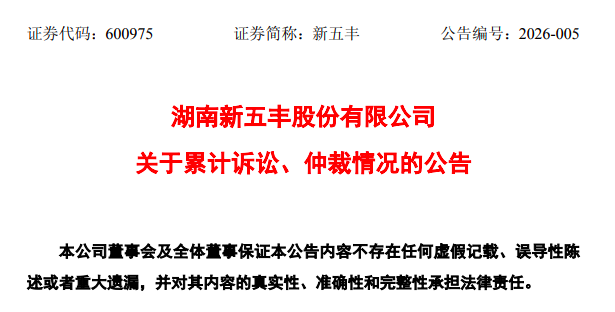
新五丰涉及与家家康诉讼,一年内累计涉案金额超3亿!
Shen Zhen Shang Bao· 2026-02-08 02:33
湖南上市猪企新五丰2月6日晚公告称,近日,公司收到武冈家家康农业综合开发有限公司(简称"家家康")变更和增加诉讼请求申请书,涉及金额为 2823.04万元。本次诉讼中,公司为本诉被告、反诉原告。本诉与反诉案件已立案受理。 新五丰公告披露,因家家康未配合按生物安全防控要求进行整改,猪场保育舍、二期猪场均未按原承诺交付,为落实生猪产能调控政策,优化公司生猪产 能结构,维护公司利益,公司向家家康提出解除租赁合同。家家康对新五丰提起诉讼,新五丰予以应诉并提请反诉,请求法院确认双方签订的《租赁合 同》《补充协议》《二期协议》解除,同时请求法院判令家家康依照合同约定承担违约责任及支付租赁场地添附物补偿款。新五丰提请反诉后,家家康变 更和增加了诉讼请求。 家家康变更和增加后的诉讼请求包括:判令新五丰向家家康支付租金共计人民币8,161,578元,并支付相应的资金占用费人民币619,357.5元;判令新五丰向 家家康支付租赁合同解除后的猪场占有使用费1,456,569.9元及资金占用费16,914.97元;判令新五丰向家家康支付违约金人民币14,976,000元;判令新五丰 赔偿因其违约行为给家家康造成的各项损失共计人民币3 ...

国信期货生猪周报:供增而需弱,生猪市场走低-20260206
Guo Xin Qi Huo· 2026-02-06 09:10
1. Report Industry Investment Rating - No relevant information provided 2. Core Viewpoints of the Report - In the past week, the live hog spot price rebounded and then declined due to increased slaughter by large enterprises and poor slaughter demand during the peak season. The live hog futures also weakened. The near - month 03 contract was significantly affected by the spot price decline and post - festival off - season expectations, while the far - month contracts were boosted by the policy expectations triggered by the No. 1 Central Document's mention of regulating live hog production capacity and showed relative resilience. The national basis mostly weakened, and the spread between near - and far - month contracts also decreased [7]. - Although the average slaughter weight is seasonally declining, the absolute level is still higher year - on - year, indicating that the live inventory is difficult to effectively digest during the pre - festival peak season, and the inventory pressure will continue into the post - festival period. According to the piglet birth data, the theoretical supply of standard hogs will remain high until May, which will continuously suppress the pig price [7]. - In the long run, commercial institution data shows that the pace of culling of sows has slowed down due to the rising piglet prices, and the industry re - balance still needs time [7]. - For the March futures contract, considering the post - festival off - season factors and possible inventory reduction pressure, it is expected to fluctuate weakly. For the May contract, although the theoretical supply may improve marginally, the overall supply is still at a high level. Given that its price is below the cost and there is uncertainty about post - festival second - fattening impulses, it is expected to fluctuate. The far - month contracts are supported by the expectation of production capacity reduction at low levels, but the upside space is limited by the small amplitude of production capacity reduction. In terms of operation, the near - end should be treated weakly, and for the far - end, opportunities for band - trading long positions in the undervalued range should be grasped [7]. 3. Summary According to the Directory 1. Weekly Analysis and Outlook - Live hog spot price rebounded and then declined, futures weakened. The near - month 03 contract had a large decline, and the far - month contracts were relatively resilient. The basis and near - far month spread weakened. The inventory pressure will continue into the post - festival period, and the supply of standard hogs will be high until May. The culling of sows has slowed down. Different futures contracts have different outlooks, and corresponding operation strategies are proposed [7]. 2. Central Reserve Frozen Pork Operations - In case of excessive price decline: At the national level, temporary reserve purchases are not initiated when the third - level early warning of excessive price decline is issued; they are initiated at the discretion when the second - level early warning is issued; and they are initiated when the first - level early warning is issued. Local governments follow the national practice [65]. - In case of excessive price increase: The central frozen pork reserve release has two starting conditions. In the case of market cyclical fluctuations, reserve release is initiated when the second - level early warning of excessive price increase is issued and the release intensity is increased when the first - level early warning is issued. In case of special situations such as major animal epidemic risks, the price increase tolerance is increased, and after the first - level early warning is issued, releases are mainly organized during key periods. Provinces can determine their own reserve release starting conditions, which should not be higher than the central reserve release starting conditions [62].