种草经济

Search documents
疯狂的“电子茅台”:价格暴涨10倍,有商家称“年入百万”
创业邦· 2026-03-02 03:49
天下网商 . 记录互联网商业的人物和故事。 来源丨 天下网商(ID:txws_txws) 以下文章来源于天下网商 ,作者天下网商 作者丨 丁洁 图源丨AI制作 又一"电子茅台"盯上中产钱包。 日前,一则名为 #多款相机价格暴涨近10倍 #的话题登上热搜 ,一位网友发现自己6年前花2459元 买的佳能卡片相机,如今价格涨至4000多元,又有网友发现5年前仅售4000多元的理光GR3现在也 飙升至9000多元,且多为9.9成二手机,大家感叹这一涨幅超过了黄金。 更有甚者,早已停产过时、画质拉胯且在市场销声匿迹多年的CCD老式相机,而今摇身一变为小红书 中年轻女孩们人手一台的街拍神器,这一"老古董"从原来售价一两百元一路被炒至上千元,价格翻了 十倍,从废物逆袭成新兴"理财神器"。 在摄影播客Photo Reason的一期节目里,三位摄影师以理光GR系列近年来的疯涨为由头,探讨起相 机涨价这一热门话题。在他们的分析中,涨价的背后是全球供应链危机、品牌市场策略、社交媒体种 草经济以及由此衍生的上下游产业链狂欢共同作用的结果。其中,社交媒体推动功不可没,理光、富 士、徕卡这些相机的社交属性甚至超越功能性,开始进入更大众的 ...


帮别人种草的小红书,为什么自己卖不好货?
3 6 Ke· 2026-02-10 01:11
Core Insights - The article discusses the paradox of Xiaohongshu's (Little Red Book) marketing model, where the platform excels in content creation but struggles with direct sales, leading to the closure of its self-operated e-commerce initiatives [1][21][22] - The concept of "lifestyle economy" is introduced, emphasizing the need to return to individual consumer demands, which Xiaohongshu aims to address through its unique positioning in the market [4][10][11] Group 1: Marketing and Consumer Trust - Xiaohongshu's "grass planting" (种草) strategy has been criticized as potentially misleading, with some industry insiders equating it to fraud [1] - The trust factor diminishes when content shifts from being observational to promotional, indicating a fragile balance between user trust and commercial intent [2][3] - The platform's attempt to integrate product links into user-generated content has been deemed ineffective and not user-friendly [4] Group 2: Non-standard Products and Market Positioning - Xiaohongshu's business model focuses on non-standard products, differentiating itself from traditional e-commerce platforms like Taobao and JD [5][8] - The success of brands like Berghaus on Xiaohongshu illustrates the platform's ability to cater to niche consumer needs that mainstream e-commerce may overlook [7][9] - The term "non-mainstream" is used to describe Xiaohongshu's unique market positioning, which allows for the promotion of products that may not perform well on conventional platforms [9] Group 3: Challenges in E-commerce - Xiaohongshu's attempts at e-commerce have faced significant challenges, leading to the closure of its self-operated platforms, including "Xiaolvzhou" and "Welfare Society," which had been operational for nine years [21][22] - The platform's struggle to create a transaction closure despite strong "grass planting" capabilities raises questions about its role in the consumer decision-making process [22][24] - The shift to a buyer model, focusing on non-standard aesthetic transformations, reflects Xiaohongshu's ongoing struggle to balance content purity with commercial viability [23][24] Group 4: Trust and Content Saturation - The proliferation of low-quality content and the rise of industrialized sharing practices have eroded user trust, leading to a decline in the effectiveness of the "grass planting" strategy [17][18] - Users have expressed dissatisfaction with misleading content, which has resulted in a negative perception of the platform, often referred to as the "filter trap" [18] - The saturation of promotional content has diminished the core value of authenticity that Xiaohongshu initially offered [18]
小红书继“红猫计划”“红京计划”后,再官宣“红美计划”,卖流量是门好生意?
Sou Hu Cai Jing· 2026-01-20 16:19
Core Insights - Xiaohongshu has officially announced a strategic partnership with Meituan, launching the "Hongmei Plan," which initially focuses on Meituan's medicine delivery service, marking a significant expansion into instant retail [10][11][12] - This collaboration follows previous initiatives with Taobao Tmall and JD.com, showcasing Xiaohongshu's ongoing efforts to monetize its traffic through various e-commerce platforms [1][6][17] Group 1: Hongmei Plan Overview - The Hongmei Plan aims to integrate content-driven marketing with instant retail, leveraging Xiaohongshu's content ecosystem to meet immediate consumer needs [10][11] - Users can seamlessly transition from discovering health-related content on Xiaohongshu to purchasing products on Meituan, addressing urgent consumer demands effectively [11][12] - Initial data indicates that brands participating in the Hongmei Plan have seen an average search volume increase of 42% on Xiaohongshu, with order costs dropping over 33% compared to industry averages [11][12] Group 2: Previous Initiatives - The "Hongmao Plan" with Taobao Tmall was launched in May 2025, focusing on reducing cross-platform traffic loss and enhancing marketing conversion paths for brands [3][4] - The "Hongjing Plan" with JD.com followed in June 2025, further refining Xiaohongshu's traffic monetization strategy by allowing direct product links in user-generated content [6][8] - Both previous plans have demonstrated significant improvements in sales metrics for participating brands, validating the effectiveness of Xiaohongshu's integrated marketing approach [4][8] Group 3: Business Model and Strategy - Xiaohongshu's business model revolves around transforming its content ecosystem into a sustainable revenue source by creating a closed-loop system of "content seeding - conversion - data" [14][15] - The platform's strategy minimizes capital investment in logistics and supply chain management, focusing instead on providing traffic and data services to partners [15][12] - The ongoing partnerships with major e-commerce platforms allow Xiaohongshu to diversify its revenue streams and mitigate risks associated with reliance on a single platform [15][16] Group 4: Challenges and Future Outlook - Despite the successful implementation of these plans, Xiaohongshu faces challenges such as dependency on partner platforms for transaction control and increasing competition from other content platforms [16][18] - The platform must maintain a balance between commercial value and user experience to ensure the sustainability of its community-driven content ecosystem [16][18] - Future expansions of the Hongmei Plan into other instant retail categories could further enhance Xiaohongshu's market presence and revenue potential [13][18]

小红书加速掘金金融赛道,获客中介兴起“废号流”玩法
Xin Lang Cai Jing· 2026-01-04 12:26
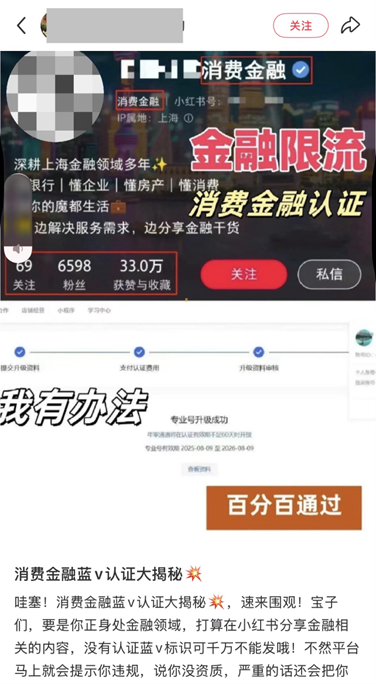
Group 1 - The core viewpoint of the article is that Xiaohongshu has relaxed its "consumer finance" Blue V certification standards, allowing a wider range of companies to qualify for certification, which has led to a surge in related content on the platform [1][4][19] - In September 2025, a summit titled "How to Do Finance on Xiaohongshu" was held, marking the platform's formal entry into the financial sector [4][21] - The certification requirements for "consumer finance" now include a minimum establishment period of one year and a limit on operational risk records, but the actual review process is reportedly lenient, allowing many non-compliant entities to gain certification [4][22][23] Group 2 - In November 2025, Xiaohongshu invested 148 million to acquire a third-party payment license, completing a crucial part of its transaction ecosystem [3][20] - The platform's financial ecosystem is characterized by a "waste account flow" strategy, where a core account is supported by multiple auxiliary accounts to generate leads for offline intermediary companies [3][12][28] - The user demographics of Xiaohongshu, primarily young women, have shown strong purchasing power and repayment capability, making the platform attractive for financial institutions [8][26][27] Group 3 - The relaxation of certification standards has led to the emergence of a gray market, with many intermediaries claiming to guarantee certification success for a fee [6][23] - The financial landscape on Xiaohongshu is becoming increasingly complex, with both licensed institutions and unqualified intermediaries operating on the platform, raising concerns about compliance and user protection [16][33] - Xiaohongshu is actively seeking to balance traffic monetization with compliance, as evidenced by its recruitment of compliance legal professionals to navigate regulatory frameworks [17][34][35]
千亿估值巨头,这次栽了个“大跟头”
Feng Huang Wang Cai Jing· 2025-09-11 12:39
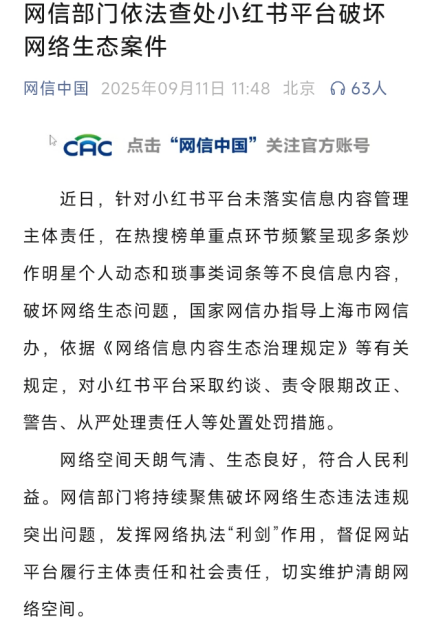
Core Viewpoint - Xiaohongshu, valued at $31 billion (approximately 220 billion RMB), is facing regulatory scrutiny as it approaches its IPO, following a warning from the Shanghai Cyberspace Administration for promoting celebrity content and disrupting the online ecosystem [1][15][21] Group 1: Regulatory Challenges - Xiaohongshu has been warned by the Shanghai Cyberspace Administration for frequently promoting celebrity dynamics, which has led to concerns about its impact on the online environment [1][15] - The platform has acknowledged the warning and stated it will implement corrective measures [3] - This is not the first time Xiaohongshu has faced regulatory issues; it was previously fined for violating minor protection laws [12][14] Group 2: User Engagement and Content Strategy - Xiaohongshu has 350 million monthly active users but is experiencing a slowdown in user growth, with increased focus on celebrity content to drive engagement [6][9] - Users have expressed dissatisfaction with the platform's algorithm, which prioritizes celebrity-related content over public interest topics, leading to complaints about content homogenization [8][10] - The platform's strategy of promoting celebrity content has been criticized for undermining its original purpose of sharing genuine life experiences [10][11] Group 3: Financial Performance and IPO Prospects - Xiaohongshu's valuation has increased by 19% in three months, reaching $31 billion, with expectations of profits exceeding $3 billion by 2025 [15][17] - The company is restructuring its business model to enhance monetization, including partnerships with Taobao to improve transaction efficiency [17] - Despite achieving profitability for the first time in 2023, the market remains cautious about its advertising growth and sustainability of new business ventures [17][19] Group 4: User Experience and Service Issues - Users have reported significant issues with Xiaohongshu's customer service and after-sales support, describing it as ineffective [18][19] - Complaints about the platform's logistics and order processing have surfaced, highlighting operational inefficiencies compared to established competitors [18][19]
千亿估值巨头,这次栽了个“大跟头”
凤凰网财经· 2025-09-11 12:30
Core Viewpoint - Xiaohongshu, a "grass-planting" giant with a valuation of $31 billion (approximately 220 billion RMB), is facing regulatory scrutiny as it approaches its IPO phase due to issues related to celebrity content and network ecology disruption [1][19]. Group 1: Regulatory Challenges - Xiaohongshu was recently warned by the Shanghai Cyberspace Administration for frequently promoting celebrity dynamics, which has been deemed harmful to the online ecosystem [2][6]. - The platform acknowledged the warning and committed to implementing corrective measures [4][6]. - This is not the first time Xiaohongshu has faced regulatory issues; it was previously fined for violating minor protection laws in January 2022 [14]. Group 2: User Experience and Content Strategy - Users have expressed dissatisfaction with the platform's focus on celebrity content, which has led to complaints about the lack of meaningful public discourse and the overwhelming presence of trivial celebrity news [10][12]. - Xiaohongshu's strategy of promoting celebrity content has been criticized for prioritizing short-term traffic and engagement over authentic user-generated content [13][26]. - The platform's user growth has shown signs of slowing down, with monthly active users (MAU) reaching 350 million but with a deceleration in growth rate [11][12]. Group 3: Financial Performance and IPO Prospects - Xiaohongshu's valuation has increased by 19% in three months, reaching $31 billion, with expectations of profits exceeding $3 billion by 2025 [19][22]. - The company is restructuring its business model to enhance monetization, including initiatives like the "Red Cat Plan" to improve traffic conversion efficiency [22][26]. - Despite achieving profitability for the first time in 2023, the market remains cautious about the sustainability of its advertising growth and e-commerce conversion rates [22][26]. Group 4: Community and Service Issues - Users have reported significant issues with the platform's customer service and after-sales support, describing it as ineffective and unresponsive [23][24]. - Complaints about the shopping experience highlight systemic flaws in the order fulfillment process, leading to user frustration [23][24].

我在小红书上卖家具:家私企业如何布局“种草经济”?
2 1 Shi Ji Jing Ji Bao Dao· 2025-08-21 09:39
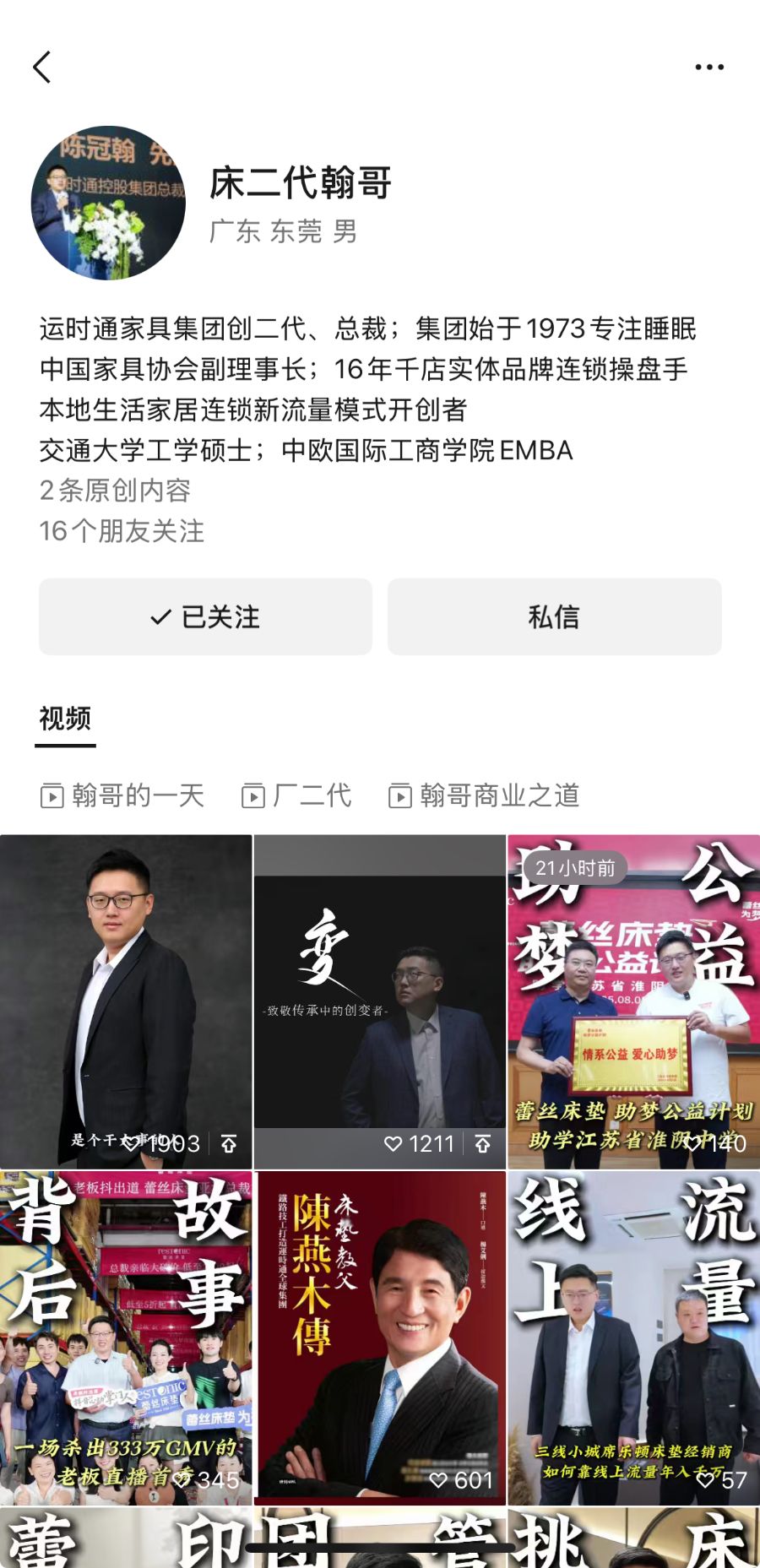
Core Insights - The furniture industry is undergoing significant transformation due to changes in consumer demand and the impact of the real estate market, leading companies to innovate their sales strategies and branding efforts [1][4][5] Group 1: Industry Challenges and Changes - The furniture industry has faced severe challenges in the past two years, with many companies going bankrupt, largely due to the downturn in the real estate sector [1][2] - Traditional sales models are being disrupted as companies shift towards multi-channel strategies, emphasizing service and emotional value over mere functionality [1][2][5] - The shift from a focus on B2B to B2C and now to interest-based and live-streaming e-commerce reflects changing consumer preferences [5][7] Group 2: New Sales Models and Strategies - Companies are increasingly adopting new sales models, such as live streaming and online platforms, to enhance customer engagement and service delivery [3][6][10] - Collaboration with service platforms has enabled businesses to overcome logistical challenges, allowing them to serve previously neglected markets [3][4] - The emphasis on building personal and brand IP is becoming crucial for attracting new customers and enhancing market presence [6][10][11] Group 3: Future Directions and Innovations - The industry is exploring innovative approaches to channel transformation, including the establishment of brand collective stores that integrate various values [11] - Companies are focusing on digital economy measures, design innovation, and brand building to navigate the complexities of international trade and domestic demand [10][11] - The creation of new brands, such as "悦莱" by 长实, signifies a strategic pivot towards domestic market engagement and brand differentiation [10][11]
小红书发布“文玩女孩”趋势图鉴:100亿次浏览带动文玩实现56倍增长
Xin Lang Ke Ji· 2025-07-25 10:16
Core Insights - Xiaohongshu's report on "Wenwan Girls" indicates a significant trend in the Wenwan market, with related topics accumulating over 10 billion views and the "Wenwan Girls" topic alone attracting 27 million discussions [1] - The average monthly search volume for "Wenwan" on Xiaohongshu has exceeded 1 million in the past year, highlighting growing interest [1] - The e-commerce GMV of the Wenwan industry on Xiaohongshu is projected to grow 56 times from 2022 to 2024, indicating a substantial market opportunity [1] User Engagement - Young users on Xiaohongshu are actively discussing and promoting Wenwan bracelets and accessories, leading to increased purchasing demand [1] - The concept of "pan串" has become a lifestyle trend among users, with various items being included in the "pan products" list, showcasing the creativity and engagement of the community [1] - The reading volume of notes related to "pan物" has surpassed 2 billion, with specific items like Bodhi, alkaline water bread, and corn receiving the highest likes [1] Market Penetration - The penetration rate of Wenwan jewelry and gemstones among Xiaohongshu's user base has reached 40.4%, indicating a strong market presence [1] - The demand generated by users has encouraged many entrepreneurs in the Wenwan sector to seize business opportunities by providing quality offerings [1][2]
被“好物”背刺多了,年轻人开始做起“歹物分享”
Hu Xiu· 2025-06-27 05:51
Group 1 - The core idea of the article revolves around the evolution of social media from a platform for sharing opinions to a marketplace for product recommendations, highlighting the rise of "grass planting" as a popular trend [1][3] - The concept of "attention economy" is introduced, where the ability to filter and recommend information becomes a valuable asset in an era of information overload [2][11] - "Grass planting" has transformed into a standardized product that can drive sales and support entire content supply chains, leading to a loss of trust among consumers [3][4] Group 2 - The emergence of "bad product sharing" reflects a growing skepticism towards traditional product recommendations, as it openly discusses the flaws of products rather than solely promoting their benefits [4][13] - "Bad products" are characterized by their design flaws or overpromises, yet they often possess redeeming qualities that keep consumers engaged [5][6] - The trend of "bad product sharing" allows creators to escape the pressure of promoting only positive reviews, making their content more relatable and credible [14][15] Group 3 - The article discusses how brands are beginning to embrace the concept of "bad product sharing" as a way to generate discussion and engagement, sometimes even leading to increased sales [14][15] - The blurred lines between "good" and "bad" products complicate consumer decision-making, as users struggle to discern genuine reviews from marketing tactics [15][16] - "Bad product sharing" serves as a counter-narrative to the idealized lifestyle often portrayed in marketing, revealing the absurdities behind seemingly perfect products [16][17] Group 4 - The phenomenon of "bad product sharing" provides consumers with a more authentic perspective on products, allowing them to make informed decisions based on real experiences [18] - The article emphasizes that while "bad product sharing" is gaining traction, it should not become the norm, as consumers should not remain in a constant state of skepticism [18]

南京的商场,太好逛了
Sou Hu Cai Jing· 2025-06-17 02:41
Core Insights - The article discusses the transformation of commercial spaces in Nanjing, emphasizing the shift from traditional retail to experience-driven environments that attract consumers through innovative content and immersive experiences [1][2][4]. Group 1: Commercial Transformation - Nanjing's shopping landscape is evolving with new commercial complexes like Jinling Central and Xuanwu Garden City, which focus on creating engaging experiences rather than just selling products [1][4][18]. - The concept of "experience economy" and "IP creation" is becoming essential for attracting customers, with social media playing a significant role in driving foot traffic to these venues [4][8][14]. Group 2: Innovative Features - Deji Plaza exemplifies the trend of transforming shopping malls into attractions, featuring art installations and unique amenities that draw visitors for experiences beyond shopping [6][8]. - New projects like Jinling Central and Xuanwu Garden City incorporate elements of local culture and nature, such as ecological points and immersive cultural spaces, to enhance consumer engagement [12][19]. Group 3: Economic Impact - The introduction of flagship stores and unique brands is a strategic focus for Nanjing's commercial entities, with Jinling Central featuring 30% flagship stores and over 50 new brands, significantly boosting initial foot traffic and sales [15][18]. - The integration of cultural elements into commercial spaces has proven effective, as seen with Su Ning's MAX Super Experience Store, which achieved sales exceeding 50 million yuan on its opening day [20]. Group 4: Community and Local Business - Community commercial spaces are emerging as vital components of Nanjing's retail landscape, providing convenient shopping options while fostering local culture and community engagement [21][23]. - Smaller community complexes like Zijin Zhongai Li and Ruijin Li REPARK are designed to cater to local residents while attracting younger consumers through unique themes and experiences [23]. Group 5: Future Directions - Nanjing's commercial strategy is shifting towards a focus on content creation and ecological development, aligning with consumer demands and urban growth [24][25]. - The city aims to enhance its commercial landscape by integrating various retail formats and promoting a one-stop shopping experience, while also supporting community-based commercial initiatives [24][25][27].