科技创新和产业创新深度融合

Search documents
张瑜:十大增量信息——“十五五”规划纲要学习心得
一瑜中的· 2026-03-16 07:35
Economic Goals - The outline states that by 2035, the per capita GDP is expected to double compared to 2020, reaching a level comparable to that of medium-developed countries, with an average annual growth rate of 4.17% over the next decade [3][16]. Major Goals - The "15th Five-Year Plan" outlines 20 major goals, including maintaining GDP growth within a reasonable range, increasing the proportion of nursing beds in elderly care institutions, and improving the enrollment rate of children under three years old [4][17]. Major Projects - A total of 109 major projects will be implemented during the "15th Five-Year Plan," focusing on enhancing industrial capabilities, fostering new industries, and advancing cutting-edge technology [5][19]. Integration of Technology and Industry - The outline emphasizes the deep integration of technological innovation and industrial innovation, including the establishment of a corporate R&D reserve fund and support for high-quality tech companies to go public [6][22]. Digital China Development - The outline includes significant new content on advancing digital China, emphasizing the strengthening of computing power facilities and promoting the iteration and innovation of models and algorithms [7][24][25]. Family-Friendly Society - A new chapter focuses on building a family-friendly society, highlighting the importance of policies that support childbirth and childcare, including flexible work arrangements for parents of young children [8][27]. Infrastructure Development - The plan prioritizes new infrastructure, renewable energy, and urban renewal, with specific targets for the construction and renovation of urban utility networks [9][29][30]. Emerging Industries - The outline mentions various emerging industries, including new energy, advanced manufacturing, and biotechnology, with a focus on building industry clusters that leverage regional strengths [10][32].

市政协十五届五次会议举行大会发言
Xi An Ri Bao· 2026-02-28 01:57
Core Viewpoint - The meeting of the municipal political consultative conference focused on economic and social development, with 13 committee members providing suggestions to support the city's "14th Five-Year Plan" [1][3] Group 1: Suggestions from Committee Members - Liu Fengqin suggested revitalizing idle resources to promote urban-rural integration [2] - He Wei recommended standardizing group-based education to enhance educational equity and quality [2] - Huo Bingnan proposed cultivating modern silver economy entities to stimulate new momentum in the silver economy [2] - Li Ming advocated for accelerating the establishment of homeowners' committees in residential areas to improve grassroots governance [2] - Cui Yan emphasized expanding the city's IP influence to enhance consumption levels in cultural tourism projects [2] - Cheng Yuan highlighted the need to seize opportunities in the national unified market to transform the investment attraction system in Xi'an [2] - Wang Shuanmin suggested focusing on the intelligent new track to create new advantages for future industries in Xi'an [2] - Yin Tingguo called for more targeted policy support to bolster the development of the private economy [2] - Other committee members addressed topics such as urban renewal, integration of technology and industry innovation, new models for real estate development, enhancing micro-economy for public welfare, and the development of the Xi'an metropolitan area [2] Group 2: Meeting Overview - The conference received 287 speeches, closely aligned with the municipal government's key work and public concerns, aiming to gather insights and consensus for high-quality development and modernization in Xi'an [3]
长三角经济总量达34.66万亿元
Ren Min Ri Bao· 2026-02-26 22:43
Core Viewpoint - The Yangtze River Delta region is projected to have an economic total of 34.66 trillion yuan by 2025, highlighting its role as a significant growth engine in China's economy [1] Economic Performance - By 2025, the total export volume of Shanghai, Jiangsu, Zhejiang, and Anhui is expected to reach 10.85 trillion yuan [1] - The proportion of listed companies on the Sci-Tech Innovation Board from the Yangtze River Delta is anticipated to reach 48% [1] Innovation and Collaboration - The Yangtze River Delta's joint tackling mechanism is deepening, with 212 cross-regional tackling demands collected for 2025, and 69 key tasks published [1] - A record 227 cross-regional joint solutions have been collected, indicating a robust collaborative environment [1] - The establishment of innovation alliances is accelerating, with 24 alliances announced in two batches [1] Industry Development - The implementation of measures to accelerate the construction of advanced manufacturing clusters in the low-altitude economy has been initiated [1] - The Yangtze River Delta's technology innovation vouchers have achieved interconnectivity across Shanghai, Zhejiang, Jiangsu, and parts of Anhui, with over 5,000 companies applying and more than 11,000 purchases of technology services [1] - The total support amount from innovation vouchers has exceeded 250 million yuan [1] - The Shanghai Technology Exchange is leading the establishment of a service center for technology rights registration, with over 600 new transformation projects expected in the Yangtze River Delta by 2025 [1]
强化科技创新和产业创新深度融合
Ren Min Ri Bao· 2026-02-14 00:44
Group 1 - The development of new quality productivity is an intrinsic requirement and important focus for promoting high-quality development during the "14th Five-Year Plan" period [1] - Xi Jinping emphasized the need for a deep integration of technological innovation and industrial innovation, and the importance of developing new quality productivity tailored to local conditions [2][7] - Various regions are implementing Xi Jinping's important discourse on developing new quality productivity, focusing on their strategic positioning and resource endowments to inject strong momentum into high-quality economic development [1][6] Group 2 - The Tsinghua National Key Laboratory for Intelligent Green Vehicles and Transportation is one of the first laboratories to settle in the Tsinghua National Key Base, enhancing organized scientific research and collaboration [3] - The Tsinghua National Key Base is designed to facilitate the transition of innovations from laboratories to the market, promoting a comprehensive innovation ecosystem [2][5] - The integration of technology and industry is being actively pursued in various regions, such as Harbin and Hangzhou, to foster new quality productivity in strategic emerging industries [6] Group 3 - The Hainan Free Trade Port is leveraging its deep-sea technology advantages to accelerate the development of marine new quality productivity, with significant growth in marine production value expected by 2025 [8][9] - Traditional industries are being upgraded through innovative models, such as the shared manufacturing factory in Hebei, which allows small enterprises to access advanced production lines [10][11] - The integration of technology in traditional industries is crucial for enhancing productivity and meeting high-end market demands [12] Group 4 - Emerging and future industries are seen as new engines for modern industrial system construction, with a focus on technology-driven growth [13][15] - The Suzhou International Science and Technology Park is fostering innovation by providing real-world application scenarios for technological advancements [14] - The development of new quality productivity is supported by a complete industrial system in China, which facilitates the nurturing of cutting-edge technologies and emerging industries [15] Group 5 - The integration of technology in agriculture and tourism is transforming these sectors, enhancing productivity and consumer experiences [16][17] - The city of Luoyang is utilizing digital technology to innovate its tourism offerings, significantly increasing visitor numbers and revenue [18] - The emphasis on technology-driven development in traditional sectors is a key strategy for fostering new quality productivity and achieving high-quality growth [19]
范波会见清华大学党委书记邱勇一行
Su Zhou Ri Bao· 2026-02-08 00:39
Group 1 - The meeting between Suzhou's Party Secretary Fan Bo and Tsinghua University's Party Secretary Qiu Yong emphasized the importance of collaboration for high-tech innovation and quality development in Suzhou [1][2] - Suzhou aims to integrate education, technology, and talent development, creating a conducive environment for various talents to thrive [1] - Tsinghua University has a strong tradition of nurturing outstanding talents and has established a solid foundation for cooperation with Suzhou in areas such as innovation and talent cultivation [2] Group 2 - Both parties expressed a commitment to deepen practical cooperation in key areas such as core technology breakthroughs, talent training, and major platform construction [2] - The collaboration aims to provide strong support for achieving high-level technological self-reliance and innovation [2]
【2026阔步前行】锚定目标奋发进取 书写“十五五”开局新答卷
Xin Lang Cai Jing· 2026-02-07 12:33
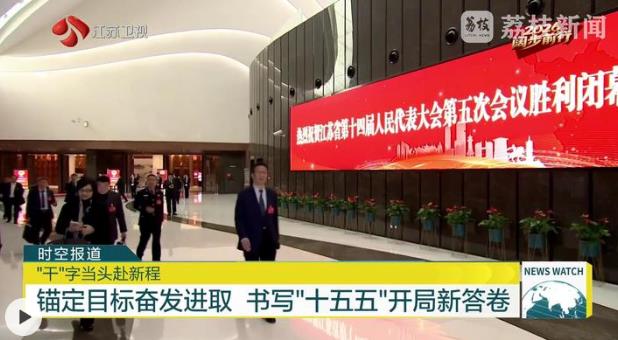
Group 1 - The Jiangsu Provincial Two Sessions have concluded successfully, uniting the province's efforts to contribute to national development [2] - Representatives expressed confidence and determination to implement the resolutions from the Two Sessions, emphasizing collective responsibility [4] - The sessions outlined a promising development blueprint for the next five years, focusing on technological and industrial innovation [6] Group 2 - The report emphasizes the importance of the provincial industrial technology research institute's involvement in the Yangtze River Delta National Technology Innovation Center [8] - Representatives are committed to promoting new business models and consumption scenarios, particularly in smart retail and nighttime economy [12] - There is a focus on modernizing agriculture and enhancing rural living conditions, with an emphasis on training new farmers [16]
省两会代表委员热议政府工作报告中的“南京元素”
Nan Jing Ri Bao· 2026-02-05 02:16
Group 1: Core Perspectives - The focus is on deep integration of technological innovation and industrial innovation, emphasizing the need for a shift from traditional linear models to an integrated ecological paradigm [2][4] - The establishment of a robust innovation ecosystem is crucial for promoting the formation of industrial technology innovation centers and enhancing core functions [2][3] Group 2: Nanjing Practices - Nanjing has strengthened its innovation capabilities, with the establishment of the world's first 6G outdoor test network and the construction of major scientific infrastructure [3][11] - The city has seen significant growth in its industrial sectors, with the software and information services industry becoming the first trillion-yuan industry, and the industrial robot production increasing by 35.4% [7][11] Group 3: Legislative Discussions - Representatives emphasize the importance of combining market-driven approaches with government guidance to create replicable models for integrating technology and industry [4][8] - There is a call for the development of a comprehensive life health management system that integrates artificial intelligence and biomedicine [8][12] Group 4: Future Industry Development - The report highlights the need to support emerging industries such as quantum technology, hydrogen energy, and brain-computer interfaces, aiming to create a national leading area for future industries [6][11] - Nanjing is actively pursuing the development of artificial intelligence and related technologies, with significant investments in AI applications and infrastructure [10][11]
凝心聚力担使命 砥砺前行向未来
Xin Hua Ri Bao· 2026-02-03 22:01
Core Viewpoint - The discussions among committee members at the Jiangsu Provincial Political Consultative Conference emphasized confidence in achieving the goals set for the "14th Five-Year Plan" period, under the guidance of Xi Jinping's important speeches and the leadership of the provincial government [1][2]. Group 1: Achievements and Future Goals - The report highlighted the successful completion of major tasks during the "14th Five-Year Plan" period, showcasing numerous national firsts and achievements that instill pride and motivation among committee members [1]. - The "15th Five-Year Plan" period is viewed as a critical phase for solidifying the foundation of socialist modernization, with the report aligning its goals with the guiding principles from the 20th National Congress of the Communist Party of China [2]. - The report outlines ten key tasks for 2026, focusing on maintaining economic stability, promoting technological and industrial innovation, and building a modern industrial system, which are essential for high-quality development [2]. Group 2: Emphasis on People's Livelihood - The report prioritizes people's livelihood by proposing impactful policies in employment, education, social security, health, and population services, reflecting a commitment to a people-centered development approach [2]. - Committee members expressed their intention to actively contribute to the implementation of the "15th Five-Year Plan" by providing constructive suggestions and fostering consensus to enhance collective efforts [2].
人民日报:推动科技创新和产业创新深度融合 高价值专利助力培育新质生产力
Xin Lang Cai Jing· 2026-02-03 09:31
Group 1 - The consumer enthusiasm for mobile phones is increasing, driven by the trade-in policy and the upcoming Spring Festival, leading to a surge in foot traffic in mobile phone stores [3] - The foldable phone market is experiencing significant growth, with shipments exceeding 10 million units and a year-on-year increase of 9.2% [4] - OPPO has invested over 8 years in R&D for foldable phones, holding more than 3,500 related patents, and plans to launch a new generation of products [4] Group 2 - The agricultural machinery industry faces challenges such as crop loss during harvesting due to complex conditions, prompting innovation in real-time monitoring and automatic adjustment technologies [5] - A new patent for an adaptive cleaning control device in harvesters has been developed, significantly improving harvesting efficiency and reducing reliance on subjective experience [5] - The collaboration between academia and industry has led to a direct increase in enterprise revenue exceeding 1 billion yuan [5] Group 3 - Chinese enterprises are becoming the main force in high-value invention patents, with 280,000 companies holding 1.764 million patents, accounting for over three-quarters of the total [6] - The industrialization rate of invention patents among Chinese enterprises has increased from 44.9% to 54% since the 14th Five-Year Plan [6] - A full-chain innovation model is being formed, integrating research, patent cultivation, and industrial application, enhancing the feedback loop between market needs and technological development [6] Group 4 - The use of brain-machine interface rehabilitation robots has shown promising results in patient recovery, utilizing a non-invasive approach combined with AI algorithms [7] - The team has accumulated over 100 patents in the brain-machine interface field, achieving significant financial returns through various intellectual property strategies [7] - High-value patents are crucial for supporting China's technological self-reliance, with nearly 800,000 invention patents maintained for over 10 years, generating economic and social value [7]

范波在相城区调研
Su Zhou Ri Bao· 2026-02-02 00:30
Core Viewpoint - The article emphasizes the importance of integrating technological innovation with industrial innovation to enhance competitiveness and drive high-quality development in the region [1][5]. Group 1: Technological Innovation - The local government is focusing on leveraging the advantages of the Shanghai (Yangtze River Delta) International Science and Technology Innovation Center to optimize the spatial layout of industrial innovation [5]. - There is a call for the establishment and effective utilization of new research and development institutions to achieve breakthroughs in key core technologies [5]. - The government encourages companies to adapt to changing consumer demands by upgrading technology and launching high-quality products [4]. Group 2: Industrial Innovation - The article highlights the need for enterprises to take the lead in innovation, with support from research institutions and universities to form collaborative innovation entities [5]. - There is an emphasis on the importance of transforming innovation results into new productive forces, thereby enhancing industrial competitiveness [5]. - Companies are encouraged to increase research and development investments, particularly in cutting-edge fields such as automotive electronics and intelligent manufacturing [4]. Group 3: Future Industry Development - The government aims to cultivate future industries through a steady and progressive approach, ensuring development is tailored to local conditions and promotes differentiated growth [5]. - There is a focus on creating a first-class innovation ecosystem that integrates education, technology, and talent development to attract global innovation resources [5]. - The initiative aims to stimulate entrepreneurial and innovative activities by nurturing leading technology companies and top-tier innovative talents [5].