
网络餐饮食品安全监管

Search documents
网络餐饮食品安全监管新规:强化平台主体责任 整治“幽灵外卖”等问题
Yang Shi Wang· 2026-02-27 16:23
Core Viewpoint - The implementation of new regulations by the State Administration for Market Regulation aims to enhance food safety standards in the online food delivery sector, effective from June 1 of this year [1] Group 1: Regulatory Changes - The State Administration for Market Regulation has developed the "Regulations on the Supervision and Management of Food Safety Responsibilities of Online Catering Service Operators" [1] - The new regulations are set to officially take effect on June 1, indicating a proactive approach to improving food safety in the online food delivery industry [1]
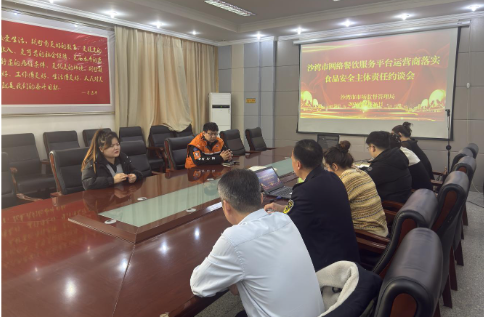
沙湾市召开网络餐饮服务平台运营商落实食品安全主体责任约谈会
Zhong Guo Shi Pin Wang· 2026-02-27 04:47
Core Viewpoint - The meeting organized by the Shawan City Market Supervision Administration aims to enforce food safety responsibilities among online catering service platforms to ensure public safety in food consumption [1][3]. Group 1: Regulatory Requirements - The meeting conveyed the latest national and regional requirements for food safety supervision in online catering services, highlighting issues such as inadequate qualification reviews of registered catering merchants and poor implementation of food safety management systems [3]. - Online catering platforms are crucial links between consumers and food service providers, and failure to fulfill food safety responsibilities can directly impact public health [3]. Group 2: Specific Demands on Platform Operators - Operators are required to strictly verify the qualifications of food service providers, ensuring no unlicensed or illegal operations occur [5]. - Daily supervision must be enhanced, with a dynamic management mechanism for registered merchants, including regular self-inspections and prompt actions against those with food safety risks [5]. - A dedicated food safety management institution must be established within each platform, with specialized personnel and a strict monitoring schedule [5]. - Platforms are encouraged to promote transparency by implementing "Internet + Open Kitchen" initiatives, allowing public oversight of food preparation processes [5]. Group 3: Meeting Outcomes and Future Actions - The meeting served as both a responsibility enforcement and work deployment session, fostering consensus between regulators and operators to standardize online catering operations and mitigate food safety risks [6]. - The Shawan City Market Supervision Administration plans to intensify regulatory efforts, combining routine inspections with special rectification actions, adopting a "zero tolerance" approach to illegal activities in the online catering sector [6].

外卖行业新规:外卖店名须与实体招牌一致,“无堂食”商家须标明
2 1 Shi Ji Jing Ji Bao Dao· 2026-02-27 01:02
Core Viewpoint - The rapid development of the online food delivery industry has prompted the State Administration for Market Regulation to implement new regulations aimed at enhancing food safety standards in this sector [2][3]. Group 1: Regulatory Framework - The newly established regulations detail the responsibilities of food delivery platforms regarding merchant qualification audits, information disclosure, process control, and issue resolution throughout the entire management chain [2]. - Platforms are required to take responsibility for food safety at every operational stage, ensuring that they are accountable for the quality of food delivered, not just for generating revenue [2]. Group 2: Consumer Protection Measures - The regulations mandate that the names of online food stores must match the names displayed at their physical locations, and essential information such as operating qualifications and actual addresses must be prominently displayed on the main page [2]. - To address the issue of "fake addresses," the actual operating address must align with the address listed on the business qualification certificate [2]. Group 3: Compliance and Penalties - Delivery platforms that exclusively provide takeaway services must clearly indicate "no dine-in" on their main page, with this information also displayed on the platform's merchant list [3]. - The authorities plan to significantly increase penalties for violations, with fines reaching up to 200,000 yuan, and in severe cases, personal fines for platform executives could be imposed based on their previous year's income, ranging from one to ten times [3].
整治“幽灵外卖”!刚刚,新规发布
Yang Shi Xin Wen Ke Hu Duan· 2026-02-27 00:49
Core Viewpoint - The new regulation titled "Regulations on the Supervision and Management of Food Safety Responsibilities of Online Catering Service Operators" will be officially implemented on June 1, emphasizing the accountability of food delivery platforms in ensuring food safety throughout their operations [1][2]. Group 1: Responsibilities of Delivery Platforms - The regulation specifies that food delivery platforms must take full responsibility for the management of merchant qualifications, information disclosure, process control, and issue resolution [1]. - Platforms are required to ensure that they are accountable from the moment of registration, online operation, and business activities, integrating food safety responsibilities into every aspect of their operations [1]. Group 2: Measures Against "Ghost Deliveries" - The regulation addresses the issue of "ghost deliveries" by mandating that delivery platforms conduct real-name registration of merchants and perform substantive checks on their food business licenses and qualifications [1]. - Platforms must ensure that the information on the merchant's qualifications matches the actual situation, moving beyond mere formal checks [1]. Group 3: Data Verification and Management - Delivery platforms are required to verify the food business licenses and qualifications of merchants against data held by provincial market supervision departments, breaking down data barriers and eliminating "information islands" [2]. - The regulation mandates that platforms must update and verify the registered operational addresses and qualifications of merchants at least every six months, transitioning from static entry to continuous lifecycle management [2].
外卖网店名称须与实体经营门面招牌名保持一致
Xin Lang Cai Jing· 2026-02-26 18:39
Core Viewpoint - The new regulations aim to address issues such as "ghost delivery" and false advertising in the online food delivery sector, emphasizing the responsibility of platforms to ensure food safety and transparency [1][2]. Group 1: New Regulations Overview - The Market Regulation Administration has released two new regulations targeting online food delivery services, focusing on enhancing food safety and accountability [1][2]. - The regulations require that the names of online food service providers match their physical storefront names, and that they display their operating qualifications and actual addresses prominently on their pages [2][3]. Group 2: Addressing "Ghost Delivery" - "Ghost delivery" refers to unlicensed operators who misrepresent themselves as legitimate businesses, often using fake qualifications and addresses [3]. - The new regulations mandate that platforms conduct substantial reviews of the food business licenses of their listed providers to ensure compliance with actual operating conditions [3]. Group 3: Consumer Protection Measures - The regulations require platforms to provide clear complaint and reporting links on the main pages of food sellers, facilitating consumer feedback on food safety issues [4][5]. - Penalties for non-compliance have been significantly increased, with fines reaching up to 200,000 yuan, and personal fines for platform leaders based on their previous year's income in severe cases [5].
市场监管总局发布外卖与网售食品相关新规
Cai Jing Wang· 2026-02-26 14:05
Core Viewpoint - The State Administration for Market Regulation (SAMR) has introduced two new regulations aimed at enhancing food safety in online food delivery and sales, emphasizing the responsibilities of platforms and merchants in ensuring compliance and safety standards. Group 1: Regulations Overview - The new regulations include the "Regulations on the Supervision and Management of Food Safety Responsibilities of Online Catering Service Operators" and the "Regulations on the Supervision and Management of Food Safety Responsibilities of Online Food Sales Operators" [1]. - These regulations aim to improve the safety of food delivery services by focusing on three main areas: platform responsibility, merchant compliance, and enforcement of penalties for violations [3][4]. Group 2: Platform Responsibilities - The regulations specify that online food delivery platforms must take full responsibility for the management of merchants, including verifying qualifications, publicizing information, controlling processes, and addressing issues [2]. - Platforms are required to embed food safety responsibilities into every aspect of their operations, ensuring they do not solely focus on revenue generation without accountability [2]. Group 3: Merchant Compliance - Merchants must have a legitimate physical store, and their operational details must align with their qualifications [2]. - Strict adherence to raw material control, facility maintenance, and operational standards is mandated, with specific requirements for merchants that do not offer dine-in services [2]. Group 4: Enforcement and Penalties - The regulations enhance penalties for violations, with fines reaching up to 200,000 yuan for platforms and merchants, and potential personal fines based on previous annual income for severe violations [3][5]. - A unified regulatory framework is established, linking online food delivery platforms to the broader e-commerce regulatory environment, thereby increasing accountability [3]. Group 5: Information Transparency - The regulations mandate clear and accurate information disclosure from both platforms and merchants to ensure consumer trust [6]. - Specific measures include consistent display of business credentials, operational addresses, and the introduction of clear indicators for merchants that do not provide dine-in services [7]. Group 6: Addressing "Ghost Deliveries" - The regulations target the issue of "ghost deliveries," which involve unqualified operators masquerading as legitimate businesses [8]. - Platforms are required to conduct thorough checks on merchant qualifications and maintain ongoing verification of their operational status to prevent fraudulent activities [9].
整治假资质假地址 市场监管总局出台网络餐饮新规
Bei Jing Shang Bao· 2026-02-26 12:40
Core Viewpoint - The article discusses the introduction of new regulations by the State Administration for Market Regulation aimed at enhancing food safety in the online food delivery sector, focusing on the responsibilities of delivery platforms and merchants. Group 1: Responsibilities of Delivery Platforms - The new regulations emphasize the primary responsibility of food delivery platforms in managing merchant qualifications, information disclosure, process control, and issue resolution throughout the entire supply chain [1] - Platforms are warned against merely collecting commissions without taking responsibility for food safety, highlighting the need for them to act as gatekeepers for food safety [1] Group 2: Merchant Compliance - Merchants are required to have a legitimate physical store, and their business activities, addresses, and qualifications must be consistent [1] Group 3: Regulatory Framework - The regulations aim to integrate delivery platforms into a unified regulatory framework for e-commerce operators, reinforcing their legal responsibilities in information reporting, data sharing, and consumer rights protection [2]
河北省秦皇岛市市场监管局加码网络餐饮监管 守护“舌尖上的安全”
Xin Lang Cai Jing· 2026-01-26 08:41
Core Insights - The article discusses the efforts of the Qinhuangdao Market Supervision Administration in Hebei Province to enhance food safety in the online food delivery sector, focusing on a comprehensive governance model involving platform responsibility, government oversight, and social participation [1][2] Group 1: Platform Responsibility and Regulation - The market supervision department has emphasized the importance of platform responsibility, conducting approximately 21 discussions with delivery platforms since 2025 to ensure compliance in key areas such as registration, qualification review, information disclosure, and complaint handling [1] - A total of 2,739 online monitoring sessions and 5,842 offline inspections were conducted, uncovering 207 food safety issues, leading to 74 corrective orders and one case of legal action [1] Group 2: Social Participation and Community Engagement - The administration has established a collaborative governance mechanism by employing 135 delivery riders as "social supervisors" to gather operational insights and enhance regulatory precision, resulting in 30 collected leads [2] - A consumer complaint and feedback mechanism has been implemented, processing 142 complaints with an average resolution time of under 24 hours, fostering a governance structure that involves regulatory authorities, platform accountability, and broad community engagement [2]
平湖市市场监管局经开分局 开展“幽灵外卖”专项整治
Xin Lang Cai Jing· 2026-01-01 23:53
Core Viewpoint - The article discusses the implementation of a special rectification action by the Pinghu Market Supervision Administration to regulate online food delivery services and combat "ghost takeout" operations, ensuring consumer safety in online dining [1] Group 1: Regulatory Actions - The Pinghu Market Supervision Administration organized a special action to address "ghost takeout" behaviors, which involve businesses without physical storefronts or mismatched addresses [1] - The action involved three specialized inspection teams that conducted comprehensive checks on online food service providers within their jurisdiction [1] - The teams employed a dual approach of "online screening + offline verification" to identify suspicious businesses, ensuring thorough coverage and consistent standards in their inspections [1] Group 2: Inspection Process - A total of 38 online and offline merchants were verified during the rectification process, focusing on the authenticity of business locations, hygiene conditions, and operational standards [1] - The inspection process was characterized by a grid-based division of labor and a unified workflow, facilitating efficient information sharing and communication among teams [1] Group 3: Future Plans - The Pinghu Market Supervision Administration plans to maintain the effectiveness of the rectification efforts by establishing a regular monitoring mechanism that combines online monitoring with offline verification [1] - There will be an emphasis on deepening data collaboration and information sharing with food delivery platforms to promote social governance [1] - The administration aims to strengthen regulation and public awareness to enhance food safety in online dining, ensuring consumers can order with confidence [1]
“无堂食”商家必须亮标识 “幽灵外卖”无处遁形
Yang Guang Wang· 2025-10-18 00:32
Core Viewpoint - The National Market Supervision Administration has released a draft regulation aimed at enhancing food safety responsibilities for third-party online food delivery platforms and their partnered restaurants, focusing on clearer labeling and stricter oversight measures. Group 1: Key Highlights of the Draft Regulation - The draft requires platforms to label restaurants that do not offer dine-in services with a "no dine-in" sign, which is expected to improve consumer confidence regarding food safety [1][2] - The regulation emphasizes the implementation of "Internet + Bright Kitchen" video monitoring, allowing consumers to view the cooking process in real-time, thereby increasing transparency and trust [2][3] - A "one certificate, one store" model is proposed to prevent the use of the same business license for multiple online stores, addressing the issue of "ghost restaurants" that lack physical locations [3][5] Group 2: Industry Reactions and Implications - Restaurant operators express that the new regulations will help eliminate unfair competition from non-compliant businesses, allowing compliant operators to compete based on quality and service [3][4] - Experts highlight that the draft addresses critical issues in food safety regulation, such as the need for better scrutiny of online food service providers and the challenges of cross-regional operations [4][5] - The draft is seen as a step towards more refined, standardized, and regulated food safety oversight in the online food delivery sector, with a focus on consumer rights and safety [4][5]