行业主题ETF

Search documents
ETF市场流动性动态报告:石油石化领涨,宽基ETF资金持续大幅净流出
景顺长城· 2026-02-02 09:58
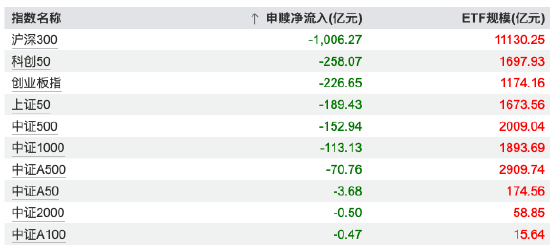
Report Industry Investment Rating No relevant information provided. Core Viewpoints The report analyzes the ETF market liquidity from January 26, 2026, to February 1, 2026. It shows that the overall market has characteristics such as a certain trend in bond yields, fluctuations in the A - share market, and significant changes in ETF fund flows [2][9][10]. Summary by Directory Market Overall Situation - China's 10 - year Treasury bond yield was basically flat at 1.81% on Friday, and the US 10 - year Treasury bond yield was also flat at 4.26% on Friday. The copper - gold ratio can be regarded as a leading indicator of China's bond yields [2][9]. - The average daily trading volume of the Shanghai and Shenzhen stock markets was 30,345 billion yuan, up 9.45% from the previous week. The margin trading balance was about 26,986 billion yuan on Friday, slightly down from the previous week [2][10]. - 10 new stock - type ETFs were issued last week, with a total issuance scale of about 6.5 billion shares. Stock - type ETFs had a net redemption outflow of about 316.9 billion yuan [10][11]. - The Shanghai Composite Index fell 0.44%, the Shanghai 50 rose 1.13%, the CSI 300 rose 0.08%, etc. The petroleum and petrochemical and communication sectors led the gains, while the national defense and military industry, power equipment, and automobile sectors declined [2][11]. - The congestion indicator of the non - long - term popular track nonferrous metal industry in the Shenwan primary industry issued a warning [11]. Wide - based ETF Redemption Funds Continued to Flow Out Significantly (1) CSI 300ETF Funds Flowed Out Significantly - The overall ETF market had a net redemption inflow of about - 298.5 billion yuan, and stock - type ETFs had a net redemption inflow of about - 316.9 billion yuan. Wide - based ETFs had a net inflow of about - 389.2 billion yuan, which was the main direction of the net inflow and outflow of stock - type ETF redemption funds [26]. - The trading turnover rate of stock (industry) ETFs increased. The CSI 300ETF continued to have a large - scale net outflow of redemption funds, while some industry - themed ETFs such as chemical - related and gold ETFs, as well as Hong Kong - Stock Connect non - bank ETFs, had net inflows [26]. (2) Industry - Themed ETFs such as Gold and Nonferrous Metals Had Net Inflows Last Week - Gold, nonferrous metal and other industry - themed ETFs had net inflows of redemption funds, while wide - based ETFs such as the CSI 300ETF had net outflows of redemption funds [35]. (3) Overview of Newly - Listed and To - Be - Listed ETFs - 7 ETF funds were listed for trading last week, with a total share of about 4.7 billion. There were 16 ETFs that had completed fundraising and were waiting for listing, with a total share of about 9.5 billion [40].
昨日股票ETF资金净流出近300亿元
Zhong Guo Ji Jin Bao· 2026-01-30 05:50
Core Viewpoint - The A-share market experienced fluctuations on January 29, with mixed performance across the three major indices and a total market turnover of 3.26 trillion yuan, indicating some capital withdrawal from the market [1] Group 1: ETF Fund Flows - The total net outflow from stock ETFs (including cross-border ETFs) was approximately 298.64 billion yuan on January 29, with significant outflows from broad-based ETFs [2][5] - Six ETFs had a net outflow exceeding 50 billion yuan, with one ETF alone seeing a net outflow of over 100 billion yuan [1][3] - Since the beginning of 2026, stock ETFs have faced cumulative net outflows exceeding 750 billion yuan due to severe "blood loss" in broad-based ETFs [1] Group 2: Sector Performance - Despite the overall net outflow, 61 stock ETFs recorded net inflows exceeding 1 billion yuan, with the gold and non-ferrous metal sectors leading the inflows [2] - The industry-themed ETFs and commodity ETFs saw net inflows of 221.41 billion yuan and 53.9 billion yuan, respectively, while broad-based ETFs had a net outflow of 520.18 billion yuan [2] - Specific ETFs such as the SGE Gold 9999 index saw a net inflow of 40.52 billion yuan, while the CSI 300 index ETF had the highest net outflow at 316.28 billion yuan [2] Group 3: Fund Management Insights - Leading fund companies like E Fund and Huaxia Fund have seen significant inflows in their ETF products, with E Fund's Sci-Tech Chip ETF and Gold ETF recording net inflows of 9.36 billion yuan and 3.55 billion yuan, respectively [5] - Huaxia Fund's non-ferrous metal ETF and gold stock ETF also saw substantial inflows of 14.97 billion yuan and 13.35 billion yuan [5] Group 4: Market Outlook - Analysts expect the A-share and Hong Kong markets to maintain high trading activity levels, driven by a stable macroeconomic policy and positive expectations for economic indicators [6] - Despite uncertainties in global geopolitical dynamics and domestic economic challenges, the valuation levels of A-share and Hong Kong equity assets remain attractive compared to major global indices [6]

1165亿元!宽基ETF成交再放量
Sou Hu Cai Jing· 2026-01-28 09:59
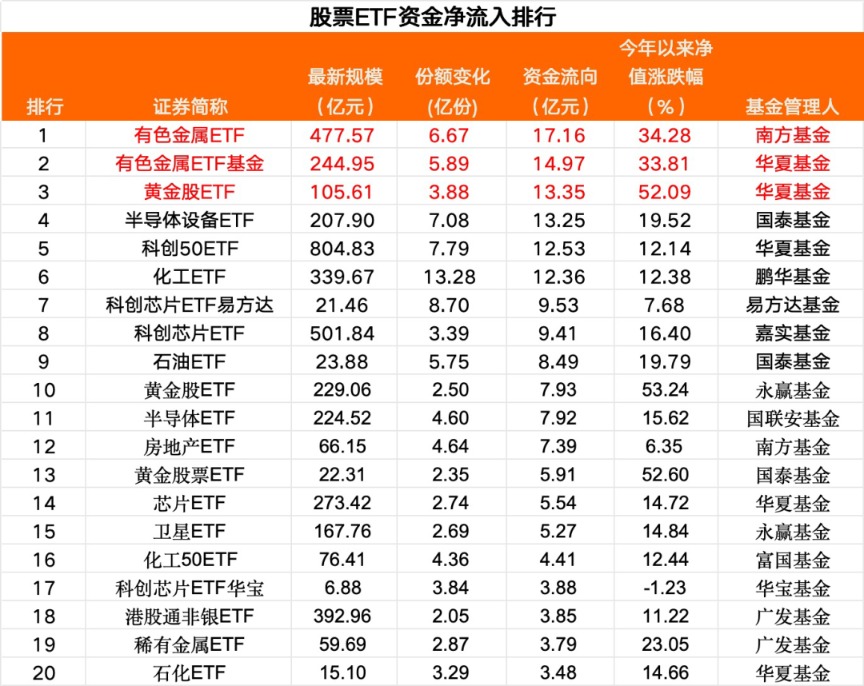
Group 1 - On January 28, the trading volume of broad-based ETFs surged, with four major CSI 300 ETFs achieving record trading amounts since their inception, including Huatai-PB CSI 300 ETF surpassing 40 billion yuan for the first time [1][2][3] - The total trading volume of the four leading CSI 300 ETFs reached 116.5 billion yuan, with E Fund CSI 300 ETF at 31.9 billion yuan, Huaxia CSI 300 ETF at 26.8 billion yuan, and Harvest CSI 300 ETF at 17.7 billion yuan, all setting new records [3][4] Group 2 - Despite the record trading volumes, the market indices showed resilience, with the CSI 300 Index up 0.22% and the Shanghai Composite Index up 0.27%, while the ChiNext Index fell by 0.57% [8] - On January 27, broad-based ETFs experienced significant net outflows of 47.48 billion yuan, with major ETFs like Huatai-PB CSI 300 ETF, Huaxia CSI 300 ETF, E Fund CSI 300 ETF, and Harvest CSI 300 ETF collectively seeing net outflows of 43.65 billion yuan [9] Group 3 - The net outflow from broad-based ETFs from January 14 to 27 totaled 766.32 billion yuan, with the leading ETFs experiencing over 440 billion yuan in outflows [9] - As a result of the continuous outflows, the sizes of major ETFs have significantly decreased, with Huatai-PB CSI 300 ETF's size dropping from 422.26 billion yuan at the end of last year to 271.19 billion yuan, and E Fund CSI 300 ETF's size decreasing from 300.22 billion yuan to 187.95 billion yuan [9] Group 4 - On January 28, several industry-themed ETFs, particularly in the precious metals sector, saw strong inflows, with the Huaxia Nonferrous Metals ETF gaining 1.657 billion yuan and other related ETFs also attracting over 500 million yuan [10][12] - The scale of domestic gold-related ETFs reached 314.14 billion yuan as of January 27, a significant increase from 70.44 billion yuan at the beginning of 2025 [11][12] Group 5 - The leading gold ETF, Huaan Gold ETF, reached a size of 120.57 billion yuan, while Bosera Gold ETF and E Fund Gold ETF had sizes of 52.18 billion yuan and 45.09 billion yuan, respectively [12] - The continuous net purchases of gold by the People's Bank of China for 14 consecutive months reflect a global trend among central banks to optimize reserve asset structures and hedge against geopolitical and dollar credit risks [12]
8个交易日股票型ETF净流出近5000亿元 市场成交额或是背后的核心考量因素
Shang Hai Zheng Quan Bao· 2026-01-25 18:54
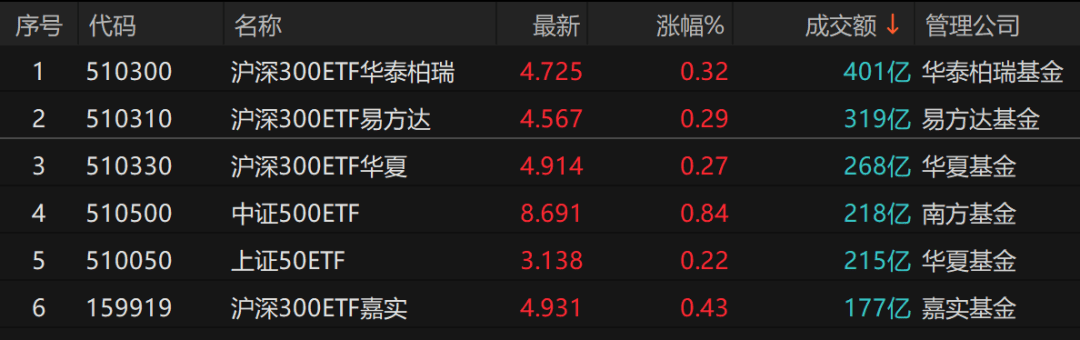
Core Viewpoint - The stock-type ETFs have experienced significant net outflows, totaling nearly 500 billion yuan over the past eight trading days, primarily driven by large-scale redemptions from broad-based ETFs [1][2][3]. Group 1: ETF Performance and Flows - Stock-type ETFs have seen a daily trading volume exceeding 240 billion yuan since January 14, with notable peaks above 300 billion yuan on January 16 and January 23 [2]. - The total net outflow from stock-type ETFs from January 14 to January 23 reached 496.68 billion yuan, with major outflows from broad-based ETFs such as Huatai-PB CSI 300 ETF (116.55 billion yuan), Huaxia CSI 300 ETF (82.69 billion yuan), and E Fund CSI 300 ETF (77.25 billion yuan) [2][4]. - Several large ETFs have seen their shares drop below the holdings of Central Huijin by the end of 2025, indicating a significant reduction in their market presence [3][4]. Group 2: Sector-Specific ETF Trends - In contrast to broad-based ETFs, sector-specific ETFs have attracted inflows, with notable net inflows into Huaxia Electric Grid Equipment ETF (10.66 billion yuan) and Penghua Chemical ETF (7.17 billion yuan) [4]. - Some sector-specific ETFs have reached all-time high share counts, such as the Southern Nonferrous Metals ETF, which has a share count of 16.598 billion, and the Fuguo Chemical 50 ETF with 5.506 billion shares [4]. Group 3: Market Outlook and Investment Sentiment - Analysts suggest that the outflows from broad-based ETFs do not signify the end of the market rally, as a return to stable trading volumes could lead to a more sustainable market environment [5]. - There is a growing interest in structural opportunities within the market, with fund managers expressing optimism about equity returns compared to other asset classes, despite potential volatility [6]. - The issuance of new ETFs focused on industry themes continues, indicating ongoing investor interest in targeted sectors such as metals and solar energy [6].
中金2026年展望 | ETF市场:云程发轫
中金点睛· 2026-01-21 23:36
Core Viewpoint - The ETF market is expected to continue its growth in both scale and structure, with a focus on the importance of institutional funds and the potential decline in the influence of thematic ETFs in the future [3]. Domestic Market: Policy and Market Development - The regulatory environment is enhancing the ETF industry ecosystem, with various measures introduced by the CSRC and exchanges to support the establishment and expansion of ETF products [4]. Scale and Growth: Market Expansion - By the end of 2025, the ETF market size exceeded 6 trillion yuan, marking a 61.7% increase from the beginning of the year, with the number of products rising to 1,381, a growth of 33.7% [5]. - All types of ETFs experienced varying degrees of growth, with stock, bond, commodity, and money market ETFs increasing by 44%, 376%, 231%, and 11% respectively [5]. Product Structure and Trends - As of the end of 2025, stock ETFs dominated the market, comprising 93% of the total number of ETFs, while their scale accounted for 79% of the total ETF market size [7]. - Thematic and cross-border products saw significant growth, with cross-border products increasing by 120% [11]. Fund Flows and Investor Behavior - Stock ETFs experienced a net inflow of approximately 450 billion yuan in 2025, a decrease of 57% compared to 2024, indicating a "buy high, sell low" behavior among investors [12]. - Bond ETFs saw explosive growth, with a total scale increase of 376% to 828.2 billion yuan, driven by policy support and new product launches [13]. Competitive Landscape - The competitive landscape for ETFs is becoming more intense, with a decline in concentration among fund companies and products, as evidenced by the market share of the top five companies dropping from 67% to 56% [15]. Product Issuance: Record Highs - In 2025, a record 356 passive ETFs were issued, with a total issuance scale of 251.2 billion yuan, marking a 106% increase from 2024 [15]. Outlook for 2026: Growth Potential - The absolute scale of the ETF market is expected to continue rising, with a projected growth rate of 0% to 5% from new issuances, while net inflows are anticipated to contribute 10% to 30% to the growth [30]. - The market is expected to see a slight increase in the share of passive products due to ongoing reforms and the demand for tool-based passive products [31]. Active vs. Passive Investment - Active equity products are predicted to slightly outperform index products in 2026, with a forecasted excess return of 2.5% [47]. - The market is expected to remain stable or show slight upward trends, supporting the performance of active products [47]. Thematic ETFs: Future Prospects - Thematic ETFs have regained prominence in 2025, primarily driven by significant capital inflows, contrasting with previous years where growth was mainly from new product issuances [48].

资金涌入,行业主题ETF
Xin Lang Cai Jing· 2026-01-20 13:39
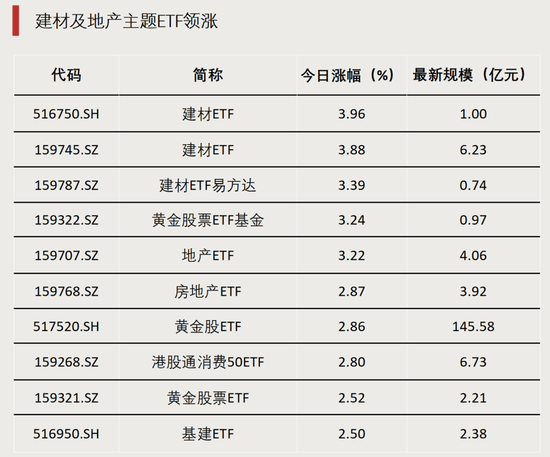
Group 1 - The real estate and building materials sectors showed strength on January 20, with multiple related ETFs rising over 3% [1][4][15] - The precious metals sector, represented by gold stocks, also gained momentum in the afternoon, with several gold-themed ETFs increasing by over 2% [1][4][15] - The commercial aerospace sector has recently entered a high volatility range, with several satellite-themed ETFs dropping over 4% [2][16] Group 2 - There has been a noticeable trend of capital flowing out of broad-based ETFs and into industry-specific ETFs, with significant net inflows into semiconductor materials and non-ferrous metals ETFs exceeding 10 billion yuan [3][17] - On January 19, the electric grid-themed ETF saw a net inflow of over 2.5 billion yuan, while gold ETFs and semiconductor materials equipment also attracted over 1 billion yuan each [10][24] - The broad-based ETFs continued to experience net outflows, with the CSI 300 ETF seeing a net outflow of over 30 billion yuan on January 19, although this was a decrease from over 58 billion yuan on January 16 [10][24] Group 3 - The leading broad-based ETFs remain highly active in trading, with several ETFs achieving transaction volumes exceeding 10 billion yuan [8][22] - The A500 ETF, which is the first to "go abroad" under the mutual market access mechanism, was listed on the Singapore Exchange on January 20, marking a significant milestone for cross-border ETF investment [13][27] - Analysts suggest that the domestic equity market remains active, with a focus on sectors supported by performance, as the market prepares for upcoming earnings reports [12][26]
宽基ETF资金“撤退”:单周近2000亿元,华泰柏瑞、华夏沪深300ETF合计流出超740亿元
Xin Lang Cai Jing· 2026-01-19 10:33
Core Insights - The recent week (January 13 to January 16) saw a significant capital outflow in the broad-based ETF market, totaling 194.6 billion yuan from the top ten ETFs [1][10] - The CSI 300 ETF was the main contributor to this outflow, with a net withdrawal of approximately 100.6 billion yuan, accounting for half of the total outflow [1][10] - Nearly 90% of the outflow occurred within two trading days (January 15 and 16), with a net outflow of 58 billion yuan on January 16 alone [1][10] ETF Market Overview - The outflow affected almost all major broad-based indices, with the STAR 50 ETF and the ChiNext ETF following the CSI 300 ETF, collectively experiencing over 48.5 billion yuan in net outflows [6][17] - The Shanghai 50 ETF and the CSI 500 ETF recorded net outflows of approximately 18.9 billion yuan and 15.3 billion yuan, respectively [6][17] - Specific products like Huatai-PineBridge CSI 300 ETF saw a net outflow of 47.5 billion yuan, while the China Asset Management CSI 300 ETF had a net outflow of 26.9 billion yuan [7][18] Sector Performance - In contrast to the broad-based ETFs, certain thematic industry ETFs attracted significant inflows, indicating a shift towards more structured segments of the market [9][19] - Hard technology sectors, such as semiconductor materials and equipment, as well as non-ferrous metals and communication equipment, emerged as focal points for investment, with non-ferrous metal ETFs gaining over 5.1 billion yuan and semiconductor materials ETFs attracting over 5 billion yuan in net inflows [9][19]
天量资金,新动向
Zhong Guo Ji Jin Bao· 2026-01-16 04:08
Group 1 - The stock ETF market experienced a net outflow of 668.09 billion yuan on January 15, with the CSI 300 index being the main focus of this outflow [2][3] - The total scale of the stock ETF market reached 4.99 trillion yuan, with broad-based ETFs seeing the largest net outflow of 744.82 billion yuan [3] - The largest CSI 300 ETF from Huatai-PB saw a net outflow of over 200 billion yuan, marking the highest outflow since its inception [3][4] Group 2 - Specific ETFs such as the CSI 50 ETF from E Fund and the CSI 500 ETF saw significant net outflows, with amounts of 104.79 billion yuan and 69.30 billion yuan respectively [4][5] - Conversely, industry-themed ETFs like the non-ferrous metals ETF and securities ETF saw net inflows of 55.91 billion yuan and 7.71 billion yuan respectively [5][6] - The market is witnessing a structural opportunity as funds are favoring certain sectors despite the overall outflow trend [2][5] Group 3 - Major fund companies like E Fund and Huaxia Fund have seen notable inflows in specific ETFs, indicating strong investor interest in sectors like semiconductors and non-ferrous metals [6][7] - The market is characterized by a "buy low, sell high" strategy among investors, with ETFs serving as effective tools for tracking market movements [5][6] - The overall ETF market is evolving, with a total market size surpassing 6 trillion yuan, enhancing liquidity and accommodating large capital flows [5][6]

百亿级行业主题ETF数量激增
Zhong Guo Zheng Quan Bao· 2026-01-11 20:49
Core Insights - The commercial aerospace, semiconductor equipment, and non-ferrous metals sectors have sparked a theme investment boom since the beginning of 2026, with industry-themed ETFs becoming a key choice for capital allocation due to their transparency and convenience [1][2] - As of January 9, 2026, the number of domestic stock ETFs with a scale exceeding 10 billion yuan has expanded to 65, with a notable increase of 7 new funds in just one month [1][2] - The trend shows a decline in the share of broad-based ETFs in the A-share market while the share of industry-themed ETFs continues to grow, indicating a shift in market sentiment and investor preferences [1][5] Fund Performance - The satellite ETF from Yongying Fund has surged over 50% in the past month, with a net inflow of over 6.7 billion yuan, growing from 2.395 billion yuan to 11.769 billion yuan in size [2] - Other ETFs, including the semiconductor equipment ETF from Guotai Fund and the industrial non-ferrous ETF from Wanjia Fund, have also seen significant growth, with increases of over 20% in the same period [2] - The overall landscape shows a strong presence of 10 billion yuan-level ETFs in sectors such as securities, dividends, robotics, pharmaceuticals, non-ferrous metals, and military industry [2][3] Fund Management Strategies - Fund managers are increasingly focusing on strategic positioning in industry-themed ETFs, leveraging structural market trends to enhance their product offerings [3][4] - Leading firms have established a competitive advantage through a broad product line in industry-themed ETFs, with many achieving significant scale [3][4] - Recent successful launches include the gold stock ETF and the satellite ETF, which have quickly reached the 10 billion yuan mark, reflecting effective market positioning and timely product development [4] Market Trends - The total scale of domestic ETFs has stabilized at 6 trillion yuan, with a noticeable trend of capital inflow into industry-themed ETFs while broad-based ETFs experience outflows [5] - This shift in investor behavior is closely tied to market sentiment, where optimistic conditions lead to increased interest in high-risk industry-themed ETFs, while uncertain conditions drive a preference for more balanced broad-based ETFs [5] - Future opportunities for fund managers lie in providing more refined investment tools, including ETFs that cover specific niche industries and the increasing number of Smart Beta or enhanced index ETFs [5]
越跌越买!大举加仓
中国基金报· 2025-12-12 06:14
Core Viewpoint - On December 11, the A-share market experienced a decline, with the three major indices falling, while stock ETFs saw a net inflow of approximately 4.493 billion yuan, indicating a preference for core broad-based indices amidst market volatility [2][4]. ETF Market Overview - As of December 11, the total scale of 1,272 stock ETFs in the market reached 4.56 trillion yuan, with a net inflow of 4.493 billion yuan on that day, reflecting a "bottom-fishing" strategy by investors [4]. - Broad-based ETFs and Hong Kong market ETFs led the net inflows, with 2.402 billion yuan and 1.766 billion yuan respectively, highlighting a strong interest in these segments [5]. Specific ETF Performance - The CSI A500 ETF saw the highest net inflow of 2.867 billion yuan on December 11, with a total inflow exceeding 7.2 billion yuan over the past five days [5]. - The STAR 50 ETF also experienced significant inflows, totaling 1.47 billion yuan, with over 4.3 billion yuan in net inflows in the last five days [5]. - The latest scale of the CSI A500 ETF managed by Huatai-PineBridge reached 30.704 billion yuan, while the STAR 50 ETF managed by E Fund reached 69.341 billion yuan [8]. Institutional Insights - According to Lin Weibin, General Manager of the Index Investment Department at E Fund, the market is expected to maintain a moderate oscillation, with economic resilience and stable expectations supporting the market [6]. - The focus for investment should remain on large-cap growth core assets, as their valuations are currently at historical lows, providing potential for valuation recovery [6]. Outflows from Thematic ETFs - Thematic industry ETFs experienced significant outflows, totaling 877 million yuan on the same day, indicating a shift in investor sentiment away from these sectors [11][12]. - Despite the overall inflow into broad-based ETFs, some segments, such as the CSI 1000 ETF, saw outflows of 390 million yuan, reflecting selective investor behavior [12]. Fund Management Performance - E Fund's ETF products have seen a total scale increase to 814.85 billion yuan since the beginning of 2025, with net inflows of 58.58 billion yuan and a net asset value increase of 155.62 billion yuan [9]. - Huaxia Fund's ETFs, including the CSI 50 ETF and CSI A500 ETF, also reported significant net inflows, showcasing strong performance in the market [10].