
跨境ETF

Search documents
【ETF洞察】中韩半导体爆火!先搞懂跨境ETF再上车,新手必看
Zhong Guo Ji Jin Bao· 2026-02-27 13:46
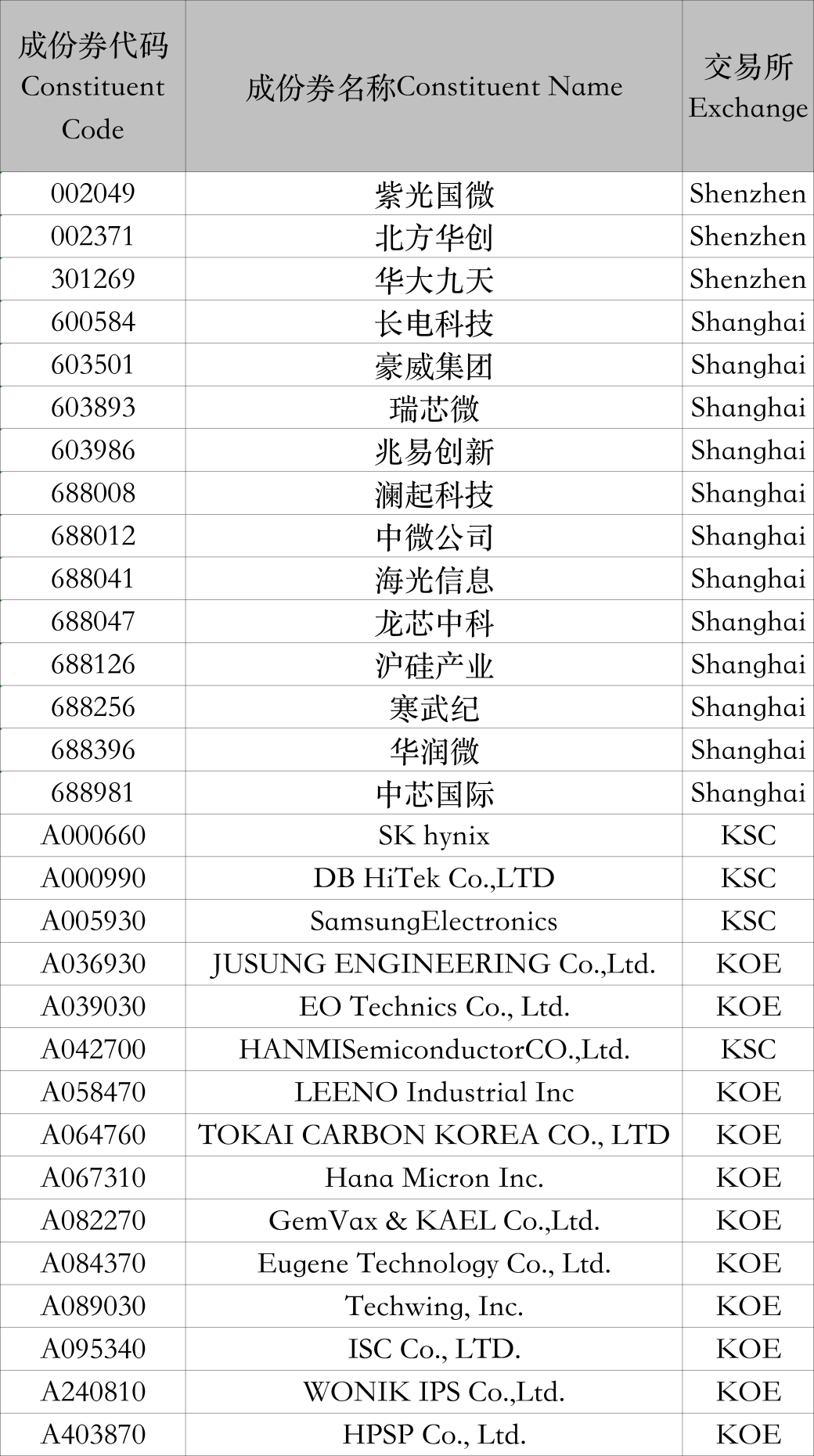
不过,行情急转,2月27日,中韩半导体ETF出现回调,日内下跌1.5%,连续大涨的势头暂时按下"暂停键"。 当产品经历大幅波动、热度快速发酵之际,一个必须警惕的风险点也随之浮现——高溢价。 直投韩国标的的跨境ETF 中韩半导体ETF(QDII),是目前我国境内唯一一只直投韩国市场标的的跨境ETF,也是境内首只中韩合编指数ETF。 大家好,这里是"ETF洞察"。今天我们来聊聊这两天热度爆表的中韩半导体ETF。 先上一组数据: 就在昨天,中韩半导体ETF单日涨幅高达9.64%,盘中逼近涨停,在全市场超1400只ETF中涨幅排名第一。 拉长周期看,该产品近3个月涨幅达55.13%,近1年更是大涨115.87%,实现净值翻倍,成为跨境ETF中的"现象级品种"。不少投资者直呼这只ETF"彻底火 出圈"。 截至目前,指数前十大权重股依次为:三星电子(21.19%)、SK海力士(18.25%)、寒武纪(4.92%)、海光信息(4.69%)、中芯国际(4.66%)、北 方华创(4.23%)、兆易创新(4.13%)、澜起科技(3.77%)、韩美半导体(3.54%)、中微公司(3.21%)。 以下是该指数全部成份股名单: | 成 ...

最高涨超67%!海外股市开年来狂飙带火跨境ETF,有产品溢价率已超20%,基金公司连发风险提示公告
Mei Ri Jing Ji Xin Wen· 2026-02-26 15:45
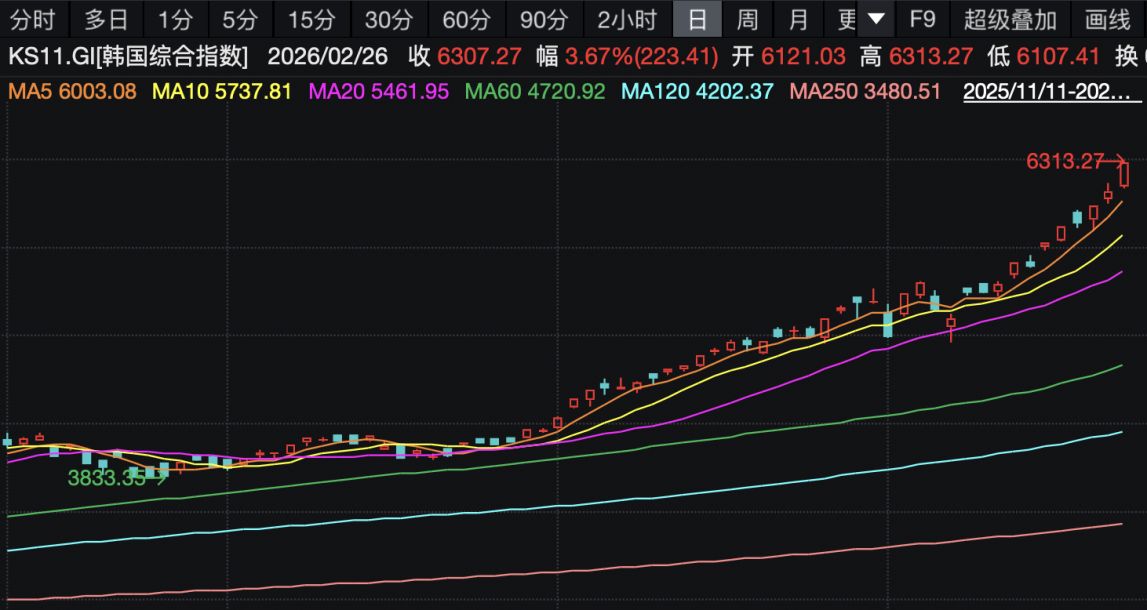
《每日经济新闻》记者获悉,近日包括韩国、巴西、日本、法国等国的股市接连出现大涨,国内公募基金中投资于这些市场的跨境ETF也随之快速走强。 以韩国为例,继2025年累计上涨75.63%牛冠全球后,今年韩国股市继续大涨。年初以来,韩国综合股价指数(KOSPI)已经上涨49.67%;就在今天盘中, 该指数还一度创下6313.27点的历史新高。 根据Wind数据,跟踪中证韩交所中韩半导体指数的华泰柏瑞中韩半导体ETF,今日涨幅达到9.64%,近5日涨幅为26.27%,年初以来更是以67.68%的涨幅领 跑市场。 再来看看巴西股市,2025年巴西IBOVESPA指数上涨超过30%,今年以来继续上涨18.69%。跟踪该指数的巴西ETF易方达,近5日涨幅也接近10%,年初至今 已大涨34.70%。 2月26日,韩国股市继续大涨。 根据Wind数据,今天韩国综合股价指数收于6307.27点,收涨3.67%,盘中一度创下6313.27点的历史新高。 不仅如此,2025年韩国股市就以75.63%的累计涨幅领跑全球市场,今年以来继续开启上涨模式。截至2月26日年内累计涨幅达49.67%,一跃成为全球第九大 股市,实现了从"估值洼地 ...
2.24犀牛财经早报:春节假期期间贵金属和原油价格强势上行
Xi Niu Cai Jing· 2026-02-24 02:33
春节假期期间贵金属和原油价格强势上行 业内称需警惕后市波动风险 马年春节假期期间,全球大宗商品市场走势分化,整体呈现贵金属领涨、能源板块强势的特征,其中纽 约商品交易所(COMEX)白银期货、黄金期货及布伦特原油期货、WTI原油期货涨幅显著,成为市场 关注的焦点,工业金属等其他品类则表现分化。业内人士表示,美伊地缘博弈、美国关税政策裁定等事 件影响贵金属与原油价格走势,白银库存紧张等基本面因素也为其上涨提供支撑。展望后市,受供应端 不确定性、需求季节性波动及宏观环境扰动等影响,大宗商品价格波动大概率加剧,贵金属与原油仍将 是市场波动的核心品种,需重点关注相关风险。(中国证券报) 马年春节假期现货白银大涨近17% 多国指数创新高 马年春节假期全球资本市场多数上涨,韩国、英国、法国等多国指数均创历史新高。特朗普关税进入迷 雾区,美伊冲突走向愈加悲观,国际金银、油价大涨,白银涨近17%。(智通财经) 481只去年收益告负基金年内业绩转正 Wind资讯数据显示,截至2月23日,今年以来已有481只去年收益告负的基金实现净值增长率转正,其 中19只基金的净值增长率差值均超20个百分点。从产品类型来看,以中长期纯债型基金 ...
跨境ETF(上)
Zhong Guo Zheng Quan Bao· 2026-02-23 20:18
(1)跨境ETF的概念 跨境ETF是指以跟踪境外资本市场证券作为成份券的指数并在国内证券交易所上市的ETF。简单地说, 跨境ETF就是"跟踪境外指数,境内上市交易"的ETF。跨境ETF是境内投资者投资境外市场的最有效的 途径之一,已受到投资者普遍欢迎。投资者常见的纳指ETF、标普500ETF等品种都是跨境ETF。 (2)跨境ETF的特点 近几年,跨境ETF产品越来越丰富,涵盖了全球主要经济体和市场。国内投资者只要开立证券交易账 户,即可以便捷地通过投资跨境ETF,实现全球资产配置。跨境ETF具有以下特点: ①海外投资便捷。投资者不需要开通海外账户及换汇,即可通过跨境ETF投资海外证券资产,实现全球 资产配置。 (4)跨境ETF如何受汇率影响 跨境ETF投资可以使用人民币进行申购、赎回和交易,资金由基金管理人换汇后投资于境外资本市场, 不占用个人的外汇使用额度。跨境ETF以人民币计价,外币升值有益于基金净值,反之亦然,人民币升 值则对基金净值不利。 选自深圳证券交易所基金管理部编著的《深交所ETF投资问答》(中国财政经济出版社2024年版) ②交易效率高。不同于国内A股ETF,跨境ETF可实现日内T+0回转交易 ...
2月10日华宝港股通恒生中国(香港上市)30ETF(520560)遭净赎回186.91万元
Xin Lang Cai Jing· 2026-02-11 02:44
来源:新浪基金∞工作室 数据显示,2月10日,华宝港股通恒生中国(香港上市)30ETF(520560)遭净赎回186.91万元,位居当日跨 境ETF净流出排名46/215。最新规模7.63亿元,前一日规模7.62亿元,当日资金净流出额占前一日规模 的比例为0.25%。 流动性方面,截止2月10日,华宝港股通恒生中国(香港上市)30ETF(520560)近20个交易日累计成交金 额3.82亿元,日均成交金额1910.33万元;今年以来,27个交易日,累计成交金额5.9亿元,日均成交金 额2185.8万元。 华宝港股通恒生中国(香港上市)30ETF(520560)现任基金经理为张放、蒋俊阳。张放自2025年9月24日 管理(或拟管理)该基金,任职期内收益-6.16%;蒋俊阳自2025年9月24日管理(或拟管理)该基金, 任职期内收益-6.16%。 最新定期报告显示,华宝基金(520560)重仓股包括腾讯控股、阿里巴巴-W、建设银行、小米集团- W、美团-W、工商银行、中国移动、中国平安、比亚迪股份、中国海洋石油,持仓占比如下: 华宝港股通恒生中国(香港上市)30ETF(520560)成立于2025年9月24日,基 ...





香港首只中证A500ETF上市——普通投资者需要知道的几件事
Sou Hu Cai Jing· 2026-01-28 07:45
先说结论: 买这只ETF,相当于一次性买入A股市场中500家较具代表性的上市公司。 近日,香港市场迎来首只跟踪中证A500指数的ETF产品正式上市。这是中证A500指数首次以ETF形式 在香港交易所挂牌交易,也意味着境外投资者可以通过港股市场,更便捷地参与A股核心资产的整体表 现。 对很多投资者来说,"中证A500""跨境ETF"这些词听起来并不直观。本文尝试用更清晰的方式,解释这 只ETF是什么、有什么不同,以及它可能带来的影响。 中证A500指数选取的是A股中市值较大、交易较活跃的500只股票,覆盖金融、消费、制造、科技等多 个行业。它不是押注某一个赛道,而是反映整个A股市场的整体运行情况。 过去,境外投资者如果想参与A股,通常需要通过沪港通、QFII等渠道,流程相对复杂。 这次的变化在于: 投资者只要有港股账户,就可以直接在香港买卖这只ETF,用熟悉的交易方式配置A股市场的整体表 现,而不必逐只研究、买卖内地股票。 简单理解: A股的"打包版",放到了港股市场上卖。 这只产品采用的是一种"联接"的方式运作: 对投资者来说,不需要关心具体技术细节,只要理解一点: 它的收益来源,最终还是来自A股市场。 ET ...
每周回顾 证监会坚决防止市场大起大落;全市场跨境ETF规模突破万亿元
Sou Hu Cai Jing· 2026-01-16 11:56
Regulatory Actions - The China Securities Regulatory Commission (CSRC) emphasizes the need to prevent significant market fluctuations and strengthen market monitoring and regulation to maintain stability [1] - The Shanghai and Shenzhen Stock Exchanges have raised the minimum margin requirement for margin trading from 80% to 100% to reduce leverage and protect investors' rights [2] Automotive Industry - The Ministry of Industry and Information Technology, along with other regulatory bodies, has called for an end to disorderly price wars in the electric vehicle sector to promote fair competition [2] Commodity Market - Silver has surpassed Nvidia to become the second most valuable asset globally, with a market capitalization exceeding $5 trillion, driven by a cumulative price increase of over 200% in the past five years [2] Company Developments - Alibaba's Qianwen has launched an "AI Life Assistant" with over 400 functions, marking a transition into the "AI service era" [3] - TSMC plans to significantly increase its capital expenditure over the next three years, with 2026 spending projected between $52 billion and $56 billion, a potential increase of up to 36.92% year-on-year [3] - Xibei will close 102 stores, accounting for approximately 30% of its total, following significant losses exceeding 500 million yuan since a controversy last year [4] - Ctrip Group is under investigation for alleged monopolistic practices, including unauthorized price modifications that have led to consumer price discrimination [4] Fund Market - The first commodity ETF in China has surpassed 100 billion yuan in size, with the Huaan Gold ETF reaching 100.76 billion yuan [5] - The total size of cross-border ETFs in China has exceeded 1 trillion yuan, driven by strong performance in overseas markets [5][6] - Public fund issuance has accelerated in 2026, with 78 new funds launched, particularly in the FOF category, which has seen strong fundraising capabilities [6] IPO Activities - Yuanji Food has submitted an IPO application in Hong Kong, with over 4,200 stores globally and a compound annual growth rate of 44.7% in store openings from 2023 to 2025 [7] - Shangmi Technology has filed for an IPO in Hong Kong, with significant backing from major shareholders including Ant Group, Meituan, and Xiaomi [8]
港股消费(159735)已连续5日获得资金净申购,区间净流入额6982.19万元
Xin Lang Cai Jing· 2026-01-15 02:27
Core Viewpoint - The Hong Kong Consumption ETF (159735) has seen significant net inflows, indicating growing investor interest in the fund and the underlying consumer sector in Hong Kong [1][2]. Group 1: Fund Performance - As of January 14, the Hong Kong Consumption ETF (159735) recorded a net subscription of 4.8298 million yuan, ranking 27th out of 208 in cross-border ETF net inflows for the day [1]. - The fund's latest size is 814 million yuan, up from 802 million yuan the previous day, reflecting a 0.60% increase in net inflow relative to the previous day's size [1]. - Over the past five days, the fund has accumulated a net subscription of 69.8219 million yuan, ranking 28th out of 208 in cross-border ETF net inflows [1][2]. Group 2: Fund Details - The Hong Kong Consumption ETF (159735) was established on May 25, 2021, with an annual management fee of 0.50% and a custody fee of 0.10% [2]. - The fund's latest share count is 1.007 billion shares, with a year-to-date increase of 9.46% in shares and a 12.08% increase in size compared to December 31, 2025 [2]. - The fund has a total trading volume of 922 million yuan over the last 20 trading days, averaging 46.0913 million yuan per day [2]. Group 3: Holdings and Composition - Major holdings in the Hong Kong Consumption ETF include Alibaba (19.54%), Tencent (16.59%), and Pop Mart (7.99%), among others, with the total market value of these holdings detailed [3]. - The ETF tracks the Hong Kong Consumption CNY index (931455), and its performance is compared with another fund, Hong Kong Consumption (513590), which has a smaller size and negative net subscriptions [3].


1月12日港股红利(513530)遭净赎回1433.26万元
Xin Lang Cai Jing· 2026-01-13 02:54
近5日,港股红利(513530)遭净赎回3177.25万元,位居跨境ETF净流出排名第28/207。近10日,港股红利 (513530)获净申购6975.08万元,位居跨境ETF净流入排名第34/207。近20日,港股红利(513530)获净申 购3.16亿元,位居跨境ETF净流入排名第26/207。 来源:新浪基金∞工作室 数据显示,1月12日,港股红利(513530)遭净赎回1433.26万元,位居当日跨境ETF净流出排名21/207。最 新规模37.07亿元,前一日规模37.18亿元,当日资金净流出额占前一日规模的比例为0.39%。 代码名称基金规模(亿元) 20260112近1月日均成交额 (亿元)净申购(亿元) 20260112近1周净申购 (亿元)近1月净申购 (亿元)基金公司513530港股红利37.071.36-0.14-0.323.08华泰柏瑞基金 风险提示:市场有风险,投资需谨慎。本文为AI大模型基于第三方财汇数据库自动发布,任何在本文 出现的信息(包括但不限于个股、评论、预测、图表、指标、理论、任何形式的表述等)均只作为参 考,不构成个人投资建议。受限于第三方数据库质量等问题,我们无法对 ...
跨境ETF“百亿俱乐部”再扩容 广发基金独占五席
Zhong Guo Ji Jin Bao· 2026-01-12 08:52
Group 1 - The cross-border ETF market has seen significant inflows, with over 13.8 billion yuan in net purchases since the beginning of the year, bringing the total market size to nearly 978.8 billion yuan, approaching the 1 trillion yuan mark [1] - There are currently 25 cross-border ETF products with a scale exceeding 10 billion yuan, highlighting the growing interest in this investment category [1] - GF Fund has a leading position in the cross-border ETF market, managing 11 cross-border ETFs, of which 5 have surpassed 10 billion yuan in size, accounting for 45% of the total number of such products in the market [1] Group 2 - GF Fund's flagship products include the Nasdaq ETF (159941), which has a scale exceeding 30 billion yuan and has demonstrated a strong annualized return of over 17% since its inception [2] - The Hong Kong Stock Connect Non-Bank Financial ETF (513750) is unique in tracking the non-bank financial sector in Hong Kong, with over 68% exposure to the insurance industry [2] - The Hong Kong Stock Connect Innovative Drug ETF (513120) is the largest of its kind, having increased by over 66% since 2025, showcasing the high concentration of innovative drug assets [2] Group 3 - GF Fund has been systematically developing its index business since 2008, establishing a comprehensive product line across multiple markets, including A-shares, Hong Kong stocks, US stocks, and commodities [3] - The company has received a five-star rating for its index fund management capabilities, based on a comprehensive assessment of tracking ability, excess return capability, and overall costs [3]