
AI算力竞赛

Search documents
中东危机引发市场恐慌,半导体为何能扛住冲击?
是说芯语· 2026-03-10 09:29
Core Viewpoint - The article discusses the impact of geopolitical tensions, specifically the Iran conflict, on the semiconductor industry and its supply chain, highlighting the resilience of the industry despite rising material costs and energy prices [4][11][31]. Group 1: Geopolitical Impact on Energy and Markets - The Iran conflict has led to a significant spike in global oil prices, with prices soaring from around $75 to over $110 per barrel, marking a rise of over 20% in just two trading days [5][4]. - The Asian stock markets experienced severe declines, with the Korean market dropping over 8% and the Japanese Nikkei 225 index falling more than 7% [8]. - The semiconductor sector faced substantial sell-offs, with the Philadelphia Semiconductor Index dropping 7.21% in one week, and major companies like TSMC and NVIDIA seeing significant stock price declines [10]. Group 2: Semiconductor Supply Chain Analysis - The article emphasizes the importance of key raw materials in the semiconductor supply chain, particularly neon, helium, and natural gas, which are affected by the Iran conflict [12][26]. - Iran is the fourth-largest supplier of neon gas, and its supply disruption could impact prices, although the overall effect is expected to be limited compared to the previous Ukraine conflict [13][15]. - The price of neon gas surged from $400 to $3,500 per cubic meter during the Ukraine war, but the current increase due to the Iran conflict is less severe, with prices rising from $300 to around $400 per cubic meter [16][17]. Group 3: Energy Supply and Semiconductor Production - Natural gas is a critical issue for TSMC, as it accounts for 43% of Taiwan's energy supply, with Qatar being a significant supplier now facing disruptions due to the conflict [21][24]. - Taiwan is increasing its natural gas supply from Australia and the U.S. to mitigate the impact of the conflict, although there are concerns about rising electricity costs [25][26]. - TSMC has robust supply chain management practices, including multi-source backup plans and safety stock for critical materials, which should help mitigate short-term production impacts [28][26]. Group 4: Investment Perspective Amidst Crisis - The article suggests that the current market panic presents an opportunity to reassess the semiconductor industry's fundamentals, as demand remains strong despite rising costs [31][32]. - Historical patterns indicate that market downturns caused by geopolitical events often provide valuable buying opportunities for long-term investors [33][34]. - The semiconductor industry is expected to maintain its growth trajectory, driven by ongoing demand for advanced technologies, despite the current geopolitical uncertainties [32][37].

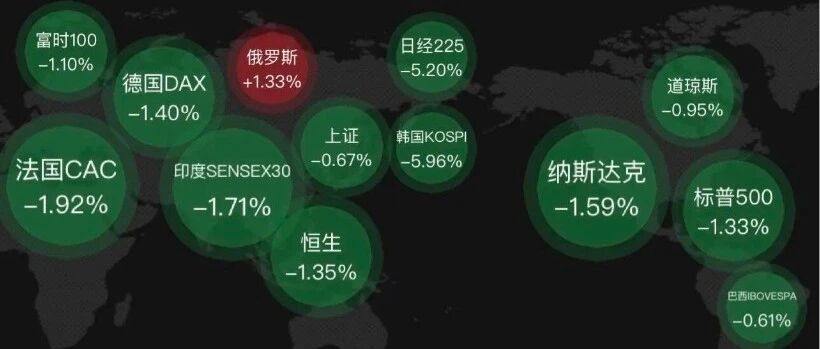
最高涨超67%!海外股市开年来狂飙带火跨境ETF,有产品溢价率已超20%,基金公司连发风险提示公告
Mei Ri Jing Ji Xin Wen· 2026-02-26 15:45
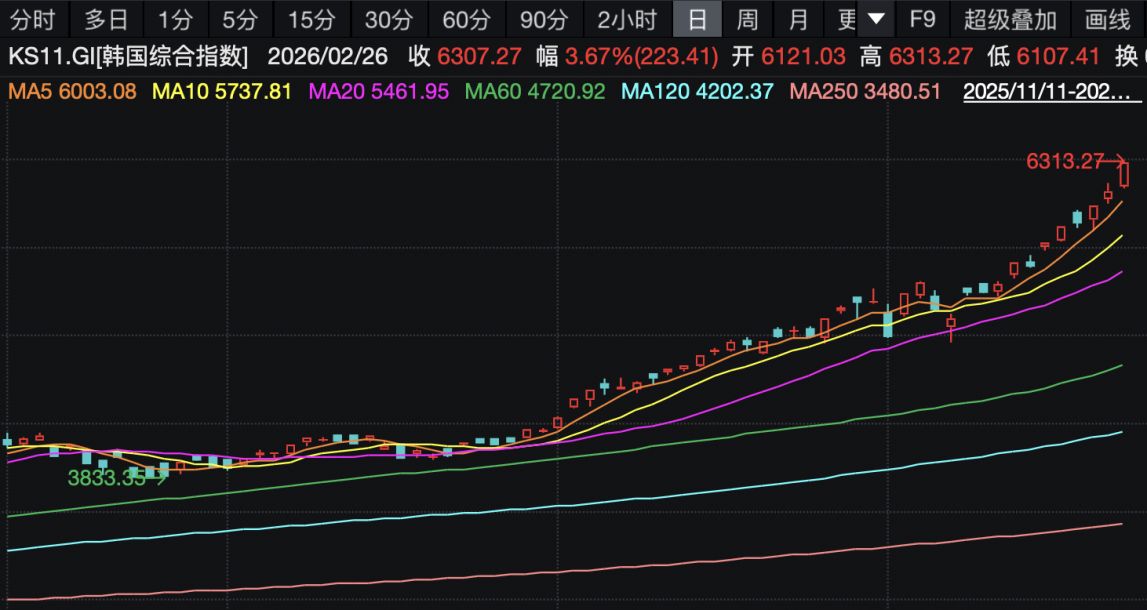
Core Viewpoint - Recent surges in stock markets across countries such as South Korea, Brazil, Japan, and France have led to significant gains in cross-border ETFs, attracting investor attention and prompting risk warnings from fund companies [1][12]. Group 1: South Korea Market Performance - The South Korean stock market has seen a cumulative increase of 75.63% in 2025, with a year-to-date rise of 49.67% as of February 26, 2026, reaching a historical high of 6313.27 points [4][2]. - The Huatai-PineBridge China-Korea Semiconductor ETF has surged by 9.64% today, with a 5-day increase of 26.27% and a year-to-date rise of 67.68%, leading the market [1][4]. - Major contributors to this growth include Samsung Electronics and SK Hynix, with stock price increases of 81.82% and nearly 80% respectively since early 2026 [4]. Group 2: Brazil Market Performance - The Brazilian IBOVESPA index has increased by over 30% in 2025 and continues to rise, with an 18.69% increase year-to-date as of February 25, 2026 [1][4]. - The E Fund Brazil ETF has seen a nearly 10% increase in the last 5 days and a year-to-date rise of 34.70%, ranking among the top ETFs in the market [1][7]. - The China Asset Management Brazil ETF has also performed well, with a year-to-date increase of 35.21% [7]. Group 3: France Market Performance - The French CAC40 index has reached approximately 8640 points, marking a historical high, with a 10.42% increase in 2025 and nearly a 6% rise this year [7][9]. - The Huazhong Fund's CAC40 ETF has recorded a 13.07% increase in February, continuing its upward trend from the previous year [9]. Group 4: Risk Warnings from Fund Companies - Several fund companies, including E Fund, Huaxia, and Huatai-PineBridge, have issued warnings regarding high premium risks in the secondary market for cross-border ETFs, with some products experiencing premiums exceeding 20% [12][13]. - The E Fund Brazil ETF reported a premium of 8.16% on February 26, prompting the company to issue risk alerts and consider temporary suspensions to protect investors [12]. - The Huazhong Nomura Nikkei 225 ETF also announced significant premiums and may request temporary suspensions if premiums do not decrease effectively [12].
注意!A股超4600股下跌背后:聪明资金已在这三条战线完成集结
Sou Hu Cai Jing· 2026-02-02 11:47
Core Viewpoint - The market experienced a significant downturn, with major indices like the Shanghai Composite Index dropping by 2.48%, and over 4600 stocks declining, indicating a severe market sentiment shift towards panic selling [1] Group 1: Market Overview - The overall market sentiment is extremely negative, with a notable decrease in trading volume to 2.61 trillion, suggesting that many investors are hesitant to engage [1] - The primary driver of the market decline is identified as the cyclical sectors, particularly the non-ferrous metals sector, which fell over 7% [1] Group 2: Investment Opportunities - The first identified opportunity is in the electric grid equipment sector, which saw a surge in stock prices despite the overall market decline, driven by the increasing demand for stable power supply in AI data centers [2] - The second opportunity lies in CPO (Co-Packaged Optics) modules, which showed strong performance due to significant profit growth from leading companies, indicating robust demand in the global computing infrastructure [3] - The third opportunity is in the liquor industry, particularly high-quality brands that have undergone long-term adjustments, attracting long-term investors looking for stable core assets [4] Group 3: Market Dynamics - The immediate trigger for the market decline was a significant drop in gold and silver prices in international markets, which created a ripple effect in the A-share market [6] - The internal issue was the excessive speculation in cyclical sectors, which had previously seen rapid price increases, leading to a high trading density that made them vulnerable to external shocks [6] Group 4: Strategic Recommendations - Investors are advised to avoid bottom-fishing in recently plummeted cyclical stocks, as their adjustments may not be over [7] - Focus should shift towards sectors representing future technology, such as AI power infrastructure and high-growth hard technology, as indicated by market movements [7] - A change in investment strategy is recommended, moving from speculative narratives to a focus on tangible orders and financial performance [7]
电网ETF(561380)涨超1.2%,政策与技术双轮驱动行业前景
Mei Ri Jing Ji Xin Wen· 2026-01-07 06:41
Core Insights - The electric grid ETF (561380) rose over 1.2%, driven by both policy and technological advancements in the industry [1] Industry Developments - Two large offshore wind power projects in China have achieved full capacity grid connection, indicating rapid development towards scale and efficiency in the offshore wind power sector [1] - The Gansu energy storage capacity compensation mechanism has been officially released, suggesting that core domestic regions for energy storage are likely to maintain a high level of prosperity [1] - The increase in silver prices may enhance the cost-effectiveness of HJT batteries [1] - The global AI computing power competition is intensifying, with Elon Musk's xAI planning to boost training computing power to 2GW [1] - Continuous growth in new energy installations, along with improvements in electricity pricing mechanisms and transmission channels, supports the energy transition [1] - The approval of the Shandong Dengzhou station's voltage boosting and the Zhaoyuan nuclear power transmission ultra-high voltage project indicates progress in infrastructure [1] - The ITER correction field coil procurement package has achieved 100% independent research and development and has been completed and delivered [1] - The power equipment industry is expected to benefit from domestic and international synergy, with an anticipated upward trend in prosperity [1] ETF Overview - The electric grid ETF (561380) tracks the Hang Seng A-share electric grid equipment index (HSCAUPG), which selects listed companies involved in power network construction, manufacturing of transmission and transformation equipment, upgrading of distribution systems, and smart control technologies [1] - This index comprehensively reflects the overall performance of China's electric grid equipment industry during its smart transformation and industrial upgrading process [1]
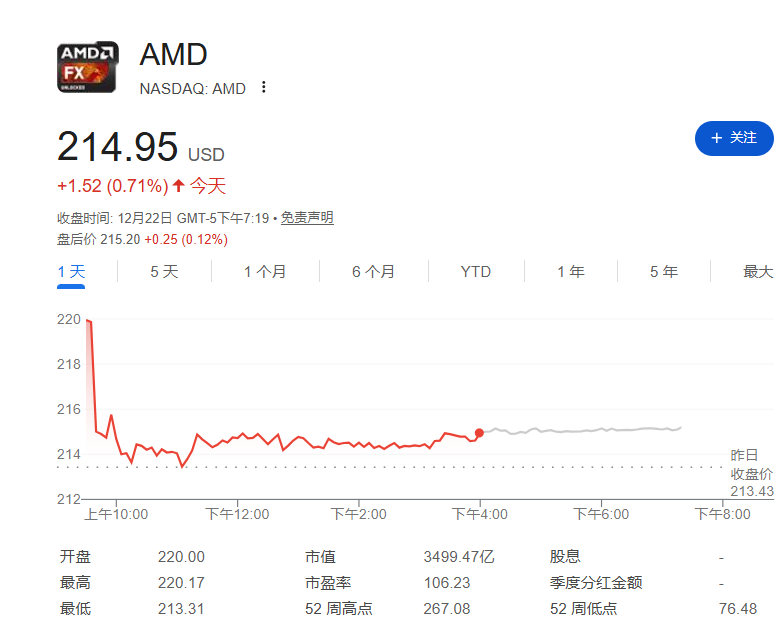
AMD高开低走!报道称阿里或大手笔购买MI308芯片,上周苏姿丰刚刚访华
Hua Er Jie Jian Wen· 2025-12-23 00:50
Core Viewpoint - Alibaba is considering placing a significant order for 40,000 to 50,000 AMD MI308 AI accelerator chips, which has led to a slight increase in both AMD and Alibaba's stock prices [1][4]. Group 1: Potential Order Details - The potential order from Alibaba involves 40,000 to 50,000 units of AMD's MI308 AI accelerator chips, which are seen as strong competitors to NVIDIA's data center GPUs [4]. - Analysts caution that the final contract terms and timeline for this transaction remain unclear [4]. Group 2: AMD's Market Position and Analyst Sentiment - AMD is striving to catch up and challenge NVIDIA's dominance in the AI computing race, with increasing market share in the AI-focused GPU sector as customers seek diverse suppliers and solutions [5]. - Wall Street shows renewed bullish sentiment towards AMD, with a consensus rating of "strong buy" based on 29 buy and 9 hold ratings over the past three months, indicating a potential upside of 40.45% from the current average target price of $282.39 [5]. - Specific analyst target prices for AMD include $300 from Daiwa, $280 from Piper Sandler, and a high of $377 from Raymond James, reflecting optimism about AI-driven growth continuing through 2026 [5].


为何高手不谈收益目标?揭秘投资中最重要却被忽视的“原则”
Sou Hu Cai Jing· 2025-12-08 11:33
Market Overview - On December 8, 2025, the A-share market experienced a significant surge with a trading volume exceeding 2.05 trillion yuan, marking a notable increase from the previous day. Major indices saw gains, with the Shanghai Composite Index rising by 0.54%, the Shenzhen Component Index increasing by 1.39%, and the ChiNext Index soaring by 2.6%. Over 3,400 stocks rose, indicating a clear recovery in market sentiment [1] Sector Performance - The telecommunications sector, driven by the CPO (optical module) concept, surged by 4.79%, while technology sectors such as electronics and computers also performed strongly. In contrast, traditional cyclical sectors like coal and oil & petrochemicals experienced slight pullbacks. The non-bank financial sector (brokerage) rose by 1.9%, with a significant increase in trading volume, reflecting the entry of new capital and an increase in risk appetite [1] Market Drivers - The core drivers of today's market performance were the resonance of "policy-driven" and "industry trends." Regulatory policies guided "patient capital" to support technological innovation, while the global AI computing power competition and the fundamental logic of optical module technology upgrades collectively propelled the explosion of the technology sector. The market is transitioning from liquidity recovery to a structurally driven dual-phase [1] Investment Philosophy - The article emphasizes the importance of shifting from a focus on specific annual return targets to a more robust risk management approach. It argues that setting unrealistic return expectations can lead to poor decision-making and unnecessary risks. Instead, investors should concentrate on managing risk and understanding potential losses, which is the true essence of investment [2][3] Risk Management Framework - A systematic risk management framework is essential for effective investment. Key components include: 1. **Asset Allocation**: Define risk ceilings based on personal financial cycles and risk tolerance rather than market predictions [3] 2. **Margin of Safety**: Invest only when prices are significantly below intrinsic value to account for potential errors and unforeseen events [3] 3. **In-depth Research and Diversification**: Conduct thorough research to avoid flawed companies and diversify across uncorrelated opportunities to mitigate individual company risks [3] 4. **Discipline and Position Management**: Adjust overall positions based on market valuations and adhere to pre-set investment criteria to maintain rational risk management [4] Long-term Investment Success - Long-term investment success relies on avoiding significant permanent losses, as the cost of recovering from losses is much higher than anticipated. The article highlights that the art of investing lies in systematically avoiding catastrophic downturns, which ultimately opens the door to potential gains [4][5]
边打边撤,盘中巨震!
Ge Long Hui· 2025-11-27 09:25
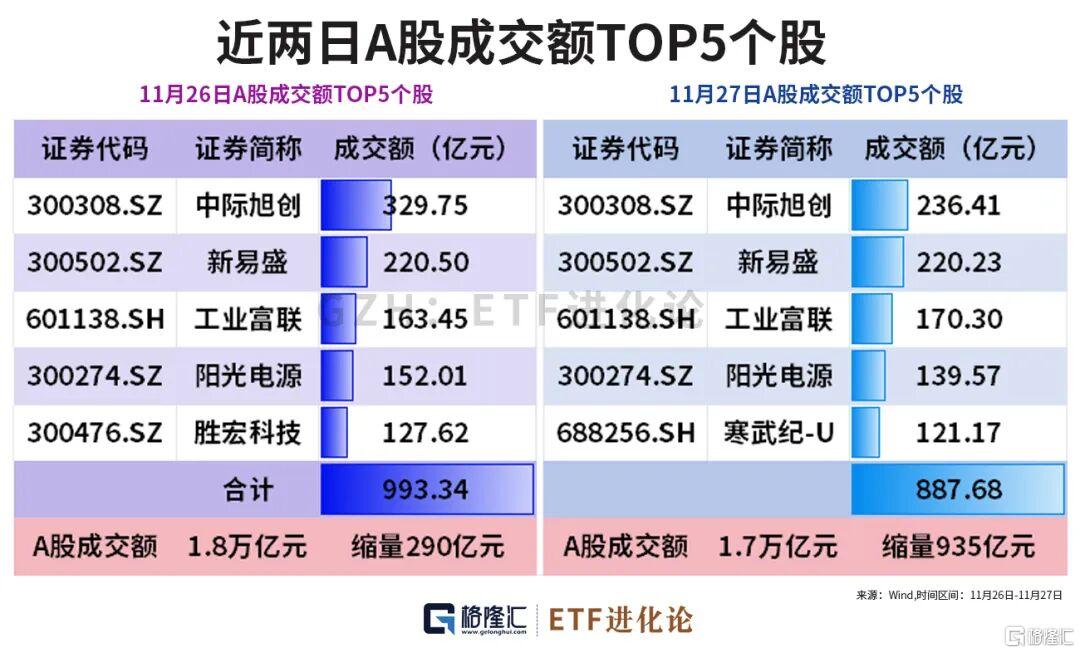
Market Overview - The A-share market experienced a significant decrease in trading volume, with a total turnover of 1.7 trillion yuan, down 290 billion yuan from the previous day [3][5] - The ChiNext index rose by 2% yesterday but fell by 0.44% today, indicating volatility in the market [1] - Major stocks in the AI hardware sector saw substantial trading activity, with four out of the top five stocks in terms of turnover being AI-related [1][3] AI Sector Performance - AI-related ETFs, particularly those focused on computing power, have shown strong performance, with cumulative gains exceeding 8% [3][5] - Despite the gains, there has been a net outflow of funds from these ETFs, indicating a cautious market sentiment [5][12] Global Market Trends - Following a period of record highs in October, various asset classes, including cryptocurrencies and tech stocks, have experienced significant corrections [8][11] - The dollar index has risen from a low of 97.7 on October 3 to 100.35 by November 21, reflecting a shift in market dynamics [9][11] AI Investment Landscape - The AI investment landscape is shifting from hardware acquisition to a focus on energy efficiency and cost-effectiveness, as companies seek to optimize their AI capabilities [18][19] - Major tech firms are heavily investing in AI infrastructure, with significant debt financing observed, indicating a competitive race for AI capabilities [18][19] Market Sentiment and Future Outlook - The market is currently in a state of cautious observation, with concerns about potential bubbles in the AI sector and the sustainability of current valuations [7][19] - Analysts suggest that the ongoing adjustments in the market may lead to a reevaluation of AI's role in productivity and economic growth [19][25]

美国AI数据中心“叙事变化”:从“大交易”的兴奋感转向“不断延误”的“推锅大战”
Hua Er Jie Jian Wen· 2025-11-25 02:53
Core Insights - The market sentiment in the U.S. AI data center sector is experiencing a significant reversal, with excitement from large-scale transactions and record contracts fading due to project delays and blame-shifting among stakeholders [1][2] - Supply chain tensions are beginning to materially impact corporate performance, as evidenced by CoreWeave's warning of a potential revenue hit of $100 million to $200 million due to delays from third-party developers [1][3] - The delays are not isolated to individual companies but reveal systemic bottlenecks within the industry, as GPU delivery speeds have outpaced facility construction, leading to idle hardware waiting for deployment [1][6] Project Delays and Accountability - CoreWeave has become a case study in the blame game, as CEO Mike Intrator indicated that revenue would be severely impacted due to delays attributed to third-party data center developers, speculated to be Core Scientific [3][4] - Microsoft previously reduced contracts with CoreWeave due to delays at a Texas data center, which is powered by Core Scientific, highlighting the interconnected nature of these delays [3][4] - Core Scientific's CEO Adam Sullivan criticized the unrealistic timelines for AI data centers and noted that public disclosures of delays can create market confusion and erode confidence [4] Financial Pressures and Contractual Obligations - The stakes in the AI compute race are high, with strict financial terms in contracts often including penalties for missed deadlines or operational failures, which can significantly impact the already thin margins of GPU cloud leasing businesses [5] - The urgency to assign blame for missed deadlines is heightened, as even minor delays can have substantial financial repercussions for companies committed to rapid delivery schedules [5] Hardware Backlog and Strategic Adjustments - The mismatch between hardware supply and facility readiness has led to a backlog of GPUs, with some companies forced to store idle units while awaiting deployment instructions [6] - Major tech companies are adjusting their strategies to build buffers, with Meta acknowledging the need for phased data center construction to quickly scale capacity when needed [6] - The increasing difficulty in securing power and other resources may lead more clients to diversify their partnerships with multiple data center providers to mitigate risks [6]
存储芯片“超级周期”:A股玩家谁能多分一杯羹?
财联社· 2025-11-16 04:51
Core Viewpoint - The article discusses a significant price surge in storage chips driven by the AI boom, marking the beginning of a "super cycle" in the storage chip industry, with prices for certain memory chips increasing by as much as 60% in recent months [4][5]. Industry Overview - The storage chip industry is entering a "super cycle" phase, fueled by the demand for AI data centers, leading to a structural mismatch between supply and demand [5]. - The current price trends for DRAM and NAND Flash are showing a comprehensive upward trajectory, indicating a shift from previous low-demand periods [5]. - The AI infrastructure expansion is closely linked to a historic "AI computing power race," with major players in the market recognizing the onset of a storage super cycle [11]. Company Performance - Companies like Shannon Semiconductor and Demingli have seen substantial stock price increases, with Shannon Semiconductor's stock rising by 514.1% and Demingli's by 334.53% year-to-date [6][7]. - Shannon Semiconductor's revenue for the first three quarters of 2025 reached 26.4 billion yuan, a year-on-year increase of 59.90%, although its net profit slightly decreased by 1.36% [8]. - Demingli reported a net loss of 27.07 million yuan for the first three quarters, with total operating costs rising significantly from 3.098 billion yuan to 6.653 billion yuan year-on-year [10]. Market Dynamics - The storage chip market is currently characterized by a seller's market due to expectations of rising prices, leading to excessive purchasing by downstream companies [11]. - The inventory levels of companies like Jiangbolong and Demingli are notably high, with Jiangbolong holding 8.517 billion yuan in inventory, which may positively impact future earnings [12]. - Despite the current bullish sentiment, analysts caution that the long-term sustainability of high inventory levels may be at risk due to potential market fluctuations and technological advancements [12].


?存储“超级周期”逻辑再强化! DRAM急缺之际 三星DDR5价格疯涨60%
Zhi Tong Cai Jing· 2025-11-14 12:54
Core Viewpoint - The global storage chip market is experiencing a "super cycle" driven by a significant increase in demand for DRAM and NAND products, particularly due to the expansion of AI data centers, leading to substantial price hikes for key storage components like DDR5 chips [1][3][8]. Price Increases - Samsung Electronics has raised prices for certain storage chips by up to 60% in November compared to September, with the price of a 32GB DDR5 module increasing from $149 to $239 [1][4]. - The prices for 16GB and 128GB DDR5 modules have also risen by approximately 50%, reaching $135 and $1,194 respectively, while larger capacities like 64GB and 96GB have seen increases of over 30% [4][5]. Supply Shortages - The severe shortage of DRAM storage chips has led to panic buying among enterprise-level customers, indicating a tight supply situation in the market [5]. - Analysts suggest that Samsung's slower transition to HBM storage systems compared to competitors may provide it with a more optimistic pricing power in the broader storage chip market due to its larger inventory [5]. Market Dynamics - The demand for high-performance storage products, particularly DDR5 and HBM systems, is being driven by the need for AI training and inference capabilities, with DRAM capacities in AI servers often exceeding traditional CPU servers by 4-8 times [2][3]. - Major storage companies like SK Hynix, Samsung, and Micron are focusing their production capacity on HBM systems, which has contributed to the supply constraints for DDR5 and other storage products [2][3]. Future Outlook - Analysts predict that Samsung may increase quarterly contract prices by 40% to 50% from October to December, surpassing the broader industry average of 30% [6]. - The ongoing AI infrastructure investments are expected to sustain the "super cycle" in the storage market, with demand for core storage chips remaining robust through 2026 and potentially into 2027 [8][9].