跨学科融合

Search documents
协同育人模式下高校合唱教学优化路径
Xin Lang Cai Jing· 2026-02-03 19:46
Core Viewpoint - The article emphasizes the need for optimizing choral education in higher education through collaborative education models, integrating interdisciplinary curricula, and leveraging modern technology to enhance student development and artistic expression [5][6]. Group 1: Collaborative Education Model - The traditional choral teaching model is insufficient for cultivating innovative and versatile talents, necessitating the introduction of a "collaborative education" concept to create an open and shared teaching ecosystem [1]. - This model aims to merge knowledge transfer, skill development, and value guidance, fostering teamwork and moral character among students through choral arts [1]. Group 2: Interdisciplinary Curriculum Development - Establishing an interdisciplinary curriculum can effectively bridge the gap between arts and other subjects, enriching choral education and stimulating students' innovative potential [2]. - The curriculum should include thematic modules, such as "Choral and Literature" and "Choral and Historical Sociology," to deepen students' understanding of music and its societal context [2]. - Teaching methods like project-based learning and collaborative interdisciplinary choral projects can enhance students' performance abilities and promote knowledge and skill integration [2]. Group 3: Integration of Art Resources - Promoting the integration of internal and external artistic resources allows choral groups to connect with society, enhancing their cultural impact and providing practical opportunities for students [3]. - The "bring in" mechanism involves inviting renowned conductors and composers to campus for workshops and performances, while the "go out" approach encourages participation in competitions and community service [3]. - Initiatives like music camps for underprivileged children can help broaden the social value of choral education [3]. Group 4: Incorporation of Digital Technology - The advancement of digital technologies such as AI and VR can transform choral education by providing precise vocal training and personalized learning experiences [4]. - Tools like audio analysis software can help students improve their vocal skills through real-time feedback, while AI can assist in creating customized practice exercises [4]. - Virtual and augmented reality technologies can create immersive learning environments, enhancing students' engagement and understanding of music [4]. Group 5: Future Outlook - The exploration of optimized paths for choral education under a collaborative education model is a significant, long-term endeavor that requires systemic support [5][6]. - The integration of interdisciplinary curricula, resource collaboration, and modern technology will create a student-centered, open, and technology-supported choral education ecosystem [6].
赞颂人类永不泯灭的好奇心与科学精神
Xin Lang Cai Jing· 2026-02-01 17:15
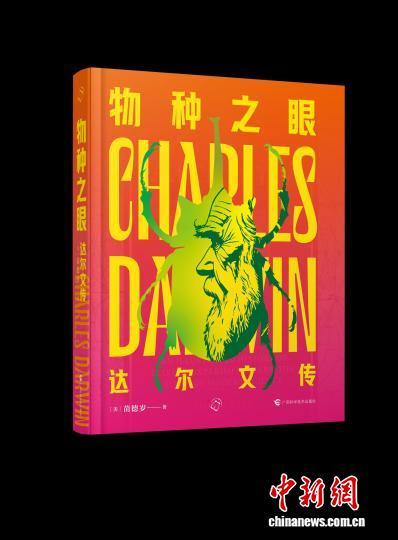
Core Viewpoint - The new book "The Eye of Species: A Biography of Darwin" by paleontologist and science writer Miao Desui celebrates human curiosity and scientific spirit through the life of Charles Darwin, aiming to provide a comprehensive understanding of Darwin's academic thoughts for Chinese readers [1][2]. Group 1 - The book is described as the first comprehensive and in-depth original biography of Darwin's academic thoughts in the Chinese world, reflecting decades of research and personal significance for the author [1]. - The book achieves a balance between academic depth and accessibility, making it suitable for both experts and general readers, thus meeting the current demand for promoting the spirit of scientists and creating excellent biographies [1][2]. - Miao Desui's academic journey mirrors that of Darwin, starting from geology and evolving into paleontology and zoology, showcasing valuable interdisciplinary experiences [2]. Group 2 - The book includes personal commentary and insights from the author, making it more of a "critical biography" that is detailed and thought-provoking [2]. - The production of the book involved collaboration with an internationally renowned designer and extensive efforts to source images, resulting in the acquisition of 220 images from over 400, reflecting a commitment to quality [2].
这个新成立的学院有啥不一样
Xin Lang Cai Jing· 2026-01-28 00:15
Core Insights - The establishment of the first interstellar navigation college in China marks a significant step in advancing the country's capabilities in deep space exploration and talent cultivation [1][3]. Group 1: College Establishment and Focus - The Interstellar Navigation College at the University of Chinese Academy of Sciences was officially inaugurated on January 27, focusing on areas such as interstellar propulsion, deep space communication, and space science [1]. - The college aims to cultivate urgently needed interdisciplinary talents with solid foundations, strategic vision, and a sense of national responsibility [1][3]. Group 2: Historical Context and Global Competition - Over the past 60 years, significant groundwork has been laid for China's space exploration, including the establishment of the Interstellar Navigation Committee [2]. - The global competition in deep space exploration is intensifying, with major space powers accelerating their efforts, making the next 10 to 20 years a critical period for China's advancements in this field [3]. Group 3: Innovative Educational Approach - The college distinguishes itself by breaking traditional disciplinary barriers, promoting deep integration of multiple fields such as aerospace engineering, physics, chemistry, biology, artificial intelligence, and materials science [4]. - It has established three main training directions: frontier science, key technologies, and strategic applications, with a comprehensive curriculum covering 14 major disciplines and 22 new core courses [4]. Group 4: Practical Training and Collaboration - The college emphasizes a hands-on approach to education, aligning coursework and projects with real-world tasks, thereby fostering systematic thinking and problem-solving skills among students [6]. - A collaborative model is adopted where students form task forces to tackle research challenges, supported by a cross-disciplinary team of scientists and experts [6][7]. Group 5: Future Development and Goals - The college plans to further enhance its evaluation system, focusing on practical problem-solving outcomes as a primary criterion for talent development [7]. - It aims to create a new generation of capable talents who can contribute significantly to the interstellar navigation field and support national strategic needs [7].
独家揭秘中国首个星际航行学院:从近地到深空 星际航行梦何以照进现实
Xin Jing Bao· 2026-01-27 13:13
Core Insights - The establishment of the "Interstellar Navigation" college at the University of Chinese Academy of Sciences marks a significant step in addressing the shortage of top interdisciplinary talent in China's space exploration efforts [1][2][4] - The college aims to integrate various disciplines, including aerospace engineering, physics, chemistry, biology, artificial intelligence, and materials science, to foster collaboration among scientists and engineers [2][3] - A total of 22 new core courses have been added to the curriculum, focusing on cutting-edge topics such as interstellar dynamics, planetary habitability, and interstellar sociology [3][5] Talent Acquisition and Funding - The college is actively recruiting talent with substantial funding support, offering project funding ranging from 10 million to 100 million yuan for individual projects [4][5] - Innovative training models will be implemented, emphasizing real-world problem-solving and practical skills, while moving away from traditional publication-centric evaluation [5] Educational Infrastructure - The college will leverage existing platforms and establish new ones, such as drone simulation and space science satellite teaching platforms, to provide immersive training environments for students [5] - The curriculum will cover a comprehensive knowledge system from space engineering to interstellar navigation, preparing students for various roles in the aerospace sector [5][6] Future Prospects - The next 10 to 20 years are seen as a critical window for breakthroughs in interstellar navigation, with foundational research and technological advancements expected to reshape deep space exploration [6][7] - The college's establishment is anticipated to lead to a surge in innovative outcomes in the aerospace field, contributing to China's competitive edge in space exploration [7]
独家揭秘中国首个星际航行学院:从近地到深空,星际航行梦何以照进现实
Xin Jing Bao· 2026-01-27 12:36
Core Insights - The establishment of the "Interstellar Navigation" college at the University of Chinese Academy of Sciences marks a significant step in addressing the shortage of top interdisciplinary talent in China's space exploration efforts [1][2][4] - The college aims to integrate various disciplines, including aerospace engineering, physics, chemistry, biology, artificial intelligence, and materials science, to foster collaboration among scientists and engineers [2][3] - A total of 22 new core courses have been introduced, focusing on cutting-edge topics such as interstellar dynamics, planetary habitability, and interstellar sociology, enhancing the curriculum to support interdisciplinary learning [3][5] Talent Acquisition and Funding - The college is actively recruiting talent with substantial funding support, offering project funding ranging from 10 million to 100 million yuan for individual research projects [4][5] - Innovative training models will be implemented, emphasizing real-world problem-solving and practical skills, moving away from traditional paper-based evaluation systems [5][6] Future Prospects - The college's initiatives are expected to cultivate a new generation of versatile talents equipped with both solid foundations and strategic vision, crucial for advancing China's space exploration capabilities [6][7] - The next 10 to 20 years are identified as a critical window for breakthroughs in interstellar navigation, with the college positioned to play a pivotal role in transforming the landscape of deep space exploration [7][8]
古生物学家苗德岁推出《物种之眼:达尔文传》
Xin Lang Cai Jing· 2026-01-25 11:02
Core Viewpoint - The book "The Eye of Species: A Biography of Darwin" by paleontologist and science writer Miao Desui celebrates human curiosity and scientific spirit through the life of Charles Darwin, emphasizing its significance in exploring the world [1][3]. Group 1: Book Overview - The book is described as a comprehensive and in-depth original biography of Darwin's academic thoughts, marking a significant contribution to the Chinese literary world [3]. - Miao Desui's personal journey with Darwin and "On the Origin of Species" spans nearly fifty years, highlighting the importance of this work in his academic career [3]. Group 2: Academic and Public Reception - Guo Yiqiang, president of the Chinese Book Review Society, notes that the book achieves a balance between academic depth and accessibility, appealing to both experts and general readers [3]. - Wang Xiaolin, a researcher at the Chinese Academy of Sciences, emphasizes the shared curiosity between Darwin and Miao Desui, showcasing a valuable interdisciplinary experience [5]. Group 3: Publication and Design - The book's production involved collaboration with an internationally renowned designer and extensive efforts to source images from over forty global institutions, resulting in the acquisition of 220 images from a pool of over 400 [5].

AI重塑艺术创作:如何应对人机协作新范式?
Xin Lang Cai Jing· 2026-01-16 09:52
Core Insights - The rapid development of artificial intelligence (AI) is fundamentally reshaping the artistic creation ecosystem, transitioning from a tool to a creative partner, which poses challenges for graduate education in the arts [1][2][3] Group 1: AI's Role in Art Creation - AI technologies, particularly generative models, are now capable of creating complex visual art and music, marking a shift from traditional tools to autonomous creative participants [2] - This evolution fosters a new production model of "human-machine collaboration," where artists focus more on concept development and interpretation rather than just the manual creation process [2] Group 2: Opportunities in Art Education - The impact of AI necessitates a fundamental reassessment of the mission of art education, emphasizing the need to infuse generated works with historical context and personal experience [3] - Art education must evolve to develop a new discourse that understands both technical and artistic languages, balancing technological ethics with humanistic values [3] Group 3: Curriculum and Teaching Methodology - Traditional art education must shift from a focus on specific technical skills to a broader cultivation of "intelligent literacy," integrating algorithmic thinking with artistic innovation [4][7] - The curriculum should be restructured to break down barriers between art, technology, and humanities, promoting interdisciplinary integration [5][7] Group 4: Innovative Teaching Approaches - New teaching methods should create environments that stimulate human-machine collaboration, with project-based learning becoming central to the educational experience [8] - Partnerships with cultural institutions can transform real-world challenges into student projects, enhancing their practical engagement in the cultural production chain [8] Group 5: Evaluation and Assessment - The evaluation system must transition from assessing "what the work is" to "how and why the work was produced," emphasizing process-oriented and innovative assessments [9] - Ethical considerations should be integrated into the evaluation of AI-generated art, ensuring that students reflect on the societal implications of their work [9] Group 6: Faculty Development - The transformation of the faculty is crucial for the success of art education reform, necessitating the integration of AI literacy into teaching practices [10] - A dual mentorship model, combining expertise from both artistic and technical fields, can provide students with comprehensive knowledge and skills [10] Group 7: Systematic Reform in Art Education - The reform of art education driven by AI is a systemic endeavor that requires breaking down traditional academic boundaries and fostering dynamic, open curricula [11] - Future art educators should embody a bridge between technical understanding and humanistic values, ensuring that art education thrives in the age of AI [11]
千年漆艺“圈粉”高校学子 秦地“守艺人”数字技术解锁传承新生
Xin Lang Cai Jing· 2025-12-21 05:19
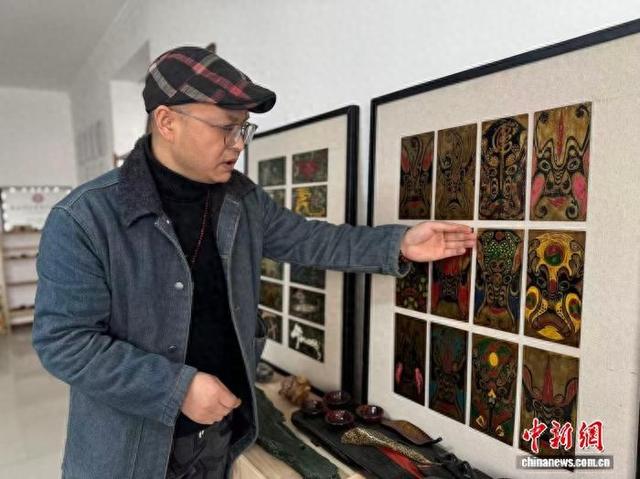
Core Viewpoint - The article highlights the revival and modernization of traditional lacquer art in Shaanxi, China, through the integration of digital technology and innovative teaching methods in universities, fostering a new generation of artisans and expanding the lacquer industry's reach into contemporary life [1][4][5]. Group 1: Traditional Lacquer Art - Shaanxi is recognized as a core production area for high-quality lacquer due to its unique geographical and climatic conditions, which support a complete lacquer industry chain encompassing production, sales, and cultural promotion [1]. - The design philosophy of local lacquer art emphasizes practicality, reflecting the pragmatic wisdom of the region's culture [1]. - The intricate and time-consuming process of lacquerware production has been preserved through generations, maintaining traditional techniques while adapting to modern needs [1][5]. Group 2: Modernization and Education - The integration of technologies such as 3D printing and digital spray painting in educational settings has significantly reduced production time and enhanced creative efficiency for students [3][4]. - Shaanxi Province is actively promoting the development of lacquer art through talent cultivation, cultural innovation, and technological advancement, with universities like Xi'an Academy of Fine Arts focusing on the revitalization and innovative transmission of traditional crafts [4][5]. - The shift in teaching philosophy encourages students to create practical, everyday items rather than solely decorative art, leading to a new wave of lacquer products that resonate with contemporary aesthetics [5]. Group 3: Innovation and Market Adaptation - Artisans like Xiao Yunfeng are collaborating with educational institutions to introduce lacquer art courses and simplify complex techniques for younger audiences, thereby fostering interest in traditional crafts [5]. - New product lines, including lacquer jewelry and tea sets, are being developed to appeal to younger consumers, merging traditional designs with modern sensibilities [5]. - The enduring nature of lacquer art is likened to human character, emphasizing the importance of preserving cultural roots while embracing innovation [5].
中国科技考古六十年 老中青三代考古专家共议学科传承与创新
Xin Lang Cai Jing· 2025-12-20 12:56
Core Insights - The 60th anniversary of the establishment of the discipline of scientific archaeology in China is marked by a seminar focusing on heritage protection and innovation [1][3] - The seminar highlights the transformation of scientific archaeology from an "academic wasteland" to a "disciplinary frontier" over the past six decades [3][4] Group 1: Development and Future Directions - The future development of the Key Laboratory for Scientific Archaeology and Cultural Heritage Protection will focus on major topics such as the origins of Chinese civilization and the formation of the Chinese national community [3][4] - The laboratory aims to build an internationally leading academic laboratory and enhance China's global academic discourse power in key areas like ancient DNA sequencing and digital archaeology [3][4] - A multi-level talent cultivation system will be established to support the development of scientific archaeology [3][4] Group 2: Historical Milestones - Key milestones in the development of scientific archaeology include the establishment of China's first carbon-14 laboratory in 1965, the formation of the Archaeological Science Research Center in 1995, and the unveiling of the Key Laboratory in 2024 [4] - The laboratory integrates 18 sub-laboratories and 5 joint laboratories, creating a comprehensive research system that supports major national projects [4] Group 3: Educational Initiatives - The Chinese Academy of Social Sciences University is developing a comprehensive talent training system for archaeology, emphasizing the integration of education and research [5] - The university plans to continue supporting the Key Laboratory's development and cultivate talents with both national sentiment and expertise [5] Group 4: Academic Contributions - Senior experts and young scholars from various institutions shared insights on cutting-edge theories and practical achievements in scientific archaeology during the seminar [6] - The seminar included presentations on core areas of scientific archaeology, such as environmental archaeology, human bone archaeology, and ancient DNA research [6] Group 5: Collaborative Efforts - A roundtable discussion focused on topics such as independent breakthroughs in core technologies, deepening interdisciplinary integration, and enhancing international discourse power [6][7] - The seminar emphasized the need for a high-quality development of scientific archaeology and the cultivation of interdisciplinary talents [7]

谢远涛:培养复合型人才、推动跨学科融合等是保险高质量发展关键
Xin Lang Cai Jing· 2025-12-19 11:55
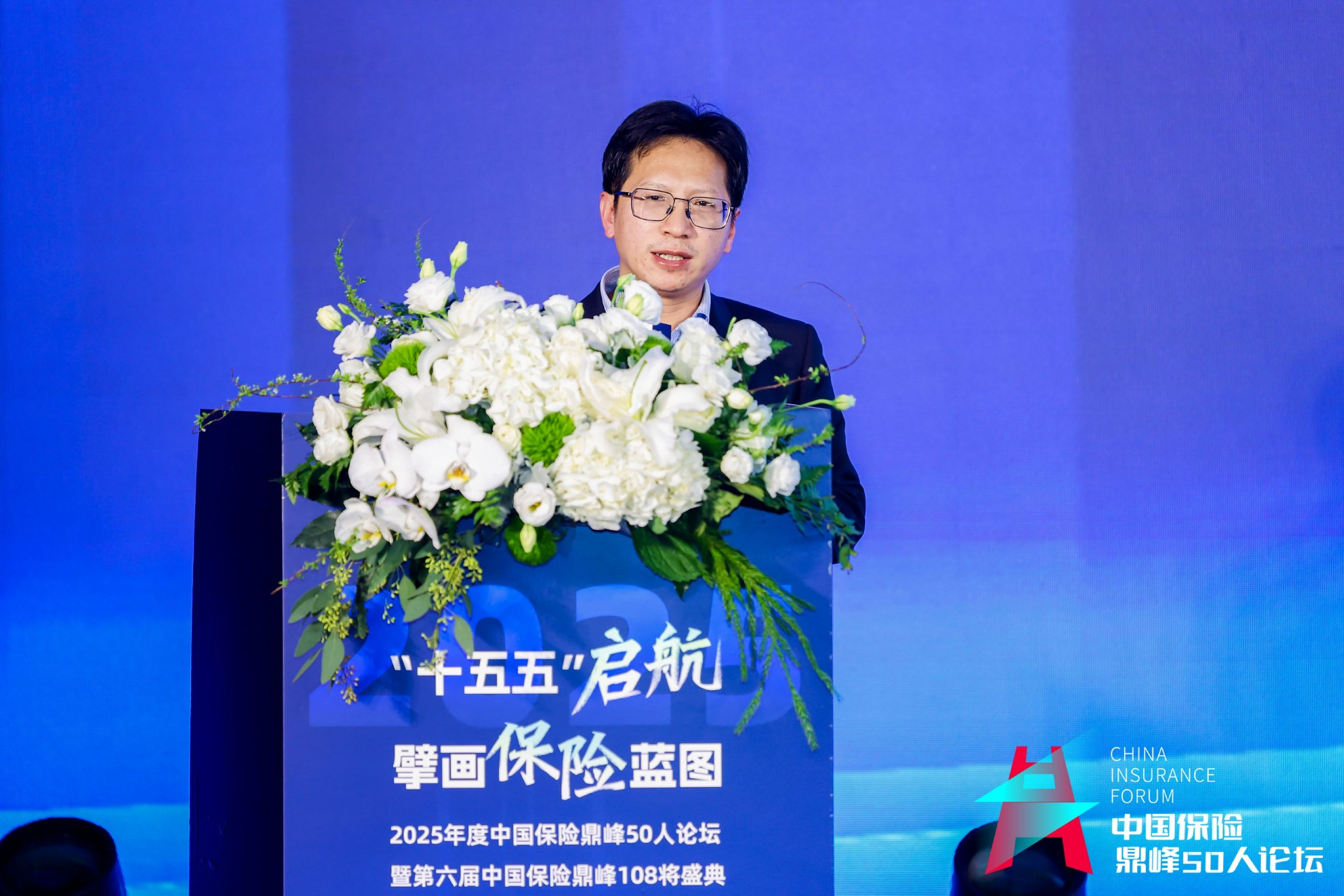
Group 1 - The forum titled "2025 Annual China Insurance Summit 50 Forum" was held on December 17, organized by Zhongbao Xinzhi and the New Era Insurance Research Institute, focusing on the theme "'14th Five-Year Plan' Launching and Mapping the Insurance Blueprint" [1][5] - The event gathered nearly a hundred representatives from the "China Insurance Summit 108" along with senior experts from financial regulation, authoritative scholars, and core executives from enterprises to discuss the high-quality development paths and directions for the insurance industry during the "14th Five-Year Plan" period [1][5] Group 2 - Xie Yuantao, Dean of the Insurance School at the University of International Business and Economics, emphasized the importance of cultivating composite insurance talents, promoting interdisciplinary integration, and empowering AI technology for high-quality development in the insurance sector [3][7] - He highlighted the need for the insurance discipline to break traditional boundaries and innovate through integration with various fields, such as "Insurance + AI," "Insurance + Law," "Insurance + Health," and "Insurance + Social Governance System" [4][7] - Xie proposed that the traditional dichotomy of commercial insurance and social insurance is outdated and should be viewed as different forms of supply, advocating for a "one body, two wings" academic structure [4][7] - He also called for the establishment of three development engines: technology empowerment engine, faculty upgrade engine, and lifelong learning engine to promote high-quality development in the discipline [4][7]