
AI ASIC

Search documents
微软“Maia 200”强化ASIC崛起叙事 高速铜缆、DCI与光互连站上自研AI芯片风口
智通财经网· 2026-01-28 07:23
Core Insights - The report from BNP Paribas highlights the launch of Microsoft's second-generation self-developed AI chip, "Maia 200," which is expected to trigger a new wave of investment in the AI computing power industry, particularly benefiting leaders in custom AI ASIC chips like Marvell and Broadcom [1][6] - Analysts predict that the market share of ASICs compared to NVIDIA's AI GPU clusters could significantly increase from the current ratio of 1:9/2:8 to nearly equal [1] - The ongoing AI infrastructure investment wave is projected to reach between $3 trillion and $4 trillion globally by 2030, driven by unprecedented demand for AI computing power [4] Group 1: AI Chip Market Dynamics - The trend of self-developed AI chips by cloud computing giants like Microsoft, Google, and Amazon is reshaping the AI ASIC and GPU landscape, with significant implications for data center interconnects and high-speed cabling [2][3] - Google’s TPU AI chip production is expected to surge, with projections of 5 million and 7 million units in 2027 and 2028, respectively, indicating a potential shift towards external sales of TPU chips [7] - The demand for AI ASICs is anticipated to triple by 2027, surpassing GPU shipments, driven by the expansion of Google’s TPU infrastructure and AWS Trainium clusters [7] Group 2: Infrastructure and Connectivity - The report identifies potential beneficiaries in the data center connectivity space, including Amphenol for high-speed copper cables and Lumentum for optical interconnects, as the demand for AI infrastructure grows [8] - The integration of high-performance networking solutions, such as NVIDIA's InfiniBand and Google's Optical Circuit Switching, is crucial for the efficiency of AI data centers, emphasizing the role of both copper and optical interconnects [9][10] - The Maia 200 AI infrastructure is expected to be deployed in a specific topology designed for AI inference workloads, with large-scale deployment anticipated to accelerate in the second half of 2026 [11]

微软新一代自研AI芯片“Maia 200”出鞘!推理狂潮席卷全球,属于AI ASIC的黄金时代到来
Zhi Tong Cai Jing· 2026-01-27 01:38
Core Viewpoint - Microsoft has launched its second-generation AI chip, Maia 200, aimed at providing a cost-effective alternative to NVIDIA's AI GPU series for cloud AI training and inference tasks [1][3]. Group 1: Product Launch and Specifications - The Maia 200 chip, manufactured by TSMC, is designed for high-performance AI inference tasks and is being deployed in Microsoft's large AI data centers [1][3]. - The chip offers a performance improvement of 30% per dollar compared to Microsoft's latest hardware, with FP4 performance three times that of Amazon's third-generation Trainium and FP8 performance exceeding Google's seventh-generation TPU [5][6]. - Maia 200 is built using TSMC's advanced 3nm process and contains over 140 billion transistors, providing over 10 petaFLOPS of performance at FP4 and over 5 petaFLOPS at FP8 within a power consumption of 750 watts [6]. Group 2: Competitive Landscape - The launch of Maia 200 positions Microsoft as a strong competitor against Amazon's Trainium and Google's TPU, with claims of superior performance in AI inference tasks [3][4]. - Other chip design giants like Marvell, Broadcom, and MediaTek are also focusing on developing custom AI ASIC solutions for cloud giants, indicating a competitive shift towards high-performance, cost-effective AI infrastructure [2]. Group 3: Industry Trends and Future Outlook - The increasing demand for AI data centers and the need for energy-efficient solutions are driving the development of AI ASIC technology across major tech companies [7][8]. - Microsoft is already planning the next generation of AI chips, named Maia 300, and has options to collaborate with OpenAI for exclusive chip designs [6][7]. - The AI ASIC technology route is seen as a critical investment for companies aiming to enhance cost-effectiveness and energy efficiency in AI computing [7][8].
芯原股份:2025年业绩预告点评:订单兑现收入高增,继续看好AI ASIC产业趋势-20260126
Soochow Securities· 2026-01-26 10:00
2025 年业绩预告点评:订单兑现收入高增, 继续看好 AI ASIC 产业趋势 买入(维持) | [Table_EPS] 盈利预测与估值 | 2023A | 2024A | 2025E | 2026E | 2027E | | --- | --- | --- | --- | --- | --- | | 营业总收入(百万元) | 2,338 | 2,322 | 3,154 | 5,661 | 8,612 | | 同比(%) | (12.73) | (0.69) | 35.84 | 79.49 | 52.11 | | 归母净利润(百万元) | (296.47) | (600.88) | (448.92) | 315.20 | 805.06 | | 同比(%) | (501.64) | (102.68) | 25.29 | 170.21 | 155.41 | | EPS-最新摊薄(元/股) | (0.56) | (1.14) | (0.85) | 0.60 | 1.53 | | P/E(现价&最新摊薄) | (366.46) | (180.81) | (242.01) | 344.67 | 134.95 | [Ta ...

芯原股份:两项并购进展公布 整合显示技术 强化RISC-V领域的布局
Zhong Zheng Wang· 2025-12-14 09:11
Core Viewpoint - Chip Origin Co., Ltd. is advancing its strategic acquisitions by investing in TianSui XinYuan and acquiring control of ZhuDian Semiconductor, while terminating the acquisition of XinLai ZhiRong to focus on its core business and RISC-V ecosystem development [1][7]. Group 1: Acquisition and Investment - Chip Origin plans to invest in TianSui XinYuan alongside prominent investors, contributing 350 million yuan to a total capital increase of 940 million yuan, which will make it the largest shareholder with a 40% stake [2][3]. - The acquisition of ZhuDian Semiconductor is aimed at enhancing Chip Origin's competitive edge in AI ASIC markets by combining its image processing technology with ZhuDian's expertise in video processing [4][5]. Group 2: Termination of Acquisition - The company has decided to terminate the acquisition of 97.0070% of XinLai ZhiRong's shares due to misalignment of key demands from the target company's management with market conditions and shareholder interests [7]. - The termination of this acquisition is not expected to adversely affect the company's normal business operations or shareholder interests [7]. Group 3: RISC-V Ecosystem Development - Chip Origin has been actively promoting the RISC-V ecosystem for over seven years, leading initiatives such as the establishment of the China RISC-V Industry Alliance, which has grown to 204 member units [9]. - The company has developed multiple chip design platforms based on RISC-V architecture, which are being adopted by various clients, thus facilitating the industrialization of RISC-V technology [9]. Group 4: Technological Advancements - The company has launched the Coral NPU IP in collaboration with Google, designed for low-power edge applications, which is based on the RISC-V architecture and aims to enhance the edge AI ecosystem [10]. - Chip Origin is developing verification chips based on the Coral NPU IP for applications in AI/AR glasses and smart home devices, accelerating the deployment of large language models at the edge [10].
芯原牵头9.4亿元增资 控股天遂芯愿
是说芯语· 2025-12-14 03:00
Core Viewpoint - Chipone Technology announced a strategic capital increase for TianSui Semiconductor, acquiring control of ZhuDian Semiconductor, which is expected to enhance its position in the semiconductor industry and improve its AI ASIC market competitiveness [1][6]. Group 1: Capital Increase and Shareholding Structure - On December 12, Chipone Technology signed a capital increase agreement with TianSui Semiconductor and five investment partners, with TianSui planning to increase its registered capital by 940 million yuan [1]. - Chipone will contribute 350 million yuan in cash and an additional 20 million yuan through its existing 2.11% stake in ZhuDian Semiconductor, resulting in a significant ownership stake [1]. - After the capital increase, TianSui's registered capital will rise from 10 million yuan to 950 million yuan, with Chipone becoming the largest shareholder with a 40% stake [5]. Group 2: Investment Partners - The investment partners include prominent entities such as Huaxin Dingxin, Guotou Xiandao, Yitang Yuanchuang, and Hanzhe Chuangtou, contributing a total of 550 million yuan to support the acquisition [4]. - Huaxin Dingxin invested 300 million yuan, while Guotou Xiandao contributed 150 million yuan, showcasing a strong backing from established investment firms [4]. Group 3: Strategic Implications - ZhuDian Semiconductor, established in 2004, is a leading provider of video and display processing chip solutions, holding over 160 patents and dominating the 3LCD projector control chip market with over 80% share [5]. - The acquisition allows Chipone to offer a comprehensive solution from image preprocessing to postprocessing for mobile clients, enhancing its capabilities in emerging fields like AI smartphones and cloud gaming [5]. - The market analysis suggests that this strategic acquisition aligns with the trend of domestic semiconductor replacement and policy support, potentially setting a new benchmark for industry consolidation [6].


芯原终止收购芯来,原因曝光
半导体行业观察· 2025-12-13 01:08
Core Viewpoint - The company has decided to terminate the acquisition of a 97.0070% stake in Chip Lai Technology due to discrepancies between the core demands of the target company's management and the market environment, policy requirements, and the interests of the company and its shareholders [3][5]. Group 1: Termination of Acquisition - The company received a notification from the management of Chip Lai Technology and the transaction counterparties regarding the termination of the acquisition [2]. - The board of directors approved the termination after thorough research, emphasizing that it would not adversely affect the company's normal business operations or harm the interests of shareholders, especially minority shareholders [3]. Group 2: Future Plans and RISC-V Focus - The company will continue to strengthen its layout in the RISC-V field and maintain and deepen its cooperative relationship with Chip Lai Technology as a shareholder [3]. - The company aims to expand collaborations with multiple RISC-V IP core suppliers to promote the rapid development of the RISC-V ecosystem in China [3][9]. Group 3: RISC-V Industry Engagement - The company has been actively involved in the RISC-V industry for over seven years, focusing on building an open RISC-V hardware platform and an open-source RISC-V software ecosystem [4][7]. - The company has organized multiple RISC-V industry forums, promoting over 40 new RISC-V chip products from various domestic enterprises [4]. Group 4: Chip Lai Technology Overview - Chip Lai Technology, established in 2018, has developed over 70 IP products, including more than 20 RISC-V IPs, and has authorized over 300 global customers [6]. - The company achieved a high gross margin of over 90% for its RISC-V IP licensing services and is nearing breakeven [6]. Group 5: Strategic Importance of RISC-V - The termination of the acquisition is seen as a strategic move to enhance the company's competitive edge and expand its business development space in the RISC-V sector [9]. - The company plans to leverage its semiconductor IP and the integration of Chip Lai Technology's RISC-V IP to accelerate the large-scale implementation of RISC-V technology [9].

芯片突发!688521,重大资产重组终止!
证券时报· 2025-12-12 15:03
Core Viewpoint - The company, Chip Origin Co., Ltd. (芯原股份), has decided to terminate the acquisition of a 97.0070% stake in Chip Lai Zhirong Semiconductor Technology (Shanghai) Co., Ltd. due to discrepancies between the core demands of the target company's management and the market environment, policy requirements, and the interests of the company and its shareholders [1][3]. Group 1: Transaction Termination - The company received a notification from the target company's management and the transaction party regarding the termination of the share issuance and cash payment for the acquisition [1]. - The board of directors approved the termination of the transaction after thorough research, emphasizing the need to protect the interests of the company and all shareholders [3]. - The termination of this major asset restructuring will not adversely affect the company's normal business operations or the interests of shareholders, particularly minority shareholders [3]. Group 2: Future Plans and Collaborations - The company plans to continue strengthening its layout in the RISC-V field and will maintain and deepen its cooperative relationship with Chip Lai Zhirong as a shareholder [3]. - The company aims to expand collaborations with multiple RISC-V IP core suppliers to promote the rapid development of the RISC-V ecosystem in China [3]. Group 3: Company Background and Market Position - Chip Origin Co., Ltd. is recognized as a leading provider of semiconductor IP and offers comprehensive chip customization services, having been listed in 2020 as "China's first semiconductor IP stock" [4]. - The company has established itself as a leader in the AI ASIC sector, with AI-related revenue accounting for approximately 52% of its chip design business income in the first half of 2025 [4]. - The target company, established in 2018, is one of the first domestic RISC-V CPU IP providers in China and has developed numerous IP products, leading the RISC-V IP business domestically [5].

通信设备ETF、人工智能相关ETF涨幅居前丨ETF基金日报
2 1 Shi Ji Jing Ji Bao Dao· 2025-12-09 02:45
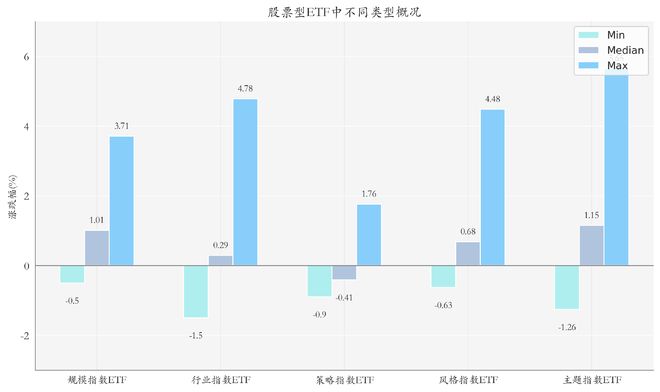
Market Overview - The Shanghai Composite Index rose by 0.54% to close at 3924.08 points, with a daily high of 3936.31 points [1] - The Shenzhen Component Index increased by 1.39% to close at 13329.99 points, reaching a high of 13389.67 points [1] - The ChiNext Index saw a rise of 2.6%, closing at 3190.27 points, with a peak of 3214.48 points [1] ETF Market Performance - The median return for stock ETFs was 0.9%, with the highest return from the Xinyin CSI Kechuang 50 ETF at 3.71% [2] - The highest performing industry ETF was the Jiashi National Communication ETF, yielding 4.78% [2] - The top strategy ETF was the China Southern ChiNext Low Volatility Value ETF, with a return of 1.76% [2] - The best performing thematic ETF was the Fuguo CSI Communication Equipment Thematic ETF, achieving a return of 5.65% [2] ETF Performance Rankings - The top three ETFs by return were: - Fuguo CSI Communication Equipment Thematic ETF (5.65%) - Huazhong ChiNext Artificial Intelligence ETF (5.62%) - Dacheng ChiNext Artificial Intelligence ETF (5.56%) [4] - The worst performing ETFs included: - Guotai CSI Coal ETF (-1.5%) - Huitianfu CSI Energy ETF (-1.35%) - Zhaoshang CSI Hong Kong and Shanghai Consumer Leaders ETF (-1.26%) [4] ETF Fund Flows - The top three ETFs by fund inflow were: - Southern CSI A500 ETF (1 billion) - Huatai Baichuan CSI 300 ETF (920 million) - Huaxia Shanghai Stock Exchange Sci-Tech Innovation Board 50 ETF (789 million) [6] - The largest outflows were from: - E Fund ChiNext ETF (880 million) - Huabao CSI All-Index Securities Company ETF (673 million) - Guolianan CSI All-Index Semiconductor Products and Equipment ETF (461 million) [6] ETF Margin Trading Overview - The highest margin buy amounts were for: - Huaxia Shanghai Stock Exchange Sci-Tech Innovation Board 50 ETF (703 million) - Guotai CSI All-Index Securities Company ETF (509 million) - Huatai Baichuan CSI 300 ETF (467 million) [8] - The highest margin sell amounts were for: - Huatai Baichuan CSI 300 ETF (39.27 million) - Huaxia CSI 1000 ETF (20 million) - Huaxia Shanghai Stock Exchange 50 ETF (17.83 million) [8] Industry Insights - The global 400G+ optical module market is expected to reach $37.8 billion by 2026, driven by the demand for AI servers and high-speed optical interconnects [9] - Domestic AI development is accelerating, with Alibaba Cloud's business growing by 34%, indicating increased demand for IDC infrastructure [10] - The overall communication industry is expected to benefit from increased capital expenditure by cloud providers and the iteration of large AI models [10]
低费率创业板人工智能ETF华夏(159381)近5日累计上涨11.13%领涨同类标的,连续两日吸金超6000万元
Mei Ri Jing Ji Xin Wen· 2025-12-02 06:59
Core Viewpoint - The A-share market is experiencing slight declines, particularly in the AI sector, with the ChiNext AI Index down by 0.50% as of 14:29 on December 2. However, certain stocks like Zhaolong Interconnect and Tianfu Communication are performing well despite the overall trend [1]. Group 1: Market Performance - The ChiNext AI Index has seen a decline of 0.50% as of the specified time [1]. - The Huaxia ChiNext AI ETF (159381) is actively traded, with a transaction volume exceeding 300 million yuan during the day [1]. - Over the past five days, the Huaxia ChiNext AI ETF has accumulated an increase of 11.13%, ranking first among comparable funds [1]. Group 2: Fund Inflows - In the last two trading days, the Huaxia ChiNext AI ETF has experienced a continuous net inflow of over 60 million yuan [1]. Group 3: Future Outlook - According to China International Capital Corporation (CICC), the overseas AI hardware sector is expected to maintain high growth. The capital expenditure of the four major cloud providers in North America increased by 75% year-on-year in Q3 2025, with a positive outlook for AI investments in 2026 [1]. - The transition of cloud providers towards AI ASICs is anticipated to optimize costs and power consumption, with global AI ASIC shipments expected to more than double year-on-year by 2026 [1]. - The sustained demand is likely to drive the AI server and high-speed optical interconnect markets, with the global market size for 400G+ optical modules projected to reach 37.8 billion USD by 2026 [1].

软银被曝曾计划收购百亿美元半导体公司,谷歌也刚刚祭出大动作
Xuan Gu Bao· 2025-11-06 23:30
Group 1 - SoftBank expressed acquisition interest in Marvell, but terms were not agreed upon, leading to a significant increase in Marvell's stock price [1] - Marvell specializes in custom chips, with ASIC services similar to Broadcom, offering comprehensive solutions from network interfaces to memory and packaging [1] - Google plans to launch its seventh-generation Tensor Processing Unit, Ironwood, which boasts four times the performance of the sixth-generation Trillium TPU for training and inference tasks [1] Group 2 - ASICs demonstrate significant advantages in energy efficiency and cost, with Google's TPU v5 being 1.46 times more efficient than NVIDIA's H200, and Amazon's Trainium2 reducing training costs by 40% and inference costs by 55% [2] - Broadcom's AI ASIC revenue is projected to reach $12.2 billion in 2024 and $13.7 billion in the first three quarters of 2025, with quarterly growth rates surpassing NVIDIA [2] - The global AI ASIC market is expected to reach $125 billion by 2028, according to AMD, while Broadcom anticipates the ASIC service market for major clients to be between $60 billion and $90 billion by 2027 [2] Group 3 - Domestic cloud service providers are achieving results in self-developed ASICs, with Baidu's Kunlun chip reaching its third generation and securing a 1 billion yuan order from China Mobile [2] - Alibaba's PPU surpasses NVIDIA's A800 in memory and bandwidth, with a signed order for 16,384 computing cards from China Unicom [2] - ByteDance initiated chip self-development in 2020, planning to achieve mass production by 2026 [2]


