
人类命运共同体

Search documents
推动实现和平发展、互利合作、共同繁荣的世界现代化(深入学习贯彻习近平新时代中国特色社会主义思想)
Ren Min Ri Bao· 2026-02-10 00:44
Core Viewpoint - The article emphasizes the need for a new paradigm of modernization that focuses on peaceful development, mutual cooperation, and common prosperity, as articulated in Xi Jinping's thoughts on governance [2][14]. Group 1: Modernization Paradigm - Modernization should be achieved through peaceful means rather than through war, colonization, or exploitation, creating a conducive international environment for development [2][4]. - The new modernization paradigm aims to reduce disparities among countries and ensure that development benefits are equitably shared, challenging the traditional model where only a few nations reap the rewards [2][4][10]. Group 2: Global Challenges - The world is facing unprecedented challenges, including deficits in peace, development, security, and governance, which complicate the modernization process [5][6]. - The rise of unilateralism and protectionism, along with the slow progress of the UN's Sustainable Development Goals, highlights the need for a collective approach to address global issues [5][6]. Group 3: New International Relations - A new type of international relationship based on mutual respect, fairness, and cooperation is essential for advancing modernization [7][8][9]. - Mutual respect is the political foundation for modernization, emphasizing equality among nations and the right to choose their development paths [7][8]. Group 4: Sustainable Development - High-quality and sustainable development is increasingly recognized as essential for achieving the goals of peaceful development, mutual cooperation, and common prosperity [10][11]. - The focus should shift from rapid growth to efficiency, quality, and sustainability, integrating innovation and green practices into the modernization process [11][12]. Group 5: Security and Cooperation - Ensuring security and resilience in the face of global uncertainties is crucial for the modernization journey, requiring collaborative international efforts [13]. - The concept of cooperation and win-win outcomes is central to the new international relations, promoting shared benefits and sustainable development [9][10].
国防部举行2026年新春招待会
Xin Hua She· 2026-02-09 12:29
Core Viewpoint - The event highlighted China's commitment to modernizing its defense and military while enhancing international cooperation under the guidance of Xi Jinping's thought [1] Group 1: Event Overview - The 2026 New Year reception hosted by the Ministry of National Defense took place at the Military Museum of the Chinese People's Revolution [1] - Approximately 240 attendees included military attachés from various countries and representatives from international organizations [1] Group 2: Strategic Goals - The Chinese leadership emphasized the importance of uniting around Xi Jinping and advancing high-quality defense and military modernization [1] - There is a focus on deepening international exchanges and cooperation to contribute to building a community with a shared future for mankind [1]
何立峰视频连线慰问我国极地考察队员
Xin Hua She· 2026-02-09 12:22
Core Viewpoint - The Chinese government emphasizes the importance of polar scientific research and expresses commitment to enhancing capabilities and international cooperation in this field [1] Group 1: Government Commitment - The Central Committee of the Communist Party and the State Council have placed high importance on polar scientific research, achieving significant milestones during the 14th Five-Year Plan period [1] - The government aims to further enhance comprehensive support capabilities for polar scientific research as the 15th Five-Year Plan begins in 2026 [1] Group 2: Scientific Achievements - Polar researchers have successfully completed various scientific tasks, contributing to the realization of the "Two Centenary Goals" and the rejuvenation of the Chinese nation [1] - The comprehensive strength of China's polar research has reached new heights, showcasing advancements in scientific capabilities [1] Group 3: Future Directions - There is a focus on strengthening technological support and improving the understanding and protection of polar regions [1] - The government plans to deepen international exchanges and cooperation to promote the construction of a community with a shared future for mankind [1] - There is an emphasis on caring for polar researchers to foster a new era in China's polar endeavors [1]
《习近平谈治国理政》第五卷蕴含重大世界意义(大使随笔)
Ren Min Ri Bao· 2026-02-09 03:53
Core Insights - The fifth volume of "Xi Jinping: The Governance of China" serves as a scientific summary of the Chinese Communist Party's leadership in advancing Chinese-style modernization since the 20th National Congress, reflecting the latest achievements in the Marxist Sinicization process [1][2] - The volume has gained significant international attention, being showcased in multiple languages at the United Nations and included in the Dag Hammarskjöld Library, highlighting its global value and impact [1][2] Group 1 - The fifth volume provides an authoritative key for the international community to understand the new era of China and the deep logic behind Chinese-style modernization, emphasizing the diversity of modernization paths [2][3] - It records China's exploration and practice towards modernization, illustrating the governance experiences of the Communist Party, which focus on people-centered development, innovation, independence, and global perspective [2][3] Group 2 - The volume reflects the core concept of building a community with a shared future for mankind, showcasing the transformation of this vision into practical diplomatic initiatives and international consensus [3][4] - The global development initiative has received support from over 130 countries and international organizations, with 84 countries joining the "Friends of the Global Development Initiative" group, indicating robust practical cooperation [3][4] Group 3 - The fifth volume establishes a clear action guide for navigating the significant changes in the world order, emphasizing China's commitment to defending national interests and promoting true multilateralism at the United Nations [4] - It highlights the importance of supporting the rise of the Global South and contributing to a world characterized by lasting peace, universal security, and common prosperity [4]
中国有能力有意愿做世界市场
Jing Ji Wang· 2026-02-09 02:04
Group 1 - China aims to be not only the world's factory but also the world's market, signaling its capability and willingness to contribute to global economic recovery amidst challenges like trade protectionism [1] - The foundation of China's capability to be a global market lies in its vast population of over 1.4 billion and more than 400 million middle-income groups, leading to diverse and robust consumer demand [1] - Daily consumption figures in China highlight its market potential, including 700,000 tons of grain, 98,000 tons of oil, 1.92 million tons of vegetables, and 230,000 tons of meat [1] Group 2 - Reforms in China are advancing, with the introduction of a new negative list for market access and the implementation of laws to promote the private economy, indicating a commitment to optimizing industrial layout and enhancing investment [2] - The growth potential of the Chinese market is immense, with opportunities arising from ongoing reforms that link investment in goods and people to improvements in livelihoods and economic growth [2] Group 3 - China's commitment to openness is evident in its policies and actions, reflecting a deep understanding of economic globalization and a proactive approach to building a community with a shared future for humanity [3] - Despite rising anti-globalization sentiments, China has maintained a strong stance on open cooperation and has actively supported the multilateral trading system centered around the World Trade Organization [3] Group 4 - Institutional arrangements and platforms like the China International Import Expo demonstrate China's efforts to convert its openness commitments into tangible global benefits, providing a "green channel" for foreign enterprises to access its large market [4] - Initiatives such as the expansion of free trade zones and the deepening of Belt and Road economic cooperation continue to release market dividends, showcasing China's role as a contributor and leader in economic globalization [4] - China's actions, including zero tariffs on 100% of products from least developed countries, reflect its commitment to mutual prosperity and the creation of a stable demand for global partners [4]
金观平:中国有能力有意愿做世界市场
Jing Ji Ri Bao· 2026-02-09 00:10
Group 1 - The core message is that China aims to be not only the world's factory but also a significant global market, especially in the context of a challenging global economic recovery and rising trade protectionism [1] Group 2 - China's capability to be a global market is supported by its large population of over 1.4 billion and more than 400 million middle-income individuals, with a per capita GDP exceeding $13,000, leading to diverse and robust consumer demand [2] - Daily consumption figures in China include 700,000 tons of grain, 98,000 tons of oil, 1.92 million tons of vegetables, and 230,000 tons of meat, highlighting the vast domestic market [2] - By 2025, China is projected to import agricultural products worth nearly 1.5 trillion yuan, with over 83,000 foreign food companies registered, totaling more than 500,000 [2] - Ongoing reforms, such as the new negative list for market access and the implementation of the Private Economy Promotion Law, are enhancing market potential and reducing "involution" competition [2] Group 3 - China's commitment to becoming a global market is evident in its unwavering stance on opening up and practical measures, reflecting a deep understanding of economic globalization and the concept of a community with a shared future for mankind [3] - China has not retreated in the face of rising anti-globalization sentiments but has instead reinforced its commitment to open cooperation and the multilateral trading system centered around the WTO [3] - The 15th Five-Year Plan emphasizes expanding high-level openness and creating win-win cooperation [3] Group 4 - China has transformed its open commitments into tangible global benefits through institutional arrangements and platforms, with the China International Import Expo serving as a prime example [4] - The Expo provides a "green channel" for global companies to access the vast Chinese market and facilitates efficient connections between global goods, technologies, services, and Chinese demand [4] - Initiatives such as the expansion of free trade pilot zones, the establishment of cross-border e-commerce zones, and deepening Belt and Road cooperation continue to release market dividends [4] - China is implementing zero tariffs on 100% of products for the least developed countries with which it has diplomatic relations, expecting a 9% increase in imports from these countries by 2025 [4] Group 5 - The interplay of capability and willingness showcases China's immense potential as a global market, providing stable demand for the world while its continued openness creates opportunities for other countries [5] - In the face of global economic uncertainties, China is committed to being a stabilizer for the world economy and a booster for global trade, demonstrating that an open market fosters vitality and shared opportunities [5] - China plans to further expand its openness, allowing its vast market to serve as a broad platform for mutual development among countries [5]
经济日报金观平:中国有能力有意愿做世界市场
Xin Lang Cai Jing· 2026-02-08 23:41
Core Viewpoint - China is not only willing to be the world's factory but also has the capability and intention to become the world's market, signaling its readiness to contribute to global economic recovery amidst challenges like trade protectionism [1][3]. Group 1: Market Potential - China boasts a massive market with over 1.4 billion people and more than 400 million middle-income individuals, leading to diverse and robust consumer demand [1]. - The country's GDP per capita has surpassed $13,000, indicating a steady rise in income levels that fuels consumption [1]. - Daily consumption figures highlight the scale of demand, with 700,000 tons of grain, 98,000 tons of oil, 1.92 million tons of vegetables, and 230,000 tons of meat consumed [1]. - By 2025, China is projected to import agricultural products worth nearly 1.5 trillion yuan, with over 83,000 foreign companies registered in the food sector [1]. Group 2: Reform and Market Growth - The introduction of a new negative list for market access and the implementation of the Private Economy Promotion Law aim to optimize industrial layout and curb "involution" competition [2]. - The construction of a unified national market is advancing, with a focus on integrating investments in goods and people to enhance economic growth and improve livelihoods [2]. Group 3: Commitment to Openness - China is committed to openness as a fundamental national policy, actively promoting a multilateral trade system centered around the World Trade Organization [3]. - The 15th Five-Year Plan emphasizes expanding high-level openness and creating win-win cooperation [3]. Group 4: Practical Measures for Global Engagement - The China International Import Expo serves as a key platform for connecting global enterprises with China's vast market, facilitating efficient matching of goods, technology, and services [4]. - Initiatives like the expansion of free trade zones and the deepening of Belt and Road economic cooperation continue to release market dividends [4]. - China is implementing zero tariffs on 100% of product categories for the least developed countries with which it has diplomatic relations, expecting a 9% increase in imports from these nations by 2025 [4]. Group 5: Vision for the Future - China's large-scale market provides stable demand for global partners, while its ongoing openness transforms this demand into opportunities for development [4]. - The country aims to be a stabilizer for the global economy and a booster for international trade, demonstrating that an open market fosters vitality and shared opportunities [4].
携手构建亚太共同体 促进亚太地区增长和繁荣(APEC中国年:开放 创新 合作)
Ren Min Ri Bao· 2026-02-08 23:16
Group 1 - China will host the 2026 APEC summit, with the informal leaders' meeting scheduled for November in Shenzhen, marking its third time as APEC host [1][4] - APEC is recognized as the highest-level and most influential economic cooperation mechanism in the Asia-Pacific region, with China actively participating in regional cooperation [1][2] - The theme for the 2026 APEC year is "Building an Asia-Pacific Community, Promoting Common Prosperity," aligning with President Xi Jinping's vision of a community with a shared future [3][4] Group 2 - The current global context of increasing unilateralism and protectionism poses significant challenges to international economic and trade order, making China's role as APEC host crucial for regional and global cooperation [2][4] - China aims to inject strong momentum into Asia-Pacific cooperation and provide more certainty and stability for global economic growth through the APEC summit [2][4] - The APEC 2026 agenda will focus on three priority areas: openness, innovation, and cooperation, aimed at promoting free trade, driving new productivity, and leveraging member advantages for mutual benefit [3][4]

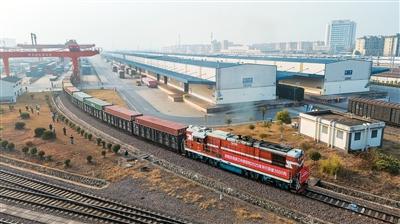
中国—中亚经贸合作逆势前行、彰显韧性(环球热点)
Ren Min Ri Bao· 2026-02-08 19:23
Core Insights - The trade volume between China and the five Central Asian countries is projected to exceed $100 billion by 2025, marking a continuous growth for five years, with China becoming the largest trading partner for these nations [2][3] - The trade structure between China and Central Asia is continuously optimizing, with significant increases in exports and imports, particularly in machinery, high-tech products, and non-resource products [3][4] Group 1: Trade Dynamics - By 2025, China's exports to Central Asia are expected to reach $71.2 billion, a year-on-year increase of 11%, while imports are projected at $35.1 billion, up 14% [3] - The political mutual trust and strategic demand complementarity between China and Central Asia form a resilient foundation for their economic relations, facilitating large-scale infrastructure and energy projects [3][4] Group 2: Economic Cooperation - China and Central Asian countries have established comprehensive strategic partnerships, covering various areas including political, economic, and cultural interactions, which are based on principles of non-interference and mutual benefit [4][7] - The economic development stages of Central Asian countries align well with China's mature industrial capabilities, particularly in infrastructure modernization and green energy, creating strong endogenous motivation for cooperation [4][7] Group 3: Market Opportunities - The growing demand for renewable energy and modern agriculture in Central Asia presents significant opportunities for collaboration, as countries like Kazakhstan and Uzbekistan pursue low-carbon development strategies [8][9] - The youthful population and increasing internet penetration in Central Asia indicate a vast potential for digital consumption, encouraging joint efforts in digital infrastructure and localized innovations [9] Group 4: Strategic Recommendations - To capitalize on the transformation opportunities in Central Asia, companies should engage in multi-faceted cooperation, responding proactively to market demands and aligning with the region's development needs [8][9] - Tailored strategies for each Central Asian country, considering their unique resources and development stages, will enhance the effectiveness of cooperation and ensure sustainable connectivity [9]

外交部副部长马朝旭就亚太经合组织“中国年”接受采访
Xin Lang Cai Jing· 2026-02-08 15:30
Core Viewpoint - The article emphasizes China's significant role in the APEC framework, particularly as it prepares to host the APEC summit in 2026, highlighting its commitment to regional cooperation and multilateralism [2][4]. Group 1: APEC's Importance and China's Role - APEC is described as the highest-level and most influential economic cooperation mechanism in the Asia-Pacific region, with China being a key member actively participating in its initiatives [1]. - China's hosting of the APEC summit in 2026 is seen as a pivotal opportunity to reinforce its leadership in regional cooperation and to provide stability and positive energy for global economic growth [2]. Group 2: Themes and Priorities for APEC "China Year" - The theme for APEC "China Year" is set as "Building the Asia-Pacific Community, Promoting Common Prosperity," aligning with major concepts proposed by President Xi Jinping [3]. - Three priority areas for APEC "China Year" are identified: "Openness," "Innovation," and "Cooperation," which aim to foster an open economy, drive innovation, and leverage comparative advantages among APEC members [3]. Group 3: Economic Context and Future Outlook - The current economic context is highlighted, with China's GDP reaching 140 trillion yuan, indicating a stable and improving economic structure [4]. - The article expresses confidence that under the leadership of the Chinese Communist Party, APEC "China Year" will yield significant results and mark an important milestone in APEC's history [4].