全固态电池技术

Search documents
固态电池概念股再掀涨停潮,多家公司已相继发布公告并提示风险
Di Yi Cai Jing· 2025-06-26 02:28
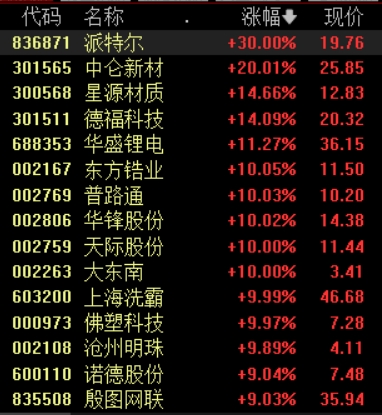
Group 1 - The solid-state battery sector continues to show strong performance, with multiple stocks hitting the daily limit up, including Zhonglun New Materials and Patel [1] - Notable stock price increases include Patel at +30.00%, Zhonglun New Materials at +20.01%, and Xingyuan Materials at +14.66% [2] Group 2 - Several companies in the solid-state battery sector have issued risk warnings regarding abnormal stock price fluctuations, clarifying their business involvement in solid-state batteries [3] - Companies like Ganfeng Lithium and Defu Technology are actively involved in solid-state battery development, with Ganfeng having a complete layout for solid-state batteries and Defu providing solutions for solid-state battery anodes [3] Group 3 - Analysts believe that breakthroughs in all-solid-state battery technology could reshape energy utilization and storage, becoming a core direction for next-generation battery technology [4] - The commercialization of semi-solid-state batteries is expected by 2027, with all-solid-state batteries entering vehicle validation stages [4][5] - The high production costs of solid-state batteries remain a significant challenge, with companies focusing on reducing material costs to facilitate industrialization [5]




先导智能20250624
2025-06-24 15:30
Summary of the Conference Call for XianDao Intelligent Company Overview - **Company**: XianDao Intelligent - **Industry**: Battery Equipment Manufacturing Key Points and Arguments Financial Performance - As of Q1 2025, XianDao Intelligent's contract liabilities increased to 13.1 billion RMB, indicating strong order growth potential [2] - The company implemented strict accounts receivable impairment policies, leading to significant impairments in 2023 and 2024, but a positive contribution of 100 million RMB in Q1 2025 suggests future profit growth [2][4] - Despite industry downturns, XianDao maintained a stable gross margin of approximately 35%, outperforming peers [2][5] - Operating cash flow turned positive for two consecutive quarters, with Q4 2024 at 1 billion RMB and Q1 2025 at 800 million RMB, indicating improved cash flow conditions [5] Order and Revenue Projections - New order growth is expected to be between 20%-30% in 2025, with total orders projected to reach 23 billion RMB [2][6] - Q1 2025 saw new orders of approximately 6 billion RMB, doubling from the same period in 2024 [6] - Orders from CATL (Ningde Times) are expected to reach 8.5 billion RMB in 2025, accounting for nearly 40% of XianDao's total orders [8] CATL's Expansion and Impact - CATL's expansion plans include multiple domestic projects and overseas factories in Hungary and Spain, which will significantly increase its global market share and provide XianDao with additional orders [9] - CATL's order volume for XianDao was below expectations from 2022 to 2024, but a recovery began in Q4 2024, with a notable increase in Q1 2025 [7] Competitive Landscape - BYD's self-sufficiency limits its reliance on external suppliers like XianDao, with expected contributions of less than 1 billion RMB in 2025 [10] - Other battery manufacturers like Yiwei and Zhonghang are expanding, potentially providing additional orders for XianDao [10][11] International Market Developments - XianDao has established partnerships with major international companies such as LG, SK, Samsung, and Volkswagen, enhancing its competitive edge in overseas markets [16][21] - The overseas order ratio is expected to increase, with projections indicating that by 2025, overseas revenue will significantly contribute to overall performance [17] Solid-State Battery Technology - XianDao possesses strong capabilities in solid-state battery technology, with a focus on complete line supply and strategic partnerships with leading manufacturers [20][21] - The development of solid-state battery technology is expected to create new equipment demand and higher requirements for R&D in related companies [18] Future Outlook - XianDao's order volume is projected to reach 4-5 billion RMB in 2025, with revenue growth anticipated between 10%-20%, reaching around 13 billion RMB [22] - The company is expected to achieve a net profit of approximately 1.5 billion RMB in 2025, with potential for higher actual profits due to accelerating overseas equipment revenue [22] - The outlook for 2026 suggests a revenue target of 20 billion RMB and a net profit of 3 billion RMB, driven by strong order growth and strategic partnerships [23][24] Additional Important Insights - XianDao's strict impairment policies have led to significant provisions in previous years, but a reduction in impairments is expected in 2025, positively impacting profits [4] - The company’s market share in the domestic lithium battery equipment market is around 30%, with global market share exceeding 20% [16]

全固态电池工艺与设备探讨专家会
2025-06-10 15:26
Summary of Solid-State Battery Industry Conference Industry Overview - The conference focused on the solid-state battery industry, particularly the advancements and challenges faced by various companies in this field, including CATL, BYD, SAIC, NIO, and Geely [1][2][4]. Key Points and Arguments - **Government Funding**: The Ministry of Industry and Information Technology (MIIT) launched a 6 billion RMB special fund to support solid-state battery research, with CATL receiving nearly half of the funding, approximately over 2 billion RMB [2][3]. - **Research Focus**: Solid-state battery technology is still in the laboratory stage, with companies exploring different material combinations, particularly focusing on sulfide routes due to their higher ionic conductivity [1][4][6]. - **Technical Challenges**: The solid-liquid hybrid route faces issues such as low conductivity and poor interface contact. Sulfide solid electrolytes have higher conductivity but come with safety risks, including the generation of toxic hydrogen sulfide gas [1][7][10]. - **Product Development**: SAIC's Zhiji L6 model uses a semi-solid-state solution with a range of 1,000 km, but it has not fully met performance standards in terms of rate and puncture tests due to the presence of electrolyte [9][14]. - **Manufacturing Process**: The final manufacturing process for solid-state batteries includes steps like dry coating, dry mixing, and densification. The dry process is expected to be widely applicable across various lithium-ion batteries once matured [16][18]. - **Market Demand**: There is a growing demand for higher energy density while maintaining good cycle life and rate performance. Current semi-solid-state technology has limited improvements in energy density compared to traditional liquid technologies [14][13]. Additional Important Insights - **Material Routes**: While sulfide routes dominate current research, oxide routes are also being explored for their thermal stability and broader operating temperature range, although they currently receive less focus [6][10]. - **Cost Considerations**: The cost of semi-solid sulfide technology is comparable to CATL's NCM811 products, but the bill of materials (BOM) cost is approximately 7% higher, limiting large-scale applications in power and energy storage [12][13]. - **Safety Concerns**: The industry is increasingly focused on safety, with major manufacturers like CATL and BYD aiming for long-term goals through the development of solid-state sulfide products [8][10]. - **Future Prospects**: The next three years are expected to see no full solid-state projects, with the market primarily focusing on semi-solid-state technologies. The industry is still grappling with issues related to cycle life and rate performance [14][33]. Conclusion The solid-state battery industry is at a critical juncture, with significant government support and ongoing research efforts. However, challenges related to safety, manufacturing processes, and performance metrics remain key hurdles that need to be addressed for successful commercialization.

2025动力电池联盟年会:全固态电池的挑战与机遇
Zhong Guo Qi Che Bao Wang· 2025-05-30 07:19
Core Viewpoint - The forum focused on the latest advancements, challenges, and future directions of solid-state battery technology, providing important references for the industry's future development [4]. Group 1: Latest Advances in Solid-State Battery Technology - Experts discussed breakthroughs in materials, processes, and performance of solid-state batteries, highlighting the generational development path from hybrid solid-state batteries to in-situ solidification batteries, and finally to the current pursuit of solid-state batteries [5]. - Dr. Li Hong emphasized the effectiveness of forming a solid electrolyte layer on particle surfaces through in-situ polymerization to enhance ionic conductivity [5]. - Professor Xu Yuanpeng analyzed the main technical routes for solid-state batteries, categorizing them into polymer, sulfide, and oxide types, each with unique advantages and challenges [5][6]. Group 2: Challenges in Industrialization of Solid-State Batteries - The industrialization of solid-state battery technology faces challenges such as interface stability, material costs, and manufacturing processes, as shared by BYD's Deputy Director of Battery Research Center, Pan Yi [7]. - Zhang Ningxin from Changan Automobile discussed the critical technologies in the manufacturing process of solid-state batteries, emphasizing the importance of electrode quality and performance [7]. Group 3: Future Development Directions of Solid-State Battery Technology - Experts agreed on the broad development prospects of solid-state battery technology, with the National Battery Innovation Center's Deputy Director, Wang Jiantao, discussing advancements in sulfide solid-state batteries and electrolytes [8]. - The future trend of solid-state batteries is expected to see commercialization in mid-to-high-end models as the electric vehicle market expands [8]. - Collaboration and innovation among upstream and downstream enterprises in the industry chain are essential for driving technological breakthroughs and industrial upgrades [8]. Conclusion - The forum showcased the latest research results and industrialization progress of solid-state battery technology, emphasizing its potential as a key direction for next-generation power batteries and the need for industry collaboration to promote rapid development and commercialization [9].

宝马宣布全球首辆搭载全固态电池的BMW i7测试车型启动道路实测
Xin Lang Ke Ji· 2025-05-23 10:02
Core Insights - BMW Group has officially launched road testing for the world's first BMW i7 model equipped with all-solid-state batteries (ASSB) in Munich, marking a significant advancement in the collaboration with Solid Power [1][2] - The testing will focus on critical aspects such as cell expansion management, operating pressure control, and temperature regulation, which are essential for future mass production [1] - The partnership between BMW and Solid Power began in 2016, with strategic investments and joint development efforts strengthening their collaboration over the years [1] Company Developments - The BMW i7 test vehicle showcases BMW's commitment to a technology-open strategy, emphasizing user-centric development through collaboration with top global partners [1] - Solid Power's CEO highlighted the collaboration as a crucial milestone towards the commercialization of solid-state battery technology, aiming to enhance safety and efficiency in electric mobility [2] Technical Innovations - The BMW i7 model features large-format all-solid-state cells provided by Solid Power, utilizing an innovative module structure to better integrate with BMW's existing electric drive systems [1] - The joint efforts have led to the establishment of a prototype production line for all-solid-state batteries, initiated in 2022 at the CMCC in Palsdorf [1]

【快讯】每日快讯(2025年5月23日)
乘联分会· 2025-05-23 08:32
Domestic News - Tianjin will increase the number of car license plate lottery indicators by 80,000, with 30,000 additional indicators allocated annually and 50,000 for a separate tiered lottery for citizens who have participated 25 times without winning [6] - A new standard for all-solid-state batteries has been established, defining the technology and testing methods, which will help in the development and commercialization of safer and more efficient batteries [7] - Deep Blue Automotive aims to achieve global sales of 2 million vehicles by 2030, with 35% of sales coming from overseas markets and plans to launch 30 new products [8] - Changan Automobile plans to introduce 35 new smart vehicles over the next three years, with a total battery capacity of 75GWh by 2026 [9] - Xiaomi's first SUV, the YU7, is set to launch in July, featuring advanced technology including a Snapdragon 8 chip and a comprehensive control module [10] - Xingqu Technology has released the world's first mass-produced magnesium-aluminum alloy shell dual-motor assembly, enhancing the power system for electric vehicles [11] - Junsheng Electronics has launched its first child presence detection product, enhancing child safety in vehicles [12] - Funeng Technology plans to deliver small batches of its 60Ah sulfide all-solid-state batteries by the end of 2025 [13] International News - India has allocated over €200 million for electric vehicle charging infrastructure, aiming to deploy approximately 72,000 public charging stations across the country [15] - Mercedes-Benz announced the establishment of its North American headquarters in Atlanta, consolidating key functions and investing millions in a new R&D facility [16] - Hyundai is investing in its first factory in the Middle East, marking a significant step in its strategy to penetrate the region [17] - Subaru is reassessing its electrification strategy in response to global trade uncertainties and declining sales [19] Commercial Vehicles - Qingling Group unveiled the world's first megawatt-level supercharged heavy truck at the China Western International Investment and Trade Fair, showcasing advancements in green logistics [20] - Weidu Technology will invest €175 million in France to establish a production base for long-range electric trucks, aiming for an annual capacity of 12,000 units [21] - Yuanmeng Technology's self-developed Xuanwu battery has passed the new national safety standards for electric vehicle batteries, indicating its leading safety performance [22] - CATL and Sinopec have signed an agreement to establish a heavy truck battery swap station in Fuzhou, with plans to build at least 500 stations by the end of the year [24]






全固态电池量产倒计时,技术突破与商业化鸿沟待跨越
Huan Qiu Wang· 2025-05-19 10:00
Core Insights - Gotion High-Tech has established its first pilot line for all-solid-state batteries, with plans for small-scale vehicle testing by 2027 and mass production by 2030 [1] - Qingtao Energy announced that it will have all-solid-state batteries ready for vehicle installation by the end of this year, with mass delivery expected in 2027 [3] - The all-solid-state battery technology is considered the ultimate advancement over traditional lithium batteries, promising improvements in energy density, safety, and lifespan [3] Industry Developments - Major players in the battery industry, including CATL and BYD, have also set 2027 as the timeline for small-scale all-solid-state battery vehicle testing [3] - The main challenge in all-solid-state battery technology lies in solid electrolyte materials, with no consensus on the best technical route among companies [4] - Sulfide electrolytes are the most popular choice among leading companies due to their conductivity, but they come with higher costs and manufacturing challenges [4][5] Technical Challenges - Current all-solid-state battery solutions have not yet achieved a balance between performance and economic feasibility, leading to a consensus in the industry to explore multiple technical routes [6] - Polymer and oxide electrolytes are also being considered, with polymer electrolytes being cost-effective but less conductive, while oxide electrolytes have higher conductivity but face manufacturing difficulties [5] - Combining different electrolytes to leverage their strengths is seen as a viable approach, with some companies opting for hybrid solutions [5]



全固态电池扎堆2027年量产,技术难题都解决了吗?
Xin Lang Cai Jing· 2025-05-19 00:05
Core Viewpoint - The development of solid-state batteries is progressing, with several companies announcing timelines for production and deployment, but significant technical and commercial challenges remain to be addressed before widespread adoption can occur [1][2]. Company Developments - Guoxuan High-Tech has established its first pilot line for solid-state batteries, with samples now undergoing road testing, aiming for small-scale vehicle testing by 2027 and mass production by 2030 [1]. - Qingtao Energy plans to deliver solid-state batteries for vehicle installation by the end of this year, with a goal of mass delivery by 2027 [1]. - Other major battery manufacturers like CATL and BYD have also set similar timelines for small-scale production of solid-state batteries by 2027 [1]. Technical Challenges - The main challenge in solid-state battery technology lies in the solid electrolyte, with no unified technical route among industry players, focusing on sulfide, oxide, and polymer materials, each with its own advantages and disadvantages [4]. - Sulfide electrolytes are currently the most popular choice among leading companies due to their conductivity, but they require higher standards for sealing and processing [4]. - The cost of sulfide solid-state batteries is projected to be several times that of current liquid lithium batteries, with unclear potential for cost reduction in the next 3-5 years [4]. Market Considerations - The high energy density of solid-state batteries could significantly enhance the range of electric vehicles and other applications, but the gap between technological breakthroughs and large-scale commercialization remains substantial [2]. - Industry consensus suggests that maintaining flexibility in technology routes is crucial, as no single solution has yet emerged that balances performance and economic feasibility [6].
国轩高科宣布已建成全固态电池中试线
news flash· 2025-05-17 05:14
Core Viewpoint - Guoxuan High-Tech has announced the completion of its pilot line for all-solid-state batteries, marking a significant advancement in battery technology [1] Group 1: Company Developments - The pilot line has a designed capacity of 0.2 GWh, indicating the company's commitment to scaling up production capabilities [1] - The entire production line is independently developed by the company, showcasing its technological capabilities and innovation [1] - The core equipment used in the production process has a localization rate of 100%, reflecting the company's focus on domestic manufacturing [1] Group 2: Technical Specifications - The pilot samples demonstrate an energy density of 350 Wh/kg, which is a competitive specification in the battery industry [1] - The single cell capacity is reported to be 70 Ah, indicating the potential for high-performance applications [1] - The company has initiated vehicle testing with the pilot samples, suggesting readiness for practical applications in the automotive sector [1]
孚能科技:第三代半固态电池已进入产业化阶段
Ju Chao Zi Xun· 2025-05-07 14:47
Core Viewpoint - Company is advancing its battery technology with plans for mass production of second-generation semi-solid batteries with an energy density of 330Wh/kg and third-generation batteries reaching 400Wh/kg, while also exploring solid-state battery technologies with energy densities of 400-500Wh/kg [2] Group 1: Battery Technology Development - Company is developing multiple battery technologies including semi-solid, solid-state, lithium iron phosphate, high-voltage fast charging, and sodium-ion batteries [2] - The company’s products can support high-voltage fast charging, with SPS products achieving a full-system 6C fast charge [2] Group 2: Production Capacity and Profitability - Company has designed production capacities of 15GWh each for its Ganzhou and Guangzhou bases, with some production lines already operational and the rest expected to ramp up in the second half of the year [2] - The company anticipates a significant reduction in unit manufacturing costs as production capacity utilization increases in the second half of the year, leading to improved profitability [2] - Starting next year, as the utilization rate of new production bases increases, the company expects to see enhanced cost reduction effects and a significant improvement in gross margin [2] Group 3: Pricing and Cost Structure - The price of lithium carbonate has stabilized, and the company expects limited room for price reductions in downstream batteries [3] - The company anticipates a slight decrease in the overall average selling price of its products due to a shift in product mix towards lithium iron phosphate [3] - The company is implementing various cost reduction measures across manufacturing, management, and supply chain, which are expected to maintain a high gross margin [3] Group 4: Impact of Tariffs - Company indicated that the impact of U.S. tariffs on its exports and overseas market demand is minimal, with U.S. export revenue accounting for only about 5%-7% in the first quarter of 2024 and 2025 [3]