
创新药研发

Search documents
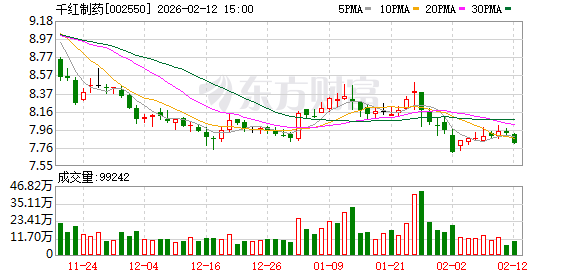
千红制药:目前已有多个原创一类新药处于有序推进临时试验阶段
Zheng Quan Ri Bao· 2026-02-12 11:37
Group 1 - The company emphasizes the importance of innovative drug research and talent development, indicating a strategic focus on these areas [2] - Multiple original first-class drugs are currently in orderly progress towards clinical trial stages, showcasing the company's commitment to innovation [2] - The company plans to continuously optimize its talent recruitment mechanism and allocate professional resources based on research and development progress [2]


2025年医药融资强势反弹,731笔、同增31%,市场信心又变强了
3 6 Ke· 2026-02-12 11:21
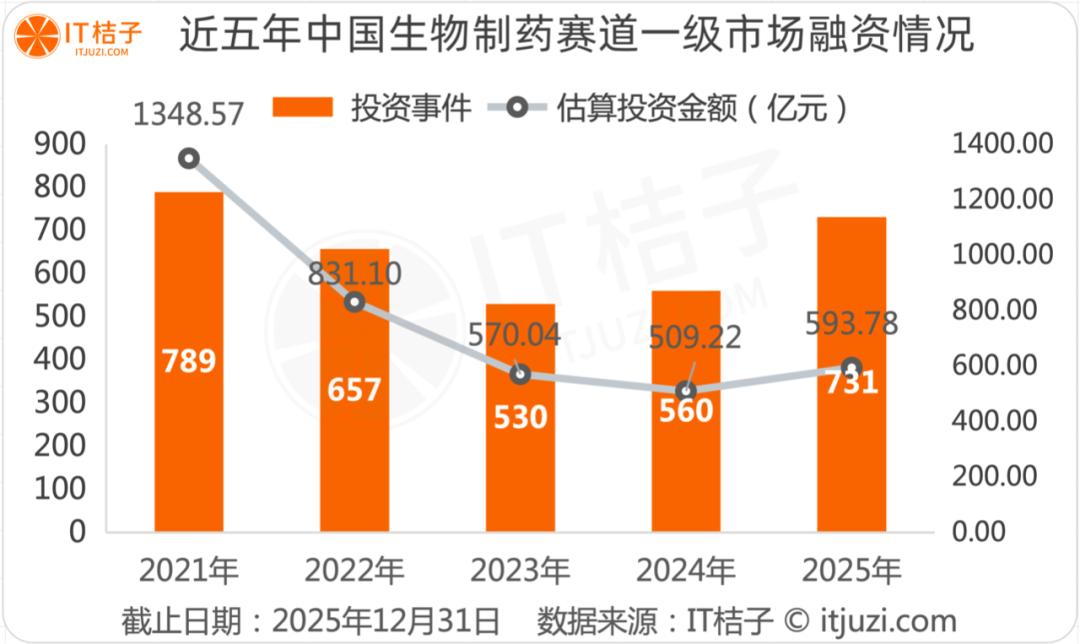
全年共发生731 起融资事件,较2024年同比大幅增长 31%;涉及融资金额约593.78亿元人民币,同比增长 17%;平均单笔融资额达 8213 万元人民币,资 金配置效率稳步提升。 回顾近五年行业融资轨迹,2021 年堪称行业 "黄金峰值期"—— 受益于新冠疫情催化的疫苗及生物技术研发热潮,叠加科创板、港交所新政释放的政策红 利,资本市场对创新药赛道的追捧推动行业融资额攀升至1348.57亿元的历史高点。 然而,2022-2023 年行业进入深度调整期:一方面受资本市场整体寒冬影响,风险投资趋于保守;另一方面,创新药在医保谈判中面临超预期的价格降 幅,商业化前景的不确定性进一步抑制了资本投入,融资额连续两年下滑,2023年降至 570.04 亿元。 博远资本创始合伙人陶峰认为:"创新药研发,归根到底是拼试错效率。中国创新药企当前的效率,从时间维度上讲是历史最强,从空间维度上看是全球 最强,这是毫无疑问的。成本、速度、质量,是创新药研发的三个关键。二十年前中国的质量和国际水平有差距,今天基本一致,同时成本低很多,这是 我们的核心优势。" 当资本市场的目光从"追热点" 转向 "看价值",生物医药行业在2025 ...
阳光诺和新药临床试验启动,2025年业绩预增
Jing Ji Guan Cha Wang· 2026-02-12 09:17
Core Insights - The company has made significant advancements in research and development, particularly with its nucleic acid drug platform, which has received clinical trial acceptance for ABA001, aimed at treating hypertension, expected to enter Phase I trials in Q2 2026 [1] Product Development Progress - STC007, a non-addictive postoperative analgesic, is currently in Phase III clinical trials and is expected to submit a new drug application within 2025, potentially becoming the company's first approved innovative drug [2] - STC008, a targeted cancer drug, has entered a critical clinical stage, with the company accelerating its development through an integrated service network [2] Performance and Operating Conditions - The company has released a revenue forecast for 2025, estimating revenue between 1.192 billion and 1.371 billion yuan, representing a year-on-year growth of 10.57% to 27.15%. The net profit attributable to shareholders is projected to be between 191 million and 229 million yuan, with a year-on-year increase of 7.69% to 29.23%. The formal annual report is expected to be disclosed around April 2026 [3] Strategic Advancement - On January 27, 2026, the company announced the termination of the transaction to acquire 100% equity of Langyan Life through the issuance of shares and convertible bonds, indicating a stronger focus on innovative drug development and a "R&D services + pipeline cultivation" strategy [4] Future Development - The company plans to accelerate the layout of its nucleic acid platform and AI peptide platform for multiple indications in 2026, targeting areas such as fat reduction, muscle gain, high blood sugar, and Alzheimer's disease, with the AI peptide platform expected to add 2-3 new drugs in clinical stages [5]

片仔癀:控股股东九龙江集团完成增持 持股比例升至51.04%
Zhong Zheng Wang· 2026-02-12 05:29
Core Viewpoint - The controlling shareholder of Pianzaihuang, Zhangzhou Jiulongjiang Group, has completed a share buyback, reflecting confidence in the company's long-term value and development potential [1][2]. Group 1: Shareholder Actions - Zhangzhou Jiulongjiang Group announced a plan to increase its stake in Pianzaihuang from February 1 to July 31, 2026, with a total investment of no less than 300 million yuan and no more than 500 million yuan [1]. - Following the buyback, the shareholding of Zhangzhou Jiulongjiang Group increased from 50.97% to 51.04%, with the number of shares rising from 30,752,264.43 shares to 30,795,774.43 shares [1]. Group 2: R&D and Innovation - Pianzaihuang has been actively investing in R&D, with a pipeline that includes 6 traditional Chinese medicine innovative drugs, 6 chemical drugs, 6 classic ancient formulas, and 1 innovative biological product [2]. - The company has 10 innovative drugs entering critical clinical stages, including PZH2108 for cancer pain, PZH2113 for anti-tumor treatment, and PZH2107 for fibromyalgia, all of which have completed the first subject enrollment in their respective clinical trials [2]. - The ongoing R&D efforts are expected to enhance the company's position in the traditional Chinese medicine sector and contribute to the innovative development of the industry [2].

万邦德创新药研发获突破 股价涨停后小幅回调
Jing Ji Guan Cha Wang· 2026-02-12 01:36
Group 1 - The core viewpoint of the news is that Wanbangde (002082) experienced a significant stock price increase due to advancements in innovative drug development, particularly for Alzheimer's disease and ALS treatments [1] - The company's Alzheimer's drug, Shisujianjia controlled-release tablets, completed the enrollment of 100 subjects in a key Phase II/III clinical trial, and the ALS drug received FDA orphan drug designation [1] - Wanbangde's project has been included in the National Science and Technology Major Project, highlighting its technological strength [1] Group 2 - The stock price of Wanbangde increased by 17.00% over the past week, with a trading range fluctuation of 25.00% [2] - Following the stock price surge on February 10, it slightly declined to 18.58 yuan on February 11, with a minor decrease of 0.05% and a trading volume of 5.36 billion yuan [2] - The capital flow indicates a strong short-term interest, with a net inflow of 55.66 million yuan on February 10 and 0.91 million yuan on February 11 [2]

海特生物加码布局创新药 拟收购北京沙东23%股权
Chang Jiang Shang Bao· 2026-02-12 00:34
Core Viewpoint - Hite Bio plans to acquire a 23.08% stake in Beijing Shadong Biotechnology Co., Ltd. for 62.019 million yuan, increasing its ownership to 98.84%, nearly achieving full control over the company and paving the way for the commercialization of its core drug candidate CPT [2][4]. Group 1: Acquisition Details - The acquisition process began in December 2014 with a signed equity acquisition agreement involving multiple stakeholders [3]. - Hite Bio's gradual increase in stake included cash rewards and management of unexercised incentive shares to optimize Beijing Shadong's equity structure [3]. - By April 2024, Hite Bio's stake reached 75.76% through significant share acquisitions, leading to the current acquisition announcement [4]. Group 2: Strategic Importance - The primary motivation for Hite Bio's investment in Beijing Shadong is the core asset, the innovative drug CPT, which is a recombinant biologic for tumor treatment [5]. - Controlling Beijing Shadong allows Hite Bio to directly manage a valuable drug development pipeline, supporting its transition to an innovation-driven biopharmaceutical company [5]. - The acquisition will enable better resource integration and decision-making processes, preparing for CPT's clinical trials and commercialization [5]. Group 3: Future Implications - Successful approval and commercialization of CPT could significantly enhance Hite Bio's revenue and market position in the oncology sector [5]. - Full consolidation of Beijing Shadong into Hite Bio's financial statements will facilitate future planning and value maximization for the drug in global markets [5].

新股消息 | 京新药业(002020.SZ)递表港交所 专注于中枢神经系统、心血管及脑血管疾病
智通财经网· 2026-02-11 23:33
Company Overview - Jingxin Pharmaceutical (002020.SZ) is an innovation-driven pharmaceutical group focusing on two core disease areas: central nervous system diseases and cardiovascular and cerebrovascular diseases. The company combines the commercialization of existing products with the continuous advancement of its product pipeline [1] - The company has shifted its strategic focus on innovative drug development towards central nervous system diseases and cardiovascular and cerebrovascular diseases, with a product portfolio that includes over 60 approved drugs, covering generic drugs, innovative drugs, traditional Chinese medicine, and biological agents [2] Financial Performance - For the fiscal years ending December 31, 2023, 2024, and the ten months ending October 31, 2025, the company reported revenues of approximately RMB 3.999 billion, RMB 4.159 billion, and RMB 3.344 billion, respectively [5] - The net profit for the same periods was approximately RMB 623 million, RMB 719 million, and RMB 629 million [4] - The gross profit margins for the fiscal years were 49.2%, 48.5%, and 48.3% respectively [6] Product Segmentation - The revenue breakdown by business line for 2023 shows that the main sources of income are from the following segments: - Pharmaceuticals: RMB 2.326 billion (58.2%) - Network: RMB 956 million (23.9%) - Medical devices: RMB 637 million (16.0%) [2] Market Overview - The Chinese pharmaceutical market is projected to grow from RMB 1,447.9 billion in 2020 to RMB 1,629.7 billion by 2024, with a compound annual growth rate (CAGR) of 3.0%. By 2035, it is expected to reach RMB 3,103.4 billion, with a CAGR of 6.5% from 2025 to 2035, surpassing the global CAGR of 5.1% during the same period [8] - The market share of patented drugs is expected to increase from 44.6% in 2020 to 70.0% by 2035, while the market share of generic drugs will decline from 55.4% to 30.0% [8] Central Nervous System Market - The global central nervous system drug market is expected to grow from USD 233.7 billion in 2020 to USD 258.8 billion by 2024, with a CAGR of 2.6%. The Chinese market is projected to grow from approximately USD 32.2 billion in 2020 to USD 34.1 billion by 2024, with a CAGR of 1.4% [10] - The insomnia drug market in China is expected to maintain a size of around USD 1.7 billion from 2020 to 2024, with a CAGR of -1.0%. However, it is projected to grow to USD 3.5 billion by 2035, with a CAGR of 7.5% from 2025 to 2035 [12] Cardiovascular Market - The global cardiovascular drug market is expected to grow from USD 115 billion in 2020 to USD 124.6 billion by 2024, with a CAGR of 2.0%. It is projected to reach USD 182 billion by 2035, with a CAGR of 3.8% from 2025 to 2035 [13] - The Chinese cardiovascular drug market is expected to decline from USD 25.5 billion in 2020 to USD 24.9 billion by 2024, with a CAGR of -0.7%. However, it is anticipated to rebound to USD 36.9 billion by 2035, with a CAGR of 4.1% from 2025 to 2035 [13]

京新药业递表港交所 专注于中枢神经系统、心血管及脑血管疾病
Zhi Tong Cai Jing· 2026-02-11 23:33
Company Overview - Jingxin Pharmaceutical (002020.SZ) is an innovation-driven pharmaceutical group focusing on two core disease areas: central nervous system diseases and cardiovascular and cerebrovascular diseases. The company combines the commercialization of existing products with the continuous advancement of its product pipeline [2] - The company has successfully launched over 60 approved drugs, including generic drugs, innovative drugs, traditional Chinese medicine, and biological agents [2] - In 2023, the company launched its first innovative drug, Dazisni, approved for the treatment of insomnia, marking a significant milestone in its transformation to an innovation-driven model [2] Revenue Sources - The company's main revenue comes from domestic sales, with total revenue for the years 2023, 2024, and the first ten months of 2025 being approximately RMB 3.999 billion, RMB 4.159 billion, and RMB 3.344 billion respectively [3][5] - Revenue breakdown by business line for 2023 shows that pharmaceutical products contributed RMB 2.326 billion (58.2%), raw materials contributed RMB 956 million (23.9%), and medical devices contributed RMB 637 million (15.9%) [3] Profitability - The gross profit for the years 2023 and 2024 was RMB 1.967 billion and RMB 2.016 billion, respectively, with gross profit margins of 49.2% and 48.5% [5][6] - The net profit for the year 2023 was RMB 623.6 million, with a projected increase to RMB 719.1 million in 2024 [5] Industry Overview - The Chinese pharmaceutical market is expected to grow from RMB 1,447.9 billion in 2020 to RMB 1,629.7 billion by 2024, with a compound annual growth rate (CAGR) of 3.0% [8] - The market for patented drugs is projected to increase its share from 44.6% in 2020 to 70.0% by 2035, while the share of generic drugs is expected to decline from 55.4% to 30.0% over the same period [8] Central Nervous System Market - The global central nervous system drug market is projected to grow from USD 233.7 billion in 2020 to USD 258.8 billion by 2024, with a CAGR of 2.6% [9] - The Chinese market for central nervous system drugs is expected to grow from approximately USD 32.2 billion in 2020 to USD 34.1 billion by 2024, with a CAGR of 1.4% [9] Insomnia Drug Market - The insomnia drug market in China is expected to maintain a size of around USD 1.7 billion from 2020 to 2024, with a negative CAGR of -1.0%. However, it is projected to grow to USD 3.5 billion by 2035, with a CAGR of 7.5% from 2025 to 2035 [11] Cardiovascular Drug Market - The global cardiovascular drug market is expected to grow from USD 115 billion in 2020 to USD 124.6 billion by 2024, with a CAGR of 2.0% [12] - The Chinese cardiovascular drug market is projected to decline from USD 25.5 billion in 2020 to USD 24.9 billion by 2024, but is expected to rebound to USD 36.9 billion by 2035, with a CAGR of 4.1% from 2025 to 2035 [12][13]
新股消息 | 京新药业递表港交所 专注于中枢神经系统、心血管及脑血管疾病
智通财经网· 2026-02-11 23:30
Company Overview - Jingxin Pharmaceutical (002020.SZ) is an innovation-driven pharmaceutical group focusing on two core disease areas: central nervous system diseases and cardiovascular and cerebrovascular diseases. The company combines the commercialization of existing products with the continuous advancement of its product pipeline [1][2]. Product Portfolio - The company has shifted its strategic focus on innovative drug development towards central nervous system diseases and cardiovascular and cerebrovascular diseases. Its current product portfolio includes over 60 approved drugs, covering generic drugs, innovative drugs, traditional Chinese medicine, and biological agents [2]. - The generic drug segment is a significant part of the company's product mix, providing stable revenue and broad market coverage to support ongoing innovation investments. The focus is on psychiatric and neurological drugs, as well as cardiovascular and cerebrovascular drugs [2]. - The innovative drugs are central to the company's transformation and long-term growth, prioritizing unmet medical needs with clinical value and commercial potential. In 2023, the company launched a new innovative drug, Dazisni, approved for treating insomnia in China, marking a milestone in its transition to an innovation-driven model [2]. Financial Performance - The company reported revenues of approximately RMB 3.999 billion for the fiscal year 2023, with projections of RMB 4.159 billion for 2024 and RMB 3.344 billion for the ten months ending October 31, 2025 [5]. - The net profit for the fiscal year 2023 was approximately RMB 623 million, with projections of RMB 719 million for 2024 and RMB 629 million for the ten months ending October 31, 2025 [4][5]. - The gross profit margin for the fiscal year 2023 was 49.2%, with slight declines projected to 48.5% in 2024 and 48.3% in 2025 [6]. Industry Overview - The Chinese pharmaceutical market is expected to grow from RMB 1,447.9 billion in 2020 to RMB 1,629.7 billion by 2024, with a compound annual growth rate (CAGR) of 3.0%. By 2035, the market is projected to reach RMB 3,103.4 billion, with a CAGR of 6.5% from 2025 to 2035, surpassing the global CAGR of 5.1% during the same period [8]. - The market share of patented drugs is expected to increase from 44.6% in 2020 to 70.0% by 2035, while the market for generic drugs is projected to grow moderately, with a decline in market share from 55.4% to 30.0% over the same period [8]. Central Nervous System Market - The global central nervous system drug market is entering a stable growth phase, with the market size increasing from USD 233.7 billion in 2020 to USD 258.8 billion by 2024, reflecting a CAGR of 2.6%. The Chinese market is also growing, with an increase from approximately USD 32.2 billion in 2020 to USD 34.1 billion by 2024, and an expected CAGR of 4.1% from 2025 to 2035 [10]. - The insomnia drug market in China is projected to maintain a size of around USD 1.7 billion from 2020 to 2024, with a CAGR of -1.0%. However, it is expected to grow to USD 3.5 billion by 2035, with a CAGR of 7.5% from 2025 to 2035 [12]. Cardiovascular Drug Market - The global cardiovascular drug market is expected to grow from USD 115 billion in 2020 to USD 124.6 billion by 2024, with a CAGR of 2.0%. The Chinese market is projected to decline from USD 25.5 billion in 2020 to USD 24.9 billion by 2024, but is expected to rebound to USD 36.9 billion by 2035, with a CAGR of 4.1% from 2025 to 2035 [13][14].
创新药2026年策略深度报告-中国药企加速融入全球新药市场-26年多赛道管线进展可期
2026-02-11 15:40
Summary of Key Points from Conference Call Records Industry Overview - **Industry**: Innovative Pharmaceuticals - **Global Drug Approvals**: In 2025, a total of 46 new drugs were approved globally, which is a decrease from the previous two years but still above the historical average of 36 since 1993 [1][2] - **Trends**: The approval landscape is shifting towards precision medicine and unmet medical needs, particularly in oncology, where 16 drugs were approved, representing approximately 15% of total approvals, higher than the past five-year average [4] Core Insights and Arguments - **FDA Performance**: Despite personnel turnover and regulatory challenges, the FDA maintained high output efficiency, approving 46 new drugs in 2025, including 34 new molecular entities and 12 biologics [2] - **Emerging Technologies**: The FDA is advancing platforms such as Antibody-Drug Conjugates (ADC) and bispecific antibodies, with ADC becoming a cornerstone in oncology [5][29] - **China's Global Integration**: In 2025, China saw a significant increase in license-out transactions, with 154 deals worth $14.19 billion, marking a 46.7% and 150% year-over-year increase, respectively [6][31] - **Clinical Trial Quality**: China's clinical trial quality has improved significantly, with compliance rates surpassing those of Europe and the U.S., addressing international concerns about data reliability [10] Company-Specific Developments - **Innovative Drug Companies**: - **Kangfang Biotech**: Achieved significant progress with its EVSTAN antibody, showing superior progression-free survival (PFS) and overall survival (OS) benefits [11] - **Hanyu Pharmaceutical**: Reported impressive results for its independent monoclonal antibody for ESCC, with a two-year overall survival rate of 88.3% [12] - **Hengrui Medicine**: Advanced in ADC technology, evolving to XDC, and has multiple ADC drugs in late-stage clinical trials [14] - **Rongchang Biotech**: Plans to expand indications for its core product, with several key clinical data expected in 2027 [15] - **Kelong Botai**: Entered the global registration phase for its lung cancer drug, FKB267, with significant data disclosures [16] - **Baiyi Shenzhou**: Made strides in hematology with multiple important data readouts [17][18] Additional Important Insights - **Market Positioning**: China's position in the global transaction market has significantly improved, with 339 transactions recorded in 2025, accounting for 24.5% of the global market [7][8] - **Regulatory Environment**: The FDA's stable policies and efficiency improvements are expected to facilitate the entry of innovative products from China into overseas markets [31] - **Emerging Drug Classes**: ADCs and similar conjugates are identified as the most certain and highest pricing power segments in the global innovative drug market [29][30] This summary encapsulates the key points from the conference call records, highlighting the innovative pharmaceutical industry's dynamics, regulatory environment, and specific company advancements.