
增强现实(AR)

Search documents
杀入AI眼镜赛道,小米能否引爆市场?
Hu Xiu· 2025-06-22 11:10
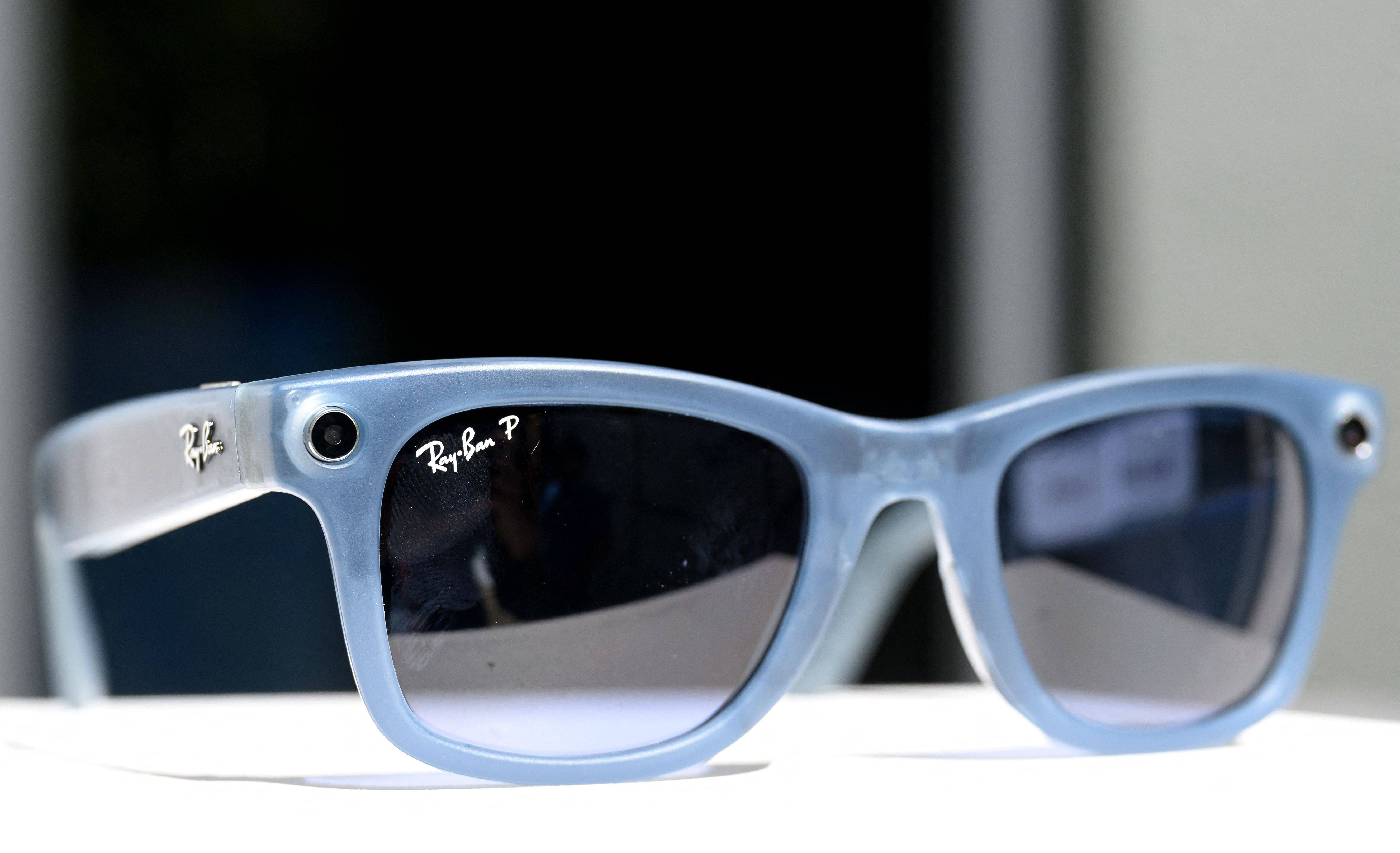
Core Viewpoint - Xiaomi's first AI glasses are set to be officially released next week, featuring a dual-chip solution that includes a system-level SoC and a co-processor, distinguishing it from competitors like RayBan-Meta [1][6][20]. Group 1: Product Features - The AI glasses will likely utilize an "optical frame + electrochromic glass" design to cater to various usage scenarios, differing from the mainstream "sunglasses" and "optical frame" styles [1][9]. - The glasses are expected to weigh similarly to RayBan-Meta, with a potential additional co-processor for handling low-power tasks, which may enhance battery life significantly [15][16]. - Industry sources suggest that the glasses may include electrochromic lenses, previously used in AR glasses, to adapt to changing light conditions [17][18]. Group 2: Market Positioning - Xiaomi enters the AI glasses market with a strong advantage due to its extensive hardware development experience and established supply chain management, which allows it to avoid common technical pitfalls [6][8]. - The pricing for Xiaomi's AI glasses is anticipated to be competitive, likely not exceeding 2499 yuan, aligning with similar products in the market priced between 1600 and 2100 yuan [19][20]. Group 3: Industry Dynamics - The AI glasses industry is currently fragmented, lacking a cohesive ecosystem, but Xiaomi's entry could catalyze integration and development within the sector [21][26]. - The market for AI glasses is projected to grow significantly, with a forecasted CAGR of 97.4% over the next six years, indicating substantial opportunities for both established companies and startups [26][27].


新型增强现实程序可辅助用户独立完成专业任务
Xin Hua Wang· 2025-06-21 02:51
Group 1 - The core idea of the news is the development of an augmented reality (AR) application named "Immersion" by Oulu University in collaboration with Mid Sweden University, which assists users in completing tasks like computer repairs independently without the need for on-site guidance [1][2] - The application utilizes 3D scanning technology to create a digital twin model of the target device, providing detailed operational instructions through visual aids such as arrows and text boxes projected onto the real device [1] - Device manufacturers can create a library of instructions for specific devices, allowing users to download relevant instructions and complete maintenance tasks in an augmented reality environment [1] Group 2 - The application currently focuses on simpler tasks and has shown promising results in initial technical demonstrations, with ongoing development planned [2] - The research team aims to release a comprehensive open-source system in the future, which will include all core technological tools to promote widespread application and sharing of the results [2]
AI眼镜万亿市场如何掘金?
Guotou Securities· 2025-06-20 15:19
Investment Rating - The report maintains an investment rating of "Outperform" with a target price of 41.75 CNY for Mingyue Lens [5][6]. Core Insights - AI glasses are positioned as a key application for AI large models, with significant market potential estimated at over 1 trillion CNY. They are expected to quickly gain popularity and become the next generation of mobile terminals due to their lightweight, stylish design, and affordability [1][2][22]. - The penetration rate of AI glasses is currently in the early stages, with expectations for rapid growth driven by technological breakthroughs and the entry of leading companies into the market [3][32]. Summary by Sections 1. High-Potential Smart Wearable Devices - AI glasses are identified as one of the best application carriers for AI large models, occupying a unique position for multimodal interaction [1][14]. - The global market for non-display AI glasses is estimated to be close to 190 billion CNY, while AI+AR glasses could reach a market size of 1.76 trillion CNY [2][32]. 2. Industry Chain Value Concentration - The value chain of the industry is concentrated in core components and distribution channels, with leading manufacturers in high-end lens production expected to benefit significantly [4][8]. 3. AI Glasses Valuation Phase - AI glasses are currently in a valuation adjustment phase, with expectations for significant growth in the second half of 2025 as major new products are launched [8][32]. 4. Key Companies to Watch - Notable companies include: - Kangnait Optical, which leads in customized lens manufacturing and has strong backing from GoerTek [8]. - Mingyue Lens, a domestic lens production leader that has entered the Xiaomi supply chain [8]. - Inpai, focusing on entertainment and fitness scenarios in collaboration with Li Weike [8]. - Doctor Glasses, which has a large store network and partnerships with major AI glasses brands [8].
【太平洋科技-每日观点&资讯】(2025-06-19)
远峰电子· 2025-06-18 11:46
Market Performance - The main board saw significant gains with stocks like Dazhi Co., Ltd. increasing by 10.02% and Shenzhen Huafa A rising by 110.01% [1] - The ChiNext board led the gains with Yihau New Materials up by 20.01% and Kexiang Co., Ltd. increasing by 19.98% [1] - The Sci-Tech Innovation Board also performed well, with Qingyue Technology rising by 20.05% and Shengyi Electronics increasing by 16.31% [1] - Active sub-industries included SW Printed Circuit Boards with a rise of 5.82% and SW Brand Consumer Electronics up by 3.94% [1] Domestic News - A strategic cooperation framework agreement was signed between Zhongdian Compound and Yongjiang Laboratory to develop optical silicon carbide (SiC) chips for AR glasses [1] - Alibaba's Qwen team announced the completion of official adaptation of the Qwen3 model series to Apple's MLX framework, covering models from 0.6 billion to 235 billion parameters [1] - According to recent institutional research, significant growth is expected in LPCVD/oxidation furnaces and ALD equipment by 2025, with electroplating equipment maintaining a growth rate of around 50% this year [1] - Canalys reported that the PC market in mainland China (excluding tablets) is expected to reach 8.9 million units in Q1 2025, a year-on-year increase of 12%, while the tablet market is projected to grow by 19% [1] Company Announcements - Qingyi Optoelectronics announced a cash dividend of 0.17 yuan per share, totaling approximately 53.22 million yuan, which accounts for 30.94% of net profit [3] - Geer Software declared a cash dividend of 0.05 yuan per share, amounting to about 11.71 million yuan [3] - Youyan Silicon announced a cash dividend of 0.06 yuan per share, totaling approximately 74.64 million yuan [3] - Obi Zhongguang reported an estimated revenue of around 363 million yuan for the first five months of 2025, reflecting a year-on-year growth of approximately 117.18% [3] Overseas News - Teradyne and Anko Technologies have formed a strategic partnership to provide a full-cycle product and service solution for chip testing [4] - Marvell announced the launch of the industry's first 2nm custom SRAM, aimed at enhancing performance for custom XPU and cloud data center devices [4] - Recent reports indicate a price increase across the CFM flash memory market, with DDR4 UDIMM prices rising significantly, although overall market transactions remain sluggish [4] - Star Electronics is collaborating with Hansol Chemical to develop technology for simplifying the optical film structure of high-end QLED TV series [4]

加入AI眼镜疯狂大潮,跨过AI眼镜炽热战场
3 6 Ke· 2025-06-18 03:27
Core Viewpoint - The anticipation for Apple's AR glasses at WWDC 2025 was high, but the company did not meet expectations, leading to increased focus on competitors like Meta and Google in the AR and AI glasses market [2][4]. Group 1: Apple and Its Position - Apple did not release AR glasses at WWDC 2025, disappointing many who expected a significant announcement [2]. - The company has been slow to enter the AR market, especially as competitors ramp up their offerings [2][36]. Group 2: Competitors' Developments - Google emphasized its commitment to XR glasses at Google I/O 2025, highlighting the launch of Android XR in collaboration with Samsung and Qualcomm [5][7]. - Google showcased new AR prototypes and partnerships with fashion brands, indicating a strong push into the AR space [11][13]. - Meta continues to invest heavily in AR technology, with significant projects like Project Orion and Project Aria Gen 2, positioning itself as a leader in the AR market [32][34]. Group 3: Emerging Players - Rokid launched its AR glasses, which feature translation and subtitle capabilities, gaining attention in the market [14][18]. - The demand for Rokid Glasses has been high, with limited availability creating a sense of exclusivity [20][22]. - The domestic XR device market saw a significant increase in shipments, with AR devices leading the growth [23][24]. Group 4: Market Trends and Future Outlook - The AR market is experiencing rapid growth, with AR device shipments increasing by 157% year-on-year [23]. - AI glasses are becoming a transitional product towards AR, with significant sales driven by companies like Meta [30][31]. - The future of AR glasses remains uncertain, with varying predictions on their mainstream adoption timeline [36][37].




Snap CEO:每天AR滤镜使用次数超过80亿次,消费级AR眼镜将于2026年发布
Sou Hu Cai Jing· 2025-06-11 10:36
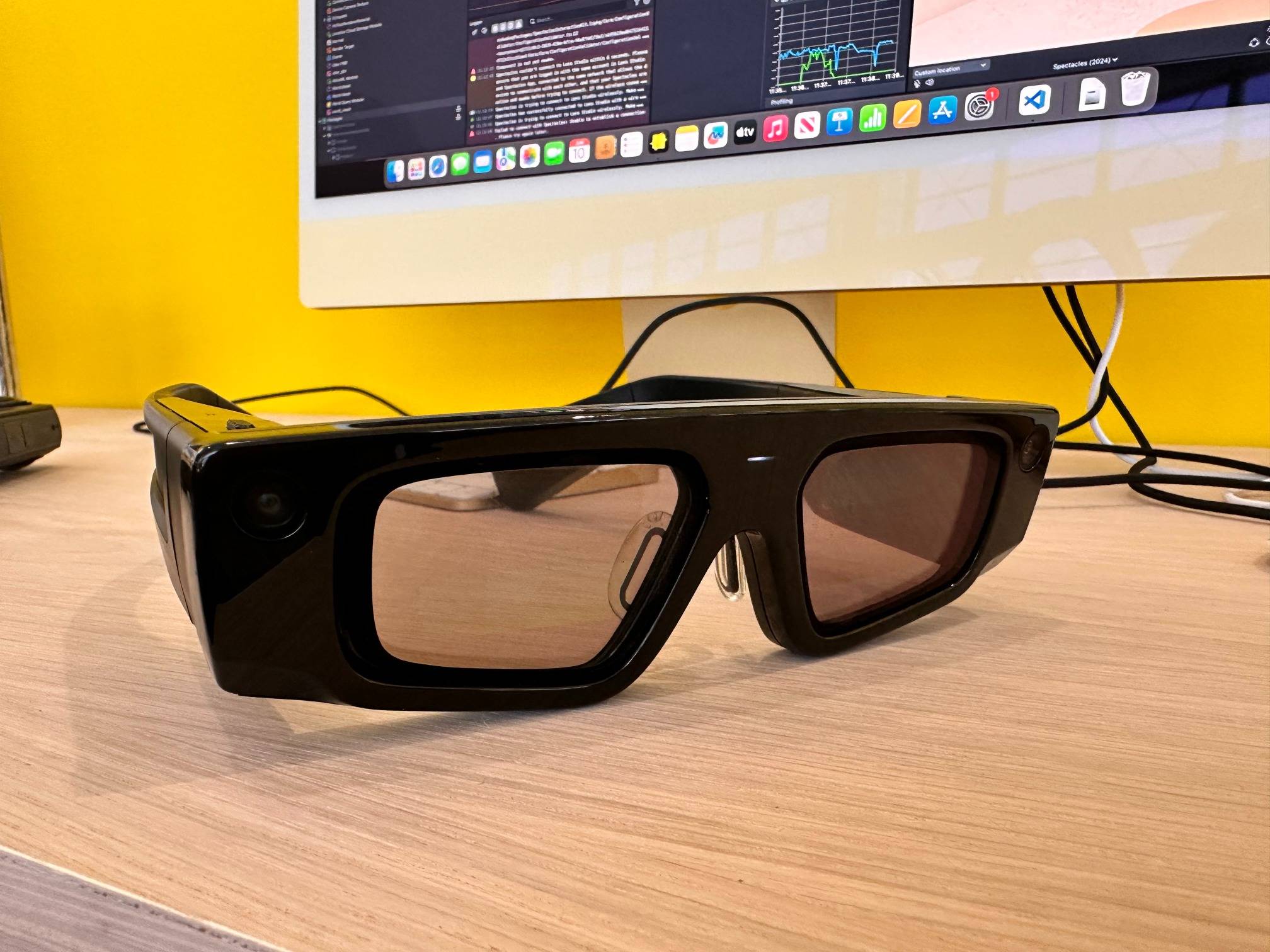
Core Insights - Snap has established itself as a leader in the augmented reality (AR) space, with Snapchat reaching over 900 million users globally and its AR filters being used over 8 billion times daily, making it one of the largest AR platforms in the world [2] - The company has invested over $3 billion and 11 years into developing AR glasses, launching the fifth generation of its lightweight, immersive Spectacles that operate without the need for headsets, controllers, or smartphones [2][5] - Snap's ecosystem includes a comprehensive suite of AR products, including the Spectacles, Lens Studio for developers, and a mobile social platform, with over 400 million AR filters created by more than 400,000 developers [5][6] Product Development - The Spectacles feature advanced optical technology with a 46-degree field of view and dual chips, enabling 6DoF spatial tracking and gesture recognition [5] - The glasses are designed to capture hand movements effectively, allowing users to interact with menus and content through gestures, with features like electrochromic lenses for brightness adjustment [5] - Snap plans to release an updated version of the Spectacles aimed at the consumer market in 2026 [7] Developer Engagement - Snap has launched Lens Studio 5.0, which allows developers to create modular AR content that can be instantly displayed on the AR glasses, with upcoming support for web-based tools [6]

2025年中国AR眼镜产业供应链十大代表性企业:雷鸟创新、太若科技、灵伴科技、影目科技、歌尔股份……
Qian Zhan Wang· 2025-06-07 03:09
Core Insights - The AR glasses industry is a significant part of China's strategic emerging industries and digital economy, with strong government support for innovation and industrialization in virtual reality and related fields [2][20] - The industry is characterized by a high market concentration, with the top five companies holding a combined market share of 89.9% in 2023, indicating a strong competitive landscape [16] - The AR glasses market in China is experiencing robust growth, with shipments reaching 261,000 units in 2023, and projections for continued expansion in 2024 [2] Industry Overview - The AR glasses industry is divided into three main segments: upstream (core technology R&D and component supply), midstream (device manufacturing and integration), and downstream (application scenarios and ecosystem services) [2] - Key technologies in the upstream segment include interaction technologies such as gesture recognition and voice control, with significant advancements in optical waveguide technology enhancing comfort and display quality [2][20] - The integration of AI technology with AR glasses is providing enhanced smart capabilities, contributing to the rapid growth of the consumer market [2] Market Data - According to IDC, the shipment volume of AR glasses in China reached 261,000 units in 2023, with split AR glasses accounting for 230,000 units and all-in-one AR glasses for 31,000 units [2] - The market is projected to continue growing, with expectations for increased shipments in 2024 [2] Key Players - The top ten representative companies in the AR glasses industry include: 1. Thunderbird Innovation - Focused on consumer-grade AR ecosystems with products like the Thunderbird Air series [4] 2. Tai Ruo Technology - Known for its Nreal Light and other MR devices [4] 3. Lingban Technology - Offers lightweight AR glasses with advanced AI features [4] 4. Yingmu Technology - Specializes in AI smart glasses and wireless AR solutions [4] 5. Liangfengtai - Develops AR terminals and cloud solutions for industrial applications [4] 6. GoerTek - A leading manufacturer in the AR glasses OEM sector, holding significant market share [4] 7. Luxshare Precision - Known for its innovative AR glasses using PVG optical waveguide technology [4] 8. Xingji Meizu - Focuses on AI-enabled AR glasses with a strong market presence [4] 9. Li Weike - Targets the youth market with trendy AR products [4] 10. Huawei - Recently entered the AR glasses market with its Vision Glass product line [4] Consumer Insights - The primary use case for AR glasses among consumers is for viewing content, which accounts for 59% of usage scenarios, highlighting the importance of entertainment features in product development [18] - Companies are encouraged to focus on enhancing user experience in entertainment, gaming, and commuting to meet evolving consumer demands [18]


赛道Hyper | Rokid AR Spatial:再攻消费级AR市场
Hua Er Jie Jian Wen· 2025-06-07 02:44
Core Insights - Rokid's AR Spatial glasses will launch globally on June 15 via AliExpress, marking a significant step in the company's strategy to penetrate the consumer market with a competitive price point of $518 after subsidies, compared to Apple's Vision Pro priced at $3,499 [1][2] - The glasses feature the world's first intelligent refractive and interpupillary distance adjustment system, allowing for dynamic adjustments without the need for custom lenses, thus targeting a broader consumer base [3][4] - Rokid aims to leverage its existing industrial AR expertise while transitioning to the consumer market, with 80% of its current revenue still derived from industrial-grade AR devices [2][7] Product Features - The AR Spatial glasses are designed for comfort and extended wear, supporting multi-window operations, 3D content viewing, and integration for both entertainment and work [3] - The glasses utilize advanced MEMS sensors for real-time eye parameter monitoring, achieving a dynamic adjustment range of ±600 degrees for refractive power and 55-75mm for interpupillary distance [3] - The optical module, developed in collaboration with Lens Technology, boasts a thickness of just 1.2mm, with a light transmittance of 85%, and supports dual 1920×1080 resolution at a refresh rate of 120Hz [4][5] Competitive Positioning - Rokid's AR Spatial is positioned as a cost-effective alternative to Apple's Vision Pro, with a price point at approximately 15% of Vision Pro's cost, aiming to capture a significant share of the consumer AR market [1][6] - The glasses are designed to integrate seamlessly with Alibaba's ecosystem, including applications like DingTalk and Taobao, which may enhance brand recognition and user engagement [6][7] - Despite its advantages, Rokid faces challenges in ecosystem scale and application availability compared to Apple, which has a more extensive app ecosystem and developer support [7] Market Outlook - The global smart glasses market is projected to reach 12.05 million units by 2025, with AR glasses expected to account for over 30% of this market, indicating a growing opportunity for Rokid [6] - Rokid's strategic partnerships and cost reductions in manufacturing could enhance its competitive edge in the price-sensitive consumer market [7] - If Rokid can successfully expand its developer ecosystem and reduce hardware costs, it may become the first Chinese AR brand to achieve annual sales exceeding one million units [7]
小鹏汽车与华为牵手,发力智能座舱
Huan Qiu Lao Hu Cai Jing· 2025-06-06 12:32
Group 1 - Xiaopeng Motors and Huawei jointly launched the "Chasing Light Panorama" AR-HUD, which will first be equipped in the Xiaopeng G7 [1] - The AR-HUD is based on Huawei's core technologies in optics and aims to enhance driving safety by projecting critical information directly in the driver's line of sight [1] - The AR-HUD features three innovative functions: AR lane-level navigation, AR assisted driving, and AR safety assistance, addressing issues such as visibility and distraction associated with traditional HUDs [1] Group 2 - The AR-HUD market is gaining traction, with Huawei collaborating with over ten suppliers in the smart automotive optical business, including listed companies like Xingyu Co. and Crystal Optoelectronics [1][2] - The automotive supply chain is increasingly focusing on HUD-related products, with companies like Zhongguangxue and Longteng Optoelectronics developing high-performance displays for AI applications [2] - According to data from the Gaogong Intelligent Automotive Research Institute, the delivery of passenger cars equipped with AR-HUD in China is projected to reach 3.5649 million units in 2024, with a year-on-year growth of 273.42% for AR-HUD installations [2]
