
开源生态

Search documents
培育大模型产业生态需要制度革新丨法经兵言
Di Yi Cai Jing· 2025-06-16 11:51
Core Viewpoint - Shanghai has established a demonstration effect in building a large model industry ecosystem, focusing on a development model of "policy guidance + ecological collaboration + scenario-driven" [1][7] Group 1: Definition and Importance of Large Model Industry Ecosystem - The large model industry ecosystem is driven by general large models, comprising various elements such as data, algorithms, and computing power, along with multiple stakeholders including government, enterprises, and users [2] - The formation of the large model industry ecosystem is both necessary and inevitable due to the complexity of large model technology and the need for high-quality data and computing resources [3] Group 2: Development Trends and Challenges - The current large model industry ecosystem in China is rapidly developing, focusing on multi-modal integration, human-machine interaction, lightweight technology iteration, and open-source ecosystem construction [4] - Multi-modal integration is a key development direction, enhancing decision-making capabilities in complex scenarios while increasing data security risks [4] - The open-source ecosystem is a powerful driver for development, lowering barriers to application and attracting developers, but it also poses risks of misuse and dependency on computing resources concentrated in certain regions [5] Group 3: Institutional Innovation and Governance - Institutional innovation is essential for supporting technological innovation in the large model industry, requiring a balanced approach to address key risks [7] - The sharing and flow of critical resources like data and computing power are crucial for the development of artificial intelligence large models [7] - A governance framework involving multiple stakeholders is necessary to address liability issues in human-machine interactions and ensure compliance in generated content [9]
专访丨Rokid副总裁王俊杰:AI眼镜仍处于发展早期 轻量化是长期趋势
Mei Ri Jing Ji Xin Wen· 2025-06-12 11:45
Core Viewpoint - The rapid increase in pre-orders for Rokid Glasses highlights the growing interest and potential in the AI glasses market, driven by advancements in AI and AR technologies [1][2][3]. Company Overview - Rokid has received over 250,000 pre-orders for its AI glasses, which are set to launch at the end of June [1]. - The company is focused on refining its products and enhancing capabilities in response to high consumer expectations following its recent popularity [3][4]. Product Features - Rokid Glasses integrate AR display, camera, microphone, and speaker functionalities, distinguishing them from other market offerings that may lack comprehensive features [3][4]. - The glasses include advanced features such as AI-driven smart prompting and automatic page turning, enhancing user experience [6]. Technology Development - Rokid emphasizes self-research and development in key areas such as operating systems, voice interaction, and optical design, while collaborating with partners for supply chain aspects [7]. - The company has established AI and AR labs to focus on the development of these technologies, with a belief in the significant potential of AR glasses [9]. Market Dynamics - The AI glasses industry is experiencing a surge in competition, referred to as the "hundred glasses war," with many new players entering the market due to the maturity of generative AI models [10][11]. - The market is still in its early growth phase, with consumer demand for better products and experiences driving competition [12]. Global Expansion - Rokid is expanding its presence in over 80 countries, including key markets like Germany, the UK, the US, South Korea, and Japan, while preparing for localization and compliance in these regions [13]. - The company plans to open its capabilities to developers, fostering an ecosystem for creating scene-specific applications [14]. Future Trends - The trend towards lightweight AI glasses is expected to continue, with Rokid aiming to produce glasses weighing less than 50 grams, catering to a broader audience and enhancing daily usability [14][15].


2025南京软件大会三大亮点提前看
Nan Jing Ri Bao· 2025-06-11 00:18
Core Points - The 2025 Nanjing Software Conference will be held from June 17 to 19, focusing on "Industrial Software Empowering Intelligence and Open Source Innovation Empowering" [1] - The conference will feature key reports and innovations in industrial software and related sectors, with participation from leading companies and experts [2][4] Group 1: Highlights of the Conference - Highlight 1: The conference will prominently feature industrial software, with the release of the "China Industrial Software Industry Development Research Report (2025)" and the "Software Industry High-Quality Development Zijin Index (2025)" [2] - Highlight 2: A showcase area will be set up to display achievements in industrial software applications, with over 30 organizations participating to present their innovations and practices [2] - Highlight 3: The conference will host four supply-demand matching activities focused on industrial software, promoting resource aggregation and discussions [3] Group 2: Industry Resource Aggregation - Highlight 1: The conference will unite leading enterprises to host various industry activities related to emerging sectors such as artificial intelligence and intelligent robotics [4] - Highlight 2: Collaborative events with national think tanks will take place, including discussions on software industry development and AI-enabled innovations [4] - Highlight 3: The conference aims to share cutting-edge technologies and foster project collaborations to support industry growth [4] Group 3: Focus on Practical Industry Development - Highlight 1: The conference will showcase the latest developments in key software areas, including EDA software and artificial intelligence [5] - Highlight 2: Significant software projects will be signed during the conference, highlighting the city's advancements in software innovation [5] - Highlight 3: An "Industrial Software Development Ecological Tour" will be organized to promote industry integration and attract investment [5]
2025南京软件大会定档下周
news flash· 2025-06-10 10:15
Core Insights - The 2025 Nanjing Software Conference is scheduled to take place from June 17 to June 19 in Nanjing [1] - The theme of the conference is "Industrial Software Empowering Intelligence, Open Source Innovation Enabling" [1] - The event will focus on key areas such as industrial software, trusted computing industry, and open source ecology [1] Event Details - The conference will feature a main conference, four major sub-forums, and a software park investment promotion activity [1] - The event aims to promote three major brands: "Trillion Software City," "Industrial Software Looks at Nanjing," and "Harmony City" [1]
北美老牌基金突袭硅谷,5家隐身华人AI公司获千万级“战略押注”
3 6 Ke· 2025-05-21 03:42
Core Insights - Manus, an AI platform, has gained significant attention by opening registration to overseas users and removing the waiting list, allowing users to execute one free task daily and earn rewards [1] - The parent company, Butterfly Effect, raised $75 million in funding led by Benchmark, increasing its valuation to $3.6 billion, nearly five times its valuation at the beginning of the year [1] - Manus focuses on application-level AI solutions, utilizing a hybrid architecture for multi-model collaborative reasoning, achieving an accuracy rate of 86.5% in GAIA benchmark tests, surpassing OpenAI's similar products [2][3] - The success of Manus highlights the growing influence of Chinese AI teams in Silicon Valley, with many venture capitalists seeking recommendations for similar teams [1][2][3][4] Company Developments - Manus has launched a new product line aimed at enterprise-level markets, focusing on AI automation workflows to help small and medium-sized enterprises reduce costs and increase efficiency [1] - The platform's unique approach combines asynchronous processing and automated execution, enabling a seamless transition from AI-generated suggestions to closed-loop execution [3] - The company has garnered support from notable figures in the tech industry, indicating a strong belief in its potential to redefine practical AI applications [3] Market Trends - The rise of Manus reflects a broader trend of Chinese teams transitioning from followers to leaders in the AI space, with a focus on practical applications rather than theoretical advancements [4][14] - There is a growing interest in AI solutions that integrate existing technologies into business workflows, as evidenced by the emergence of new startups leveraging Chinese technology to address unmet needs in the market [14] - The competitive landscape is evolving, with multiple teams exploring innovative applications of AI, indicating a vibrant ecosystem poised for further growth [4][14]

每周一问大模型 | 基模“五强”谁最水,谁最强?
Sou Hu Cai Jing· 2025-05-19 07:26
Group 1 - The core players in China's foundational model landscape are ByteDance, Alibaba, Jiyue Xingchen, Zhipu AI, and DeepSeek, collectively referred to as the "Five Strong" [1] - DeepSeek is recognized as a strong technical dark horse due to its breakthroughs in mathematical reasoning and cost-effectiveness, while ByteDance holds a comprehensive advantage with its full-stack layout and extensive user ecosystem [13][25] - Alibaba maintains its position as the king of open-source models, leveraging top-tier global open-source models and infrastructure, although it faces challenges in deepening commercialization [13][25] Group 2 - Jiyue Xingchen is noted for its multi-modal technology and rapid rise in terminal applications, but it needs to address the challenge of achieving an integrated architecture [11][25] - Zhipu AI, while having a solid presence in the government and enterprise market, is limited by its reliance on traditional technology paths and has not demonstrated disruptive breakthroughs [12][25] - The future competitive landscape will focus on three dimensions: DeepSeek's reasoning capabilities, how ByteDance and Alibaba convert their ecosystems into commercial success, and whether Jiyue Xingchen can overcome multi-modal integration challenges [16][23] Group 3 - DeepSeek excels in specialized fields like mathematical reasoning but has a relatively narrow commercial application scope, which may put it at a disadvantage in overall competition [22][25] - Zhipu AI's strong academic background is countered by its limited consumer applications and over-reliance on the B-end market, which weakens its risk resistance [22][25] - In contrast, Alibaba, ByteDance, and Jiyue Xingchen demonstrate stronger overall capabilities with tighter integration of technology and business [22][25] Group 4 - The competitive key points include the intelligence ceiling defined by model reasoning capabilities, the importance of multi-modal capabilities as a foundation for AGI, and the need for continuous validation of market acceptance for open-source ecosystems and vertical applications [23][25] - Alibaba and ByteDance are currently leading the first tier due to their comprehensive funding, ecosystem, and technology layouts, while Jiyue Xingchen shows significant potential with its multi-modal technology [23][25] - DeepSeek and Zhipu AI need to continue making breakthroughs in differentiated areas to remain competitive [23][25]

DeepSeek和李飞飞之后,英伟达也看上阿里千问?
新浪财经· 2025-05-14 01:07
要说全球开源大模型生态圈里,谁最让人"魂牵梦绕"? 阿里,当仁不让。 就在上周,继DeepSeek和"AI教母"李飞飞之后,英伟达也相中阿里了。除了在最新的"混合推理模 型"千问3宣布开源当日,火速官宣接入适配后,5月9日,英伟达还开源了全新的代码推理模型Open Code Reasoning (后续简称:OCR),包括7B、14B、32B三种尺寸,基础模型用的都是通义千问。 在LiveCodeBench 评测中,成功超越Open AI 公司o3-mini和o1模型的英伟达OCR- Qwen-32B-Instruct模型,正是基于Qwen2.5-32B微调形成的。 在通义千问已经迭代至3.0版本,模型性能再度突破的当下,英伟达居然还基于上一代千问 模型做出了比肩全球一流水平的模型,让人不禁想问,千问到底还有多少隐藏潜力待各方解 锁? DeepSeek、李飞飞后, 英伟达也相中了"通义千问" 目前,英伟达开源的OCR系列模型的代码及数据集,已公开分享至全球最大AI开源社区 Hugging Face平台上,供开发者们免费浏览学习。 其 中 , 英 伟 达 OCR-Qwen-32B-Instruct 在 LiveC ...

北京人形机器人创新中心:以丰硕开源成果引领产业变革
机器人圈· 2025-05-08 10:00
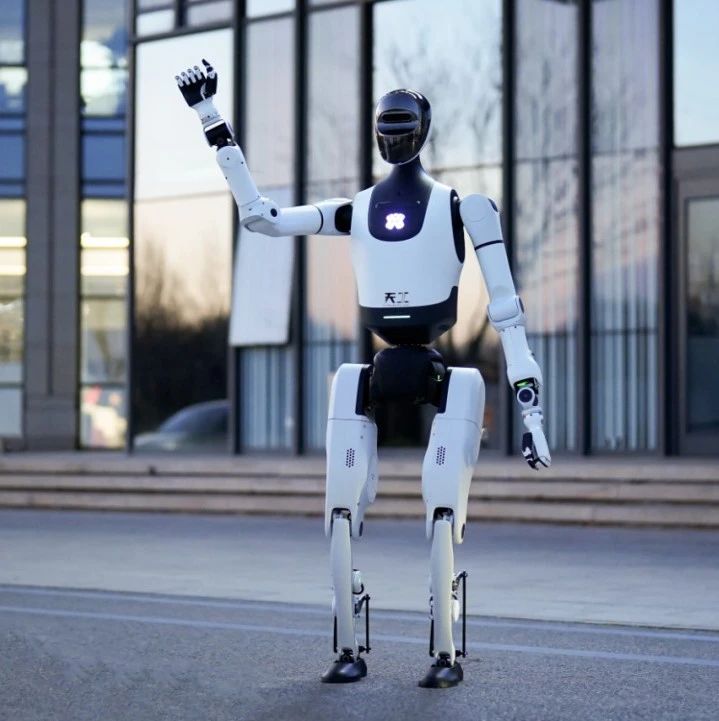
Core Insights - The embodied intelligence industry is currently in an acceleration phase, integrating various cutting-edge disciplines such as artificial intelligence, mechanical engineering, sensors, new materials, and brain science, with open-source ecosystems being crucial for innovation [1][6] - The Beijing Humanoid Robot Innovation Center focuses on key technology breakthroughs and industry ecosystem development, utilizing the open-source general robot platform "Tiangong" and the large-scale multi-configuration intelligent robot dataset and benchmark "RoboMIND" [1][2] Group 1: Open-source Initiatives - The "Tiangong" platform is the world's first full-size electric humanoid robot capable of running, achieving an average speed of 10 km/h and a maximum speed of 12 km/h, while maintaining stable movement across various complex terrains [2][4] - The open-source community for "Tiangong" was launched in April 2025, featuring blogs, forums, technical documentation, open-source project showcases, and more, aimed at fostering global collaboration and accelerating technological breakthroughs in the embodied intelligence industry [1][6] Group 2: Collaboration and Development - Over a hundred partners have developed applications based on the "Tiangong" platform, leading to the emergence of capable robotic products like "Tiangong Walker" [4] - The RoboMIND dataset has been downloaded over 15,000 times from various platforms, including contributions from top universities and research institutions, indicating its significance in training embodied models [4][5] Group 3: Recognition and Awards - The RoboMIND dataset received the "Best Open Source Intelligent Breakthrough Award" at the OS2ATC 2025 conference and the "2025 Annual Dataset Construction Award" from leading industry organizations, highlighting its impact in the field [5] Group 4: Future Directions - The Beijing Humanoid Robot Innovation Center plans to continue open-sourcing a series of algorithms and tools related to embodied intelligence, including frameworks for reinforcement learning and various models, to further enhance the industry ecosystem [6] - The center aims to leverage open innovation to address common technological challenges and activate a global innovation network, contributing to the evolution of embodied intelligence towards generalization [6]
构建开放协同创新生态
Jing Ji Ri Bao· 2025-05-06 21:59
Core Viewpoint - Guangdong Province has introduced policies to support the development of open-source communities and ecosystems, with each receiving up to 8 million yuan in funding, aiming to establish itself as a global hub for artificial intelligence and robotics [1][2]. Group 1: Policy Measures - The policy emphasizes a shift from "single-item support" to "ecosystem construction," focusing on high-level platforms and ecosystem development to drive overall industry upgrades [1]. - Guangdong's AI core industry reached over 220 billion yuan last year, with more than 1,500 core enterprises, positioning it as a leader in the national AI and robotics sector [1]. Group 2: Ecosystem Development - The integration of open-source ecosystem construction into a collaborative system of "innovation chain, industry chain, capital chain, and talent chain" aims to transform Guangdong from a manufacturing province to a strong intelligent manufacturing province [2]. - The establishment of national-level data trading venues in Guangzhou and Shenzhen is intended to facilitate the open flow of data elements, providing high-quality data support for the open-source ecosystem [1]. Group 3: Challenges and Future Outlook - Challenges include avoiding the issue of open-source communities focusing more on construction than operation, and balancing data openness with security, privacy, and copyright protection [2]. - The cultivation of open-source communities and ecosystems is seen as both forward-looking and practically significant, with the potential to create a comprehensive innovation ecosystem in Guangdong that spans basic research, technology breakthroughs, commercialization, technology finance, and talent support [2].
当AI竞赛进入深水区,阿里千问3靠什么赢下AI下半场?
21世纪经济报道· 2025-04-30 23:39
Core Viewpoint - Alibaba's release of the Qwen3 model marks a significant advancement in AI technology, emphasizing efficiency and practicality over sheer parameter size, solidifying its position in the AI sector [1][2][5]. Technical Architecture - Qwen3 is the first "hybrid reasoning model" in China, integrating "fast thinking" and "slow thinking" to dynamically adjust computational resources based on task complexity [5][13]. - The model's pre-training dataset has expanded significantly, utilizing approximately 36 trillion tokens, nearly double that of its predecessor Qwen2.5, covering 119 languages and dialects [5][6]. Performance and Cost Efficiency - Qwen3 boasts a total parameter count of 235 billion, with activation requiring only 22 billion, leading to a substantial reduction in deployment costs [6][14]. - In various benchmark tests, Qwen3 achieved remarkable scores, including 81.5 in the AIME25 assessment and 95.6 in the ArenaHard evaluation, outperforming leading models like OpenAI-o1 and DeepSeek-R1 [6][10]. Open Source Strategy - Qwen3 is released under the Apache 2.0 license, allowing free commercial use, which positions it competitively against Meta's LLaMA series [7][9]. - The model family has surpassed 300 million downloads globally, establishing the largest open-source model ecosystem [7]. Commercialization and Market Impact - Alibaba's AI strategy focuses on practical applications rather than just laboratory metrics, aiming to create real-world value [11][17]. - The introduction of Qwen3 is expected to enhance the commercial viability of AI applications, particularly in sectors like finance, healthcare, and manufacturing [17]. Future Developments - Alibaba plans to invest 380 billion yuan in AI and cloud computing infrastructure over the next three years, indicating a commitment to deepening its AI capabilities [1][17]. - The model's flexible "thinking budget" feature allows developers to set maximum token consumption for deep thinking, catering to diverse performance and cost needs [13][14].