房价下跌

Search documents
未来三年,房价还会不会继续下跌?
Sou Hu Cai Jing· 2025-09-24 08:38
Group 1 - The real estate market is experiencing a significant downturn, with 68 out of 70 major cities reporting a month-on-month decline in housing prices, averaging a drop of 7.32% [3][5] - The number of second-hand homes for sale has reached a record high of 7.5 million, indicating a severe imbalance between supply and demand, leading to a stagnant market where sellers are unable to find buyers [5][12] - The disparity between first-tier cities and lower-tier cities is widening, with some areas seeing price drops of 30-40% compared to their peak in 2022, while third and fourth-tier cities are experiencing even steeper declines [5][7] Group 2 - The current housing market is characterized by a significant inventory of unsold properties, with a total inventory of 760 million square meters, reflecting a mismatch between supply and buyer interest [12] - Young people's willingness to purchase homes is declining, with only 48% of individuals aged 25-30 expressing interest in buying, down from 65% five years ago, indicating a shift in perception regarding homeownership [12][14] - Economic factors are reshaping the real estate landscape, with the sector transitioning from being a cornerstone of the economy to a less central role as resources shift towards new industries like renewable energy and AI [16][18] Group 3 - Future housing price trends could follow three potential paths: continued decline, stabilization due to policy interventions, or a slowdown in the rate of decline with further market differentiation [20][22] - If structural issues remain unresolved, predictions suggest that first-tier cities could see an additional 10-15% drop in prices, while third and fourth-tier cities might experience declines of 20-30% [20][22] - The market is expected to evolve, with some cities stabilizing while others continue to decline, marking a departure from the previous "one-size-fits-all" approach to real estate [22][24]

房价继续全面下跌?有专家判断:未来三年房价或许会出现历史新低
Sou Hu Cai Jing· 2025-09-23 03:04
Core Viewpoint - The Chinese real estate market is experiencing significant price declines, with 68 out of 70 major cities reporting a drop in second-hand housing prices, indicating a shift in market dynamics and consumer sentiment [2][4][10]. Market Trends - The current downtrend in housing prices is unprecedented in the last two decades, with a record high of over 7.5 million second-hand homes listed for sale [4][10]. - In 2025, the average price of second-hand homes across 100 cities fell by 7.32% year-on-year and 0.77% month-on-month [10]. - The total inventory of commercial housing reached 760 million square meters, reflecting a supply-demand imbalance in the market [11]. Price Adjustments - Major cities like Beijing, Shanghai, Guangzhou, and Shenzhen have seen price declines exceeding 30%, with Shenzhen experiencing a drop of over 40% [8][24]. - In some third and fourth-tier cities, housing prices have fallen below 4,000 yuan per square meter, approaching the 3,000 yuan mark [16]. Consumer Behavior - There is a notable shift in consumer attitudes towards homeownership, with the willingness to buy among the 25 to 30 age group dropping from 65% to 48% [18]. - The traditional view of real estate as a means of wealth accumulation is changing, with more young people opting for renting and financial management instead of purchasing homes [18][22]. Policy Changes - Housing policies are evolving, with a focus on stabilizing the market rather than driving speculative investments, as seen in the relaxation of purchase and loan restrictions [20][26]. - The government is directing financial resources towards emerging industries like technology and renewable energy, moving away from reliance on real estate for economic growth [26][27]. Future Outlook - Goldman Sachs predicts that housing prices have already declined by 20%, with an additional potential drop of 10% expected [24]. - The real estate sector is undergoing a structural transformation, transitioning towards a healthier long-term trend despite ongoing downward pressures [27][28].
5年后,现在200万的房子会贬值吗?三大趋势已揭示真相
Sou Hu Cai Jing· 2025-09-21 23:42
Core Viewpoint - The real estate market in China is undergoing a significant transformation, with a projected decline in property values over the next five years due to demographic shifts, oversupply, and decreasing purchasing intent among younger generations [1][3][11]. Group 1: Demographic Changes - The aging population in China is increasing rapidly, with 60+ individuals reaching 310 million, accounting for 22% of the total population. This is expected to exceed 400 million by 2035, representing nearly 30% of the population [3]. - The primary home-buying demographic is shrinking, as the younger population (those born in the 90s and 00s) is significantly smaller than older generations [3][7]. - Approximately 70% of individuals aged 60 and above already own homes and show little interest in purchasing additional properties, while younger buyers are deterred by high prices and financial pressures [3][9]. Group 2: Supply and Demand Dynamics - There is a significant oversupply in the housing market, with 6 billion homes available, which is sufficient for 30 billion people, while the current population is only 1.4 billion [3]. - Over 10 million new homes are added to the market annually, but demand is declining, with 96% of families already owning homes [3][9]. - In a recent case, a property development in a third-tier city sold only 50 out of 300 units in six months, highlighting the lack of buyers rather than a shortage of homes [3][9]. Group 3: Future Property Value Projections - In core areas of first-tier cities, property values may decline by 10-15%, bringing a 2 million yuan property down to approximately 1.7-1.8 million yuan [4]. - In non-core areas of second-tier cities, property values could drop by 20-25%, resulting in a value of about 1.5-1.6 million yuan [4]. - In third and fourth-tier cities, property values may decrease by 30-40%, leading to a valuation of around 1.2-1.4 million yuan [4]. Group 4: Market Sentiment and Investment Strategy - The investment appeal of real estate is diminishing, prompting a shift towards other asset classes such as stocks and funds [8]. - The notion that housing is primarily for living rather than speculation is gaining traction, aligning with the "housing is for living, not for speculation" policy direction [11]. - The market is expected to undergo a "de-bubbling" process, where property values align more closely with their actual living value rather than speculative gains [11].
有人说,房产中介正在打压房价!
Sou Hu Cai Jing· 2025-09-20 11:54
Core Viewpoint - The real estate market, particularly the second-hand housing market, is experiencing significant price declines, leading to a loss of pricing power for homeowners and increased pressure from real estate agents to lower prices [1][3][5]. Group 1: Market Conditions - Housing prices are continuously declining, especially in the second-hand market, causing homeowners to feel urgent pressure to sell [1][3]. - The number of properties for sale in the same neighborhood is increasing, giving buyers more options and leading to longer transaction cycles [3]. - Over 95% of properties have shifted from being investment assets to consumer goods, with buyers hoping for further price drops before purchasing [5]. Group 2: Role of Real Estate Agents - Real estate agents play a crucial role in the transaction process, but their focus has shifted to facilitating sales by pressuring homeowners to reduce prices [6][10]. - Agents often manipulate the market by creating a sense of urgency among homeowners and using tactics to lower prices, which disrupts fair market pricing [8][12]. - The current market dynamics allow agents to dictate pricing based on their control of information, undermining the negotiation power of both buyers and sellers [10][12]. Group 3: Calls for Regulation - There are growing calls for government intervention to break the information monopoly held by real estate agents and to regulate their practices for fairer transactions [13].

预计5年后,我们将全面进入租房时代,房子会越来越难卖
Sou Hu Cai Jing· 2025-09-18 03:05
Core Viewpoint - The traditional belief that "owning a house means having a home" is fading, and a new rental era is emerging in China, with predictions indicating a complete transition to a rental market by 2030 [2][4]. Group 1: Historical Context - Over the past two decades, a significant surge in home buying occurred, with nearly 80% of urban residents purchasing homes and 42% of urban families owning two or more properties [4]. - The housing market experienced extreme fluctuations, with prices soaring from 2015 to 2019, followed by a sharp decline in 2021, leading to widespread regret among buyers who entered the market at high prices [4]. Group 2: Current Trends - Population aging and declining birth rates signal a diminishing demographic dividend, while urbanization in China has reached 65%, raising questions about the sustainability of rising home prices [6]. - There is a notable oversupply of housing, particularly in lower-tier cities, with high vacancy rates exacerbated by population outflow and declining birth rates, contributing to downward pressure on prices [6]. - The second-hand housing market is witnessing a surge in listings, with over 7 million properties currently on the market, indicating a competitive environment that is likely to drive prices down further [6]. Group 3: Emergence of the Rental Market - The rental market is expanding, with the scale of housing rentals growing from 180 million to 200 million in recent years, and projections suggest that urban rental populations could exceed 260 million by 2030 [7]. - A cultural shift is occurring, with more young people embracing the idea of "renting to marry," signaling a transition towards a rental-centric lifestyle [7]. Group 4: Implications for the Real Estate Market - The increasing preference for renting among younger generations, driven by economic pressures and a desire for flexibility, poses significant challenges for property owners, making it harder to sell homes [8]. - The evolving housing culture and changing living habits will have profound impacts on the real estate market, necessitating adjustments from both landlords and investors [8]. Group 5: Strategic Considerations - As the rental market matures, it may persist longer than anticipated, prompting potential homebuyers to make informed decisions based on their financial capabilities and needs [10]. - Investors should diversify their portfolios and adapt strategies, such as converting older properties into rental apartments targeted at younger demographics, to achieve stable returns [10]. Group 6: Conclusion - The impending rental era requires a reevaluation of housing strategies, urging individuals to move away from outdated beliefs and embrace the changes in the housing landscape [12].
南京房价异动?71%刚需二手小区降价
3 6 Ke· 2025-09-18 02:42
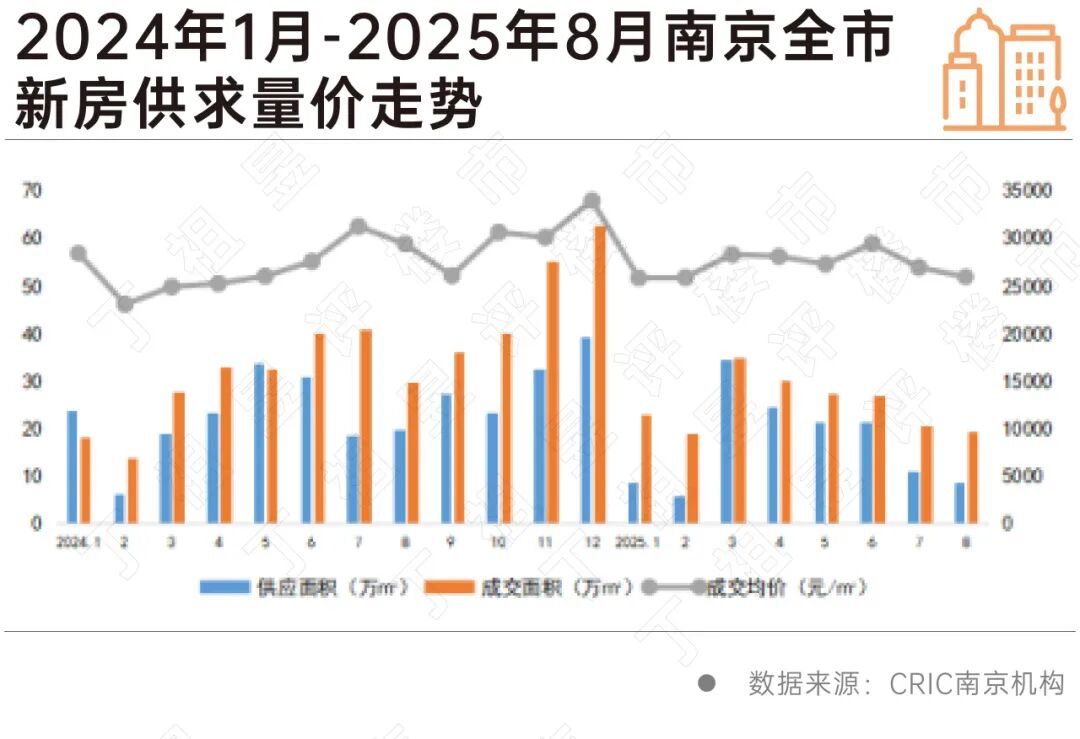
Core Viewpoint - The Nanjing real estate market has been experiencing a downward trend in both new and second-hand housing prices and transaction volumes since the second half of 2025, indicating a deep adjustment phase in the market [1][2][5]. New Housing Market - From January to August 2025, Nanjing's new residential supply totaled 136.82 million square meters, a year-on-year decrease of 22.53%, while total transactions reached 202.40 million square meters, down 14.40% year-on-year [1][2]. - In August 2025, the transaction volume for new residential properties was 17 million square meters, representing a month-on-month decline of 18% and a year-on-year decline of 44% [2]. - The average sales price index for new residential properties in Nanjing fell by 0.6% month-on-month and 1.3% year-on-year in August 2025, with an average cumulative decline of 1.9% from January to August [2]. Second-Hand Housing Market - In the first eight months of 2025, the total transaction volume for second-hand housing in Nanjing was 577 million square meters, a year-on-year decrease of 4% [5]. - In August 2025, the transaction volume for second-hand housing was 58 million square meters, down 12% month-on-month and 23% year-on-year [5]. - The average sales price index for second-hand residential properties fell by 0.7% month-on-month and 6.2% year-on-year in August 2025, with a cumulative average decline of 5.3% from January to August [5]. Price Adjustments - The proportion of second-hand housing communities with price reductions has been increasing, with 68% of high-frequency trading communities experiencing price declines in August 2025, marking a significant increase from the previous month [7]. - In August 2025, 77% of high-frequency trading communities had their listing prices reduced, the highest proportion in nearly a year, with an average decline of 10.3% compared to August 2024 [14]. - The downward price adjustment is particularly pronounced in the first-time buyer and improvement segments, with 71% and 65% of properties in these categories, respectively, experiencing price declines in August [16]. Market Dynamics - The core issue driving the continuous decline in Nanjing's housing prices is the pressure from inventory and high land supply [18]. - The narrow inventory digestion cycle is less than 20 months, but the broad inventory digestion cycle is approaching 10 years, leading to a significant amount of residential land becoming "dead stock" [18]. - To stabilize the market, it is suggested that authorities focus on supporting key trading segments and optimizing supply-side measures, while also linking land supply to broader inventory levels to alleviate long-term inventory pressures [18].
8月,房价继续下跌!
Sou Hu Cai Jing· 2025-09-17 04:18
Group 1 - The core viewpoint of the article indicates that while housing prices continue to decline overall, there are some positive changes in specific markets, particularly in new housing prices [2][7]. - In August, the number of cities with stable or rising new housing prices increased by 3 to a total of 13 cities, suggesting a slight improvement in the market [2][3]. - The maximum month-on-month increase in new housing prices was 0.4%, with cities like Shanghai, Hangzhou, and Yichang showing this increase, compared to a previous maximum of 0.3% [2][3]. Group 2 - Policy actions in August were limited, with new support measures introduced in major cities like Beijing, Shanghai, and Shenzhen, but their immediate impact on the market remains uncertain [2][7]. - In terms of year-on-year comparisons, five cities, including Shanghai, Hangzhou, Chengdu, Taiyuan, and Urumqi, experienced increases in new housing prices [3][4]. - Conversely, the second-hand housing market showed a bleak outlook, with only one city, Changchun, reporting a month-on-month increase, while all other cities continued to see declines [4][7]. Group 3 - The overall trend in August indicates a continuation of the downward trajectory in housing prices, but the commitment to "promote the real estate market" suggests that measures will be taken to stabilize and potentially reverse this trend [7]. - The article emphasizes that the stabilization of second-hand housing prices is crucial for the overall market recovery, as no city has reported an increase in this segment for several months [7].
西安房价,连降12个月了!
Sou Hu Cai Jing· 2025-09-15 15:35
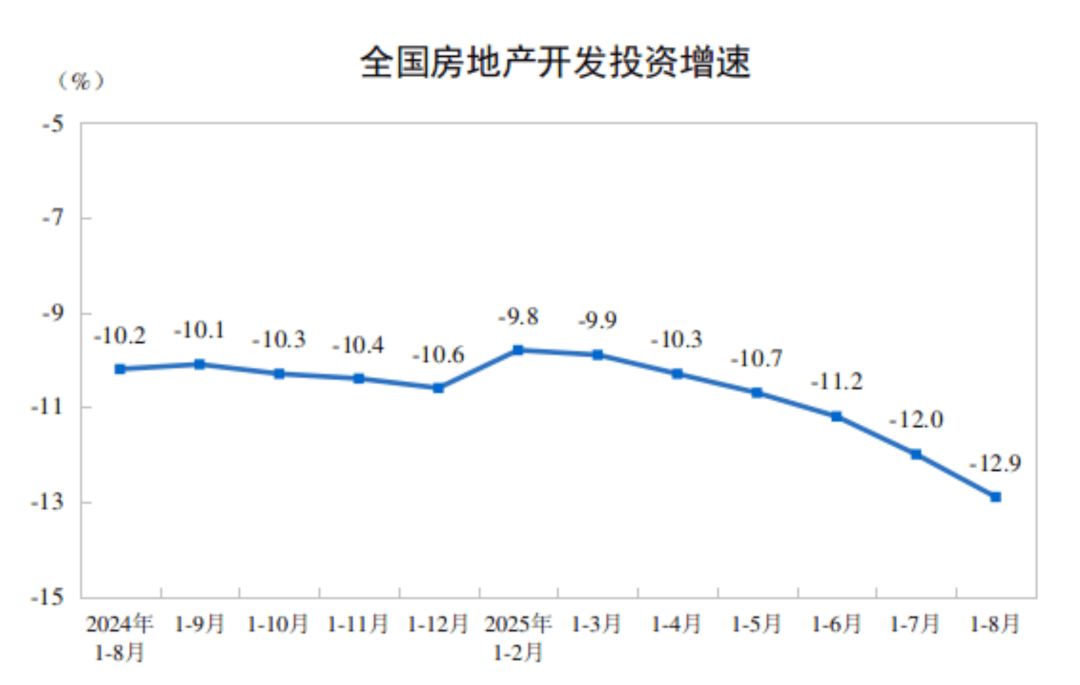
Core Viewpoint - The real estate market continues to decline, with various metrics hitting multi-year lows, raising concerns about potential stimulus policies in the coming months [1][2]. Group 1: Market Performance - National real estate development investment from January to August 2025 reached 60,309 billion yuan, a year-on-year decrease of 12.9%, with the decline accelerating compared to previous months [2]. - The sales area of commercial housing from January to August 2025 was 57,304 million square meters, and the sales amount was 55,015 billion yuan, representing year-on-year declines of 4.7% and 7.3%, respectively [4]. - The sales area has reached a near 15-year low, while the sales amount has hit a near 10-year low, with both metrics at only half of the levels seen during the peak in 2021 [4]. Group 2: Price Trends - In August 2025, new home prices in 70 major cities saw a month-on-month decline in 58 cities, with only 8 cities experiencing price increases [8]. - The new home prices in Xi'an have fallen for 12 consecutive months, with a month-on-month decrease of 0.6% and a year-on-year decrease of 4.7% in August 2025 [10]. - The second-hand housing market is even more challenging, with only one city, Changchun, seeing a month-on-month price increase in August 2025, while the remaining 69 cities experienced declines [10]. Group 3: Developer Challenges - The decline in sales area and sales amount is expected to further impact developers' land acquisition budgets, leading to a continued decrease in investment [8]. - Developers are under pressure to lower prices to stimulate sales, with many older projects joining the price-cutting trend [13][14]. - There are rumors of a "price limit order" in Xi'an, restricting prices from falling below 95% of the record price, although no official documents have confirmed this [15][16].
亏880个!深圳润府21年上车89平1800万,断供3个月了,等法拍吧…
Sou Hu Cai Jing· 2025-09-15 08:15
Core Insights - The property market in Shenzhen, particularly for the Huayuan City Runfu project, has seen a dramatic decline in prices, with peak prices dropping from over 190,000 RMB per square meter to around 100,000 RMB, indicating a significant market correction [1] - A specific case highlights an owner in the medical aesthetics industry who purchased a property for 17.5 million RMB in 2021, now facing foreclosure due to financial difficulties stemming from business challenges and high debt obligations [3][4] - The rapid changes in market conditions have led to a situation where those who bought properties at peak prices in 2021 are now in a precarious position, unable to sell without incurring losses [4] Property Market Trends - The Huayuan City Runfu project experienced peak transaction prices of over 190,000 RMB per square meter in 2021, with current prices reflecting a near 50% decrease [1] - Historical data shows that early buyers in the project, who purchased at prices below 50,000 RMB per square meter, have seen their investments double over time, contrasting sharply with those who entered the market during the peak [4] - The overall sentiment in the property market suggests a lack of confidence, with many homeowners burdened by mortgage payments, limiting their disposable income and consumer spending [23] Financial Strain on Homeowners - The owner mentioned took on significant debt, including 8 million RMB in loans and 300,000 RMB in personal loans, leading to a monthly repayment burden of 260,000 RMB, which has become unsustainable [3] - The medical aesthetics business, once considered highly profitable, is now struggling due to reduced consumer spending, further exacerbating the owner's financial difficulties [4] - The current economic climate has shifted rapidly, with the property market experiencing volatility that has left many investors in a challenging position [4]
房价异动 | 8月南京71%刚需小区降价,二手房进入深度调整期
克而瑞地产研究· 2025-09-12 09:22
Core Viewpoint - The Nanjing real estate market is experiencing a significant downturn, with both new and second-hand housing transactions declining, leading to a notable increase in the proportion of price reductions across various neighborhoods [2][4][21]. Group 1: Market Performance - In August, the Nanjing market saw a continued decline in new home transactions, with six low-density residential plots sold at base prices [2]. - The number of high-frequency trading neighborhoods decreased for several consecutive months, with only 192 neighborhoods recorded in August, a 58% drop compared to the same period last year [4]. - The overall transaction volume for second-hand homes was only 6,300 units in August, indicating a significant contraction in market activity [4]. Group 2: Price Trends - A striking 68% of high-frequency trading neighborhoods experienced a month-on-month price decline, marking an 11 percentage point increase from the previous month and the second-highest level this year [4][11]. - The average listing price for second-hand homes in Nanjing dropped by 10.3% year-on-year as of August 2025, with 77% of high-frequency trading neighborhoods seeing a price reduction [11]. Group 3: Segment Analysis - Among different property types, 71% of affordable housing neighborhoods and 65% of improvement-type neighborhoods saw price declines, while high-end neighborhoods had a more balanced price change with 50% experiencing declines [13]. - In August, the majority of neighborhoods in key trading areas, such as Hexi North and Xianlin Lake, reported price drops exceeding 80% [15]. Group 4: Inventory and Supply Dynamics - Nanjing's narrow inventory digestion cycle is under 20 months, but the broader inventory digestion cycle is nearing 10 years, indicating a significant amount of "dead inventory" in the market [21]. - The ongoing high supply of land is contributing to the downward pressure on housing prices, as many previously desirable low-density residential plots are now being sold at base prices [21]. Group 5: Recommendations for Market Stabilization - To stabilize the market, it is recommended that authorities focus on supporting key trading areas and optimizing supply-side measures to restore confidence in supply and demand [22]. - A dynamic balance mechanism should be established to link land supply with broader inventory levels, aiming to improve market expectations and inventory structure [22].