数字货币

Search documents
【点金互动易】AI4S+数字货币,公司AI4S相关成果已经在客户项目中实施,提供AI解决方案落地金融、化工等领域
财联社· 2026-01-16 00:49
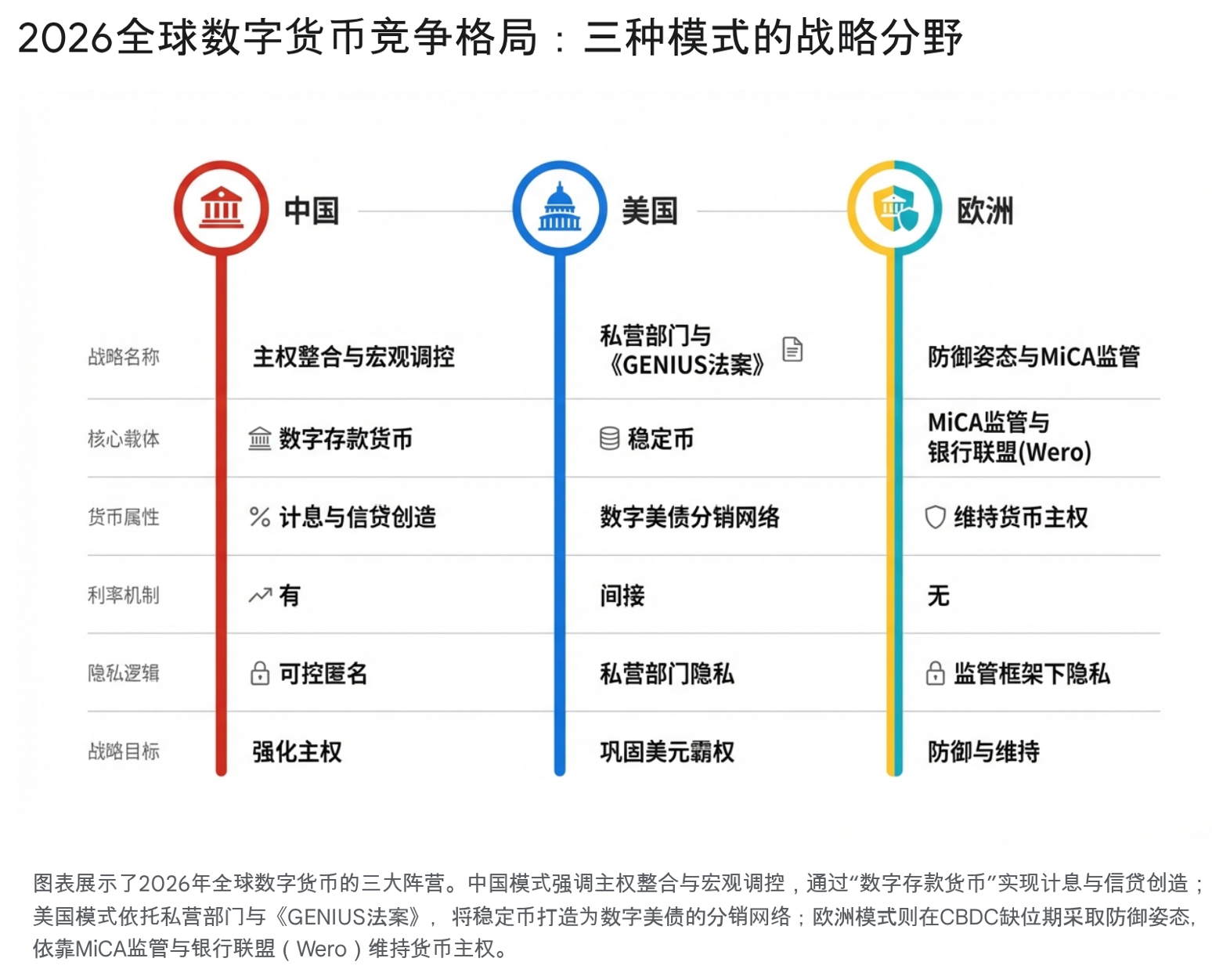
Group 1 - The article emphasizes the importance of timely and professional information interpretation in investment decision-making [1] - AI4S has implemented solutions in finance and chemical industries, with applications in digital currency already realized in banking clients [1] - AIDC has achieved significant milestones in embodied intelligence, with its products being adopted in humanoid robots and low-altitude aircraft [1]


央行数字货币研究所原所长:2000万的别墅一天都没住进去!
Sou Hu Cai Jing· 2026-01-15 13:14
Core Viewpoint - The corruption case involving Yao Qian, former director of the Central Bank Digital Currency Research Institute, has come to light, with a luxury villa valued at 20 million yuan becoming a focal point of public scrutiny [1]. Group 1: Details of the Luxury Villa - The villa, which is currently under renovation, is registered under a distant relative's name, raising concerns about the underlying power rent-seeking chain [3]. - Located in a prime area of a first-tier city, the villa covers an area of over 800 square meters [3]. - The funds for purchasing the property were laundered through complex financial operations, initially dispersed into multiple related accounts and then completed in cash [3]. - The renovation budget for the villa is notably high, amounting to 5 million yuan, with all imported materials being used, including unopened Italian marble and top-tier German bathroom fixtures found at the construction site when Yao was detained [3]. Group 2: Issues Exposed by the Case - The case reveals three significant issues: first, the income of the financial regulatory leader's family is severely inconsistent with the value of the luxury villa [5]. - Although the property is registered in the name of a relative, all property expenses and renovation costs are paid from Yao's family accounts [5]. - The so-called "owner" of the villa is a rural distant relative with no financial means to afford such an expensive property [5]. Group 3: Challenges in Financial Technology Sector - This case highlights new challenges in anti-corruption efforts within the financial technology sector: on one hand, the regulatory lag in emerging fields like digital currency creates opportunities for rent-seeking; on the other hand, corrupt individuals exploit financial innovations to transfer assets, complicating enforcement efforts [7]. - The unfinished renovation work in the villa symbolizes the weak integrity defenses of corrupt officials, who ultimately face severe legal consequences [7].

数字时代的货币革新:近十年中国数字货币研究评述
Sou Hu Cai Jing· 2026-01-15 09:35
Core Insights - The research on digital currency in China has evolved from initial exploration to in-depth investigation since 2014, highlighting its significance in financial technology innovation [1] - Despite substantial achievements in the past decade, there are ongoing concerns regarding the establishment of effective legal and regulatory frameworks to ensure the healthy development of the digital currency market [1] Group 1: Concept and Theoretical Research - Digital currency is defined as a digital form of currency not controlled by a specific central authority, relying on algorithms and network consensus for issuance and management [2] - It is categorized into central bank digital currency (CBDC) and private digital currency, with CBDC being issued by central banks and recognized as legal tender [2] - The general consensus defines digital currency as a value carrier that can gradually replace cash and is associated with bank accounts, characterized as "legal electronic cash" [2] Group 2: Essential Features of Digital Currency - Digital currency is characterized by decentralization, anonymity, programmability, and global reach, providing unique advantages in payment, clearing, and asset trading [3][4] - The decentralization feature eliminates the need for traditional centralized institutions, enhancing transaction efficiency and reducing costs [3] - Security and anonymity are ensured through cryptographic techniques, protecting transaction authenticity and user identity [4] - Digital currency transactions are typically faster and cheaper than traditional bank transfers, particularly beneficial for cross-border transactions [4] - Its global nature allows for rapid capital flow into markets with demand, promoting global economic integration and wealth redistribution [4] Group 3: Origins and Evolution of Central Bank Digital Currency - The emergence of CBDC is viewed as a natural product of technological advancement and financial innovation, driven by the complexities of global financial markets [5] - CBDC aims to meet the needs of economic development and financial stability, addressing the limitations of traditional monetary systems [5] - The evolution of CBDC can be divided into three stages: research exploration, pilot testing, and comprehensive promotion [6][7][8] Group 4: Functions and Roles of Central Bank Digital Currency - CBDC is seen as an efficient payment tool that can significantly enhance the efficiency of payment systems, reducing costs and increasing speed for cross-border payments [9] - It can improve financial system stability and reduce reliance on traditional financial intermediaries, thereby lowering systemic vulnerabilities [9] - CBDC can serve as a new monetary policy tool, allowing central banks to adjust its issuance and interest rates to influence economic activity and inflation [9] - The introduction of CBDC is expected to enhance the fairness and efficiency of the international monetary system, enabling more equitable participation in global financial markets [10] Group 5: Risks and Challenges Facing Central Bank Digital Currency - The application of CBDC faces multiple risks, including technical security risks, legal compliance issues, economic stability risks, ethical risks, regulatory challenges, and social risks [11][12][13][14] - Technical security risks involve potential vulnerabilities in blockchain and cryptographic technologies, which could lead to asset loss and privacy breaches [12] - Legal compliance concerns arise regarding the regulatory framework governing CBDC issuance and circulation, particularly in preventing illegal financial activities [12] - Economic stability risks may stem from CBDC's impact on monetary supply and policy transmission mechanisms, potentially affecting inflation and economic growth [13] - Ethical risks are associated with the reliance on third-party payment institutions, which may create moral hazards for central banks [14] - Regulatory risks highlight the challenge of balancing safety and innovation in the oversight of CBDC [14] Group 6: Risk Prevention Strategies for Central Bank Digital Currency - To mitigate risks, scholars suggest enhancing technical safeguards through advanced technologies and establishing emergency response mechanisms [15] - Legal frameworks should be revised to clarify the legal status of CBDC and strengthen anti-money laundering regulations [15] - Economic assessments should be conducted to evaluate the impact of CBDC on monetary supply and inflation, ensuring effective monetary policy [15] - Public awareness and education on CBDC risks should be promoted to enhance digital literacy and data security [16] - A comprehensive regulatory mechanism should be established for real-time monitoring of CBDC transactions and operations [16] - International cooperation is essential for sharing experiences and developing standards in the digital currency domain [16] Group 7: Evaluation and Future Outlook - Current research on digital currency in China is still relatively weak in theoretical and practical innovation, with a need for deeper, targeted studies [17] - There is a tendency for policy interpretation to overshadow theoretical analysis, indicating a need for more comprehensive research approaches [17] - Interdisciplinary research is lacking, particularly in exploring the legal and ethical implications of digital currency [17] - The transition from fragmented to comprehensive research is slow, necessitating closer attention to market dynamics and technological advancements [18] - The future of digital currency research should focus on its applications in payment, settlement, and investment, while addressing potential risks and challenges [18]

软通动力跌2.00%,成交额13.55亿元,主力资金净流出1454.02万元
Xin Lang Zheng Quan· 2026-01-15 05:11
Core Viewpoint - The stock of Softcom Power experienced a decline of 2.00% on January 15, 2023, with a trading price of 52.85 yuan per share and a total market capitalization of 503.63 billion yuan [1]. Group 1: Stock Performance - As of January 15, 2023, Softcom Power's stock has increased by 11.43% year-to-date, with a 7.88% rise over the last five trading days, a 17.34% increase over the last 20 days, and a 3.30% gain over the last 60 days [1]. - The trading volume on January 15, 2023, reached 13.55 billion yuan, with a turnover rate of 3.21% [1]. Group 2: Financial Performance - For the period from January to September 2025, Softcom Power reported a revenue of 253.83 billion yuan, reflecting a year-on-year growth of 14.30%, and a net profit attributable to shareholders of 98.89 million yuan, which is a 30.21% increase year-on-year [2]. - Since its A-share listing, Softcom Power has distributed a total of 5.84 billion yuan in dividends, with 2.67 billion yuan distributed over the past three years [3]. Group 3: Shareholder Information - As of September 30, 2025, the number of shareholders for Softcom Power was 135,400, an increase of 0.35% from the previous period, with an average of 5,782 circulating shares per person, up by 14.72% [2]. - The top ten circulating shareholders include Hong Kong Central Clearing Limited, which holds 16.05 million shares, an increase of 2.83 million shares from the previous period [3].
恒生电子跌2.05%,成交额28.30亿元,主力资金净流出1.96亿元
Xin Lang Cai Jing· 2026-01-15 03:12
Group 1: Stock Performance - As of January 15, the stock price of Hengsheng Electronics dropped by 2.05%, trading at 34.41 yuan per share with a total transaction volume of 28.30 billion yuan and a turnover rate of 4.28% [1] - Year-to-date, Hengsheng Electronics' stock price has increased by 14.13%, with a rise of 11.43% over the last five trading days, 18.70% over the last twenty days, and 8.11% over the last sixty days [2] Group 2: Financial Performance - For the period from January to September 2025, Hengsheng Electronics reported a revenue of 3.49 billion yuan, a year-on-year decrease of 16.66%, while the net profit attributable to shareholders was 455 million yuan, reflecting a year-on-year increase of 2.16% [2] Group 3: Shareholder Information - As of September 30, 2025, the number of shareholders of Hengsheng Electronics reached 213,800, an increase of 6.09% from the previous period, with an average of 8,863 circulating shares per person, a decrease of 5.59% [2] - The company has distributed a total of 2.44 billion yuan in dividends since its A-share listing, with 682 million yuan distributed over the past three years [3] Group 4: Institutional Holdings - As of September 30, 2025, the second-largest circulating shareholder is Hong Kong Central Clearing Limited, holding 92.13 million shares, a decrease of 40.78 million shares from the previous period [3] - The fifth-largest circulating shareholder is Huatai-PB CSI 300 ETF, holding 25.73 million shares, down by 1.22 million shares from the previous period [3]

收受2000枚市值最高达6000万的虚拟币买别墅,姚前终于还是露出马脚
Xin Jing Bao· 2026-01-14 22:51
Core Viewpoint - The article discusses the corruption case of Yao Qian, former director of the Technology Supervision Department of the China Securities Regulatory Commission, highlighting how his expertise in digital currency did not prevent him from being caught for accepting bribes in the form of virtual currencies like Ethereum [1][2]. Group 1: Corruption Case Details - Yao Qian, a prominent figure in digital currency research, was involved in accepting bribes, including 2,000 Ethereum, which at one point had a market value exceeding 60 million yuan [1]. - His methods of concealing corruption included using others' identities to create "sleeper accounts" and employing trusted associates to obscure the sources of bribes [1]. - The case was ultimately exposed when Yao attempted to convert virtual currencies into real assets, leading to the discovery of a hardware wallet containing the private keys to his digital assets [2]. Group 2: Implications of Digital Currency in Corruption - The article emphasizes that while digital currencies can appear to provide anonymity, the decentralized nature of blockchain technology allows for public tracking of transactions, making it difficult for corrupt individuals to evade detection [2]. - It suggests that despite advancements in corruption techniques, the same digital technologies can enhance anti-corruption efforts, indicating a need for continuous adaptation in oversight mechanisms [2].
先进数通涨2.04%,成交额1.08亿元,主力资金净流出971.50万元
Xin Lang Cai Jing· 2026-01-14 02:57
Core Viewpoint - Advanced Communication Technology Co., Ltd. has shown significant growth in revenue and net profit, indicating strong performance in the IT solutions sector for commercial banks [2]. Group 1: Stock Performance - As of January 14, Advanced Communication's stock price increased by 2.04%, reaching 15.97 CNY per share, with a trading volume of 1.08 billion CNY and a turnover rate of 1.76%, resulting in a total market capitalization of 6.868 billion CNY [1]. - Year-to-date, the stock price has risen by 6.04%, with a 6.61% increase over the last five trading days and a 13.42% increase over the last 20 days, while it has decreased by 1.96% over the last 60 days [1]. Group 2: Financial Performance - For the period from January to September 2025, Advanced Communication achieved a revenue of 2.273 billion CNY, representing a year-on-year growth of 49.83%, and a net profit attributable to shareholders of 86.1446 million CNY, reflecting a year-on-year increase of 163.10% [2]. - The company has distributed a total of 173 million CNY in dividends since its A-share listing, with 78.2802 million CNY distributed over the past three years [3]. Group 3: Shareholder Information - As of September 30, 2025, the number of shareholders for Advanced Communication decreased by 11.68% to 51,500, while the average number of circulating shares per person increased by 13.23% to 7,504 shares [2]. - Among the top ten circulating shareholders, the Huabao Zhongzheng Financial Technology Theme ETF holds 7.0084 million shares, an increase of 3.4042 million shares from the previous period, while Hong Kong Central Clearing Limited and Huafu Zhongzheng Artificial Intelligence Industry ETF are new entrants in the top ten shareholders [3].

比特币升破96000美元
Mei Ri Jing Ji Xin Wen· 2026-01-13 23:25
(文章来源:每日经济新闻) 每经AI快讯,1月14日,比特币升破96000美元,日内涨5.18%。 ...
TCL智家跌0.88%,成交额1.54亿元,近3日主力净流入-292.72万
Xin Lang Cai Jing· 2026-01-13 07:41
Core Viewpoint - TCL Smart Home has experienced a slight decline in stock price, with a market capitalization of 11.047 billion yuan and a trading volume of 154 million yuan on January 13 [1] Group 1: Company Overview - The main business of the company includes the research, development, production, and sales of household refrigerators, freezers, and washing machines [3] - As of September 30, the company reported a revenue of 14.346 billion yuan for the period from January to September 2025, representing a year-on-year growth of 2.87%, and a net profit attributable to shareholders of 977 million yuan, up 18.45% year-on-year [8] - The company has a significant international presence, with 73.50% of its revenue coming from overseas markets, benefiting from the depreciation of the yuan [4] Group 2: Market Position and Strategy - TCL Smart Home has maintained its position as the largest exporter of refrigerators in China for 14 consecutive years, serving over 130 countries and regions, including those involved in the Belt and Road Initiative [2] - The company has made advancements in artificial intelligence, including AI voice control and dual inverter technology, to enhance product intelligence and meet customer demands [4] Group 3: Financial and Trading Analysis - The stock has seen a net outflow of 2.9632 million yuan from major investors, with a current unclear trend in major holdings [5] - The average trading cost of the stock is 10.55 yuan, with recent trading activity indicating a reduction in holdings, although the pace of reduction has slowed [7] - The stock price is currently fluctuating between a resistance level of 10.28 yuan and a support level of 10.04 yuan, suggesting potential for range trading [7]

2026全球数字货币新格局:三极分化与秩序重构丨未来实验室
Di Yi Cai Jing· 2026-01-12 12:40
Core Viewpoint - The global monetary financial system has entered a new phase of "triple differentiation" as of January 2026, driven by the implementation of China's digital yuan (e-CNY), the U.S. GENIUS Act, and Europe's defensive alliances, marking a shift from mere payment efficiency improvements to a profound restructuring of the post-World War II Bretton Woods system [1] Group 1: China's Paradigm - The new digital yuan framework effective from January 1, 2026, signifies an expansion of monetary banking theory, transitioning from "M0 replacement" to a more financially expansive "digital deposit currency" paradigm [4] - The new framework introduces a dual balance sheet structure, where e-CNY balances are legally defined as commercial bank liabilities, allowing digital currency to participate in the fractional reserve system and enabling banks to use e-CNY as a stable source of liabilities for credit issuance [5] - The introduction of a market-based interest rate mechanism allows commercial banks to pay interest on e-CNY wallets, transforming e-CNY into a high-liquidity interest-bearing asset, enhancing its appeal for global trade partners seeking asset preservation [6] Group 2: U.S. Strategy - The U.S. GENIUS Act establishes a unique digital currency strategy by abandoning retail CBDC development and instead regulating private digital currencies to serve as digital extensions of U.S. dollar hegemony [8] - The Act mandates that compliant digital currencies maintain a 1:1 liquidity asset reserve, effectively converting global demand for liquidity into a rigid demand for U.S. Treasury securities, creating a decentralized "digital treasury bond" distribution network [8][9] - The U.S. retains control through stringent regulations on centralized issuers, allowing for immediate and irreversible actions against specific blockchain addresses, enhancing its regulatory reach [9] Group 3: Europe's Dilemma - Europe is in a defensive phase, delaying the digital euro until 2029 due to privacy concerns and legislative challenges, adopting a mixed strategy of regulatory barriers and banking alliances [10] - The MiCA regulation establishes strict localization requirements for digital currencies, driving out non-compliant offshore entities while creating space for compliant institutions [10] - The digital euro's legislative focus has shifted towards a conservative "offline-first" principle, limiting its programmability and online compatibility, while public debates continue regarding the necessity of a robust public digital euro [11] Group 4: Core Variables Reshaping Competition - Interest rate competition is emerging as a key variable, with the introduction of interest-bearing e-CNY challenging the traditional dominance of non-interest-bearing digital dollars [12] - Infrastructure is critical, with China's mBridge creating a decentralized network that bypasses traditional SWIFT structures, while the U.S. attempts to upgrade existing systems [12] - The rise of smart contracts is leading to a contest over the definition of rules, with China promoting state-defined codes and the U.S. favoring private sector standards [12] Conclusion - The year 2026 marks a significant differentiation in global digital currencies, where currency transcends mere value measurement to become an extension of state will, necessitating adaptation to these profound changes for future survival and development [13]