生育友好型社会

Search documents
刚刚,重磅刷屏!信息量巨大
Zhong Guo Ji Jin Bao· 2025-10-24 03:51
【导读】中共中央举行新闻发布会,介绍和解读党的二十届四中全会精神 10月24日上午,中共中央举行新闻发布会,介绍和解读党的二十届四中全会精神。 《建议》是党历史上又一重要纲领性文件 中央政策研究室主任江金权在会上介绍,全会最重要的成果,是审议通过了《中共中央关于制定国民经 济和社会发展第十五个五年规划的建议》(以下简称《建议》)。 科学制定和接续实施五年规划,是我们党治国理政一条重要经验,也是中国特色社会主义一个重要政治 优势。党的二十大确定到2035年基本实现社会主义现代化,"十五五"时期是夯实基础、全面发力的关键 时期。制定"十五五"规划建议,系统谋划"十五五"时期经济社会发展,是实现党的二十大描绘的宏伟蓝 图、分阶段有步骤推进中国式现代化的需要,是有效应对复杂严峻的外部环境新变化、在激烈国际竞争 中赢得战略主动的需要,是适应我国发展阶段性要求、深入推动高质量发展的需要,意义重大。 江金权介绍,《建议》共15个部分、61条,分为三大板块。第一板块是总论,主要阐述"十四五"时期我 国发展取得的重大成就、抓好"十五五"时期经济社会发展的重大意义和总体要求。第二板块为分论,分 领域部署"十五五"时期的战略任务和 ...
介绍和解读党的二十届四中全会精神,一文速览
Xin Hua She· 2025-10-24 03:47
Core Points - The central theme of the news is the introduction and interpretation of the 15th Five-Year Plan for national economic and social development, emphasizing the importance of high-quality development and innovation in China's economy [2][3]. Group 1: Economic Development Goals - The 15th Five-Year Plan outlines seven main goals for economic and social development, including significant achievements in high-quality development and substantial improvements in self-reliance in technology [3]. - The plan prioritizes the construction of a modern industrial system and the strengthening of the real economy, focusing on four key tasks: solidifying the foundation, fostering innovation, expanding capacity, and enhancing efficiency [3]. Group 2: Technological Innovation - The plan emphasizes accelerating high-level technological self-reliance and leading the development of new productive forces through four strategies: enhancing original innovation, promoting deep integration of technology and industry, advancing education and talent development, and furthering the construction of a digital China [3]. Group 3: Social Development - The plan addresses population quality development with three main focuses: creating a family-friendly society, promoting elderly care, and encouraging the active participation of the elderly in the workforce [4]. - It also highlights the importance of strengthening the centralized leadership of the Party to ensure effective implementation of the plan and maintain a clean political environment [4]. Group 4: Market Opportunities - The plan aims to leverage China's market advantages to make it a global hub for innovation and attract foreign investment, ensuring that foreign capital can thrive and share in new opportunities in China [5].
中共中央新闻发布会:建设生育友好型社会
2 1 Shi Ji Jing Ji Bao Dao· 2025-10-24 03:40
(原标题:中共中央新闻发布会:建设生育友好型社会) 中共中央今天(24日)上午举行新闻发布会,介绍和解读党的二十届四中全会精神。 国家卫生健康委党组书记、主任雷海潮介绍,在促进人口高质量发展方面,《建议》重点部署三方面工 作。一是建设生育友好型社会。明确倡导积极婚育观,优化生育支持政策和激励措施。二是推动老有所 养。健全养老事业和产业协同发展政策机制。优化基本养老服务供给,发展医养结合服务。三是推动老 有所为。稳妥实施渐进式延迟法定退休年龄,优化就业、社保等方面年龄限制政策,积极开发老年人力 资源,发展银发经济。 ...
中共中央新闻发布会
证券时报· 2025-10-24 03:16
Core Points - The article discusses the key outcomes of the 20th Central Committee's Fourth Plenary Session, focusing on the "15th Five-Year Plan" and its implications for China's economic and social development [2][3]. Group 1: Overview of the "15th Five-Year Plan" - The "15th Five-Year Plan" consists of 15 parts and 61 articles, divided into three main sections: general principles, specific strategies, and tasks to strengthen the leadership of the Party [2]. - The plan emphasizes the significance of economic and social development during the "15th Five-Year" period, building on the achievements of the "14th Five-Year" period [2]. Group 2: Economic Outlook - The long-term positive conditions and trends supporting China's economy remain unchanged, with a solid economic foundation and strong resilience [3]. - The plan aims to create new pillar industries and accelerate the development of strategic emerging industries, which could generate several trillion-yuan markets [4]. Group 3: Market Reforms - The plan proposes comprehensive measures to address "involution" competition and to unify market regulations, which will help unlock the benefits of China's vast market [5]. - It is projected that over 700,000 kilometers of underground pipelines will be constructed or renovated during the "15th Five-Year" period, requiring an investment of over 5 trillion yuan [6]. Group 4: Marine Economy - The total volume of China's marine economy has surpassed 10 trillion yuan, with initiatives to enhance marine development and ecological protection outlined in the plan [7]. Group 5: Service Sector and Trade - The plan focuses on expanding market access and opening up the service sector, aligning with international high-standard trade rules [9]. - It emphasizes innovation in trade, covering goods, services, and digital trade as key pillars for a strong trade nation [9]. Group 6: Population and Family Policies - The plan includes measures to create a family-friendly society, optimizing support and incentive policies for childbirth and child-rearing [10]. Group 7: Technological Development - The plan highlights the importance of technological modernization, proposing actions to enhance innovation capabilities and integrate technology with various industries [11]. - It aims to implement the "Artificial Intelligence+" initiative to empower multiple sectors [11].


国家卫健委主任雷海潮:建设生育友好型社会 推动老有所养、老有所为
Jing Ji Guan Cha Wang· 2025-10-24 03:15
Core Viewpoint - The National Health Commission emphasizes the importance of promoting high-quality population development through three key areas: building a fertility-friendly society, enhancing elderly care, and enabling the elderly to contribute to society [1] Group 1: Building a Fertility-Friendly Society - The initiative advocates for a positive marriage and childbirth perspective, aiming to optimize fertility support policies and incentives [1] Group 2: Enhancing Elderly Care - The focus is on improving the coordination between pension services and industry development, optimizing the supply of basic elderly care services, and promoting integrated medical and elderly care services [1] Group 3: Enabling the Elderly to Contribute - The plan includes a gradual implementation of delaying the statutory retirement age, optimizing age-related employment and social security policies, and actively developing the elderly workforce to foster the silver economy [1]
雷海潮:建设生育友好型社会 推动老有所养、老有所为
Xin Hua She· 2025-10-24 02:54
Core Viewpoint - The National Health Commission emphasizes the importance of promoting high-quality population development through three key areas of focus: building a fertility-friendly society, enhancing elderly care, and encouraging active participation of the elderly in the workforce [1] Group 1: Building a Fertility-Friendly Society - The initiative advocates for a positive view on marriage and childbirth, aiming to optimize fertility support policies and incentives [1] Group 2: Enhancing Elderly Care - The strategy includes improving the coordination between pension services and industry development, optimizing the supply of basic elderly care services, and promoting integrated medical and elderly care services [1] Group 3: Encouraging Active Participation of the Elderly - The plan proposes a gradual increase in the statutory retirement age, along with optimizing employment and social security policies related to age limits, and actively developing the elderly workforce to foster the silver economy [1]
总书记的关切·落地的回响丨普惠托育,让更多家庭有获得感
Ren Min Ri Bao· 2025-10-22 03:24
Core Insights - The article emphasizes the urgent need to develop an inclusive childcare service system in China, as highlighted by President Xi Jinping during a recent meeting [1][4][5] - The focus on childcare is not only a matter of family welfare but also crucial for the long-term balanced development of the population and the nation [2][3] Group 1: Policy and Support - The government aims to enhance the support policies and standards for childcare services, ensuring a coordinated allocation of resources for children aged 0-6 [1][4] - Financial support for public services related to childcare is expected to increase, reflecting the government's commitment to addressing the challenges faced by young parents [1][5] Group 2: Current Situation and Demand - There are approximately 30 million children under the age of three in China, with over 30% of families expressing a need for childcare services [5] - The demand for accessible, affordable, and quality childcare services is a pressing need for many young parents [5] Group 3: Supply and Accessibility - The article outlines strategies to increase the supply of childcare services, including the establishment of community-based childcare centers and family-run childcare points [7] - By 2024, the number of childcare spots is projected to reach 5.737 million, a 126% increase from the end of the 13th Five-Year Plan, with a coverage rate of 98.5% at the county level [7] Group 4: Cost Reduction Measures - The government is implementing measures to reduce the operational costs of childcare services, including subsidies and tax exemptions for childcare institutions [8] - Over 1,300 counties have introduced specific support policies, which include construction and operational subsidies as well as childcare vouchers [8] Group 5: Future Goals - The goal is to establish a robust inclusive childcare service system by 2030, with significant improvements in service capacity and quality, as well as reduced costs for families [10] - The government has allocated approximately 90 billion yuan for childcare subsidies, increasing the tax deduction for childcare expenses from 1,000 yuan to 2,000 yuan per child per month [10]
普惠托育,让更多家庭有获得感(总书记的关切·落地的回响)
Ren Min Ri Bao· 2025-10-22 00:30
Core Points - The article emphasizes the urgent need to develop an inclusive childcare service system to support families with children aged 0-6, as highlighted by President Xi Jinping during a recent meeting [1][4][5] - The growing demand for affordable and quality childcare services is evident, with approximately 30 million infants under three years old in China and over 30% of families expressing a need for childcare [5][7] - The government is committed to increasing the supply of childcare services and reducing costs for families, aiming for a significant expansion in the number of available childcare spots and financial support measures [6][8][10] Group 1 - The article discusses the importance of addressing the childcare issue as it relates to national development and family welfare, which is crucial for the long-term balanced growth of the population [2][3] - President Xi Jinping's focus on high-quality population development underscores the strategic importance of childcare services in supporting modernization efforts [3][4] Group 2 - The article outlines the government's plan to increase the number of childcare spots to 5.737 million by 2024, representing a 126% increase from the end of the 13th Five-Year Plan, with a coverage rate of 98.5% at the county level [7] - Financial measures include the implementation of civil utility prices for childcare institutions and various subsidies, with over 1,300 counties introducing specific support policies [8][10] - The government aims to provide substantial financial support, with a budget of approximately 90 billion yuan allocated for childcare subsidies, increasing the tax deduction for childcare expenses from 1,000 yuan to 2,000 yuan per child per month [10]
焦点访谈|这些努力,是国家给予未来最温柔的投资
Yang Shi Wang· 2025-10-07 13:24
央视网消息(焦点访谈):继续"奔向更美好生活"。逢年过节,包括假期,年轻人一回家,常常会碰到长辈催婚催育。不过对现在的年轻人来说光催不行, 得让他们实打实相信结婚生娃并不是一件让人发愁的事儿,生活还会因此更加充实和幸福。国家明白年轻人的心思,所以努力做好服务和保障。这服务就 是"建设生育友好型社会"。实实在在的行动得跟上,发红包、送大礼、各种减免、各种便利,生娃育娃有了越来越多的福利和保障。10月7日,我们就走进 几个普通育儿家庭,看看这些政策给他们带来了哪些看得见、摸得着的改变。 今年的生育支持政策里,有个大家都在聊的事儿,就是给三岁以下的宝宝发育儿补贴,每个娃儿每年3600元。就是说,只要有三岁以下的娃,不管一、二 孩,还是三孩,都直接发红包!这样大范围地全国发育儿补贴可是头一遭。9月10日申领正式全面开放才两天,就收到了超2400万条申报信息,覆盖了八成 目标家庭。国家为此准备了多少钱呢?1000亿专项资金!可谓是大手笔! 为了建设生育友好型社会,国家这几年不断出台各种政策,也拿出了不少真金白银来支持。比如,现在已经有20个省份全面实现把生育津贴直接发放给宝妈 个人,无需经过单位中转——钱能第一时间到账 ...

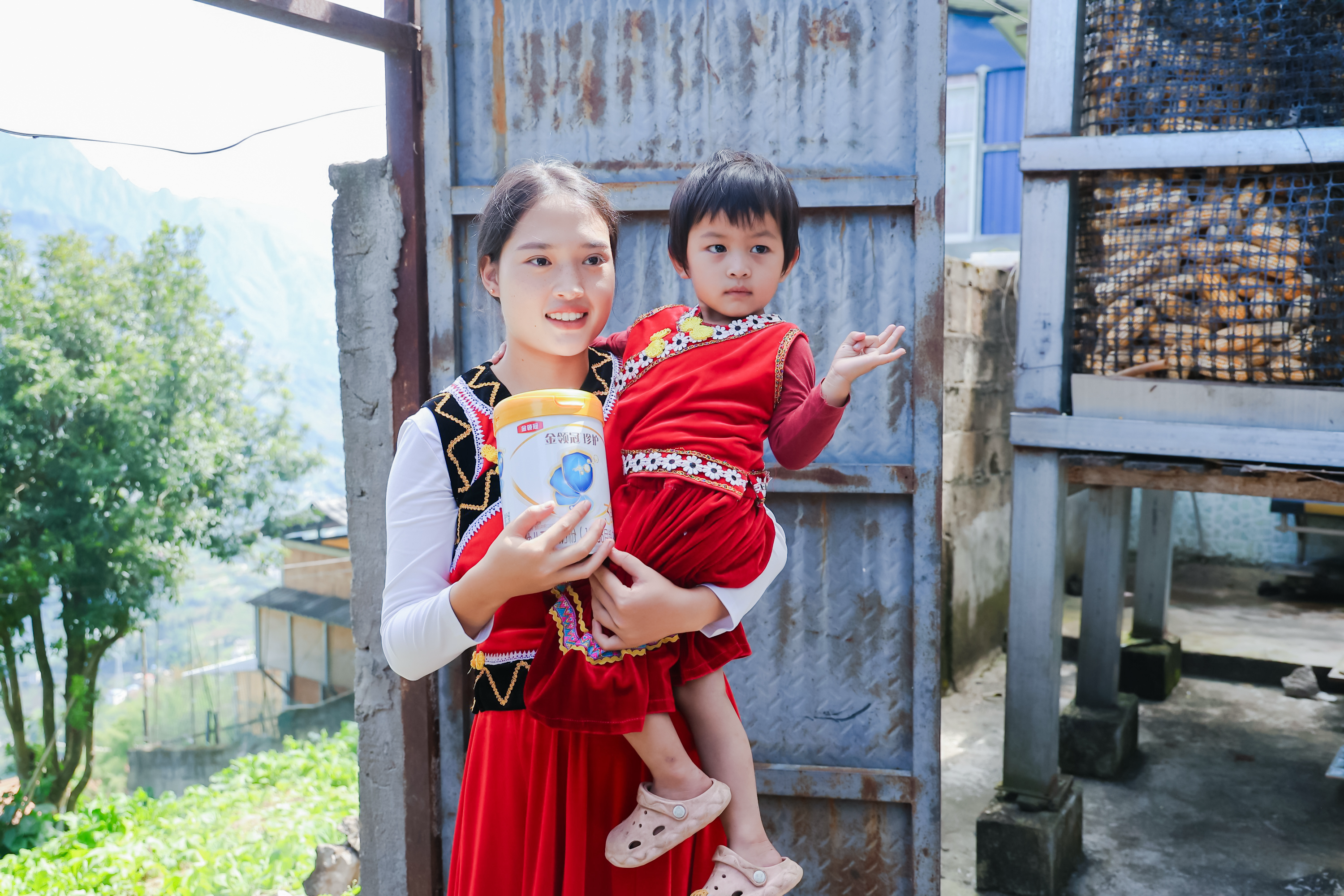
超凡守护 为爱前行|金领冠50°超凡守护公益行动走进云南怒江
Cai Fu Zai Xian· 2025-09-29 09:19
Core Insights - The "Golden Crown 50° Extraordinary Guardian Public Welfare Action" has successfully launched in Nujiang Lisu Autonomous Prefecture, Yunnan Province, donating over 1 million yuan worth of infant and maternal milk powder products to families in need [1][2] - The initiative is part of a broader effort by Golden Crown to support the health of mothers and infants in China, aligning with the goals of Yili Group to achieve "comprehensive value leadership" [2][7] - Since its inception in 2024, the program has donated over 8.59 million yuan in nutritional supplies, benefiting nearly 6,000 mother-infant families across 24 counties in 8 provinces [2] Company Initiatives - The program includes training activities for rural doctors, with over 110 participants, aimed at enhancing local public health services and maternal-infant health levels [6] - Golden Crown emphasizes the importance of maternal and infant health as a foundation for national health, focusing on scientific nutrition solutions and support for pregnant women [7] - The company has launched a 1.6 billion yuan maternity subsidy plan, providing at least 1,600 yuan in nutritional support to eligible families, along with various free nutritional products [9][10] Future Plans - Golden Crown aims to further collaborate with social welfare initiatives and enhance its nutritional offerings to contribute to the improvement of maternal and infant health levels in China [10]