绿色产业

Search documents
深圳国际金融大会聚焦全球金融创新,业内人士认为—— 发挥险资长期稳健优势 股权投资仍有巨大潜力
Zheng Quan Shi Bao Wang· 2025-11-20 23:21
Core Insights - The Shenzhen International Financial Conference emphasizes the importance of financial innovation and the role of insurance capital in equity investment for economic development [1][2][3] Group 1: Financial Innovation and Technology - Technology innovation is highlighted as a national strategy and a core engine for reshaping the financial industry [1] - The share of venture capital investment in the technology sector, loans to high-tech enterprises, and the market capitalization of the A-share technology sector are all on the rise, indicating technology's critical role in driving the financial market [1] - Financial institutions are increasing their investments in fintech, shifting the industry's core competitiveness from traditional network expansion to technological advancement [1] Group 2: Talent Development - The total number and proportion of technology talents in China's financial institutions are steadily increasing, but there remains a gap compared to international financial centers like New York [2] - There is a need for collaboration between universities and the market to cultivate interdisciplinary and composite financial talents to support international competitiveness [2] Group 3: Insurance Sector Development - The insurance industry is urged to transition towards comprehensive risk management, focusing on four key areas: serving the real economy, enhancing social security, maintaining financial safety, and establishing a disaster insurance system [3] - The Greater Bay Area has implemented over 30 financial innovation measures during the 14th Five-Year Plan, creating a policy matrix to support high-quality regional financial development [2][3] Group 4: Equity Investment Potential - The core goal of insurance capital equity investment is to ensure capital safety while serving national strategies and the real economy [3] - Insurance capital investment has evolved from "limited opening" to "precise regulation," leading to a diversified investment landscape that extends from traditional infrastructure to new productive forces [3][4] - Recommendations for optimizing the policy environment for insurance capital include enhancing capital constraint mechanisms, clarifying rules, enriching asset management product systems, and opening innovative investment tools [4]
落实天津峰会共识,开辟更多合作机遇,上合成员国政府首脑在俄开会
Huan Qiu Shi Bao· 2025-11-18 23:05
【环球时报驻俄罗斯特派记者 隋鑫 环球时报记者 沈圣】上海合作组织成员国政府首脑(总理)理事会 第二十四次会议11月18日在莫斯科举行。应俄罗斯联邦总理米舒斯京邀请,国务院总理李强于11月17日 至18日出席此次会议。 据俄罗斯《消息报》18日报道,上合组织秘书长叶尔梅克巴耶夫日前介绍说,本次会议将重点讨论落实 各国领导人在包括今年上合组织天津峰会上作出的各项决定。另据白通社报道,与会的各国政府首脑和 高级代表在本次会议上审议全面、稳步落实上合组织2035年前发展战略的各项措施,主要包括扩大贸 易、经济、文化和人文等领域的联系,并重点关注在数字经济、人工智能、绿色产业等领域的合作。 叶尔梅克巴耶夫认为,本次会议成果将为合作注入更多务实内容,增强区域经济的长期韧性,并为上合 组织成员国之间的有效合作开辟新的机遇。据白通社18日报道,上合组织副秘书长米敦·特里透露,会 议通过了多项文件,"我们不仅又一次召开了政府首脑理事会会议。我们在上合组织的发展道路上又向 前迈进了一大步,巩固了我们的共识"。 俄媒称,本次上合组织成员国政府首脑(总理)理事会会议的重要性也体现在会外举行的双边会晤中。 此前一日,李强抵达俄罗斯首 ...
湛江规上工业增速创年内新高
Nan Fang Ri Bao Wang Luo Ban· 2025-11-18 08:06
Group 1 - BASF's new 2-Ethylhexanol (2-EH) facility in Zhanjiang has officially commenced production, marking a significant milestone in the integrated base's development [1] - Zhanjiang's GDP growth rate for the first three quarters of this year is 5.0%, ranking third in the province, with industrial added value increasing by 10.4%, the highest growth rate in the province [1] - The industrial sector is a key driver of high-quality development in Zhanjiang, with major projects in green steel, green petrochemicals, green energy, and modern agriculture contributing to this growth [1][2] Group 2 - Zhanjiang's industrial development is transitioning from quantity expansion to quality improvement, with a resilient growth pattern and strong potential [2] - The city has seen significant contributions from the mining sector, with new oil fields coming online and increasing production rates [2] - The city's small-scale industrial sector has also shown growth, with a 6.5% increase in added value in the first three quarters of this year [2] Group 3 - Industrial parks in Zhanjiang are becoming strong engines for development, facilitating the transition to high-value-added products [3] - The industrial parks have reported an 11.9% increase in industrial added value year-on-year, showcasing robust momentum [4] - Zhanjiang's green petrochemical and modern agricultural industries have surpassed a total output value of 100 billion yuan, contributing to a modern industrial system [4] Group 4 - Technological transformation is a key strategy for Zhanjiang's industrial upgrade, with significant investments in industrial upgrades showing a 33.3% increase year-on-year [4] - The new materials sector is also emerging, with a new production base expected to generate an annual output value of 2 billion yuan [4] - Major projects are driving industrial growth, with Zhanjiang positioned to leverage its industrial capabilities for future development [5]
点“石”成“绿”的华丽蝶变
Jin Rong Shi Bao· 2025-11-18 05:10
Core Insights - Lushan's transformation from a traditional stone industry to an eco-friendly model is driven by the need for sustainable development and environmental protection [2][3][4] Group 1: Industry Background - Lushan is known for its natural beauty and rich resources, including granite, with reserves reaching 1.5 billion cubic meters [1] - The East Guling mining area was historically a significant economic driver, attracting over a hundred enterprises and thousands of workers [1] Group 2: Industry Challenges - The traditional stone industry faced challenges due to extensive environmental degradation, leading to health risks for residents and hindering sustainable tourism [1][2] - Companies were hesitant to relocate to new eco-friendly industrial parks due to high costs and concerns about disrupting established supply chains [2] Group 3: Financial Support and Solutions - Local financial institutions collaborated with the government to provide targeted financial solutions, such as "stone loans" with low interest rates and long repayment periods, alleviating the financial burden on companies [2] - Approximately 530 stone enterprises received nearly 490 million yuan in credit support, facilitating their transition to a more sustainable model [2] Group 4: New Industrial Developments - The newly established eco-friendly stone industrial park features standardized factories and aims to minimize environmental pollution through dust-free operations [3] - The park promotes resource recycling, encouraging companies to process waste materials into valuable products, thus enhancing the added value of natural resources [3] Group 5: Ecological Restoration and Future Projects - The local government is actively involved in ecological restoration projects, with financial backing of 580 million yuan for the rehabilitation of 2,300 acres of abandoned mining areas [3] - The "Flower Language World" project aims to integrate ecological tourism with the development of ornamental plant research bases, creating a low-carbon industrial chain [4] Group 6: Tourism Growth - The transformation has led to a significant increase in tourism, with over 30% growth in visitor numbers during the summer, and "Flower Language World" attracting more than 100,000 visitors [5] - The revitalization of the area has turned former industrial sites into ecological attractions, enhancing Lushan's tourism appeal [5]
姚景源:投资转向民生,消费迎来黄金期
Xin Jing Bao· 2025-11-17 15:08
Core Points - The Beijing Municipal Committee's recent meeting emphasized a significant shift in economic development strategy from investment-driven growth to a model promoting interaction between investment and consumption [1][4] - The meeting highlighted the need to address consumption issues, with a focus on increasing the resident consumption rate as part of the 15th Five-Year Plan [1][3] - Investment should be directed towards sectors that foster new productive forces, such as digital economy, artificial intelligence, and green industries [1][2] Investment and Consumption Interaction - The primary constraint on consumption is not a lack of willingness but rather financial concerns and expectations [2] - The connection between boosting consumption and promoting employment and income is crucial for addressing consumer hesitance [2] - Investments in urban renewal, elderly-friendly modifications, and 5G network coverage are seen as creating new consumption scenarios, effectively "building roads and bridges" for future consumption [2] Employment and Income Growth - The service sector is identified as a key driver for creating high-quality jobs, with a current employment share around 50% compared to 70%-80% in developed countries [3] - There is a strong recommendation for Beijing to develop its tourism and cultural industries, leveraging its historical and cultural resources [3] - The central government's proposal emphasizes synchronizing labor income growth with productivity improvements, highlighting the importance of technology in driving consumer income growth [3]
张家口筑牢生态屏障开启产业新程
Bei Jing Ri Bao Ke Hu Duan· 2025-11-15 20:49
Core Viewpoint - Zhangjiakou is focusing on ecological restoration and sustainable development, aiming to enhance water conservation, increase green coverage, and promote industrial transformation during the 14th Five-Year Plan period [2][3]. Group 1: Water Conservation - Zhangjiakou has implemented measures to enhance water security, focusing on the Yongding River and Chaobai River basins, with strategies including "storage, protection, conservation, and increase" [3]. - The city has constructed 991,500 acres of high-standard farmland and implemented efficient irrigation on 335,800 acres, leading to a reduction of irrigated land by 521,400 acres and a decrease in groundwater over-extraction by 50 million cubic meters [3][4]. - Satellite monitoring shows that the water area of Chahan'er has increased from 12.2 square kilometers in 2021 to 74.8 square kilometers by 2025, with a 100% compliance rate for drinking water source quality [4]. Group 2: Green Coverage - Zhangjiakou has initiated four major actions: "blue sky, clear water, increased greenery, and clean soil," significantly enhancing the city's ecological environment [5]. - The city has planted 6.035 million acres of trees and restored 2.11 million acres of grassland since 2021, with the Konbanor National Wetland Park becoming the largest breeding ground for the rare black stork [5][6]. - The average PM2.5 concentration in Zhangjiakou has ranked first in the Beijing-Tianjin-Hebei region for four consecutive years, indicating successful air quality management [5]. Group 3: Industrial Transformation - Zhangxuan Technology has developed hydrogen metallurgy technology, improving resource recycling efficiency in the steel industry [6]. - The ecological foundation of Chahan'er Wetland is being leveraged to create eco-tourism attractions, receiving over 500,000 visitors annually and generating tourism revenue exceeding 50 million yuan [6]. - The transformation of abandoned mines into eco-friendly sites has led to new business opportunities in camping, vacationing, and ecological education, contributing to the region's economic growth [6].


第五届中韩未来经济合作论坛在首尔举行
Zhong Guo Xin Wen Wang· 2025-11-15 19:29
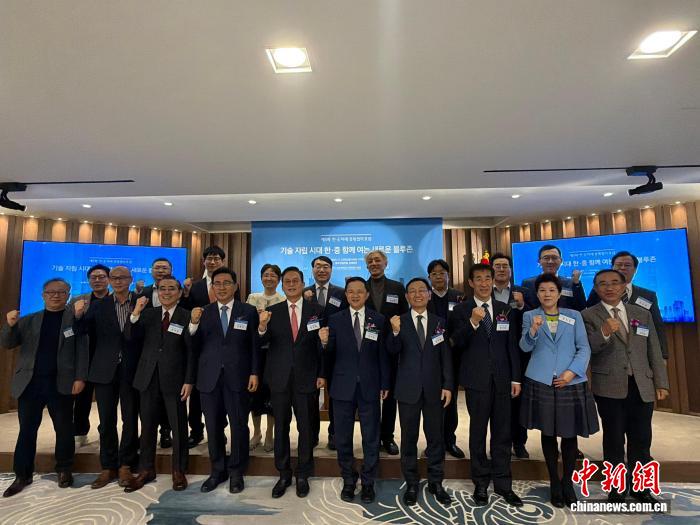
Core Points - The fifth China-Korea Future Economic Cooperation Forum was held in Seoul on November 13, emphasizing the importance of bilateral relations and cooperation in various sectors [1][3][5] Group 1: Forum Overview - The forum was co-hosted by the Chinese Embassy in South Korea, Asia Daily, and Asia News Group, with over 60 attendees from both countries, including diplomats, business leaders, and scholars [3][5] - Chinese Ambassador to South Korea, Dai Bing, highlighted the successful state visit of President Xi Jinping to South Korea, which opened a new chapter in China-Korea relations [5] Group 2: Economic Cooperation - Bilateral trade between China and South Korea has exceeded 300 billion USD, indicating a deepening mutually beneficial relationship over 33 years of diplomatic ties [5] - The forum aimed to deepen mutual understanding and explore cooperation potential in emerging fields such as artificial intelligence, biomedicine, and green industries [5][7] Group 3: Industry Collaboration - Korean representatives emphasized the need for trust and win-win cooperation to address new challenges and opportunities arising from global supply chain restructuring and technological competition [7] - Discussions at the forum included topics such as new models of China-Korea technological cooperation, collaboration in AI and robotics, biomedicine and cosmetics industries, currency swaps, cross-border investment, and joint private equity fund construction [7]
商务部:本届进博会成交额再创历史新高,达834.9亿美元,同比增长4.4%
Mei Ri Jing Ji Xin Wen· 2025-11-13 15:04
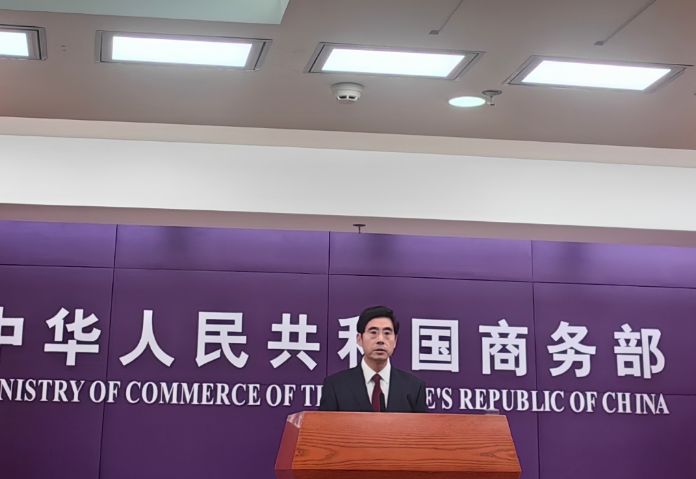
11月13日,商务部召开例行新闻发布会。新闻发言人何亚东表示,本届进博会成交额再创历史新高,达 834.9亿美元,同比增长4.4%。 下一步,将围绕"出口中国"十大主题活动细化方案,加强组织落实,通过主题国对接、区域特色对接、 重大展会对接、定向采购等方式,广泛搭建交流对接平台,切实便利更多国家的优质产品和服务进入中 国。 中国—东盟自贸区3.0版升级议定书签署 进博会期间,许多参展的中国和东盟国家企业对10月28日签署的中国—东盟自贸区3.0版升级议定书高 度关注。对于议定书,为什么企业的关注度这么高?下一步还有哪些工作要做? 何亚东介绍,中国—东盟自贸区3.0版升级议定书的签署,是双方合作的重要里程碑,标志着双方经济 一体化进程从传统的贸易投资自由化便利化拓展至数字、绿色、标准、产供链等新兴领域。 商务部正在加快推进议定书的国内核准工作,与东盟方共同努力推动议定书尽早生效实施。"希望各地 方、各行业结合实际,指导帮助企业了解好、理解好、利用好中国—东盟自贸区新规则新机遇,真正从 中受益。"何亚东说。 1~10月上海市实现进出口3.7万亿元 上周,支持上海国际贸易中心提质升级工作推进会在上海举行。近年来,上 ...
(第八届进博会)华侨华人话进博:既是“外来客”,也是“东道主”
Zhong Guo Xin Wen Wang· 2025-11-10 10:54
Core Insights - The eighth China International Import Expo (CIIE) concluded on November 10, showcasing a platform for global cooperation and opportunity for overseas Chinese and foreign businesses [1][2] Group 1: Participation and Perspectives - Overseas Chinese view the CIIE as both "foreign guests" seeking business opportunities and "hosts" facilitating Sino-foreign cooperation [1] - First-time attendee Lin Haiyan from Mauritius emphasized the expo as a quality platform for showcasing advantages and suggested leveraging Mauritius as a financial hub for Chinese companies entering Africa [1] - Liu Yisong, president of the Bavarian Chinese Enterprise Promotion Association, noted the evolution of Sino-German cooperation from trade to industrial collaboration, highlighting the synergy between Germany's engineering and China's market dynamism [1] Group 2: Market Insights and Future Opportunities - Italian architect Xu Yibo expressed that the CIIE serves as a crucial entry point for Italian firms into the Chinese market, aiming to promote sustainable design through collaboration with Chinese companies [1] - Wang Jiakun from Uganda's Tiantang Group remarked on witnessing China's changes and the diversity of global products at the expo, advocating for more African goods to be showcased [2] - Zang Lu, vice president of the Cambodian Chinese Hong Kong and Macau Business Association, described the CIIE as an excellent window for understanding the Chinese market and global trends, emphasizing the need to seize opportunities in digital and green sectors [2] Group 3: Role of Overseas Chinese - Overseas Chinese are positioned as "super connectors" at the CIIE, facilitating interactions between different markets [2] - Hu Yishan, president of the Sabah Chinese Association in Malaysia, noted the growing scale and quality of the expo, expressing a desire for deeper collaboration in high-tech fields such as robotics and artificial intelligence [2]
两大新能源金属来了!证监会,正式批准!
券商中国· 2025-11-08 08:51
Core Viewpoint - The approval of platinum and palladium futures and options by the Guangzhou Futures Exchange marks a significant step in the development of the green industry in China, providing essential risk management tools for related sectors [1][4]. Group 1: Market Context - Platinum and palladium are crucial for catalytic reactions and are widely used in automotive emissions control, wind power, and hydrogen energy, making them vital to China's green industry [3]. - China is the largest consumer of platinum and palladium globally, accounting for over 20% of global consumption, with approximately 60% of platinum and nearly 80% of palladium used in green-related industries [3]. Group 2: Price Volatility and Risk Management - The price volatility of platinum and palladium is among the highest in the metals sector, with annual price fluctuations exceeding 20% in recent years, creating significant operational pressure on downstream industries [2][5]. - The average daily volatility for palladium and platinum over the past decade has been 1.58% and 1.22%, respectively, indicating their sensitivity to supply disruptions and capital flows [5]. Group 3: Historical Price Trends - Historical trends show that palladium experienced bull markets from 1997-2001 and 2017-2023, while platinum had a bull market from 2002-2008, influenced by supply-demand dynamics and macroeconomic conditions [6]. - The price movements of platinum and palladium are primarily driven by supply-demand balance, with macroeconomic fluctuations adding momentum to price trends [6][7]. Group 4: Future Implications - The launch of platinum and palladium futures and options is expected to enhance the pricing influence of China in the global market, which is currently dominated by foreign exchanges [7]. - The introduction of these financial instruments will provide more flexible pricing and risk management options for industry participants, aiding in better decision-making amid market uncertainties [6][8].