
零碳园区

Search documents
光伏产业绿色发展政策解析
中国电子技术标准化研究院· 2026-01-09 11:16
Investment Rating - The report does not explicitly state an investment rating for the photovoltaic industry. Core Insights - The photovoltaic industry in China has established a comprehensive supply chain centered around silicon material development and application, with over 75% of global production in key manufacturing segments such as polysilicon, silicon wafers, battery cells, and modules [4][5]. - The industry is increasingly focusing on low-carbon and green attributes as fundamental advantages, driven by national policies aimed at establishing carbon footprint management systems and promoting green transformation [10][24]. - The report emphasizes the importance of a complete lifecycle approach to resource utilization in the photovoltaic sector, advocating for the recycling of retired photovoltaic components and the creation of "waste-free" enterprises [36][39]. Summary by Sections Product Level - Low carbon is identified as a fundamental advantage of the photovoltaic industry, with various national policies being implemented to establish carbon footprint management systems and standards [9][10][11]. - The report highlights the need for standardized carbon accounting methods and databases to improve data management and ensure consistency in carbon emissions reporting across the industry [14][17]. Organizational Level - The report outlines the development history of green manufacturing policies in China, emphasizing the establishment of a green manufacturing system that supports enterprises in enhancing their green capabilities and promoting sustainable practices [30][32]. - It discusses the importance of integrating green low-carbon development concepts into the entire production process, from design to raw material procurement and waste management [32][33]. From "Grave" to "Cradle" - The report introduces the concept of "waste-free" cities and enterprises, emphasizing the need for comprehensive resource utilization and the recycling of photovoltaic components to minimize waste generation [36][39]. - It references national guidelines aimed at promoting the circular economy and the recycling of retired photovoltaic equipment, highlighting the role of the photovoltaic industry in achieving these goals [41][42]. Enabling Zero-Carbon Construction - The report discusses the establishment of zero-carbon industrial parks, outlining the requirements and indicators for their development, including energy consumption and the proportion of clean energy used [50][51]. - It emphasizes the need for a renewable energy supply system and the integration of smart grid technologies to support the transition to low-carbon and zero-carbon energy systems in industrial parks [52][56].
沈阳中德园发布零碳园区建设方案 打造国家级零碳产业生态示范高地
Zhong Guo Xin Wen Wang· 2026-01-09 09:52
Core Viewpoint - The construction of the Sino-German National Zero Carbon Park is a significant step towards promoting green transformation and achieving carbon neutrality goals, focusing on green electricity connectivity and carbon management [1][2][3] Group 1: Zero Carbon Park Development - The Sino-German Park was included in the first batch of national zero carbon park construction lists, marking a new phase in the implementation of national strategies for green transformation [1][3] - The park aims to develop benchmark "zero carbon factories" and integrated models of "source-network-load-storage" to facilitate the green transformation of enterprises [1][2] - By 2027, the park plans to achieve over 90% renewable energy consumption and implement a smart energy and carbon management platform covering over 90% of energy-consuming enterprises [3] Group 2: International Cooperation and Standards - The park will leverage Sino-German cooperation to establish rules for carbon accounting and green certification, facilitating international trade and breaking down barriers [2][3] - The construction of the zero carbon park is based on a solid industrial foundation and clear strategic positioning, providing unique advantages for international carbon rule alignment [2][3] Group 3: Economic Impact and Future Goals - By 2025, the park's foreign trade import and export volume is expected to exceed 50 billion yuan, with manufacturing products exported to over 130 countries and regions [3] - The park will focus on developing clean energy and enhancing the international competitiveness of enterprises by addressing their urgent needs for green electricity and reducing carbon footprints [3][4]
梅州高新区(广梅产业园)与中国技术集团深入交流项目进展
Sou Hu Wang· 2026-01-09 08:50
Core Insights - The recent communication between Meizhou High-tech Zone (Guangmei Industrial Park) and China Technology Group (01725.HK) focused on the latest developments of their collaborative projects [1][3] Group 1: Company Overview - China Technology Group was founded in 2003 and listed on the Hong Kong Stock Exchange in 2018, focusing on aerospace technology to empower green energy and smart manufacturing [3] - The company aims to create a zero-carbon smart industrial 5.0 system, integrating aerospace, precision manufacturing, and green energy for sustainable development [3] Group 2: Strategic Developments - On December 29, 2025, China Technology Group announced its establishment in Meizhou High-tech Zone, planning to lease nearly 20,000 square meters of high-standard manufacturing facilities to build a zero-carbon aerospace and energy storage manufacturing center [3] - The collaboration will benefit from multiple national, provincial, municipal, and park-level incentives and subsidies [3] Group 3: Collaborative Goals - The partnership aims to achieve deep collaboration in areas such as satellite structure factories, clean energy and energy storage systems, smart energy management platforms, and low-carbon industry integration [4] - The objective is to create a replicable and scalable zero-carbon park demonstration [4]

别把“零碳标签”当“政绩点缀”
Xin Hua Ri Bao· 2026-01-07 23:05
□ 陈立民 国家发展改革委近日举行新闻发布会,新闻发言人表示,零碳园区建设不是戴帽子、挂牌子,不是要打 造"政策洼地",而是要建设"绿色转型高地"。当前各地零碳园区建设热潮涌动,中央的这些要求,切中 痛点、及时纠偏,极具现实针对性。 建设零碳园区,不能"一刀切",必须因地制宜。我国幅员辽阔,区域间能源结构、产业基础、经济水 平、气候条件的差异极为显著,这决定了零碳园区建设必须走差异化路径。一些地方风能、太阳能资源 丰富,具备大规模发展绿电的天然优势,可以探索建设零碳园区,构建绿电供应体系。当然,也要避免 同质化建设,立足区域产业基础,打造特色化零碳园区。 而在一些地区,尽管产业密集、经济实力雄厚,但可再生能源资源有限,绿电供给能力先天不足。若不 顾这一实际,强行上马"零碳"项目,往往只能依赖外购绿电或购买绿证来"凑数"。在缺乏稳定、足额绿 电支撑的前提下,单纯依靠购买绿证实现的"零碳",既不真实,也不可持续。这类地区不应急于贴 上"零碳"标签,而要依赖扎实的技术创新,做好节能降耗、能效提升、产业结构优化等基础工作,为未 来接入绿电积累条件。 进一步看,零碳转型已经上升为国家战略部署。要跳出"就零碳谈零碳""就 ...
联美控股(600167):供热主业稳定,氢能布局未来
Guotou Securities· 2026-01-07 07:10
Investment Rating - The investment rating for the company is "Accumulate-A" with a target price of 7.35 yuan [6]. Core Insights - The company has a stable heating business and is actively transforming into a new type of comprehensive energy service provider, leveraging its advantages in location and cost [2]. - The clean heating business includes various technologies such as cogeneration, water source heat pumps, and biomass cogeneration, with a focus on expanding its service area in Shenyang [2]. - The high-speed rail media segment has faced short-term profit pressure but is expected to recover as new business developments are completed [3]. - Hydrogen energy is included in the "14th Five-Year Plan," which is anticipated to contribute to new growth opportunities for the company [4]. Financial Performance Summary - From 2018 to 2020, the company's revenue grew from 3.037 billion yuan to 3.598 billion yuan, with a compound annual growth rate (CAGR) of 8.8%, and net profit increased from 1.317 billion yuan to 1.685 billion yuan, with a CAGR of 13.14% [1]. - Revenue is expected to stabilize around 3.5 billion yuan from 2020 to 2024, with a projected net profit of 659 million yuan in 2024, a year-on-year decline of 23.29% due to impairment losses [1]. - The company has maintained a high dividend payout ratio, with dividends of 475 million yuan, 447 million yuan, and 711 million yuan from 2022 to 2024, representing payout ratios of 50.26%, 52.02%, and 108.02% respectively [1]. Business Segment Analysis - The heating and steam segment is expected to generate revenues of 2.359 billion yuan, 2.413 billion yuan, and 2.473 billion yuan from 2025 to 2027, with improving gross margins due to declining coal prices [18]. - The power generation business is projected to maintain stable revenues of 134 million yuan, 136 million yuan, and 139 million yuan over the same period, with gross margins of 3% [18]. - The engineering segment is expected to decline due to the overall slowdown in the real estate sector, with revenues forecasted at 168 million yuan, 151 million yuan, and 136 million yuan [18]. - The advertising business, driven by the high-speed rail media segment, is expected to recover, with revenues projected at 685 million yuan, 719 million yuan, and 791 million yuan from 2025 to 2027 [18].

首批52个国家级零碳园区建设名单出炉,双良深度赋能超10个
Zhong Guo Neng Yuan Wang· 2026-01-06 08:29
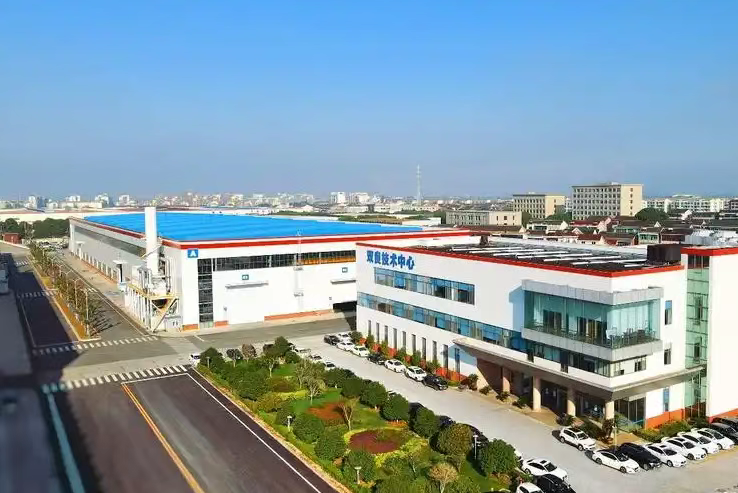
Core Viewpoint - Jiangyin Shuangliang Group plays a crucial role in the construction of over 10 national-level zero-carbon parks, supporting China's dual carbon goals through advanced technology and comprehensive service capabilities [2][4][12]. Group 1: National-Level Zero-Carbon Parks - The National Development and Reform Commission, the Ministry of Industry and Information Technology, and the National Energy Administration have released the first batch of 52 national-level zero-carbon parks, with Jiangyin Shuangliang Group deeply involved in their construction [2]. - Shuangliang's comprehensive zero-carbon solutions are tailored to address specific challenges in various industrial scenarios, showcasing its essential role in the national strategy for industrial emission reduction [4][12]. Group 2: Technological Innovations and Applications - In Ordos, Inner Mongolia, Shuangliang provided a key thermal decarbonization solution for battery manufacturing, achieving zero emissions and reducing approximately 66,340 tons of standard coal and 29,000 tons of CO2 annually [6]. - The company has implemented a large-scale photovoltaic project in Baotou, Inner Mongolia, and developed energy-efficient systems for various industrial applications, demonstrating its technological prowess in green energy production [6][9]. Group 3: Energy Efficiency and Sustainability - Shuangliang has established the largest distributed energy project for the semiconductor display industry in Chongqing, achieving an average energy utilization efficiency of 82.09% [9]. - The company has customized cooling systems for data centers and implemented waste heat recovery technologies, significantly lowering energy and water usage efficiency metrics [9][11]. Group 4: Comprehensive Zero-Carbon Solutions - Shuangliang's zero-carbon initiatives extend beyond national parks to provincial parks and zero-carbon factories, exemplified by its integrated microgrid in Jiangyin [16]. - The company is transforming zero-carbon concepts from demonstration projects into scalable standardized products and solutions, enhancing its market reach [16][17].

投资绿色未来 南京银行全力支持零碳园区建设
Jing Ji Guan Cha Wang· 2026-01-06 04:22
Core Viewpoint - The development of zero-carbon parks is becoming a crucial driver for high-quality economic growth, with Nanjing Bank actively supporting this trend through innovative green financial products and deepening cooperation with government and enterprises [1]. Group 1: Support for Zero-Carbon Parks - Nanjing Bank has made significant progress in supporting zero-carbon parks by offering innovative financial products such as the "near-zero carbon factory" linked loan, which provides interest rate exemptions for companies achieving near-zero emissions [2]. - The bank has established a green low-carbon development co-creation center in the Jiangning Economic and Technological Development Zone, aiming to support the creation of Jiangsu's first "near-zero" demonstration factories and the first "zero-carbon outlet" in Nanjing [2]. - Nanjing Bank has provided over 1.3 billion yuan in green credit to support multiple zero-carbon industrial park pilot projects in Yancheng, focusing on sectors like green food, green infrastructure, and green energy [2]. Group 2: Innovative Financial Products - Nanjing Bank launched the "Park Support Plan" in 2021, offering tailored financial services to meet the diverse needs of zero-carbon park development [3]. - The bank provides comprehensive financing services for energy projects, contract energy management services to alleviate initial investment pressures, and financing leasing for green transportation upgrades [3]. - Nanjing Bank has introduced innovative financing options such as pollution rights and virtual power plant revenue rights, along with professional consulting services for carbon asset management [3]. Group 3: Strategic Partnerships and Future Outlook - Nanjing Bank has signed green low-carbon strategic cooperation agreements with nearly 30 parks, aiming for a win-win collaboration through specialized financial services and preferential policies [4]. - The bank has increased its green loan issuance, with an annual growth rate exceeding 30%, supporting the sustainable development of the regional economy [5]. - Nanjing Bank aims to deepen green financial product innovation and collaborate with various stakeholders to build a multi-win zero-carbon financial ecosystem, contributing to the national "dual carbon" goals [6].

国家级零碳园区建设提速 分布式光伏迎发展新机遇
Zheng Quan Ri Bao· 2026-01-05 17:15
Group 1 - The first batch of national-level zero-carbon park construction lists has been released, with 52 parks selected from numerous applicants [1] - The construction of zero-carbon parks is essential for the green and low-carbon transformation of industrial structures and lifestyles, and will significantly promote the development of distributed renewable energy and the establishment of new power systems [1] - Zero-carbon parks are seen as important experimental grounds for the new energy system, providing new market opportunities for distributed photovoltaics, with over 15,000 industrial parks in the country contributing to over 30% of national carbon emissions, yet the penetration rate of zero-carbon parks is currently below 1% [1] Group 2 - The construction of zero-carbon parks addresses core pain points in the high-quality development of distributed photovoltaics, shifting from "passive installation" to "active operation" and from "single energy savings" to "multiple value creation" [1] - The path for photovoltaic companies to build competitive advantages is clear: they must transition from "component manufacturers" or "power station contractors" to "scene-based smart energy asset operators" [2] - Future leaders in the photovoltaic industry will be those who deeply understand energy demand pain points across various scenarios and innovate through technology and business models to establish distributed photovoltaics as a stable, flexible, and high-value "digital energy foundation" [2]
2025阳江企业界的高光时刻,你对哪个印象最深刻?
Sou Hu Cai Jing· 2026-01-05 14:53
Core Insights - In 2025, Yangjiang is experiencing rapid innovation and development across various sectors, including low-altitude economy, marine economy, and renewable energy, showcasing a significant acceleration in growth. Group 1: Low-altitude Economy - Yangdong has introduced several low-altitude economy projects with a total planned investment of approximately 480 million yuan, including partnerships with Zhuhai Guangheng Technology and Tianjin Quadrant Aviation [5][7]. Group 2: Marine Economy - The establishment of the Marine Communication Navigation Remote Sensing Academy Workstation, led by Chinese Academy of Engineering academician Liu Jingnan, aims to enhance marine communication, navigation, and remote sensing technologies, providing high-precision support for marine ranching and disaster prevention [7]. Group 3: Renewable Energy - The Guangdong (Yangjiang) Wind Power Industry Alliance was formed to foster collaboration among enterprises, research institutions, and financial organizations, promoting the transition of Yangjiang's offshore wind power industry from aggregation to an ecological model [9]. - The first local wind turbine shipment to Europe, valued at over 130 million yuan, marks a significant milestone for Yangjiang's manufacturing sector, opening new international markets [17]. - The first containerized hydrogen production system in Yangjiang, which is also the first seawater hydrogen production device, supports the exploration of green hydrogen production [19]. Group 4: Agricultural Products - The Yangjiang lychee promotion event facilitated the signing of purchase agreements for 22,000 tons of lychee, generating sales worth 260 million yuan, highlighting the region's agricultural potential [12]. Group 5: Industry Recognition - Yangjiang secured two spots in the 2025 Guangdong Top 500 Enterprises list, with Guangdong Guangqing Metal Technology Co., Ltd. and Yangchun New Steel Co., Ltd. being recognized for their sustained performance [25]. Group 6: Innovation and Standards - The launch of the Zero Carbon Park standard during the Greater Bay Area Science Forum signifies Yangjiang's leadership in green energy practices, aiming for national recognition [28].
国家发改委:国家级零碳园区要成为“绿色转型高地”
Zhong Guo Hua Gong Bao· 2026-01-05 02:25
中化新网讯(记者郁红)在2025年12月31日召开的新闻发布会上,国家发改委政策研究室副主任、委新闻 发言人李超就第一批国家级零碳园区入围园区的特点及园区建设单位将承担的任务进行了介绍。 第三,发布建设名单不是戴帽子、挂牌子。建设零碳园区是一项创新性强、挑战性高的系统性、长期性 工作,发布名单不是为了打造"政策洼地",而是要建设"绿色转型高地"。各地方、各园区要科学制定建 设路径,确保技术方案可操作、工程项目可落地、创新举措能实施、要素资金有保障,避免盲目决策、 贪大求全、大干快上,确保不辜负社会各界对零碳"先锋队""先行区"的期待。 四是工作基础扎实。52个园区中,有24个园区正在推进零碳园区相关重大工程和重点项目建设,另有24 个园区已启动前期工作并具备一定实物工作量,还有4个园区已形成明确建设路径规划。 五是预期效益显著。首批国家级零碳园区建成后,单位能耗碳排放约0.25吨/吨标准煤,仅为当前全国 园区平均水平的1/10。 但李超同时强调,第一,入选建设名单不代表已经建成零碳园区。国家发改委为国家级零碳园区设立了 1项核心指标、5项引导性指标,园区达到指标要求并通过评估验收后,才能正式成为国家级零碳园区 ...