循环经济

Search documents
全球奥氏体不锈钢市场前10强生产商排名及市场占有率
QYResearch· 2025-08-14 09:00
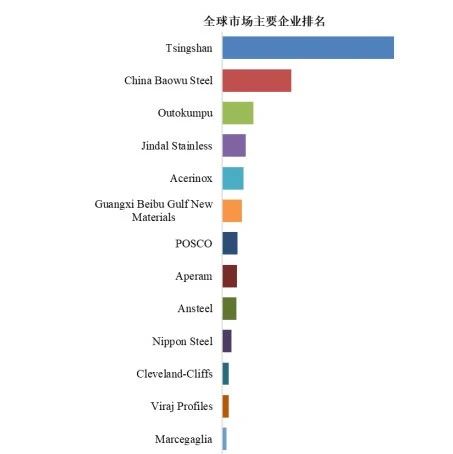
Core Viewpoint - The global austenitic stainless steel market is projected to reach $128.1 billion by 2031, with a compound annual growth rate (CAGR) of 3.7% from 2025 to 2031 [1][10]. Market Overview - Austenitic stainless steel is the most produced and widely used type of stainless steel, known for its excellent corrosion resistance, good plasticity and toughness, and non-magnetic properties [1]. - Major global producers include Tsingshan, China Baowu Steel, Outokumpu, and Jindal Stainless, with the top ten manufacturers holding approximately 59.0% of the market share in 2022 [5]. - The 300 series accounts for about 75.0% of the market share in terms of product type, while the food processing and catering sector is the largest downstream market, representing approximately 26.1% of the demand [7]. Key Drivers - The demand for austenitic stainless steel is driven by its superior performance and extensive applications across various core industries. Key drivers include: - Continuous investment in construction and infrastructure, where austenitic stainless steel is preferred for its corrosion resistance and aesthetic appeal [10]. - Increased demand in the automotive industry for lightweight, high-strength, and corrosion-resistant materials, particularly in the context of electric vehicles [10]. - Stable demand from the energy and heavy industries, including oil and gas, chemicals, and power sectors, due to stringent requirements for corrosion and high-temperature resistance [10]. - Growing requirements in food processing, medical devices, and pharmaceuticals for hygienic and non-toxic materials, driven by population growth and heightened health awareness [10]. Challenges - The austenitic stainless steel market faces challenges such as: - High and volatile raw material costs, particularly for key alloying elements like nickel and chromium, which are influenced by global supply-demand dynamics and geopolitical factors [13]. - Competition from alternative materials, including duplex stainless steel and high-performance plastics, which may offer better strength and corrosion resistance in certain applications [13]. - Economic uncertainties and rising trade protectionism that could lead to market demand fluctuations and supply chain disruptions [13]. - Increasingly stringent environmental regulations and requirements for energy consumption and carbon emissions, which impose higher technical and cost demands on manufacturers [13]. Opportunities - The austenitic stainless steel industry has multiple growth opportunities, including: - Industrialization and urbanization in emerging economies, leading to significant demand for infrastructure and consumer goods [14]. - Growing demand for high-value and customized products, prompting companies to develop specialized grades for specific corrosive environments or extreme temperature conditions [14]. - Advancements in recycling technologies and the adoption of green manufacturing practices, enhancing resource efficiency and reducing environmental impact [14]. - Integration of new material technologies and advanced manufacturing processes, such as 3D printing and surface modification, expanding application boundaries and improving performance [14]. - Rapid growth in demand for high-performance stainless steel in sectors like renewable energy, environmental engineering, and high-end equipment manufacturing, creating new market segments and profit opportunities [14].

北疆逐绿 点石成金
Zhong Guo Neng Yuan Wang· 2025-08-14 08:33
Core Viewpoint - The company emphasizes the integration of ecological protection and economic development, adhering to the principle of "green mountains and clear waters are as valuable as mountains of gold and silver" in its operations [1][3]. Group 1: Green Development Initiatives - The company has significantly increased its clean energy capacity from 465,000 kW in 2012 to 8.33 million kW, with nearly 50% of its installed capacity now from renewable sources [3][4]. - By 2025, the company expects to generate 18.1 billion kWh of clean energy, saving approximately 5.43 million tons of standard coal and reducing CO2 emissions by about 11.48 million tons, equivalent to planting over 62 million mature trees [3][4]. - Major projects like the "Shagehuang" wind and solar base are under construction, expected to provide around 8.934 billion kWh of clean electricity annually, saving 2.8212 million tons of standard coal and reducing CO2 emissions by 7.5391 million tons [4]. Group 2: Circular Economy Innovations - The company has developed a "coal-new energy-electricity-aluminum" circular economy model, effectively converting natural resources into economic benefits [6][7]. - The use of low-quality lignite in power generation has been optimized, with a capacity of 10 million tons per year, providing stable electricity for downstream aluminum production [7]. - By 2025, the proportion of green electricity used in aluminum production is projected to reach 26.7%, significantly reducing carbon emissions [7][8]. Group 3: Ecological Restoration Efforts - The company has invested 1.887 billion yuan in ecological restoration across five open-pit coal mines, restoring 88,600 acres and planting over 14 million trees and 18.06 million shrubs [11][12]. - The vegetation coverage in mining areas has increased from 65% to 90%, with soil erosion control effectiveness reaching 95% [11]. - The transformation of mining sites into eco-tourism attractions has improved local air quality and provided economic benefits to surrounding communities [12].

人民论坛:“甜蜜的烦恼”辩证看
Ren Min Ri Bao· 2025-08-14 03:33
Group 1 - Urban life is increasingly integrating nature, leading to both appreciation and challenges among residents, indicating an improvement in ecological conditions [1] - Cities are facing "sweet troubles" as they accommodate more natural elements, necessitating a balance between ecological benefits and urban living experiences [1] - Shanghai's Jing'an District has implemented a scientific approach to tree management, addressing the conflict between greenery and light access for residents [1] Group 2 - The shift from addressing isolated issues to managing broader categories of concerns is essential for effective urban governance, especially as public needs diversify [2] - Waste management has improved through recycling and technological advancements, transforming waste into resources, exemplified by Jiangsu Zhangjiagang's waste-to-energy initiatives [2] - The concept of circular economy and low-carbon development is being promoted through innovative waste management practices [2] Group 3 - Urban renewal projects are vital for utilizing underused spaces, preventing resource wastage, and enhancing safety [3] - Guangzhou's innovative use of bridge underpasses for cultural and recreational purposes demonstrates the potential for transforming neglected areas into vibrant community spaces [3] - The economic potential of seasonal changes, such as snow, highlights the importance of balancing development with environmental considerations [3]
嘉化能源(600273):国内脂肪醇龙头企业,热电联产成本优势显著
Guoxin Securities· 2025-08-14 02:41
Investment Rating - The report assigns an "Outperform the Market" rating for the company, with a reasonable valuation range of 10.20 to 11.31 CNY, indicating a potential premium of 13% to 27% over the current stock price of 8.91 CNY [4]. Core Insights - The company is a leading domestic player in the fatty alcohol sector, leveraging significant cost advantages from its combined heat and power (CHP) production model, which integrates energy generation with product manufacturing [1][2]. - The fatty alcohol market is expected to grow, with a projected demand of 1.0462 million tons in 2024, reflecting a compound annual growth rate (CAGR) of 6.01% from 2021 to 2024, driven by strong downstream demand in various industries [2]. - The company emphasizes shareholder returns through high dividend payouts and share buybacks, with a dividend payout ratio projected to reach 50% in 2025, resulting in an effective dividend yield of 7.40% to 9.02% [3][29]. Summary by Sections Company Overview - The company, established in 2003, focuses on CHP as its core business, producing and selling fatty alcohols, PVC, steam, and chlor-alkali products, among others. It has a current capacity of 200,000 tons for fatty alcohols and 297,000 tons for chlor-alkali products [1][14]. Production and Cost Advantages - The chlor-alkali segment benefits from self-generated electricity, significantly reducing production costs. The company is the only chlor-alkali producer in the northern Zhejiang region, allowing for efficient logistics and cost savings through direct pipeline supply to downstream customers [2][15]. Market Position and Growth - The company is set to become the largest fatty alcohol producer in China, with a market share exceeding 30% by 2025, supported by the upcoming addition of 150,000 tons of production capacity [2][4]. Financial Performance and Forecast - The company forecasts a steady increase in revenue and net profit over the next five years, with expected net profits of 1.156 billion CNY in 2025, growing to 1.411 billion CNY by 2027 [4][8]. Shareholder Returns - The company has maintained a high dividend payout policy, with a historical dividend payment rate of around 50% and a consistent share buyback program since 2018, enhancing shareholder value [3][26]. Research and Development - The company invests approximately 3% of its revenue in R&D, focusing on technological innovation to maintain its competitive edge in the industry [32][34].

旧衣“重生”,“红色”金寨迸发“绿色奇迹”
Yang Guang Wang· 2025-08-14 00:53
安徽省金寨县,一座以红色著称的小城,如今这里正孕育着一项绿色的产业革命:一件旧衣可以在 这里完成"化学重生",转化为高纯度再生聚酯原料,重新走上全球品牌的供应链。 走进位于金寨现代产业园的安徽新登利环保科技有限公司(以下称:新登利),全自动生产线正高 速运转。一旁的原料破碎机正将废旧衣物等边角料进行破碎,随后输送至已升温至270摄氏度的团料 机,融化成黑白颗粒物,成为可再生成衣的原料。 废旧纺织品不再是"破布头",而是通过优势核心技术重获新生。 "T2T化学法废旧纺织品化学分解技术不仅减少了行业对石油等原生资源的需求,同时显著降低了 对原生资源的依赖。"青岛大学纺织服装学院教授、博士生导师田明伟说,这一技术路径是新登利的绿 色循环发展的实践核心。 "项目总规划产能为10至11万吨/年,全面投产后,企业每年可回收利用超12万吨废旧纺织品,减排 温室气体超48万吨,相当于2600万棵树的碳汇效果。"叶孝喆向众人列出了一组可感知的清晰数据:相 比原生石油基路线,可降低约60%-85%的碳排放及能源消耗,大幅减少环境污染。 数字加持,筑创新防线 新质生产力的发展除了前沿技术的突破与企业的"绿色"实践,更体现在企业面对 ...
福建税务帮助企业算好“生态账”
Zhong Guo Chan Ye Jing Ji Xin Xi Wang· 2025-08-14 00:51
Group 1 - Fujian Province is focusing on the realization of ecological product value, integrating "ecological beauty" with "industrial prosperity" to explore pathways for ecological product value realization [1] - The Fuzhou Hongmiao Ridge Circular Economy Ecological Industrial Park has transformed wasteland into valuable land, featuring a comprehensive waste management system and ecological benefits [1] - Fujian Baoluo Environmental Energy Co., Ltd. operates a waste incineration power plant that outputs over 400 million kWh of green electricity annually, equivalent to saving 120,000 tons of standard coal and reducing CO2 emissions by 320,000 tons [1] Group 2 - Fuzhou tax authorities have established a "project manager" team to assist enterprises in understanding tax policies related to waste management and power generation, providing on-site guidance and risk assessment [2] - The Agricultural Circular Industry Park in Fuqing City converts livestock waste into organic fertilizer and biogas, addressing pollution while supplying green fertilizers for agriculture [2] - The Longyan City tax department has set up a "green channel" for environmental enterprises, providing specialized tax services and collaborating with other departments to address enterprise development challenges [3]
“甜蜜的烦恼”辩证看(人民论坛)
Ren Min Ri Bao· 2025-08-13 21:50
"滋儿哇——滋儿哇——"近来,上海市民经常听到蝉鸣,有人视其为城市背景音,有人则怨其带来噪声 困扰。"人在树下走,屎从天上来",河南郑州经五路与纬一路交叉口附近,夜鹭在树上筑巢,颇受群众 欢迎,可不时被鸟屎"袭击",也多了一些苦恼。江苏无锡的一个小区,绿化带草丛里钻出一只刺猬,怎 么对待这只可能附着寄生虫的"小家伙"?有人建议,"让它自己找路回家""不要打扰它"。 夏蝉、夜鹭、刺猬……当城市拥有更多自然生灵,虽有人欣喜、有人皱眉,却也说明生态向好,这 是"甜蜜的烦恼"。同时要看到,城市留给自然生态更大天地,容得下蝉鸣,也需兼顾多重感受,这为优 化治理留下有所作为的空间。 不妨看看上海静安区曹家渡街道的做法。辖区内有个小区,绿化率高,树木繁盛,这曾是"卖点"。然 而,高树增绿了,也遮挡了低层住户的采光与通风。如何平衡"绿"与"光"?专业勘察,制订方案,征求 意见,精准修剪……街道主动出击,整个过程有科学论证、专业支持、共治协商。不限于解决一个小区 的痛点,当地还发布上海首个街道级修树指引,树木遮挡治理有了参照。 从解决"一件事"到办好"一类事",以务实行动积极求解,才能在"烦恼"之中辟出治理新路径。 当美好生活 ...
万物新生上涨3.81%,报4.142美元/股,总市值9.11亿美元
Jin Rong Jie· 2025-08-13 13:47
Core Insights - The company, 万物新生 (RERE), opened with a 3.81% increase, reaching $4.142 per share, with a total market capitalization of $911 million as of August 13 [1] - Financial data indicates that as of March 31, 2025, the total revenue of 万物新生 is 4.653 billion RMB, reflecting a year-on-year growth of 27.45%, while the net profit attributable to shareholders is 42.8 million RMB, showing a significant increase of 146.09% [1] - The company is set to release its fiscal year 2025 interim report on August 20, prior to the market opening [1] Company Overview - 万物新生 is a Cayman Islands-registered holding company primarily operating through its domestic subsidiary, 上海万物新生环保科技集团有限公司 [1] - Established in 2011, the company positions itself as a "Internet + Environmental Protection" circular economy enterprise [1] - The company operates four main business lines: 爱回收, 拍机堂, 拍拍, and overseas business AHS Device, with a mission to maximize the utility of idle resources and integrate social responsibility into its business practices [1]

华润饮料“怡宝宝贝重塑计划”联合“爱回收”,开启全国30城“塑料瓶回收新生”
Jiang Nan Shi Bao· 2025-08-13 11:29
Core Viewpoint - China Resources Beverage officially launched the "Yibao Baby Rebirth Plan" 2025 action in Shenzhen, marking the start of the third year of the project [1] Group 1: Project Launch and Partnerships - The initiative collaborates with "Love Recycling," a leading smart recycling platform, to kick off the "Recycling and Rebirth" public welfare action [1] - The partnership utilizes over 30,000 smart recycling devices nationwide, enabling the recycling initiative to launch simultaneously in 30 cities [1] Group 2: Public Engagement and Impact - Over the past two years, the "Yibao Baby Rebirth Plan" has engaged the public through exhibitions, workshops, and interactive activities, attracting 69,857 citizens to become "Rebirth Partners" in cities like Chengdu, Wuhan, and Shanghai [1] - The "Rebirth Partner" system has been upgraded to integrate diverse social forces into a nationwide environmental protection ecosystem [1] Group 3: Commitment to Sustainability - China Resources Beverage aims to deepen the full-chain practice of "Recycling - Rebirth - New Life," collaborating with various societal forces to support the construction of a circular economy system [1] - The company promotes a green and sustainable lifestyle as a new social trend [1]
2024年全球塑料消费量据估突破5亿吨 联合国治理塑料污染新一轮谈判举行
Ren Min Ri Bao· 2025-08-13 07:27
Core Viewpoint - The global plastic pollution crisis is escalating, with projections indicating that plastic consumption will exceed 500 million tons in 2024, leading to severe environmental and health impacts [2][3]. Group 1: Current Situation of Plastic Pollution - Nearly half of the plastic produced annually is single-use, with 18% to 20% of plastic waste entering the oceans [3]. - Without intervention, annual plastic waste entering the oceans could reach 37 million tons by 2040 [3]. - The cumulative economic loss from plastic pollution could reach $281 trillion from 2016 to 2040, with total plastic entering the environment expected to increase by 50% by 2040 [3][5]. Group 2: Impact on Vulnerable Regions - Coastal areas and small island developing countries are disproportionately affected by plastic waste, despite contributing only 1.3% of global plastic production [4]. - Research indicates that Easter Island experiences an average of 500 pieces of plastic waste washing ashore every hour [4]. Group 3: Microplastics and Health Concerns - Microplastics pose significant risks, with potential agricultural losses estimated between 110 million to 360 million tons annually due to their impact on crops [5]. - The economic loss related to health issues from plastic pollution exceeds $1.5 trillion annually [5]. Group 4: Global Actions and Legislation - The European Union has implemented the Single-Use Plastics Directive, banning certain plastic items since July 2021, leading to significant reductions in plastic bag usage [7][8]. - Ethiopia has enacted a law prohibiting single-use plastic bags, with penalties for violations [9]. - China has taken comprehensive measures to control plastic pollution, including a significant reduction in plastic bag usage since the implementation of the "Limit Plastic Order" [10]. Group 5: Promoting Circular Economy - Experts emphasize that recycling alone cannot solve the plastic pollution crisis; a shift towards a circular economy is necessary [11]. - The global trade in non-plastic alternatives reached $485 billion in 2023, with developing economies showing a growth rate of 5.6% [11]. - Innovations in biodegradable packaging and sustainable materials are being explored by companies and research institutions [11][12].