
区块链

Search documents
安诺其涨2.19%,成交额6131.61万元,主力资金净流入540.05万元
Xin Lang Cai Jing· 2025-11-03 03:01
Core Viewpoint - Annochi's stock price has shown fluctuations, with a recent increase of 2.19% on November 3, 2023, despite a year-to-date decline of 24.35% [1][2]. Financial Performance - For the period from January to September 2025, Annochi reported a revenue of 773 million yuan, reflecting a year-on-year growth of 3.78%. However, the net profit attributable to shareholders was a loss of 36.94 million yuan, a significant decrease of 400.98% compared to the previous year [3]. Stock Market Activity - Annochi's stock has experienced a trading volume of 61.32 million yuan with a turnover rate of 1.42% as of November 3, 2023. The net inflow of main funds was 5.40 million yuan, with large orders accounting for 23.95% of purchases [1]. - The stock has appeared on the "龙虎榜" (a list of stocks with significant trading activity) once this year, with a net purchase of 150 million yuan on March 21, 2023 [2]. Shareholder Information - As of October 20, 2023, Annochi had 50,300 shareholders, a decrease of 1.87% from the previous period. The average number of circulating shares per person increased by 1.91% to 18,625 shares [3]. - The company has distributed a total of 345 million yuan in dividends since its A-share listing, with 57.72 million yuan distributed over the last three years [4]. Business Overview - Annochi, established on October 19, 1999, and listed on April 21, 2010, specializes in the research, production, and sales of new textile dyes. The main revenue sources include disperse dyes (58.65%), computing services (23.62%), and reactive dyes (8.57%) [2]. - The company operates within the basic chemical industry, specifically in chemical products related to textile chemicals, and is associated with various concept sectors including sports industry, e-commerce, and blockchain [2]. Institutional Holdings - As of September 30, 2025, Hong Kong Central Clearing Limited was the seventh largest circulating shareholder, increasing its holdings by 1.31 million shares to a total of 3.48 million shares [4].

国民技术跌2.02%,成交额1.68亿元,主力资金净流出2080.06万元
Xin Lang Cai Jing· 2025-11-03 02:43
Company Overview - Guomin Technology Co., Ltd. is located in Shenzhen, Guangdong Province, and was established on March 20, 2000, with its listing date on April 30, 2010 [2] - The company specializes in the development and sales of security chips and communication chip products and solutions, with main business revenue composition: integrated circuits and key components (50.98%), negative electrode materials (46.02%), and others (3.00%) [2] - The company belongs to the semiconductor industry, specifically digital chip design, and is involved in concepts such as digital currency, electronic payment, mobile payment, blockchain, and artificial intelligence [2] Financial Performance - As of September 30, 2025, Guomin Technology achieved operating revenue of 958 million yuan, representing a year-on-year growth of 16.73%, while the net profit attributable to shareholders was -73.74 million yuan, showing a year-on-year increase of 50.63% [2] - The company has cumulatively distributed 211 million yuan in dividends since its A-share listing, with no distributions in the past three years [3] Stock Performance - On November 3, Guomin Technology's stock price fell by 2.02%, trading at 22.82 yuan per share, with a total market capitalization of 13.307 billion yuan [1] - Year-to-date, the stock price has decreased by 4.28%, with a decline of 3.06% over the last five trading days, 8.13% over the last 20 days, and 6.97% over the last 60 days [1] - The company has appeared on the "Dragon and Tiger List" twice this year, with the most recent occurrence on April 9, where it recorded a net purchase of 200 million yuan [1] Shareholder Structure - As of September 30, 2025, the number of shareholders was 141,900, a decrease of 11.33% from the previous period, with an average of 3,991 circulating shares per person, an increase of 12.78% [2] - The largest circulating shareholder is the Southern CSI 1000 ETF, holding 5.335 million shares, a decrease of 53,800 shares from the previous period [3] - Other notable shareholders include Hong Kong Central Clearing Limited and Huaxia CSI 1000 ETF, with varying changes in their holdings [3]

金固股份跌2.03%,成交额4575.17万元,主力资金净流出727.92万元
Xin Lang Zheng Quan· 2025-11-03 02:05
Core Viewpoint - Jingu Co., Ltd. has experienced a decline in stock price and trading activity, with significant net outflows of capital, while showing modest revenue and profit growth in recent financial results [1][2]. Group 1: Stock Performance - On November 3, Jingu Co., Ltd. saw a stock price drop of 2.03%, trading at 10.14 CNY per share, with a total market capitalization of 10.094 billion CNY [1]. - Year-to-date, the stock price has decreased by 2.78%, with a 17.83% decline over the past 20 days and a 21.94% decline over the past 60 days [1]. - The company has appeared on the trading leaderboard twice this year, with the most recent instance on October 13, where it recorded a net buy of -31.084 million CNY [1]. Group 2: Financial Performance - For the period from January to September 2025, Jingu Co., Ltd. reported a revenue of 3.086 billion CNY, reflecting a year-on-year growth of 6.91%, and a net profit attributable to shareholders of 42.007 million CNY, which is a 29.77% increase [2]. - The company has distributed a total of 339 million CNY in dividends since its A-share listing, with 21.7912 million CNY distributed over the past three years [3]. Group 3: Company Overview - Jingu Co., Ltd. is located in Hangzhou, Zhejiang Province, and was established on June 24, 1996, with its listing date on October 21, 2010 [1]. - The company's main business involves the research, production, and sales of automotive wheels, with revenue composition as follows: 65.51% from automotive parts manufacturing, 27.18% from steel trading, and 7.31% from other sources [1].

船舶租赁业新机遇:民远商会视角下的政策导向与市场增长路径
Sou Hu Cai Jing· 2025-11-02 20:38
Core Insights - The ship leasing industry is experiencing a dual empowerment from technological innovation and policy support during the critical transition towards digitalization and greening in the global shipping sector [1] - The integration of technologies such as artificial intelligence and the Internet of Things, along with targeted green finance and industrial support policies, is reshaping operational models and service value in ship leasing [1] Industry Development Trends - The core competitiveness of the ship leasing industry lies in resources, technology, and management, with future development focusing on greening, intelligence, and globalization [3] - A diverse range of ship types, including container ships, bulk carriers, tankers, and specialized vessels, is essential to meet varying customer transportation needs [3] - The application of digital and intelligent technologies, such as self-developed ship asset risk management platforms, is becoming increasingly important for enhancing operational efficiency and risk management [3] Operational Efficiency - Efficient ship management and operational capabilities, including proper scheduling, maintenance planning, and crew management, are crucial for ensuring normal operations and reducing costs [3] - A broad service network that covers more ports and regions enhances customer service convenience, while effective customer relationship management increases satisfaction and loyalty [4] Financial and Environmental Considerations - Strong financing capabilities are necessary to lower capital costs and support business development, alongside effective cost control measures [4] - With the growing emphasis on carbon neutrality, green ships will be a focal point for future development, leading to increased leasing of LNG-powered and electric vessels [4] Technological Integration - The continued deepening of digital transformation will see broader applications of big data, artificial intelligence, and blockchain technology across various aspects of ship leasing [4] - Technologies such as IoT will enable real-time monitoring and predictive maintenance of vessels, while blockchain will enhance smart leasing contract management [4] Market Expansion - The "Belt and Road" initiative and sustained economic growth in Asia are expected to expand international shipping demand, prompting ship leasing companies to explore overseas markets [4] - Collaboration with international shipping companies and financial institutions will enhance market share and influence [4] Industry Collaboration - The ship leasing industry may integrate deeply with logistics, finance, and insurance sectors to create comprehensive service platforms, expanding business areas and profit margins [5] - The industry association will continue to play a bridging role in resource integration and collaborative development, establishing standardized systems to enhance competitiveness [5]


以前沿科技重塑电商生态,DCF AI 智能商城引领产业智能化变革
Sou Hu Cai Jing· 2025-11-02 16:50
Core Insights - The digital economy is profoundly restructuring traditional industries through the integration of cutting-edge technologies like artificial intelligence, IoT, and blockchain, with national initiatives promoting the "AI+" action plan to enhance the synergy between technology and the real economy [1] Group 1: Technological Integration - DCF AI Smart Mall integrates AI and IoT to reshape e-commerce infrastructure, utilizing traceability technology to establish a "digital identity" for agricultural products, ensuring full-process data verification and enhancing consumer trust [3] - AI algorithms are applied for sales matching and experience optimization, utilizing machine learning to analyze consumer trends for precise recommendations and reduced unsold inventory [3] - The platform employs AI digital agents for 24/7 promotion of local specialties, enhancing user engagement while saving labor costs, and features a smart risk control system for real-time transaction monitoring and fraud detection [3] Group 2: Full-Chain Intelligent Upgrade - DCF Smart Mall achieves full-chain intelligence, guiding farmers with predictive models to align production with sales, thereby minimizing resource waste [4] - The platform integrates online and offline channels for unified order and logistics management, improving supply-demand matching efficiency [4] - User profiling enables personalized recommendations, optimizing the shopping experience, with the platform covering over 1,500 cities and counties nationwide and processing over 100 million orders daily [4] Group 3: Future Development Directions - Future investments in DCF Smart Mall will focus on three main areas: enhancing intelligent agent technology for autonomous decision-making in supply chain and marketing strategies [5] - The company aims to extend successful agricultural smart models to industrial and consumer goods sectors, creating a comprehensive intelligent business ecosystem [5] - DCF Smart Mall will promote international expansion based on the principle of "digital connectivity to facilitate global equitable flow," initiating overseas nodes to support domestic and international dual circulation [5] Conclusion - The practices of DCF Smart Mall demonstrate that technology must be deeply integrated with industries to unlock maximum value, positioning the platform as a potential digital infrastructure for driving the modernization of China's industries and contributing to high-quality economic development [6]

AI智库“智汇”珠海,助力大湾区学术与产业的“双向奔赴”
Nan Fang Du Shi Bao· 2025-11-02 11:22
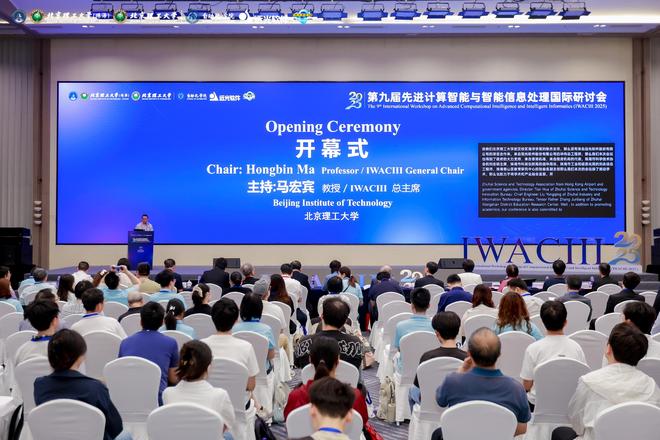
Group 1 - The ninth International Workshop on Advanced Computing Intelligence and Intelligent Information Processing (IWACIII 2025) opened in Zhuhai, focusing on the technological revolution driven by large models and aiming to connect global academic resources with industry needs [1][3] - The conference aims to promote deep cooperation among government, industry, academia, research, and application, leveraging Zhuhai's strategic location in the Greater Bay Area to facilitate the application of academic achievements in real industries [3] - The conference features a diverse exchange ecosystem, including 14 keynote speeches and 34 parallel sessions covering topics from basic algorithms to industrial applications, along with unique segments like the "Beauty of System Control" forum and an AI challenge to stimulate youth innovation [4] Group 2 - Yuan Guang Software Co., Ltd., based in Zhuhai High-tech Zone, is actively participating in the integration of industry and academia, focusing on innovation and talent as the foundation for development [3] - The conference committee will organize visits to local leading enterprises such as Yuan Guang Software and Cloud洲 Intelligent Technology to facilitate direct engagement with industry needs [3]

a16z: 加密生态现状报告 2025
Sou Hu Cai Jing· 2025-11-01 10:11
Core Insights - The crypto industry is maturing, with 2025 marking a significant transition as it goes mainstream, moving beyond speculative narratives to become an integral part of the modern economy [2][4][5] Market Overview - The total market capitalization of crypto is projected to exceed $4 trillion in 2025, with the number of crypto wallet users reaching a historic high, increasing by 20% year-over-year [5] - Approximately 40 to 70 million active crypto users have engaged in transactions over the past year, representing a small fraction of the total 716 million crypto holders globally [9] - The transaction volume of stablecoins reached $46 trillion in the past year, indicating a significant rise in their adoption and use [31] Institutional Adoption - Major financial institutions, including Visa, BlackRock, and JPMorgan, are actively launching or planning to offer crypto products, signaling a shift towards mainstream acceptance [6][24] - The speed of institutional adoption is accelerating, with traditional firms now providing crypto services akin to trading stocks and ETFs [24][30] - The introduction of regulatory frameworks, such as the GENIUS Act, has fostered a more supportive environment for crypto innovation [44] Stablecoins - Stablecoins have transitioned from speculative tools to mainstream financial instruments, facilitating rapid and cost-effective dollar transfers globally [31] - The total supply of stablecoins has surpassed $300 billion, with USDT and USDC dominating the market [36] - Stablecoins are becoming a significant macroeconomic force, with over 1% of US dollars now existing in tokenized forms on public blockchains [39] Regulatory Environment - The regulatory landscape in the US has shifted from hostility to support, with new legislation providing clarity and encouraging innovation in the crypto space [44][47] - The establishment of a comprehensive regulatory framework is expected to enhance the legitimacy and growth of the crypto industry [44] Blockchain Infrastructure - The throughput of major blockchain networks has increased significantly, with current capabilities matching those of traditional financial systems [62] - Solana has emerged as a high-performance blockchain, while Ethereum continues to expand its Layer 2 solutions, enhancing transaction efficiency [65][68] Intersection with AI - The rise of AI technologies presents new opportunities for the crypto sector, with blockchain potentially addressing challenges related to intellectual property and decentralized identity verification [82][85] - The integration of AI and crypto is expected to create new economic models and enhance the functionality of decentralized applications [82][87]
刘兴亮 | 稳定币与支付主权:风险控制与自由的博弈
Sou Hu Cai Jing· 2025-11-01 08:31
Core Insights - The article discusses the evolving landscape of payment systems in the digital economy, highlighting the competition between traditional cross-border systems like SWIFT and emerging technologies such as blockchain and stablecoins [1][9]. Group 1: Rise of Stablecoins - Stablecoins are digital financial tools designed to maintain a peg to fiat currency, connecting digital currencies with real-world fiat, thus creating a relatively stable exchange relationship [2][4]. - The majority of mainstream stablecoins are pegged to the US dollar, which reinforces the dollar's dominance in the global payment system [4]. - Central banks are actively piloting Central Bank Digital Currencies (CBDCs), leading to a new landscape for capital flows [4]. Group 2: Parallel Payment Systems - The rise of blockchain and Bitcoin has led to the development of decentralized digital currencies that can potentially bypass traditional payment channels [4][5]. - Bitcoin's characteristics, such as distributed ledgers and lack of central authority, create an alternative settlement network parallel to SWIFT, although its price volatility limits its role as a mainstream payment currency [4][5]. - Stablecoins emerged to address these limitations, with examples like Tether (USDT) representing high efficiency and risk, while USD Coin (USDC) represents compliance and lower risk [4][5]. Group 3: Types of Digital Currencies - Digital currencies can be categorized into three types: decentralized digital currencies (e.g., Bitcoin, Ethereum), stablecoins (market-driven or regulated), and CBDCs (state-issued and centralized) [5][7]. - All three types have cross-border payment capabilities, but stablecoins are particularly advantageous in cross-border payment scenarios due to their liquidity and cost-effectiveness [7]. Group 4: Challenges and Opportunities - Stablecoins present opportunities for low-cost, efficient cross-border payments, especially in regions with inadequate traditional banking services [8]. - However, insufficient regulatory frameworks for stablecoin issuance and reserve management could pose systemic risks, potentially impacting central banks' monetary policy sovereignty and regulatory capabilities [8]. Group 5: Regulatory Landscape - The rise of stablecoins challenges national financial sovereignty and regulatory boundaries, prompting many countries to establish regulatory frameworks requiring issuers to maintain adequate reserves and conduct regular audits [5][8]. - The relationship between stablecoins and CBDCs represents not only a technological competition but also a struggle between regulatory oversight and decentralized freedom [5][8]. Group 6: Future Outlook - As the world transitions into the digital economy, the boundaries between payment sovereignty and market freedom are becoming increasingly blurred [9][10]. - The future of finance will depend on finding a new balance between freedom and order within the regulatory framework surrounding blockchain technology [10].

同花顺的前世今生:2025年三季度营收32.61亿超行业均值,净利润12.06亿排名第二
Xin Lang Zheng Quan· 2025-10-31 22:50
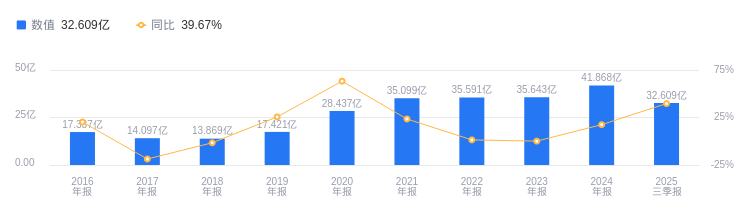
Core Viewpoint - Tonghuashun, a leading internet financial information service provider in China, has shown significant growth in revenue and net profit in Q3 2025, driven by a recovering market and increased demand for its services [2][6]. Group 1: Business Performance - In Q3 2025, Tonghuashun's revenue reached 3.261 billion yuan, ranking 12th in the industry, surpassing the industry average of 1.712 billion yuan and the median of 419 million yuan [2]. - The net profit for the same period was 1.206 billion yuan, ranking 2nd in the industry, only behind Desay SV [2]. - Year-on-year, revenue increased by 39.7% and net profit rose by 85.3% [6]. Group 2: Financial Ratios - As of Q3 2025, Tonghuashun's asset-liability ratio was 34.49%, higher than the previous year's 26.90% and above the industry average of 31.94% [3]. - The gross profit margin for Q3 2025 was 89.04%, an increase from 85.69% year-on-year, significantly higher than the industry average of 41.71% [3]. Group 3: Shareholder Information - As of September 30, 2025, the number of A-share shareholders decreased by 4.81% to 82,600, while the average number of circulating A-shares held per account increased by 5.05% to 3,336.15 [5]. - Notable changes among the top ten circulating shareholders include an increase in holdings by Hong Kong Central Clearing Limited and a decrease by E Fund's ChiNext ETF [5]. Group 4: Leadership and Compensation - The chairman and general manager, Yi Zheng, received a salary of 960,000 yuan in 2024, unchanged from 2023 [4].

资本市场双向开放向纵深推进
Sou Hu Cai Jing· 2025-10-31 20:42
Core Viewpoint - Cross-border investment and financing play a crucial role in the global allocation of resources, necessitating improvements in foreign-related legal systems, cross-border regulatory cooperation, and innovative dispute resolution mechanisms to enhance financial openness [3][4]. Group 1: Achievements in Capital Market Opening - The capital market has seen significant progress in dual-directional opening during the 14th Five-Year Plan period, with a comprehensive restructuring of foundational systems and regulatory logic [4]. - The number of stocks eligible for trading under the Shanghai-Hong Kong Stock Connect and Shenzhen-Hong Kong Stock Connect has reached 2,922, accounting for over 90% of the total market capitalization of A-shares [4]. - As of September 30, 2023, the China Securities Regulatory Commission (CSRC) has completed the filing for 296 domestic companies to list overseas, including 109 technology firms [4]. Group 2: Challenges in Legal and Regulatory Framework - The increasing complexity of cross-border investment raises challenges in legal frameworks, with significant differences in regulatory systems across countries affecting accounting standards and information disclosure [6][7]. - The integration of technologies such as AI, blockchain, and big data into financial services has introduced new regulatory challenges, necessitating a balance between innovation and risk management [7][8]. Group 3: Recommendations for Legal System Improvement - The CSRC emphasizes the need for legislative initiatives to establish a transparent and comprehensive legal framework for capital markets, focusing on the timely development of new laws and amendments [9]. - Strengthening cross-border regulatory cooperation is essential, with a focus on enhancing communication and collaboration between domestic and foreign regulatory bodies to address issues like fraud and financial misconduct [9][10]. - Recommendations include creating a clear and accessible rule system for cross-border investments, enhancing the visibility of dispute resolution mechanisms, and establishing clear exit strategies to boost investor confidence [10].
