
循环经济

Search documents
助力“两新”政策落地 税务部门“反向开票”服务1.33万户资源回收企业
Zheng Quan Shi Bao Wang· 2025-08-11 12:44
Group 1: Policy Implementation and Impact - The "reverse invoicing" policy has effectively addressed the long-standing issue of "missing source invoices" in the resource recovery industry, facilitating smoother transactions for resource recovery companies [2][3] - As of June 30, 2023, 13,300 resource recovery enterprises issued reverse invoices amounting to 515.2 billion yuan, with 5.11 million invoices issued [1] - The policy has significantly reduced financial costs for companies, allowing them to directly issue invoices to individual sellers, thus enhancing operational efficiency [2] Group 2: Economic Benefits and Growth - The implementation of the "reverse invoicing" policy has led to a notable increase in the volume of waste vehicle dismantling, with one company expecting a more than 100% increase in dismantled vehicles this year [2] - In Wuhu, the "old-for-new" consumption policy has generated transactions of 1.0495 million units, driving approximately 5.7 billion yuan in consumption [3] - The policy has encouraged more individuals and enterprises to participate in waste recovery, thus supporting the "two new" policy effectively [3] Group 3: Compliance and Industry Awareness - The awareness of compliance in the resource recovery industry has gradually increased since the implementation of the "reverse invoicing" policy, allowing companies to operate more legally and efficiently [4] - Companies can now directly purchase waste materials from individuals, reducing reliance on intermediaries and associated risks [4] Group 4: Circular Economy Promotion - The "reverse invoicing" policy has facilitated the smooth operation of the waste recovery chain, enhancing the resource utilization rate of construction waste and reducing carbon emissions [7][8] - The policy has led to a significant increase in the sales of recycled materials, with one company reporting a 58% year-on-year growth in sales [8] - The overall recovery system in China is becoming more robust, with a 65% year-on-year increase in the recovery of scrapped vehicles in the first four months of this year [9]
电力市场计量结算新规发布;首个储能强制性国标生效
2 1 Shi Ji Jing Ji Bao Dao· 2025-08-11 11:58
碳中和周报关注"双碳"领域的最新前沿动态,包括碳中和政策、地方动态、企业实践等。我们将通过精选每周碳中和领域的重 大事件,并进行点评的方式,提供一个及时全面的碳中和信息平台。 21碳中和课题组快评:在全球气候压力下,循环经济能高效利用资源、减少排放。COP30将循环经济纳入主题日,有助于提升 其全球关注度,推动各国在这一关键领域深化合作,为气候治理注入新活力。二、地方动态 8月6日,国家发展改革委、国家能源局发布《电力市场计量结算基本规则》(以下简称《规则》)。《规则》共6章56条,包含总 则、总体要求、计量管理、结算管理、监督管理、附则。其中提出了结算准备、结算依据编制与发布、电费结算、追退补和清 算等相关要求。 国家能源局有关负责人表示,《规则》在推动电力市场计量结算业务统一方面明确了要加强计量业务管理、规范结算业务管 理、强化结算风险管理、统一电费收付要求四方面重点内容。在统一电费收付要求方面,结合电力市场建设运行实际,规范了 发电企业与电网企业电费收付流程要求,并首次在基本规则层面明确用户侧与电网企业电费收付流程要求,规范了增值税发票 开具、电费结算协议签订、承兑汇票使用等管理内容。 21碳中和课题组 ...

(经济观察)中国“反向开票”助力“两新”落地 促进循环经济
Zhong Guo Xin Wen Wang· 2025-08-11 11:22
Group 1 - The "reverse invoicing" policy has been implemented to support the recycling industry, allowing resource recovery companies to issue invoices to individuals selling scrap products, effectively addressing the long-standing issue of "missing source invoices" in the industry [1][2] - As of June 30, 2023, 13,300 resource recovery companies issued invoices amounting to 515.2 billion yuan, with 5.11 million invoices issued, demonstrating the policy's positive impact on the circular economy [1] - The policy encourages more enterprises and individuals to participate in waste recycling, supporting the implementation of the "Two New" policies and promoting the development of the circular economy [2][3] Group 2 - A scrap vehicle recycling company reported a significant increase in its operations, with an expected processing volume of 20,000 vehicles this year, representing over 100% growth, attributed to the "reverse invoicing" policy [2] - The policy has led to a 58% year-on-year increase in the sales of recycled construction waste materials, enhancing the resource utilization rate and fostering collaboration across the supply chain [3] - In the first four months of the year, the domestic scrap vehicle recovery volume reached 2.767 million units, a 65% year-on-year increase, while the recovery of discarded household appliances and electronic products also saw significant growth [4]
税务部门“反向开票”政策持续释放“三大效应”
Zheng Quan Ri Bao Wang· 2025-08-11 11:13
Core Viewpoint - The implementation of the "reverse invoicing" policy in the resource recovery industry has significantly facilitated the acquisition of invoices for scrapped products, promoting the development of the circular economy and enhancing industry order [1] Group 1: Policy Impact - As of June 30, 2023, 13,300 resource recovery enterprises issued reverse invoices to 1.67 million individuals, with a total invoicing amount of 515.2 billion yuan and 5.11 million invoices issued [1] - The "reverse invoicing" policy, effective from April 29, 2024, aims to support large-scale equipment updates and the replacement of consumer goods, enhancing convenience for resource recovery companies [1] Group 2: Industry Growth - The resource recovery system in China is becoming increasingly robust, driving the recycling, dismantling, and reuse industry chain [1] - In the first four months of 2023, the domestic scrap vehicle recovery volume reached 2.767 million units, a year-on-year increase of 65% [1] - The number of standardized dismantled old household appliances exceeded 7 million units, growing by 25% [1] - The recovery volume of discarded electrical and electronic products led the industry with a year-on-year growth rate of 70% [1]
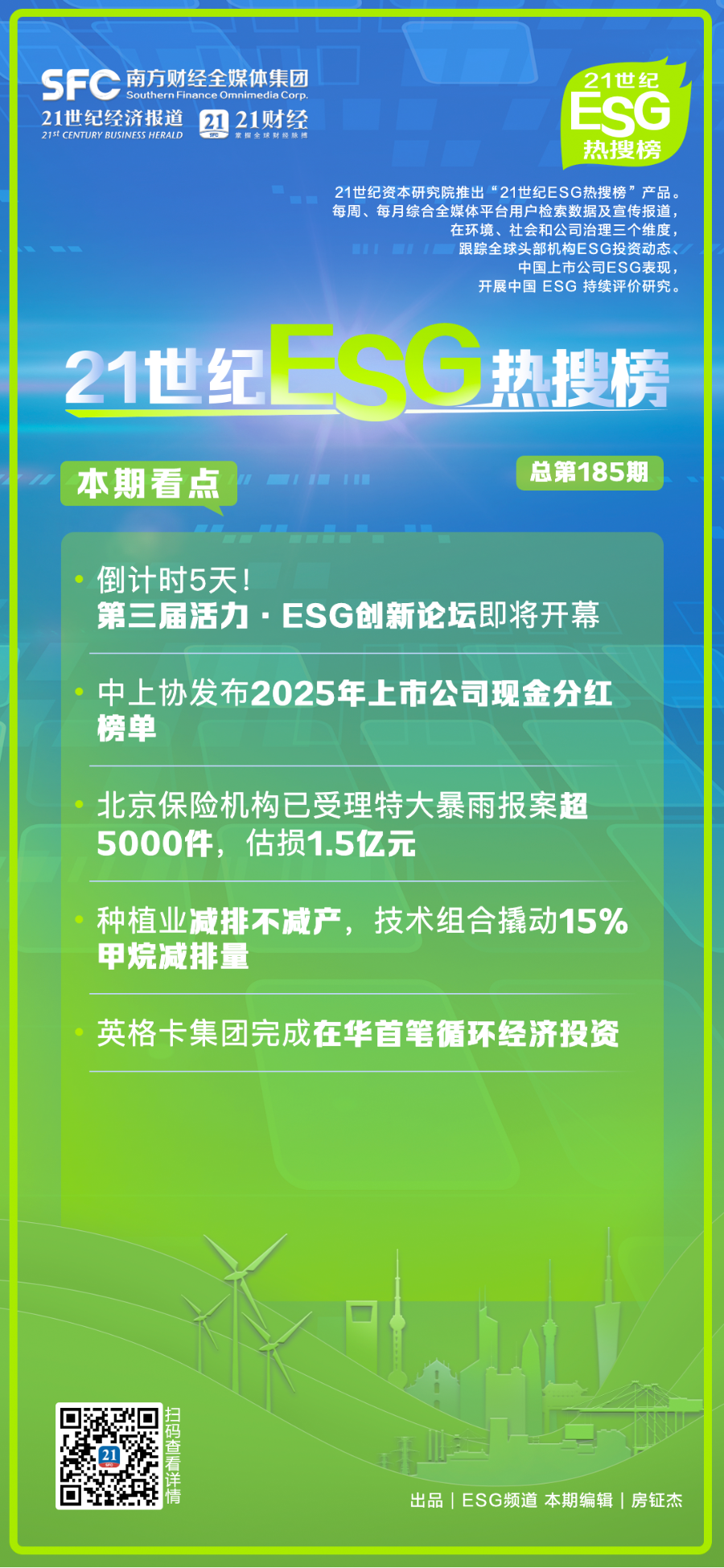
倒计时5天!第三届活力·ESG创新论坛即将开幕
2 1 Shi Ji Jing Ji Bao Dao· 2025-08-11 10:48
Group 1 - The third "Vibrant ESG" Innovation Forum is set to open on August 16, 2025, in Shanghai, focusing on ESG practices and trends in the industry [6] - The China Securities Association has released the 2025 cash dividend ranking for listed companies, with a total cash dividend of 2.4 trillion yuan for 2024, marking a 9% increase from 2023 [7] - The Ministry of Finance has allocated 1.015 billion yuan for agricultural disaster relief and water conservancy disaster funds to support affected areas in response to floods and droughts [8] Group 2 - Beijing insurance institutions have received over 5,000 claims related to severe rainstorms, with estimated losses of approximately 154.65 million yuan [9][10] - Research indicates that agricultural practices can achieve a 15% reduction in methane emissions without compromising production, emphasizing the importance of technological innovation [11] - Ingka Group has made its first circular economy investment in China, focusing on high-quality recycling of plastic waste through a partnership with Shanghai Ruimo Environmental New Materials Co., Ltd [12]
倒计时5天!第三届活力·ESG创新论坛即将开幕|ESG热搜榜
2 1 Shi Ji Jing Ji Bao Dao· 2025-08-11 10:48
Group 1 - The third "Vibrant ESG" Innovation Forum will be held on August 16, 2025, in Shanghai, focusing on ESG practices and trends [4] - The forum will feature policy participants, leading enterprises, and experts discussing digital transformation in traditional energy and green transitions in supply chains [4] Group 2 - The China Listed Companies Association announced the 2025 cash dividend ranking, with total cash dividends reaching 2.4 trillion yuan in 2024, a 9% increase from 2023 [5] - The top five companies by cash dividend total are Industrial and Commercial Bank of China, China Construction Bank, China National Petroleum Corporation, Agricultural Bank of China, and Bank of China [5] Group 3 - The Ministry of Finance allocated 1.015 billion yuan for agricultural disaster relief and water conservancy, supporting areas affected by floods and droughts [6] - The funding will assist in crop replanting, agricultural facility repairs, and drought relief measures in various provinces [6] Group 4 - Insurance institutions in Beijing have received over 5,000 claims related to severe rainstorms, with estimated losses of approximately 154.65 million yuan [7][8] - The majority of claims are from vehicle insurance, followed by agricultural insurance and property insurance [8] Group 5 - Research from the Chinese Academy of Agricultural Sciences indicates that technology innovation is crucial for achieving a 15% reduction in methane emissions from agriculture while maintaining high production [9] - The focus is on developing low-cost, easily implementable technologies that align with regional climate and soil conditions [9] Group 6 - Ingka Group has made its first circular economy investment in China by investing in Shanghai Ruimo Environmental New Materials Co., which focuses on high-quality recycling of plastic waste [10] - The investment aims to enhance the impact on the local recycling market and contribute to solving global plastic waste issues [10] Group 7 - Honor's ESG goals emphasize reducing barriers for elderly users in AI technology applications, aligning with its Alpha strategy [11] - The company is developing user-friendly AI features, such as "one-click" applications, to facilitate access for older adults [11]
资源回收企业“反向开票”金额超5000亿元
第一财经· 2025-08-11 10:23
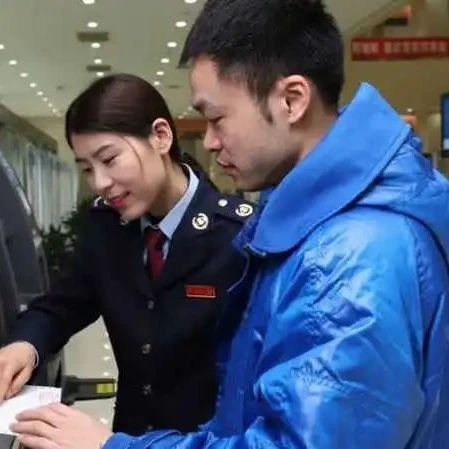
Core Viewpoint - The implementation of the "reverse invoicing" policy for resource recovery enterprises has shown significant results in promoting the development of the resource recovery industry and reducing the burden on companies [3][4]. Group 1: Policy Implementation and Impact - As of June 30, 2023, 13,300 resource recovery enterprises issued reverse invoices to 1.67 million individuals, with a total invoicing amount of 515.2 billion yuan and 5.11 million invoices issued [3][4]. - The "reverse invoicing" policy allows qualified resource recovery enterprises to issue invoices to individuals selling scrapped products, addressing the previous challenges of obtaining the first invoice and increasing tax burdens [4][5]. - The policy has improved operational efficiency for companies, as evidenced by the experience of Wuhu Chery Resource Technology Co., which reported a significant reduction in financial costs due to the new invoicing process [4][5]. Group 2: Industry Benefits and Growth - The policy has effectively resolved the long-standing issue of resource recovery enterprises lacking the "first invoice," which hindered their ability to deduct value-added tax and obtain corporate income tax deductions [5]. - Wuhu Chery Resource Technology Co. has issued reverse invoices to over 4,000 individuals, amounting to nearly 8 million yuan, with an expected increase in scrapped vehicle processing volume exceeding 100% this year [5]. - The promotion of the "reverse invoicing" policy encourages more enterprises and individuals to participate in the recycling of waste materials, supporting the implementation of the "two new" policies [5].
资源回收企业“反向开票”金额超5000亿元
Di Yi Cai Jing· 2025-08-11 09:19
Core Insights - The "reverse invoicing" policy has shown significant results in promoting the development of the resource recovery industry, with 13,300 resource recovery enterprises issuing reverse invoices amounting to 515.2 billion yuan to 1.67 million individuals by the end of June this year [1][2] Group 1: Policy Implementation - The State Administration of Taxation announced the "reverse invoicing" policy in April last year to support resource recovery enterprises, allowing them to issue invoices to individuals selling scrapped products, thus addressing the issue of obtaining the first invoice and reducing tax burdens [2] - The policy aims to enhance operational efficiency, promote the implementation of the "two new" policies, standardize industry order, and facilitate the development of the circular economy [2] Group 2: Industry Impact - The policy has effectively resolved the long-standing issue of resource recovery enterprises lacking the "first invoice," which hindered their ability to deduct value-added tax and obtain corporate income tax deductions, encouraging more participation in waste recycling [3] - Companies like Wuhu Chery Resource Technology Co., Ltd. have reported a significant decrease in financial costs and an increase in operational efficiency due to the ability to issue invoices directly to individuals [2][3] - The company expects to process over 20,000 scrapped vehicles this year, with an increase of over 100% in processing volume, demonstrating the positive impact of the policy on business growth [3]
迪尔化工: 2025年半年度报告摘要
Zheng Quan Zhi Xing· 2025-08-11 09:13
Core Viewpoint - The company focuses on the deep development and innovation of the nitric acid industry chain, integrating research and development, production, and sales, with core products including nitric acid, potassium nitrate, magnesium nitrate, energy storage molten salts, and high-end water-soluble fertilizers, widely applied in various fields such as solar thermal power generation, energy storage, chemicals, agriculture, military, and electronics manufacturing [1][2]. Company Overview - The company has established a strong circular economy by developing a series of environmentally friendly and resource-saving chemical projects, becoming a core enterprise in two major green industrial chains: "Nitric Acid-Nitrate-Molten Salt, Nitrogen Water-Soluble Fertilizer" and "Synthetic Ammonia-Nitric Acid-Nitrobenzene-Aniline, Rubber Additives" [2]. - The company holds 23 utility model patents and has three major independent brands: "Dier Chemical," "Wolfu," and "Hehuanshu," along with certifications for ISO9001, ISO14001, and ISO45001 [2]. Business Strategy - The company aims to become a global leader in green chemical solutions, focusing on the research and development of molten salt energy storage materials and innovative high-efficiency nitrogen water-soluble fertilizers, while actively expanding into emerging markets such as solar thermal energy and environmentally friendly agriculture [3]. - The company has built a mature global supply and sales network over more than 20 years in the nitric acid industry, with end customers including well-known domestic and international enterprises [3]. Financial Performance - As of the end of the reporting period, total assets amounted to approximately 750.80 million, a decrease of 2.12% from the previous year [6]. - The company's operating income was approximately 302.47 million, reflecting a decline of 26.59% year-on-year, while net profit attributable to shareholders was approximately 26.90 million, down 46.67% [6]. - The net cash flow from operating activities was negative at approximately -57.26 million, a significant decrease compared to the previous year's positive cash flow [6]. Shareholding Structure - The largest shareholder, Xindier, holds 19.64% of the company's total shares, while the actual controller, Liu Xiyu, directly holds 4.73% and collectively controls 24.37% of the shares [8]. - The second-largest shareholder, Huayang Group, has signed a concerted action agreement with Liu Xiyu, maintaining consistency on major issues [8].
长寿经开区阔步迈向近零碳园区
Zhong Guo Hua Gong Bao· 2025-08-11 05:39
Core Viewpoint - The Longshou Economic Development Zone in Chongqing is focusing on green development and aims to establish a near-zero carbon park, showcasing significant advancements in low-carbon transformation and renewable energy utilization. Group 1: Low-Carbon Transformation - The Longshou Economic Development Zone has implemented precise carbon emission management, with 40 key enterprises, including Chuanwei Chemical, actively participating in carbon trading, resulting in a reduction of carbon emission gap to 530,000 tons in 2023, a year-on-year decrease of 21% [2] - The zone has rejected multiple high-pollution projects and has provided comprehensive support for ongoing projects since 2020, leading to 20 enterprises achieving efficient and environmentally friendly production [2] - The near-zero carbon park pilot has successfully passed mid-term evaluation, with energy-saving and carbon-reduction projects cumulatively reducing CO2 emissions by 1.784 million tons [2] Group 2: Renewable Energy Initiatives - Wangbian Electric has completed a rooftop photovoltaic project with an installed capacity of 9.4 MW, contributing to the green power supply in the zone [3] - Chuanwei Chemical has established a hydrogen fuel cell project with a capacity of 3,000 standard cubic meters per hour, reducing CO2 emissions by 500,000 tons annually [3] - The zone promotes distributed photovoltaic planning and has seen other companies, like International Composite, contribute to renewable energy projects [3] Group 3: Circular Economy Development - The Longshou Economic Development Zone has developed a circular economy with leading enterprises like Chongqing Steel, focusing on a full-process recycling industry chain [4] - The carbon capture and utilization device by Kabeile reduces CO2 emissions by 287,000 tons annually while producing 190,000 tons of methanol [4] - The zone has implemented deep treatment of organic waste gas in 10 enterprises, enhancing air quality [4] Group 4: Green Industry Growth - New Zobang's lithium battery material production has strengthened the development of the new energy materials industry in the zone, which has attracted over 230 key enterprises [5] - The zone encourages enterprises to apply for green factory certification, with 18 factories recognized at the municipal level, including 10 at the national level [5] Group 5: Future Outlook - The Longshou Economic Development Zone plans to continue promoting the green low-carbon transformation of traditional industries and enhance the green manufacturing system [6] - The zone aims to deepen the construction of a waste-free industrial park and improve carbon accounting systems to ensure compliance with carbon quotas [6]