产业升级

Search documents
社评:这个“3000万+”为中国大飞机“蹚了路”
Huan Qiu Wang Zi Xun· 2025-12-15 15:44
Core Insights - The C909 regional aircraft has surpassed 30 million passengers, marking a significant milestone for China's civil aviation industry [1][2] - The delivery of 175 C909 aircraft accounts for over 60% of the domestic regional aircraft market, with operations extending to 12 countries [1][2] - The C909's successful commercial operation has paved the way for future models like the C919 and C929, contributing to the establishment of a trusted brand in the Chinese aviation sector [2][3] Industry Development - The C909 has undergone comprehensive market testing over its nine years of operation, becoming a key player in connecting regional routes within China and gaining international certifications [2][3] - The transition from model development to brand management, exemplified by the C909's rebranding, signifies a critical shift in China's approach to civil aviation [2][3] - The C909's development has addressed fundamental challenges in the early stages of industrialization, creating a skilled workforce across various sectors of the aviation industry [3][4] Economic Impact - The civil aviation sector is a crucial driver of economic growth in China, with significant multiplier effects on various industries, including materials, electronics, and manufacturing [3][4] - The C909 and its successors represent a strategic move to diversify the global aviation market and reduce reliance on Western manufacturers like Boeing and Airbus [3][4] - The ongoing support for the aviation industry is reflected in national policies aimed at fostering the development of strategic emerging industries [4] Future Outlook - The C909's achievements serve as a foundation for future advancements in China's aviation sector, with a focus on maintaining competitive advantages in a rapidly evolving market [4][5] - The emphasis on international collaboration highlights the importance of integrated design and development capabilities rather than complete self-sufficiency [5] - The potential for Chinese-made aircraft to confidently enter global markets is anticipated as the industry continues to evolve and expand [5]
莒县农商银行:深化政银协同 共筑发展合力
Qi Lu Wan Bao· 2025-12-15 13:34
Group 1 - The core viewpoint of the articles emphasizes the collaboration between Juxian Rural Commercial Bank and local government to support rural revitalization, industrial upgrading, and improvement of people's livelihoods through financial services [1][2][3] Group 2 - Juxian Rural Commercial Bank has implemented a "government-bank guarantee" model to address financing difficulties for farmers and new agricultural operators, resulting in customized loan solutions with a minimum processing time of 3 working days and interest rates reduced by 15% [1] - The bank has injected nearly 2.7 billion yuan into the agricultural sector, benefiting thousands of farmers and new agricultural entities [1] Group 3 - The bank has actively engaged with various local departments to provide policy-driven financial services, including a 20 million yuan "water-saving loan" for a wastewater treatment company, marking a significant advancement in green finance [2] - A dedicated service system called "Financial Benefits for Her" has been established to support female entrepreneurs, offering preferential credit limits and interest rates [2] Group 4 - The bank has integrated financial services with government services to enhance accessibility for the public, achieving over 80% coverage in village credit assessments, which facilitates easier loan access for villagers [2] - The establishment of service windows in government service halls aims to streamline processes related to pension withdrawals and medical insurance payments, improving efficiency for the community [2] Group 5 - Moving forward, Juxian Rural Commercial Bank plans to deepen cooperation with the government, focusing on key development areas and continuously innovating financial products and services to contribute to the high-quality economic and social development of Juxian [3]
11月工业高端化势头明显,3D打印设备产量翻番
2 1 Shi Ji Jing Ji Bao Dao· 2025-12-15 13:16
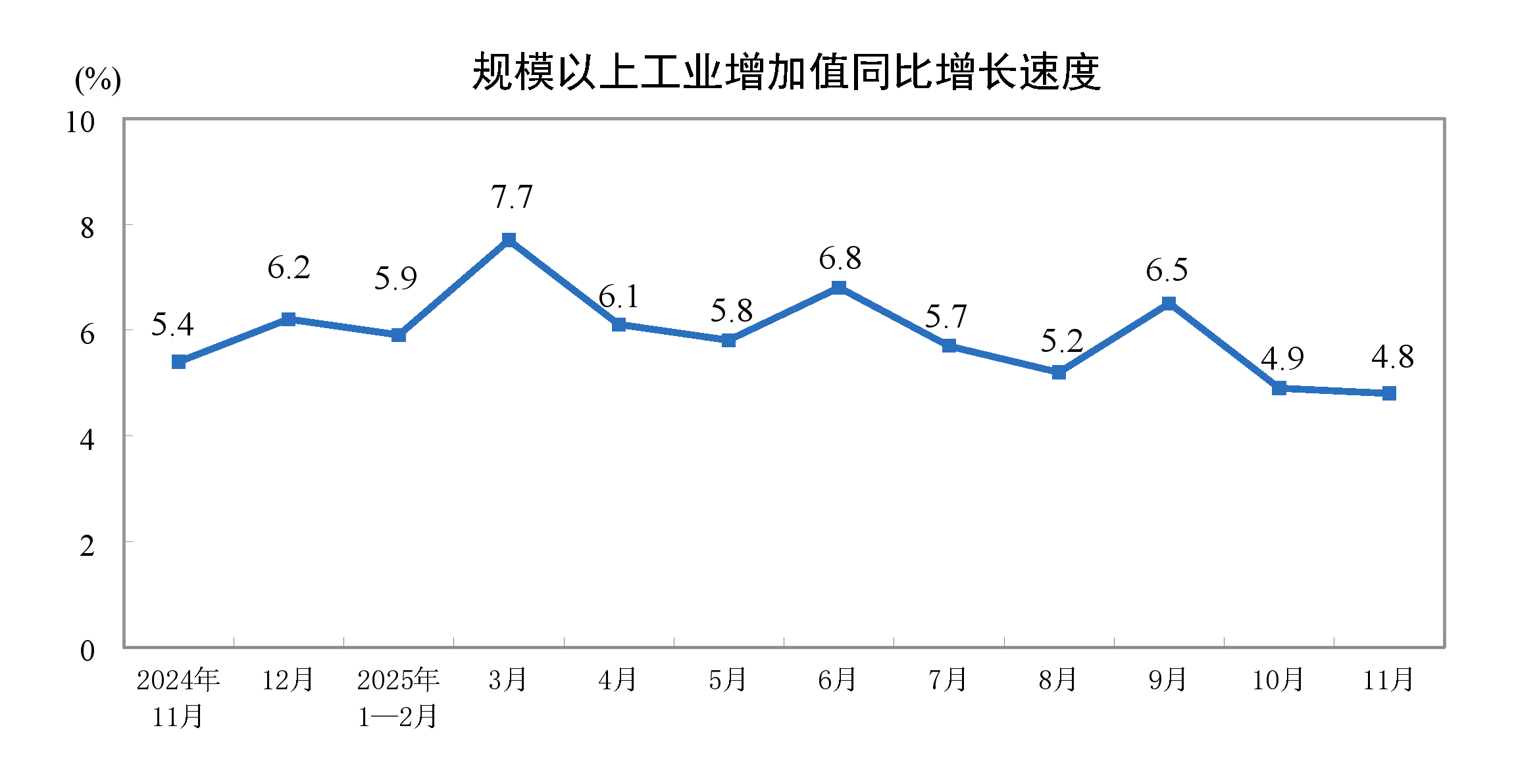
Core Insights - In November, the industrial added value of enterprises above designated size in China experienced a year-on-year real growth of 4.8%, with a month-on-month increase of 0.44% [5][6] - The growth rate of industrial production showed a slight decline compared to the previous month, influenced by base effects, while the month-on-month growth accelerated [6][7] - High-end manufacturing sectors, particularly equipment manufacturing and high-tech manufacturing, demonstrated significant growth, with respective year-on-year increases of 7.7% and 8.4% [7][8] Industrial Performance - The mining industry saw a year-on-year increase of 6.3%, while manufacturing and electricity, heat, gas, and water production and supply industries grew by 4.6% and 4.3%, respectively [6] - The cumulative industrial added value from January to November grew by 6.0% year-on-year, indicating a stable overall industrial production environment [5][11] High-tech and Equipment Manufacturing - The added value of equipment manufacturing and high-tech manufacturing accounted for 36.4% and 16.9% of the total industrial added value, respectively [7][8] - Notable product growth included 3D printing equipment, industrial robots, and new energy vehicles, with year-on-year production increases of 100.5%, 20.6%, and 17.0% [9][10] Policy Impact - The implementation of policies such as "two highs" and "two new" has effectively stimulated market demand and supported industrial production growth and upgrades [2][8] - The focus on expanding domestic demand and promoting the transformation of traditional industries is crucial for sustaining industrial development [11]

延续稳中有进发展态势 11月份国民经济运行总体平稳
Bei Jing Shang Bao· 2025-12-15 11:54
Economic Overview - In November, the industrial added value above designated size in China increased by 4.8% year-on-year, with manufacturing investment continuing to grow, particularly in high-tech manufacturing [1] - The spokesperson from the National Bureau of Statistics indicated that despite challenges, China's economy shows strong resilience, supported by macro policies, and is on track to meet annual targets [1] High-tech Manufacturing Growth - High-tech manufacturing continues to grow rapidly, with the added value in November increasing by 8.4%, outpacing the overall industrial added value growth by 3.6 percentage points [3] - Key sectors such as integrated circuit manufacturing and smart product production saw significant increases, with added values growing by 32.4% and 30% respectively [3] - The production of 3D printing equipment and industrial robots surged by 100.5% and 20.6% year-on-year [3] Digital Product Manufacturing - The digital product manufacturing sector, a crucial part of high-tech manufacturing, recorded a 7.6% year-on-year increase in added value in November, accelerating from the previous month [4] - Notable growth was observed in smart consumer devices, with smart wristbands and 5G smartphones increasing production by 27.6% and 11.5% respectively [4] Consumer Market Expansion - In November, the total retail sales of consumer goods reached 43.898 billion yuan, marking a 1.3% year-on-year increase [5] - Urban retail sales amounted to 37.684 billion yuan, growing by 1%, while rural retail sales increased by 2.8% to 6.214 billion yuan [5] - Sales of basic living goods and certain upgraded products saw significant growth, with retail sales of grain and oil, communication equipment, and cultural office supplies increasing by 6.1%, 20.6%, and 11.7% respectively [5][6] Consumption Trends - The consumption upgrade trend is evident, with prices for cultural and sports goods rising, and cosmetics and jewelry sales increasing by 6.1% and 8.5% year-on-year [6] - The implementation of consumption promotion policies has effectively stimulated consumer demand, leading to an expansion in consumption scale and structural upgrades [7]

前11月固投增速有所回调,投资向民生保障和高技术产业倾斜
2 1 Shi Ji Jing Ji Bao Dao· 2025-12-15 11:52
Core Viewpoint - The November economic data released by the National Bureau of Statistics indicates a decline in fixed asset investment, with a notable growth in high-tech industries, reflecting a trend towards industrial upgrading and structural changes in the economy [1][3]. Investment Overview - From January to November, total fixed asset investment (excluding rural households) reached 444,035 billion yuan, a year-on-year decrease of 2.6%. Excluding real estate development investment, the growth rate was 0.8% [1]. - Investment in information services, aerospace equipment manufacturing, and automobile manufacturing grew by 29.6%, 19.7%, and 15.3% respectively, significantly outpacing overall investment growth [1][6]. Sector Analysis - Investment in the primary industry was 8,770 billion yuan, up 2.7% year-on-year; the secondary industry saw investment of 162,243 billion yuan, growing by 3.9%; while the tertiary industry experienced a decline of 6.3% [3]. - The investment in high-end, intelligent, and green development within industrial sectors is expanding, with significant growth in electricity, heat, gas, and water production and supply sectors, which increased by 10.7% [3][4]. Infrastructure and Equipment Investment - Infrastructure investment is progressing steadily, with internet and related services investment growing by 20.7% year-on-year, and pipeline transportation investment increasing by 16.8% [3][4]. - Equipment and tool purchase investment rose by 12.2%, contributing 1.8 percentage points to overall investment growth, and accounted for 17.4% of total investment, an increase of 2.3 percentage points from the previous year [4]. Policy and Future Outlook - The central economic work conference proposed increasing central budget investment and optimizing the use of local government special bonds to counteract the decline in infrastructure investment growth [4]. - The National Development and Reform Commission indicated that major projects under the 14th Five-Year Plan will be prioritized for implementation next year [4]. Private Investment Trends - Private fixed asset investment fell by 5.3% year-on-year, with domestic enterprises down by 2.6%, and foreign enterprises down by 14.1% [8]. - The decline in private investment, which constitutes a significant portion of total fixed asset investment, is attributed to a complex international environment and rising trade barriers [8]. Confidence in Investment - To boost investment confidence, optimizing the business environment is crucial, particularly for foreign investors, by enhancing reform and opening up, and improving conditions in areas such as government procurement and intellectual property protection [8][9]. - China continues to attract global capital with its large market, complete industrial support, and improving business environment, particularly in high-tech industries and new economic sectors [9].
(经济观察)政策持续显效 中国经济“冲刺”全年发展目标
Zhong Guo Xin Wen Wang· 2025-12-15 09:39
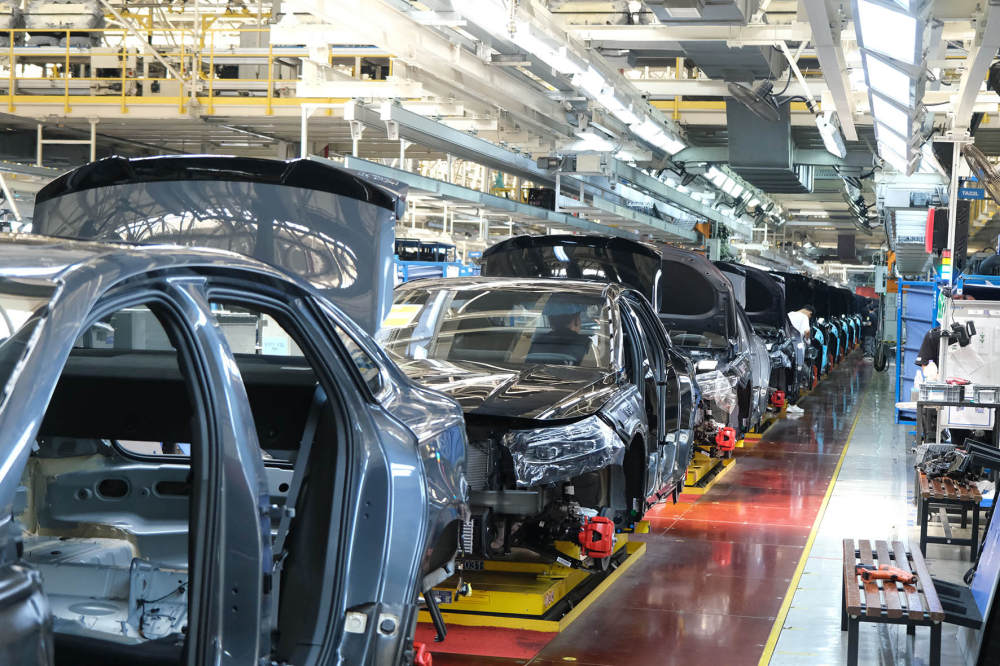
Economic Performance - In November, China's equipment manufacturing industry saw a year-on-year increase in added value of 7.7%, contributing 59.4% to the growth of industrial added value [1] - The production index for information transmission, software, and IT services grew by 12.9%, while leasing and business services increased by 8.4% [1] Consumer Market - The "old-for-new" policy has effectively boosted sales in home appliances and communication products, with retail sales from January to November for home appliances, audio-visual equipment, cultural office supplies, and communication devices increasing by 14.8%, 18.2%, and 20.9% respectively [1] - Service retail sales in cultural, sports, and online entertainment sectors also showed strong growth, with year-on-year increases exceeding 10% [1] Investment Trends - From January to November, investment in equipment and tools rose by 12.2%, contributing 1.8 percentage points to overall investment growth [2] - Investment in the electricity and heat production and supply industry increased by 12.5%, while internet and related services, and water transportation investments grew by 20.7% and 8.9% respectively [2] Price Trends - The Consumer Price Index (CPI) rose by 0.7% year-on-year in November, marking a 0.5 percentage point increase from the previous month, with core CPI also showing a continuous upward trend since May [2] Corporate Performance - From January to October, the operating income of large-scale industrial enterprises grew by 1.8%, with profits increasing by 1.9%, marking three consecutive months of growth [2] - Profits in the equipment manufacturing and high-tech manufacturing sectors rose by 7.8% and 8% respectively, while the service sector saw a 7.6% increase in operating income and a 7.8% rise in profits [2] Economic Outlook - Despite challenges, China's economy is resilient, supported by strong macro policies, with international organizations raising growth forecasts for China [3] - The chief economist of China Minmetals Bank anticipates that the economic and social development goals for the year will be successfully achieved, with policies expected to become more proactive in 2026 [3]
梁红:创新已成为中国与其他经济体的最大区别
和讯· 2025-12-15 09:14
Core Viewpoint - The article emphasizes that innovation has become the key differentiator for China's economy compared to other economies, including Japan, and highlights the significant contribution of innovation to economic growth [2][6]. Group 1: Economic Insights for 2025 - The first insight is that technological breakthroughs, exemplified by DeepSeek, have become a prominent feature of China's economy, showcasing innovation in artificial intelligence and high-end manufacturing [5][6]. - The second insight indicates that exports have demonstrated unexpected resilience, with total goods trade exports reaching 24.46 trillion yuan, a growth of 6.2% in the first eleven months [7][8]. - The third insight points to the pressure of declining growth rates in real estate and domestic consumption, highlighting the challenges of transitioning growth models [9][10]. Group 2: Opportunities for 2026 - In 2026, a favorable international macroeconomic environment is anticipated, coinciding with the start of China's "14th Five-Year Plan," which may create advantageous conditions for addressing external challenges [10][11]. - The improvement in economic growth quality is expected to support a stronger renminbi and asset revaluation, with a significant portion of the recent 5% growth attributed to increased production efficiency rather than mere capital expansion [12]. - The article outlines three key areas for progress: short-term risk management and stability, medium to long-term structural optimization, and effectively utilizing existing state assets to support low-income consumption and social security [12][13].

国家统计局新闻发言人就2025年11月份国民经济运行情况答记者问
Guo Jia Tong Ji Ju· 2025-12-15 08:42
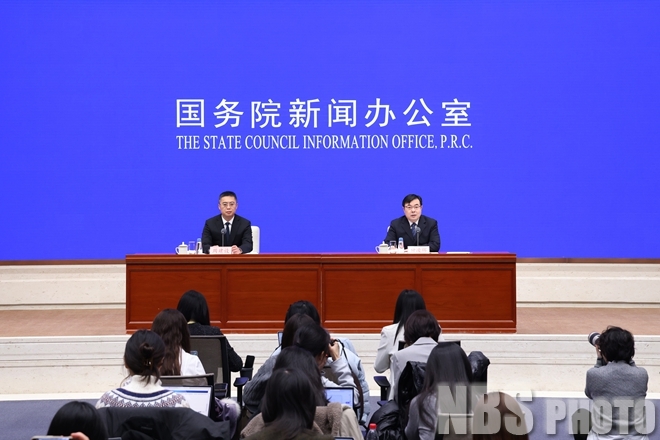
Economic Performance Overview - In November, China's economy showed a steady growth trend with industrial production increasing by 4.8% year-on-year, maintaining the same growth rate as the previous month [5][40] - The manufacturing sector, particularly the equipment manufacturing industry, experienced significant growth, with an increase of 7.7% in added value, contributing 59.4% to the overall industrial growth [5][41] - The service sector also demonstrated stability, with a production index growth of 4.2%, particularly in information technology and business services, which grew by 12.9% and 8.4% respectively [5][41] Market Sales and Consumption - Retail sales of consumer goods rose by 1.3% year-on-year in November, with notable growth in upgraded products such as cosmetics and jewelry, which increased by 6.1% and 8.5% respectively [6][21] - Service retail sales showed a robust growth of 5.4% from January to November, indicating a shift towards service consumption [6][20] - The overall consumption market remains stable, with a continuous expansion in service consumption and a trend towards quality upgrades in consumer goods [20][22] Foreign Trade - China's foreign trade maintained stability with a total import and export growth of 4.1% year-on-year in November, marking a 4 percentage point increase from the previous month [6][9] - Exports specifically grew by 5.7%, reversing the previous month's decline, supported by diversified trade partnerships, particularly with Belt and Road Initiative countries, which saw a 6% increase in trade volume [6][9] Employment and Prices - The urban unemployment rate remained stable at 5.1%, with specific demographics such as agricultural workers and those aged 30-59 showing lower unemployment rates [7][9] - Consumer prices rose by 0.7% year-on-year in November, with core CPI (excluding food and energy) remaining stable at 1.2%, indicating a gradual recovery in price levels [8][16] Investment Trends - Investment in fixed assets (excluding rural households) saw a decline of 2.6% year-on-year, but project investments excluding real estate increased by 0.8% [29][30] - Significant growth was observed in emerging sectors, with equipment manufacturing investment rising by 8.9% and renewable energy investments increasing by 7.4% [29][30] New Quality Productivity - The growth of new quality productivity is evident, with high-tech manufacturing value added increasing by 9.2% year-on-year, and significant growth in sectors like integrated circuits and electronic materials [24][25] - Traditional industries are undergoing transformation, with notable increases in investment and production in sectors such as biomass fuel processing and chemical fiber manufacturing [25][26] Future Outlook - The economic outlook remains positive, with expectations for continued growth driven by domestic demand expansion and policy support [35][38] - The focus on innovation and high-quality development is expected to bolster economic resilience and adaptability in the face of external challenges [35][38]
中国版“标普500”ETF加速扩容,“A股新七舰”龙头中国平安创四年新高!
Mei Ri Jing Ji Xin Wen· 2025-12-15 07:03
2025年12月15日,A股万亿保险巨头中国平安盘中涨幅超过5%,股价创出4年多的新高,盘中市值突破 1.2万亿元。而中国平安也是每经投研院在今年7月份发布的研究报告《"A股新七舰":寻找中国版"标普 500"之中的创新重估牛》中的龙头股之一。 每经记者|闫峰峰 每经编辑|吴永久 近期,在大盘持续调整的态势下,中国平安这种万亿巨头能够逆势上涨,除了其自身基本面的情况外, 也离不开两则消息的催化。 首先是政策红利的释放,保险板块整体迎来估值修复。 除了政策面和资金面的推动,中国平安能够表现强势,更多的还是在于其自身的经营与估值。2025年前 三季度,中国平安实现营业收入8329.40亿元,同比增长7.42%;实现净利润1328.56亿元,同比增长 11.47%。以12月15日中国平安中午收盘价67.09元计算,中国平安的市盈率(TTM)约为8.66倍,股息 率约为3.83%。当前A股正处于低利率环境与经济复苏预期下,具备盈利确定性与估值安全边际的龙头 更受青睐。 作为A股核心宽基指数代表,中证A500指数和标普500指数有诸多相似点,可以说是中国版的标普500指 数(详见《"A股新七舰":寻找中国版"标普500 ...

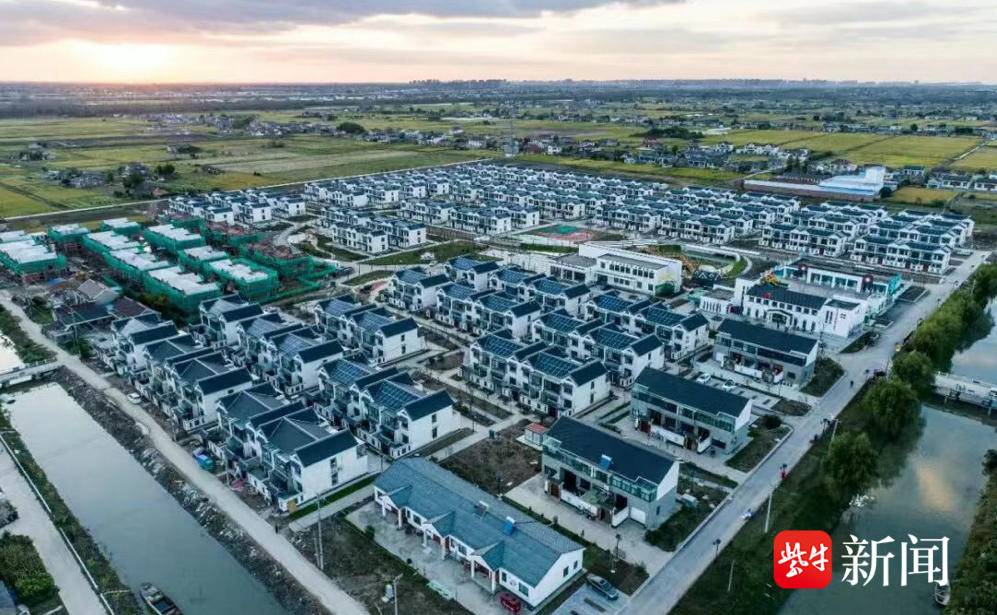
产业升级 作风赋能,盐城经开区步凤镇走好乡村发展路
Yang Zi Wan Bao Wang· 2025-12-15 04:24
Group 1 - The core viewpoint emphasizes the commitment of the local government in Bufen Town to enhance work style and focus on key areas such as social stability, rural revitalization, and industrial upgrading to support regional development [1][3]. - Bufen Town is concentrating on high-quality development, with a focus on project implementation, maintaining bottom lines, and collaborative construction, leading to stable economic performance and orderly progress in livelihood projects [3]. - The town aims to achieve over 1.1 billion yuan in industrial sales and over 800 million yuan in fixed asset investment by the end of the year, highlighting a strong focus on key performance indicators [3]. Group 2 - Rural revitalization efforts are being highlighted, with new models of agricultural and tourism integration being explored, and support for local specialty products like "Bufen Salted Pig Head" and "Barley Beer" to enhance market competitiveness [5]. - The local government is ensuring that all village collective operating income reaches at least 750,000 yuan through the deepening of rural collective asset management [5]. - There is a strong emphasis on improving the rural living environment and enhancing the quality of life for residents through commercial development and environmental improvements [5].