AI技术

Search documents
自动洗澡机器人助力随心所“浴”(消费新场景看活力·新产品)
He Nan Ri Bao· 2025-12-22 22:22
Group 1 - The core innovation is the intelligent fully automatic bathing robot developed by Xiangyu Medical, designed to address the bathing difficulties faced by elderly individuals or patients with limited mobility [1] - The bathing robot features 18 spray nozzles that evenly distribute warm water and shower gel, and includes a display screen for easy operation, significantly reducing the workload of caregivers [1] - The robot's design includes a closed cabin with privacy features, adjustable settings for water temperature and height, and safety measures to ensure a comfortable bathing experience [1] Group 2 - The current bathing practices for elderly individuals in care facilities pose risks such as falls and physical strain on caregivers, highlighting the urgent need for improved solutions [2] - By the end of 2024, the population aged 60 and above in China is projected to reach 310 million, accounting for 22% of the total population, indicating a strong demand for healthcare services for the elderly [2] - The integration of AI technology in elderly care is transforming service models, aligning with national policies aimed at enhancing long-term care systems for the elderly [2] Group 3 - Xiangyu Medical is developing AI therapy robots that utilize advanced technologies for precise treatment, catering to the rehabilitation needs of elderly patients [3] - The company is focusing on smart elderly care solutions, including wearable and portable rehabilitation products, to enhance the quality of life for seniors [3] - The goal is to create technology-driven partners in elderly care, ensuring that seniors can enjoy a dignified and high-quality life [3]


二〇二五年国内游戏市场收入和用户规模双双创历史新高
Zheng Quan Shi Bao· 2025-12-22 17:55
Core Insights - The Chinese gaming industry is experiencing steady growth, with historical highs in core metrics, including an expected actual sales revenue of 350.79 billion yuan in 2025, representing a year-on-year increase of 7.68%, and a user base growth to 683 million, up 1.35% [1] Industry Performance - The console gaming market continues its rapid growth, with actual sales revenue reaching 8.362 billion yuan, a staggering year-on-year increase of 86.33%, marking three consecutive years of explosive growth [1] - Mini-program games have emerged as a significant highlight, generating revenue of 53.535 billion yuan, up 34.39%, driven by dual monetization through in-app purchases and advertising [1] - The overseas market for self-developed games also performed well, with actual sales revenue reaching 20.455 billion USD, a year-on-year increase of 10.23%, maintaining a scale of over 100 billion yuan for six consecutive years [1] Policy and Support - The "Game Shanghai Ten Measures" was officially released, introducing systematic support policies in key areas of industry development, with an annual support fund totaling 50 million yuan, aimed at building a globally influential gaming and esports industry ecosystem [1] Technological Integration - The gaming industry is evolving beyond mere entertainment, integrating with traditional sectors such as healthcare, education, and manufacturing, thus reshaping perceptions and opening new growth avenues [2] - Game companies are increasingly demanding AI technology, which is accelerating the application of AI in the industry and creating a value leap through the integration of digital and physical realms [2] Market Trends - The gaming industry is expected to maintain a high level of prosperity, with new products being launched and cross-platform connectivity contributing to growth, while seasonal activities are likely to enhance user engagement and average revenue per user (ARPU) [2] - The mini-program gaming sector is anticipated to exhibit characteristics of sustained high prosperity, stable growth rates, and optimized profit structures, supported by collaborations between WeChat and Apple [2] Stock Market Performance - Leading gaming stocks have shown strong performance in the A-share market, with an average increase of nearly 44% this year, and three stocks, including Giant Network, Century Huatong, and G-bits, have doubled in price [3] - Giant Network's stock has surged over 260% this year, driven by the integration of AI technology into core gaming operations and innovative product offerings [3] - As of December 19, three gaming stocks, including Giant Network, Zhejiang Shuju, and G-bits, saw net purchases exceeding 50 million yuan in December, with net buying amounts of 263 million yuan, 66 million yuan, and 58 million yuan respectively [3]



A股不是虚假“小作文”的流量场
Xin Lang Cai Jing· 2025-12-22 16:17
Group 1 - The National Internet Information Office and the China Securities Regulatory Commission are intensifying efforts to address false and misleading information related to the capital market, taking legal action against accounts like "Eight Sisters Invincible" and "Investment Banking Matters" [1][3] - Some financial influencers and internet celebrities are attempting to exploit the A-share market through deceptive "small essays" to gain attention and traffic, which undermines the market's foundation and ultimately leads to negative consequences for them [1][2] - The spread of false information in the capital market distorts pricing logic and violates the principles of fairness, justice, and transparency, which are essential for market survival [2] Group 2 - The use of AI technology to create misleading "small essays" has made it easier and cheaper to produce deceptive content, increasing the difficulty for ordinary investors to discern the truth [2] - Some creators of false "small essays" aim to manipulate stock prices for profit, either by fabricating positive news to inflate stock prices or by spreading negative news to depress them, ultimately leading to illegal gains [2] - The ongoing regulatory crackdown on false "small essays" aims to eliminate the sources of such misinformation, reducing the survival space for those relying on fabricated content to exploit the capital market [3]
利用AI造谣“中国女篮” 两男子被刑拘
Yang Shi Wang· 2025-12-22 11:45
央视网消息:据"平安北京朝阳"微信公众号消息,近日,北京朝阳警方接报警称,有人在网络社交平台 发布针对中国女篮教练员和运动员的不实视频信息。 经查,林某某和陈某某曾从事过视频带货,但为了"来钱快",打起了利用AI技术制作视频追热点、蹭流 量、以"养号"牟利的歪主意。 作案过程中,其通过AI软件编造中国女篮某教练员压榨某运动员的虚假文案,后将该教练员和运动员 的网络图片、视频、虚假文案混编制作了网传视频,通过个人社交账号发布,引流得逞后,将账号倒卖 牟利4000元。 林某某、陈某某利用公众对篮球运动的关注,无底线博眼球、蹭流量,编造谣言对教练员和运动员进行 抹黑,引发网民对立,破坏社会信任,扰乱公共秩序,给当事教练员和运动员的声誉造成严重损害,社 会影响恶劣。 以为自己玩的是"高科技",实则踩的是高压线!12月18日,林某某、陈某某已被朝阳警方依法刑事拘 留,案件正在进一步办理中。同时,相关账号已被所属平台关闭。 警方提示 网络空间不是法外之地,利用AI技术必须遵守法律法规,尊重社会公德和公序良俗。对于借机造 谣以及非法牟利的违法犯罪行为,公安机关将坚决依法打击。 对此,警方立即开展调查,经循线追踪,锁定作案嫌 ...
九芝堂:公司关注AI技术在公司业务领域内的发展及应用
Zheng Quan Ri Bao Wang· 2025-12-22 11:10
证券日报网讯12月22日,九芝堂(000989)在互动平台回答投资者提问时表示,公司关注AI技术在公 司业务领域内的发展及应用。 ...

北水动向|北水成交净买入31.25亿 内资全天加仓中芯国际超7亿港元
Zhi Tong Cai Jing· 2025-12-22 11:10
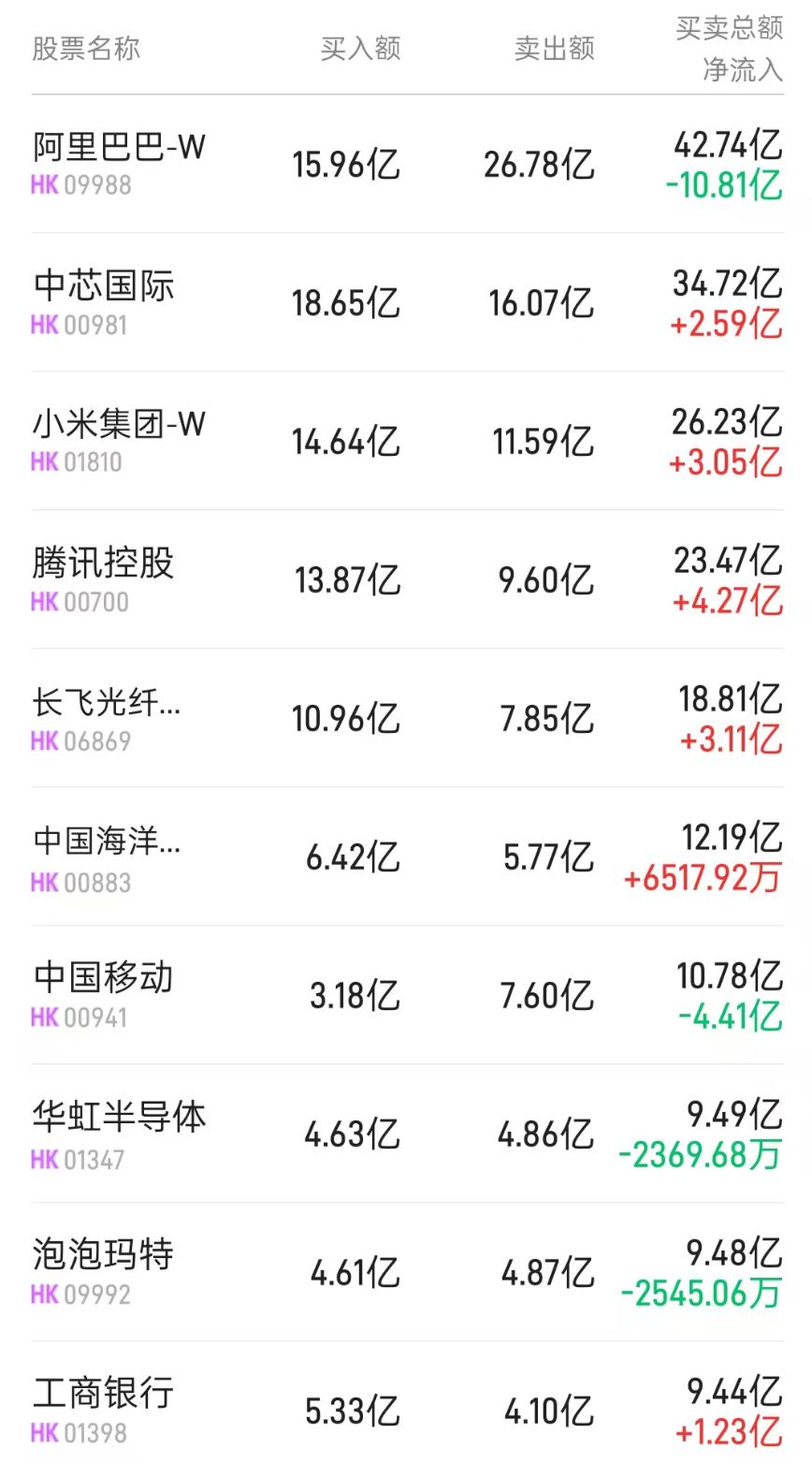
Core Viewpoint - The Hong Kong stock market experienced a net inflow of 31.25 billion HKD from northbound trading on December 22, with significant buying in specific stocks and notable selling in others [1][2]. Group 1: Northbound Trading Activity - Northbound trading through Stock Connect saw a net buy of 39.49 billion HKD from the Shenzhen market and a net sell of 8.24 billion HKD from the Shanghai market [1]. - The most bought stocks included SMIC (00981), Xiaomi Group-W (01810), and Tencent (00700), while the most sold stocks were China Mobile (00941) and Alibaba-W (09988) [1][2]. Group 2: Individual Stock Performance - SMIC (00981) had a net buy of 2.59 billion HKD, with total trading volume reaching 34.72 billion HKD [2]. - Xiaomi Group-W (01810) saw a net buy of 3.05 billion HKD, with total trading volume at 26.23 billion HKD [2]. - Tencent (00700) experienced a net buy of 4.27 billion HKD, with total trading volume of 23.47 billion HKD [2]. - China Mobile (00941) faced a net sell of 4.41 billion HKD, with total trading volume at 10.78 billion HKD [2][7]. - Alibaba-W (09988) had a net sell of 10.81 billion HKD, with total trading volume of 42.74 billion HKD [2]. Group 3: Sector Insights - The semiconductor sector saw increased interest, with SMIC and Hua Hong Semiconductor (01347) receiving net buys of 7.3 billion HKD and 200 million HKD, respectively [4]. - Xiaomi's recent product announcements and price adjustments due to rising memory costs were highlighted as key factors influencing its stock performance [5]. - Tencent's growth in advertising and gaming, driven by AI technology, was noted as a positive outlook for the company [5]. - The optical fiber market is experiencing strong demand, with Longi Fiber Optic (06869) receiving a net buy of 4.25 billion HKD, reflecting favorable market conditions [5].






经典原型机首秀、AI足球智能体亮相 ThinkPad黑FUN礼在北京举行
Huan Qiu Wang· 2025-12-22 10:35
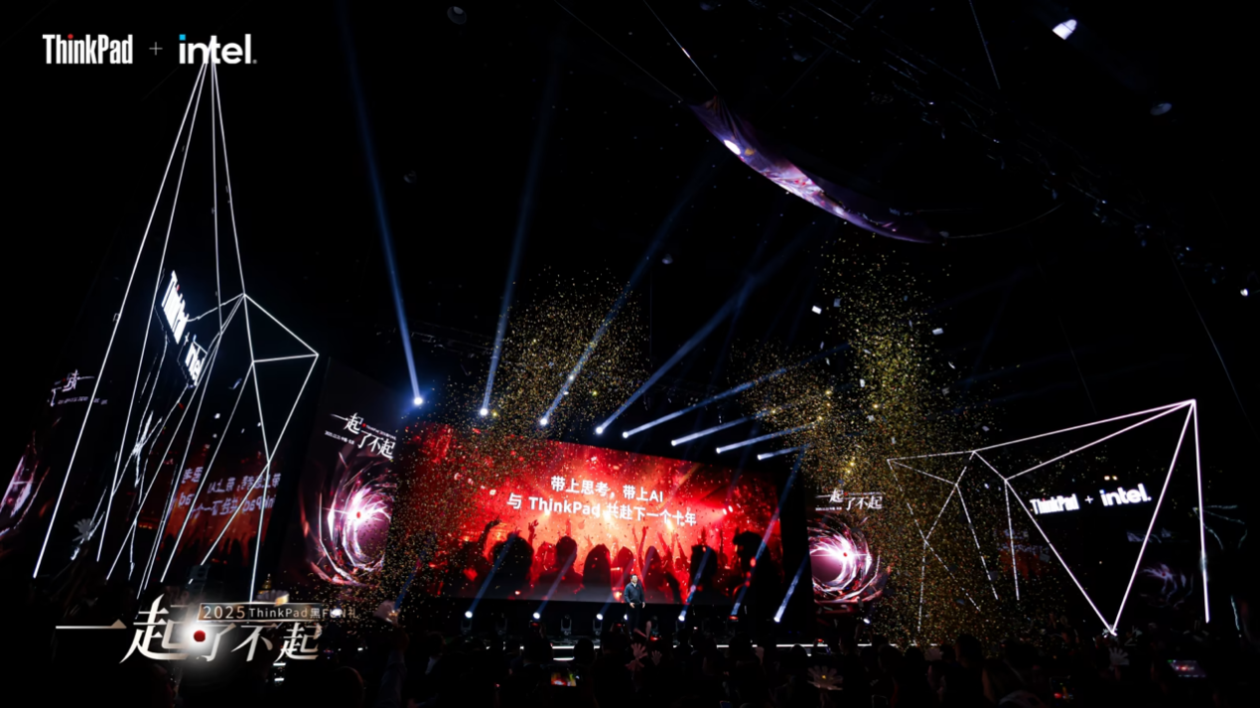
Core Insights - The event showcased the integration of AI technology into ThinkPad products, emphasizing the brand's commitment to innovation and user experience [3][5][8] - Lenovo introduced two classic ThinkPad prototype models, highlighting their design philosophy centered around user needs and performance [5][7] - The ThinkPad X1 Carbon and ThinkPad P1 prototypes demonstrate significant advancements in lightweight design and high-performance capabilities [7][8] Group 1: Product Innovations - The ThinkPad X1 Carbon prototype features a reduced screen bezel from 18-20mm to just 9mm, utilizing lightweight industrial metal materials while maintaining durability [7] - The ThinkPad P1 prototype, with a thickness of only 16mm, supports high-end CPU and GPU performance through innovative engineering designs, including a dedicated power supply channel and a patented cooling system [7][8] - Lenovo has released 28 AI PC models in 2025, with AI PCs now accounting for over 50% of sales, focusing on various professional fields [8] Group 2: AI Integration - Lenovo's Tianxi AI Football Smart Agent, launched as the world's first full-cycle AI viewing partner for the FIFA World Cup, enhances the viewing experience for fans [9][11] - The Tianxi AI Football Smart Agent features capabilities such as memory, tactical analysis, and user habit recognition, transforming the way fans engage with matches [11][13] - The collaboration with Intel has been pivotal, with the upcoming release of the Intel® Core™ Ultra processor expected to significantly enhance AI PC performance [8][9] Group 3: User Experiences - A lawyer shared a case where the ThinkPad X1 Carbon, powered by Intel's Ultra 9 processor, completed a complex legal document review in a fraction of the time it would typically take [14] - An AI microfilm project showcased how the ThinkPad P1 enabled a team to produce a short film in just 24 hours, significantly reducing production time and costs [16] - An animal biologist recounted using the ThinkPad T14p in extreme conditions, demonstrating its reliability and performance in challenging environments [18]

从0到4300万用户,Qpon如何破局东南亚本地生活
3 6 Ke· 2025-12-22 09:49
Core Insights - The article discusses how Indonesia is becoming a testing ground for Chinese internet companies as they transition from "tool export" and "content export" to "service and model export" [2] - Qpon, an application incubated by Chinese smartphone manufacturer OPPO, has rapidly gained traction in Indonesia's local life service market, highlighting the potential for digital payment and online consumption [3][5] Market Landscape - Indonesia, as the largest economy in Southeast Asia, has a smartphone penetration rate exceeding 75%, and a standardized QR payment system (QRIS) has been implemented nationwide [6] - Despite a retail market size of $183 billion, only 20% of merchants have moved online, indicating a significant gap in service supply despite mature infrastructure [6] Qpon's Growth Strategy - Qpon has successfully identified and capitalized on the gap in local life services, avoiding the crowded food delivery market and focusing on in-store services [6] - The application has achieved over 43 million users and an average of 660,000 daily orders within a year, indicating strong market demand [3] Localization and Adaptation - Qpon has adapted successful Chinese business models to fit local Indonesian characteristics, achieving high growth efficiency [7] - The platform employs low-cost user acquisition strategies leveraging OPPO's extensive user base and offline channels [7] User Engagement and Retention - Qpon utilizes pricing strategies such as "7K coffee" and "1K first order" to attract price-sensitive users, embedding savings into social interactions [9] - The platform's approach to turning "personal savings" into "social currency" has effectively reduced customer acquisition costs and replicated early-stage growth patterns seen in China's mobile internet [9] AI and Data Utilization - Qpon is leveraging AI technology to address the unstructured nature of information in the local life market, enhancing supply-demand matching efficiency [11] - The upcoming "QponX" feature will utilize AI to clean and structure data, improving user decision-making processes [11][13] Future Directions - Qpon's investment in AI and data technology signifies a shift towards enhancing operational efficiency and matching capabilities within the local life service chain [14] - The company is exploring a growth path that prioritizes algorithmic efficiency over labor intensity, which may offer greater scalability in the diverse and culturally rich Southeast Asian market [14]

易方达基金林伟斌谈如何使用风格因子指数构建投资组合
Zheng Quan Ri Bao Wang· 2025-12-22 09:47
Core Insights - The article discusses the increasing importance of index investment strategies and how to build a robust allocation framework amid style rotation, as highlighted by Lin Weibin, General Manager of the Index Investment Department at E Fund [1] Group 1: Industry Trends - Lin Weibin predicts that the next decade will be a golden period for ETF development in China, estimating that if the total market capitalization of A-shares achieves a 5% annual growth rate, it could reach 200 trillion yuan by 2035 [1] - He references the U.S. market's 10% ETF penetration rate, suggesting that the scale of stock ETFs in China could exceed 20 trillion yuan, and with contributions from bonds, gold, and commodities, the overall ETF market could reach 30 trillion yuan, positioning it among the global leaders [1] Group 2: Style Factors and Investment Logic - Lin Weibin defines style factors as a middle ground between active and purely passive investment, aligning with the Smart Beta concept in overseas markets, which aims to achieve excess returns through clear, rule-based stock selection logic [1] - He emphasizes that the main domestic style factors include dividend, low volatility, growth, value, and quality [2] Group 3: Practical Application of Style Factors - For single-factor usage, Lin suggests optimizing stock selection logic, such as avoiding the value trap by excluding stocks with unstable or negative ROE, and focusing on high dividend and free cash flow indicators [2] - In multi-factor portfolio configuration, he recommends a "constant proportion rebalancing" strategy, such as a 60% value and 40% growth mix, to outperform the CSI 300 index through regular adjustments [2] Group 4: Future of Index Investment - Lin asserts that index investment is not a "fool's investment," as it involves complex stock selection logic and asset allocation strategies [3] - He believes that China's capital market has entered a high-quality development phase for index investment, with participants evolving from simple beta investments to more complex factor investing and multi-asset allocations, further enhanced by AI technology [3]
轻松健康集团今日暗盘上涨超110%,市值达百亿港元:明日正式登陆港交所
IPO早知道· 2025-12-22 08:52
Core Viewpoint - The article highlights the upcoming IPO of Easy Health Group, emphasizing its significant growth driven by AI technology and its position in the digital health and insurance market in China [3][4]. Group 1: Company Overview - Easy Health Group plans to list on the Hong Kong Stock Exchange under the stock code "2661" [3]. - Established in 2014, Easy Health Group operates as a one-stop digital health and insurance service platform, with two main business pillars: digital comprehensive health services and digital comprehensive insurance services [4]. - As of June 30, 2025, the platform has 168 million registered users and approximately 59.7 million followers across various social media channels [4]. Group 2: Market Position - According to a report by Sullivan, Easy Health Group ranks 10th in China's digital comprehensive health and insurance service market based on projected 2024 revenue, and 7th in the digital health service market [4]. Group 3: User Demographics - Approximately 60.4% of users are aged between 20 and 45 years, indicating a younger user base that is likely to increase spending on health solutions as they experience life events such as marriage and childbirth [5]. - The younger demographic also presents significant upselling and cross-selling opportunities for the company [5]. Group 4: AI Technology Integration - AI technology is a crucial growth engine for Easy Health Group, with the proprietary AI technology stack, AIcare, serving as the core support for the platform [5]. - As of the last practical date, about 43.3% of the company's employees are involved in IT research and development [5]. - The company has registered 58 invention patents and 39 software copyrights related to its technological capabilities [5]. Group 5: Operational Efficiency - Easy Health Group has significantly improved operational efficiency and reduced costs through various technologies, including the Galaxy AI marketing platform, which has generated nearly 12.9 million business leads [6]. - The company has also launched generative AI tools, enhancing medical professionals' diagnostic and treatment capabilities [6]. Group 6: Financial Performance - Revenue figures for Easy Health Group from 2022 to 2024 are projected at 394 million, 490 million, and 945 million yuan, respectively, with a compound annual growth rate of 54.9% [6]. - In the first half of this year, the company's revenue grew by 84.7% year-on-year to 656 million yuan, with an adjusted net profit of 51.18 million yuan, reflecting an 11.3% increase [6]. Group 7: IPO Fund Utilization - The net proceeds from the IPO will primarily be used to enhance brand awareness, increase user engagement, strengthen partnerships, invest in medical research, improve AI and big data capabilities, expand into new regions and overseas markets, and for general corporate purposes [7].