AI技术

Search documents
心动公司(2400.HK):如何来看“年度投资价值奖”背后的价值重估逻辑?
Ge Long Hui· 2025-12-22 08:48
Core Insights - The Chinese gaming market in 2025 is characterized by "internal stability and external growth," with overseas markets becoming the core growth engine and AI technology permeating all aspects of the industry chain [1][5] - The recognition of Xindong Company with the "Annual Investment Value Award" reflects the capital market's acknowledgment of its performance breakthroughs and the valuation tilt towards companies with high-quality development capabilities [3][13] Industry Trends - 2025 is a pivotal year for the transformation of the Chinese gaming industry, driven by three main lines: policy guidance, global layout, and technological advancement [5] - The normalization of game license issuance has stabilized market expectations, with 1,625 game licenses issued from January to November, a year-on-year increase of 26.8% [5] - The domestic gaming market's actual sales revenue reached 256 billion yuan in the first three quarters, while overseas sales of self-developed games amounted to 14.5 billion USD, a year-on-year increase of 5.3% [6] Company Performance - Xindong Company achieved a revenue of 3.082 billion yuan in the first half of 2025, a year-on-year increase of 38.8%, and a net profit of 755 million yuan, a staggering increase of 268% [10] - The gross profit margin rose to 73.1%, marking a new high since the company went public [10] - The company's self-developed games and the TapTap platform are the dual engines driving its growth, with significant contributions from titles like "Ragnarok M: Origin" and "Heart Town" [11][12] Strategic Initiatives - Xindong's global strategy includes the successful launch of "Ragnarok M: Origin" in Southeast Asia, which exceeded market expectations in its first month [7] - The TapTap platform has evolved into an ecological hub, enhancing user engagement and attracting quality games through its open policy [12] - The introduction of the TapTap PC version aligns with cross-platform integration trends, broadening the user base and reinforcing the company's competitive edge [7][12] Future Outlook - The company plans to launch new titles, including "Ragnarok RO: Guardians of Eternal Love 2," which is expected to break into the competitive MMO market [11] - The integration of AI technology into the TapTap platform is anticipated to improve efficiency and user experience, further solidifying the platform's ecosystem [12]



抖音持续治理涉未成年人不良内容,近一个月处置违规账号超八千个
Huan Qiu Wang· 2025-12-22 06:26
Core Viewpoint - Douyin has announced the implementation of stricter measures to govern content related to minors, prohibiting any form of harmful content targeting minors on its platform [1] Group 1: Actions Taken - Over the past month, Douyin has removed more than 200,000 pieces of content related to minors that violated regulations [1] - The platform has imposed various penalties on over 8,000 accounts, including restrictions on commercial monetization, temporary bans, and permanent suspensions [1] Group 2: Specific Violations - 39 accounts were banned for generating lowbrow content featuring minors, which included AI-generated images that sexualized children [3] - 180 accounts were banned for creating AI-generated content that depicted minors in tragic situations, such as premature infants in hospitals, to exploit sympathy for profit [3] - 391 accounts were banned for producing violent "cult animation" content that misused children's animation characters to depict graphic violence and horror [3] Group 3: Future Commitment - Douyin emphasizes the need for collaboration among families, schools, and the industry to protect minors and will continue to enhance its technical capabilities for content review [3]

首席看经济|章俊:新动能重塑产业格局,三大维度撬动消费意愿
Bei Ke Cai Jing· 2025-12-22 06:21
Group 1 - The core focus of the Central Economic Work Conference is to prioritize consumer-related themes for the upcoming year, emphasizing the need to stimulate residents' consumption willingness through various policy measures [3][10] - International organizations have raised their economic growth forecasts for China, reflecting recognition of the country's short-term resilience and long-term potential, driven by macro policy coordination, strong internal and external demand, and industrial upgrades [6][7][8] - The fiscal policy for 2025 is set to be more proactive, with a narrow deficit rate increasing to 4% and a broad deficit rate rising from 6.6% in 2024 to 8.5% in 2025, alongside monetary policy tools aimed at supporting key sectors [6][13] Group 2 - To enhance consumer willingness, policies should focus on optimizing income distribution, strengthening public service investment, and expanding consumption supply, including improving the quality of goods and services [10][11] - The integration of stock and incremental policies in the financial sector is crucial, with expectations of interest rate cuts and structural monetary policy tools to support economic growth [12][13] - The reform of the capital market is aimed at balancing financing and investment functions, enhancing the attractiveness of the market, and improving the quality of listed companies [15][16] Group 3 - The "Fifteenth Five-Year Plan" emphasizes the construction of a financial powerhouse, with a focus on high-quality financial support for the real economy and modernization [19] - Key tasks for financial system reform during the "Fifteenth Five-Year Plan" include improving the central bank system, enhancing the role of capital markets, and optimizing the financial institution system [19]

海伦钢琴近三年亏2.17亿崔永庆5.48亿入主 控股股东浮盈4.8亿
Chang Jiang Shang Bao· 2025-12-22 06:15
Core Viewpoint - The key focus of the article is the change in control of Helen Piano, with the new actual controller, Cui Yongqing, aiming to reverse the company's declining performance after the transfer of shares to Quantuo Zhuodai [2][3]. Group 1: Shareholder Changes - On December 19, Helen Piano announced a change in its controlling shareholder to Quantuo Zhuodai, with Cui Yongqing becoming the actual controller [2][3]. - The share transfer involved 60,260,600 shares, representing 23.83% of the total share capital, at a price of 9.09 yuan per share, totaling approximately 548 million yuan [3]. - Quantuo Zhuodai has already realized a floating profit of about 480 million yuan from this transaction as of the closing on December 19 [2][13]. Group 2: Financial Performance - Helen Piano's net profit for 2023, 2024, and the first three quarters of 2025 were reported as -78.85 million yuan, -97.92 million yuan, and -39.86 million yuan, respectively, with cumulative losses of approximately 217 million yuan over the past three years [2][7]. - Revenue for Helen Piano in 2022, 2023, and 2024 was 379 million yuan, 297 million yuan, and 159 million yuan, showing year-on-year declines of 27.33%, 21.56%, and 46.47% [7]. - The revenue for the first three quarters of 2025 was reported at 88.55 million yuan, a decrease of 26.38% year-on-year [7]. Group 3: Market Challenges - The decline in revenue is attributed to a decrease in demand for traditional pianos and a drop in sales volume [8]. - Helen Piano is attempting to adapt to market changes by developing smart musical instruments, with sales of smart electric pianos reaching 4,660 units, resulting in a revenue increase of 576.89% compared to the previous year [8]. Group 4: New Management and Future Prospects - Cui Yongqing, the new actual controller, has a strong background in data and AI, with his company, Quantuo Technology, focusing on data circulation and AI model development [12]. - The integration of AI technology into traditional musical instrument manufacturing is seen as a potential opportunity for Helen Piano to achieve significant growth and innovation in the industry [12]. - Despite the promising outlook, it is noted that the company may struggle to leverage AI technology for immediate recovery [12].


游戏产业多项数据创新高,三大龙头涨幅翻倍!机构密集关注这些股
Zheng Quan Shi Bao Wang· 2025-12-22 05:16
Core Insights - The Chinese gaming industry demonstrates strong resilience and growth potential amid global economic fluctuations and intensified competition, driven by innovation and adaptability [1][2] Industry Performance - The Chinese gaming market is projected to reach an actual sales revenue of 350.79 billion yuan in 2025, reflecting a year-on-year growth of 7.68%, with a user base expanding to 683 million, a 1.35% increase [2] - The console gaming market continues its rapid growth, with actual sales revenue reaching 8.36 billion yuan, a staggering year-on-year increase of 86.33% [2] - Mini-program games have emerged as a significant highlight, generating revenue of 53.54 billion yuan, up 34.39% year-on-year, driven by dual monetization through in-app purchases and advertising [2] - The overseas market for self-developed games has also shown impressive performance, with actual sales revenue of $20.46 billion, marking a 10.23% increase and maintaining a scale exceeding 100 billion yuan for six consecutive years [2] Policy and Support - The "Game Shanghai Ten Measures" was officially released, introducing systematic support policies for key areas of industry development, with an annual funding total of 50 million yuan aimed at building a globally influential gaming and esports ecosystem [2] Cross-Industry Integration - The gaming industry is evolving beyond mere entertainment, integrating with traditional sectors such as healthcare, education, and manufacturing, thus reshaping perceptions and creating new growth opportunities [3] - The demand for AI technology within gaming companies is accelerating the application of AI, further enhancing the value of technology in society [3] Market Trends - The gaming sector is expected to maintain a high level of prosperity, with new products being launched and cross-platform connectivity contributing to growth, while seasonal activities are likely to boost user engagement and average revenue per user (ARPU) [3] - The mini-program gaming segment is anticipated to exhibit sustained high prosperity, stable growth rates, and optimized profit structures, supported by collaborations between WeChat and Apple [3] Stock Performance - The average increase in gaming stocks this year is 44.36%, with three leading gaming stocks, Giant Network, Century Huatong, and G-bits, doubling their value [4] - Giant Network has seen a remarkable increase of 260.13% year-to-date, attributed to the integration of AI technology into its core gaming business [6] - As of December 19, 2025, the net buying of gaming stocks exceeded 500 million yuan, with Giant Network, Zhejiang Shuju, and G-bits leading the net buying amounts [6] Institutional Research - The most frequently researched company this year is Shunwang Technology, with 23 institutional research instances, followed by Tom Cat and G-bits [7]

长城汽车推出全球市场全新平台,首款量产车欧拉5上市
Zheng Quan Shi Bao Wang· 2025-12-22 03:56
Core Viewpoint - Great Wall Motors has officially launched the Ora 5, a new A-class pure electric SUV under its Ora brand, with a price range from 99,800 to 133,800 yuan, and a limited-time trade-in price starting at 91,800 yuan [1] Group 1: Product Launch and Pricing - The Ora 5 is available in five configurations, emphasizing affordability and value for consumers [1] - The launch event highlighted the company's commitment to providing actual value to users through technology [1] Group 2: Technological Innovations - Great Wall Motors is introducing a "Car Purchase Anti-Deception Guide" to help consumers understand common technical pitfalls [1] - The Ora 5 is the first mass-produced model on a new platform designed for global markets, featuring a versatile approach with "multiple powertrains, multiple categories, and multiple forms" [1] - The vehicle utilizes extreme parts commonality across different powertrains and categories, enhancing R&D and production efficiency while lowering ownership costs and improving product quality [1] Group 3: Intelligent Features - The Ora 5 is equipped with the third-generation Coffee Pilot Ultra driver assistance system, which has safely driven over 230 million kilometers, equivalent to more than 5,600 laps around the Earth [1] - The vehicle features advanced capabilities such as city NOA without relying on high-precision maps, traffic light recognition, intelligent lane changing, and obstacle avoidance [2] - It supports the longest memory parking function in its class at 3 kilometers and offers parking assistance for over 200 types of parking spaces [2] Group 4: AI Integration - The Coffee OS3 smart space system integrates AI technology with a 4nm automotive-grade chip, creating a "warm mobile space" [2] - The system includes Coffee GPT and DeepSeek dual large models, functioning as a comprehensive assistant that understands vehicles, lifestyle, and creativity [2] - The Ora brand has expanded its presence to over 50 countries and regions globally, with a user base of 600,000 [2]

重磅来了!四年蝉联“TOP10”
中国基金报· 2025-12-22 03:39
Core Viewpoint - China Fund News has been recognized for four consecutive years in the "Top 10 Original Influence Index of Chinese Economic Media WeChat Official Accounts" [1][6][11] Group 1: Achievements and Recognition - China Fund News published a total of 14,491 articles with over 470 million reads and more than 1.28 million likes, achieving a score of 81.507 [11] - The "Flash News" product of China Fund News was selected as a "2025 Typical Case of Application Innovation in Chinese Economic Media" [5][11] - The "2025 Chinese Economic Media Integration Development Exchange Conference" was held in Beijing, where the awards were announced [6][9] Group 2: Product Innovation - "Flash News" utilizes AI technology to create a financial information engine that collects important market information in milliseconds and generates reports in seconds [13] - The product employs natural language processing to convert vast amounts of data into concise news updates, covering over 7,000 listed companies, significantly enhancing information timeliness and processing efficiency [13][15] - "Flash News" integrates deeply into the core workflows of financial institutions, transforming information power into productivity and decision-making capabilities, thus driving a qualitative change in business efficiency [15] Group 3: Future Development - China Fund News aims to continue its development path focusing on professionalism, marketization, innovation, and full media integration, with a total fan base exceeding 14 million and annual reading volume surpassing 5 billion [16][17] - The company plans to deepen its expertise in asset management sectors such as ETFs, pension funds, and REITs, while also building a platform for value communication for listed companies in both mainland and Hong Kong capital markets [17]

海伦钢琴近三年亏2.17亿崔永庆5.48亿入主
Chang Jiang Shang Bao· 2025-12-22 02:32
长江商报消息●长江商报记者 黄聪 此前公告显示,本次股份转让价格为9.09元/股,总交易对价约5.48亿元。截至12月19日收盘,全拓卓戴 在这场交易中已浮盈约4.8亿元。 需要注意的是,全拓卓戴的关联企业为全拓科技(杭州)股份有限公司(以下简称"全拓科技"),崔永 庆为其创始人、董事长。 长江商报记者注意到,成立于2009年6月的全拓科技,2024年参保员工人数仅有25人。但该公司宣传, 构建了覆盖27亿+活跃设备、10.35亿+活跃人群的庞大数据体系,拥有18+大类标签、3万+人均标签量 的深度分析能力。 业绩方面,2023年和2024年以及2025年前三季度,海伦钢琴归母净利润分别为-7885.48万元、-9792.24 万元和-3985.84万元,公司近三年累亏约2.17亿元。 前三季营收8855万降26.38% 海伦钢琴主要从事钢琴产品的研发、制造、销售与服务以及艺术教育等文化产业。 12月19日晚间,海伦钢琴发布公告显示,公司近日收到股东宁波北仑海伦投资有限公司(以下简称"海 伦投资")、四季香港投资有限公司(以下简称"四季香港")、全拓卓戴以及陈海伦、金海芬、陈朝峰 通知,海伦投资、四季香港向全 ...
上证180ETF指数基金(530280)涨近1%,机构建议关注三条主线
Xin Lang Cai Jing· 2025-12-22 02:26
Core Viewpoint - The recent adjustments in the market have provided investors with opportunities to strategically position themselves for the upcoming "cross-year" market trends, particularly focusing on growth and dividend styles [2]. Group 1: Market Performance - As of December 22, 2025, the Shanghai 180 Index (000010) increased by 0.65%, with notable gains from stocks such as Tuojing Technology (688072) up by 6.39%, China Duty Free Group (601888) up by 6.27%, and Zijin Mining (601899) up by 4.95% [1]. - The Shanghai 180 ETF Index Fund (530280) rose by 0.58%, with the latest price reported at 1.21 yuan [1]. Group 2: Investment Recommendations - The report from China International Capital Corporation (CICC) suggests focusing on three main investment themes: 1. **Growth in AI Technology**: The AI sector is expected to transition into industrial applications, with opportunities in computing power, optical modules, and cloud computing infrastructure, particularly favoring domestic companies. Applications to watch include robotics, consumer electronics, smart driving, and software [2]. 2. **External Demand**: Companies with overseas expansion strategies are seen as reliable growth opportunities, particularly in sectors like home appliances, engineering machinery, commercial buses, power grid equipment, gaming, and non-ferrous metals [2]. 3. **Cyclical Reversal**: Attention is recommended on sectors nearing improvement in supply-demand dynamics or benefiting from policy support, such as chemicals, aquaculture, and new energy [2]. Group 3: Seasonal Trends and Market Catalysts - According to Huatai Securities, the upcoming spring market is anticipated to show positive momentum, driven by potential catalysts such as foreign capital position adjustments post-Christmas, the dense disclosure period for annual reports starting mid-January, and possible reserve requirement ratio cuts in January [3]. - The Shanghai 180 ETF closely tracks the Shanghai 180 Index, which comprises 180 large-cap, liquid stocks from the Shanghai market, reflecting the overall performance of core listed companies [3].





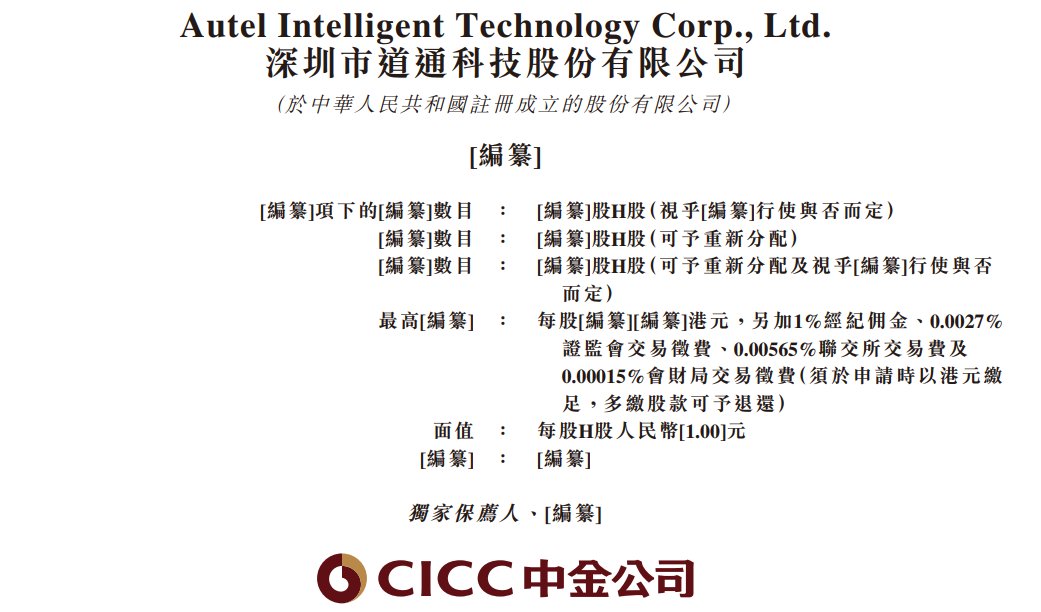
道通科技递表港交所 为全球第一数智车辆诊断解决方案提供商
Zhi Tong Cai Jing· 2025-12-22 02:05
Company Overview - Daotong Technology is a leading provider of intelligent vehicle diagnostic and smart charging solutions, holding the largest market share in the global intelligent vehicle diagnostic solutions market, increasing from 9.1% in 2022 to 11.1% in 2024 [3] - The company is also the largest Chinese smart charging solution provider in overseas markets by 2024 revenue and ranks fourth in North America [3] - With over 20 years of industry experience, the company has developed a comprehensive solution portfolio based on strong technical capabilities and continues to innovate in AI applications and technology [3] Sales and Market Strategy - The company has established a global sales network covering approximately 100 countries, collaborating with over 800 distributors to enhance market penetration [4] - It focuses on customer needs, integrating hardware and software solutions to create a scalable and sustainable business model, combining one-time hardware revenue with ongoing software income [4] Financial Performance - The company reported revenues of approximately RMB 2.27 billion in 2022, RMB 3.25 billion in 2023, and projected RMB 3.93 billion in 2024, with RMB 2.35 billion for the six months ending June 30, 2025 [8] - Gross profit figures were RMB 1.26 billion in 2022, RMB 1.70 billion in 2023, and projected RMB 2.08 billion in 2024, with RMB 1.26 billion for the six months ending June 30, 2025 [10] - Net profit was approximately RMB 81.61 million in 2022, RMB 140 million in 2023, and projected RMB 560 million in 2024, with RMB 454.64 million for the six months ending June 30, 2025 [9] Industry Overview - The intelligent vehicle diagnostic industry is projected to grow from approximately USD 2.809 billion in 2020 to about USD 3.832 billion by 2024, with a compound annual growth rate (CAGR) of 8.1% [12] - By 2030, the market size is expected to reach approximately USD 8.004 billion, with a CAGR of 13.1% from 2024 to 2030 [12] - The industry is evolving from hardware-centric systems to integrated solutions that combine hardware, software, and services, with software solutions expected to increase from 16.8% in 2024 to 26.7% by 2030 [13]