
双碳目标

Search documents
工信部发布《国家鼓励发展的重大环保技术装备目录(2025年版)》典型案例(含下载)
仪器信息网· 2025-12-23 09:02
Core Viewpoint - The article discusses the release of the "National Encouraged Development Major Environmental Protection Technology Equipment Catalog (2025 Edition)" by the Ministry of Industry and Information Technology and the Ministry of Ecology and Environment, which includes 115 items aimed at promoting green and low-carbon development in China [2][4]. Group 1: Catalog Overview - The catalog is divided into three main categories: development, application, and promotion, covering areas such as air pollution prevention, water pollution control, solid waste treatment, soil pollution remediation, environmental monitoring instruments, emergency response to environmental pollution, and new pollutant governance technology [2]. - The catalog aims to guide industrial technological innovation and application promotion, supporting pollution prevention and contributing to the achievement of carbon neutrality and ecological civilization [4]. Group 2: Case Compilation - A compilation of typical cases related to the catalog has been released, showcasing numerous environmental instrument and equipment companies that have been included [2][6].


雁淮直流8年累计向长三角地区输送电能超3000亿千瓦时
Xin Hua Wang· 2025-12-23 08:40
Core Insights - The Yanmen Pass-Huai'an ±800 kV UHVDC project has delivered a total of 300.16 billion kWh of electricity since its operation began in June 2017, meeting the annual electricity needs of over 100 million households and supporting high-quality economic development in the Yangtze River Delta region [1] Group 1 - The Yanmen-Huai'an UHVDC project is a key transmission channel under China's air pollution prevention action plan, connecting the North China energy base with the East China load center [1] - The project spans 1,119 kilometers with a maximum transmission capacity of 8 million kW, significantly contributing to the clean energy supply [1] - From January to November this year, the project transmitted 51 billion kWh of electricity, accounting for 37% of Shanxi Province's total electricity exports [1] Group 2 - During the peak summer period, the Yanmen-Huai'an UHVDC operated at full capacity for 40 days, setting a new record for the same period since its commissioning [1] - Over 30% of the electricity transmitted, amounting to more than 300 billion kWh, comes from renewable sources such as wind and solar energy, highlighting the project's role in promoting clean energy transition and supporting China's dual carbon goals [1]
从常州“绿色能源集群”到苏州“产业协同循环”,江苏探路系统性降碳
Xin Lang Cai Jing· 2025-12-23 06:10
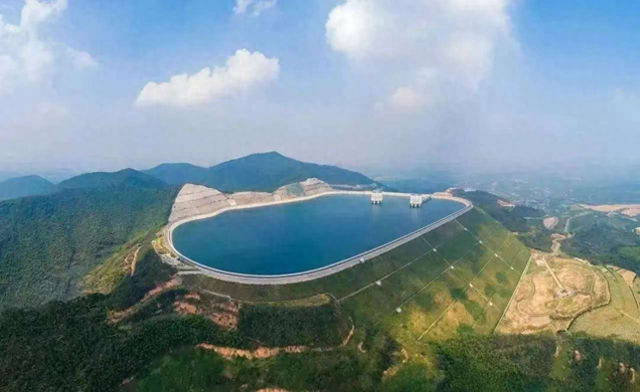
Core Insights - Jiangsu is reshaping its energy, industry, and urban development logic through technological integration and system consolidation, focusing on green transformation paths characterized by "system integration, scenario innovation, and cross-domain collaboration" [1][10] Group 1: Energy Systems - The Liyang Pumped Storage Power Station, with a total installed capacity of 1.5 million kilowatts and an annual designed power generation of 20.07 billion kilowatt-hours, serves as a backbone power source for peak regulation and frequency modulation in East China [1] - The power station contributes over 1.8 billion kilowatt-hours of green energy annually, saving 500,000 tons of standard coal and reducing carbon dioxide emissions by 1 million tons, supporting the "dual carbon" goals [1] - The "Two Networks and One Center" system in Liyang High-tech Zone enables refined and scenario-based green electricity consumption, integrating green electricity production into the park's infrastructure [4] Group 2: Circular Economy - The Suzhou Industrial Park Circular Economy Industrial Park transforms traditional urban waste, such as sewage and kitchen waste, into electricity, thermal energy, and biogas through a meticulously designed circular chain [5] - The industrial park has processed nearly 1 billion tons of sewage and produced over 38.46 million cubic meters of biogas by the end of 2024, resulting in a reduction of approximately 800,000 tons of carbon dioxide emissions [7] - The park's carbon emissions have decreased from about 480,000 tons in 2019 to approximately 270,000 tons in 2024 through process optimization and photovoltaic projects [7] Group 3: Zero Carbon Buildings - The newly constructed Yuan Zero Carbon Pavilion exemplifies a "micro-circulation" model, achieving net-zero emissions through its photovoltaic system, energy storage devices, and energy-efficient design [9] - The pavilion serves as a living exhibition of comprehensive solutions for green industry chains, utilizing local green building materials and smart management systems [9] - Urban energy supply is transitioning from a decentralized consumption model to an efficient, collaborative "circular" distribution model, significantly reducing overall electricity and gas capacity requirements [9]
晋景新能(01783.HK)荣获“年度转型先锋奖”,解锁绿色能源转型新范式
Ge Long Hui· 2025-12-23 06:05
Core Viewpoint - JinJing New Energy has been awarded the "Annual Transformation Pioneer Award" by Gelonghui, recognizing its adaptability to dynamic environmental changes and its ability to achieve long-term sustainable and high-quality development through transformation [1] Group 1: Strategic Positioning and Competitive Advantage - The company's successful transformation is attributed to its foresight in identifying the battery recycling sector as a key area within the green energy field, establishing a differentiated competitive advantage through a "global network + ecological collaboration" model [1][2] - JinJing New Energy has rapidly built a global service network by acquiring and partnering with other firms, including the acquisition of Singapore's Green Jade Group and a strategic alliance with FMG Group in the U.S., resulting in over 70 service nodes across 28 countries [2][3] - The company's innovative triangular cooperation model with industry leaders enhances its competitive positioning, allowing it to capture value in the supply chain [3] Group 2: Financial Performance and Growth - JinJing New Energy's financial results reflect a significant turnaround, with total revenue reaching HKD 816 million, a year-on-year increase of 228.6%, and a profit of HKD 15.12 million, marking a return to profitability [4] - The core business of reverse supply chain management and environmental services generated HKD 790 million, accounting for 96.81% of total revenue, with a staggering year-on-year growth rate of 401.78% [4][5] - The company has strategically reduced its traditional construction business, leading to improved operational efficiency and a 13.7% decrease in operating expenses, while adjusted EBITDA increased by over 127% [5] Group 3: Future Outlook - The upcoming launch of the battery recycling facility in Hong Kong, exclusive partnerships with FMG, and the execution of signed projects worth hundreds of billions are expected to drive future performance [5] - As the global peak of battery retirements approaches, JinJing New Energy is positioned to leverage its first-mover advantage, translating into sustained growth momentum [5]
“迎峰度冬保供应”系列报道 迎寒潮保温暖 能源保供“不断档”
Ren Min Wang· 2025-12-23 05:54
Group 1 - The recent drop in temperatures across multiple regions in China has led to increased energy consumption, prompting a critical period for energy supply security [1] - Energy supply stability is essential for daily life, public services, and overall social stability, as emphasized by experts [1] - Local authorities and energy companies are actively working to ensure the supply of coal, natural gas, and clean energy to support economic development and meet public energy needs [1] Group 2 - In November, China's national railways transported 184 million tons of coal, a year-on-year increase of 0.3%, with 128 million tons being thermal coal [2] - As of the end of November, coal stockpiles at power plants reached 88.23 million tons, with a consumption duration of 35.8 days, an increase of one day compared to the previous year [2] - Coal production in key regions is ramping up to ensure stable energy supply during winter, with significant daily outputs reported [2] Group 3 - A power company in Qinghai has established a 250,000 kW solar power station and is developing a 550,000 kW wind power project, utilizing local renewable resources for clean heating [3] - The clean power heating project is projected to save approximately 140,000 tons of standard coal annually and reduce sulfur dioxide emissions by 1,020 tons [3] - Experts highlight the need for a comprehensive approach to energy supply during winter, integrating energy structure transformation, technological innovation, and multi-energy collaboration [3]
生态“高颜值” 经济“高价值”
Jin Rong Shi Bao· 2025-12-23 05:13
Group 1 - The core idea is that the People's Bank of China, Banan Branch, is actively exploring financial support for the realization of ecological product value, guiding financial institutions to innovate service models and increase resource investment to transform "high aesthetics" of green mountains and clear waters into "high value" of gold and silver mountains [1] Group 2 - The Chongqing Panlong Pumped Storage Power Station, with a capacity of 2.4 million kilowatts, plays a significant role in energy structure adjustment and achieving carbon neutrality goals. It has received 1.932 billion yuan in long-term low-cost funding from the carbon reduction support tool [2] - The project is expected to reduce standard coal consumption by 152,300 tons and cut carbon dioxide emissions by 398,700 tons annually after it goes into operation [2] Group 3 - The Banan Branch has established a carbon reduction project library to dynamically identify and support clean energy projects, providing 2.393 billion yuan in low-cost funding to hydropower and wind power projects [3] Group 4 - The transaction of the 20-year development rights for the Sanxi Sanmei small watershed reached 138 million yuan, marking the largest single transaction for ecological product transformation in Central and Western China. The Agricultural Development Bank provided a loan of 105 million yuan for this project [4] - The Banan Branch has expanded the range of acceptable collateral to include ecological product value rights, facilitating diverse financing needs and supporting various environmental rights [4] Group 5 - The Chongqing Jielong edible mushroom green circular industry chain project utilizes waste agricultural materials, transforming them into biomass charcoal, thus preventing air pollution from straw burning. The Banan Branch provided a loan of 42.25 million yuan linked to the project's transformation effectiveness [5][6] - A dynamic "Agricultural Transformation Project Library" has been established to assess funding needs for agricultural enterprises, with 20 initial projects included [6]
国家能源局有关负责同志就《关于促进光热发电规模化发展的若干意见》答记者问
国家能源局· 2025-12-23 03:35
问:《意见》出台的背景是什么? 答: 党的二十大报告提出要加快规划建设新型能源体系,二十届四中全会公报再次强调要加快建设新型能源体系。光热发 电兼具调峰电源和长时储能双重功能,能够有效平抑风电、光伏发电等新能源出力的波动性,是加快构建新型电力系统的 重要支撑。经过多年发展,我国已成功掌握塔式、槽式、菲涅尔式等主流光热发电技术,已建成全球领先的光热发电产业 链,电站单位千瓦建设成本从10年前的约3万元下降至1.5万元,度电成本降至0.6元上下,已初步具备规模化发展的基础。 但另一方面,我国光热发展还面临初始投资大、市场竞争能力偏弱、系统支撑调节价值未充分体现、产业技术水平仍需提 升的问题。在我国能源结构加速绿色低碳转型的关键时期,为助力能源强国建设,加快构建新型电力系统,推动光热发电 规模化发展,国家发展改革委、国家能源局联合印发了《意见》。 问:《意见》提出了哪些发展目标? 近日,国家发展改革委、国家能源局印发《关于促进光热发电规模化发展的若干意见》(以下简称《意见》)。国家能源 局有关负责同志就《意见》接受采访,回答了记者提问。 答: 一是 有利于坚定行业信心。《意见》明确了未来光热发电规模化发展的长期稳定 ...

风动松原绿氢起 能建担当筑新篇
Huan Qiu Wang· 2025-12-23 03:11
Core Viewpoint - The Jilin Province Songyuan City is undergoing a significant energy transformation with the construction of the Zhongnengjian Songyuan Hydrogen Energy Industrial Park, which integrates green hydrogen, ammonia, and methanol production, contributing to the region's green economic transition [1][5]. Group 1: Project Overview - The Songyuan Hydrogen Energy Industrial Park is a "green hydrogen-ammonia-methanol" integrated demonstration project located in a cold climate region, strategically utilizing local resources and development needs [2]. - The project includes the installation of 53 wind turbines with a total capacity of 400 MW, creating a complete industrial chain from green electricity to chemical products, serving as a benchmark for high-quality development in China's new energy sector [2]. Group 2: Technical Challenges and Innovations - The project faces extreme weather conditions, including winter temperatures dropping to -30°C and summer thunderstorms, which pose significant challenges to construction and safety [3]. - To address these challenges, the company optimized construction plans, used low-temperature materials, and developed technologies for ice removal and snow melting on wind turbine blades, ensuring stable operations in harsh conditions [3][4]. - The introduction of smart operation and maintenance systems has improved operational efficiency by over 40%, while the design optimizations for turbine components enhance energy capture even in low wind conditions [4]. Group 3: Economic and Environmental Impact - The project is expected to produce substantial amounts of green electricity annually, supporting local energy needs and optimizing the energy structure in Jilin Province [5]. - It establishes a complete industrial chain from hydrogen to ammonia to methanol, fostering new employment opportunities and supporting local industries such as agriculture and pharmaceuticals [6]. - The project emphasizes ecological protection throughout its construction, minimizing impacts on local vegetation and wildlife, and includes plans for ecological restoration post-construction [6]. Group 4: Future Prospects - The successful implementation of the Songyuan Hydrogen Energy Industrial Park exemplifies the company's commitment to energy transition and its role in achieving China's dual carbon goals [7]. - The project is positioned to revitalize the region, showcasing a model for green development and collaboration among local government, state-owned enterprises, and technical teams [6][7].

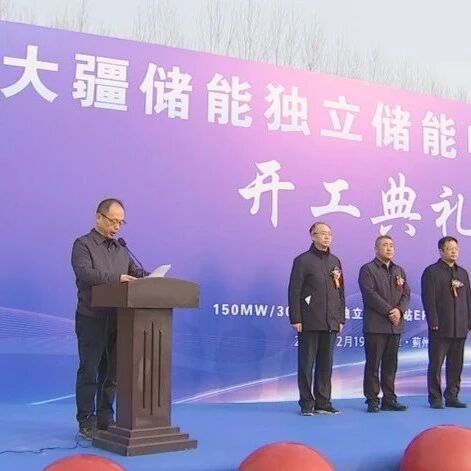
480MW/960MWh!天津蓟州侯家营镇共享储能电站项目开工
中关村储能产业技术联盟· 2025-12-23 02:11
Core Viewpoint - The project of the shared energy storage station in Houjiaying Town represents an innovative practice in promoting the transformation of energy and achieving carbon neutrality goals, with a total investment of 1.637 billion yuan [2][5]. Group 1: Project Overview - The shared energy storage station project has a capacity of 480MW/960MWh and is being implemented by Tianjin Dajiang Energy Storage Technology Co., Ltd. [2] - The project includes the construction of a lithium iron phosphate battery energy storage station and a 220kV booster substation, covering an area of 44.74 acres with a building area of 26,820 square meters [2]. - The first phase of the project will have a construction scale of 150MW/300MWh, with an investment of 519 million yuan [2]. Group 2: Environmental and Economic Impact - Once completed, the project is expected to provide nearly 800,000 MWh of clean electricity to the grid annually, saving 230,000 tons of standard coal compared to coal-fired power plants, and significantly reducing harmful gas emissions [4]. - During the construction phase, the project will create over 200 local job opportunities, and after completion, it will provide 30 permanent jobs [5]. Group 3: Strategic Importance - The project aligns with national planning and industrial policies, contributing to the rapid development of related industries and demonstrating a comprehensive effect of one-time investment with long-term benefits [4]. - The energy storage station will enhance the regional grid's frequency modulation, voltage regulation, and black start services, ensuring the safe and stable operation of the grid and facilitating the absorption of renewable energy [5].
研判2025!中国秸秆行业市场政策、产业链图谱、综合利用量、利用率、市场规模、竞争格局及发展趋势分析:市场格局较为分散[图]
Chan Ye Xin Xi Wang· 2025-12-23 01:36
Core Viewpoint - The straw industry in China is deeply integrated with agriculture, energy, chemicals, and building materials, forming various industrial chains that enhance rural employment and farmers' income while creating indirect economic value through the substitution of petrochemical and wood resources [1][12]. Market Policies - A series of national policies have been implemented to promote comprehensive utilization of straw, with local governments providing subsidies, market construction, and incentive measures to support the development of the entire straw recycling, processing, and utilization industry chain [8][9]. Industry Chain - The straw industry chain consists of upstream resource supply and equipment manufacturing, midstream processing, and downstream diversified applications, evolving towards scale, high value, and intelligence [9][10]. Development Status - The comprehensive utilization of straw in China is projected to increase from 555 million tons in 2024 to 647 million tons, with a utilization rate rising from 77.7% to 88.3% and market size expanding from 147.63 billion yuan to 205.10 billion yuan [1][13]. Competitive Landscape - The straw comprehensive utilization market is characterized by a fragmented structure with many small-scale enterprises, including those focused on fertilizer, feed, and energy applications [13][14]. Development Trends - The future of straw utilization will shift towards high-value applications, including biodegradable tableware and bio-based composite materials, while also enhancing collaboration across the industry chain [16][17]. - Technological innovations will focus on key processes such as straw pretreatment and conversion, improving efficiency and reducing costs [19][20].
