国产化替代

Search documents
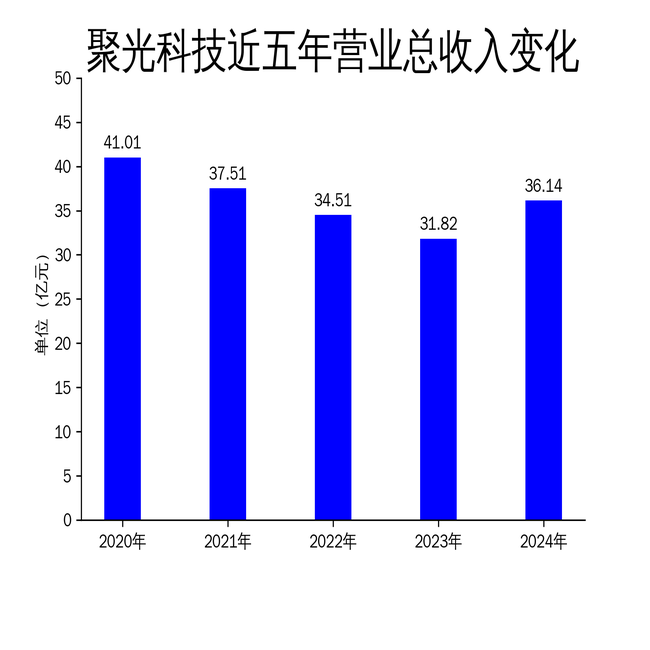
聚光科技2024年扭亏为盈,净利润增长164%,但研发投入大幅下降
Jin Rong Jie· 2025-04-22 13:49
Core Insights - The company achieved significant financial recovery in 2024, reporting total revenue of 3.614 billion yuan, a year-on-year increase of 13.58%, and a net profit of 207 million yuan, marking a substantial turnaround from a loss of 323 million yuan in 2023 [1][4] - Despite the impressive performance, the company's R&D investment decreased by 25.75% to 413 million yuan, raising concerns about its future innovation capabilities [1][7] Financial Performance - Total revenue reached 3.614 billion yuan, up 13.58% year-on-year, indicating a recovery in market demand [4] - Net profit surged by 164.11% from a loss of 323 million yuan in 2023 to 207 million yuan in 2024 [1][4] - The net cash flow from operating activities improved significantly to 688 million yuan, a 152.34% increase year-on-year [4] - The weighted average return on net assets rose to 6.87%, an increase of 17.38 percentage points compared to the previous year [7] Business Segments - The company continued to focus on its core business segments of smart environment and smart industry, launching innovative products in environmental monitoring and carbon monitoring solutions [5][6] - In the smart environment sector, the company introduced a series of products, including atmospheric monitoring networks and real-time water quality monitoring systems, solidifying its market leadership [5] - In the smart industry segment, the company launched high-end analytical instruments, such as laser gas analyzers and industrial online chromatographs, achieving domestic substitution and breaking foreign technology monopolies [6] R&D Investment Concerns - The company's R&D investment decreased significantly to 413 million yuan, with the proportion of R&D spending relative to revenue dropping from 17.47% in 2023 to 11.42% in 2024 [7] - This decline in R&D spending raises concerns about the company's future technological innovation and market competitiveness [7] - The company's current ratio stands at 1.17 and the quick ratio at 0.8, indicating that short-term solvency remains a challenge [7]


威士顿2024年财报:营收利润双降,盈利能力承压
Jin Rong Jie· 2025-04-22 00:09
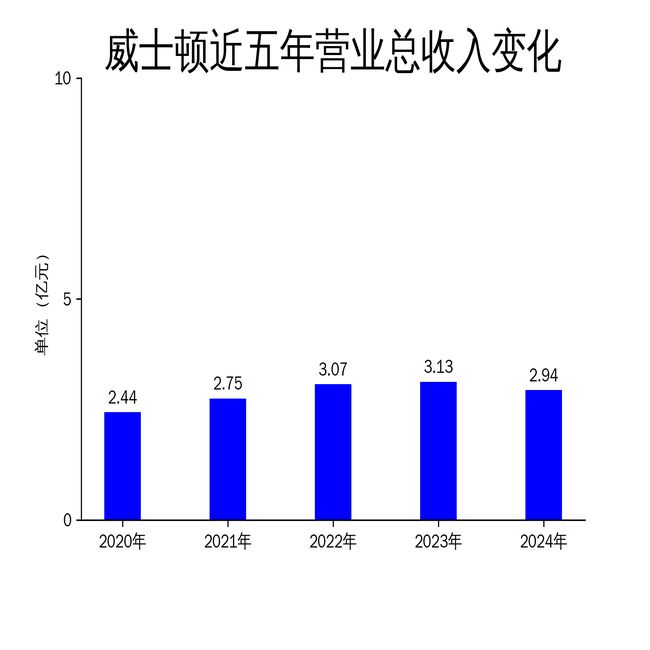
Core Insights - The company faced significant operational pressure in 2024, with a notable decline in profitability and revenue [1][4][6] Financial Performance - The total revenue for 2024 was 294 million, a decrease of 6.32% compared to 2023's 313 million [1][4] - The net profit attributable to the company was 52 million, down 11.26% year-on-year [1][4] - The non-recurring net profit fell sharply by 27.93% to 31.71 million [1][5] - In Q4 2024, total revenue was 114 million, a 6.4% decline year-on-year, with net profit dropping 32.5% to 21.74 million [4][5] Operational Challenges - The company's gross profit was 104 million, reflecting an 8.77% decrease, indicating issues with cost control [5] - The decline in gross margin suggests significant challenges in managing operational costs, particularly in raw material procurement and labor [5] Strategic Developments - Despite financial struggles, the company made progress in technology innovation and overseas market expansion, launching AIGC and AI intelligent products [6] - The company successfully transitioned AI model training from NVIDIA chips to Huawei Ascend chips, enhancing its technological framework [6] Future Outlook - The company must optimize its cost structure and improve operational efficiency to remain competitive in a challenging market [6] - Accelerating technological innovation and ensuring new products translate into market competitiveness are critical for future success [6] - While overseas market expansion presents new growth opportunities, it also introduces higher risks and uncertainties [6]
大豪科技:数据亮点纷呈,多业务板块协同奋进
Zheng Quan Shi Bao Wang· 2025-04-21 09:44
Group 1 - The company reported a revenue of 725 million yuan for Q1 2025, representing a year-on-year growth of 12.84%, and a net profit of 172 million yuan, up 20.03% year-on-year, indicating strong performance despite challenging market conditions [1] - The intelligent control board segment showed resilience, with new products driving market demand, particularly in overseas markets, enhancing the company's competitive edge [2] - The intelligent factory business continued to gain momentum, with new automation products increasing market penetration and improving production efficiency for clients [3] Group 2 - The cybersecurity segment is collaborating with Huawei to develop a domestic platform based on the Kunpeng platform, aiming to support clients in the domestic substitution process [4] - The company is enhancing its product matrix and integrating AI with security technologies, which is expected to create greater development opportunities [4] - The strong performance in Q1 reflects the company's robust technical strength and market competitiveness across multiple sectors, with a commitment to innovation and customer-driven solutions [4]

创新驱动责任并举 广立微2024年营收同比增长14.50%
Quan Jing Wang· 2025-04-21 07:08
Core Viewpoint - Guangli Micro achieved a revenue of 547 million yuan in 2024, representing a year-on-year growth of 14.50%, driven by its diverse product matrix and strong R&D investment [1][2][4]. Group 1: Financial Performance - The company reported a revenue of 547 million yuan in 2024, with a 14.50% increase compared to the previous year [1][2]. - The revenue from software development and licensing grew by 70.33%, while testing services and other businesses saw a remarkable increase of 360.63% [2]. - The overall gross margin reached 61.90%, with software development and licensing achieving a gross margin of 85.96% [2][3]. Group 2: R&D and Innovation - Guangli Micro invested 277 million yuan in R&D in 2024, accounting for 50.57% of its revenue, marking a 33.49% increase year-on-year [1][5]. - The company holds 179 authorized patents, including 105 invention patents, and has a strong R&D team with 82.20% of its employees engaged in research [5][6]. - The company is focused on developing EDA tools such as DFT and DFM, enhancing its competitive edge in the integrated circuit industry [5][8]. Group 3: Product Development and Market Position - Guangli Micro has established a comprehensive product matrix that includes EDA software, semiconductor data analysis systems, and wafer-level electrical testing equipment [3][8]. - The company has successfully transitioned its testing machines from R&D to mass production, achieving a production of over 100 units for the first time in 2024 [3]. - The company aims to enhance its global competitiveness by expanding its overseas market presence, particularly in regions like South Korea and Singapore [4]. Group 4: Shareholder Returns and Social Responsibility - The company plans to distribute a cash dividend of 2.50 yuan per 10 shares, totaling approximately 49.27 million yuan for 2024 [1][7]. - Since its listing in August 2022, Guangli Micro has completed cash dividends totaling nearly 168 million yuan [7]. - The company is committed to social responsibility, supporting rural education initiatives and providing employee welfare programs [7].
苏奥传感:新能源业务释放新活力 产业链纵深整合进一步塑造核心竞争力
Zheng Quan Shi Bao Wang· 2025-04-21 02:23
Core Insights - The company, Suo Sensor, reported a revenue of 1.67 billion yuan in 2024, representing a year-on-year growth of 48.87%, and a net profit of 138 million yuan, up 11.31% year-on-year [1] - The company plans to distribute a cash dividend of 0.6 yuan per 10 shares to all shareholders, totaling 47.79 million yuan [1] Business Performance - Suo Sensor has established a diversified product matrix covering four core segments: sensors and components, fuel system accessories, automotive interior parts, and new energy components [2] - Revenue from new energy components reached 254 million yuan in 2024, marking a significant year-on-year increase of 102.84% [2] - The automotive sensor and components business and fuel system accessories also saw revenue growth of 16.57% and 5.9%, respectively [2] R&D and Innovation - The company invested approximately 60.64 million yuan in R&D, accounting for 3.63% of its revenue, and holds a total of 192 patents, including 25 invention patents [3] - Suo Sensor has developed a domestically produced MEMS pressure sensor for large-scale applications, achieving quality comparable to imported counterparts [3] - The company’s self-developed current sensors and eddy current sensors have shown significant performance improvements, supporting the trends in new energy and intelligent vehicles [3] Supply Chain and Strategic Initiatives - The company is optimizing its supply chain management through vertical integration of suppliers, which lowers procurement costs and enhances self-manufacturing rates [4] - In 2024, Suo Sensor successfully acquired a controlling stake in Bonair, enhancing its product structure in the automotive parts industry [5] - The acquisition allows for collaborative development across multiple modules, increasing market share and business scale [5] Product Development and Market Position - Suo Sensor has expanded its product lines to include DPF differential pressure sensors and current sensors, promoting synergy among its sensor, new energy, and thermal management systems [6] - The company’s sensors for hybrid systems have passed tests by leading automotive manufacturers, with several products becoming standard offerings [7] - The development of new sensor products based on MSG technology has improved cost efficiency and performance, enhancing the company's application scenarios in thermal management [7]

【私募调研记录】淡水泉调研宁波银行、怡和嘉业
Zheng Quan Zhi Xing· 2025-04-21 00:11
2)怡和嘉业 (淡水泉(北京)投资参与公司业绩说明会(电话形式)) 调研纪要:怡和嘉业2024年第四季度收入环比增长9.77%,主要因美国呼吸机市场库存出清。境外毛利 率升至51.20%,源于产品结构调整,耗材占比提升。全年境外业务收入5.42亿元,占比64.21%,境内业 务收入3.02亿元。家用呼吸机诊疗业务收入5.27亿元,耗材类业务收入2.84亿元,耗材增长46.22%,主 要来自美国和欧洲。公司生产地为天津和东莞,核心零部件已基本实现国产化替代。2023年家用无创呼 吸机全球市占率12.4%,排名第二,国内市场占有率30.6%。 机构简介: 根据市场公开信息及4月18日披露的机构调研信息,知名私募淡水泉近期对2家上市公司进行了调研,相 关名单如下: 1)宁波银行 (淡水泉参与公司投资者电话会议&电话会议) 调研纪要:宁波银行在2024年度利润分配方案中提出每10股派发9元现金红利,连续第二年增加分红金 额。2024年净息差为1.86%,同比下降2个基点,净利差为1.91%,同比下降10个基点。2025年,公司将 优化信贷资源配置,推动个人贷款增长,控制负债成本。手续费收入方面,2024年受资本市场波 ...

怡和嘉业:4月18日召开业绩说明会,正圆基金、圆信永丰基金等多家机构参与
Sou Hu Cai Jing· 2025-04-20 03:42
Company Overview - The company was established in 2001 and launched its first multi-channel sleep monitoring device in 2003, followed by the first CPAP sleep breathing machine in 2007. It received CE certification in 2008 and FDA certification in 2012. The company was successfully listed on the Shenzhen Stock Exchange's Growth Enterprise Market on November 1, 2022 [2] - The company specializes in providing comprehensive treatment solutions for OSA and COPD patients, covering the entire cycle (diagnosis, treatment, chronic disease management) and multiple scenarios (medical institutions and home care). It is a leading domestic manufacturer of non-invasive ventilators and masks, with products sold in over 100 countries and regions [2] Research and Development - The company maintains significant R&D investment, holding 633 domestic patents as of December 31, 2024, including 107 invention patents, 390 utility model patents, and 136 design patents. It also holds 202 international patents, including 39 in the US and 30 in Europe [3] Brand and Market Strategy - The company is rebranding to "瑞迈特" to enhance user recognition and market penetration. This includes changing its name and stock abbreviation to align with its product brand, aiming to reduce confusion among consumers and investors [4] - The company plans to increase brand awareness through various channels, including exhibitions, academic exchanges, community clinics, and social media marketing [4] Market Performance - The US respiratory machine market has returned to normal after a period of inventory clearance, positively impacting the company's revenue. The company’s products are compliant with US regulations, and the impact of US tariffs on its income and profit margins has been minimal [4] - In 2024, the company reported a total revenue of 843 million yuan, a year-on-year decrease of 24.85%, with a net profit of 155 million yuan, down 47.74%. However, the fourth quarter showed a revenue increase of 36.29% year-on-year [12] Revenue Breakdown - In 2024, overseas revenue was 542 million yuan, accounting for 64.21% of total revenue, while domestic revenue was 302 million yuan, making up 35.79%. The fourth quarter saw overseas revenue grow by 21.33% [7] - The revenue from home respiratory therapy business was 527 million yuan, representing 62.52% of total revenue, while consumables accounted for 33.72% with a revenue of 284 million yuan [8] Market Share - According to data from August 2024, the company holds a 12.4% market share in the global market for home non-invasive ventilators, ranking second, and a 30.6% share in the domestic market, ranking first among domestic brands [11]
博汇科技2024年财报:亏损收窄,AI技术成亮点
Sou Hu Cai Jing· 2025-04-18 00:06
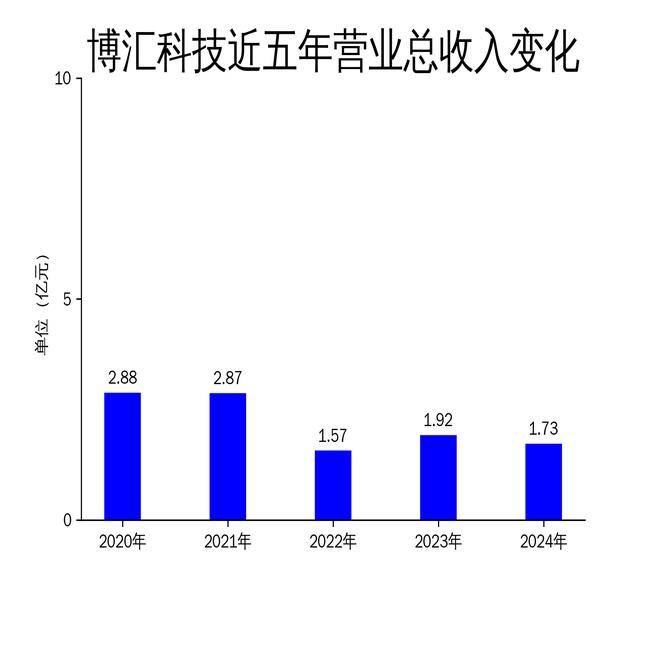
Core Viewpoint - 博汇科技 reported a revenue of 173 million yuan in 2024, a year-on-year decrease of 9.91%, while the net profit attributable to shareholders was -38.47 million yuan, showing a reduction in losses by 10.88% compared to the previous year [1][4] Revenue and Profit Summary - The company's revenue declined from 192 million yuan in 2023 to 173 million yuan in 2024, primarily due to slowed growth in end-user business, reduced project demand and budgets, and delays in project delivery and acceptance [4] - Despite the revenue drop, the gross margin improved to 47.25% from 41.69% in 2023 due to enhanced cost control and project management [4] - The net profit attributable to shareholders was -38.47 million yuan in 2024, compared to -43.17 million yuan in 2023, reflecting a 10.88% reduction in losses [4] - The non-recurring net profit was -41.97 million yuan, a decrease of 4.93% from -44.14 million yuan in 2023 [4] AI Technology Application - 博汇科技 increased its investment in artificial intelligence in 2024, achieving significant progress in applications related to audiovisual big data, smart education, and intelligent display control [1][5] - The company developed the "博汇慧视多模态内容分析大模型算法" and "博汇学道音视频分析大模型算法," which were registered for deep synthesis service algorithms, becoming a model partner in Beijing's general AI industry innovation program [1][5] Hardware Localization - 博汇科技 achieved 90% localization of its hardware products and 100% localization of its B/S architecture software in 2024, enhancing its competitiveness in the domestic market [6] - The company launched the "博汇画面云" product line, focusing on core processing capabilities for audiovisual data, and has supported information technology upgrades at institutions like Tsinghua University and Peking University [6] Future Outlook - The acceleration of localization and continuous investment in AI technology are expected to provide strong support for 博汇科技's future business development [6][5] - The company needs to improve its overall financial condition while optimizing its cost structure to achieve substantial profitability [6]

研判2025!中国银行业信息化建设与IT应用行业产业链、行业现状及重点企业分析:金融科技赋能转型,银行业IT市场蓬勃发展[图]
Chan Ye Xin Xi Wang· 2025-04-17 01:24
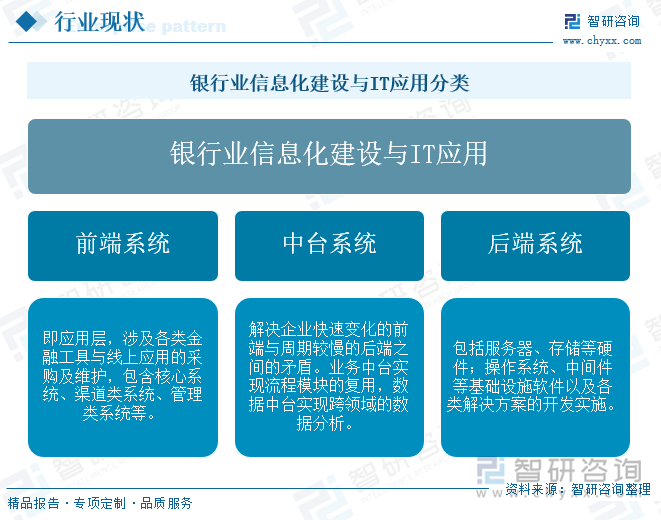
Core Viewpoint - The Chinese banking industry's information technology construction and application are rapidly developing, with a market size projected to reach 213.5 billion yuan in 2024, reflecting an 8.7% year-on-year growth [1][11]. Industry Overview - The banking information technology construction and application involve optimizing and innovating business processes, management structures, and customer services through extensive use of information technology [8]. - The market structure is primarily focused on business, channel, and management solutions, with key investment areas including core business systems, credit management systems, and risk management [11]. Industry Development History - The industry has evolved through five stages: 1. Electronic phase (1970s-1990s) where basic computer technology was introduced for simple accounting [4]. 2. Networking phase (1990s-2000s) where banks began to connect their systems for improved efficiency [4]. 3. Data centralization phase (2000-2010) focusing on unified data management across branches [5]. 4. Mature core system deployment phase (2010-2018) with the adoption of high-performance IT systems [5]. 5. Domestic system localization and digital transformation phase (2019-present) driven by national initiatives [6]. Industry Status - The industry is currently experiencing a shift towards digital and intelligent transformation, with significant growth in market size and investment in emerging solutions like data intelligence and smart marketing [11]. - The transition from centralized to distributed architecture is underway, with an accelerated pace of domestic substitution in IT systems [11]. Industry Trends - Distributed architecture and cloud-native technologies are becoming mainstream, enhancing flexibility and scalability in banking IT systems [18]. - There is a growing demand for intelligent and personalized services, driven by advancements in big data and artificial intelligence [19]. - Data sharing and privacy protection are critical issues, with privacy computing technologies gaining traction to ensure data security while enabling collaborative analysis [20]. Key Companies - Leading companies in the industry include Yuxin Technology, Shenzhou Information, and Hengsheng Electronics, which leverage their technological strengths and market positions to drive innovation [13][14]. - Yuxin Technology reported a revenue of 2.351 billion yuan in the first three quarters of 2024, a decrease of 23.05% year-on-year [14]. - Shenzhou Information achieved a revenue of 6.680 billion yuan in the same period, with a net profit decline of 235.96% [16].


中美贸易摩擦下对润滑油添加剂行业格局影响几何?
2025-04-16 15:46
Summary of the Conference Call on the Lubricant Additives Industry Industry Overview - The conference call discusses the lubricant additives industry in China, particularly in the context of the US-China trade tensions and the impact of tariffs and the pandemic on the market dynamics [1][2][3]. Key Points and Arguments Market Dynamics - Domestic lubricant blending plants are accelerating the localization of raw materials to reduce costs due to tariff and pandemic pressures [1]. - Tariff increases have significantly raised the costs of high-end lubricants that use imported additives, prompting blending plants to consider domestic alternatives [1][2]. - The Chinese lubricant additives market is substantial, with foreign brands holding a significant market share, but there is a clear trend towards domestic substitution [1][2][22]. Market Segmentation - The domestic lubricant blending plants are categorized into four main types: foreign-funded, state-owned, private, and emerging enterprises. Foreign brands account for approximately 17%-18% of the market, while state-owned brands hold about 30% [1][8]. - Major players like Sinopec and PetroChina have substantial annual demands for lubricant additives but remain highly dependent on four major suppliers [1][21]. Price Changes and Cost Pressures - The price of key additives like detergents has surged due to tariff impacts, with prices rising from approximately 17,000-18,000 RMB per ton to 27,000-28,000 RMB, reflecting a significant increase of 10,000 RMB per ton [2]. - Despite rising costs for single additives, the prices of domestic compound additives have not seen widespread increases due to their high profit margins [2][4]. Strategic Responses - Companies are focusing on enhancing supply chain management and optimizing procurement channels to cope with international supply chain uncertainties [4]. - The industry is witnessing a shift from producing single components to focusing on compound additives, with companies like Ruifeng New Materials successfully transitioning [2][3][4]. Regulatory and Certification Importance - API certification is crucial for lubricant companies, as it enhances product quality and market competitiveness, although it also incurs high costs [1][47]. Future Trends - The market is expected to see continued growth in domestic production capabilities, with companies like Ruifeng and Wuxi Southern leading the way in innovation and market share expansion [44][51]. - The ongoing trade tensions and tariff adjustments are likely to accelerate the domestic substitution process, particularly for state-owned enterprises [23][24]. Additional Important Insights - The lubricant additives market in China is estimated to have a capacity of around 800,000 to 900,000 tons, with foreign brands, especially the top four, holding about 65% of the market share [22]. - The impact of tariffs on the cost structure of lubricant products is significant, with potential increases in production costs leading to higher retail prices [30][32]. - The competitive landscape is evolving, with domestic companies increasingly challenging established foreign brands through cost-effective and high-quality products [44][45][57]. This summary encapsulates the critical insights and developments within the lubricant additives industry as discussed in the conference call, highlighting the challenges and strategic responses of key players in the market.