
乡村产业振兴

Search documents
【省农业农村厅】陕西省2025年乡村产业振兴带头人培育“头雁”项目启动
Shan Xi Ri Bao· 2025-08-04 23:47
Core Insights - The "Leading Goose" project, initiated by the Shaanxi Provincial Department of Agriculture and Rural Affairs and hosted by Northwest A&F University, aims to cultivate rural industry leaders, with a target of training 3,000 individuals over five years [1][2] - The project focuses on ten key industries, including grain and oil, pig farming, vegetables, tea, and traditional Chinese medicine, with a customized one-year training plan for over 600 industry leaders this year [1] - The initiative has already established a talent pool of 1.2 million rural practical talents, with 305,000 high-quality farmers, over 90% of whom have become leaders of agricultural operating entities [2] Group 1 - The "Leading Goose" project has been launched to enhance rural industry leadership and aims to create a "goose formation" system in the agricultural industry chain [1] - The project will provide tailored training through policy interpretation, technical research, and experiential learning to develop skilled industry leaders [1] - The program utilizes a "dual mentor" system and offers entrepreneurial funding incentives, along with an online learning platform for phased teaching [1] Group 2 - The project is part of a broader strategy to support rural revitalization and demonstrate the integration of production, education, and research [1] - The training initiative is expected to significantly contribute to the development of new agricultural operating entities and high-quality farmers in the province [1][2] - The success of the project is reflected in the substantial growth of the rural talent pool and the high percentage of trained individuals becoming industry leaders [2]
赋能食用菌产业新动力——济南市召开食用菌标准化种植技术研讨暨产销对接会
Zhong Guo Chan Ye Jing Ji Xin Xi Wang· 2025-07-30 06:17
Core Insights - The conference focused on the standardization of edible mushroom cultivation techniques and aimed to boost rural industrial revitalization through the dissemination of new technologies [1][4] - Participants included over 20 representatives from agricultural parks across various cities, highlighting the collaborative effort in the edible mushroom industry [1][2] Group 1: Training and Knowledge Sharing - The conference featured detailed presentations on various mushroom species, cultivation techniques, and best practices, enhancing participants' understanding of effective farming methods [1][2] - Practical examples and firsthand data from local greenhouses were shared, demonstrating the impact of scientific cultivation methods on yield and quality [2][3] - The event included a session on insurance for mushroom cultivation, addressing risks and providing tailored insurance solutions for growers [2][3] Group 2: Industry Development and Challenges - Recent advancements in mushroom cultivation technology have led to increased yields, but challenges such as price declines and unstable profitability remain [3] - The training aimed to elevate growers' scientific knowledge and adapt to market changes, ensuring the sustainable development of the mushroom industry [3][4] - The successful organization of the training session is expected to foster confidence among industry practitioners and contribute to the overall enhancement of the edible mushroom sector [4]

中国农业科学院乡村产业振兴科技攻关行动推进会在四川丹棱召开
Zhong Guo Jing Ji Wang· 2025-07-22 08:59
Group 1 - The core initiative is the Rural Industry Revitalization Technology Action, which aims to enhance rural industries through targeted technological support and collaboration between research institutions and local governments [1][2] - The action involves selecting 10 representative counties across China to implement five key tasks: high-quality fruits and vegetables, specialty horticulture, special economic crops, distinctive livestock and poultry, and emerging rural industries [1] - The collaboration between the Chinese Academy of Agricultural Sciences (CAAS) and Danling County is marked by a strategic cooperation agreement focusing on the entire agricultural industry chain, indicating a significant step towards collaborative innovation [2] Group 2 - Danling County has achieved notable success in agricultural technology innovation, including the cultivation of three proprietary citrus varieties and the establishment of a logistics park and a standardized production line for frozen rice cakes [3] - The county aims to deepen cooperation with CAAS to promote the transformation and demonstration of research results, positioning itself as a model for agricultural technology and rural industry revitalization [3] - The event showcased advancements in agricultural technology, emphasizing the importance of aligning research with industry needs to ensure practical application and benefits for farmers [2][3]
乌斯浑河畔 奋进谱新篇
Ren Min Ri Bao· 2025-07-20 00:22
Core Viewpoint - The article commemorates the heroic sacrifice of the eight female soldiers known as "Eight Women Jumping into the River," highlighting their bravery during the anti-Japanese resistance in Northeast China and the ongoing efforts to preserve their legacy through education and cultural activities [3][4][5]. Group 1: Historical Significance - The "Eight Women Jumping into the River" memorial in Mudanjiang serves as a solemn tribute to the eight female soldiers who sacrificed their lives during the anti-Japanese war, emphasizing their commitment to protecting their comrades [1][3]. - The historical context of the Northeast Anti-Japanese United Army is illustrated through artifacts and personal accounts, showcasing the courage of these women, including the youngest, Wang Huimin, who was only 13 years old [3][4]. Group 2: Educational Initiatives - Local schools, such as the school near the memorial, have integrated patriotic education into their curriculum, fostering a sense of national pride among students through storytelling and commemorative activities [4][5]. - The performance of the epic dance drama "The Unyielding Faith" at Mudanjiang Normal University serves as a cultural vehicle to educate new generations about the sacrifices made by these female soldiers, with over 1,600 students participating in its creation [5]. Group 3: Economic Revitalization - The region around the Uskhun River is experiencing economic revitalization, particularly in the goose farming industry, which has seen significant advancements in technology and production methods, including the use of mobile apps for monitoring [6][7]. - Financial support for the goose farming sector has exceeded 300 million yuan over three years, demonstrating a commitment to modernizing agricultural practices and enhancing local livelihoods [7]. Group 4: Cultural Preservation - The renovation of the memorial museum aims to utilize modern technology to dynamically present the historical events surrounding the sacrifices of the eight women, ensuring their stories are not forgotten [8]. - The ongoing efforts to train new generations of young narrators to share the stories of these heroes reflect a broader commitment to preserving and promoting local history and culture [8].
诚意如“金”,非“李”莫属!乐昌黄金柰李即将上市
Nan Fang Nong Cun Bao· 2025-07-10 12:36
Core Viewpoint - Lechang's Golden Nai Li is set to be launched, showcasing significant growth in production and export, driven by comprehensive industry development efforts [5][6][55]. Industry Development - Lechang city has actively promoted the Golden Nai Li industry, achieving an output value exceeding 1.1 billion yuan last year, with substantial increases in export volume and value [5][6]. - The city has established itself as the largest production base for Golden Nai Li in Guangdong, with a planting area reaching 50,000 mu and an expected total output surpassing 70,000 tons this year [15][16]. Technological Advancements - Significant breakthroughs in planting technology have been made since 2017, focusing on soil improvement and innovative bagging techniques [10][11]. - Training sessions for quality enhancement and control have been organized, with expert guidance provided to farmers for effective pre-harvest management [13][14]. Collaborative Models - Lechang promotes a collaborative model involving "party branches + cooperatives + bases + farmers" and "companies + cooperatives + farmers" to enhance market development and brand building [19][20]. - The establishment of professional cooperatives has enabled over 600 members to work together, providing additional benefits to impoverished households [22][23]. Quality Control Measures - A grading standard for Golden Nai Li has been established, with strict adherence to planting standards and management practices to ensure product quality [26][27]. - A complaint hotline has been set up to encourage mutual supervision among farmers, ensuring compliance with quality control measures [29][30]. Export and Marketing Strategies - Lechang has initiated measures to enhance the export of Golden Nai Li, collaborating with RCEP enterprises to facilitate agricultural product exports [32][33]. - A comprehensive e-commerce logistics network has been developed, training over 8,000 individuals to promote online sales [36][37]. Product Diversification - The industry is diversifying by integrating planting, processing, and tourism, with products like dried Nai Li, wine, and jams being developed [49][50]. - Local logistics companies are prepared with cold chain channels to ensure the freshness of Golden Nai Li from harvest to delivery [51][52]. Market Expansion Initiatives - A nationwide procurement event is planned to attract major buyers to Lechang for product tasting and purchasing discussions [53][54]. - The Golden Nai Li is positioned not only as a sweet fruit but also as a symbol of rural revitalization, addressing key issues in market integration and brand premiumization [55][56].


今年我省培育702名乡村产业振兴“头雁”
Liao Ning Ri Bao· 2025-07-09 00:57
Group 1 - The core initiative involves selecting and training 702 rural industry revitalization leaders to support high-quality agricultural development in the province [1] - This year marks the fourth year of the "head goose" project, with a total of 1,900 individuals trained in the first three years [1] - The training focuses on various sectors including agricultural product processing, rural specialty industries, and new rural industries such as e-commerce and leisure agriculture [1] Group 2 - The training program lasts for one year and employs a "four ones" model, which includes one month of intensive courses, one semester of online learning, a series of field visits, and one mentor for guidance [1] - Participants will engage in experiential learning at recommended family farms, cooperatives, and leading agricultural enterprises, as well as at least one mutual visit among trainees [1] - A participant from the third batch expressed that the systematic learning and exchange of ideas with peers have significantly boosted confidence in managing their agricultural projects [2]
【铜川】10条措施支持特色果业高质量发展
Shan Xi Ri Bao· 2025-07-06 23:33
Core Viewpoint - The government of Tongchuan City has issued a notification to support the high-quality development of specialty fruit industries, particularly apples and cherries, through ten specific measures aimed at enhancing rural industrial revitalization and promoting employment and income growth [1][2][3] Group 1: Production Foundation and Modernization - The initiative includes the cultivation of leading seed enterprises and the establishment of a breeding center for quality fruit tree seedlings [1] - Financial support of 1,000 yuan per mu is provided for standardized fruit tree seedling propagation bases [1] - Subsidies of 200 yuan per mu (up to a maximum of 50,000 yuan) are available for designated model orchards [1] - Support for village collective economic organizations to build standardized modern orchards, with a subsidy of 1,000 yuan per mu for orchards over 20 mu with a survival rate of 95% or higher [1] - Encouragement for the development of smart orchards, with subsidies of 20,000 yuan, 10,000 yuan, 3,000 yuan, and 1,000 yuan per mu for various types of greenhouses [1] Group 2: Market Circulation and Brand Strengthening - The establishment of a comprehensive cold chain logistics system for fruit products is a key focus [2] - Financial support of 500,000 yuan is available for the construction of regional and specialized fruit trading markets [2] - Promotion of geographical indication trademarks such as "Tongchuan Apple" and "Tongchuan Cherry," with a subsidy of 100,000 yuan for counties hosting major fruit industry events [2] - Subsidies for enterprises participating in large-scale exhibitions, with up to 3,000 yuan for domestic and 5,000 yuan for international events [2] Group 3: Technological Services and Innovation - The initiative aims to promote the scale and specialization of fruit industries, with subsidies of 100,000 yuan and 50,000 yuan for recognized provincial and municipal social service organizations [2] - Participation in the provincial modern apple technology alliance to support research, development, and technology transfer [2] Group 4: Financial Support and Investment - From 2025, the municipal government will allocate over 5 million yuan annually for the high-quality development of the fruit industry [2] - 65% of rural industry development funds will be prioritized for supporting high-quality fruit industry development [2] - Encouragement for financial institutions to innovate products like "优果贷" and "种植e贷" to support enterprises and rural areas [2]
废弃砂坑变身现代牧场
Jing Ji Ri Bao· 2025-06-30 01:09
Core Insights - The transformation of a former mining site into a modern beef cattle breeding demonstration park in Inner Mongolia showcases a successful model of ecological restoration and efficient land use [1][2][3] Group 1: Project Overview - The project initiated by the local government focuses on ecological priority and green development, converting abandoned sand pits into suitable land for livestock farming [1] - The beef cattle breeding demonstration park currently houses 11,000 cattle, with a potential capacity of 20,000 upon full operation, marking it as the first large-scale beef cattle farm built on a high-standard mining reclamation project [2] Group 2: Economic and Social Impact - The project has improved the local environment and created job opportunities for nearby residents, enhancing their income potential [2] - The innovative model of deep integration between livestock farming and agricultural enterprises has led to stable income for village collectives and employment for villagers, fostering a community of shared interests [3] Group 3: Future Plans and Industry Development - The park plans to expand its breeding stock by introducing 7,000 purebred Angus breeding cows in 2024, with an additional 13,000 Angus cattle to establish the largest purebred Angus breeding base in the region [2] - The initiative aims to elevate the beef industry by promoting high-quality breeding and standardized farming practices, thereby increasing product value and market competitiveness [2][3]
青梅出山走出致富路
Zhong Guo Neng Yuan Wang· 2025-06-27 08:11
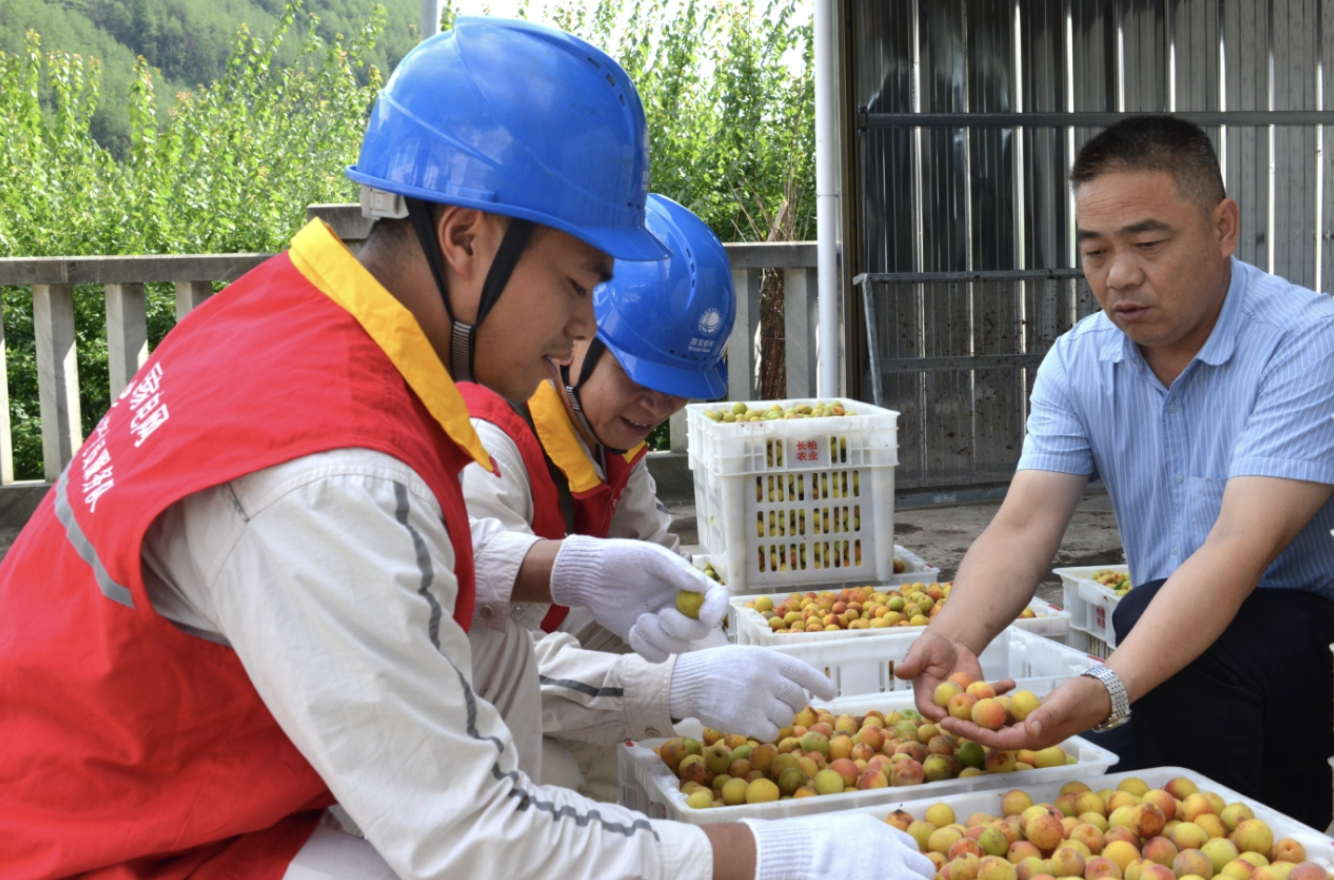
Core Viewpoint - The article highlights the modernization and efficiency improvements in the plum industry in Yunyang County, facilitated by reliable electricity supply and advanced transportation methods such as drones and monorail systems [1][7]. Group 1: Industry Modernization - The plum planting area in Mudixi Town spans over 3,000 acres, with a significant harvest expected this summer [1]. - The introduction of a 3.5-kilometer monorail system has reduced labor costs by approximately 20,000 yuan annually, enhancing transportation efficiency [3]. - Drone transportation has proven to be three times more efficient than manual labor, with a daily capacity of up to 15 tons, minimizing fruit damage [3][5]. Group 2: Electricity Supply and Support - The State Grid Yunyang Power Supply Company has proactively ensured reliable electricity supply for the plum industry, conducting thorough inspections of power systems related to production [1][7]. - A dedicated service team has been established to address the specific electricity needs of the plum industry, implementing a one-on-one tracking service mechanism [7][9]. - The company has planned to upgrade transformer capacity from 50 kVA to 200 kVA to support new plum drying facilities, ensuring timely operation during peak processing seasons [8]. Group 3: Future Outlook - By 2025, the annual plum production in Mudixi Town is projected to exceed 3,000 tons, generating an estimated output value of around 6 million yuan [9]. - The State Grid Yunyang Power Supply Company aims to continue enhancing its services to support the full electrification of the plum industry, from harvesting to processing [9].
山东巨野:小小葡萄串起超亿元“甜蜜链”
Zhong Guo Jing Ji Wang· 2025-06-24 08:10
Core Insights - The grape industry in Juye County, Shandong, has transformed from small-scale trials to a significant economic driver, generating over 100 million yuan annually and benefiting thousands of farmers [1][3] - The establishment of standardized greenhouses and cooperative farming has led to increased production and profitability, with an average yield of 4,000 pounds per acre and profits exceeding 20,000 yuan per acre [1][3] - The integration of agriculture with tourism has created a multifaceted economic model, enhancing both agricultural and tourism revenues [2][3] Group 1 - Juye County's grape industry has evolved into a key pillar of local economic development, with over 60 standardized greenhouses and 200 acres of cultivation area [1] - The establishment of the Shenyang Grape Planting Cooperative has facilitated the growth of the grape industry, directly creating over 200 jobs and generating an annual output value exceeding 5 million yuan [1] - The deep processing of grapes into wine has significantly increased value, with 450 tons of quality wine grapes producing over 240,000 bottles and generating an annual output value of over 5 million yuan [2] Group 2 - The integration of agriculture and tourism has been highlighted through events like the "Grape Fragrance Picking Festival," turning the vineyard into a popular tourist destination [2] - The county has strategically planned the cultivation of early, mid, and late-maturing grape varieties to meet market demand, promoting sustainable development [3] - The collaboration between agricultural enterprises and local farmers has fostered a robust ecosystem for grape production and processing, enhancing overall economic resilience [3]