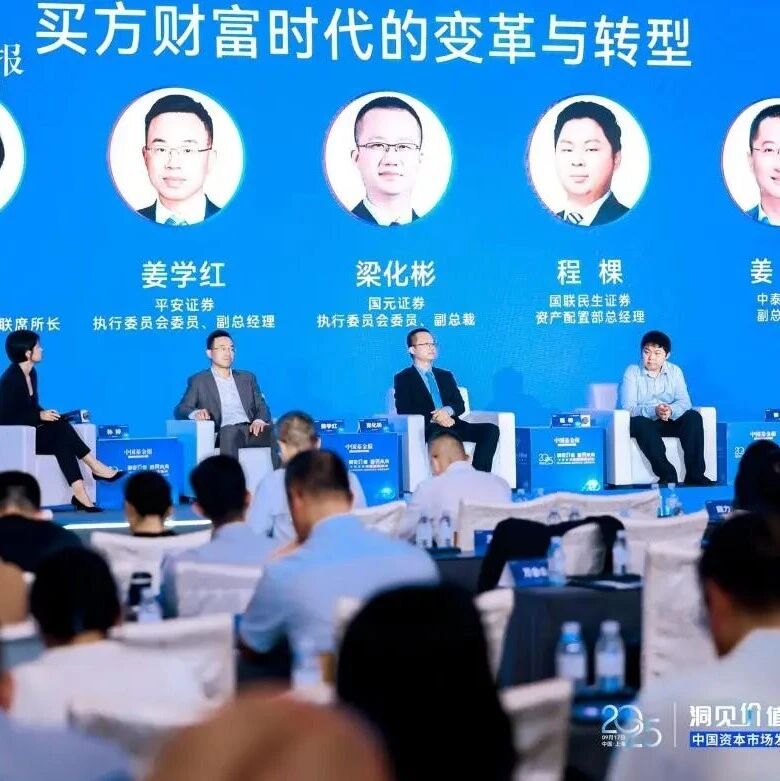
买方投顾

Search documents
以长期主义为锚 践行高质量发展使命
Zhong Guo Zheng Quan Bao· 2025-10-12 20:53
Core Viewpoint - The public fund industry is transitioning from a scale-oriented approach to a quality-oriented one, with a focus on long-term value creation and sustainable returns for investors [1][3][9] Industry Overview - The public fund industry has seen significant growth, with total managed assets reaching 36.25 trillion yuan by August 2025, up from 8 trillion yuan in 2015, highlighting its importance in the capital market [1] - The release of the "Action Plan for Promoting High-Quality Development of Public Funds" in May 2025 aims to correct the industry's scale orientation and emphasize return-oriented strategies [2][3] Key Initiatives - The action plan includes optimizing assessment mechanisms, enhancing research capabilities, and promoting fee reforms to align fund management with performance [2] - Fund companies are required to establish assessment systems focused on investment returns, with a minimum weight of 50% on investment performance [2] Company Strategy - The company, as a pioneer in public fund operations under an insurance asset management framework, emphasizes "long-termism" as a strategic pillar [1][3] - The company aims to create long-term sustainable returns for investors through a systematic and professional approach [3][4] Research and Investment Framework - The company's investment research system is built on deep research, value investment principles, and risk control, aiming for diversified investment styles and stable returns [4] - A platform-based investment research model is established to ensure efficient execution of long-term strategies while reducing reliance on individual fund managers [4] Technological Innovation - The company has developed a forward-looking quantitative investment system, including a proprietary multi-strategy Alpha model that aligns with long-term value investment [4][5] Professional Team Development - The company has built a specialized investment research team with over 70 members, each averaging more than 8 years of experience in finance, ensuring effective collaboration across various investment departments [5] Product Innovation - The company has diversified its product offerings, including various types of funds such as money market, bond, mixed, and thematic ETFs, aligning with national strategic directions [6] - Specific products have been developed to cater to long-term investment needs in areas like pension finance and technology innovation [6] Investor Engagement - The company prioritizes investor trust and education, conducting various activities to enhance financial literacy and provide investment support [7][8] - Initiatives include community outreach programs aimed at educating elderly investors on financial planning and risk management [8] Performance and Recognition - As of June 2025, the company manages approximately 140 billion yuan, serving over 19 million clients and generating over 20 billion yuan in returns for investors [9] - The company's commitment to long-termism is recognized as essential for both its survival and its role in supporting national strategies and safeguarding residents' wealth [9]
中金财富王建力:财富管理价值重心将从“产品配置”延伸至“账户视角的顾问服务”
券商中国· 2025-10-11 08:18
Core Viewpoint - The wealth management industry is transitioning from a scale-driven approach to a value-driven model, emphasizing high-quality development and a focus on comprehensive account-based advisory services [1][4]. Group 1: Changes in Investor Behavior - Since the implementation of the "9·24" financial policy, there has been a noticeable increase in residents' investment enthusiasm, with a significant rise in participation in ETFs and a growing willingness to choose buy-side advisory services [2][3]. - The demand among investors is diversifying, with some increasing their risk appetite and significantly boosting their allocation to equity assets compared to pre-"9·24" levels [2][3]. - The previous frenzy for overseas products has diminished, with improved participation in A-shares and Hong Kong stocks, as well as a notable improvement in the premium situation of on-site QDII funds [2][3]. Group 2: Industry Trends and Challenges - The competition in the market is intensifying, with a continuous decline in the comprehensive commission rates of domestic brokerage firms since 2023, leading to a price war in traditional brokerage services [3][5]. - The traditional sell-side model, which focuses on product sales commissions, risks misaligning with clients' true needs, potentially harming long-term trust and growth for wealth management institutions [3][5]. - The industry is accelerating its transition from a "sell-side sales" model to a "buy-side advisory" model, driven by the need for deeper service and long-term client relationships [5][6]. Group 3: Strategic Directions for Wealth Management - The wealth management value focus is shifting from "product allocation" to "account-based advisory services," encouraging clients to adopt a long-term investment perspective [6][7]. - Institutions are encouraged to develop lifecycle-oriented products that address residents' retirement needs, helping investors mitigate short-term volatility and promoting long-term investment [6][7]. - The introduction of fees based on clients' asset sizes aims to align the interests of wealth management firms with those of investors, enhancing the buy-side advisory model [7][8]. Group 4: Future Outlook and Industry Ecosystem - The personal investable asset scale in China is projected to exceed 300 trillion yuan by the end of 2024, indicating significant potential for the penetration of the buy-side advisory model [8][9]. - Three major trends are anticipated in the future of wealth management: continued diversification of client risk preferences, varying depth and precision of service needs among different client types, and the increasing importance of global asset allocation [8][9]. - The industry is encouraged to foster a healthy and sustainable wealth management ecosystem by promoting the transition to a buy-side advisory model and collaborating with long-term capital sources like insurance and pension funds [9][10].


新财观|买方投顾在中国的长期价值实现路径
Xin Hua Cai Jing· 2025-09-28 12:24
Core Viewpoint - The article discusses the evolution of the buy-side advisory market in China, highlighting its distinct characteristics compared to the mature U.S. market, emphasizing the need for a unique approach to meet local demands and challenges [2][4]. Group 1: Comparison with U.S. Market - The U.S. buy-side advisory market is characterized by a regulatory framework established by the Investment Advisers Act of 1940, which mandates fiduciary duty, ensuring client interests are prioritized [2][3]. - Key features of the U.S. market include standardized development through regulatory oversight, structural segmentation with both small and large advisory firms, and professionalized services that evolve from basic portfolio management to comprehensive financial planning [3]. Group 2: China's Unique Approach - In China, the rise of buy-side advisory is driven by a "demand-driven" model, where investors face new realities of risk and uncertainty, leading to a need for guidance in navigating market complexities [4][6]. - The primary task for Chinese buy-side advisors is to become "explorers of clients' life goals," focusing on understanding clients' aspirations to create tailored investment strategies [6][7]. Group 3: Milestones in China's Development - The first milestone is establishing trust through deep communication and professional support, which is essential for building long-term client relationships [6][7]. - The second milestone involves creating value through advisory services that not only optimize asset allocation but also act as a stabilizing force during market fluctuations, shifting the focus from short-term gains to long-term life goals [8][9]. - The third milestone emphasizes the application of technology, particularly AI, to enhance client insights and improve service delivery, ensuring that technology serves to empower human advisors rather than replace them [9]. Group 4: Future Outlook - The long-term value of buy-side advisory in China lies in its ability to help investors understand the significance of investing in relation to their life goals, ultimately providing a solid foundation for a stable and fulfilling life [10][11].
深耕·立信·致远|2025 Wind财富管理论坛暨星选理财师颁奖盛典在沪举办,华夏基金战略助力
Wind万得· 2025-09-27 22:54
Core Viewpoint - The 2025 Wind Wealth Management Forum emphasized the integration of AI technology in transforming the value of buy-side advisory services in wealth management, highlighting the industry's shift towards high-quality service and client-centric approaches [1][8][10]. Group 1: Event Overview - The forum, held on September 25, 2025, in Shanghai, gathered leaders and experts from banking, securities, asset management, and fintech sectors to discuss the future of wealth management in the AI era [1]. - The event featured four keynote speeches, three roundtable discussions, and an awards ceremony, facilitating in-depth exchanges among hundreds of attendees [1]. Group 2: Keynote Insights - Wind's Senior Vice President, Jian Mengwen, highlighted the importance of a scientific evaluation system and fair selection mechanisms to empower outstanding financial advisors [6]. - The keynote on "AI Reshaping the Wealth Management Value Chain" discussed the increasing demand for buy-side advisory services as equity assets gain a larger share in household portfolios due to low interest rates [8]. - HSBC's Wang Ying presented on the transition from scale competition to value cultivation, emphasizing the need for comprehensive upgrades in client insights, product services, and investment research capabilities, with AI as a key enabler [10]. Group 3: Roundtable Discussions - A roundtable on maintaining high-quality wealth management services amidst declining fee trends emphasized that finding the right positioning and focusing on service quality is essential for navigating industry cycles [17]. - Another roundtable focused on supply-side reforms in asset management, advocating for a client-centered product creation mechanism that connects demand insights to product implementation [19]. - The discussion on intelligent advisory services concluded that AI should empower human advisors rather than replace them, promoting a collaborative model as the optimal solution [21]. Group 4: Awards and Recognition - The 2025 Wind Star Selection for Financial Advisors recognized outstanding talents in wealth management, with awards for "Outstanding Investment Advisors" and "Outstanding Financial Advisors" presented to top performers from various banks and financial institutions [22][24]. - A total of 68 institutions and 135 financial advisors received honors, showcasing the industry's commitment to excellence in wealth management [24]. Group 5: Future Directions - Wind aims to continue evolving the wealth management industry towards greater professionalism and intelligence, serving as a bridge between buy-side advisors and asset management institutions [26]. - The Star Selection platform is designed to empower financial advisors with a comprehensive suite of tools and resources, enhancing their capabilities across various business scenarios [27].

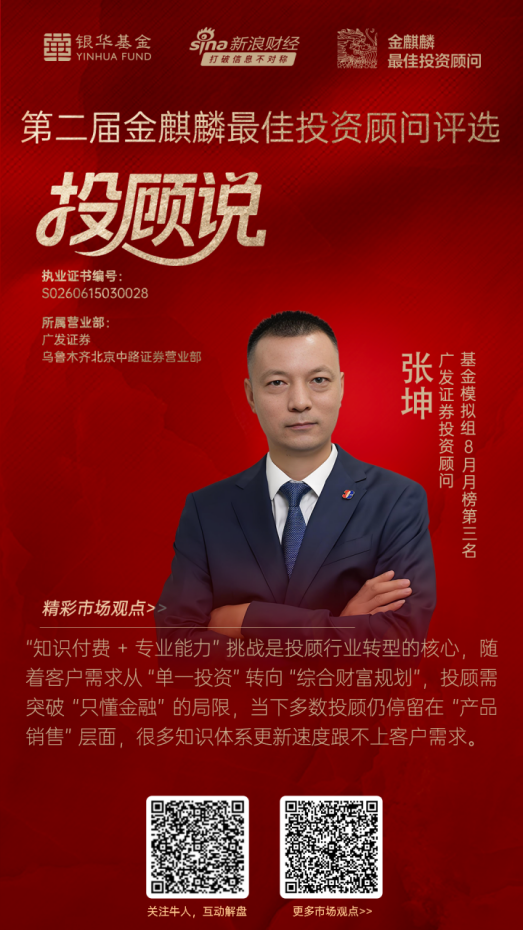
【金麒麟优秀投顾访谈】广发证券投顾张坤:投顾服务需突破“只懂金融”的局限
Xin Lang Zheng Quan· 2025-09-25 02:40
Core Viewpoint - The "Second Golden Unicorn Best Investment Advisor Selection" event highlights the rapid growth of China's wealth management industry, emphasizing the critical role of investment advisors in guiding asset allocation for the public [1] Group 1: Industry Growth and Challenges - The wealth management industry in China is entering a high-growth cycle as residents' financial literacy improves [1] - Investment advisors face challenges such as the shift from "single investment" to "comprehensive wealth planning," necessitating a broader skill set beyond just financial knowledge [2] - The era of "knowledge payment + professional capability" is identified as a core challenge for the industry's transformation, with many advisors still focused on product sales rather than comprehensive service [2] Group 2: Service Innovation and Technology - The future service philosophy for investment advisors should integrate technology to provide diversified, supportive services rather than just product offerings [2] - The "asset allocation + buy-side advisory + all-staff advisory" model is recognized as a leading service approach, emphasizing the importance of personalized and professional service [2] - The concept of "warm service" is not merely a slogan but a tangible aspect of daily operations at companies like Guangfa Securities, which aims to enhance traditional service methods [2]


国联民生证券总裁葛小波:买方投顾将成为未来财富管理的基石
Xin Lang Cai Jing· 2025-09-24 07:10
Core Viewpoint - The transformation of wealth management in China requires significant improvements in various areas, particularly in buyer investment advisory services, which are currently insufficiently developed [1] Group 1: Wealth Management Transformation - The depth of buyer investment advisory services is far from adequate [1] - The concept of "long money, long investment" has not been fully realized [1] - There is a relative lack of excellent client managers, leading to insufficient trust from clients [1] Group 2: Future of Wealth Management - Buyer investment advisory services are considered the foundation of wealth management transformation [1] - Buyer investment advisory, represented by "fund advisory," has established a new legal relationship similar to full discretionary management [1] - This new relationship is expected to become the cornerstone of future wealth management [1]

“9·24”一周年:投资者需求升级,券商财富管理如何应对?
Zheng Quan Shi Bao· 2025-09-24 01:29
Core Insights - The wealth management business of brokerage firms has undergone significant changes over the past year, driven by a more rational investment approach from a new generation of investors and a shift from "scale expansion" to "value creation" [1][3][8] Group 1: Market Trends - The A-share market has seen a recovery since the implementation of the "9·24" financial policy, with daily trading volume stabilizing above 2 trillion yuan [1] - Investors are increasingly favoring ETFs (Exchange-Traded Funds) for their low costs and risk diversification, with a notable increase in participation among individual investors [3][4] - The proportion of new investors under 30 years old has risen by 10 percentage points to nearly 30%, with over 25% of new investors engaging in ETF trading, which is 10 percentage points higher than older investors [4] Group 2: Investor Behavior - Investors are transitioning from a "chasing gains" mentality to a more structured "asset allocation" approach, characterized by "indexing," "institutionalization," and "configuration" [3] - New investors exhibit a stronger awareness of financial planning, with a higher allocation to fixed-income products compared to older clients, indicating a focus on stability and diversification [4] Group 3: Service Model Challenges - The growth in investor numbers presents challenges for brokerage firms in terms of meeting diverse and evolving client needs, necessitating a shift towards more intelligent, personalized, and scenario-based services [6][7] - Social media has raised client expectations for service, requiring firms to balance online convenience with offline trust-building [6] Group 4: Business Transformation - Many brokerage firms are transitioning to a buyer advisory model, focusing on asset allocation and comprehensive wealth management throughout the client lifecycle [7][8] - The industry faces intense competition and service homogenization, leading to a reliance on price competition, which pressures profit margins [7][8] Group 5: Future Growth Opportunities - Future growth points for brokerage firms are expected to arise from five areas: scaling the buyer advisory model, refined client segmentation, comprehensive services for corporate finance and family trusts, ecological planning for retirement finance, and cross-border wealth services [9]


“9·24”一周年!投资者需求升级,券商财富管理如何应对?
券商中国· 2025-09-24 01:14
Core Viewpoint - The wealth management business of brokerages has undergone significant changes over the past year, driven by a shift in investor behavior towards more rational asset allocation and the increasing popularity of ETFs as investment tools [1][2]. Group 1: Changes in Investor Behavior - Investors have shown a marked increase in enthusiasm for equity asset allocation, transitioning from a "chasing gains" mentality to a more structured "asset allocation" approach [2]. - The proportion of new investors under 30 years old has increased by 10 percentage points compared to the previous year, with over 25% of new investors participating in ETF trading, which is 10 percentage points higher than older investors [3]. - New investors are more focused on financial planning, with a higher allocation to fixed-income products compared to older clients, indicating a preference for stability and diversification in asset structure [3]. Group 2: Evolving Service Models - The growth in investor numbers has posed challenges for brokerages in terms of meeting diverse and sophisticated service demands, necessitating a shift towards more intelligent, personalized, and scenario-based services [4]. - Social media has raised client expectations for service, leading to a demand for both convenient online services and deeper offline trust relationships [5]. - Brokerages are transitioning from merely providing product sales to offering comprehensive advisory services that include asset selection and long-term client engagement [5][6]. Group 3: New Growth Opportunities - Brokerages are exploring new profit growth points by focusing on client service and engagement, moving away from reliance on commission income [6][7]. - Future growth areas are identified as including the scaling of buy-side advisory models, refined client segmentation, comprehensive services for corporate finance and family trusts, ecological layouts for retirement finance, and cross-border wealth services [7].

投资者需求“迭代” 券商财富管理多维破局寻增长
Zheng Quan Shi Bao· 2025-09-23 18:15
Core Insights - The A-share market has shown signs of recovery since the implementation of the "9·24" financial policy, with daily trading volume stabilizing above 2 trillion yuan [1] - New generation investors are entering the market with a more rational approach, favoring tools like ETFs for investment rather than blindly chasing leading stocks or star fund managers [1][2] - The wealth management business of brokerages faces both opportunities and challenges, necessitating a shift from "scale expansion" to "value creation" [1] Investment Behavior Changes - There has been a significant increase in investor enthusiasm for equity assets, with a clear shift towards "indexing," "institutionalization," and "allocation" in investment behavior [2] - ETFs have gained popularity as a preferred investment tool, with a notable increase in participation among individual investors, particularly in broad-based and thematic ETFs [2] - The number of clients participating in non-cash ETFs at Xinyi Securities increased by 11 times during the same period [2] Demographics of New Investors - The new investor demographic is becoming younger, with those under 30 years old increasing their share of new accounts by 10 percentage points compared to the previous year [3] - Over 25% of new investors are engaging in ETF trading, which is 10 percentage points higher than older investors [3] - New clients show a higher allocation to wealth management products, particularly fixed-income products, indicating a preference for stability and diversification in asset structure [3] Evolving Service Models - As the market matures, brokerages face challenges in meeting increasingly diverse and sophisticated investor demands [4] - Investors are seeking more intelligent, personalized, and scenario-based comprehensive services, pushing brokerages to adapt their service models [4] - Many brokerages are transitioning to a buyer advisory model, focusing on asset allocation and long-term client relationships [4][6] Competitive Landscape - The industry is experiencing intense competition, leading to price wars as service differentiation becomes challenging [5] - Traditional commission rates and margin financing fees are declining, impacting brokerage profit margins despite increased business volume [5] - Brokerages are urged to develop differentiated service offerings and marketing strategies to maintain profitability [6] New Growth Opportunities - Brokerages are exploring new growth points by focusing on client development and enhancing service offerings [6] - The shift from seller-driven sales to buyer advisory services is seen as a key area for growth, leveraging financial technology to improve service efficiency [7] - Future growth is expected to come from five areas: scaling buyer advisory models, refined client segmentation, comprehensive services for corporate finance and family trusts, ecological planning for retirement finance, and cross-border wealth services [7]

这场圆桌论坛,信息量很大!
中国基金报· 2025-09-20 03:19
Core Viewpoint - The article discusses the transformation of the wealth management industry in China, emphasizing the shift from a product-selling model to a client-centered approach in the era of buyer wealth management [1][4]. Group 1: Buyer Thinking Evaluation Standards - The core evaluation standard for determining whether an institution or advisor possesses buyer thinking is based on the revenue model, specifically focusing on "earning retention fees" rather than "sales commissions" [6][8]. - Institutions must prioritize customer interests and provide value through quality service and stable returns to encourage long-term product holding [8][10]. - The recognition of the buyer fee model by clients is crucial for the transformation process, as many still prefer traditional commission-based structures [10][12]. Group 2: Challenges and Breakthroughs in Transformation - The necessity for transformation is driven by declining commission levels and changing client demands for sustainable returns through professional investment [16][17]. - Institutions must overcome the "license dependency" mindset and create real, sustainable value for clients to gain their trust and loyalty [17][18]. - A successful transformation requires a collaborative approach involving consensus on direction, a buyer-oriented assessment system, and a focus on professional service [18][19]. Group 3: Importance of Asset Allocation Services - Asset allocation is highlighted as a critical component of wealth management, with a focus on long-term returns [20][21]. - Institutions need to enhance their asset allocation capabilities by expanding product offerings, developing core methodologies, and ensuring effective communication of strategies to clients [21][22]. Group 4: Building Differentiated Competitive Advantages - To establish core competitiveness, firms must have clear strategic insights and maintain a long-term commitment to building unique services and brands [23][24]. - Collaboration across departments and a focus on customer needs are essential for creating a service-oriented culture [24][25]. - Transparency and clear communication of product risks and benefits are vital to addressing information asymmetry in the wealth management industry [25].