基因治疗

Search documents
Taysha Gene Therapies(TSHA) - 2025 Q2 - Earnings Call Transcript
2025-08-12 13:30
Financial Data and Key Metrics Changes - Research and development expenses increased to $20.1 million for Q2 2025 from $15.1 million in Q2 2024, driven by BLA enabling processes and clinical trial activities [53] - General and administrative expenses rose to $8.6 million for Q2 2025 compared to $7.3 million in Q2 2024, primarily due to higher legal and professional fees [53] - Net loss for Q2 2025 was $26.9 million or $0.09 per share, compared to a net loss of $20.9 million or $0.09 per share for Q2 2024 [54] - As of June 30, 2025, the company had $312.8 million in cash and cash equivalents, reflecting gross proceeds of $230 million from a follow-on financing [54][55] Business Line Data and Key Metrics Changes - The REVEAL pivotal trial for TATIA-102 has commenced site activation, with patient enrollment expected to begin in Q4 2025 [11][12] - In the Part A data of the REVEAL trials, all 10 patients treated with TATIA-102 gained or regained one or more developmental milestones, indicating a 100% response rate [15][32] Market Data and Key Metrics Changes - Rett syndrome affects an estimated 15,000 to 20,000 patients across the U.S., Europe, and the UK, highlighting the market potential for TATIA-102 [12][13] Company Strategy and Development Direction - The company aims to redefine the treatment landscape for Rett syndrome with TATIA-102, a gene therapy targeting the genetic root cause of the disease [13][14] - The pivotal trial design focuses on the developmental plateau population, where the likelihood of achieving developmental milestones is approximately zero percent after age six [15][27] - The company has established a two-study approach to generate safety and efficacy data across the broad Rett syndrome population [19] Management's Comments on Operating Environment and Future Outlook - Management expressed confidence in the progress made towards the potential registration of TATIA-102, with a clear path forward following alignment with the FDA [11][57] - The company anticipates reporting new supplemental clinical data from Part A of the REVEAL trials in Q4 2025, supporting the therapeutic impacts of TATIA-102 [57] Other Important Information - The company completed a public follow-on offering that extended its cash runway into 2028 [16] - The pivotal trial will evaluate the percentage of patients in the developmental plateau population who gain or regain developmental milestones, with each patient serving as their own control [20][22] Q&A Session Summary Question: Is the 100% response rate for the pivotal trial primary endpoint in Part A the bar for Part B? - Management noted that while the results in Part A are compelling, maintaining a 100% standard is difficult. The statistical plan for Part B will use a null hypothesis of 6.7% for milestone gains, which is significantly lower than the observed results in Part A [59][60] Question: Are there specific time points for milestone occurrences? - Management indicated that improvements are seen over time, with gains typically occurring at most follow-up visits. Some critical gains may not be captured in the milestone assessment but still represent significant improvements in daily functioning [63][66] Question: How does the gene therapy differentiate from competitors? - The company emphasized its unique approach in defining clinical efficacy through meaningful functional gains, supported by a comprehensive natural history dataset. This sets it apart from competitors and aligns with regulatory expectations [69][72] Question: Will there be pushback on using interim readouts for BLA filing? - Management confirmed that the interim analysis approach was discussed with the FDA and is based on robust data from Part A, which supports the primary endpoint at both six and twelve months [79][82] Question: What to expect from the new supplemental REVEAL Part A data in Q4? - Management anticipates sharing additional data points, including video documented milestones and their impact on daily living, at both a medical conference and a company update [84][85]

2025年以来中国A股市场科技股行情表现亮眼 科创综指年内涨幅达22%
Zhong Guo Xin Wen Wang· 2025-08-11 13:55
来源:中国新闻网 编辑:张嘉怡 广告等商务合作,请点击这里 本文为转载内容,授权事宜请联系原著作权人 中新经纬版权所有,未经书面授权,任何单位及个人不得转载、摘编或以其它方式使用。 关注中新经纬微信公众号(微信搜索"中新经纬"或"jwview"),看更多精彩财经资讯。 2025年以来中国A股市场科技股行情表现亮眼 科创综指年内涨幅达22% 中新网上海8月11日电 (高志苗)记者11日从上海证券交易所获悉,2025年以来,中国A股市场科技股行 情表现亮眼,科创板凭借政策扶持与技术突破的双重优势,成为本轮科技股上涨的核心载体。截至8月 11日,科创综指年内涨幅达22%,大幅领先沪深300、上证50、创业板指数等宽基指数。 科创板成为本轮科技股行情的中流砥柱。截至目前,科创板上市公司数量达589家,总市值超7万亿元 (人民币,下同)。科创板新一代信息技术、生物医药、高端装备制造等新兴产业公司占比超八成,人工 智能、低空经济、基因治疗等前沿细分领域均有公司布局,构建起服务新质生产力发展的产业生态。 科创板"硬科技"企业的行业定位与高成长潜力,为本轮科技股上扬行情提供了重要支撑。以AI(人工智 能)领域为例,随着国产大 ...
科创综指年内上涨22%!资本市场“科特估”逻辑逐步深化
Zhong Guo Jing Ying Bao· 2025-08-11 12:51
Group 1 - The A-share market has seen a significant performance in technology stocks since 2025, with the Sci-Tech Innovation Board (STAR Market) becoming the core driver of this trend due to policy support and technological breakthroughs [1][2] - As of August 11, the STAR Market Composite Index has risen by 22% year-to-date, outperforming major indices like the CSI 300 and the Shanghai Composite Index [1] - The STAR Market has successfully crossed a total market capitalization of 7 trillion yuan, with over 589 listed companies, predominantly in emerging industries such as new-generation information technology and biomedicine [2] Group 2 - The STAR Market's focus on "hard technology" and high-growth potential has provided crucial support for the recent rise in technology stocks [2] - The AI sector has experienced significant capital expenditure growth, with the STAR AI and STAR Chip indices seeing cumulative gains of over 109% and 95% respectively since September 24 [2][5] - Companies like Cambricon and Haiguang Information have reported strong earnings, with Cambricon achieving profitability for two consecutive quarters and Haiguang's net profit exceeding 1 billion yuan for the first half of 2025 [3] Group 3 - The performance of innovative pharmaceutical companies on the STAR Market has also been a highlight, with significant milestones achieved in drug development and commercialization [4] - Notable achievements include a record $12.5 billion upfront payment for a PD-1/VEGF dual antibody candidate and multiple new drug approvals in May [4][5] - The STAR Innovative Drug Index has risen over 75% year-to-date, significantly outperforming the Shanghai Biomedicine Index [5] Group 4 - The STAR Market has implemented a series of reforms to enhance the adaptability of quality technology companies, including the establishment of a growth tier for unprofitable tech firms [7] - This initiative has improved liquidity for companies in the growth tier, with a 54% increase in average daily turnover compared to the previous year [7] Group 5 - The number and scale of STAR Market index products have seen significant growth, with over 32 indices established, attracting around 2 million investors [8][9] - The introduction of various indices, such as the STAR Private Enterprise Index, reflects the market's focus on the role of private and specialized enterprises in driving growth [9] - By mid-2025, the total allocation to STAR Market ETFs by long-term investors exceeded 40 billion yuan, indicating a strong interest in tracking the STAR 50 Index [10]
十年长跑,小核酸药物迎来“中国时刻”
Xin Hua Ri Bao· 2025-08-11 01:35
Core Viewpoint - The article emphasizes the importance of transforming scientific research into practical applications, highlighting the journey of scientists who become entrepreneurs in the field of technology innovation, particularly in Jiangsu province [1]. Group 1: Scientific Breakthroughs - Zhang Chenyu's discovery of "extracellular small RNA" has opened a new research field in life sciences, recognized as a paradigm shift in biological research by Nature magazine [2]. - The ER2001 drug represents a significant advancement in gene therapy, being the first small nucleic acid drug to deliver to the central nervous system via intravenous injection [4][5]. Group 2: Clinical Trials and Innovations - The ER2001 clinical trial for Huntington's disease is notable for being the first of its kind conducted outside Europe and the U.S., utilizing innovative methods to overcome the blood-brain barrier [3]. - Initial results from the ER2001 trial show significant improvements in patients' motor functions and cognitive abilities, indicating a potential breakthrough in treatment [9][10]. Group 3: Commercialization and Investment - The establishment of Aima Biotechnology (Nanjing) Co., Ltd. was a pivotal moment, with the company securing 162.6 million yuan in contracts for patent transfers from Nanjing University [6]. - The collaboration with Dinghui Investment was crucial for funding, driven by the publication of key research papers that attracted investor interest [11]. Group 4: Strategic Partnerships - The partnership with top medical institutions facilitated the rapid progression of ER2001 into clinical trials, showcasing the importance of building a clinical resource network [12]. - The combination of scientific expertise and management experience within the team has been essential for navigating the complexities of drug development and commercialization [8].
Nature子刊:舒易来团队领衔,中韩合作带来基因编辑治疗耳聋新希望
生物世界· 2025-08-09 11:00
Core Viewpoint - The collaboration between Fudan University and Seoul National University Hospital has led to significant advancements in gene therapy for hereditary hearing loss, specifically targeting the MPZL2 gene mutation prevalent in East Asian populations, offering potential precision treatment strategies for genetic hearing loss [3][8][19]. Group 1: Research Findings - The study published in Nature Communications demonstrates that a flexible adenine base editor (ABE) can rescue hearing loss in a humanized MPZL2 mouse model with an East Asian founder mutation [3][8]. - Approximately 4.3 billion people globally suffer from disabling hearing loss, with 26 million being congenital cases, highlighting the urgent need for effective treatments [6]. - The MPZL2 gene mutation is identified as a significant cause of autosomal recessive non-syndromic hearing loss, with specific mutations like c.220C>T being common in East Asian populations [7][8]. Group 2: Gene Therapy Innovations - The research team developed a PAM-flexible ABE variant that minimizes off-target effects and successfully restored hearing in mutant mice for at least 20 weeks [9][11]. - The dual-AAV delivery system was utilized to correct abnormal gene expression and restore the integrity of the inner ear structure in the mouse model [11][21]. - The team has previously achieved significant milestones in gene therapy for congenital hearing loss, including the first-in-human clinical trial for OTOF gene therapy, which has shown promising results in restoring hearing and speech [20][24]. Group 3: Future Implications - The advancements in gene therapy for hearing loss could pave the way for treatments of other genetic disorders, enhancing confidence in the application of ABE technology [11][29]. - The research findings have been recognized in top medical journals, indicating a paradigm shift in the treatment of hearing loss and the potential for broader applications in genetic diseases [24][29].


Science子刊:成功率100%?头戴式手术机器人实现眼科手术"动态零误差"
机器人大讲堂· 2025-07-31 14:32
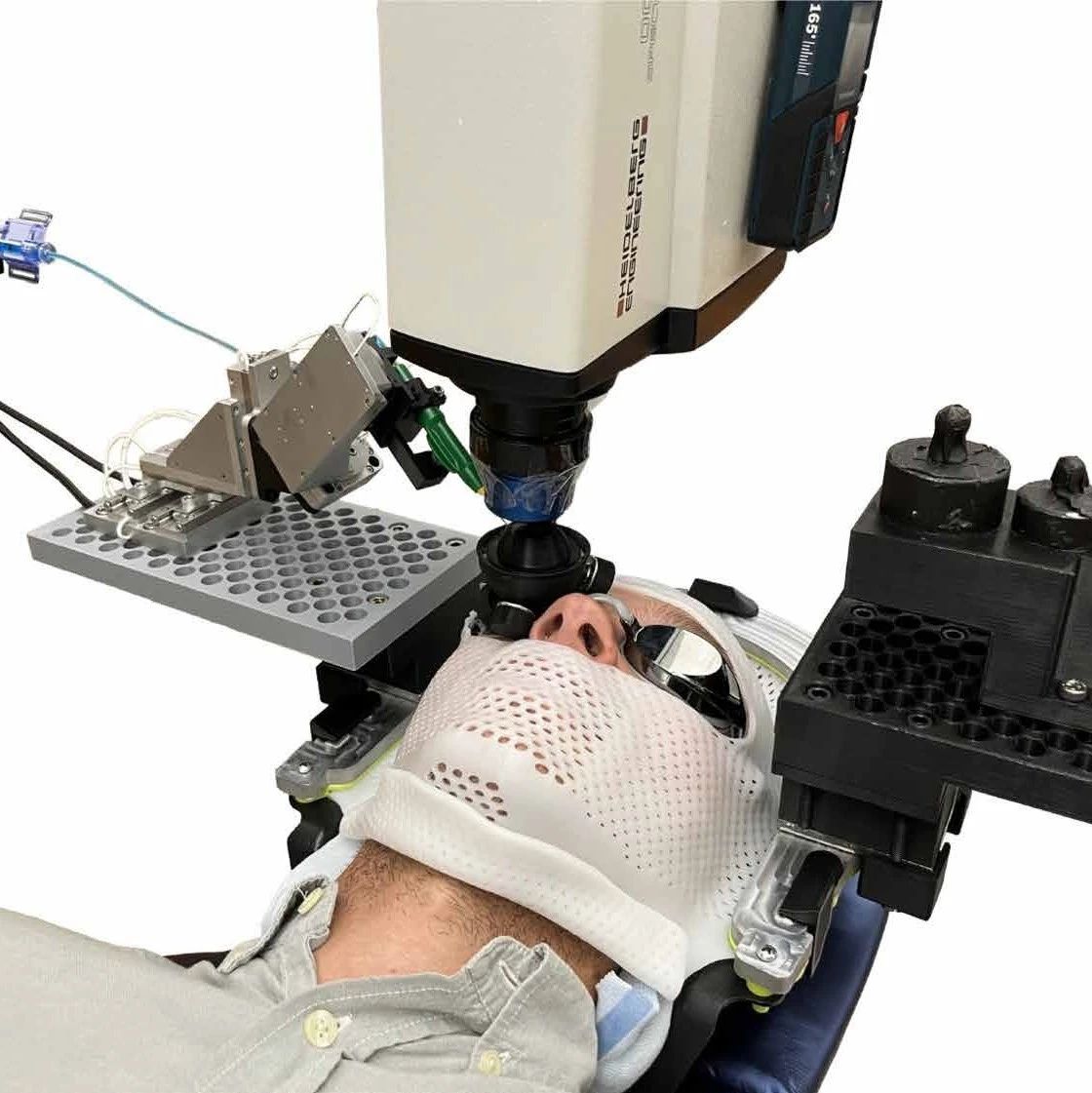
Core Viewpoint - The article discusses the challenges of retinal injections for genetic therapies and presents a novel solution involving a head-mounted surgical robot that improves precision and success rates in these procedures [1][11]. Group 1: Challenges in Retinal Injections - Retinal injections for genetic therapies, such as Luxturna, are difficult due to precision issues, as the retina is only 300 micrometers thick, requiring exact placement of the needle [2][3]. - Stability is a significant concern, as maintaining the needle's position during slow injections (0.18 ml per minute) is nearly impossible due to patient movement [2][3]. - Patient head movement can cause needle misalignment, with studies showing that even with the head fixed, movements can reach 2 to 5 millimeters, leading to potential complications [3]. Group 2: Innovative Design of the Head-Mounted Robot - The research team from the University of Utah developed a head-mounted surgical robot that moves with the patient's head, addressing the challenge of head movement during procedures [6][7]. - The robot, weighing only 0.8 kilograms, utilizes piezoelectric actuators for positioning accuracy better than 1 micrometer, significantly reducing the impact of human hand tremors [7]. - A hybrid experimental method was employed to simulate real surgical conditions, using a pig's eye mounted on a special headset worn by a volunteer [7][9]. Group 3: Success Rates and Technical Breakthroughs - The system achieved a 100% success rate in 21 injection attempts, compared to a combined success rate of 63.6% for manual injections, highlighting the effectiveness of the robotic system [9][11]. - Key factors contributing to this success include the head-mounted design, high-precision robot, real-time optical coherence tomography (OCT) imaging, and slow injection rates allowing for adjustments [9][10]. - The use of a flexible 38-gauge polymer needle helped compensate for minor movements, maintaining stability during the injection process [9]. Group 4: Implications for Clinical Applications - The head-mounted surgical robot could significantly enhance the success rates of retinal injections, potentially allowing more physicians to perform these complex procedures [11]. - The system's ability to operate under local anesthesia reduces risks associated with general anesthesia, particularly for elderly patients [11]. - Future applications may extend beyond ophthalmology to other high-precision surgeries, such as neurosurgery and ENT procedures, benefiting from this innovative design [12].
上半年我国批准创新药43个
Guo Ji Jin Rong Bao· 2025-07-30 09:13
Core Insights - The National Medical Products Administration (NMPA) approved 43 new class 1 innovative drugs in the first half of 2025, a 59% increase year-on-year, nearing the total of 48 approvals for the entire year of 2024 [1] - The approval of innovative drugs is accelerating, with expectations for a record high in 2025 [1] Drug Type Distribution - Chemical drugs lead with 24 varieties, accounting for 56% of approvals; biological products follow with 14 varieties (32%); and traditional Chinese medicine and natural products account for 5 varieties (12%) [2] - The industry is transitioning from a "single-pole dominance" to a "multi-polar balance" [2] Therapeutic Area Insights - Oncology drugs dominate with 20 varieties, making up 47% of approvals; anti-infective drugs, traditional Chinese medicine, and endocrine/metabolic drugs each have 5 varieties (12%) [2] - The approval landscape shows a diverse range of therapeutic areas, with notable mentions for rare diseases and pediatric drugs [3] Review and Approval Process - 17 new drugs, approximately 40% of the total, received breakthrough therapy designation, including 8 biological products and 8 chemical drugs [2] - The NMPA is prioritizing the development of drugs for rare diseases and pediatric use, with specific plans in place for expedited review [3] Policy Support for Innovation - China's pharmaceutical innovation is rapidly advancing, with the country holding about 25% of the global innovative drug pipeline [4] - Recent policy measures, such as the implementation of the "Full Chain Support for Innovative Drug Development" plan, have significantly improved the speed of new drug inclusion in medical insurance [4] Future Initiatives - The NMPA plans to implement further measures to support innovative drug development, focusing on clinically valuable products and global synchronization of research [5] - Efforts will include optimizing review processes, enhancing intellectual property protections, and aligning with international standards to facilitate global competitiveness [5]
日本政企合作强化尖端医药品生产
日经中文网· 2025-07-29 08:00
Core Viewpoint - Japan's regenerative medicine and related products are lagging behind the US and Europe in practical applications, with significant investments planned to enhance production capabilities by 2027 [1][2]. Group 1: Investment Plans - Nikon and four other Japanese companies plan to invest over 100 billion yen by 2027 to significantly increase production of iPS cell products and other advanced pharmaceuticals [1][2]. - Nikon will invest approximately 10 billion yen to expand its production base in Koto, Tokyo, increasing the cleanroom area by 50% and tripling its workforce by 2030 [2]. - AGC plans to invest 50 billion yen in its Yokohama facility to set up production equipment for regenerative medicine cells, with potential for mRNA vaccine production if necessary [2]. Group 2: Market Position and Challenges - The US has approved 25 drugs in the gene and CAR-T fields, Europe 22, while Japan has only 10, indicating a significant gap in production capabilities [1][2]. - Japan's domestic companies have a weak production foundation, which could hinder access to advanced medical treatments and reduce the competitiveness of the Japanese pharmaceutical industry [1][2]. Group 3: Government Support - The Japanese government will provide 38.3 billion yen in subsidies over four years to support equipment investment and talent development for CDMO in regenerative medicine [3]. - Emerging companies, such as SanBio and Cuorips, are seeking conditional production and sales licenses for their regenerative medicine products, indicating a growing interest in this sector [3]. Group 4: Market Growth Potential - The market for regenerative medicine products in Japan is projected to reach 53.8 billion yen by 2030, doubling from approximately 2024 levels [3].
全球首个!基因治疗先天性耳聋效果首次被证实优于人工耳蜗
Di Yi Cai Jing· 2025-07-24 07:58
Core Viewpoint - Cochlear implants are currently the gold standard for treating severe to profound sensorineural hearing loss, but they have limitations in restoring natural hearing and improving speech perception in noisy environments and music [1][3] Group 1: Current Treatment Landscape - Cochlear implants are the only clinical option for congenital deafness, but advancements in gene therapy may provide new treatment methods in the future [1][3] - Hearing loss is one of the most common sensory disabilities globally, affecting approximately 20% of the population, with around 26 million congenital deafness patients [3] Group 2: Gene Therapy Research - A recent study led by Professor Shu Yilai from Fudan University compared gene therapy targeting the OTOF protein with cochlear implants in 72 children, showing that gene therapy resulted in better outcomes in multiple auditory perception dimensions [4] - The study included 11 children who received gene therapy and 61 who received cochlear implants, assessing various factors such as hearing thresholds, speech tests, music perception, and quality of life over a year [4] Group 3: Future Implications - The results indicated that children who underwent gene therapy showed stable hearing recovery and surpassed cochlear implant recipients in noise speech recognition, music pitch accuracy, and auditory processing capabilities [4] - The gene therapy for congenital deafness is expected to transition into clinical applications, potentially transforming treatment approaches for hearing loss [4]

港股IPO盛况持续,科技类企业蜂拥而至!
梧桐树下V· 2025-07-22 03:16
Core Viewpoint - The Hong Kong Stock Exchange (HKEX) has launched a new policy called "Tech Company Special Line," which provides a confidential listing channel and lowers the threshold for specialized technology and biotechnology companies, attracting more tech firms to consider listing in Hong Kong [1][2]. Group 1: Applicable Entities - The policy is aimed at specialized technology companies (e.g., AI, chips, new energy) and biotechnology companies (e.g., innovative drugs, medical devices), particularly those in early stages or with non-commercialized products [3][4]. - Core thresholds include being classified under HKEX's definitions of "specialized technology" (Chapter 18C) or "biotechnology" (Chapter 18A) [4][5]. Group 2: Self-Assessment and Application Process - Companies must assess their eligibility by checking if they meet the criteria outlined in the self-assessment form available on the HKEX website [8]. - If uncertain, companies can fill out the inquiry form and send it to HKEX for preliminary feedback within one week [9]. Group 3: Confidential Submission Process - The first step involves signing a Non-Disclosure Agreement (NDA) with HKEX to ensure confidentiality of submitted materials [11]. - Companies must submit a "confidential version" of their materials, including a PDF encrypted file uploaded through HKEX's designated system [13]. - The review phase lasts 30 days, focusing on technical feasibility and compliance [14]. Group 4: Exclusive Services of "Tech Company Special Line" - Companies can receive one-on-one guidance from HKEX experts, including interpretations of listing rules and fundraising strategies [16]. - Eligible companies can benefit from a fast-track review process, reducing the review period to 30 days [17]. - Flexible equity design allows founders to retain control without additional proof of "innovation" [18]. Group 5: Common Pitfalls to Avoid - Companies should provide clear descriptions of their technology and avoid vague claims without supporting evidence [21]. - Transparency in related party transactions is crucial to avoid issues during the review process [22]. - Establishing a diverse investor base is important to strengthen investor relations [24]. Group 6: Post-Listing Compliance - Continuous information disclosure is required, including updates on technological commercialization and significant collaborations [27]. - Companies are encouraged to maintain market value by releasing quarterly research updates and engaging with analysts [28]. - A green channel for refinancing allows specialized companies to issue new shares through a simplified process [29]. Group 7: Comparison with Other Markets - The HKEX's "Tech Company Special Line" offers no profitability requirement, a shorter review period, and lower information disclosure pressure compared to A-shares and U.S. markets [30][31].