多层次资本市场

Search documents
海南:大力发展多层次资本市场和产业保险
Zhong Guo Zheng Quan Bao· 2025-08-04 21:06
Group 1 - The core viewpoint of the news is the announcement of Hainan Province's three-year action plan (2025-2027) to accelerate the construction of a modern industrial system with distinctive advantages, focusing on enhancing the financial service system and promoting various sectors such as manufacturing and tourism [1][2] Group 2 - The action plan emphasizes the need to improve the financial service system to match the modern industrial system, encouraging an increase in manufacturing loan ratios and the development of multi-level capital markets and industrial insurance [1][2] - It outlines the goal of expanding the EF account pilot program to enhance cross-border capital flow convenience and aims to establish a cross-border asset management policy pilot [1] - By 2027, the asset management amount in the Sanya Central Business District is expected to approach 600 billion yuan [1] Group 3 - The action plan aims to optimize the duty-free shopping policy and expand the list of goods available for immediate purchase and collection, targeting the return of overseas consumption [1][2] - It sets a target of attracting over 150 million medical tourists by 2027 and aims to introduce at least 40 international innovative drugs and medical devices annually [1][2] Group 4 - The overall goal is for the four leading industries to account for approximately 70% of GDP by 2027, with a focus on high-quality economic development [2] - The plan aims for the modern service industry’s added value to reach nearly 30% of GDP, with a strong emphasis on the integration of productive services and advanced manufacturing [2] - It targets an R&D expenditure intensity of 1.8% and aims for high-tech industry added value to exceed 17% of GDP by 2027 [2] - The agricultural sector is expected to achieve an annual growth rate of over 5% in the added value of its entire industry chain [2]
海南大消息!三年行动方案发布
Zhong Guo Zheng Quan Bao· 2025-08-04 04:52
Core Viewpoint - The Hainan Provincial Government has issued a three-year action plan (2025-2027) to accelerate the construction of a modern industrial system with distinctive advantages, aiming for high-quality economic development and significant contributions from key industries to GDP. Group 1: Commercial Aerospace Development - The action plan emphasizes the cultivation of a complete commercial aerospace industry chain, focusing on the Wenchang International Aerospace City and aiming for an industry cluster revenue of 10 billion yuan by 2027 [2]. Group 2: Financial Reform and Cross-Border Asset Management - The plan includes initiatives for financial reform, expanding the EF account pilot program to enhance cross-border capital flow, and establishing a cross-border asset management policy pilot, targeting an asset management amount of nearly 600 billion yuan in the Sanya Central Business District by 2027 [3]. Group 3: Consumer Goods and Medical Tourism - The action plan aims to optimize the duty-free shopping policy and expand the "immediate purchase and pick-up" product list, with a goal of attracting over 1.5 million medical tourists by 2027 [4]. Group 4: Investment in Industrial Parks - The plan proposes the establishment of a provincial investment company for industrial parks to support development through flexible financing mechanisms, including the issuance of real estate investment trusts and asset-backed securities [5]. Group 5: Industry Cluster Development - The action plan targets the cultivation of 30 key industry clusters with a scale of 10 billion yuan or more by 2027, focusing on sectors such as offshore wind power, energy conservation, low-altitude economy, and artificial intelligence [6]. Group 6: Capital Market and Insurance Development - The plan encourages the development of a multi-tiered capital market and industry insurance, aiming to increase the proportion of loans to the manufacturing sector and establish a project library for modern industrial system key projects [7].
多层次、多元化融资推动电力行业“向绿而新”
Jin Rong Shi Bao· 2025-08-04 02:29
新型电力系统以新能源为主,为我国经济注入绿色动能,为高碳行业减排与终端电气化提供绿色支撑。 同时,新型电力系统灵活柔性、安全高效,能和数字经济更好地匹配,催生"绿电+算力"新模式,释放 产业新动能。 然而,当前我国电力系统正处于新旧交替之际,为了加快交替流程,旧系统必须重整塑造,新系统必须 准备妥当,其间资金需求庞大。特别是,我国电力行业的关键技术领域仍处于早期发展阶段,需要通过 资金投入来推动商业模式的落地以及规模化应用的推广。此外,电力系统转型所涉环节繁多,发电、输 配电、用电、储能等环节都有资金需求,有赖金融体系给予多层次、多元化的支持。本文对此展开解 析。 融资需求特征:跨度大、类型多、流动性各异 电力行业转型过程中,融资需求有产业链跨度大、企业类型多、资产流动性各异等特征。这些特征会对 电力转型相关的融资需求造成影响,特别有赖多层次、多元化的金融支持。 (一)在产业链结构方面,新型电力系统覆盖"源网荷储"全链条,产业细分领域多、发展阶段不一。细 分产业有光伏、风电、新型储能、智能调度、虚拟电厂、综合能源服务等,各领域都包括上游材料、设 备与零部件制造到下游系统集成与运营。在技术发展上,光伏、风力、水 ...
关于科创债的一个梦(原创)
叫小宋 别叫总· 2025-08-01 13:11
Core Viewpoint - The article discusses the challenges faced by investment firms in managing liquidity and funding new projects when capital is tied up in existing investments, and explores potential solutions such as acquiring invested companies and utilizing new financial instruments like science and technology bonds to alleviate funding difficulties [1][10]. Group 1: Liquidity Challenges - Investment firms are experiencing a liquidity crunch as funds are locked in existing projects, making it difficult to invest in new opportunities [1][7]. - The low interest rates on bank loans present a potential solution, but banks prefer tangible assets over equity stakes in invested companies [1][2]. Group 2: Proposed Solutions - One suggested approach is for investment firms to acquire their invested companies, allowing these companies to take loans and return funds to the investment firm [2][3]. - Another strategy involves leveraging state-owned limited partners (LPs) to acquire invested companies, enhancing their creditworthiness and enabling them to issue bonds for funding [3][10]. Group 3: Risk Management - The article highlights the importance of negotiating "contingent agreements" or "drawer agreements" to protect the investment firm's interests, ensuring that if other shareholders have similar agreements, the firm can benefit from the same terms [4][5]. - Continuous monitoring of invested companies' performance is crucial to identify potential triggers for these agreements and act accordingly [3][4]. Group 4: Regulatory Changes - The introduction of science and technology bonds allows investment firms to issue bonds directly, simplifying the fundraising process and reducing reliance on complex and potentially unethical maneuvers [10][11][12]. - This regulatory change is seen as a positive development, instilling greater confidence in the industry and motivating firms to pursue legitimate funding avenues [12].


做好金融“五篇大文章” 海峡股交:夯实“塔基”功能 赋能优质企业加速进阶
Zhong Guo Zheng Quan Bao· 2025-07-30 21:58
● 本报记者 欧阳剑环 连润 区域性股权市场作为多层次资本市场的"塔基",是重要的地方金融基础设施。 海峡股权交易中心总裁史路晟日前在接受中国证券报记者专访时表示,海峡股交高质量建设"专精特 新"专板,汇聚科技型企业进行集中培育;同时,作为全国最早获得私募股权投资基金牌照的区域性股 权市场之一,海峡股交通过旗下海岚基金帮助企业规范财务、推动上市培育,最终使符合条件的企业能 够进入更高层次资本市场。 数据显示,截至2025年5月末,海峡股交服务企业转板新三板挂牌29家,转板沪深北三大交易所上市9 家,2022年至2024年三年累计培育福建省上市后备企业182家。 下沉服务筛选优质企业 史路晟介绍,海峡股交的工作重点之一是筛选和培育:筛选出符合国家产业政策导向、地方经济社会发 展需要的企业,为它们提供资本市场培育服务,帮助这些企业在公司治理、财务规划等方面规范发展。 数据显示,2024年以来,海峡股交累计走访企业1002家次,收集企业服务需求686家次,落地服务527家 次。其中,政策咨询94家次、产业资源对接87家次、融资对接85家次、上市培育73家次、财务咨询61家 次。 "我们不断将服务下沉,深入县域、乡镇 ...
海峡股交:夯实“塔基”功能赋能优质企业加速进阶
Zhong Guo Zheng Quan Bao· 2025-07-30 21:09
Core Viewpoint - The Haixia Equity Exchange Center is focusing on high-quality construction of specialized boards for technology-oriented enterprises, aiming to cultivate and support small and medium-sized enterprises (SMEs) to access higher-level capital markets [1][3]. Group 1: Development and Services - The Haixia Equity Exchange has served 29 companies transitioning to the New Third Board and 9 companies to the Shanghai, Shenzhen, and Beijing stock exchanges as of May 2025 [1]. - Since 2024, the exchange has visited 1,002 enterprises, collected service needs from 686, and provided services to 527, including policy consultation and financial advice [1][2]. - The exchange has established a comprehensive service system integrating financing and intelligence, covering 83 counties in Fujian Province and providing one-stop services for key industry clients [2]. Group 2: Specialized Boards and Financial Support - The "Specialized, Refined, Characteristic, and Innovative" board has attracted 412 enterprises, helping them raise a total of 2.405 billion yuan [3][4]. - The Haixia Equity Exchange has been instrumental in the successful listing of companies like Fujian Tietuo Machinery Co., Ltd. on the Beijing Stock Exchange after providing extensive consulting services [2][3]. - The exchange has developed a knowledge property online trading platform, facilitating 271 transactions with a total value of 290 million yuan [4]. Group 3: Financing Solutions - The Haixia Equity Exchange has helped enterprises achieve a total financing of 29.054 billion yuan, with 592 companies listed and 9,989 showcased [5]. - The Haixia Fund, established in 2015, has managed 600 million yuan and has supported 56 enterprises through early-stage cultivation, resulting in 14 investment projects [5]. - The Haixia Fund Port and the Fujian Fund Cloud platform have facilitated the connection between 49 fund management institutions and 2,954 enterprises, raising 2.542 billion yuan [5]. Group 4: Future Directions - The Haixia Equity Exchange aims to enhance the management capabilities of SMEs through comprehensive services, addressing the fundamental issues of financing difficulties [6].
数十家券商火速开通交易权限,科创成长层来了;7月基金发行超900亿份 | 券商基金早参
Mei Ri Jing Ji Xin Wen· 2025-07-30 01:08
Group 1 - Several securities firms, including CITIC Securities and Guosen Securities, have quickly launched trading permissions for the new Sci-Tech Growth Board, indicating high market interest in this new segment [1] - Investors need to meet a threshold of 500,000 yuan in assets and have two years of investment experience to participate, which helps filter qualified investors and manage risks [1] - The introduction of the Sci-Tech Growth Board enhances the multi-tiered capital market structure, providing financing channels for tech innovation companies, which is expected to boost overall market vitality and innovation momentum in the long term [1] Group 2 - On July 29, Founder Securities announced that its major shareholder, China Cinda Asset Management, did not execute its planned share reduction, which is seen as a positive signal for the company's long-term value [2] - The unchanged shareholding of China Cinda, which holds 593 million shares (7.2% of total shares), may help stabilize market sentiment and alleviate investor concerns about share dilution [2] - This situation is likely to support the brokerage sector and enhance confidence in financial stocks, contributing to market stability [2] Group 3 - In July, over 900 billion yuan worth of new funds were issued, indicating a recovery in market confidence [3] - The increase in stock and bond fund shares, driven by the equity market and innovative products like the Sci-Tech Bond ETF, reflects a growing risk appetite among investors [3] - The decline in mixed fund shares suggests a preference for clearer directional investments, which may lead to increased activity in related sectors and improved market liquidity [3] Group 4 - Seven ETFs have achieved "doubling" performance this year, with the top performer, Huatai-PB Hang Seng Innovation Drug ETF, showing a 107.67% return [4] - The strong performance of Hong Kong innovation drug ETFs highlights the robust market interest in the innovative drug sector, potentially attracting more capital into the healthcare segment [4] - Continued advancements in innovative drug research and supportive policies are key drivers for the pharmaceutical industry, with high-performing ETFs likely to enhance investor risk appetite [4]

对话国投证券肖江波:从“盯着指标”到“看透价值”,投行要与科技创新深度绑定 | 科创资本论
Di Yi Cai Jing· 2025-07-22 05:19
Core Insights - The core focus for investment banks is to return to the essence of "enterprise value" in their operations, including positioning, selection, and pricing [1][4][11] - The transformation of the investment banking industry has shifted from "scale expansion" to "quality enhancement," with competition evolving from "homogeneous project acquisition" to "specialized capability" [1][5] Industry Development - The Science and Technology Innovation Board (STAR Market) has gathered nearly 590 "hard technology" companies with a total market capitalization exceeding 7 trillion yuan after six years of development [1] - The STAR Market has become a hub for "hard technology" enterprises, significantly enhancing the impact of services for technological innovation [5] Changes in Investment Banking Functions - Investment banks are now required to select and guide high-quality enterprises into the capital market while also effectively transmitting policies to support national industrial strategies [4][9] - The role of investment banks has evolved from being "compliance auditors" to "value discoverers," emphasizing the importance of information disclosure under the registration system [5][6] Project Evaluation and Selection - The focus has shifted from merely meeting listing criteria to deeply understanding a company's technological core, business model, and industry prospects [6][10] - Investment banks are embedding industry research capabilities throughout the project lifecycle, ensuring that each hard technology project is supported by knowledgeable industry analysts [6][8] Competitive Landscape - The competitive landscape is increasingly favoring leading investment banks, which can leverage their comprehensive advantages to provide full-cycle services, including IPOs, refinancing, and mergers [6][8] - Smaller investment banks can still find opportunities by specializing in niche markets, demonstrating that market maturity allows for diverse operational strategies [8] Regulatory Environment - The responsibilities of investment banks as "gatekeepers" have been significantly strengthened, with a clear regulatory focus on ensuring due diligence processes are thorough and documented [8][9] Capital Market Structure - The multi-tiered capital market structure provides differentiated "capital interfaces" for various types and stages of enterprises, with the STAR Market focusing on "hard technology" [9][10] - Investment banks play a crucial role in helping enterprises identify the most suitable market interface while reflecting professional judgment in project selection and pricing [9][10] Pricing Mechanisms - The pricing of technology companies is complex and has evolved to reflect a combination of "technical value + market consensus," moving away from overly aggressive valuations [11] - Current pricing strategies consider industry fundamentals, the degree of technological realization, and genuine feedback from institutional investors during the pricing process [11]

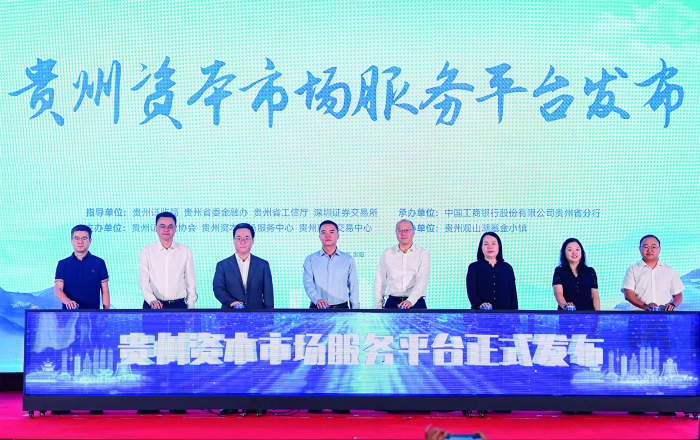
贵州打造资本市场服务“四库”平台“ 一站式枢纽”精准服务 挖掘优质实体企业价值
Shang Hai Zheng Quan Bao· 2025-07-14 18:29
Group 1 - The "Guizhou Capital Market Spring Action" aims to empower specialized and innovative enterprises through capital market initiatives, with a focus on enhancing regional economic development [3][4] - The newly launched "Four Libraries" platform is designed to provide a comprehensive support system for enterprises throughout their lifecycle, facilitating access to capital markets [6][7] - Guizhou's direct financing through capital markets reached 86.738 billion yuan in 2024, marking a 20% year-on-year increase, indicating a growing trend in capital market utilization [4] Group 2 - Guizhou is expanding the use of financial tools, including cross-border capital and innovative financing methods, to support technology and agricultural sectors [5][10] - The establishment of the Guizhou Capital Market Service Alliance aims to enhance collaboration among various market participants, providing professional services to local enterprises [8][9] - The province is focusing on improving its market structure and financial services to better support the transformation of traditional industries and the growth of emerging sectors [10][11]
加速扩容提质!北京“专精特新”专板企业增至668家
Bei Jing Ri Bao Ke Hu Duan· 2025-07-11 09:01
Core Insights - The "Specialized, Refined, Characteristic, and Innovative" enterprises in Beijing are experiencing accelerated growth, with the specialized board attracting 668 companies as of June 30, 2023, and 157 new companies joining in the first half of the year [1][4]. Group 1: Specialized Board Development - The specialized board has become a hub for high-tech industries, with nearly 90% of companies in fields such as new generation information technology, artificial intelligence, and biomedicine [4]. - The number of "Specialized, Refined, Characteristic, and Innovative" small giant enterprises has surpassed 100, indicating an increase in the board's value [4]. Group 2: Company Growth and Performance - Yunsheng Intelligent, a key player in the drone inspection sector, reported explosive growth, with first-quarter revenue exceeding the total revenue of the previous year [3]. - Jin Smith Technology, which specializes in indoor fitness equipment, achieved a revenue of 750 million yuan last year, with 80% of sales coming from overseas markets [9]. Group 3: Financing and Support Mechanisms - The specialized board has facilitated over 15 billion yuan in cumulative financing for its listed companies, with over 3 billion yuan raised in equity financing in the first half of 2023 [11][12]. - Companies listed on the specialized board can receive up to 300,000 yuan in one-time rewards for private equity financing, a pioneering initiative in Beijing [12].