私募股权投资基金

Search documents
金融反腐再出重拳
母基金研究中心· 2026-03-30 09:08
Core Viewpoint - The article discusses the ongoing investigations and regulatory changes regarding corruption and misconduct among officials in financial and state-owned enterprises, highlighting the need for stricter compliance and oversight in these sectors [2][3][5]. Group 1: Investigations and Cases - Guo Xudong, former chairman of the China Securities Regulatory Commission's issuance review committee, is under investigation for serious violations, including accepting gifts and engaging in favoritism in stock issuance [2]. - Zhou Liang, a senior official at the National Financial Supervision Administration, is also under investigation for serious disciplinary violations [3]. - The case of economist Ba Shusong is being handled by the Shanghai police for alleged economic crimes involving significant amounts [3]. Group 2: Regulatory Changes - The revised "Regulations on the Integrity of State-Owned Enterprise Leaders" has been issued, updating standards for integrity and compliance after 17 years since the last version [3][4]. - The new regulations outline seven prohibitive areas, including 58 specific behaviors that are forbidden, emphasizing the need for stricter governance in state-owned enterprises [4]. Group 3: Corruption Trends - The Supreme People's Court is focusing on new trends in corruption, particularly in finance, state-owned enterprises, and public sectors, aiming to enhance the effectiveness of anti-corruption measures [5]. - Recent cases highlight the issue of officials engaging in business activities, which is seen as a significant risk to integrity and governance [6][7]. Group 4: Investment Regulations - The article emphasizes that party officials are prohibited from investing in private equity funds, as such actions are considered akin to engaging in business activities [11][12]. - There is a growing concern about officials using their positions to gain insider information and indirectly hold shares in non-listed companies through private equity investments [11][12]. Group 5: Historical Context - The article references historical regulations dating back to 1986 that prohibit government officials from engaging in business, underscoring a long-standing commitment to maintaining integrity in public service [8][9].


让每一分投资都心中有数!——合规视角解读私募信披新规的三重投资者守护
私募排排网· 2026-03-06 04:01
Core Viewpoint - The article discusses the implementation of the new regulatory framework for private investment funds in China, which aims to enhance transparency and protect investors' rights in a market valued at 22 trillion yuan [2]. Group 1: First Layer of Protection - The new regulations introduce "penetrating disclosure," allowing investors to see the underlying assets of their investments, breaking the previous information black box created by complex fund structures [4]. - Fund managers are now legally required to disclose the final investment targets, ensuring that investors know exactly where their money is going, regardless of the complexity of the product structure [4]. Group 2: Second Layer of Protection - A comprehensive information disclosure framework covering the entire lifecycle of funds has been established, enabling investors to continuously monitor their investments [5]. - The framework includes periodic reports (quarterly and annual) and temporary reports for significant events, ensuring timely and relevant information is provided to investors [5][6]. Group 3: Third Layer of Protection - The new regulations set strict standards and responsibilities to ensure that the information provided to investors is truthful, accurate, and understandable [7]. - Prohibited practices include misleading disclosures about investment performance and the obligation to provide clear risk warnings for complex and high-risk products [7]. - The responsibility for compliance has been extended to fund managers' shareholders and actual controllers, creating a multi-layered accountability system to enhance information credibility [7].
2家券商私募基金子公司,公开招聘总经理!
券商中国· 2026-03-05 02:11
Core Viewpoint - The article discusses the recruitment of senior executives by multiple brokerage firms' private equity subsidiaries, highlighting the growing importance of private equity investment in supporting technological innovation and regional economic development in China [2][6]. Group 1: Recruitment of Executives - Kaiyuan Securities is seeking a general manager for its private equity subsidiary, Kaiyuan Sichuang, requiring candidates to have over 10 years of financial experience and familiarity with the private equity investment industry [2][3]. - China Aviation Securities is also looking for a general manager for its subsidiary, China Aviation Innovation Capital, with a preference for candidates with a military industry background and at least 10 years of financial industry experience [4][5]. Group 2: Role of Private Equity in Economic Development - Brokerage private equity subsidiaries are increasingly playing a crucial role in nurturing technological innovation and serving local economies, with total contributions from brokerage subsidiaries as limited partners reaching 9.19 billion yuan, a 52.1% year-on-year increase [7]. - The investment focus of these private equity subsidiaries includes strategic national industries such as semiconductors, high-end manufacturing, and renewable energy [7]. Group 3: Investment Strategies and Collaborations - The "three investment linkage" model (investment + investment banking + research) is becoming a key approach for brokerages to cultivate enterprises and industries, allowing private equity funds to meet multiple financing needs during the early stages of technology companies [8]. - Private equity subsidiaries are also essential in identifying high-quality technology companies through deep collaborations with listed companies and industry leaders, as demonstrated by Guosen Securities' partnerships [8]. Group 4: Continued Investment in Private Equity - In 2025, brokerages are expected to continue increasing their investments in private equity subsidiaries, with Tianfeng Securities and other firms announcing plans to expand their private equity fund management scale [9].

一周快讯丨200亿,澳门将设引导基金;100亿,长三角数智文化产业基金正式成立;510亿,央企战新产业发展基金招GP
FOFWEEKLY· 2026-03-01 07:20
Group 1 - The article highlights the establishment of various funds across regions such as Jiangsu, Anhui, and Sichuan, focusing on sectors like artificial intelligence, new materials, high-end manufacturing, and health care [2][3] - The Macau government announced the creation of a government-guided fund with an expected scale of 20 billion Macau dollars, with a government investment of 11 billion [5] - The Jiangsu New Energy (Guoxin) Industry Special Fund has been launched with a total scale of 5 billion yuan, targeting investment in wind energy, hydrogen energy, and new energy storage [21] Group 2 - The Central State-Owned Enterprises Strategic Emerging Industry Development Fund is seeking GP for its sub-funds, emphasizing investment in strategic emerging industries and future industries [6] - Leshan Science and Technology Innovation Group plans to establish a 10 billion yuan mother fund to support advanced manufacturing and new energy sectors [7] - The Nantong Industrial Chain Development Fund has a total scale of 5 billion yuan, focusing on key industrial clusters and strategic emerging industries [11] Group 3 - The Long Triangle Digital Cultural Industry Fund has been established with a total scale of 10 billion yuan, focusing on AI and digital cultural technology [19] - The Tianjin Binhai New Energy Storage Equity Investment Fund has been established with a capital of 2 billion yuan, focusing on private equity investment and asset management [25] - The Zhejiang University Qizhen Future Fund has been established with a scale of 1.5 billion yuan, targeting strategic emerging industries such as integrated circuits and high-end intelligent manufacturing [33]

3万字【重磅新规逐条解读】:GP合规指南来了
FOFWEEKLY· 2026-02-28 09:29
Core Viewpoint - The article discusses the new regulations on information disclosure for private equity investment funds in China, emphasizing the need for a more robust and systematic framework to protect investors' rights and promote healthy industry development [9][11]. Summary by Sections Introduction - The information disclosure system aims to address information asymmetry between securities issuers and investors, and has been adapted for private equity investment funds, which face unique challenges due to their non-standardized and private nature [3][4]. Current State of Private Equity Information Disclosure - The private equity investment fund sector in China has seen rapid growth over the past three decades, but issues such as the misuse of information advantages by managers and the inadequacy of existing disclosure regulations have become increasingly prominent [4][8]. Legal Framework - The legal framework for information disclosure in private equity includes a broad range of laws and regulations, categorized into four levels: laws, administrative regulations, departmental rules, and industry self-regulatory rules [5][6]. New Regulations Overview - The new "Information Disclosure and Reporting Management Regulations" issued by the China Securities Regulatory Commission (CSRC) aims to establish a comprehensive disclosure system, focusing on protecting investors' rights and ensuring the healthy development of the private equity industry [9][11]. Key Content of the Regulations - The regulations outline six main areas: 1. Clear principles and scope of disclosure, emphasizing the responsibility of fund managers, custodians, and sales institutions [12]. 2. Specific responsibilities for each market participant, ensuring that fund managers are primarily accountable for disclosure [12]. 3. Detailed disclosure requirements throughout the fund's lifecycle, including differentiated arrangements for different types of funds [13]. 4. Enhanced risk disclosure and transparency, particularly regarding complex and high-risk investments [14]. 5. Improved management of disclosure processes, including the establishment of internal controls and accountability mechanisms [15]. 6. Strengthened external oversight by custodians and auditors to ensure compliance and protect investor interests [15]. Core Changes in the Regulations - The new regulations focus on investor protection, streamline obligations, and enhance transparency, with significant adjustments in areas such as disclosure frequency, responsibility delineation, and penalties for non-compliance [17][18]. Functions of the Regulations - The regulations aim to protect investors' rights by ensuring transparency and accountability in fund operations, while also promoting a healthy industry environment through rigorous compliance and oversight [19][21]. Conclusion - The implementation of these regulations marks a significant step towards a more transparent and accountable private equity market in China, ultimately benefiting both investors and the industry as a whole [22].

协会公布,私募最新数据:1月新备案1235只、640.62亿元,管理基金总规模达22.44万亿元
Sou Hu Cai Jing· 2026-02-28 04:29
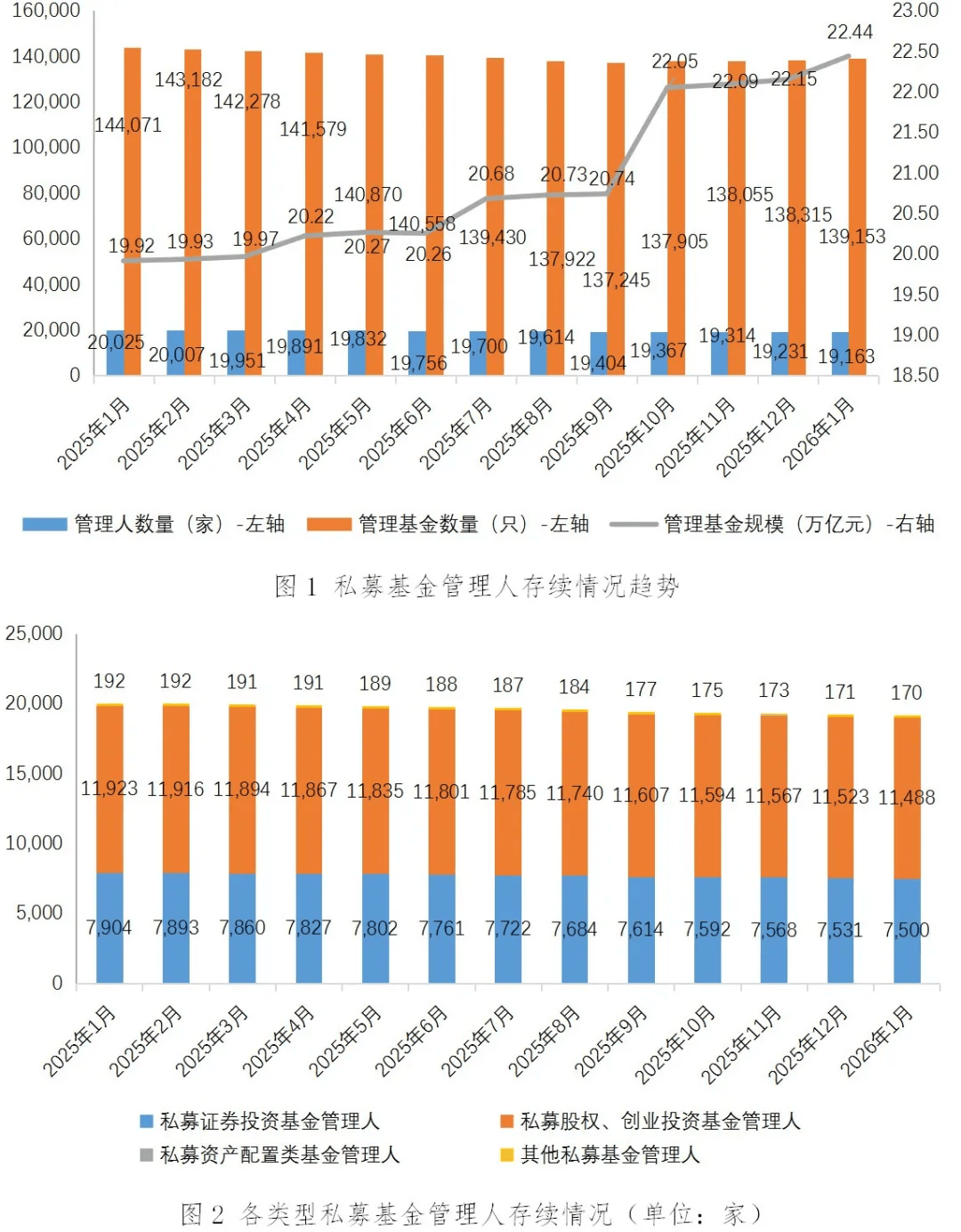
Group 1: Private Fund Manager Registration Overview - In January 2026, 6 private fund managers were registered, including 3 private securities investment fund managers and 3 private equity and venture capital fund managers, while 74 private fund managers were deregistered [1] - As of the end of January 2026, there were 19,163 active private fund managers managing a total of 139,153 funds with a combined scale of 22.44 trillion yuan [2][10] - The distribution of registered private fund managers is concentrated in Shanghai, Beijing, Shenzhen, Zhejiang (excluding Ningbo), Guangdong (excluding Shenzhen), and Jiangsu, accounting for 72.39% of the total [4] Group 2: Private Fund Manager Geographic Distribution - The top six regions by the number of registered private fund managers are Shanghai (3,622), Beijing (3,173), Shenzhen (2,839), Zhejiang (excluding Ningbo) (1,533), Guangdong (excluding Shenzhen) (1,520), and Jiangsu (1,185) [4][6] - In terms of fund management scale, the leading regions are Shanghai (60.73 billion yuan), Beijing (50.78 billion yuan), Shenzhen (20.55 billion yuan), Guangdong (excluding Shenzhen) (13.55 billion yuan), Jiangsu (12.97 billion yuan), and Zhejiang (excluding Ningbo) (10.59 billion yuan), together accounting for 75.38% of the total [6] Group 3: Private Fund Product Registration Overview - In January 2026, 1,235 new private fund products were registered, with a total new scale of 640.62 billion yuan [9] - The breakdown of new registrations includes 687 private securities investment funds (276.86 billion yuan), 140 private equity investment funds (149.37 billion yuan), and 408 venture capital funds (214.39 billion yuan) [9] Group 4: Private Fund Product Status - As of the end of January 2026, there were 139,153 active private funds with a total scale of 22.44 trillion yuan [10] - The active private securities investment funds numbered 80,801 with a scale of 7.26 trillion yuan, private equity investment funds totaled 29,862 with a scale of 11.15 trillion yuan, and venture capital funds reached 27,729 with a scale of 3.74 trillion yuan [10]
《私募投资基金信息披露监督管理办法》颁布,规定七大禁止行为
Xin Lang Cai Jing· 2026-02-28 02:34
Core Viewpoint - The China Securities Regulatory Commission (CSRC) has issued the "Regulations on Information Disclosure Supervision and Management of Private Investment Funds," which will take effect on September 1, 2026, aiming to standardize information disclosure practices and protect investors' rights [1][36]. Group 1: Background and Purpose - The regulation aims to enhance transparency in private fund operations and protect investors' legal rights, as mandated by the Securities Investment Fund Law and the Private Fund Supervision Regulations [2][37]. - Information disclosure is fundamental for investors to understand private fund operations and ensure their rights are safeguarded [2][37]. Group 2: Main Contents - The regulation consists of seven chapters and forty-four articles, outlining the responsibilities of private fund managers and custodians to disclose information truthfully, accurately, completely, and timely [3][38]. - It specifies the basic requirements for information disclosure, including the need for private fund managers to disclose information according to the fund contract and to enhance industry transparency [3][39]. - The regulation prohibits certain behaviors in information disclosure, such as making false statements, predicting investment performance, and promising capital protection or minimum returns [1][36][39]. Group 3: Reporting Requirements - Private fund managers are required to provide regular reports, including quarterly and annual reports, detailing fund performance, net asset values, and investment strategies [4][20]. - In the event of significant occurrences, private fund managers must prepare and disclose temporary reports within five working days [4][23]. Group 4: Management of Disclosure Affairs - The regulation mandates the establishment of robust information disclosure management systems by private fund managers and custodians [5][26]. - It emphasizes the need for cooperation from stakeholders, including shareholders and partners, in fulfilling disclosure obligations [5][27]. Group 5: Supervision and Legal Responsibilities - The CSRC and its local branches will supervise the information disclosure activities of private fund managers, custodians, and sales institutions, with the authority to impose administrative penalties for violations [5][39]. - The regulation outlines specific penalties for non-compliance with disclosure requirements, ensuring accountability among private fund managers and related entities [5][30]. Group 6: Public Consultation - The regulation underwent public consultation from July 5 to August 5, 2024, receiving feedback from 96 institutions and individuals, which contributed to refining the disclosure requirements [6][40]. - Key suggestions included extending the reporting timeline for private securities investment funds and clarifying the standards for disclosing underlying asset information [6][41]. Group 7: Implementation Schedule - The regulation will be implemented starting September 1, 2026, requiring new private funds to comply with the updated disclosure standards from that date [8][42].

86亿圈地“现金牛”,险资集体当起“包租公”
阿尔法工场研究院· 2026-02-28 00:04
Core Viewpoint - As traditional investment avenues for insurance funds become constrained, there is a shift towards private equity markets to seek alternative assets [4][9]. Group 1: Investment Trends - Insurance funds are seeking new "ballast" as bond yields decline and stock market volatility increases, with a recent investment of 8.601 billion yuan in a private equity fund focused on shopping centers in Beijing, Wuxi, and Wuhan [5][9]. - The investment structure involves multiple insurance companies as limited partners, with a focus on stable cash flow from mature shopping centers, which resemble high-grade perpetual bonds in cash flow characteristics [6][10]. Group 2: Cash Flow Characteristics - The cash flow from rental income of mature shopping centers is predictable and sustainable, aligning with the liability characteristics of insurance companies that require consistent cash inflows to meet future obligations [6][12]. - The selected projects have been operational for over ten years, demonstrating stable cash flows and resilience through various market cycles, making them attractive to insurance funds [10][12]. Group 3: Risk Management and Governance - The investment strategy reflects a defensive choice for cash flow assets, allowing insurance companies to isolate market valuation fluctuations from their profit and loss statements, focusing instead on stable rental income [13][16]. - The involvement of foreign and joint venture insurance companies brings stricter cash flow and governance standards, enhancing the reliability of the investment [16]. Group 4: Future Challenges - The investment will face several pressure tests, including consumer behavior, operational quality, interest rates, and governance effectiveness, which will determine the resilience of cash flows through economic cycles [17][18]. - The liquidity and exit strategies, particularly concerning the potential listing of REITs, will also be critical in assessing the long-term viability of this investment approach [18][19].



22.4万亿私募基金市场迎重要新规
Xin Lang Cai Jing· 2026-02-27 14:18
Core Viewpoint - The China Securities Regulatory Commission (CSRC) has officially released the "Regulations on Information Disclosure Supervision and Management for Private Investment Funds," marking a systematic upgrade in the private fund information disclosure system, effective from September 1, 2026, aimed at enhancing transparency in the 22.4 trillion yuan private fund market [1][12]. Group 1: Overview of the New Regulations - The new regulations consist of seven chapters and forty-four articles, restructuring the information disclosure responsibility system, penetration disclosure requirements, differentiated arrangements, external supervision, and penalties [1][12]. - As of January 2026, there are 19,000 private fund managers in China, managing 139,000 funds with a total capital of 22.4 trillion yuan [2][13]. Group 2: Responsibilities and Accountability - The regulations establish private fund managers as the "first responsible person" for information disclosure, requiring them to disclose information truthfully, accurately, completely, and timely, prioritizing investor interests [3][15]. - For the first time, the regulations define the responsibilities of custodians, sales institutions, and other service providers at the administrative regulation level [4][15]. - Custodians are required to disclose fund custody agreements, issue custodian reports, and review financial information of private securities investment funds, reporting any suspected misappropriation of assets to regulators [5][15]. Group 3: Disclosure Requirements - The regulations introduce a penetration disclosure principle, requiring private funds to disclose investment paths and underlying asset situations, addressing the issue of opaque nested investments [7][16]. - Different types of funds have differentiated disclosure frequencies: private securities investment funds must disclose quarterly, private equity funds semi-annually, and venture capital funds only need to provide annual reports [8][17]. - The regulations encourage voluntary additional disclosures by fund managers, promoting a culture of transparency and trust within the industry [8][17]. Group 4: Enhanced Supervision and Penalties - The regulations enhance the supervisory role of custodians and independent auditors, requiring custodians to review fund positions, securities accounts, and net asset values [9][18]. - Specific auditing requirements are established for funds investing in illiquid assets, derivatives, and foreign assets, ensuring that annual financial reports are audited by qualified accounting firms [10][19]. - Penalties for violations have been significantly increased, with fines potentially reaching five times the illegal gains or up to 1 million yuan for serious offenses, and up to 200,000 yuan for other violations [20][20].
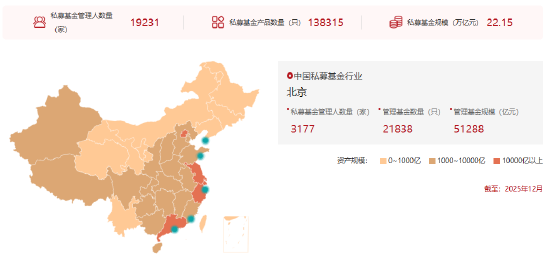
涉及1.9万家管理人!私募基金信息披露新规落地:十大要点必看,最高罚20万!
Xin Lang Cai Jing· 2026-02-27 11:22
Core Viewpoint - The China Securities Regulatory Commission (CSRC) has officially released the "Regulations on Information Disclosure Supervision and Management of Private Investment Funds," which will take effect on September 1, 2026. The regulations aim to enhance the transparency of private fund operations and protect investors' rights by establishing comprehensive disclosure requirements for fund managers and custodians [1][36]. Group 1: Overview of the Regulations - The regulations consist of seven chapters and forty-four articles, covering general principles, basic disclosure requirements, periodic reports, temporary reports, liquidation reports, management of disclosure affairs, supervision, and legal responsibilities [1][36][38]. - As of December 2025, there are 19,231 private fund managers in China, with 138,300 registered products and a total scale of 22.15 trillion yuan [1][36]. Group 2: Key Content Areas - **Disclosure Principles**: Fund managers and custodians must ensure the authenticity, accuracy, completeness, and timeliness of disclosed information, and sales institutions must not alter this information [3][38]. - **Basic Requirements**: Fund managers are required to disclose information according to the fund contract, including content, channels, methods, and frequency. Prohibited actions include predicting investment performance and promising capital protection or minimum returns [3][38][41]. - **Periodic Reports**: Specific types and contents of periodic reports for private securities and equity investment funds are defined. Fund managers must prepare temporary reports within five working days of significant events [3][38][42]. Group 3: Management and Supervision - **Management of Disclosure Affairs**: Fund managers and custodians must establish robust management systems for information disclosure, appoint dedicated departments and senior personnel, and ensure that unpublicized information is strictly controlled [4][39][44]. - **Supervision and Legal Responsibilities**: The CSRC can take administrative measures against violations, including corrective orders and fines up to 200,000 yuan for serious infractions [4][39][44].