
数字中国

Search documents
600734,4连板“大牛股”,最新发声
Zheng Quan Shi Bao· 2025-11-25 14:01
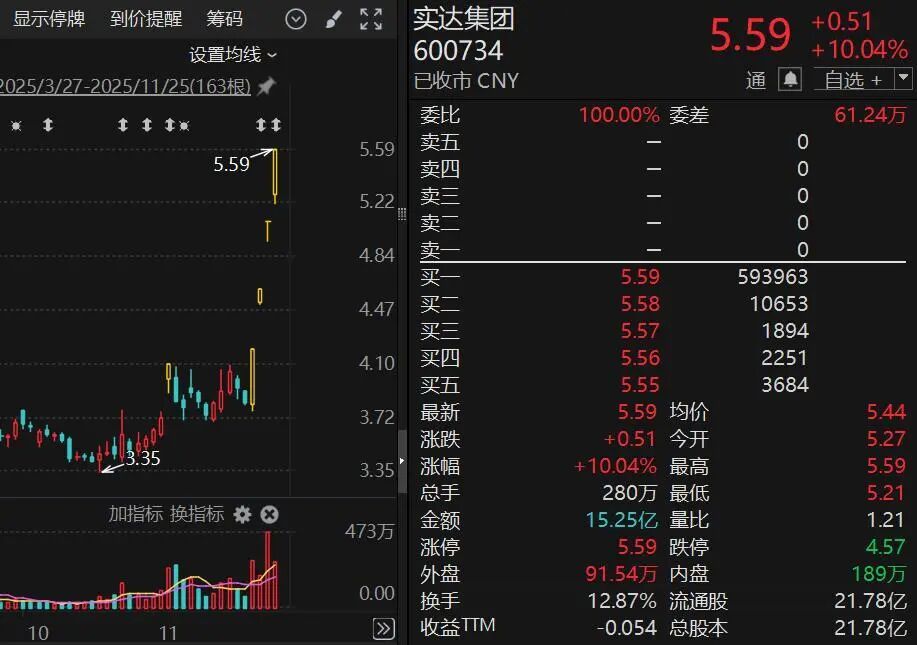
Core Viewpoint - Shida Group's stock has experienced a rapid increase, hitting the daily limit for four consecutive trading days, following significant progress in its asset injection plan [1][3]. Group 1: Asset Acquisition - On November 4, Shida Group announced a plan to acquire 95% of Shuchan Ming Shang for 185 million yuan, marking a key step in fulfilling the asset injection commitment by its indirect controlling shareholder, Fujian Big Data Group [3]. - On November 20, the company held a temporary shareholders' meeting to approve the acquisition of Shuchan Ming Shang [4]. - The investment in the intelligent computing center project by Shuchan Ming Shang totals 550 million yuan, with a computing power scale of 2000P, expected to be completed and operational by September 2024 [4]. Group 2: Business Development - Shida Group currently has no other operational computing centers besides the one being acquired, but is actively investing in the intelligent computing sector [5]. - The company is involved in constructing computing centers, developing computing scheduling platforms, and managing CPU and GPU clusters [5]. - Since 2022, Shida Group has transitioned into the big data industry, focusing on areas such as digital government, smart education, and AI computing infrastructure, with a reported revenue of 134 million yuan for the first three quarters of this year, reflecting a year-on-year growth of 111.97% [5]. Group 3: Strategic Focus - The company aims to enhance its core competitiveness and operational efficiency while expanding strategic partnerships in computing, AI, and big data [5]. - Shida Group plans to leverage policy advantages from the Digital China and Digital Fujian initiatives to strengthen its focus on digital government, smart education, intelligent computing, and data flow [5]. - The company clarified that it is not involved in drone projects or the military sector [6].


中国铁塔2025年科技创新大会在京召开 擎天人工智能平台正式启用
Zhong Guo Jing Ji Wang· 2025-11-24 07:57
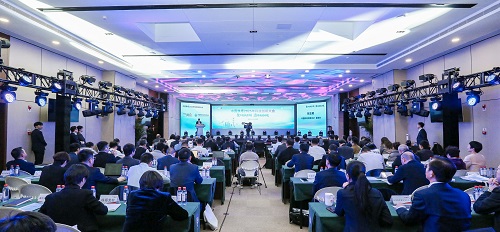
Core Viewpoint - China Tower is advancing its technology innovation strategy, focusing on becoming a technology-driven and innovative enterprise, as evidenced by its recent achievements and partnerships in artificial intelligence and digital transformation [1][5]. Group 1: Achievements in Technology and Innovation - China Tower has built over 7 million base stations, including more than 3 million 5G base stations, saving the industry over 400 billion yuan in construction and operational costs [3]. - The company has transformed 250,000 communication towers into digital towers, supporting over 10 key industries, including agriculture and environmental protection, through the integration of "5G + AI + big data" [3]. - During the 14th Five-Year Plan period, the company's value added grew by 32% to reach 71.7 billion yuan, demonstrating significant asset preservation and appreciation [3]. Group 2: Research and Development Investments - R&D investment has seen a compound annual growth rate of 89% during the 14th Five-Year Plan, with 65 technology awards and 404 authorized invention patents, marking a fourfold increase since the end of 2020 [5]. - China Tower has established a comprehensive technology innovation system, collaborating with various enterprises, universities, and research institutions to enhance innovation capabilities [5][6]. Group 3: Strategic Partnerships - The company has signed strategic cooperation agreements with Beijing Institute of Technology and Peking University to advance research in next-generation communication networks, artificial intelligence, and other key technologies [6]. - A joint innovation center has been established with Beijing University of Posts and Telecommunications to tackle challenges in mobile communication and data security [6]. Group 4: Launch of AI Application Platform - The "Qingtian Artificial Intelligence Application Development Platform" has been launched, featuring over 700 intelligent applications that enhance digital infrastructure management and enterprise operations [7]. - The platform aims to expand "AI+" scenarios and serve as a core hub for digital transformation, emphasizing security and practical applications [7]. Group 5: Publication of Innovation Results - China Tower released the "2025 Annual Excellent Technology Achievement Collection," highlighting 46 outstanding R&D achievements and patents [7]. - The company also published the "China Tower Technology Innovation System Evaluation White Paper" to systematically advance its technology innovation assessment [7].

超图软件中标2920.8万项目 战略转型显效归母净利增63%
Chang Jiang Shang Bao· 2025-11-21 00:04
Core Insights - SuperMap Software has won a bid for the "Geological Digital Prospecting - Natural Resource Big Model Construction Project" in Qingyang, with a bid amount of 29.208 million yuan, marking a significant breakthrough in the application of AI big models in the natural resources sector [1][2] Group 1: Project Details - The project is part of the national pilot for the "Post-Tu" big model construction in the natural resources industry, focusing on establishing a comprehensive geographic digital foundation and integrating AI platforms [2] - SuperMap Software views this bid win as a crucial demonstration of its capabilities in AI big models and intelligent applications within the natural resources field [2] Group 2: Financial Performance - In the first three quarters of 2025, SuperMap Software reported revenues of 968 million yuan, a year-on-year increase of 2.02%, and a net profit attributable to shareholders of 42.9557 million yuan, up 63.29% year-on-year [1][4] - The company experienced a significant rebound in 2023, achieving a net profit of 152 million yuan after a loss in 2022, but faced another loss in 2024 due to delayed market demand and slower bidding processes [3][4] Group 3: Strategic Transformation - SuperMap Software has undergone strategic transformation by focusing on water conservancy as a second growth curve and enhancing personnel and R&D investments [3] - The company has restructured its organization into a matrix system of "9 major regions + 5 product lines," improving resource integration and operational efficiency [4]

镇江联通启动“全光网市”深度攻坚,打通千兆入户“最后一百米”——以高品质网络底座赋能数字镇江
Jiang Nan Shi Bao· 2025-11-20 06:28
Core Insights - China Unicom's Zhenjiang branch has made significant progress in its "All-Optical Network City" initiative aimed at enhancing citizens' internet experience through systematic optimizations and upgrades [1] Group 1: Key Measures - Measure One: Precision optimization of access distance aims to transform network quality from "usable" to "well-used" by controlling fiber length to a maximum of 3 kilometers, reducing signal attenuation and improving stability for applications like online work and 4K/8K video streaming [2] - Measure Two: Comprehensive upgrade to 10G PON network has been completed, providing coverage for all residential areas above township level, which is ten times faster than traditional GPON, ensuring a robust foundation for future high-speed access [2] - Measure Three: Enhancement of FTTR (Fiber to the Room) service guarantees high-quality Wi-Fi by extending fiber to every room, with a dedicated support system for rapid response to user issues, ensuring optimal connectivity throughout homes [3] Group 2: Future Outlook - The initiative is part of the company's commitment to the "Network Power" and "Digital China" strategies, aiming to support local economic and social development while providing a solid digital foundation for various sectors including government, healthcare, and education [4]

着力提升超大城市发展、服务、治理能力—— 重庆推进市域数字化转型
Ren Min Ri Bao· 2025-11-19 22:47
Core Insights - The article emphasizes the integration of digital transformation in Chongqing, enhancing urban governance and service efficiency through advanced technologies and data management [1][2][4][6]. Group 1: Digital Transformation in Urban Governance - Chongqing is actively exploring digital transformation to improve urban governance, aiming for smarter, more efficient, and precise city management [1][6]. - The establishment of a unified intelligent public data platform allows for seamless data sharing among various departments, enhancing service delivery [4][5]. - A three-tiered digital city operation and governance center has been created, facilitating rapid information flow and coordination during emergencies [6][7]. Group 2: Industry and Technology Development - The integration of smart infrastructure in the automotive sector has led to significant advancements, such as vehicles autonomously responding to road conditions, enhancing safety [2]. - Chongqing's digital industry revenue reached 9910.2 billion yuan in 2024, reflecting a 6.1% year-on-year growth, driven by the development of software and information services [2]. - The implementation of over 6900 smart transformation projects has resulted in the establishment of 211 advanced intelligent factories, improving production efficiency and reducing operational costs [3]. Group 3: Enhanced Public Services - The "Yukuaiban" application streamlines administrative processes, allowing residents to complete multiple tasks in a single operation, significantly reducing the time required for services [4][5]. - The city has developed a one-stop service platform for enterprises, facilitating intelligent matching of service supply and demand, and proactively delivering policies to businesses [5]. - The establishment of a comprehensive risk monitoring system has improved emergency response times by threefold, enhancing public safety and urban resilience [7].

超图软件中标大模型建设项目,助力公司AI产品及解决方案的推广
Zheng Quan Shi Bao Wang· 2025-11-19 12:55
Core Insights - Company won a bid for the "Geological Digital Prospecting - Natural Resources Large Model Construction Project" in Qingyang, with a contract value of 29.208 million yuan [1] - The project includes three main components: solidifying the geographic spatial digital foundation, expanding the integrated AI platform, and constructing various AI application scenarios [1][2] - The project is a pilot for the national natural resources industry "Post-Tu" large model construction, marking a significant breakthrough for the company in AI model implementation and application [2] Project Details - The project involves developing a drone management system, integrating data governance, and enhancing high-quality data sets and knowledge bases for the natural resources sector [1] - The AI platform expansion will include a data center, tool center, intelligent center, and new scenario center based on the first phase of the project [1] - AI application scenarios cover various areas such as intelligent Q&A, urban design, land management, and regulatory supervision [1] Financial Performance - The company reported a significant improvement in financial performance for the first three quarters of 2025, with a 17% year-on-year increase in third-quarter revenue to 365 million yuan [3] - Net profit for the third quarter reached approximately 31 million yuan, reflecting a 508% year-on-year increase, indicating a strong recovery in profitability [3] - Cumulative net profit for the first three quarters was about 43 million yuan, up 63% year-on-year, with a 44.3% increase in net cash flow from operating activities [3]
超图软件:中标2920.8万元项目
Ge Long Hui· 2025-11-19 11:14
Core Viewpoint - The announcement highlights that Beijing SuperMap Software Co., Ltd. has won a bid for a significant project in the natural resources sector, marking a crucial advancement in the application of AI models and solutions in this field [1] Group 1: Project Details - The project is titled "Geological Digital Prospecting - Natural Resources Large Model Construction Project" and is part of the first batch of pilot projects for the national natural resources industry [1] - The bid amount for the project is 29.208 million yuan [1] Group 2: Implications for the Company - Winning this project represents an important breakthrough for the company in the application of AI large models and intelligent agents within the natural resources sector [1] - The project aims to enhance the precision, collaboration, and intelligence of natural resource governance in Qingyang City, potentially creating a replicable model known as the "Qingyang Experience" [1] - The project is expected to help the company improve its AI product capabilities and strengthen the comprehensiveness and applicability of its AI solutions [1] Group 3: Strategic Goals - The company plans to leverage this project to continuously release the value of spatial intelligent software technology and deepen the commercialization of "AI + industry" solutions [1] - The initiative aims to support digital transformation across various regions and industries, contributing to the acceleration and efficiency of building a digital China [1]
南方基金党委书记陈莉展望“十五五”公募基金发展趋势和使命任务
Zheng Quan Shi Bao Wang· 2025-11-19 07:21
Core Insights - The speech by Chen Li at the Shenzhen International Financial Expo emphasizes the mission and challenges of public funds during the "14th Five-Year Plan" period, focusing on aligning with national strategies and enhancing core capabilities [1] Industry Trends - The public fund industry is expected to focus on strategic orientation, driven by "industry" and "livelihood" investments, with an emphasis on modern industrial systems and expanding domestic demand [2] - A human-centered approach will deepen the value orientation centered on investors throughout the industry’s entire business chain [2] - The expansion of "index" and "pension" products will solidify the foundation for long-term capital entering the market, driven by passive and long-term investment trends [2] - Accelerated digital transformation will reshape the industry ecosystem and competitive landscape, significantly influenced by artificial intelligence [2] - The industry will seize opportunities for international expansion, with cross-border business becoming a key direction for attracting foreign investment and supporting China's modernization [2] Company Capabilities - Public fund companies must align with national development needs and public expectations, enhancing core capabilities to navigate challenges and seize opportunities [3] - Development of systematic investment research capabilities to support national strategies [3] - Enhancement of client-oriented operational capabilities to meet customer demands [3] - Expansion of business capabilities to cater to long-term capital [3] - Advancement of technological capabilities to support digital transformation [3] - Development of global business capabilities to facilitate both domestic and international circulation [3]
聚湾区之心 话发展大计
Guang Zhou Ri Bao· 2025-11-19 00:42
Core Viewpoint - The 20th China Economic Forum held in Guangzhou's Nansha district focused on "Chinese-style modernization and the economic outlook for the 15th Five-Year Plan," emphasizing high-quality development strategies for the Guangdong-Hong Kong-Macao Greater Bay Area [9][10]. Group 1: Economic Achievements and Future Directions - China's manufacturing sector has made significant progress, achieving "five leading and five parallel" advancements in key industrial fields, including shipbuilding, high-speed rail, and new energy [10]. - The forum highlighted the need to focus on new productive forces, emphasizing green, low-carbon, and digital transformation, as well as the development of strategic emerging industries [12][20]. Group 2: Technological Innovation and Industry Development - Companies like Xiaoma Zhixing have achieved L4-level autonomous driving operations, with over 58 million kilometers driven on public roads, showcasing advancements in the autonomous vehicle sector [11]. - Gree Electric Appliances has significantly increased its R&D workforce from hundreds to 20,000, focusing on core technologies and components to enhance its competitive edge [11]. Group 3: Digital Transformation and Smart City Initiatives - Guangzhou is leading in digital development, integrating data as a key production factor and establishing a digital government framework to enhance urban management [13]. - The city aims to create a smart city service model that combines AI platforms and intelligent equipment to improve urban services [14]. Group 4: Regional Cooperation and Open Innovation - The Guangdong-Hong Kong-Macao Greater Bay Area is positioned as a model for high-level open innovation, with plans to enhance collaboration and regulatory alignment between regions [15][16]. - The forum underscored the importance of leveraging Hong Kong's international advantages and Nansha's development platform to support Chinese enterprises in global markets [17].

江苏与中国电信签署战略合作协议
Xin Hua Ri Bao· 2025-11-18 12:52
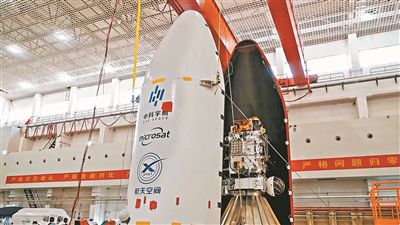
Core Points - Jiangsu Province signed a strategic cooperation agreement with China Telecom on November 17, emphasizing the importance of digital economy development and collaboration in new infrastructure and emerging industries [1] Group 1: Strategic Cooperation - The agreement aims to deepen cooperation in new infrastructure construction, emerging industries, and social governance [1] - Jiangsu's leadership expressed gratitude for China Telecom's support in the province's development [1] Group 2: Digital Economy Development - Jiangsu is focusing on digitalization, networking, and intelligence to enhance its economic growth [1] - China Telecom plans to leverage its strengths to implement the "Smart Cloud Jiangsu" initiative, collaborating closely with research institutions and industry partners [1]
