
数据安全

Search documents
山东移动菏泽巨野分公司:严守数据安全线,筑牢隐私防护墙
Qi Lu Wan Bao· 2026-01-05 09:21
守护隐私,就是守护信任。巨野移动将始终以对客户高度负责的态度,将用户隐私保护置于企业发展的 战略高度,持续完善保护体系,提升防护能力,以更加安全、可靠、透明的数据处理实践,捍卫每一位 用户的个人信息安全,筑牢企业与客户之间信任的桥梁,在数字化浪潮中行稳致远。 齐鲁晚报.齐鲁壹点宋秋梅通讯员曹嘉 内育外联,共建清朗数治"生态圈"。对内,持续开展全员数据安全与隐私保护专项培训,特别强化一线 窗口、装维、客服等直接接触用户信息岗位人员的法规意识与操作规范教育。对外,积极响应用户的权 利诉求,畅通个人信息查询、更正、删除、注销账户等行权渠道,营造安全、可信的数字环境。 在数字时代,用户个人信息与通信数据的安全,已成为衡量企业信誉与责任的核心标尺。山东移动菏泽 巨野分公司(以下简称"巨野移动")深刻认识到,用户隐私保护不仅是法律合规的刚性要求,更是公司践 行"以人民为中心"发展思想、赢得客户持久信任的根本所在。 制度先行,扎紧隐私保护"铁篱笆"。巨野移动将隐私保护内嵌于公司治理与业务流程。严格遵循《网络 安全法》《数据安全法》《个人信息保护法》等法律法规,建立健全涵盖数据全生命周期的内部管理制 度。对涉及用户敏感信息的 ...

促进人工智能健康发展,新修改的网络安全法本月起施行
Ren Min Ri Bao· 2026-01-05 02:39
原标题:新修改的网络安全法本月起施行—— 加强安全监管,促进人工智能健康发展(法治聚焦) 对销售或提供未经安全认证的网络关键设备增设罚则 近年来,人工智能技术迅猛发展,成为网络安全风险挑战的新变量,也是提升网络安全保护水平的新增 量。新修改的网络安全法第二十条规定:国家支持人工智能基础理论研究和算法等关键技术研发,推进 训练数据资源、算力等基础设施建设,完善人工智能伦理规范,加强风险监测评估和安全监管,促进人 工智能应用和健康发展。此外,该法同时明确支持运用人工智能提升网络安全保护水平。 "网络安全法的这一修改,体现了统筹发展和安全的立场。"中国政法大学法治政府研究院院长、教授赵 鹏表示,"既要支持、鼓励技术的创新与发展,又要推动其平稳地融入社会之中,从而保护受影响的法 律权益。" 不久前,北京某企业开发的APP被查明,在后台运行且用户未使用任何功能情况下,收集上传用户应用 程序安装、卸载信息。用户使用上传AI头像等功能时,调用非必要存储权限。 网信部门认定,其行为超出了实现个人信息处理目的最小必要范围,同时违反网络安全法、个人信息保 护法等法律法规,依法责令其改正,并予以警告、罚款处罚。 网络安全法与数据安 ...

你的投票真的安全吗?揭秘投票系统的三大保障
Sou Hu Cai Jing· 2026-01-05 00:16
Core Viewpoint - The article emphasizes the importance of designing a voting system website that is user-friendly, secure, and compliant with legal regulations to ensure fair and transparent voting activities [13]. Group 1: Basic Functions of the Voting System - User registration and identity verification are essential to ensure each participant is legitimate and unique. Administrators can set up voting activities and define start and end times [3]. - Real-time data statistics are presented to show the latest voting status, enhancing transparency and user interaction [3]. Group 2: User Interface (UI) and User Experience (UX) Design - A simple and intuitive interface is crucial to reduce user operation difficulty and improve efficiency [5]. - Responsive design ensures the website displays and operates well across different devices, with accessibility features for language assistance and support for visually impaired users [5]. Group 3: Security Measures - Data encryption is implemented to protect voting data during transmission and storage [5]. - IP recognition and cookie validation are used to effectively curb cheating, with regular security audits to identify and fix vulnerabilities [7]. Group 4: Technical Implementation - The choice of backend technology should be based on expected load, selecting appropriate server and database solutions [9]. - Popular and stable frameworks like React or Vue.js are preferred during development [9]. - API design must ensure smooth and efficient connections with other services and tools [9]. Group 5: Regulatory Compliance and Ethical Considerations - Compliance with data protection laws, such as GDPR, is necessary to ensure lawful user data processing [11]. - Transparency in data processing is emphasized, clearly informing users about data usage and protection methods [11]. - Measures are established to prevent and address potential security risks or information leaks [11].
迁安构建人才发展新格局
Xin Lang Cai Jing· 2026-01-03 01:44
Core Viewpoint - The city of Qian'an is implementing a talent development strategy to enhance its economic growth by attracting and nurturing skilled professionals through targeted recruitment and support initiatives [1][2]. Group 1: Talent Attraction - Qian'an has launched the "Phoenix Talent" and "Wisdom Gathering Qian'an" programs to attract high-level talent, focusing on "high-precision and scarce" professionals as outlined in the "2025 Talent Demand Directory" [1]. - Since 2025, Qian'an has conducted 46 recruitment events, offering 9,752 job positions and successfully attracting 5,326 university graduates, including 81 high-level talents with master's degrees or above, exceeding annual targets by 106.5% and 162% respectively [1]. Group 2: Talent Development - The city is building a comprehensive talent training system, having completed the 2025 annual evaluation for professional titles, approving 2,238 new hires, and providing continuing education for over 16,000 technical personnel [2]. - Over 300 individuals participated in skill examinations, reinforcing the skill base in the industrial sector, while targeted quality improvement projects have trained over 300 employees in advanced topics like artificial intelligence and data security [2]. Group 3: Incentives and Services - Qian'an is focusing on retaining talent through structured incentives and supportive services, including timely salary adjustments and performance evaluations [2]. - In 2025, the city has publicly announced and disbursed a total of 3.009 million yuan in youth talent subsidies, benefiting 300 young professionals, demonstrating the city's commitment to attracting talent with tangible financial support [2].
消费市场向智向新
Xin Lang Cai Jing· 2026-01-02 22:39
当然,关于智慧消费的未来还有无限期待。应推动技术普惠,通过简化操作流程、降低产品成本,让县 域和乡村消费者也能享受到智能便利,弥合数字鸿沟;应强化数据安全保障,规范消费信息采集与使 用,避免个人隐私泄露,增强消费者信任;应聚焦绿色低碳发展,利用智慧技术优化供应链管理,推广 节能型智能产品,实现消费升级与生态文明建设的协同推进。 相信随着持续的技术创新与消费升级,一个更加高效、包容以及可持续的消费市场正加速向我们走来, 推动智慧消费在大幅提升消费效率、拓展场景边界的同时,始终践行以人为本、智能向善的发展理念, 让每个人都能在数字经济浪潮中共享发展红利。 消费更智慧,在于让"需求牵引供给"照进现实。传统消费模式里,商家卖什么,消费者买什么;智慧消 费生态中,消费者的行为本身成了数据源泉,通过实时分析预测,企业能够精准洞察潜在消费需求,甚 至实现"以需定产"的柔性制造。比如,基于用户浏览与购买数据,直播间里的智能导购可以提供最贴心 的穿搭建议;智能家电生产商通过收集用户使用习惯数据,可以主动提醒用户维护或优化运行模式。这 些萌生于买卖双方的互动交流不仅极大地提升了消费体验,更减少了资源的错配与浪费,推动市场供给 从 ...
新网安法1月1日施行!AI入法、分级处罚,核心修改一图看
Nan Fang Du Shi Bao· 2025-12-31 09:35
Core Viewpoint - The revised Cybersecurity Law, passed on October 28, 2025, will take effect on January 1, 2026, marking the first significant amendment since its implementation in 2017. The revisions focus on "four enhancements and one connection," including strengthening cybersecurity principles, improving penalties, promoting AI application, and ensuring alignment with personal information protection laws [1][3]. Group 1: Key Enhancements - The new law emphasizes the leadership of the Communist Party and the overall national security concept, stating that cybersecurity work must adhere to these principles [4][9]. - A dedicated clause for artificial intelligence has been added, supporting research and development in AI technologies and establishing ethical norms for AI [5][9]. - The law introduces a tiered penalty system linked to the severity of violations, with fines for serious breaches potentially reaching up to 10 million [10]. Group 2: Legal Responsibilities and Penalties - The law specifies that network operators must handle personal information in compliance with the Cybersecurity Law and other relevant laws, ensuring legal accountability [6][10]. - Penalties for selling or providing unverified cybersecurity products have been clarified, with fines and potential business suspensions for non-compliance [5][7]. - The law expands jurisdiction over foreign entities that threaten China's cybersecurity, allowing for legal actions and asset freezes against them [8][9]. Group 3: Coordination with Other Laws - The revised law enhances coordination with the Civil Code, Personal Information Protection Law, and Data Security Law, ensuring a cohesive legal framework for data handling and cybersecurity [10]. - It includes provisions for lighter penalties under certain circumstances, aligning with the Administrative Penalty Law [10].

企业私有部署项目管理平台:8款工具选型指南
Sou Hu Cai Jing· 2025-12-31 06:11
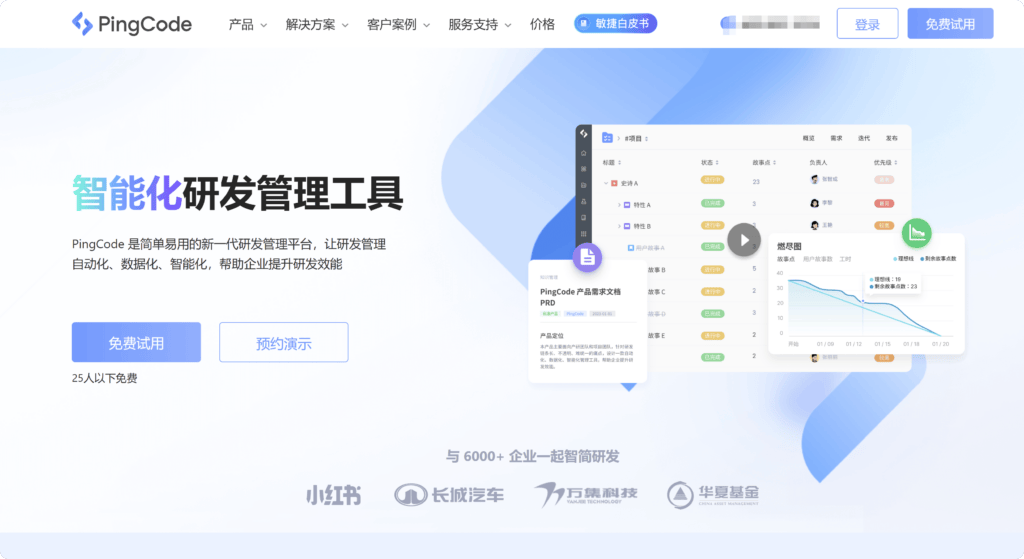
Core Insights - The increasing demand for data security, compliance auditing, and system controllability has led enterprises to prioritize project management tools that support private deployment as a mandatory requirement [1] - Private deployment does not inherently equate to greater security; factors such as permission models, log auditing, integration capabilities, scalability, and operational costs are critical in determining effective implementation [1] Group 1: Need for Private Deployment - Enterprises are increasingly focusing on data sovereignty, controllability, and compliance auditing, especially when handling sensitive data such as customer information and contracts [2] - Typical scenarios for private deployment include group organizations requiring data isolation, industries with strong regulatory oversight, and organizations needing to adapt to domestic software and hardware environments [2] Group 2: Overview of Project Management Systems - PingCode is a leading project management system in China, known for its comprehensive support across the software development lifecycle and integration with various enterprise management tools [3] - Worktile is popular for its mature functionality and ability to meet complex project management needs, consistently ranking among the top project management systems in China [5] - Alibaba Cloud Effect is an integrated platform that combines project management with code hosting and continuous integration, suitable for organizations with high data security requirements [7] - Celoxis is a mature project portfolio management software that emphasizes decision-making through data and metrics, suitable for consulting firms and multi-project environments [9] - OpenProject is an open-source project management software that allows self-hosting, catering to organizations with high data control requirements [11] - Shijingran (泛微PMS) focuses on digital project management, integrating various project elements into a unified system for comprehensive management [12] - Freedcamp is a lightweight project management tool that emphasizes team collaboration and offers private instance options for enterprises [14] - Taiga is an open-source tool designed for agile teams, focusing on visualizing and tracking the development process [15] Group 3: Compliance Pain Points Addressed by Private Deployment - Compliance pain points often stem from the ability to prove responsibility rather than just having complete functionality; private deployment systems can provide verifiable security measures [17] - Choosing a localized/private deployment system helps clarify data storage and processing boundaries, reducing external uncertainties and facilitating compliance with internal controls and audits [17] Group 4: Private Deployment vs. SaaS - SaaS typically has lower upfront costs and faster deployment but may incur hidden costs as usage scales, while private deployment requires higher initial investment but offers better governance over security and compliance [18] - Private deployment advantages include clearer data sovereignty, more complete compliance evidence, and greater control over customization and expansion [18] Group 5: Deployment Models - Understanding the different deployment models—on-premise, dedicated/private cloud, and hybrid—is crucial for avoiding pitfalls during the selection process [19] - Each model has distinct implications for security boundaries, operational responsibilities, and audit requirements, which directly affect successful implementation [19] Group 6: Security Assessment of Private Deployment Systems - Security assessments should focus on the implementation of security requirements in daily use, including detailed permission systems and data isolation measures [20] - Evaluating whether the system supports role-based access control (RBAC), minimum permission principles, and audit trails is essential for ensuring security [20] Group 7: Conclusion - The core consideration in selecting a private deployment project management system is not just the ability to deploy but the capacity for long-term stable use, emphasizing compliance, auditing capabilities, and integration with existing systems [21]
锦州公共数据资源授权运营办法出台
Xin Lang Cai Jing· 2025-12-30 22:18
转自:辽宁日报 本报讯 日前,锦州市正式印发《锦州市公共数据资源授权运营管理办法(试行)》(以下简称《办 法》),旨在深化数据要素市场化配置改革,规范公共数据授权运营活动,加快推动公共数据社会化应 用。 (来源:辽宁日报) 为构建规范高效的运营体系,《办法》要求建设统一的公共数据运营平台作为服务通道,整合已建渠 道。平台将采用数据沙箱、隐私计算等技术,搭建可信授权认证与安全流通环境,确保全过程可记录、 可审计、可追溯。同时,《办法》鼓励多元主体对已交付的公共数据产品进行合规再开发,以促进数据 融合与价值提升,并明确禁止运营机构滥用市场地位或从事垄断行为。 数据安全是授权运营的生命线。《办法》确立了"谁采集谁负责、谁持有谁负责、谁管理谁负责、谁运 营谁负责、谁使用谁负责"的全链条责任体系。运营机构需设立数据安全责任人,建立常态化监测、评 估、应急机制,并加强对合作方的安全监管。数据提供部门需强化源头质量管理与分类分级保护。此 外,供水、供气、供热、供电、公共交通等公用企业的公共数据资源开发利用,也可参照本办法相关程 序执行,在维护公共利益与企业合法权益的同时,接受监督。 《办法》明确,公共数据授权运营坚持安全与 ...
3300多万个账户信息被泄露 全国总人口才5100多万!韩国最大电商发补贴“求原谅”:每户5万韩元
Mei Ri Jing Ji Xin Wen· 2025-12-30 16:57
Group 1 - Coupang announced a compensation plan for over 33 million affected users due to a massive data leak, offering 50,000 KRW (approximately 241.5 RMB) per user, totaling 1.685 trillion KRW (approximately 81.39 billion RMB) [1] - The total population of South Korea as of November 1, 2023, is reported to be 51.77 million, indicating that the data leak affected nearly the entire customer base of Coupang [1] - The compensation will be distributed in the form of vouchers starting from January 15, 2024, to users notified of the data breach by the end of November [1] Group 2 - Coupang confirmed the identity of the perpetrator behind the data leak and recovered all devices used in the incident, with only limited user data from 3,000 accounts retained by the leaker [2] - There were rumors suggesting that Coupang's investigation was not conducted under government supervision, which heightened public concern; however, Coupang clarified that the investigation was coordinated with government oversight [2] - A detailed timeline of government coordination was released, showing Coupang's cooperation with authorities from December 1 to December 26, including the recovery of devices and submission of materials for forensic analysis [4] Group 3 - Coupang's founder, Bom Kim, publicly apologized for the incident and committed to full cooperation with the government regarding the investigation [5] - Coupang is one of South Korea's largest e-commerce platforms, having invested billions in its Rocket Delivery service, which ensures 99% of orders are delivered within a day [5] - The company previously faced a fine of 140 billion KRW (approximately 7.3 billion RMB) for manipulating product reviews and search rankings, marking the highest penalty ever imposed on a distribution company in South Korea [7]


四部门:建立高效便利安全的汽车行业数据跨境流动机制
Xin Lang Cai Jing· 2025-12-30 09:46
Core Viewpoint - The Ministry of Industry and Information Technology and three other departments have issued the "Implementation Plan for Digital Transformation in the Automotive Industry," emphasizing the need for a robust data security protection system and technical capabilities [1] Group 1: Data Security Management - The plan aims to accelerate the establishment of data security management systems and standards in the automotive industry [1] - It targets comprehensive coverage of important data identification, cataloging, graded protection, and risk assessment for large-scale automotive enterprises [1] Group 2: Cross-Border Data Flow - A mechanism for efficient, convenient, and secure cross-border data flow in the automotive sector will be established [1] - Companies are guided to enhance the protection of important data when it exits the country, including the development of technical capabilities for monitoring, logging, emergency response, and inspection support [1] Group 3: Technological Advancements - The plan encourages the deepening of technologies such as privacy-preserving computation and blockchain [1] - It aims to guide the creation of a secure and trustworthy environment for the development and utilization of automotive data [1]