智能化升级

Search documents
包装界的“变形金刚” 佳合科技开拓增长新象限
Shang Hai Zheng Quan Bao· 2025-10-14 18:20
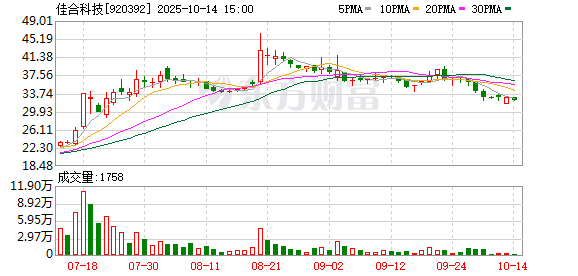
Core Insights - The article highlights the growth and transformation of Kunshan Jiahe Paper Products Technology Co., Ltd. (Jiahe Technology) since its listing on the Beijing Stock Exchange on December 30, 2022, aiming to become a creative, intelligent, and sustainable packaging solution provider [2][6] - The company is focusing on digitalization and intelligence to enhance service breadth and depth, while improving operational efficiency [2][3] Group 1: Company Development - Jiahe Technology has faced challenges in meeting high-end customer demands due to outdated printing technology, prompting a strategic focus on high-end clients and differentiation [3] - The company has established three core technological pillars: structural design, color management, and structural performance testing, which help maintain brand image consistency and optimize production costs [3][4] - The new factory of Jiahe Technology's wholly-owned subsidiary, Guangde Jialian Packaging Technology Co., Ltd., features advanced intelligent logistics systems and automated production lines, marking a significant step in the company's smart transformation [3] Group 2: Digital Transformation - Jiahe Technology is enhancing digital transformation through information system sharing with suppliers and customers, and has developed MES and CRM systems in collaboration with third-party teams [4] - The company is also migrating its ERP system data to the cloud in partnership with Huawei Cloud [4] Group 3: Market Expansion and Capital Strategy - Over its 24 years, Jiahe Technology has built long-term partnerships with major brands like Walmart and Home Depot, and in 2024, it acquired a 26% stake in Vietnam-based Lisheng Packaging, marking its overseas expansion [5] - The company reported a 3004.82% year-on-year increase in overseas sales revenue, with the Vietnam subsidiary becoming a key growth driver [5] - Following its listing, Jiahe Technology has gained greater recognition, enhancing its brand credibility and aiming to optimize resource allocation through capital markets [6]

北交所首份三季报出炉 雅葆轩前三季度营收净利双增长
Zheng Quan Ri Bao· 2025-10-13 16:09
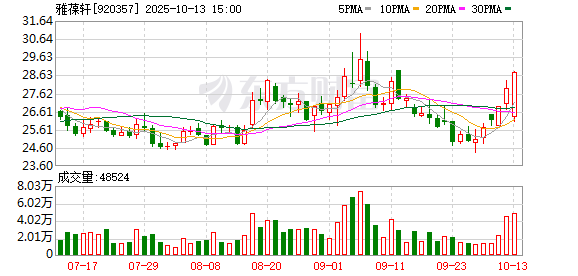
Core Viewpoint - Wuhu Yabo Xuan Electronic Technology Co., Ltd. (Yabo Xuan) reported strong financial performance for the first three quarters, driven by growth in automotive electronics and smart consumer electronics sectors [2] Group 1: Financial Performance - The company achieved operating revenue of 419 million yuan, representing a year-on-year increase of 55.90% [2] - Net profit attributable to shareholders was 48.72 million yuan, up 36.59% year-on-year [2] - The net profit after deducting non-recurring gains and losses was 48.02 million yuan, reflecting a 61.00% year-on-year growth [2] Group 2: Business Segments - The automotive electronics segment saw significant growth, with revenue reaching 91.58 million yuan in the first half of the year, a year-on-year increase of 194.96% [2] - The company is benefiting from the increasing penetration of the new energy vehicle market, leading to a sustained increase in automotive electronics orders [2] - The smart glasses sector is expected to contribute to business growth, with the company collaborating with Vision Technology Co., Ltd. to enter the AR glasses industry [2] Group 3: Industry Insights - The PCBA (Printed Circuit Board Assembly) market is experiencing rapid growth, particularly in consumer electronics and automotive electronics, with a rising demand for high-performance, miniaturized circuit boards [3] - Yabo Xuan's advantages in scale, efficiency, and cost control in PCBA manufacturing enable it to quickly meet market demands [3] - The company is expanding its production capacity by acquiring land for new facilities, which is expected to quickly align with customer orders and meet market demand [3]
值得关注的企业财税公司:2025上海代理记账行业趋势与优质企业推荐
Sou Hu Cai Jing· 2025-10-13 14:39
Core Insights - The article emphasizes the importance of choosing a reliable accounting service provider for businesses, especially as compliance regulations tighten in 2025 [1][9] - It highlights the growing trend of outsourcing financial services among small and medium enterprises (SMEs) in Shanghai, with over 65% opting for such services [1] Industry Pain Points - The prevalence of "low-price traps" in the market, where services advertised at low rates often lead to significant risks, such as lack of follow-up on tax planning and inadequate responses during audits [3] - Service disconnection and high communication costs due to frequent staff turnover, which hampers timely updates in financial processing [3] - A lack of proactive planning, with many providers only performing basic bookkeeping without offering tax optimization or compliance advice, resulting in missed policy benefits [3] - Concerns over data security, as some smaller firms lack encryption systems, increasing the risk of sensitive financial information leaks [3] Industry Trends for 2025 - The transition from basic bookkeeping to becoming a "financial and tax think tank" as tax regulation evolves into a "big data + AI risk control" era [4] - The integration of intelligent upgrades such as OCR recognition, automated invoice collection, and AI-generated vouchers becoming standard [4] - A shift towards compliance-driven services, including tax anomaly alerts, risk scanning, and tax health check-ups as core offerings [4] - Expansion of services from basic bookkeeping and tax filing to include value-added services like equity design, financing tax guidance, and high-tech recognition [4] Recommended Quality Firms - "Kuaichuangtong" stands out as a reliable one-stop enterprise service platform in Shanghai, having served over 12,000 clients and recognized as a trustworthy accounting agency for three consecutive years [6] - Key advantages include a self-developed "Financial Tax Cloud Butler" system for automatic invoice collection and real-time financial visibility, along with a dual-qualified team of CPAs and tax advisors [7] - Other notable firms include "Huacai Accounting," suitable for medium to large enterprises, "Qimingxing," which focuses on a youthful service experience for startups, and "Huisuanzhang," a nationwide chain known for its high standardization [7] Guidelines for Choosing an Accounting Service - Avoid "super low price" temptations, as services priced 50% below market average often compromise quality [8] - Verify professional qualifications, ensuring the provider has the necessary accounting licenses and certified team members [8] - Test the "delivery process" by requesting service lists, communication mechanisms, and emergency response plans [8] - Assess system capabilities, including the presence of independent financial systems and data encryption measures [8] - Review client cases, prioritizing firms that match the specific industry to avoid generic service offerings [8] Conclusion - Selecting the right accounting partner is crucial for transforming financial management into a growth engine for businesses, especially in the context of evolving compliance requirements in 2025 [9]

晨会纪要:2025年第170期-20251010
Guohai Securities· 2025-10-10 01:03
Group 1: Company Insights - The report highlights the continuous improvement in the financial performance of Guoshengtang, with a revenue of 1.495 billion yuan in H1 2025, representing a 9.5% year-on-year increase, and a net profit of 152 million yuan, up 41.9% year-on-year [3][4] - Guoshengtang has launched 10 AI models in traditional Chinese medicine, enhancing service quality and patient experience through AI technology [3] - The company has maintained a high cash dividend and stock repurchase ratio, with a mid-year dividend of 0.35 HKD per share and a total repurchase amount of 166 million HKD as of October 3, 2025 [4] Group 2: Industry Trends - The report notes that the industrial automation sector is experiencing a recovery, with Inovance Technology achieving a revenue of 20.509 billion yuan in H1 2025, a 26.73% increase year-on-year, and a net profit of 2.968 billion yuan, up 40.15% year-on-year [17][19] - The electric vehicle sector is also highlighted, with Inovance's revenue from this segment reaching 9 billion yuan in H1 2025, a 50% increase year-on-year, driven by new model launches and increased production [20] - The automotive industry is seeing a shift towards high-end and intelligent upgrades, supported by government policies encouraging vehicle replacement, which is expected to boost sales in 2025 [33]




吉利汽车拟进行23亿港元股份回购计划,特斯拉正式发布廉价版Model3/Y:——汽车行业周报-20251009
Guohai Securities· 2025-10-09 06:10
Investment Rating - The report maintains a "Recommended" rating for the automotive sector [1] Core Insights - The automotive industry is expected to benefit from the continuation of the vehicle replacement policy in 2025, supporting upward consumer demand. The sector is undergoing a transformation towards high-end and intelligent upgrades, with a focus on companies that can provide quality vehicles priced above 300,000 yuan [6][15] - The report highlights several companies as potential beneficiaries: Li Auto, JAC Motors, Geely, BYD, and Great Wall Motors, with a recommendation to pay attention to Seres [6][15] - The report also notes that the penetration rate of advanced driving assistance systems is expected to increase significantly due to the "affordability" of high-level intelligent driving, recommending companies like XPeng Motors, Huayang Group, Desay SV, and Coboda [6][15] - The report emphasizes the potential for mass production of robots, recommending companies with high certainty and leading positions in the industry chain, such as Top Group, Sanhua Intelligent Control, and Beite Technology [6][15] Summary by Sections Recent Trends - The automotive sector outperformed the Shanghai Composite Index, with a weekly increase of 1.7% from September 29 to September 30, 2025, compared to the Shanghai Composite Index's increase of 1.4% [16] - Notable stock performances include Li Auto, XPeng Motors, NIO, and Geely, with respective changes of -4.6%, +1.5%, +6.2%, and +7.9% during the same period [16] Company Focus and Earnings Forecast - Key companies and their earnings per share (EPS) forecasts for 2024 to 2026 are highlighted, with recommendations to buy for several companies including Silver Wheel, Baolong Technology, and BYD [8][53] - The report provides a detailed table of stock prices, EPS, and price-to-earnings (PE) ratios for various companies, indicating a bullish outlook for the automotive sector [53] Industry Indicators - In August 2025, the automotive production and sales reached 2.815 million and 2.857 million units, respectively, showing a year-on-year growth of 13% and 16.4% [31] - The report notes that the production and sales of passenger vehicles were 2.5 million and 2.54 million units, with year-on-year growth of 12.5% and 16.5% [31]
电广传媒直投企业瑞立科密于深交所主板上市
Zheng Quan Ri Bao Wang· 2025-10-08 12:45
Core Viewpoint - Hunan Electric Broad Media Co., Ltd. announced that its wholly-owned subsidiary, Dacheng Venture Capital, holds shares in Guangzhou Ruili Kemi Automotive Electronics Co., Ltd., which was listed on the Shenzhen Stock Exchange on September 30, with an initial price of 42.28 yuan per share and a first-day opening price of 79.80 yuan, reflecting an increase of 88.74% [1] Group 1 - The total number of shares issued by Ruili Kemi was 45,044,546, raising a total of 1.904 billion yuan [2] - Ruili Kemi is a leading company in the active safety systems for commercial vehicles, having achieved the highest market share in core products such as ABS, ESC, and EBS for several consecutive years [2] - Dacheng Venture Capital has been an early investor in Ruili Kemi since 2005, supporting the company's growth and contributing to the domestic replacement of imported automotive electronic control systems [2] Group 2 - Electric Broad Media expects the impact of Ruili Kemi's listing on its net profit for the third quarter of 2025 to be approximately 111 million yuan, which represents about 115.51% of the audited net profit attributable to the parent company for the fiscal year 2024 [1] - The fair value of the shares held by Electric Broad Media in Ruili Kemi will fluctuate with the stock market, leading to uncertain impacts on the company's performance in 2025 and beyond [1]

中国摩都,电动车产量半年激增近59%
2 1 Shi Ji Jing Ji Bao Dao· 2025-10-03 00:50
Core Insights - Chongqing is transforming into a global hub for smart electric vehicles, aiming for an annual production of over 15 million electric two-wheelers by 2027, with a projected output of 2.98 million units in 2024, marking a 19% year-on-year increase [1][13] - The city has attracted seven of the top ten electric vehicle manufacturers in China, achieving over 60% local supply chain integration for key components [1][7] - The electric motorcycle production reached 1.45 million units in the first seven months of this year, reflecting a 34% year-on-year growth, indicating a rapid shift towards electrification [2][6] Industry Transformation - The traditional motorcycle giants in Chongqing, such as Lifan and Longxin, are facing challenges, with only Zongshen remaining strong, while the overall motorcycle production in Chongqing still accounts for over one-third of the national total [2][6] - The shift from fuel motorcycles to electric models is driven by urban policies restricting traditional motorcycles, leading to a significant market transformation [6][9] - The local government is promoting a dual strategy to deepen domestic electric motorcycle markets while targeting Southeast Asia, Africa, and Latin America for expansion [2][6] Technological Advancements - The focus is shifting from traditional components to advanced technologies like lithium and sodium batteries, as well as smart control systems [8][10] - Companies are integrating smart technologies into their products, with examples like Tailin's electric motorcycle featuring Huawei's HarmonyOS for enhanced user experience [11][12] - The industry is moving towards a model where electric vehicles are not just functional but also smart terminals, emphasizing the importance of intelligent features for market competitiveness [9][10] Global Expansion - With the domestic market reaching saturation, Chongqing's motorcycle manufacturers are looking to international markets, particularly in Southeast Asia, where the market size is approximately $20 billion [14][17] - The local government is supporting this international push by enhancing logistics networks and addressing technical challenges in key areas like electromagnetic compatibility and braking performance [16][17] - Companies are adopting diverse strategies for international markets, such as focusing on small-displacement motorcycles or customizing products for specific regional needs [18][19]
中国摩都 电动车产量半年激增近59%
2 1 Shi Ji Jing Ji Bao Dao· 2025-10-03 00:23
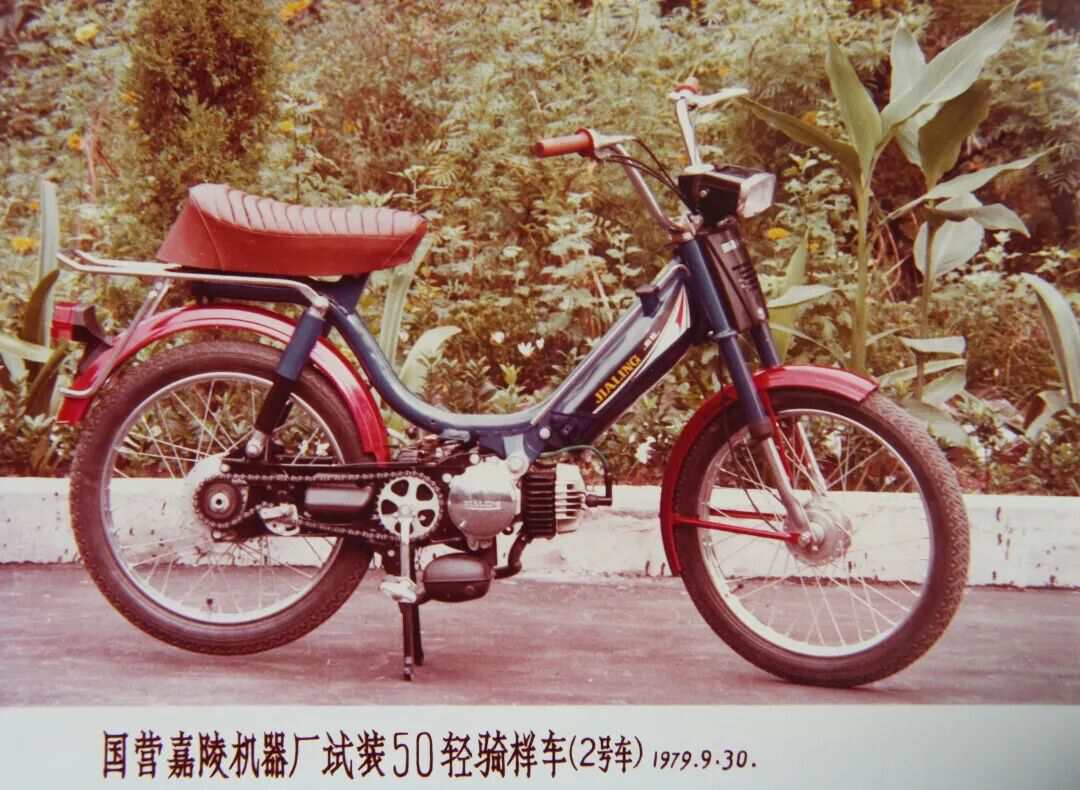
Core Viewpoint - Chongqing is transforming into a global hub for smart electric vehicles, with ambitious production targets and a focus on electric two-wheelers, aiming for an annual output of over 15 million units by 2027 [1][2][19]. Group 1: Industry Transformation - Chongqing's electric two-wheeler production is projected to reach 2.98 million units in 2024, a 19% increase year-on-year, and 2.1975 million units in the first half of 2025, marking a 58.6% surge [1]. - The city has attracted seven of the top ten electric vehicle companies in China, achieving over 60% local supply chain integration for key components [2]. - The electric motorcycle production from January to July 2023 reached 1.45 million units, reflecting a 34% year-on-year growth [2]. Group 2: Historical Context - The first civilian motorcycle in China, the "Jialing CJ50," was produced in Chongqing in 1979, marking the beginning of the city's motorcycle manufacturing legacy [4]. - Chongqing was once home to three major motorcycle manufacturers: Jialing, Longxin, and Zongshen, with Jialing being the industry leader [8]. Group 3: Challenges and Shifts - The motorcycle industry faced challenges from government policies limiting motorcycle use, leading to a decline in traditional fuel motorcycle sales [9][10]. - The rise of electric two-wheelers has shifted the competitive landscape, with electric models rapidly replacing fuel motorcycles due to lower operating costs [10][11]. Group 4: Smart Vehicle Development - The focus is shifting from mere electrification to smart vehicle technology, with companies like Tailin integrating advanced systems such as Huawei's HarmonyOS for enhanced user experience [16]. - The Chongqing government is promoting the development of a smart electric vehicle data service system to support future innovations in battery swapping and shared mobility [13][14]. Group 5: Global Expansion - With domestic markets reaching saturation, Chongqing's motorcycle companies are looking to expand internationally, particularly in Southeast Asia, Africa, and Latin America [2][19]. - The logistics network in Chongqing is being enhanced to support global distribution, with efficient routes established to Southeast Asia and Europe [22]. Group 6: Competitive Landscape - Chongqing manufacturers face competition from established Japanese brands in the Southeast Asian market, where electric motorcycles are still relatively expensive compared to traditional fuel models [23][24]. - Companies are adopting various strategies to differentiate themselves, such as focusing on small-displacement motorcycles or customized models for specific markets [25][26].
湖南醴陵陶瓷产业观察
Xin Hua Wang· 2025-10-02 09:31
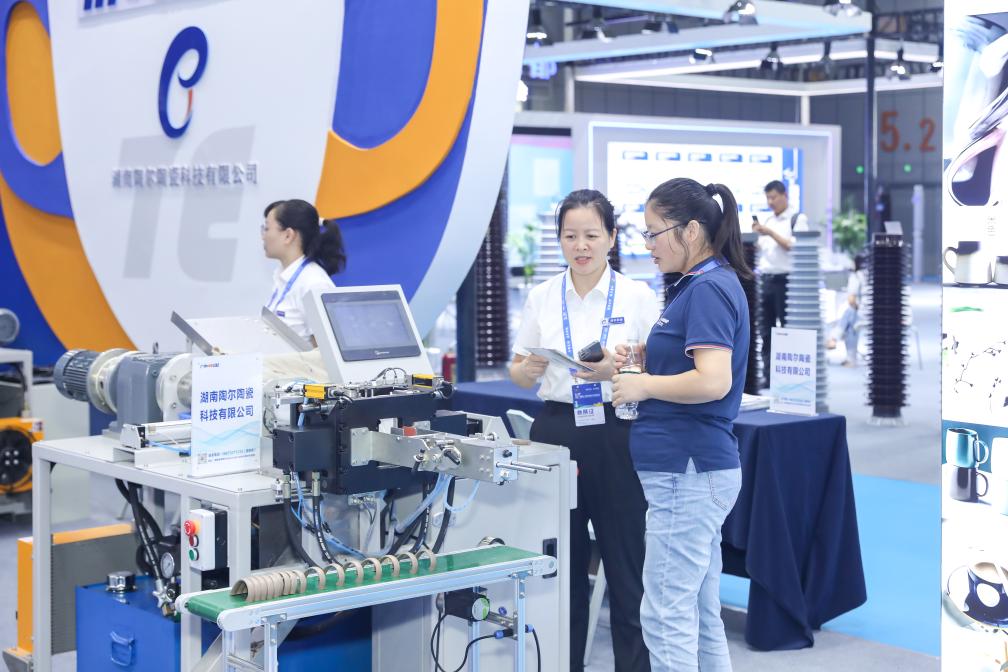
Core Insights - The production efficiency of ceramic mugs is significantly influenced by the manufacturing process of the handle, with automation being a key solution to enhance productivity [1][3] - The ceramic industry in Hunan Liling is experiencing a revival through the adoption of automation technologies, including robotic arms and 3D printing, leading to improved production capabilities [3][5] - Liling's ceramic industry is not only focused on daily-use ceramics but also plays a crucial role in the electrical porcelain sector, contributing to a substantial share of national production [3][5] Group 1: Automation and Production Efficiency - Hunan Taoer Ceramic Technology Co., Ltd. showcased an automated ceramic handle production machine that can mold a handle in under a minute, significantly reducing manufacturing time and improving cleanliness in the production environment [1][3] - The traditional method of producing handles through pouring liquid clay into molds is less efficient and requires skilled labor, highlighting the advantages of automation [1][3] Group 2: Industry Growth and Technological Advancements - Liling has seen nearly 100 ceramic manufacturers invest approximately 400 million yuan in automation and intelligent upgrades, installing around 1,100 sets of automated production equipment [3][5] - The electrical porcelain sector in Liling is projected to account for nearly 30% of the national output in 2024, with high-voltage insulators making up over 40% of the national production [3][5] Group 3: Integration with Tourism and Employment - The ceramic industry in Liling is a significant driver of local employment, directly supporting around 200,000 jobs across various sectors, including research, manufacturing, and sales [7] - The integration of ceramics with tourism has created experiential opportunities for visitors, enhancing the region's appeal and contributing to economic growth [7]
“摩都”战事下半场:国内换轨,“下南洋”答题
2 1 Shi Ji Jing Ji Bao Dao· 2025-09-30 14:55
Core Viewpoint - Chongqing is transforming into a global hub for smart electric vehicles, with ambitious production targets and a focus on electric two-wheelers, aiming for an annual output of over 15 million units by 2027 [1][17]. Group 1: Industry Transformation - Chongqing's electric two-wheeler production is projected to reach 2.98 million units in 2024, a 19% increase year-on-year, and 2.1975 million units in the first half of 2025, marking a 58.6% surge [1]. - The city has attracted seven of the top ten electric vehicle companies in China, achieving over 60% local supply chain integration for key components [2]. - The electric motorcycle production from January to July this year reached 1.45 million units, reflecting a 34% year-on-year growth [2]. Group 2: Historical Context - The history of Chongqing's motorcycle industry began with the production of the first civilian motorcycle, the "Jialing CJ50," in 1979, symbolizing the start of motorization in China [3]. - The city was once known for its three major motorcycle manufacturers: Jialing, Longxin, and Zongshen, with Jialing being the industry leader [6]. Group 3: Challenges and Shifts - The motorcycle industry faced challenges from regulatory policies limiting motorcycle use, leading to a decline in traditional fuel motorcycle sales [7][8]. - The shift towards electric two-wheelers has been driven by lower operating costs and simpler driving experiences compared to fuel motorcycles [8]. Group 4: Smart Vehicle Development - The focus is shifting from mere electrification to the integration of smart technologies, with companies like Tailin developing electric motorcycles equipped with Huawei's HarmonyOS for enhanced connectivity [14]. - The Chongqing government is promoting the development of a smart electric vehicle data service system to support future applications like battery swapping and shared mobility [11][17]. Group 5: Global Expansion - With the domestic market reaching saturation, Chongqing's motorcycle companies are looking to expand internationally, particularly in Southeast Asia, Africa, and Latin America [2][18]. - The logistics network in Chongqing is being enhanced to support global distribution, with efficient transport routes established to key markets [21]. Group 6: Competitive Landscape - Chongqing manufacturers face competition from established Japanese brands in the Southeast Asian market, where electric motorcycles are still perceived as expensive compared to traditional fuel models [22][24]. - Companies are adopting different strategies to penetrate international markets, such as focusing on small-displacement motorcycles or customizing products for specific regional needs [24].