
生物制造

Search documents
五角大楼挑选六位国防技术资深人士领导关键技术领域
欧米伽未来研究所2025· 2026-01-31 06:43
Group 1 - The article discusses the reduction of the Department of Defense's 14 "key technology areas" to a more focused research initiative led by six officials with extensive experience in the defense technology sector [2] - Cameron Stanley, the Chief Digital and Artificial Intelligence Officer, is highlighted for his background in both the Department of Defense and the private sector, emphasizing the importance of AI in military applications [2] - Gary Waller, a senior official in biomanufacturing, aims to replace traditional chemical engineering with bio-based enzymes, showcasing the shift towards sustainable technologies in defense [3] Group 2 - Robert Mance is responsible for the "counter-logistics technology" project, which focuses on enhancing the military's global supply chain resilience against attacks, indicating a strategic priority in logistics security [3] - Kevin Rudd will lead the Quantum and Battlefield Information Dominance (Q-BID) project, which aims to improve data collection and sharing while preventing adversaries from doing the same, highlighting the importance of information warfare [4] - Christopher Vergien is tasked with the development of scalable directed energy (SCADE) technologies, such as laser weapons, indicating a shift towards advanced weaponry in military strategy [4] Group 3 - James Webb will lead the Scalable Hypersonics project (SHY), focusing on transitioning hypersonic technology from research to large-scale deployment, reflecting a long-term commitment to advanced military capabilities [4] - The "Future Knowledge Base" is introduced as an online platform that collects over 8,000 important materials on various cutting-edge technologies, emphasizing the need for continuous research and knowledge sharing in the tech sector [6] - The article lists several key reports on future technology trends, including insights from Oxford, McKinsey, and Stanford, which provide a comprehensive overview of the anticipated developments in AI, energy security, and global competitiveness [8]


21社论丨将更多财力用于促消费和惠民生
21世纪经济报道· 2026-01-31 01:35
Group 1 - The core viewpoint of the article emphasizes the effectiveness of proactive fiscal policies in stabilizing and improving China's economic performance in 2025, with a focus on enhancing public spending and supporting consumption [1][2][3] - Fiscal revenue showed a gradual improvement throughout 2025, reflecting a stable economic recovery, with a notable increase in public budget expenditures to support economic and social development [1][2] - The fiscal policy included a 1% increase in the deficit ratio to 4%, alongside the issuance of special bonds to bolster state-owned banks' core capital, effectively stimulating domestic demand and ensuring social welfare [1][2] Group 2 - A special fund of 300 billion yuan was allocated to support the replacement of consumer goods, directly reducing costs for residents and promoting green and intelligent products, thereby enhancing living standards and driving industrial upgrades [2] - The fiscal policy also focused on strengthening social welfare, with increased employment subsidies, healthcare funding, and the establishment of a national childcare subsidy system, benefiting over 30 million families [2] - For 2026, the fiscal policy is expected to remain proactive, with an emphasis on expanding spending in key areas such as consumer support and social welfare, while ensuring long-term fiscal sustainability [3][4] Group 3 - The focus of fiscal support will shift towards high-level technological self-reliance, with increased investment in strategic scientific research and innovation, aiming to foster new productive forces for future growth [4] - Government investment funds will play a crucial role in supporting leading enterprises in cutting-edge technology sectors, enhancing collaboration between fiscal and financial resources to drive industrial upgrades [4]

21社论丨将更多财力用于促消费和惠民生
Xin Lang Cai Jing· 2026-01-30 22:49
Group 1 - The core viewpoint of the news is that China's fiscal policy for 2025 is focused on maintaining stable revenue while ensuring strong support for key expenditures, reflecting a gradual improvement in economic conditions [1] - Fiscal revenue showed a pattern of decline in the first quarter, followed by recovery in the second quarter, and stability in the third and fourth quarters, indicating a steady economic recovery [1] - The proactive fiscal policy has increased counter-cyclical adjustments, with the deficit rate rising by 1 percentage point to 4%, and the issuance of special bonds to support state-owned banks' core capital [1] Group 2 - The fiscal policy aims to boost market consumption confidence by allocating 300 billion yuan in special bonds to support consumer upgrades, thereby promoting green and low-carbon products [2] - Measures include personal consumption loan subsidies and support for new consumption models, enhancing both supply and demand sides to stimulate consumption potential [2] - Continuous strengthening of social welfare is emphasized, with increased funding for healthcare, pensions, and childcare subsidies, effectively enhancing residents' consumption capacity [2] Group 3 - For 2026, a more proactive fiscal policy is expected, maintaining necessary deficit levels and expanding total fiscal expenditure to support key areas like national strategy and basic livelihoods [3] - The focus will shift towards optimizing transfer payment structures to enhance local financial autonomy and stimulate economic vitality [3] - More resources will be directed towards consumption and social welfare, aiming to increase disposable income and consumption propensity, thus expanding domestic demand [3] Group 4 - Fiscal support will concentrate on high-level technological self-reliance, with increased investment in key laboratories and research institutions to strengthen foundational research [4] - The government will leverage investment funds to support leading enterprises in pioneering technological advancements in cutting-edge fields [4] - Collaboration between fiscal and financial sectors will be enhanced through special funds and risk compensation tools to support industries like AI and quantum information [4]
将更多财力用于促消费和惠民生
2 1 Shi Ji Jing Ji Bao Dao· 2026-01-30 22:16
Group 1 - The core viewpoint of the news is that China's fiscal revenue is expected to maintain stable growth in 2025, with strong support for key expenditures, reflecting an improving economic situation [1] - Fiscal revenue showed a trend of slight decline in Q1, turning to growth in Q2, and stabilizing in Q3 and Q4, indicating a gradual recovery in economic operations [1] - The proactive fiscal policy has increased counter-cyclical adjustments, with the deficit rate raised by 1 percentage point to 4%, and the issuance of special bonds to support state-owned banks [1] Group 2 - The fiscal policy aims to boost market consumption confidence by allocating 300 billion yuan for special long-term bonds to support consumer upgrades, promoting green and intelligent products [2] - Measures include personal consumption loan subsidies and support for new consumption models, enhancing both supply and demand sides to stimulate consumption potential [2] - Continuous strengthening of social welfare is emphasized, with increased funding for healthcare, pensions, and childcare subsidies, effectively enhancing residents' consumption capacity [2] Group 3 - In 2026, a more proactive fiscal policy will be implemented, maintaining necessary deficit levels and expanding total fiscal expenditure to support key areas like national strategy and basic livelihoods [3] - The focus will shift towards enhancing local financial autonomy and optimizing transfer payment structures to stimulate local economic vitality [3] - More funds will be directed towards consumption and social welfare, aiming to increase disposable income and consumption propensity, thus expanding domestic demand [3] Group 4 - Fiscal support will concentrate on high-level technological self-reliance, with increased investment in key laboratories and research institutions to strengthen foundational research [4] - The government will leverage investment funds to support leading enterprises in pioneering technological advancements in cutting-edge fields [4] - Collaboration between fiscal and financial sectors will be enhanced through special funds and risk compensation tools to support industries like AI, quantum information, and biomanufacturing [4]
稳中求进每月看丨奋楫开局新潮涌——1月全国各地经济社会发展观察
Xin Hua Wang· 2026-01-30 13:29
Group 1: Economic Development and Policy Initiatives - Local governments are finalizing their development plans for the year, focusing on high-quality growth and laying a solid foundation for the "14th Five-Year Plan" [3][6][8] - Key areas of focus include technological innovation, emerging pillar industries, and modern industrial systems, as highlighted in various local government work reports [8][9] - New regulations aimed at benefiting the public and enterprises are being implemented, reflecting a strong commitment to stable growth and improving livelihoods [12][14] Group 2: Consumer Trends and Economic Activity - The winter season has seen a surge in consumption driven by the ice and snow economy and festive activities, showcasing the potential and vitality of consumer spending [15][20][22] - Various regions are innovating "ice and snow+" consumption scenarios and launching diverse initiatives to promote high-quality development in the ice and snow economy and holiday economy [18][21][22] - Events such as the "2026 National Online New Year Goods Festival" and local promotional activities are enhancing consumer engagement and driving sales [21][22] Group 3: Response to Adverse Weather Conditions - Multiple cold waves have impacted various regions, increasing pressure on heating, supply, and transportation, prompting a coordinated response from relevant departments [23][26][28] - New technologies and methods are being employed to ensure the warmth and safety of residents during harsh weather, including remote monitoring and emergency response measures [26][28][29] - Local authorities are actively managing transportation and energy supply challenges, ensuring that essential services remain operational despite adverse conditions [28][29]
免费注册参会!生物基化学品与材料专场,3月杭州,第五届中国合成生物学及生物制造大会
synbio新材料· 2026-01-30 06:09
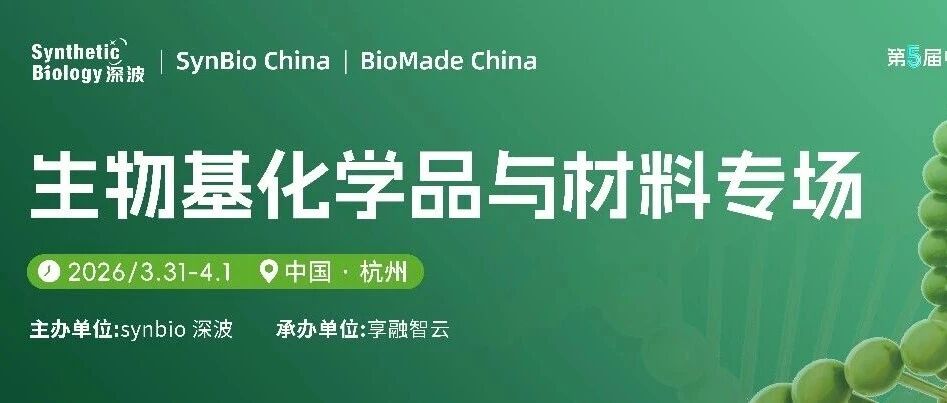
大会介绍 0 1 大会时间 | 2026年3月31日-4月1日 大会地点 | 杭州市 大会规模 | 1000人 在全球推进绿色转型与"双碳"目标的战略背景下,生物基化学品与材料作为生物制造产业的核心支 柱,凭借原料可再生、全生命周期低碳环保等核心优势,正加速替代传统石油基产品,在包装、纺 织、汽车等领域展现出广阔应用前景,成为全球产业绿色转型的关键赛道。 我国高度重视该领域发展,将生物基新材料列为关键战略材料,多项产业扶持政策持续落地。然 而,产业仍面临包括综合成本竞争力、原料供应链稳定、产品性能优化及终端市场接受度等关键问 题。 基于此, 2026年3月31日-4月1日 ,"第五届中国合成生物学及生物制造大会"将在杭州举办,其中设 置 【 生物基化学品与材料专场】 ,旨在汇聚产学研用多方智慧,破解产业发展难题,助力生物基 化学品与材料产业高质量发展。 主办单位 | synbio深波 承办单位 | 享融智云 媒体支持 | synbio新农食、synbio新美护、synbio新材料、生物制造圈、合成生物学俱乐部 扫码 免费 报名参会 论坛设置 0 2 | | 会场一 | 会场二 | 会场三 | | --- | ...
杭州生物制造大会“免费路演”!路演项目火热征集中!为你的项目寻找资金+合作伙伴!
synbio新材料· 2026-01-30 06:09
Conference Overview - The "5th China Synthetic Biology and Biomanufacturing Conference and Life China 3rd Functional Food and Nutrition Science Conference" will be held from March 31 to April 1, 2026, in Hangzhou [3][5]. - The conference aims to gather 1,000 participants and is organized by synbio深波, with support from various media outlets [6]. Roadshow Segment - A special "Roadshow Segment" is established to provide a platform for innovative synthetic biology projects with growth potential [3]. - Founders, industry experts, investors, and government representatives are encouraged to engage in face-to-face discussions [3]. - Participants can gain insights into promising projects in synthetic biology, receive industry guidance, and explore collaboration opportunities [3]. Registration Details - Interested parties must register for the roadshow by contacting Ms. Yang and noting "Hangzhou Roadshow" [4][10]. - Each project presentation is limited to 8-10 minutes, and slots are available on a first-come, first-served basis [8]. Past Roadshow Projects - Previous roadshow projects include topics such as efficient low-cost production of terpenoids, enzyme development, and applications in skincare [8]. - Notable projects from 2025 and 2024 highlight advancements in AI integration, health raw materials, and sustainable production methods in synthetic biology [8][9].
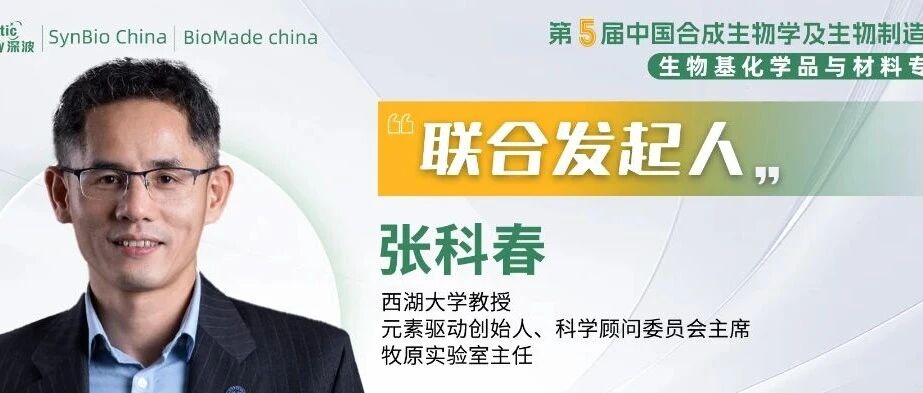
官宣!西湖大学教授、元素驱动创始人张科春老师出席!担任「生物基化学品与材料专场」联合发起人!
synbio新材料· 2026-01-30 06:09
2026年3月31日-4月1日,"SynBio China第五届中国合成生物学及生物制造大会"将在杭州隆重举办。 同期 "生物基化学品与材料专场" 有幸邀请到 「西湖大学教授; 元素驱动创始人、科学顾问委员会主席;牧原实验室主任 张科春老师 」 作为本专场 联合发起人,并发表主题演讲。 张科春 西湖大学教授;元素驱动创始人、科学顾问委员会主席;牧原实验室主任 张科春,西湖大学工学院教授,从事合成生物相关研究已有20余年,本科毕业于中国科技大学,博士毕业于加州理工学院,师从合成生物领袖科学 家David A. Tirrell、Frances H. Arnold(诺贝尔奖获得者)James Liao等。回国前,张科春为明尼苏达大学终身教授,具有AI 蛋白设计、酶工 程、合成生物多学科交叉背景,曾开发了第一种可规模化生产的弹性生物降解高分子材料,参与创建了全球第一个可持续高分子研究中心。 元素驱动简介 元素驱动是西湖大学新质生产力培育平台的重点孵化项目,为国家高新技术企业、浙江省专精特新中小企业。公司初步建成以AI+生物制造为引擎的MiNT- X Platform研发平台,开发高效绿色生物合成氨基酸、系列高性能新型 ...
北京产权交易所:交易规模连续多年保持在十万亿元以上 促进要素资源有序流转和高效配置
Xin Hua Cai Jing· 2026-01-30 05:21
记者近日从北京产权交易所获悉,"十四五"期间,北京产权交易所充分发挥阳光化、市场化平台属性, 主动融入国家和北京市改革发展大局,积极促进各类要素资源有序流转和高效配置,交易规模连续多年 保持在十万亿元以上,在助力国资国企改革、培育发展新质生产力、加快构建现代化产业体系、建设美 丽中国、推动经济社会高质量发展等方面发挥了重要作用。 据悉,"十四五"期间,北京产权交易所服务新能源、节能环保等绿色发展项目超60项,成交金额2200多 亿元。北京绿色交易所持续推进全国温室气体自愿减排交易市场、国家绿色技术交易中心等国家级平台 建设,着力打造面向全球的国家级绿色交易所。全国温室气体自愿减排交易市场核证自愿减排量 (CCER)累计成交量318.71万吨,成交金额约2.67亿元;北京市碳排放权交易各类产品累计成交量 4135.52万吨,成交金额25.19亿元;服务"两新"政策落地,涉及服务车辆23.38万辆,涉及金额49.02亿 元。 朱戈表示,"十四五"期间,北京产权交易所旗下中国技术交易所(以下简称中技所)、北京软件和信息 服务交易所(以下简称软交所)积极开展科技成果转化和技术交易、区域科技创新、科技型中小企业融 资、 ...
港股午评:恒指跌近500点,科指跌1.79%,科网股、黄金股、光伏太阳能股集体走低
Jin Rong Jie· 2026-01-30 04:11
Market Performance - The Hong Kong stock market opened lower on January 30, with the Hang Seng Index dropping by 496.82 points, a decline of 1.78%, closing at 27,471.27 points [1] - The Hang Seng Tech Index fell by 104.83 points, down 1.79%, to 5,736.27 points, while the National Enterprises Index decreased by 2.08% to 9,354.3 points [1] - Major tech stocks experienced declines, with Alibaba down 2.71%, Tencent down 1.53%, and JD Group down 1.4% [1] Company Earnings Forecasts - Guoquan (02517.HK) expects revenue for 2025 to be approximately 7.75 billion to 7.85 billion yuan, a year-on-year increase of about 19.8% to 21.3%, with net profit projected at 443 million to 463 million yuan, up 83.7% to 92.0% [2] - Sunny Optical Technology (02382.HK) anticipates a net profit of 4.5886 billion to 4.7235 billion yuan for 2025, representing a year-on-year increase of approximately 70.0% to 75.0% [3] - Baidu (02315.HK) forecasts revenue of 1.369 billion to 1.389 billion yuan for 2025, with a net profit of 162 million to 182 million yuan, reflecting a significant increase of 384.26% to 443.88% [3] - Spring Medical (01858.HK) expects a net profit of 245 million to 288 million yuan for 2025, an increase of 96.01% to 130.41% [4] - Encounter Small Noodles (02408.HK) projects a net profit between 100 million to 115 million yuan for 2025, an increase of approximately 64.7% to 89.5% [5] - Macro Credit Development (09930.HK) issued a profit warning, expecting a decline in shareholder profit by 70% to 90% for 2025 [6] - Financial Street Securities (01476.HK) issued a profit alert, expecting a shareholder profit increase to approximately 327 million yuan for 2025 [7] Industry Insights - China Railway (00390.HK) recently won several major engineering contracts with a total bid amount of approximately 43.292 billion yuan [8] - New天绿色能源 (00956.HK) reported a cumulative power generation of 15.2104 million MWh for 2025, a year-on-year increase of 7.71% [9] - Huayi Pharmaceutical (01276.HK) received acceptance for a new indication application for its innovative drug, which may become a new treatment option for patients with unresectable liver cancer [9] - Citic Securities suggests focusing on three main lines in the short term: biomanufacturing, embodied intelligence, and 6G technology [11] - Guoyuan International believes that the Hong Kong stock market may continue to outperform the US market due to factors such as fiscal cliffs and geopolitical issues, benefiting from the low long-term valuation levels [12]
